
Joined March 2021
- Tweets 16,144
- Following 2,691
- Followers 1,010
- Likes 136,217
1,111 Photos and videos



Hexidethmal retweeted

I think it is incorrect to frame Canton stuff as “tokenization” or “crypto”. It is so far from how what we build on EVM works that it probably cannot work with our trust assumptions even in theory.
It is more serving a modern replacement of some of the old cobol/db2 infrastructure completely rethought in a different way. But it is not a reinvention of money or finance in any way.
22h

Why did we raise our last round:
We’re already profitable. So why raise?
For years we’ve asked ourselves what it would take to truly bring finance OnChain. We believe @CantonNetwork has finally identified the components needed to establish crypto rails as a new global settlement layer, rather than treating crypto wallets as a mere distribution mechanism (as most “tokenization” does today). Those components are: privacy, issuer control and sovereignty, governance, and alignment of economics.
We have the largest organizations in the world moving their core businesses to run on Canton. That will drive utility to canton-network:native. @digitalasset’s entire business is canton-network:native.
So why raise? Because we have a unique opportunity right now. Organizations are willing. Regulators are willing. Admin is willing. We could wait for organic growth, or DA can step in to accelerate it. Rather than wait for large corporates with long budget cycles to build this infrastructure, DA will build much of what’s needed to double, triple, and quadruple canton-network:native utility.
We will enter new partnerships to build applications that drive more usage. Those will be announced later this year.
We will partner with builders to bring burns to subnets.
And there are potential M&A activities that will further align other companies with @CantonNetwork.
All of this requires a healthy balance sheet, which we now have.
There is still a lot of work to do, but I’m excited for what’s ahead.
9
9
108
11,977
Hexidethmal retweeted

Jun 12
Flagging this because I don’t think it got enough attention in policy circles:
YC is saying EVERY one of their startups will use crypto, soon.
Folks need to excise thoughts that this issue doesn’t matter from their minds.
Jun 11

We're excited about the US CLARITY Act.
We think all YC companies will use crypto technology, like stablecoins, before long. Not just crypto startups, not just fintech startups, but every company.
Here's why this law is such a big deal 🧵
x.com/SenLummis/status/20637…
7
16
75
11,708

Jun 12
Ethereum vs. the guy that just claimed people have “lost confidence” in it
2
30
Hexidethmal retweeted

Jun 12
One of the best parts about being an Ethereum community member and ETH investor is that often you get to wake up to wonderful adoption news that surprises in its specific timing and form but is exactly according to the trends we laid out years ago. Today it's LG L2. LFG
7
12
137
5,544
Jun 12
Does anybody know if there are RWA dashboards out there that adhere more or less strictly to this methodology?
I understand the value would skew much lower, but it would be valuable signal over time
Jun 12

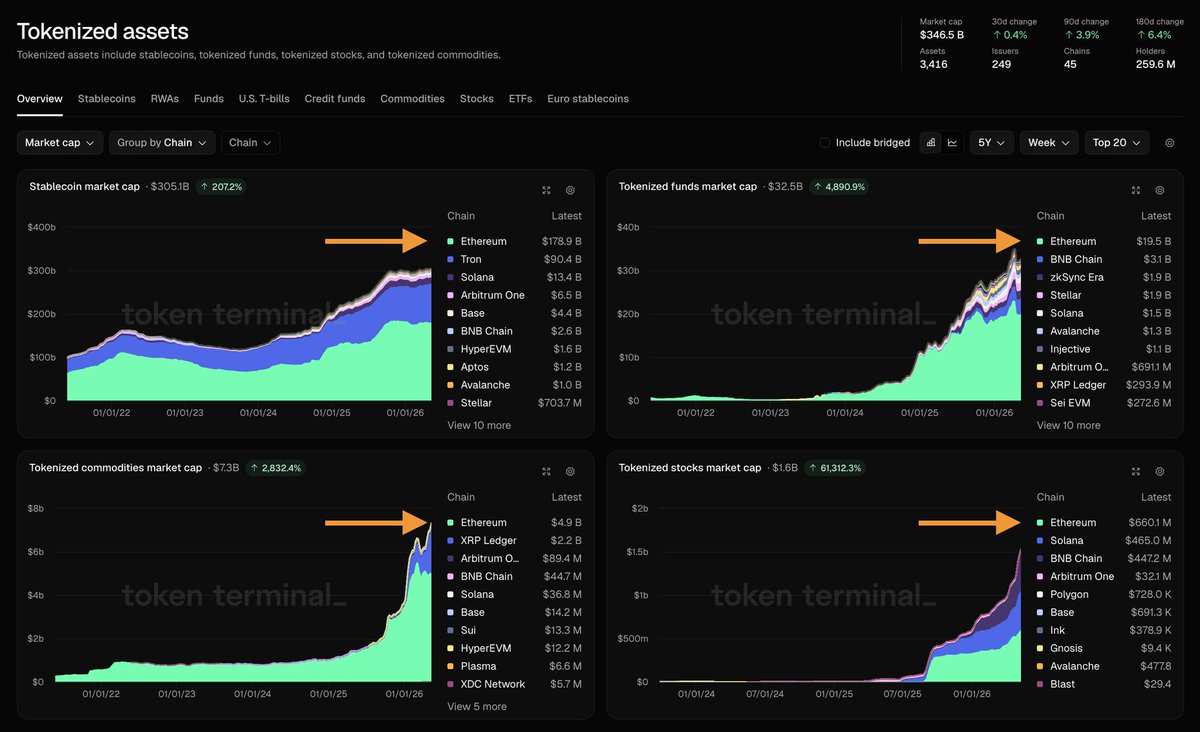
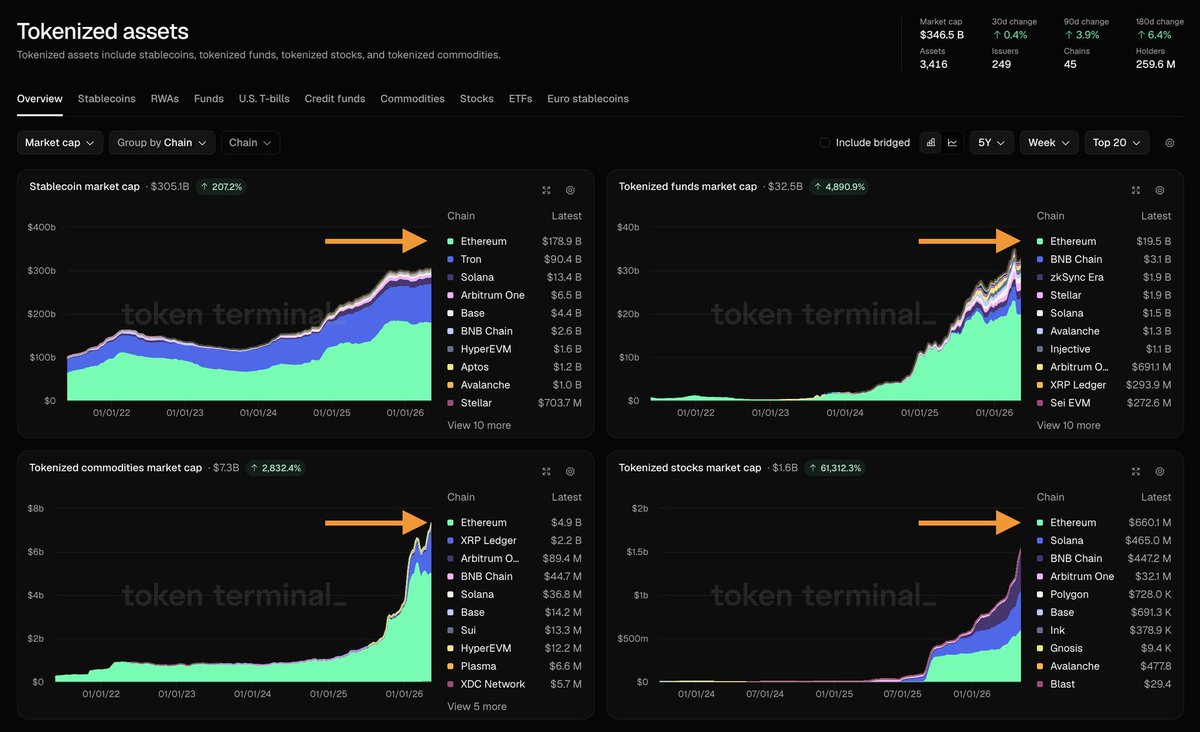
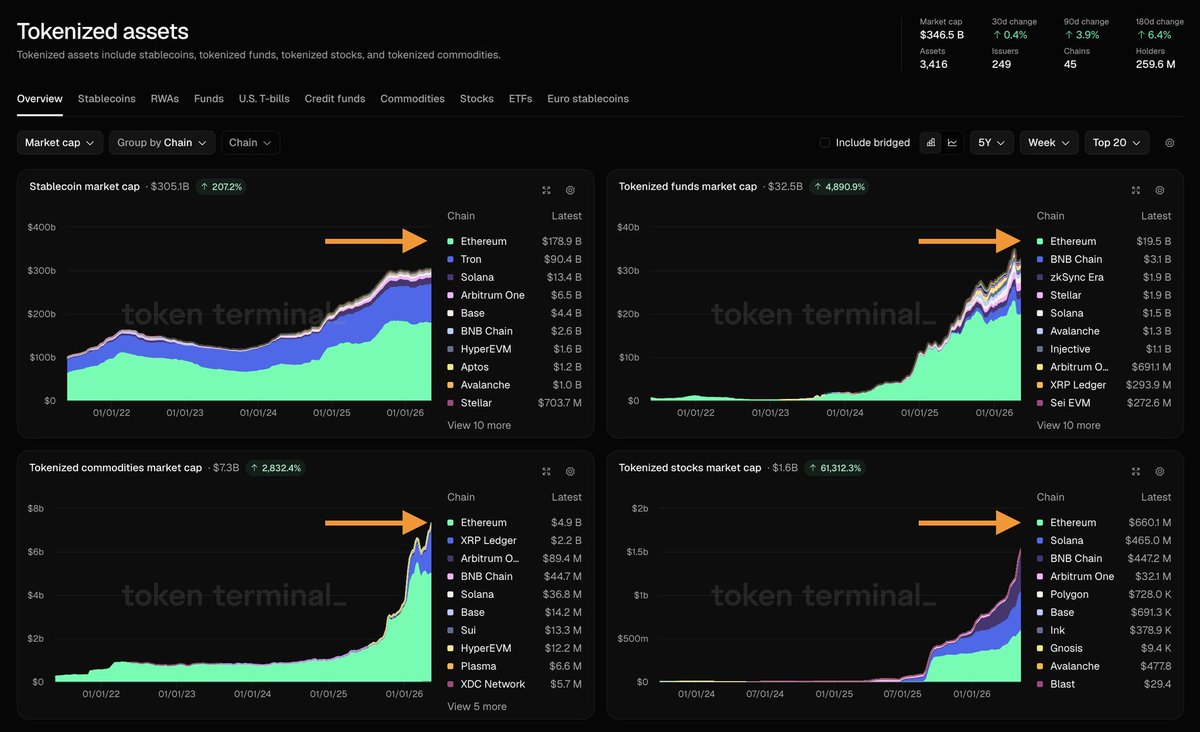
I enjoy all forms of using blockchains to do cool/useful stuff, but for people who have a "my L1 blockchain gas token is going to moon because of RWA tokenization" thesis, you need to think about it more deeply
even though USDC has custodial backing, USDC is essentially a bearer asset (now legally so thanks to the magic of the GENIUS Act), so USDC trades actually do execute/settle for example on Ethereum and it's legit bullish for ETH the more USDC is on Ethereum, especially if you subscribe to a "ETH price goes up to reflect the TVL it secures" thesis of valuation
but most securities tokenization today is completely different.
the relevant securities are not bearer assets. they are registered assets. and the register is *not* onchain--it's offchain, on a transfer agent's private systems. as for the tokens, they are not assets at all, but rather either "instruction tokens" or non-binding partial representations of what a transfer agent has allowed to happen on its offchain books--as it were, a voluntary partial obscured disclosure of the transfer agent's books.
in effect. the transfer agents and depositary companies and broker/dealers are using blockchains as simply a messaging bus--either to send messages to you about the state of their books, or to let their clients send messages to them about a change desired in their books
...sending a token around within their schemas is simply an overly complicated and undertermined way of constituting a message you send back to their offchain systems
there could be a more robust/interesting version of this, like for example transfer agents and brokers using zkSnarks to verify they follow a certain algo offchain so that they can't rug anyone or do anything funny, etc., kind of like an L2 for regulated offchain SQL databases, but that's not what they're doing either
literally they could do the exact same thing as they are doing now, without tokens, by just sending text messages on Ethereum: "transfer 500 shares of SPACEX from my account to the account of whatever person is registered as owning address 0x32asdf987asd8f9 on your offchain books"
If I used Ethereum to send a message to my bank, "wire $5,000 to my buddy John", would you say that there is $5,000 of TVL/volume from me on Ethereum? of course not--the asset is not "on" Ethereum, it's in my bank Ethereum is not where any transaction is actually being executed or settling, it's happening on SWIFT or whatever...in that scenario, Ethereum is being used as a messaging service, nothing more, and you would value Ethereum like a decentralized messaging app insofar as most of its activity is like this
so why are you saying these tokenized stocks etc. are "on" Ethereum or part of Ethereum's "TVL" or that ETH/Ethereum is "securing" these assets? It is not. It is a giant psyop.
If this is all tokenization will be, your financial models for how they affect ETH etc. should be much different. Sure, the transactions still require ETH as gas, that's still activity, that's still good for ETH, but "decentralized broker/dealer messaging app (basically decentralized Bloomberg terminal)" is a lot less impressive of a narrative than how most portray tokenization to be--usually, their idea of why tokenization is so bullish for ETH/Ethereum is the idea of Ethereum becoming an atomic execution/settlement/value-storage layer for securities. Especially, all the valuation models that take into account "how high must ETH price get to secure $x trillion of value" go right out the window--in this model, Ethereum/ETH is not securing the assets or the execution or the settlement, just securing a really weird abstract and oddly inefficient/indirect way of doing broker/dealer messaging.
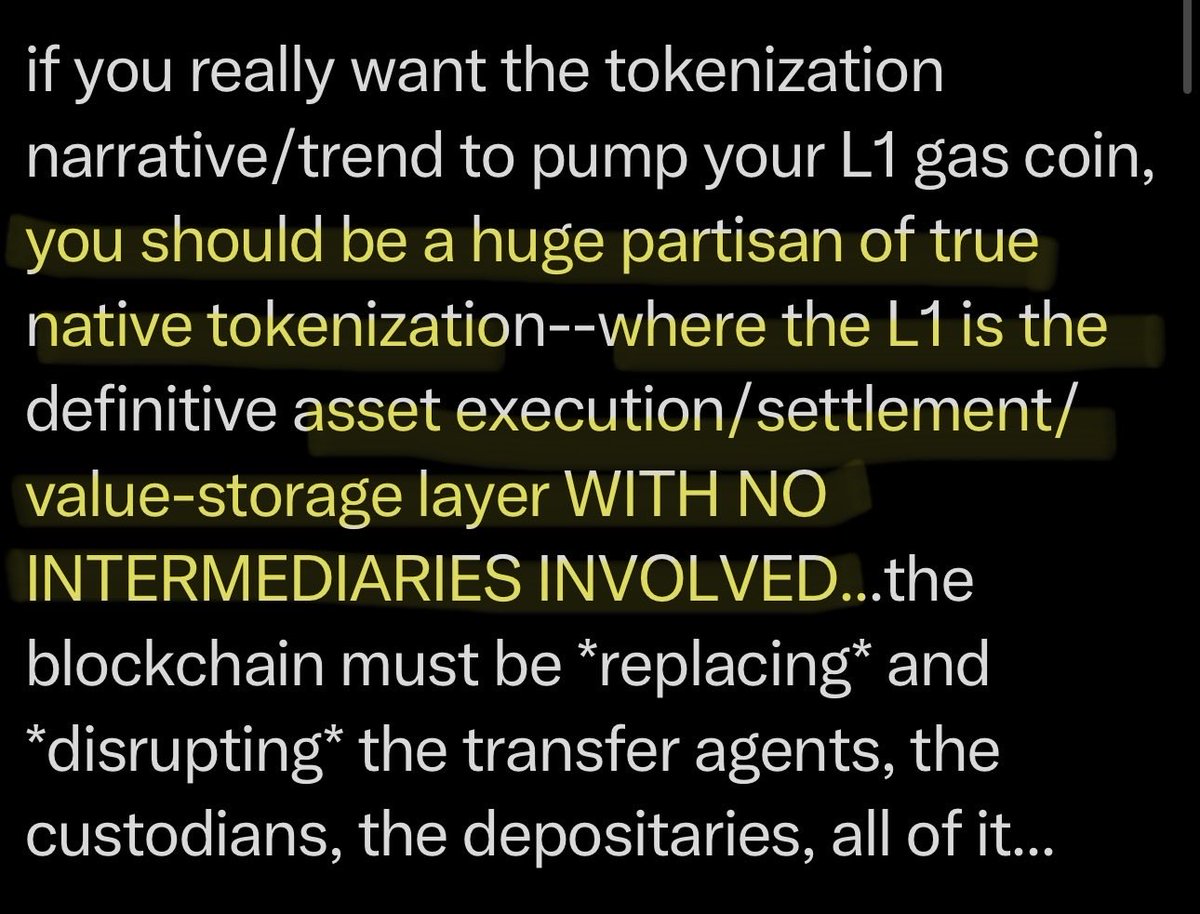
if you really want the tokenization narrative/trend to pump your L1 gas coin, you should be a huge partisan of true native tokenization--where the L1 is the definitive asset execution/settlement/value-storage layer WITH NO INTERMEDIARIES INVOLVED...the blockchain must be *replacing* and *disrupting* the transfer agents, the custodians, the depositaries, all of it...
don't get so easily seduced by 'oh something is onchain therefore this is an amazing validation of blockchain and my smart contract gas token is going to be so valuable'
learn to look into the nature of these arrangements and only get hyped on the ones that are actually doing something you could not do without putting it onchain--eliminating intermediaries, true p2p trading, trust-minimization, etc.
1
4
1,138
Hexidethmal retweeted

Jun 11
We're excited about the US CLARITY Act.
We think all YC companies will use crypto technology, like stablecoins, before long. Not just crypto startups, not just fintech startups, but every company.
Here's why this law is such a big deal 🧵
x.com/SenLummis/status/20637…

The Clarity Act passed committee. The floor is next. We did not come this far to quit at the 5 yard line.
69
266
1,548
260,902
Hexidethmal retweeted

Jun 10
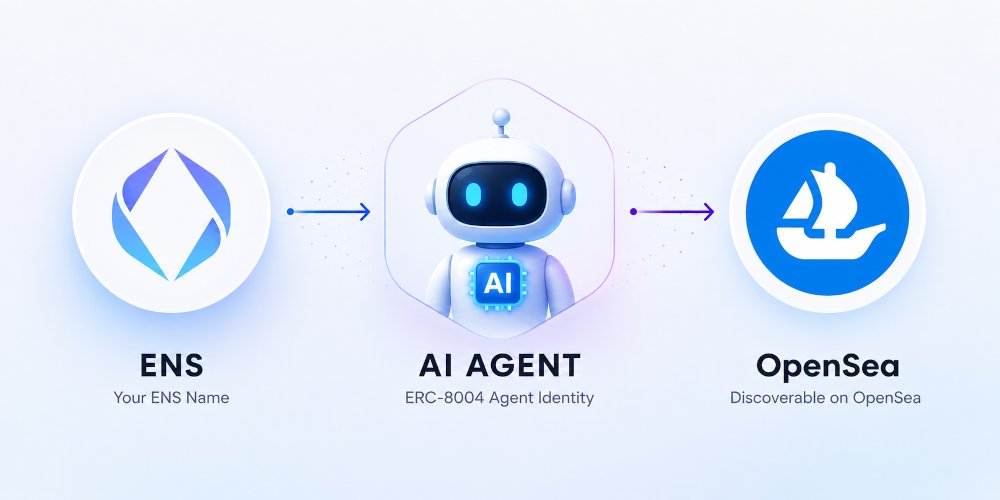
Your @ensdomains name can now be a verifiable AI agent identity.
Using ERC-8004, ENSIP-25, and ENSIP-26, an ENS name can advertise metadata, MCP endpoints, and agent capabilities that AI applications can discover and consume.
We built a simple interface to make this easy 👇
19
32
107
11,088
Hexidethmal retweeted

Jun 10
EIP-7708 will fix this in the next upgrade, Glamsterdam! - learn more at the link:
forkcast.org/eips/7708
Jun 10

First, the problem. On Ethereum, native ETH transfers emit NO events.
If you want to track them, you need to trace every single transaction with a tracing node and build your own indexer. Expensive, slow, painful.
5
14
78
15,111
Hexidethmal retweeted

Jun 10
lawyers are truly doomed in many areas
deals?
just set two claude instances against each other, one told to represent interests of party A, one told to represent interests of party B
I suspect the resulting agreement will not only be much faster, cheaper, and have fewer errors, but also will be more pareto-optimal
people will learn to blindly accept these AI-negotiated agreements as "market result", probably not wrongly
30
5
128
9,139
Hexidethmal retweeted

Jun 10
以太坊几乎是整个加密叙事和创新的原生地。该来的会来的。
Jun 10

跟几个朋友聊 $ETH 的前景问题,正好头脑风暴了下,我觉得思考清楚了,对你是否继续持有ETH和信仰以太坊会有帮助:
两个问题:
1)若以太坊上的当前DeFi协议锁仓价值(TVL)进一步抬升10倍,你觉得 $ETH 价值能破 $10000 吗?
2)若以太坊上Staking、Restaking以及原生POS挖矿等各类理财APY收益能持续高于甚至2倍于美国国债,你会把自有资产的80%以上放到链上吗?
三个答案:
1)美国GENIUS Act和CLARITY Act等稳定币相关法案接连落地,会扫清传统机构入场的最大障碍,包括BlackRock、JPMorgan等在内的机构会大规模布局稳定币,并沉淀资金到链上,其链上沉淀资产达到其总持仓资产AUM的20%以上,这大水漫灌的滔天资金入场,十倍TVL的扩张根本不在话下;
2)当RWAFi资产代币化叙事进一步落地,Tokenization股票规模达到万亿美元以上,而你玩转DeFi的价值资产从BTC、ETH、SOL等高波动资产变成了S&P 500、QQQ、NVDA等,DeFi行业会真正甩开套娃包袱,迎来真正的第二春,届时围绕美股代币化后的衍生品创新市场会雨后春笋般绽放,新一波有真实价值资产支撑的“套娃”游戏开启,你是否期待?
3)以太坊真正把zkVM、zk-SNARKs、FHE等一大批技术叙事转化落地成隐私和高性能交易引擎解决方案。机构可以再链上做大额交易、高频做市、套利,且催生以太坊版本的Hyperliquid。届时机构对公链“全透明”的需求和芥蒂矛盾完全找到最优解,以太坊金融结算链的叙事得到落实,真正围绕超级金融时代(DeFi、CeDeFi、TradFi)的大规模创新金融时代继而来临。没准能盘活一大批死掉的协议、应用和扩展链,一个开发者活跃度超越AI的大自由、平权化市场是不是更有造富效应?
以上。
认真思考完以上两个问题,和三个可能性结果,相信每一个ETH Holder内心都会有“新”的答案。
19
4
114
35,855
Hexidethmal retweeted

Decentralization sounds like ideology until it shows up in a risk model.
Jun 10

Danny Ryan on why Wall Street cares about Ethereum's decentralization
Etherealize co-founder and a key architect behind Ethereum’s transition to proof-of-stake is asked if Wall Street institutions care about “decentralization.”
“That’s not the right word,” Danny replies. “They care about counterparty risk.”
He explains:
“They care about — in a transaction or a particular market — who can screw me over? And if the infrastructure is decentralized, nobody can turn it off, and their transactions will execute as intended . . . [that’s an] elimination of counterparty risk. That’s the operative lens of how they view the world, and if you explain how these systems work to them — and the difference between Ethereum and alternatives — they’re like, ‘Oh yeah, we do love decentralization because we have risk models and this helps us on our risk model.’”
Danny jokes:
“I’ve been looking for a customer of decentralization other than the cypherpunks I hung out with for the past 8 years, and I found it on Wall Street.”
As long as you speak the right language and frame it the right way, Ethereum’s decentralization is deeply important to Wall Street institutions.
2
4
38
1,367
Hexidethmal retweeted
Jun 10
ETHConf in NYC has had fantastic speakers and topics, and the X account is doing a great job publishing it all as it happens. Next year let's livestream everything so the global community can better participate, and push every talk to YouTube asap. Great new US Flagship Eth Event

That's a wrap for Day 2 at ETHConf. 🗽
The talks mattered. So did the moments between them. Packed stages, technical talks, hallway conversations… and yes, the doggos. 🐾
Watch the playback ↓
4
11
101
3,705
Hexidethmal retweeted

Jun 9
Claude Fable outright refuses to do a smart contract audit. L model.

71
49
1,045
160,527
Hexidethmal retweeted

Jun 6
Ethereum doesn't play a narrative game because it has every narrative. It is the most decentralized network, with the widest geographic and stake-weighted validator distribution. It is the most secure network, protected by a pool of slashable Ether that even now gives it a raw total cost of attack that far outstrips all else. It stands alone as having effective client diversity, an achievement of ecosystem coordination that reduces the chance of a software bug becoming a protocol bug. Ethereum has non-probabilistic finality without sacrificing liveness, the self-healing mechanism of the inactivity leak, a sharded data availability layer, and perfect uptime.
Ethereum is the World Computer, it is the cryptographic bulletin board with guaranteed liveness, it is the unstoppable neutral verifier of proofs, it is the hardest database in existence. It is the global settlement layer for finance, finance that pretends to be decentralized, and decentralized finance. It is where you can vote, collaborate with friends, keep your art, keep your life savings, and record your life's works. Ethereum is the Unreasonable Man's katechon of liberatory technology in a world increasingly eroding Free speech, Free software, Free association, and Free markets.
Ethereum did this without taking shortcuts; scaling has always remained conservative to keep the CROPS requirement of at-home self-verification not only feasible, but easily feasible. It does this without hiding its problems; MEV is a scourge but it is transparent, where it can be reasoned about. It takes the time to prioritize important hardening features like FOCIL even when it requires the painful decision not to focus on other improvements.
Ether doesn't play a narrative game because it has every narrative. It is programmable. It is an unconfiscatable store of value with predictable and sustainable monetary policy. It is the pristine decentralized asset of the greatest network, by which virtue it is pristine collateral in decentralized finance. This makes Ether private nonvolatile money, able to mint a number of anonymous stable cash equivalents that are cheaply transferable anywhere and everywhere. It is an inherently productive asset in both its own flourishing ecosystem and as the wage of soldiers receiving the minimal viable pay to secure us all.
The future is incredibly bright. We have all of the tools we need and simply need to actually build liberatory technology with them. Ethereum upholds incredible underlying CROPS promises, but not everything that exists atop it is accessible in a CROPS way. The sovereignty of most users is eroded bit by bit in various ways and various trust assumptions. There is no reason that we cannot do better, there is no reason that we cannot fix this, and I am excited to dedicate my life to this cause.
64
79
494
42,279
Hexidethmal retweeted

Jun 8
I wrote an article about the whys behind Ethereum's consensus design.
Why two layers. Why one is allowed to halt and the other is not. Why offenses are punished economically. Why participation can collapse and the chain still recovers on its own.
Underneath every choice is the same goal — maximizing decentralization. @with_blockmedia

5
14
72
7,553
Hexidethmal retweeted

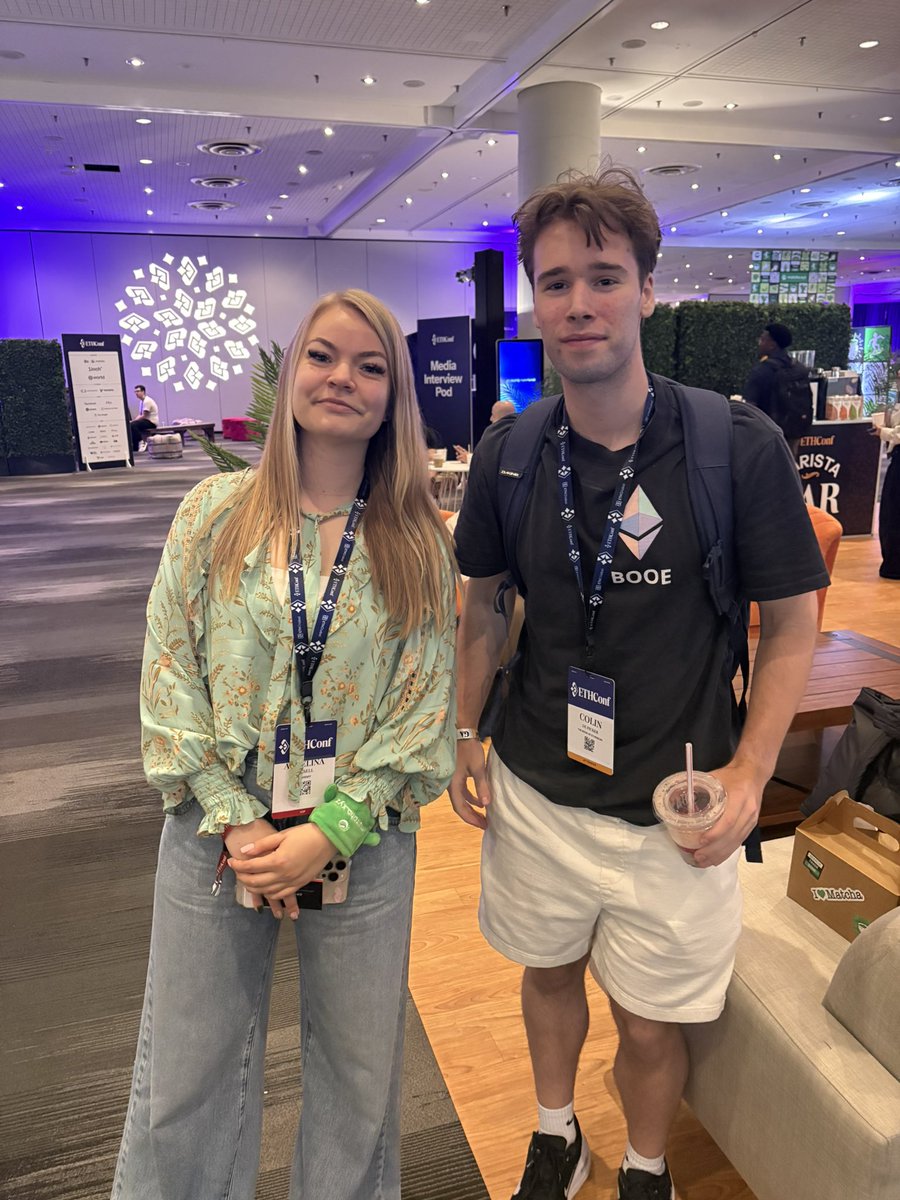
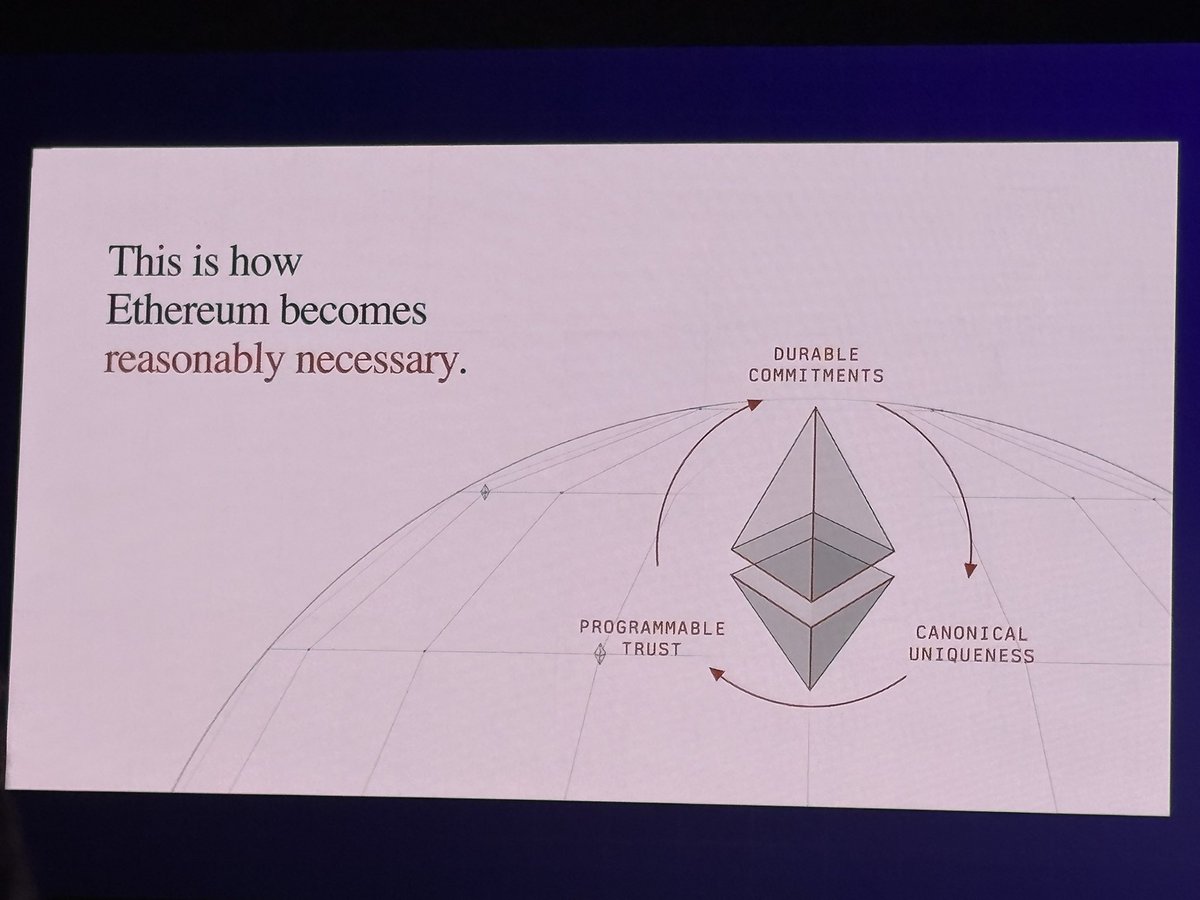
EthConf Day 1 is officially underway at the Javits Center in NYC🙏
One of the things that makes Ethereum unique is its ability to bring together institutions, founders, developers, researchers, communities, and culture in one place to help shape the future of the ecosystem.
The conference opened with a strong message from @kartiktalwar about why events like @ethconf matter and why bringing different parts of Ethereum together is essential for the next phase of growth.
We also heard valuable perspectives from @TimBeiko on the importance of preserving Ethereum’s unique values while continuing to build what the world actually needs. The challenge isn’t just creating new use cases, but ensuring the ones that matter can rely on Ethereum as their foundation.
In a fireside chat, @ethereumJoseph shared thoughts on why Ethereum becomes increasingly important as technology accelerates and AI gains more influence. As the world becomes more powerful, open and decentralized infrastructure becomes more necessary.
We also want to thank everyone who continues to support and appreciate our community.
Together, we are building the cultural layer of Ethereum.
An incredible start to what promises to be an incredible week📖✍️


20
34
99
3,514
Hexidethmal retweeted

Jun 4
We've gone to legal/regulatory hell and back just because we had the audacity to build open source permissionless software
So I'm a huge fan of this initiative
Fighting the good fight

🧵Big news today: @defenddevspac has officially launched as the first hybrid PAC dedicated exclusively to championing American crypto developers, DeFi builders, and blockchain technologists.
More information here ⬇️
defenddeveloperspac.org/blog…

36
13
139
18,195
Jun 5
🔥🔥
Did you let the short term extractive KOLs talk you into forgetting the basics anon?
Jun 5

Woke up extremely bullish on DeFi and Ethereum today
Uniswap launched in the 2018 bear, when Ethereum sentiment was at all time lows
Uniswap and other defi projects relentlessly built through that bear market and proved how powerful Ethereum can be, catalyzing defi summer and everything since
Now vibes are down bad again and Uniswap intends to build our way out of it. Last time it was by proving defi is possible. This time it will be by proving defi is inevitable.
The internet brought two disruptive changes: existing businesses moving onto the internet, and the formation of new internet-native businesses
The same duality will exist for defi: the tokenization of all existing assets, and a growing vibrant economy of crypto native assets. And it’s all happening right now, with more and more assets being brought onchain, increasing the value and productivity of crypto native assets.
As this digital economy grows, Defi is being integrated everywhere - payment processors, brokerage accounts, asset issuers. It won't stop until we eat the entire global economy
Uniswap the liquidity layer Ethereum the settlement layer. The perfect combination of low counterparty risk, permissionless, programmable infrastructure
And all this will result in huge growth in protocol volumes and fee generation. Which reminds me:
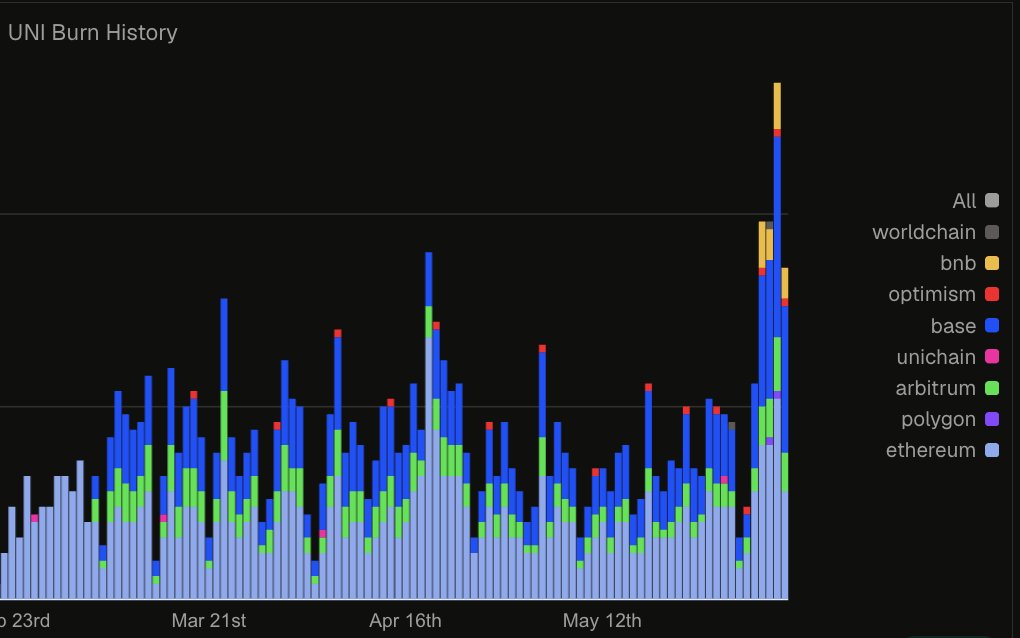
UNI burn hit all time highs today, after several new sources of protocol fees came online.
And there are many more to come: v4, uniswap x, aggregator hooks, more chains, etc
Now add in all the new assets coming onchain
We're still at the beginning 🦄
2
77
Hexidethmal retweeted

In the age of AI discovering critical bugs in blockchain protocols, client diversity has never been more important.
A bug in one Ethereum client implementation is limited to a subset of nodes, while the majority of nodes can reject the invalid behavior.
12
22
128
7,465
Hexidethmal retweeted

Jun 5
i'm generally in favor of people being able to make their own decisions and buy things like IPOs on day one if they want to with their own money
but i'm also very much against passive indexes changing rules to allow for faster-track inclusion of equities which don't meet longstanding requirements
this seems to be what happened here, so that is good
and i think we should go a step further and remove any kind of accredited investor requirements if we are going to allow 1000 forms of gambling in other domains anyway
trillion dollar IPOs are a failure of public market capitalism, and if you want a real revolution, retail should have access to deals at early stages- not just rich VCs and their LPs
14
13
182
10,008