
- Tweets 3,397
- Following 1,454
- Followers 11,864
- Likes 92
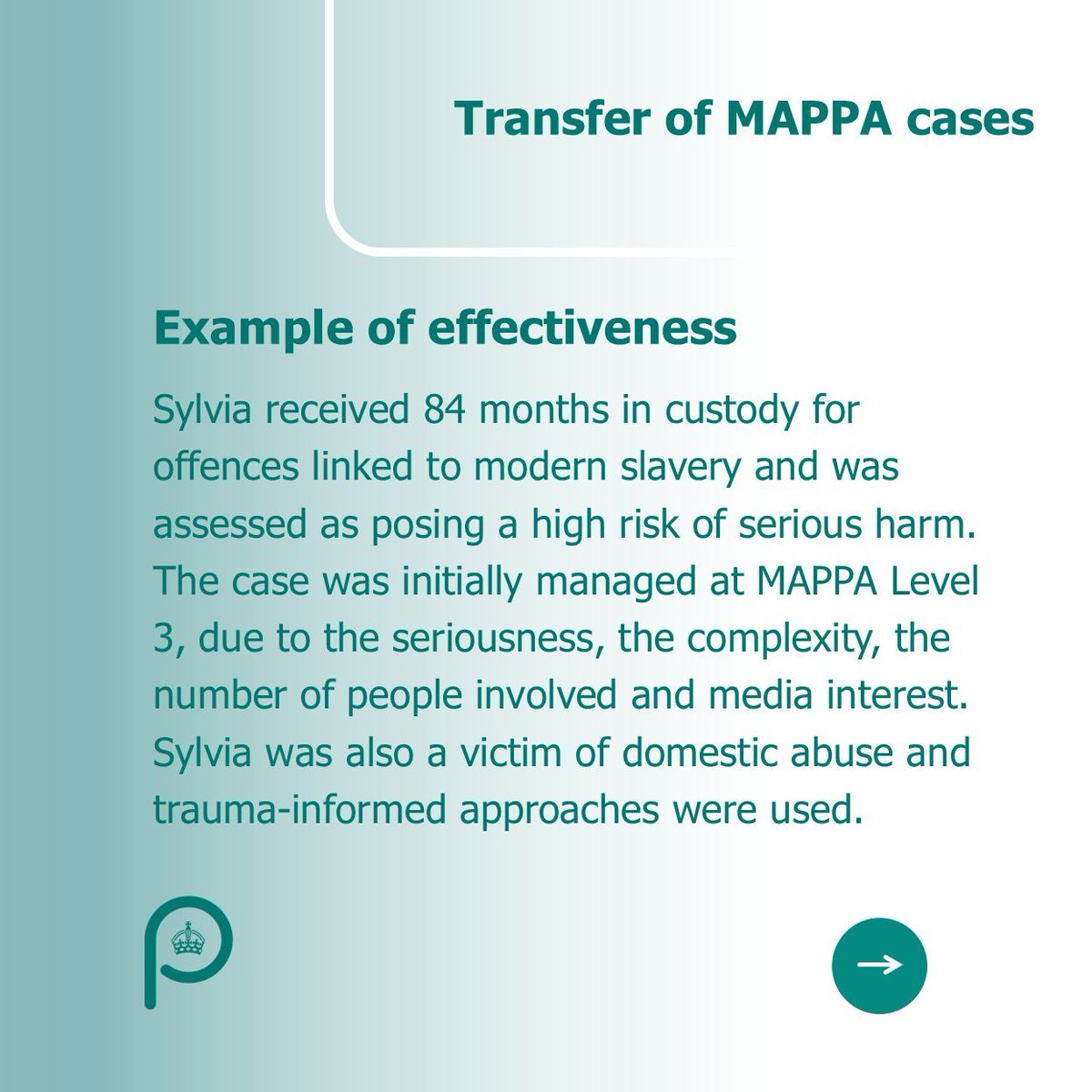



ALT Example of effectiveness: Transfer of MAPPA cases Sylvia received 84 months in custody for offences linked to modern slavery and was assessed as posing a high risk of serious harm. The case was initially managed at MAPPA Level 3, due to the seriousness, the complexity, the number of people involved and media interest. Sylvia was also a victim of domestic abuse and trauma-informed approaches were used.
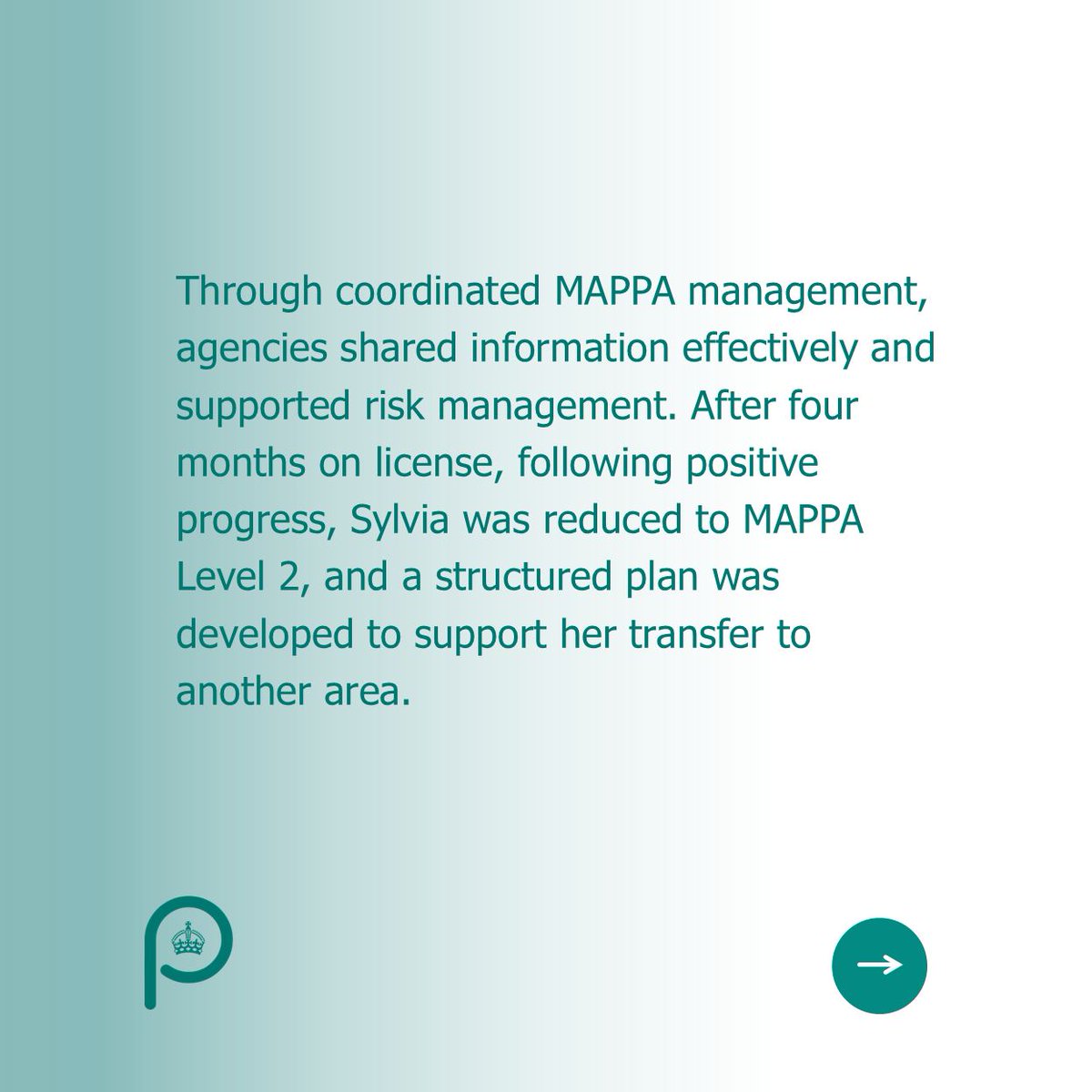
ALT Through coordinated MAPPA management, agencies shared information effectively and supported risk management. After four months on license, following positive progress, Sylvia was reduced to MAPPA Level 2, and a structured plan was developed to support her transfer to another area.
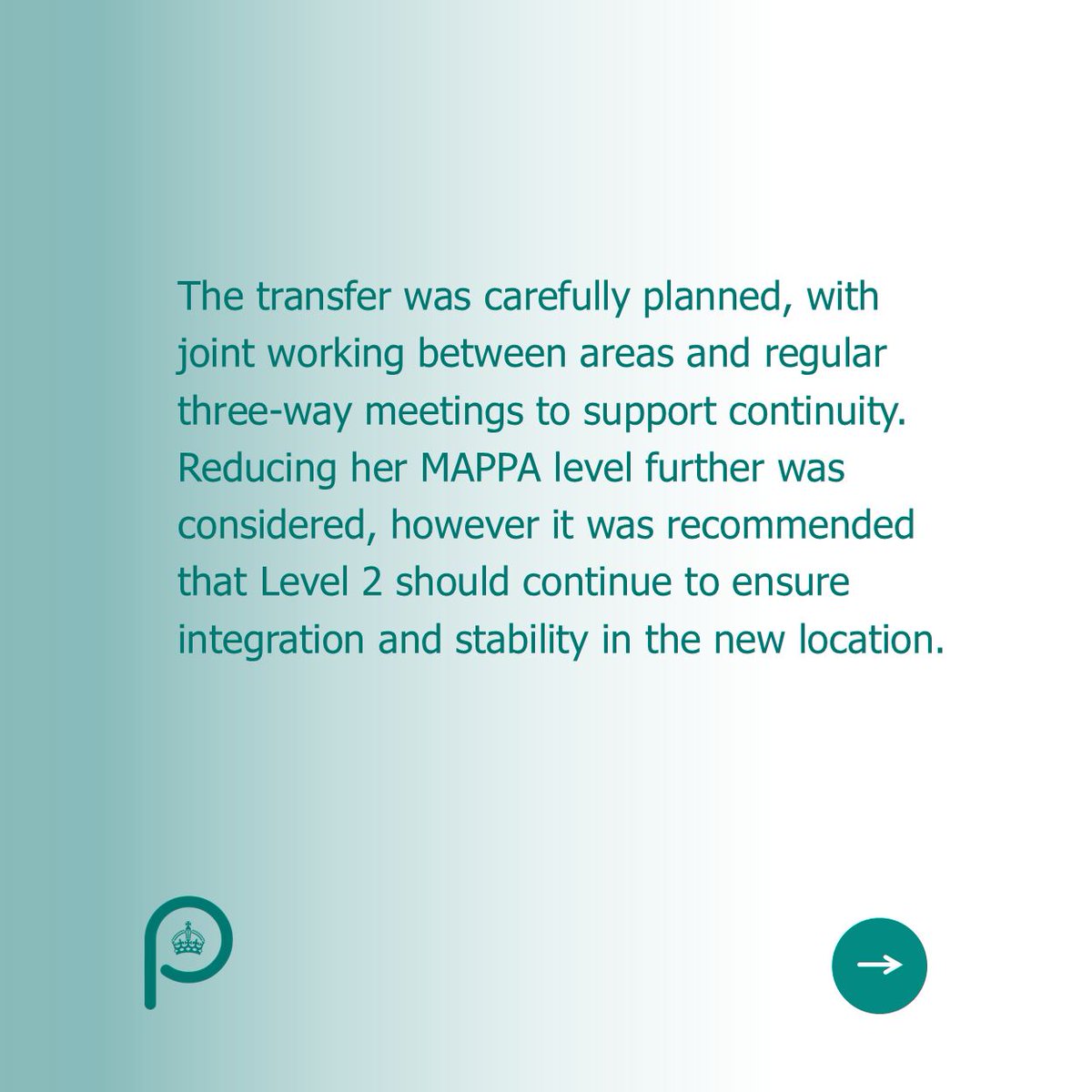
ALT The transfer was carefully planned, with joint working between areas and regular three‑way meetings to support continuity. Reducing her MAPPA level further was considered, however it was recommended that Level 2 should continue to ensure integration and stability in the new location.
ALT Sylvia settled well in the new area, and once stable, the MAPPA level was reduced further. Management oversight was recorded throughout, including discussions about potential recalls due to Sylvia’s behaviour. The practitioner and their manager regularly reviewed Sylvia’s case in supervision to ensure there was sufficient risk management. Given the case’s complexity, MAPPA played a vital role in drawing together a large volume of intelligence from partner agencies.
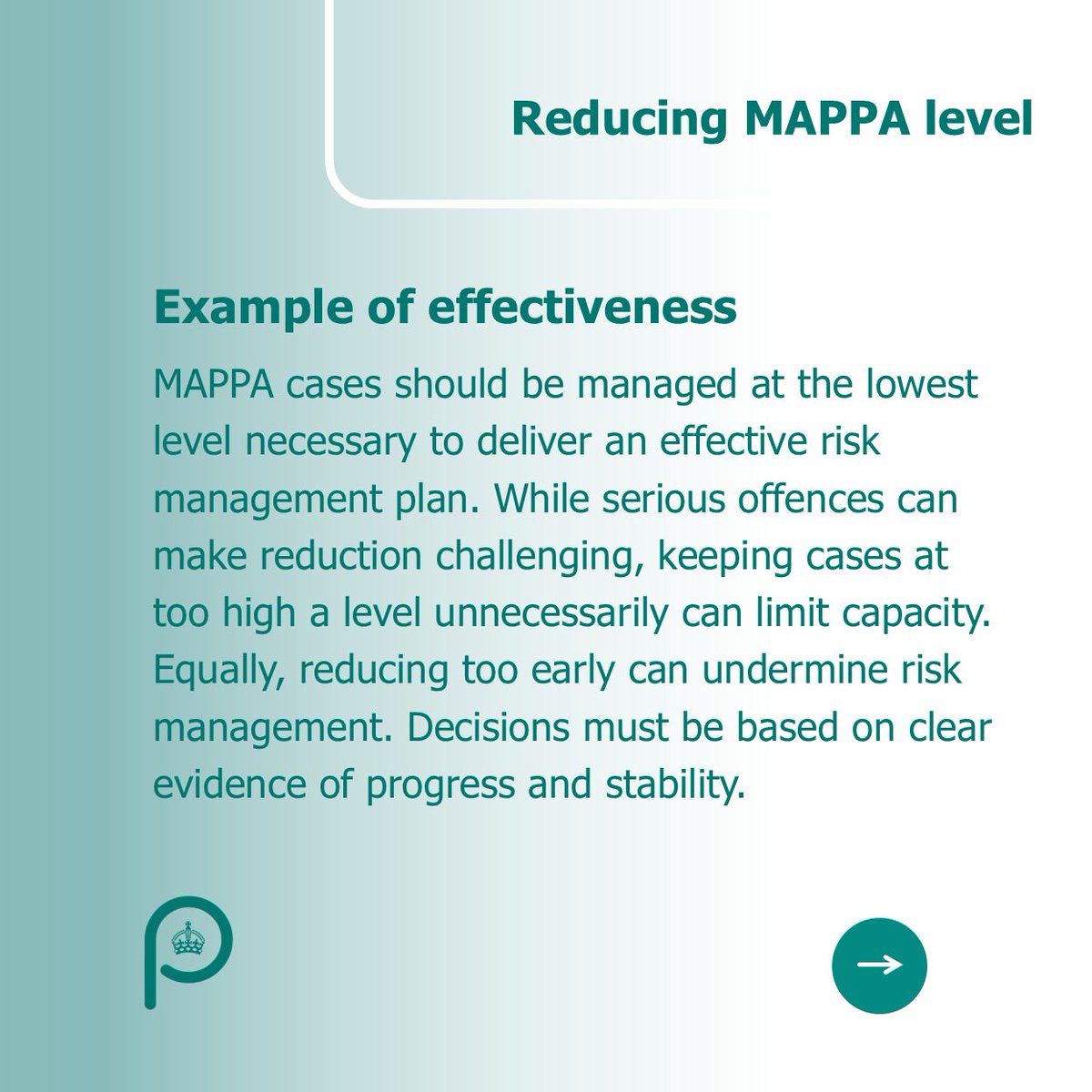
ALT MAPPA cases should be managed at the lowest level necessary to deliver an effective risk management plan.. While serious offences can make reduction challenging, keeping cases at too high a level unnecessarily can limit capacity. Equally, reducing too early can undermine risk management. Decisions must be based on clear evidence of progress and stability.
ALT Case example: Malik was sentenced to a long prison term for sexual activity with a child under the age of 13. There were a large number of co-defendants and the case attracted media coverage. Malik was initially managed at MAPPA Level 2 and released to approved premises with strict licence conditions.
ALT Malik was carefully monitored during his time at the approved premise. He complied with licence conditions and made sustained progress. He completed an offence‑focused programme, developed protective factors, and engaged well with probation and partner agencies. Regular multi‑agency liaison confirmed consistent positive progress.
ALT After four Level 2 meetings, Malik’s case was reduced to MAPPA Level 1. The rationale was that the risk management plan was in place and being delivered effectively. The risk and complexity of the case were no longer at a level that required formal multi-agency meetings. The positive working relationships that had developed through MAPPA continued at Level 1 and active collaboration continued.
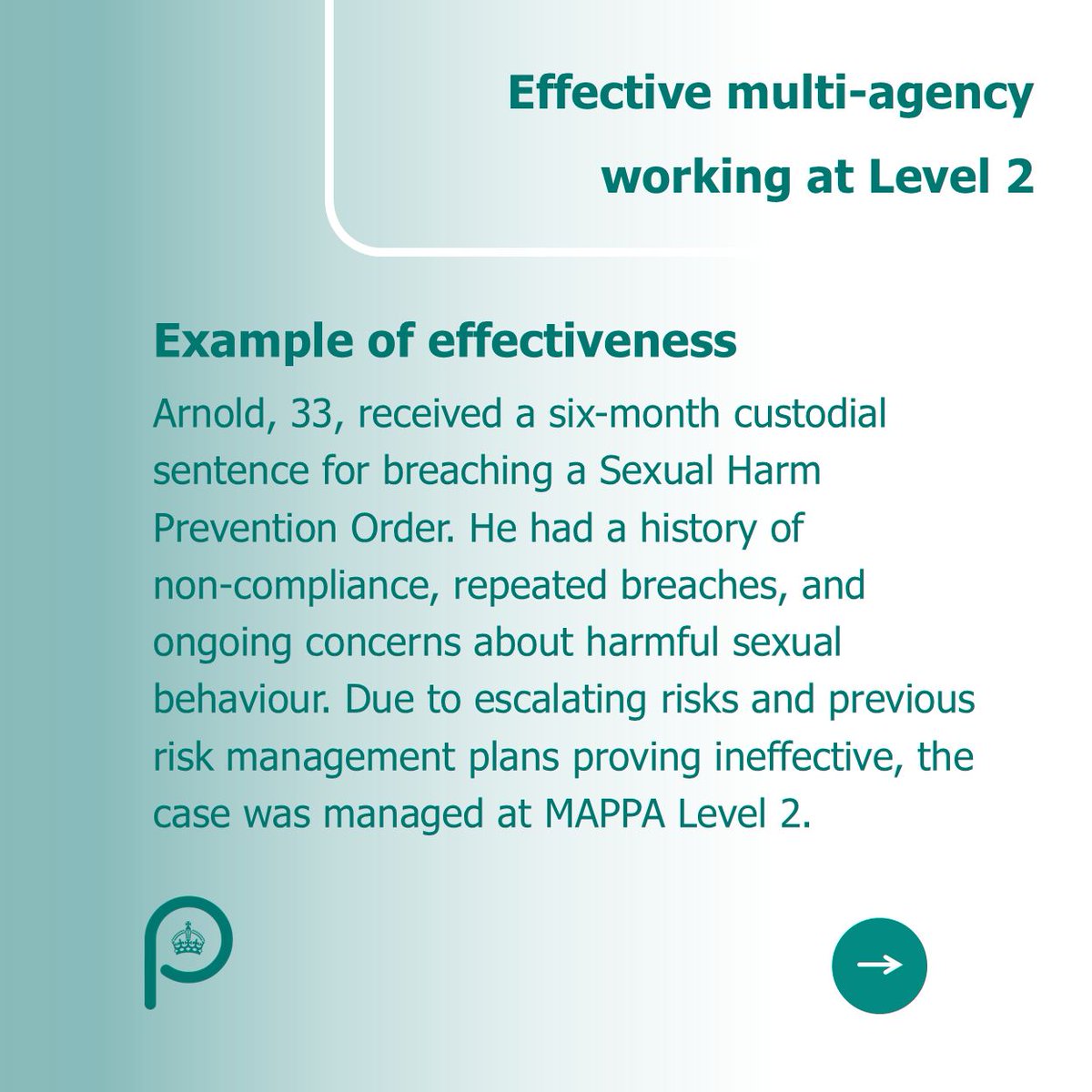
ALT Effective multi-agency working at Level 2. Example of effectiveness: Effective use of multi-agency working at Level 2 Case example: Arnold, 33, received a six‑month custodial sentence for breaching a Sexual Harm Prevention Order. He had a history of non‑compliance, repeated breaches, and ongoing concerns about harmful sexual behaviour. Due to escalating risks and previous risk management plans proving ineffective, the case was managed at MAPPA Level 2.
ALT MAPPA Level 2 meetings were held before release to ensure robust multi‑agency plans were in place. This provided structured oversight and coordination, ensuring agencies were prepared to manage Arnold’s risks effectively on release. On release, Arnold was assessed as posing a very high risk of serious harm and was closely monitored, initially in approved premises.
ALT : Joint work between probation and police uncovered multiple concerning behaviours, including access to internet‑enabled devices, non‑compliance with restrictions, and failure to take prescribed medication. These actions led to a breach of his sexual harm prevention order and he was eventually given a further custodial sentence.
ALT Mental health professionals and other agencies worked together both within and outside formal MAPPA meetings to coordinate support and risk management. While Arnold has continued to reoffend by breaching the controls, the emerging risks have been identified and acted on, potentially preventing more serious offending.
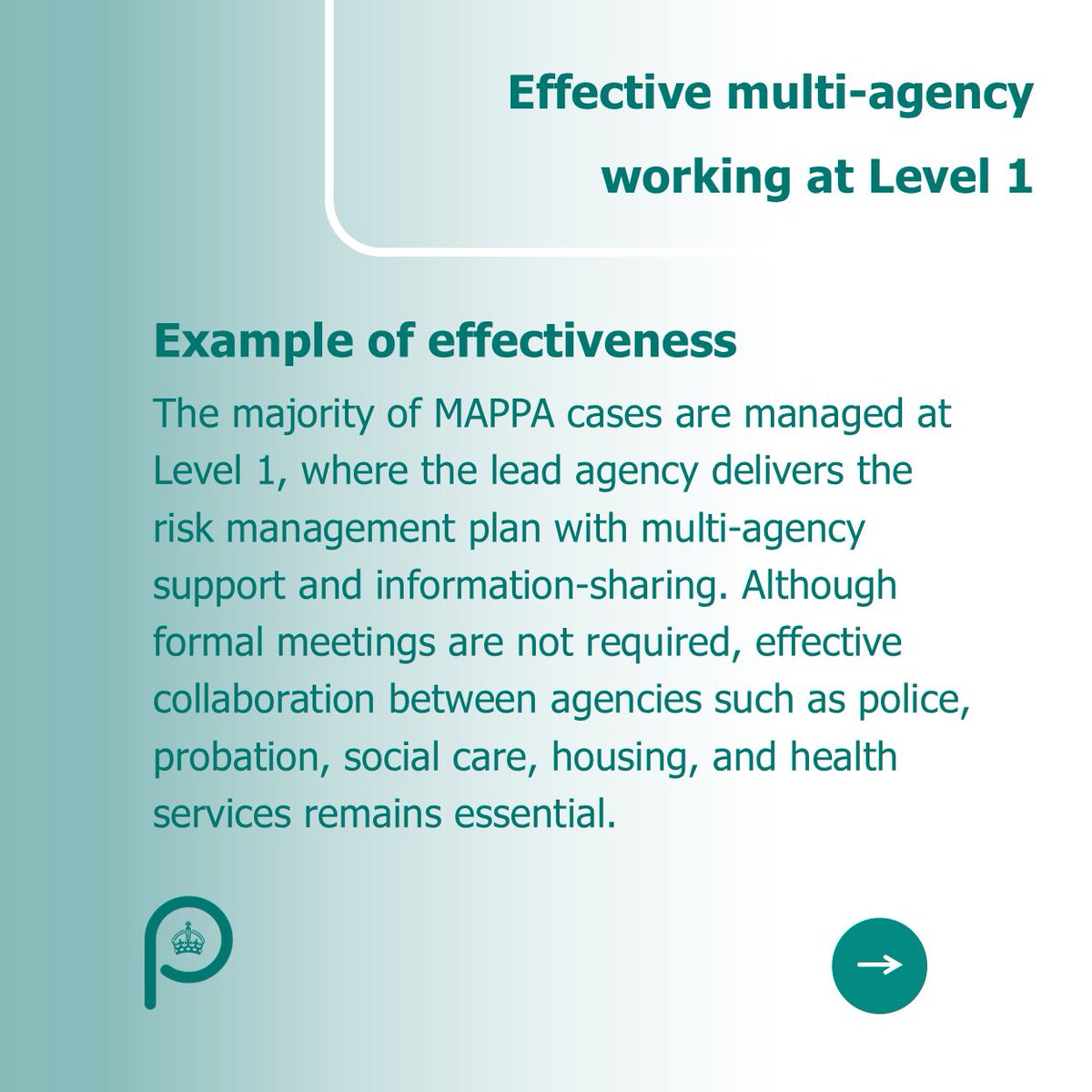
ALT Example of effectiveness: Effective use of multi-agency working at Level 1 The majority of MAPPA cases are managed at Level 1, where the lead agency delivers the risk management plan with multi‑agency support and information‑sharing. Although formal meetings are not required, effective collaboration between agencies such as police, probation, social care, housing, and health services remains essential.
ALT Case Example Daniel was sentenced to an eight‑year custodial sentence for a sexual offence and later recalled for failing to disclose a relationship. On re‑release, he was managed at MAPPA Level 1, supported by strong multi‑agency working.
ALT There was effective communication between probation, police, and partner agencies before release. Safeguarding checks, home and employment enquiries, and key information sharing supported planning, including disclosures and monitoring arrangements.
ALT A comprehensive management plan balanced restrictive measures with support for resettlement. This included approved premises, licence conditions, and a clear contingency plan. Regular reviews ensured the MAPPA level remained appropriate without escalating to Level 2. Ongoing collaboration enabled swift responses to emerging risks and consistent monitoring of compliance. Daniel engaged with support and showed progress while risks were actively managed.
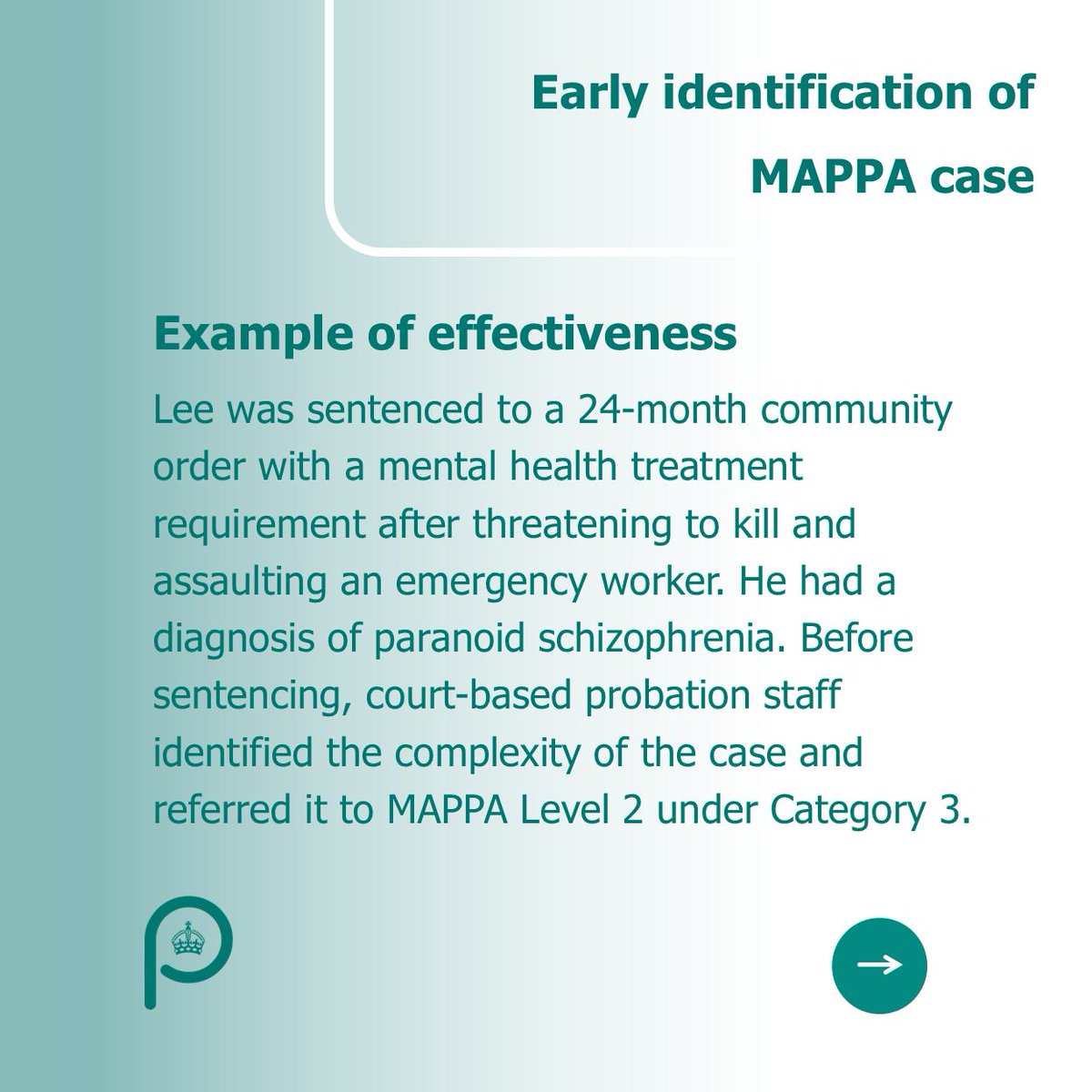
ALT Lee was sentenced to a 24‑month community order with a mental health treatment requirement after threatening to kill and assaulting an emergency worker. He had a diagnosis of paranoid schizophrenia. Before sentencing, court-based probation staff identified the complexity of the case and referred it to MAPPA Level 2 under Category 3.
ALT A multi‑agency meeting informed the pre‑sentence report, and a formal MAPPA meeting followed promptly after sentencing. Appropriate enquiries were made across agencies, including firearms checks and Prevent consideration, ensuring all partners were fully informed and coordinated in managing risk.
ALT Effective MAPPA practice was demonstrated through the early identification of eligible cases. Court‑based probation staff consistently flagged MAPPA cases at the point of sentence, following clear national processes and timescales. This ensured that risks were recognised early and recorded appropriately.
ALT Early MAPPA involvement enabled practitioners to engage meaningfully with people on probation, explain MAPPA arrangements and their implications, and incorporate them into risk management planning. It also supported timely referrals and effective release or sentence planning, particularly for cases involving mental health needs.