
Joined December 2023
- Tweets 287
- Following 0
- Followers 4,037
- Likes 995
48 Photos and videos









Pinned Tweet

Apr 7
Testnet Hoskinson is complete! 🎇
All core blockchain infrastructure and decentralized AI networking layer testing have been completed!
This milestone marks the transition from foundation-building to ecosystem expansion.
What we accomplished:
• Over 1,000,000 blocks validated
• Over 2,000,000 pubsub heartbeats processed
• Over 5,000,000 messages successfully gossiped across the network
• Fault-tolerant P2P connectivity validated under real conditions
• End-to-end decentralized AI network coordination confirmed
The future is decentralized, trustless, and P2P AI, and we've unlocked that.
⇾ Production-grade experimentation for agent swarms and model coordination
⇾ Scalable on-chain incentives for AI infrastructure
⇾ Composable decentralized AI services pooled together across a single network
We now move from proving the network… to building on it.
The future of AI starts now.
The future of AI is trustless.
The future of AI is peer-to-peer.
The future of AI is private.
8
15
59
31,389
Jun 11
Another update complete: Frameworkized Subnet Template
The subnet template has evolved from a reference implementation into a developer framework for building decentralized AI networks on Hypertensor.
This update introduces reusable framework components that handle the common decentralized infrastructure layer, allowing developers to focus on application logic.
What's included:
• Reusable server framework for P2P networking, peer discovery, consensus startup, telemetry, P2P connection management, and node lifecycle
• Merkle DAG framework with signed immutable DAG nodes, multi-head support, state materialization, synchronization, reconciliation, orphan recovery, and pluggable storage backends
• DAG GossipSub base classes that handle publishing, validation, replication, synchronization, parent selection, and message routing
• Reusable request/response protocol framework for P2P stream protocols and DAG synchronization
• Network API bridge for external services, AI workers, dashboards, and local applications
• Consensus, telemetry, scoring, and runtime utilities for production decentralized AI operations
• Example implementations for DAG replication, peer state publishing, commit/reveal workflows, monitoring, and server lifecycle management
The goal is simple:
Give developers the substrate required to build a decentralized network that handles proof-of-useful-work AI workloads, so that builders can focus on application-layer logic.
This provides a reusable foundation for decentralized inference networks, agent systems, marketplaces, data networks, and other distributed AI applications built on Hypertensor.
6
13
37
1,750
Jun 3
New update complete: Validator-Based Ownership & Staking
This update introduces validators as the primary identity layer under the entire Hypertensor umbrella.
Previously, subnet nodes were independently registered, and users' stakes were delegated to them on a per-subnet basis.
Now, node operators first register a validator identity that can own and operate nodes across multiple subnets. This makes validators easily identifiable participants to whom users can directly delegate stake.
Previously, if a validator operated across multiple subnets, delegators had to discover and stake to each node separately.
Now, delegators stake directly to validators and receive emissions generated from all subnet activity associated with that validator.
The reputation system also benefits from this change. Instead of reputation being isolated to individual subnet nodes, reputation is now accumulated at the validator level. Validators build a track record across all of the networks they participate in, allowing delegation, rewards, penalties, and consensus performance to contribute to a single reputation profile.
Why this matters:
• Establishes validators as first-class network participants
• Creates a foundation for validators to operate across multiple decentralized AI networks
• Aggregates validator reputation, rewards, penalties, and consensus participation
• Aligns validator incentives across all subnets they participate in
• Enables delegation at the validator level and subnet level, making the data structure more coherent and staking decisions easier for users
This update represents a significant optimization of the validator and delegator architecture and its scalability, creating a unified reputation, delegation, and rewards system.
7
14
42
1,956
Apr 27
We've been building the decentralized AI economy, the coordination layer for the future of AI. The system has been purposefully iterated in stages. Feature by feature. Here's what we've done:
Testnet Vitalik→
Focused on the fundamental consensus mechanism where peers formed consensus based on the LLM transformer blocks they hosted, not a state, but actual AI computation.
Testnet Gavin→
Introduced economic mechanisms and refined consensus logic, turning early experiments into an economic system that can coordinate real participants.
Overwatch Agents→
We introduced Overwatch Agents, an evolving set of decentralized, staked participants who serve as agents that join each AI network at the P2P level, validate consensus, validate on-chain vs. in-subnet state, and score networks based on decentralization, consensus accuracy, and benchmarking. They act as an evaluation mechanism, benchmarking each AI network.
Testnet Tensor→
Focused on testing the full-featured blockchain, including the final consensus mechanism, delegate node staking, and many other iterations of features.
P2P AI Template→
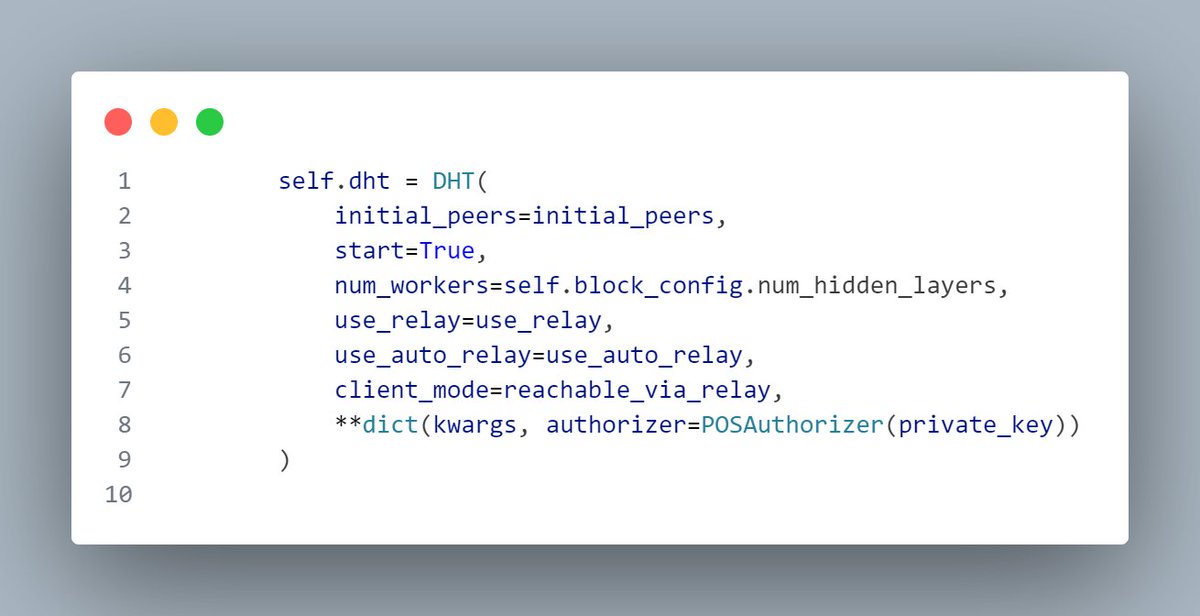
A decentralized AI framework for deploying deAI networks using DHTs, gossip, noise encryption, PoS, and more features.
This is a blockchain tech stack for building AI networks, but it's purposefully built for AI with no computational limitations, unlike blockchains. This ensures the future of AI is decentralized, reproducible, verifiable, and scalable.
This is the development backbone that makes it easy for devs to deploy decentralized AI networks.
Testnet Hoskinson→
Testnet Hoskinsons' main purpose was to test the P2P AI template in public with multiple teams and partners running nodes to ensure it was ready for production.
All of this leads to one point:
We are entering the final phases.
We're now actively working with external teams and developers to build the first set of AI networks that will be deployed to the ecosystem.
People wonder, what makes an AI network decentralized?:
- verifiable decentralization
- peer-to-peer execution
- trustless coordination
Built on the P2P AI Template. Secured by the network. Real deAI.
12
15
45
3,588
Mar 16
Testnet Hoskinson is approaching its final stages.
Our primary focus during this phase has been testing the decentralized AI subnetwork template and framework. This included validating peer coordination, gossip propagation, and fault tolerance under continuous operation.
We are now transitioning into the next stage of development: deeper blockchain testing. This phase will focus on validator incentives, smart contract deployment, and precompile functionality.
One of the key properties we tested in the subnet framework was fault tolerance. Because each subnet uses a technology stack similar to modern blockchain networks, it must meet enterprise-grade reliability standards.
During live testing, the subnet has been running uninterrupted with:
- 1,900,800 pubsub heartbeats
- 4,561,920 messages gossiped between peers
With subnet template testing nearing completion, development is expanding into additional areas of the protocol, including:
- Blockchain validator rewards
- Smart contract deployment
- Precompile smart contracts
This marks the transition from infrastructure validation toward preparing the ecosystem for the first real subnets to deploy.
In parallel, we are preparing for the stage that follows testnet, building the first subnets alongside other great teams in the AI space that will launch on mainnet.
8
13
47
2,576
Feb 15
Testnet Hoskinson 2.0 is now live.
This upgrade introduces several protocol and node-level improvements:
Core updates
- Delegate Accounts for nodes
- New node reputation events
- Fixed reputation update bug affecting removed nodes
- Improved peer system alignment with modern P2P standards
- Expanded functionality in precompiled smart contracts
Delegate Accounts
Delegate Accounts allow nodes to specify a separate address to receive a configurable portion of node emissions.
This enables:
- Reward routing to teams or operators
- Contract-based logic for emissions
- Business and organizational distribution models
- Separation of operational and treasury accounts
Delegate Accounts are optional and fully controlled by node operators; the delegate account holder can update the delegate account address themselves.
This is an infrastructure-level primitive designed to enable more flexible and scalable node operations.
A key step toward production-grade node coordination and scalable network operation has been achieved!
Jan 17

Testnet Hoskinson Update
✅Over 250k blocks processed
✅Over 2,500 epochs
We're not stopping!
We're updating the subnet template:
🔹 P2P connection maintenance to ensure peers are always connected to at least 1/4 of the maximum number of peers
🔹 Introducing a gossipsub protocol for P2P communication
🔹 Adding random walk functionality to the KAD-DHT
🔹 Adding support for Secp256k1 and ECDSA on top of Ed25519 and RSA
🔹Introducing a noise protocol for secure P2P traffic
Adding additional features to the blockchain:
🔹Introducing delegate accounts to nodes for business logic
🔹More events
These updates will be pushed and tested in the coming weeks.
25
17
73
3,959
Jan 28
Big upgrades are landing 🚀
We're rolling out a new subnet template built around three pillars:
Connectivity. Scalability. Security.
This is about making decentralized AI networks actually work at scale.
🔗 Connectivity
Random Walk peer discovery
Nodes now passively explore the network by querying random keys in the Kademlia DHT.
Why this matters:
• Continuous peer discovery
• Fresh routing tables so nodes always know which peers are reachable and how to find them
• No central coordination
• Stronger long-term connectivity
Connection maintenance
Each node actively maintains connections with up to 64 peers, ensuring sufficient overlap and resilience across the subnet.
⚡️ Scalability & Efficiency
The old model leaned heavily on DHT records as a global database.
That doesn't scale.
When every peer queries everything, everyone pays the cost.
Enter GossipSub.
We've implemented GossipSub, a peer-to-peer pubsub protocol that forms a stable mesh for real-time message propagation.
What changes:
• Messages are shared once, then gossiped
• No constant record fetching
• Lower latency
• Dramatically reduced load
This is how blockchains efficiently broadcast transactions, now applied to subnets.
🔐 Security
In addition to proof-of-stake, we've incorporated Noise into the networking stack.
Noise establishes encrypted, authenticated peer-to-peer channels with forward secrecy via cryptographic handshakes. Forward secrecy (or Perfect Forward Secrecy) ensures that even if a node's long-term private keys are compromised in the future, past session data remains secure.
Secure by default.
High performance.
No trade-offs.
This is the future of AI. P2P. Trustless. Decentralized.
Jan 17
Testnet Hoskinson Update
✅Over 250k blocks processed
✅Over 2,500 epochs
We're not stopping!
We're updating the subnet template:
🔹 P2P connection maintenance to ensure peers are always connected to at least 1/4 of the maximum number of peers
🔹 Introducing a gossipsub protocol for P2P communication
🔹 Adding random walk functionality to the KAD-DHT
🔹 Adding support for Secp256k1 and ECDSA on top of Ed25519 and RSA
🔹Introducing a noise protocol for secure P2P traffic
Adding additional features to the blockchain:
🔹Introducing delegate accounts to nodes for business logic
🔹More events
These updates will be pushed and tested in the coming weeks.
18
17
51
5,113
Jan 28
DHTs are great for lookups, but they don't scale when many peers repeatedly request the same data. Each GET triggers multiple queries across the network, creating redundant traffic and bottlenecks.
While we still utilize a DHT for more efficient and optimized peer connectivity, we're optimizing subnets to scale to thousands and millions of nodes, enabling us to provide decentralized AI networks to billions of users.
GossipSub flips the model: data is published once, propagated through a mesh, and stored locally by peers. No re-fetching, lower latency, reduced bandwidth, and predictable load, which is why blockchains rely on gossip for real-time data sharing.
4
3
29
1,037
Jan 17
Testnet Hoskinson Update
✅Over 250k blocks processed
✅Over 2,500 epochs
We're not stopping!
We're updating the subnet template:
🔹 P2P connection maintenance to ensure peers are always connected to at least 1/4 of the maximum number of peers
🔹 Introducing a gossipsub protocol for P2P communication
🔹 Adding random walk functionality to the KAD-DHT
🔹 Adding support for Secp256k1 and ECDSA on top of Ed25519 and RSA
🔹Introducing a noise protocol for secure P2P traffic
Adding additional features to the blockchain:
🔹Introducing delegate accounts to nodes for business logic
🔹More events
These updates will be pushed and tested in the coming weeks.
19 Dec 2025
TESTNET HOSKINSON IS LIVE
We named it Testnet Hoskinson as an ode to one of the original visionaries of blockchain, Charles Hoskinson (@IOHK_Charles).
This is a major step forward for the Hypertensor network.
Help us battle-test:
- The core blockchain engine
- Subnet template framework scalability
You can participate by running a subnet validator node:
docs.hypertensor.org/subnet-…
As we focus on testing the decentralized subnet templates' scalability, which is a framework for building decentralized intelligence, no GPU is required — CPU-only machines are fully supported.
10
20
48
9,105
Hypertensor retweeted

20 Dec 2025
20 Dec 2025

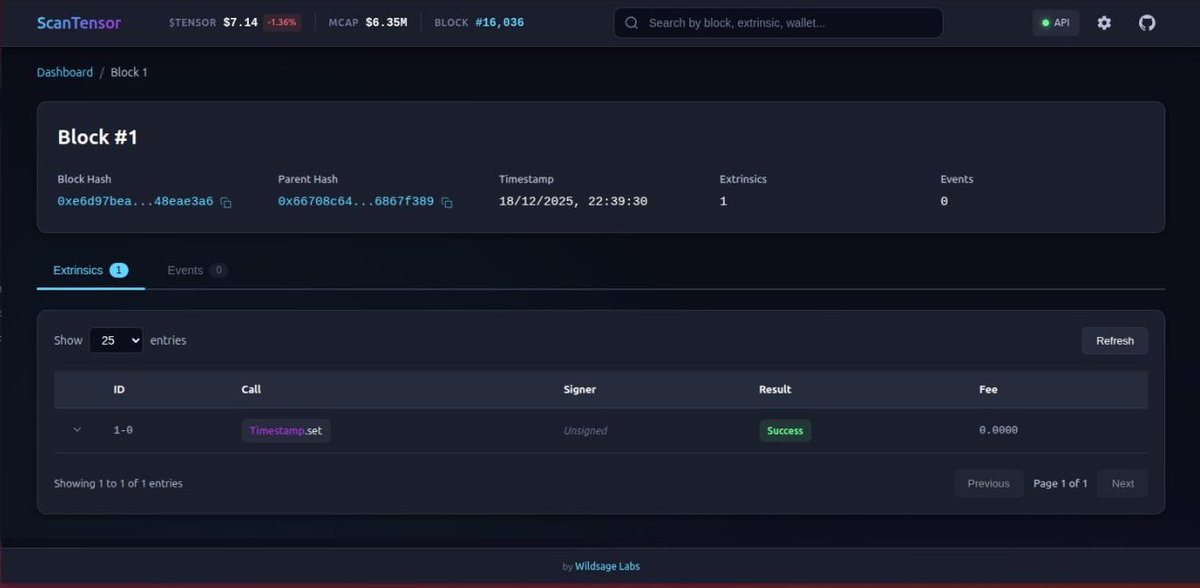
We're blocking! $TENSOR
... we're working on shiny new @hyper_tensor block explorer too 😉
7
17
44
3,080
Hypertensor retweeted

20 Dec 2025
We're blocking! $TENSOR
... we're working on shiny new @hyper_tensor block explorer too 😉
19 Dec 2025
TESTNET HOSKINSON IS LIVE
We named it Testnet Hoskinson as an ode to one of the original visionaries of blockchain, Charles Hoskinson (@IOHK_Charles).
This is a major step forward for the Hypertensor network.
Help us battle-test:
- The core blockchain engine
- Subnet template framework scalability
You can participate by running a subnet validator node:
docs.hypertensor.org/subnet-…
As we focus on testing the decentralized subnet templates' scalability, which is a framework for building decentralized intelligence, no GPU is required — CPU-only machines are fully supported.
5
14
37
5,371
19 Dec 2025
TESTNET HOSKINSON IS LIVE
We named it Testnet Hoskinson as an ode to one of the original visionaries of blockchain, Charles Hoskinson (@IOHK_Charles).
This is a major step forward for the Hypertensor network.
Help us battle-test:
- The core blockchain engine
- Subnet template framework scalability
You can participate by running a subnet validator node:
docs.hypertensor.org/subnet-…
As we focus on testing the decentralized subnet templates' scalability, which is a framework for building decentralized intelligence, no GPU is required — CPU-only machines are fully supported.
35
20
84
10,393
19 Dec 2025
Explore the community-built stats page for detailed subnet information and live, real-time visuals of all subnet networks: stats.hypertensor.org
1
2
23
1,223
10 Dec 2025
Testnet is closing in. Months of engineering, debugging, and pushing limits are about to collide with reality. The network is nearly ready to open its doors to everyone watching from the sidelines. If you thought this was just another launch, you’re not even close. The next phase is coming.
Local testing is nearly wrapped. We now need to stress test and harden the network, and push the subnet template to its limits. The subnet template is the framework and foundation for the future of decentralized AI, and we're about to prove it in the wild.
Then the gates open and the testnet goes public.
Get ready to run subnet nodes: docs.hypertensor.org/subnet-…
16
15
50
2,651
29 Nov 2025
What's the difference between a subnetwork in our ecosystem and a blockchain?
Honestly, not much.
At their core, many blockchains rely on a Kademlia Distributed Hash Table (KAD-DHT). You can think of the DHT as the circulatory system of a blockchain: it's how nodes discover each other, exchange data, route messages, and maintain a shared view of the network. All of this happens in a decentralized, trustless, peer-to-peer environment.
This communication layer is what enables Web3 to exist at all—and it's the same foundation that will enable decentralized AI to exist.
Every subnetwork in our ecosystem is built on this same DHT layer as a validated requirement (validated by the Overwatch layer).
But here's where the paths diverge:
Traditional blockchains introduce other features that are great for financial logic, but extremely limiting for high-compute workloads like LLM inference, fine-tuning, and multi-agent coordination.
So we took a different approach.
We removed the compute-limiting pieces of blockchains and kept the decentralized, fault-tolerant, trustless networking layer. Then we added the ability for nodes to host, run, and collaborate on heavy AI workloads directly.
That's the purpose of our Subnetwork Template (releasing soon).
This framework enables developers to:
- Decentralize AI models themselves (e.g., distribute transformer blocks across many nodes)
- Run or share in training
- Deploy multi-agent systems
- Collaborate or compete in decentralized AI markets
- Build AI systems that don't rely on centralized cloud providers
We're building toward a world where AI is P2P, where compute is distributed, and where models, training, and agents can all live in a trustless, decentralized network of nodes.
We are ensuring the post-AI world is P2P, trustless, and decentralized.
13
10
41
2,109
19 Nov 2025
We're in the final stretch! Just a few last development tasks left before completion
Legend:
✅ Complete
🔮 In review
🔄 In progress
🔵 To do
Bridge:
🔄 Final security checks — 95%
🔵 Internal remote testing
Blockchain & Subnet:
✅ Subnet Dutch auction
✅ Subnet slots
✅ On-chain identities
✅ Reputation tracking
✅ Overwatch nodes
✅ Node removal system
✅ Updating node queue model
✅ Node queue priority and removal system
✅ Network pallet benchmarks
✅ Block author rewards
✅ Bootnode data consumption API
✅ Proxy account integration via proxy pallet (prev 🔄)
✅ Statistics frontend (prev 🔄)
✅ Subnet heartbeat monitor (prev 🔄)
🔄 Decentralized Subnet Template — 99% (near complete and being reviewed)
🔄 Final subnet template code review — 75%
🔄 Final EVM testing and compatibility, enabling smart contracts — 95%
🔄 Subnet template DDOS attack prevention — 20% (prev 🔵)
🔄 Final blockchain code review — 40% (prev 🔵)
🔵 Post-review updates
Note: Percentages are not time-based; they are task-based.
17
10
47
3,454
10 Nov 2025
There are two major challenges when it comes to subnetworks:
1. How do we verify decentralization?
2. How do we verify subnet validators are actually running?
Every subnet in Hypertensor is built using our standard Subnet Template, which comes with a Kademlia-based Distributed Hash Table (Kad-DHT).
This is the same technology blockchains use to store and retrieve data without relying on a central server. It organizes nodes and data into a peer-to-peer network using a routing table that maps node IDs to nearby nodes based on key similarity.
At a high level, each subnet functions like a specialized blockchain, but purpose-built for AI workloads that require far more compute than a traditional chain could handle.
🔍 Why This Matters
Because every subnet uses this standardized DHT-based architecture, we can:
✅ Verify that a subnet is truly decentralized
✅ Verify that each validator is running a live server within the subnet
And this is where Overwatch Nodes come in.
⚙️ What Are Overwatch Nodes?
Overwatch Nodes are a class of trusted network observers that anyone can run, provided they meet certain requirements like maintaining a high trust score, uptime, running validator nodes, etc.
Their mission: ensure the network's transparency, integrity, and decentralization.
Here's how they work:
1. Subnet Verification
Overwatch Nodes connect to a subnet's bootnode or bootnodes and map its peer structure. They verify that the subnet follows basic subnet requirements, such as the Proof-of-Stake mechanism, signature authentication, and maintains a decentralized topology.
2. Validator Verification (Ping-Pong Protocol)
Once connected, the Overwatch Node contacts every validator using its on-chain identity and peer ID.
It sends a PING request, and expects a PONG response: a cryptographically signed proof confirming that validator's active presence in the DHT.
This simple but powerful process ensures that every validator in a subnet can be verified without centralized control.
🧠 The Vision
The goal of Overwatch Nodes is to evolve Hypertensor into a fully autonomous, self-regulating network.
They are the "eyes" of the protocol, ensuring subnets remain healthy, decentralized, and secure.
🚀 Future Concepts
In the future, Overwatch Nodes will be upgraded with autonomous agents capable of traversing subnets, simulating real users and nodes, and benchmarking performance based on each subnet's AI use case.
This turns the Overwatch layer into a living intelligence layer, constantly analyzing and improving the health of the ecosystem.
8
12
48
4,664
10 Nov 2025
AI is here, and the post-AI world is nearing. We are the trustless, peer-to-peer, and decentralized AI economy.
1
4
30
1,289
26 Oct 2025
At a high level, every subnet in our platform operates like its own blockchain. Each subnet follows the same fundamental principles that secure major chains like Ethereum or other Proof-of-Stake (PoS) networks. Because of this, subnets are subject to the same risks and security dynamics.
When a new blockchain is launched, it depends on a set of initial validator nodes to bootstrap consensus. These early participants are crucial because they establish the chain's initial trust base. If a blockchain starts with only a handful of validators, say 40 nodes, it becomes relatively easy to compromise — for instance, around 70 malicious nodes could potentially overtake the network.
As previously messaged, each subnet is basically a blockchain; therefore, the same principle applies to subnets. Subnets need to concern themselves with "who are the initial nodes?".
When registering a subnet on-chain, the owner provides a mapping of `initial_coldkeys`, each representing a trusted identity, and specifies how many validator nodes each coldkey is permitted to register. These initial validators form the trusted foundation that bootstraps the subnet's consensus.
As the subnet grows, new nodes can join under the trust model established by these initial participants. Furthermore, they are evaluated by these trusted nodes at each epoch. The more reputable and well-distributed the validator set becomes, the more resilient the subnet is against takeover attempts. In short, security scales with diversity and trustworthiness — the stronger the foundation, the harder it is to compromise the network over time.
9
15
48
3,958
16 Oct 2025
Big strides toward testnet! 💪
The momentum's building fast. Here's where development stands today:
Legend:
✅ Complete
🔮 In review
🔄 In progress
🔵 To do
Bridge:
🔄 Final security checks — 90%
🔵 Internal remote testing
Blockchain & Subnet:
✅ Subnet Dutch auction
✅ Subnet slots
✅ On-chain identities
✅ Reputation tracking
✅ Overwatch nodes
✅ Node removal system
✅ Updating node queue model (prev 🔄)
✅ Node queue priority and removal system (prev 🔵)
✅ Network pallet benchmarks (prev 🔵)
✅ Block author rewards (prev 🔵)
✅ Bootnode data consumption API (prev 🔵)
🔄 Decentralized Subnet Template — 95% (prev 90%)
🔄 Final EVM testing and compatibility, enabling smart contracts — 95% (prev 90%)
🔄 Final subnet template code review 10%
🔄 Proxy account integration via proxy pallet — 60% (prev 🔵)
🔄 Statistics frontend (prev 🔵)
🔄 Subnet heartbeat monitor (prev 🔵)
🔵 Subnet template DDOS attack prevention (new)
🔵 Final blockchain code review
🔵 Post-review updates
Note: Percentages are not time-based; they are task-based.
28 Sep 2025
Following the most recent testnet, this list was approximately 94 tasks. The following remains as a high-level overview.
Development update:
Legend:
✅ Complete
🔮 In review
🔄 In progress
🔵 To do
Bridge:
🔄 Final security checks — 90%
🔵 Internal remote testing
Blockchain & Subnet:
✅ Subnet Dutch auction
✅ Subnet slots
✅ On-chain identities
✅ Reputation tracking
✅ Overwatch nodes
✅ Node removal system
✅ Updating node queue model (prev 🔄)
🔄 Decentralized Subnet Template — 90% (prev 80%)
🔄 Final EVM testing and compatibility, enabling smart contracts — 90% (prev 80%)
🔄 Final subnet template code review 10% (prev 0%)
🔵 Node queue priority and removal system
🔵 Network pallet benchmarks
🔵 Proxy account integration via proxy pallet
🔵 Bootnode data consumption API (for scanners or statistics frontends) (new)
🔵 Subnet template DDOS attack prevention (new)
🔵 Statistics frontend (new)
🔵 Subnet heartbeat monitor (new)
🔵 Block author rewards (new)
🔵 Final blockchain code review
🔵 Post-review updates
Note: Percentages are not time-based; they are task-based.
8
17
44
4,503