Chief Architect @palantirtech
Joined August 2008
- Tweets 5,547
- Following 36
- Followers 10,478
- Likes 9,777
587 Photos and videos


Akshay Krishnaswamy retweeted

Jun 11
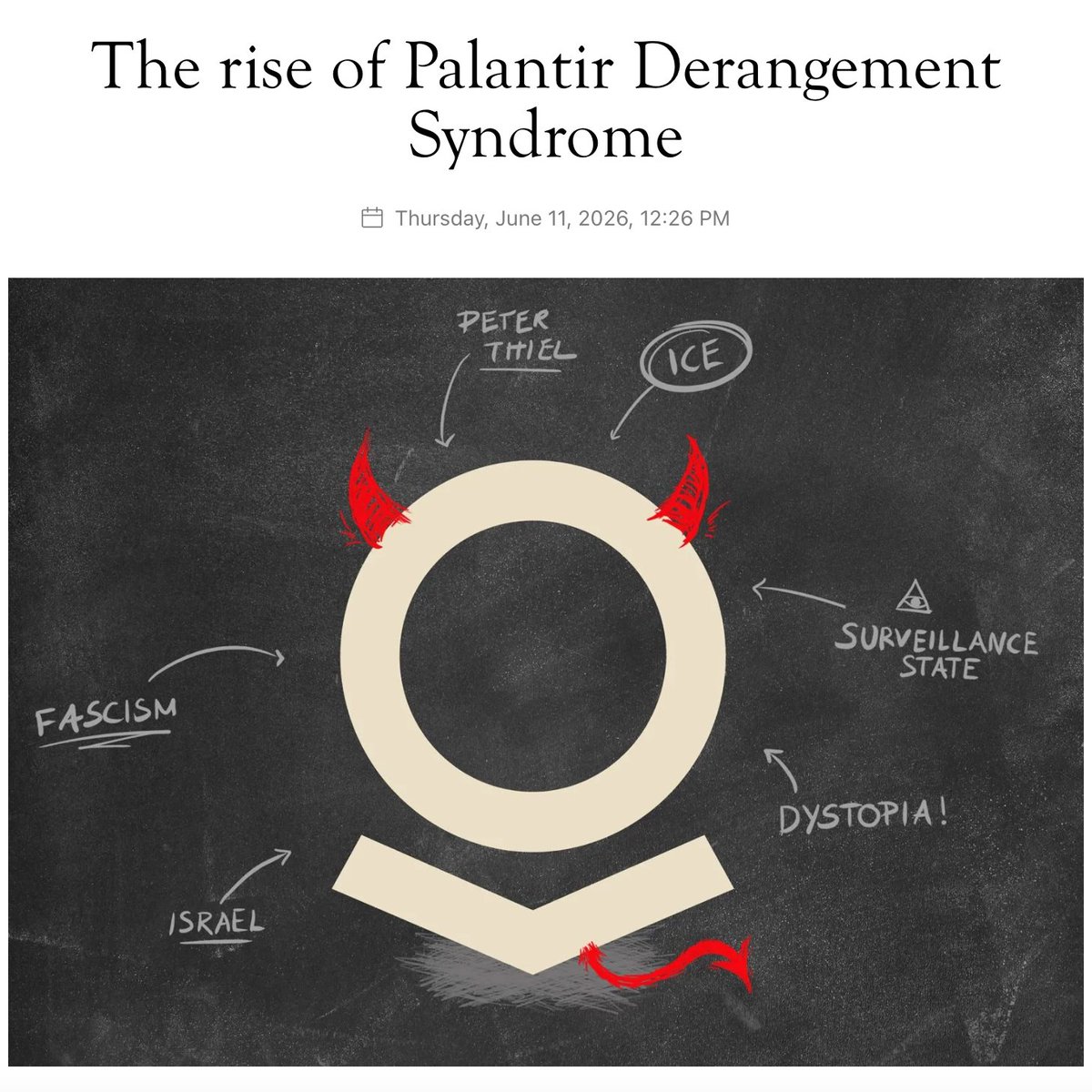
"Palantir’s role is to help make complicated systems run more efficiently. In doing so, it has saved the lives of thousands while helping the government to uphold the law. Only the truly deranged fail to see that."
47
90
686
30,009
Akshay Krishnaswamy retweeted

Jun 9
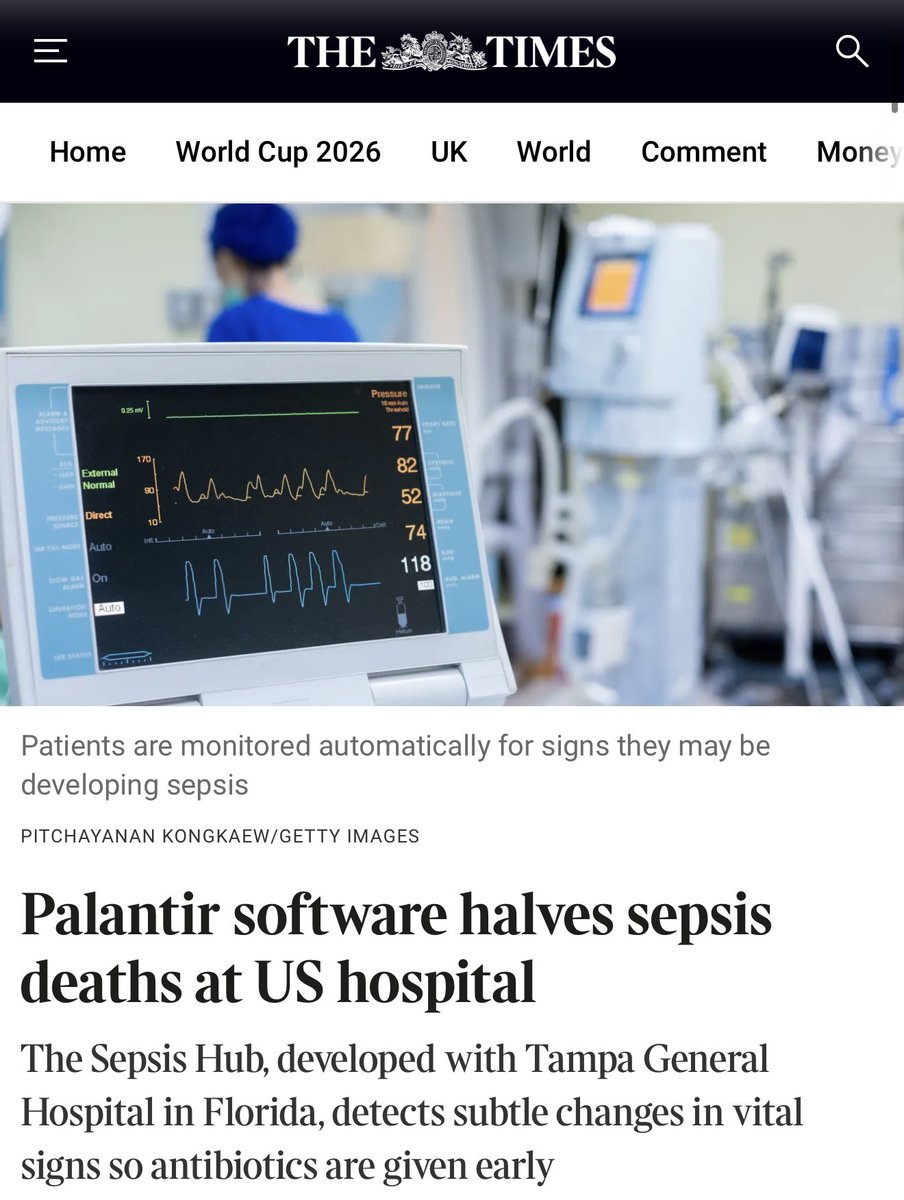
“Nearly 900 lives have been saved at Tampa General Hospital in Florida in the four years since it introduced the “game-changing” Sepsis Hub system, developed in partnership with Palantir.”
34
166
1,052
201,536

AIG’s Peter Zaffino says Palantir’s Ontology enabled them to understand exactly how an acquisition would affect their business in just 4 days:
“We did the full Ontology of AIG. Then we went to look at an acquisition of Everest, which had $2B of premium.”
“We built an Ontology of Everest’s portfolio on top of ours in 4 days.”
Via @tbpn
5
24
154
11,913
Akshay Krishnaswamy retweeted

Jun 8
I welcome scrutiny. On our NHS work, the FT has done plenty of it. I haven't always agreed with where their reporting has landed, but today I have to agree with their Editorial Board:
‘it is clear that NHS data management has improved during the period of Palantir’s contract. So exercising next year’s break clause would be the wrong decision.’
Their editorial, however, does repeat many of the Science, Innovation and Technology Committee’s concerns. So let me answer them head on:
1/ ‘Palantir is “far from the only company capable” of providing the data analysis UK public bodies need’.
Asserting there should be a British alternative is not the same as there being one. The NHS ran an 18-month, fully open and competitive tender for the FDP. Every major tech company bid, thirty independent evaluators assessed the field, and Palantir won. For what it’s worth, the companies that came second and third in that competition were also both American.
2/ ‘confirm the nature of Palantir’s access to NHS patient data.’
From the headlines you’d think our engineers can pull up anyone’s full patient record. That is simply not true. My rebuttal: x.com/louismosley/status/205… and Tom Bartlett's independent analysis: bartlettdata.co.uk/post/has-…
3/ ‘the UK is getting “locked in”’
Dependency and lock-in are not the same thing. We become dependent on things because they are useful. Lock-in is a technical problem: ie data and logic that can’t be exported from one system to another. Palantir is built on open formats with open languages, and the contract guarantees the NHS can take its data and logic anywhere it wants. There is no technical lock-in. If a better system emerges, the NHS can migrate there.
4/ ‘It should also explain why Palantir won a £240mn defence contract without a competitive tender.’
This was because it was an extension of an existing three-year programme, not a new award. Extending a programme that is performing avoids the cost, delay, and operational risk of re-procuring work already underway. That is a standard and responsible use of public money, not a lack of scrutiny.
I’ll end where the Editorial Board began with a line I would happily sign my name to:
‘Britain should endeavour to use the best available technology for any task.’
Jun 7

Britain’s questionable reliance on Palantir ft.trib.al/TdR2idb | opinion
7
45
408
40,176
Akshay Krishnaswamy retweeted

Jun 5
Palantir CEO Alex Karp says the key to preventing unnecessary wars is to involve working-class people in decision making.
"I do not want a draft. Just to be explicit."
"I'm just saying, in a world where everything is changing, don't we have to find some communal structure to remember we're American?"
“Most of our wars are fought because no working-class person is making decisions. You start making sure everyone is involved in everything, and we'll see how few wars we fight."
Via @tbpn
177
182
3,076
11,598,513
Akshay Krishnaswamy retweeted
Jun 5
Everyone optimizes AI capability.
The CDO of McCarthy Building optimizes AI economics. 5,000 users means token burn scales fast.
~60% token cost reduction with Palantir Evolve.
Same value, fraction of the cost.
Ontology drives the value. Discipline drives the margin.
3
20
140
28,506
Akshay Krishnaswamy retweeted

Jun 4
1. Make it work
2. Make it good
Did you do (1) with whatever the latest model is? Could it be 10x better? Could it be 10x faster?

Introducing NVIDIA Nemotron 3 Ultra.
A frontier smart open model built for long-running agents that need to plan, reason, use tools and keep working across complex coding, research and enterprise workflows.
Up to 5x faster inference and up to 30% lower cost for agentic tasks.
Learn more: nvda.ws/4x9nGps
1
2
27
2,655
Akshay Krishnaswamy retweeted
Jun 4
“Pointing an LLM at hundreds of disconnected, ungoverned databases gets you a system that hallucinates, is insecure, and unauditable. For something as consequential as our nation’s agricultural data, that is not just useless — it’s dangerous. The Ontology has been the key to delivering AI-enabled technology to every farmer in the country.”
At AIPCon 10, the USDA demonstrates how the Ontology now underpins national food supply security.
114
286
2,628
2,194,335
Akshay Krishnaswamy retweeted
Jun 4
“The off the shelf tools available for what my team does have two major weaknesses. First, they are great at discrete tasks, they do not knit together the complex moving parts of transaction execution. Second weakness, much more important, they are trained and developed on widely available market knowledge and know-how, which means that they tend to serve one common denominator.”
At AIPCon 10, Kirkland & Ellis shares the limits they encountered with deploying models alone and why they chose to partner with Palantir to unlock and leverage their institutional knowledge — amplifying their unique competitive advantages.
19
37
550
512,022
Akshay Krishnaswamy retweeted
Jun 4
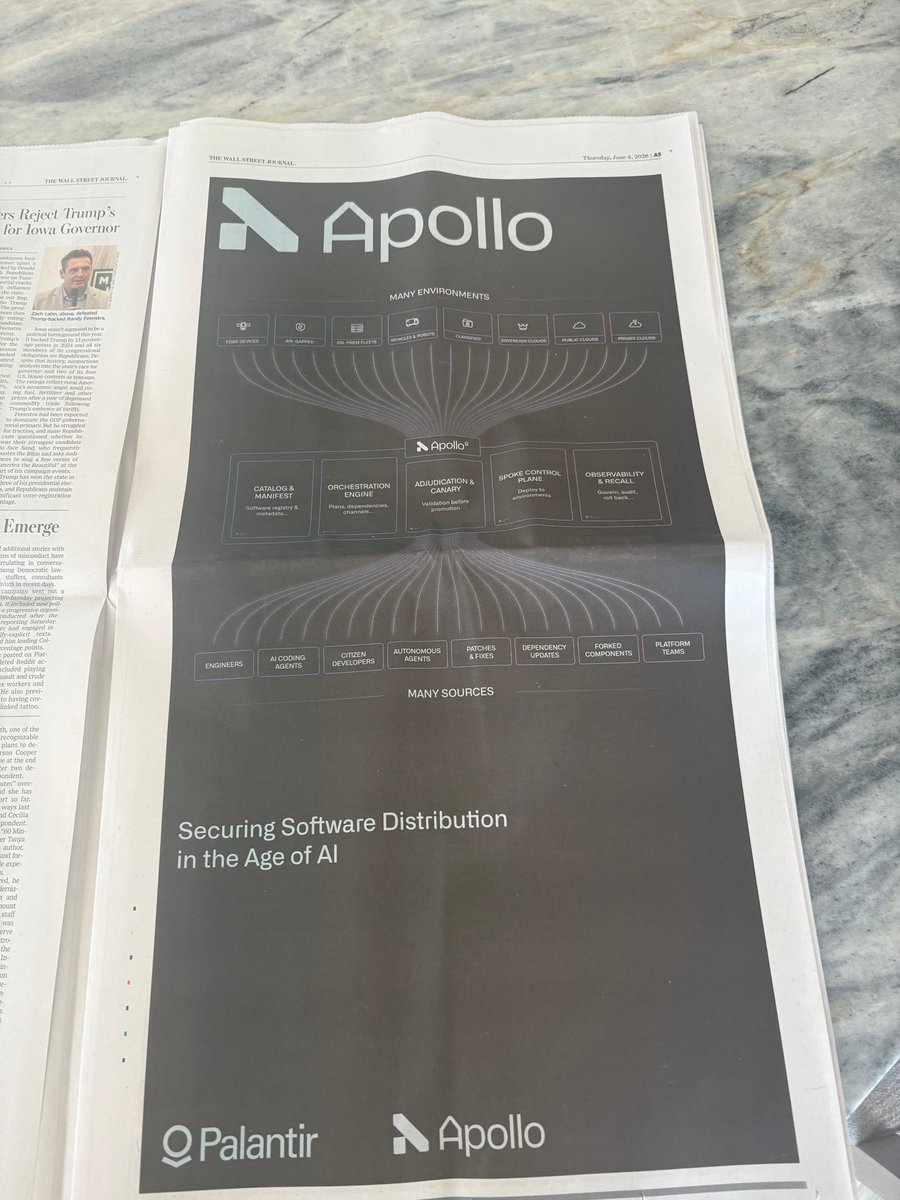
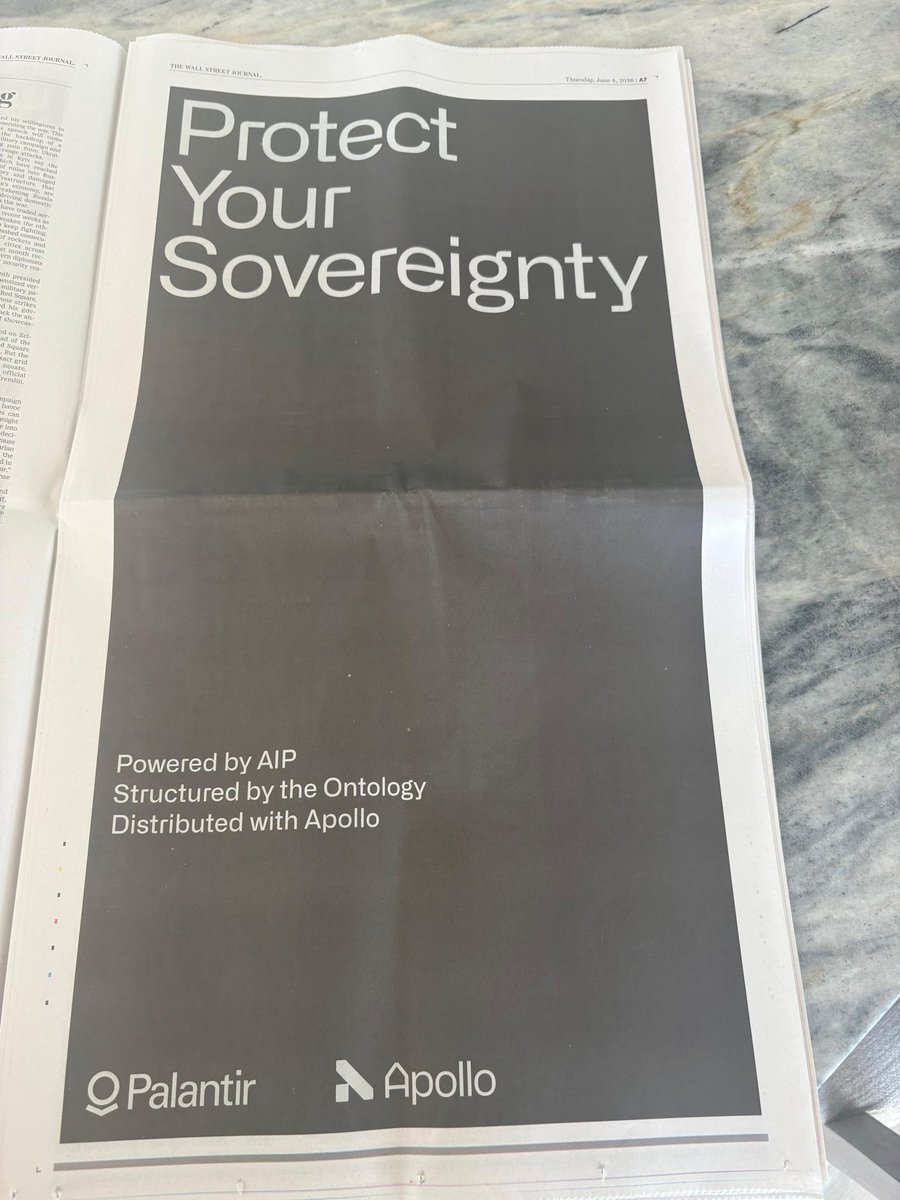
Patching is the bottleneck, Apollo is the solution
May 26

AI solved software creation.
Now comes software distribution.
The future will not run on blind deployment pipelines.
Apollo provides the Ontology Primitives for Software Distribution. Deploy. Patch. Rollback. Validate. Govern.
AI-native velocity with human accountability.
10
22
219
24,801
Akshay Krishnaswamy retweeted

Jun 4
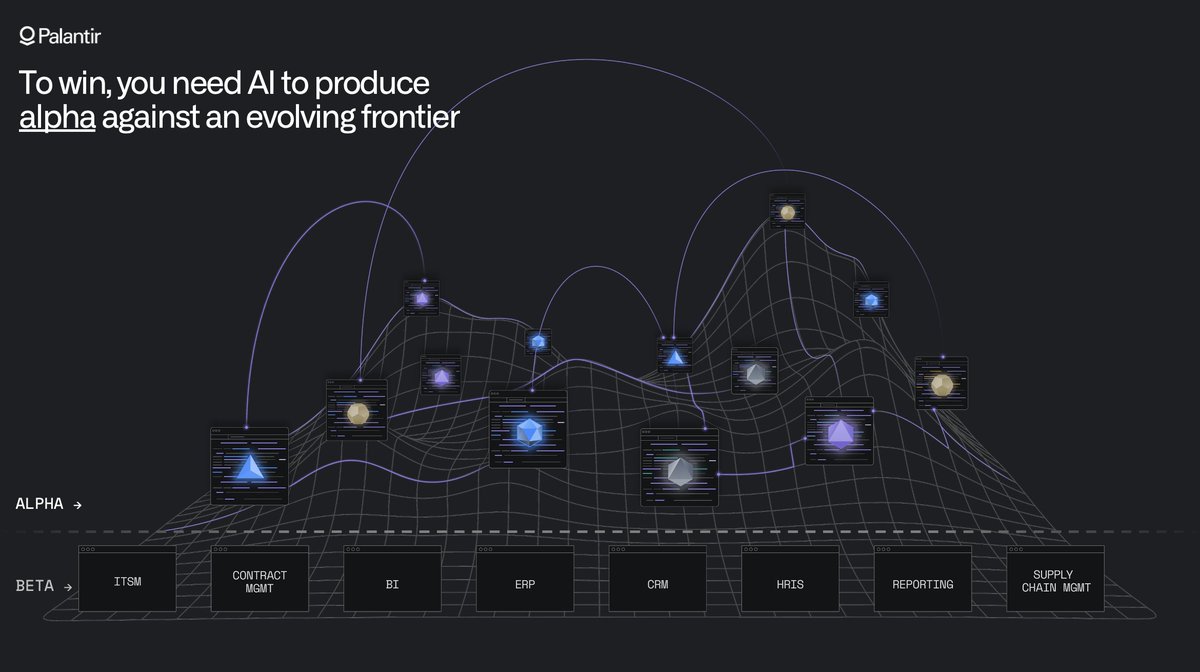
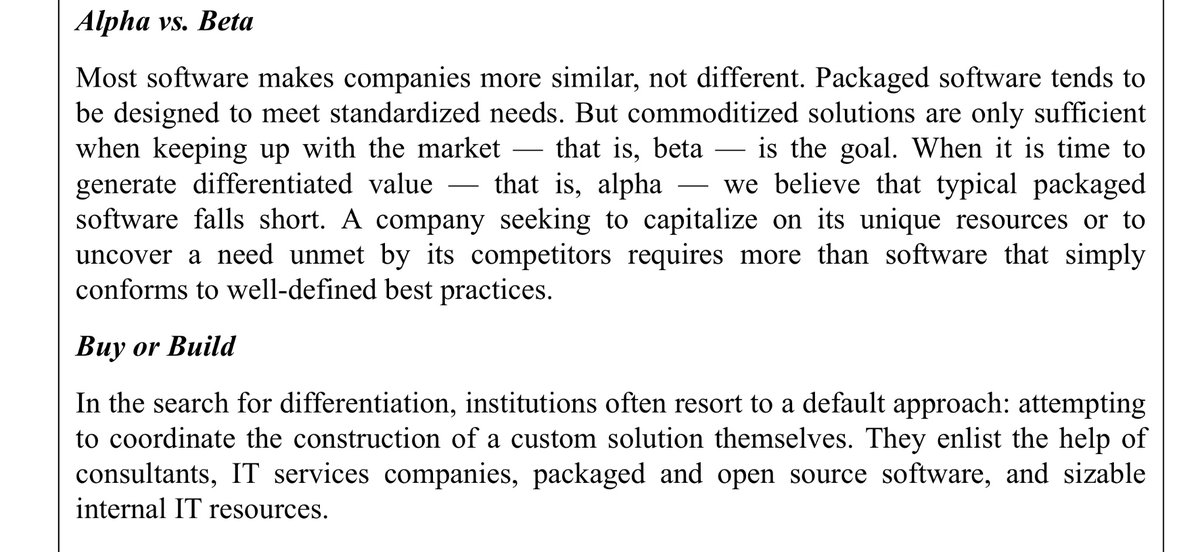
Good time to pull these passages from the Palantir S-1. AI is an alpha-not-beta game for operating companies. The stakes are very high. Execution quality is reordering the winners and losers in every industry.
Buy Palantir to succeed in Building your own alpha.

World's highest-grossing law firm Kirkland & Ellis agrees to a multiyear deal with Palantir to develop an AI tool to help advise PE firms on raising capital (Financial Times)
(Visit Techmeme dot com for the link and full context!)
6
26
161
31,300

The raw commodity != the refined output
The refined output != the composite outcome
Jun 2

Karp predicting tokenmaxxing 2 years ago
“You buy an LLM, you party with it, and the next day you have a hangover.”
6
47
3,301
Akshay Krishnaswamy retweeted
May 29
AIP Evolve — our new product for making agents more efficient and cost effective.
See how Chad and Colton used it to autonomously swap models, tune prompts, validate outputs, and find structured ontology data that eliminated 2 LLM calls; cutting compute costs while improving accuracy and reliability in production.
35
83
700
114,156
Akshay Krishnaswamy retweeted
May 29
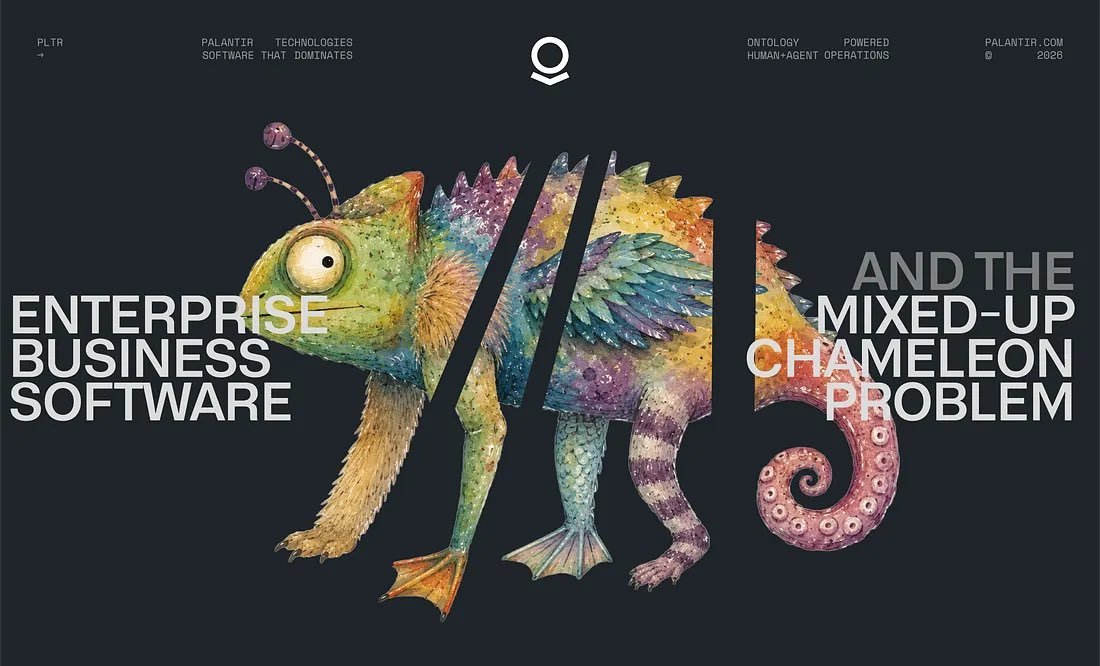
Software should serve the mission.
Not the other way around.
Enterprise software has a mixed-up chameleon problem….. the answer is not another app.
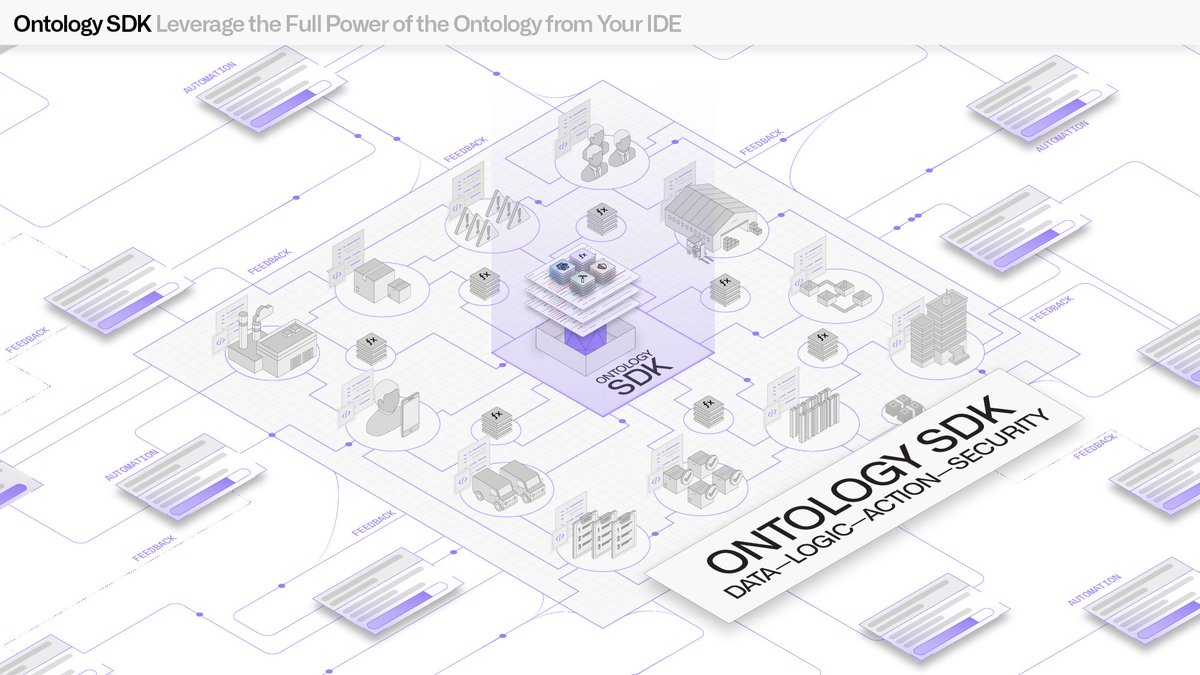
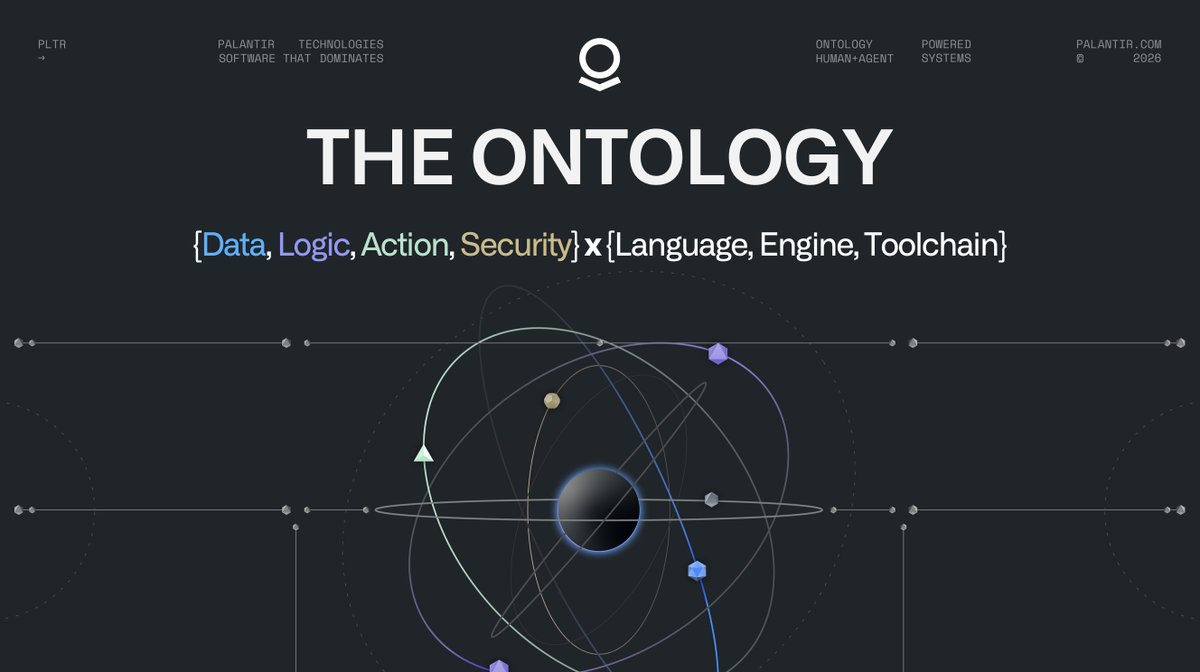
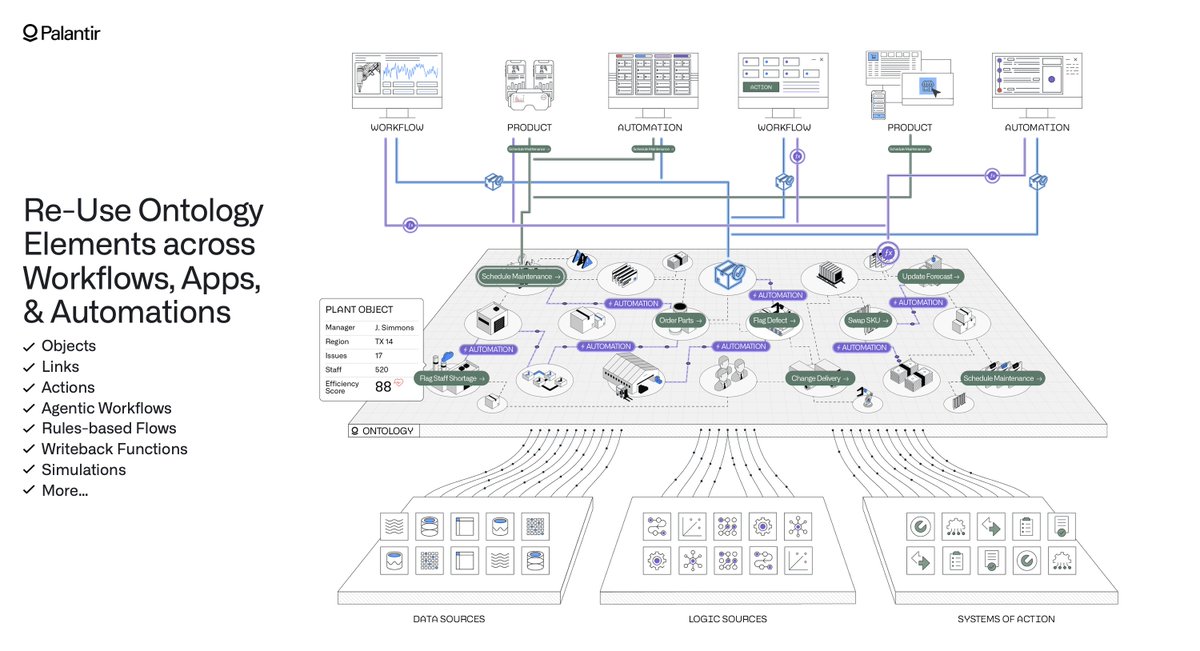
Ontology is the operating layer for the business.
blog.palantir.com/enterprise…
9
20
192
6,684
Akshay Krishnaswamy retweeted
May 29
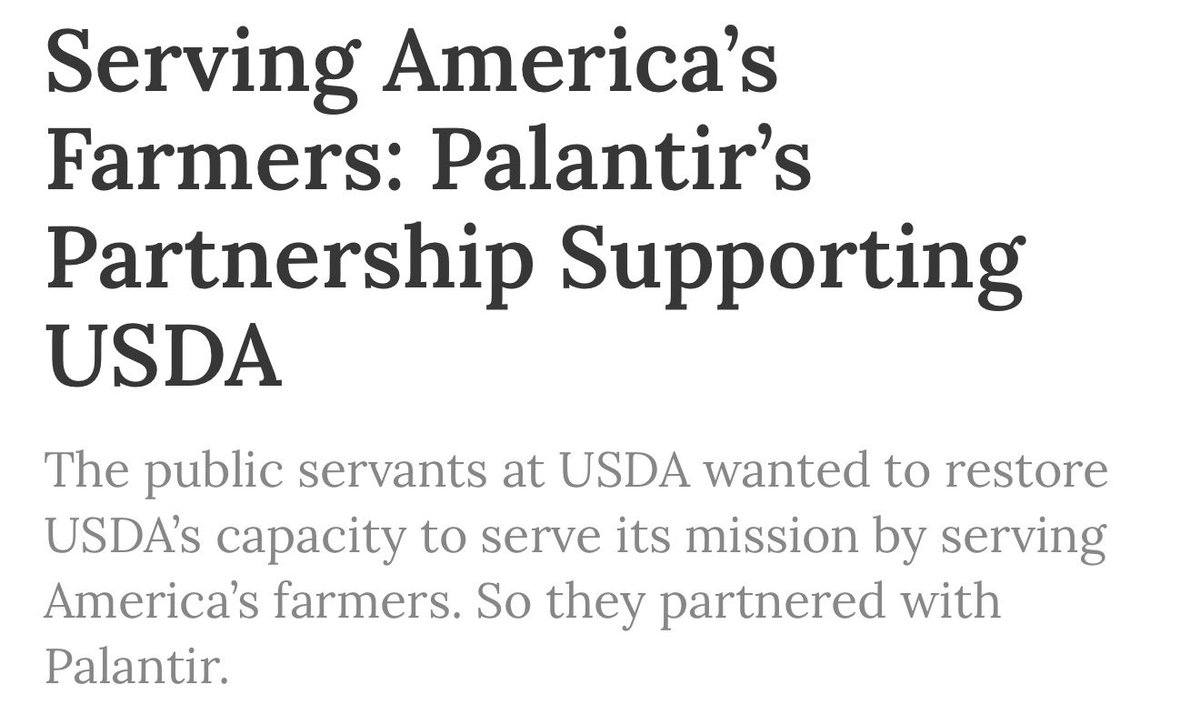
America’s farmers deserve government services that move at the speed of their work.
@PalantirTech is helping the USDA turn fragmented legacy systems into One Farmer, One File
Producers apply, report acreage, update records, and get paid faster.
artistscolony.substack.com/p…
6
22
187
6,912
Akshay Krishnaswamy retweeted
May 27
Thank you Japan 🇯🇵
627
1,731
33,966
146,839,676
Akshay Krishnaswamy retweeted
May 26
AI solved software creation.
Now comes software distribution.
The future will not run on blind deployment pipelines.
Apollo provides the Ontology Primitives for Software Distribution. Deploy. Patch. Rollback. Validate. Govern.
AI-native velocity with human accountability.
123
211
1,900
265,227