
Co-Founder at rekursiv.ai. Prev. Research Scientist at @LumaLabsAI (Realtime Video World Models, Ray), @GoogleAI (VideoPoet). Let's automate research!
Joined March 2015
- Tweets 534
- Following 692
- Followers 2,243
- Likes 2,778
129 Photos and videos












Pinned Tweet

May 28
I've started a new company, rekursiv.ai, as a co-founder with my good friend Josh Dillon.
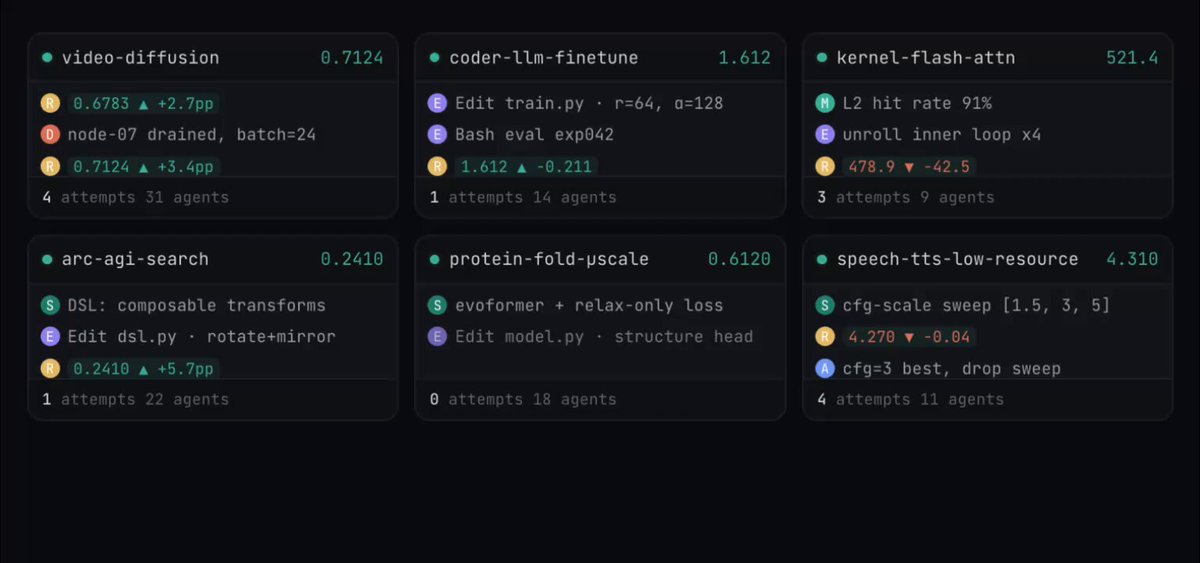
We're currently building teams of autonomous AI Scientists which are running experiments and discovering new knowledge.
1
9
540
Jun 13
Perhaps the marketing behind "Mythos is too powerful" was a little too convincing
Jun 13

The US government, citing national security authorities, has issued an export control directive to suspend all access to Fable 5 and Mythos 5 by any foreign national, whether inside or outside the United States, including foreign national Anthropic employees.
The net effect of this order is that we must abruptly disable Fable 5 and Mythos 5 for all our customers to ensure compliance.
Access to all other Claude models is not affected.
We apologize for this disruption to our customers. We believe this is a misunderstanding and are working to restore access as soon as possible.
Read our full statement: anthropic.com/news/fable-myt…
4
176
Dan Kondratyuk retweeted

Jun 6
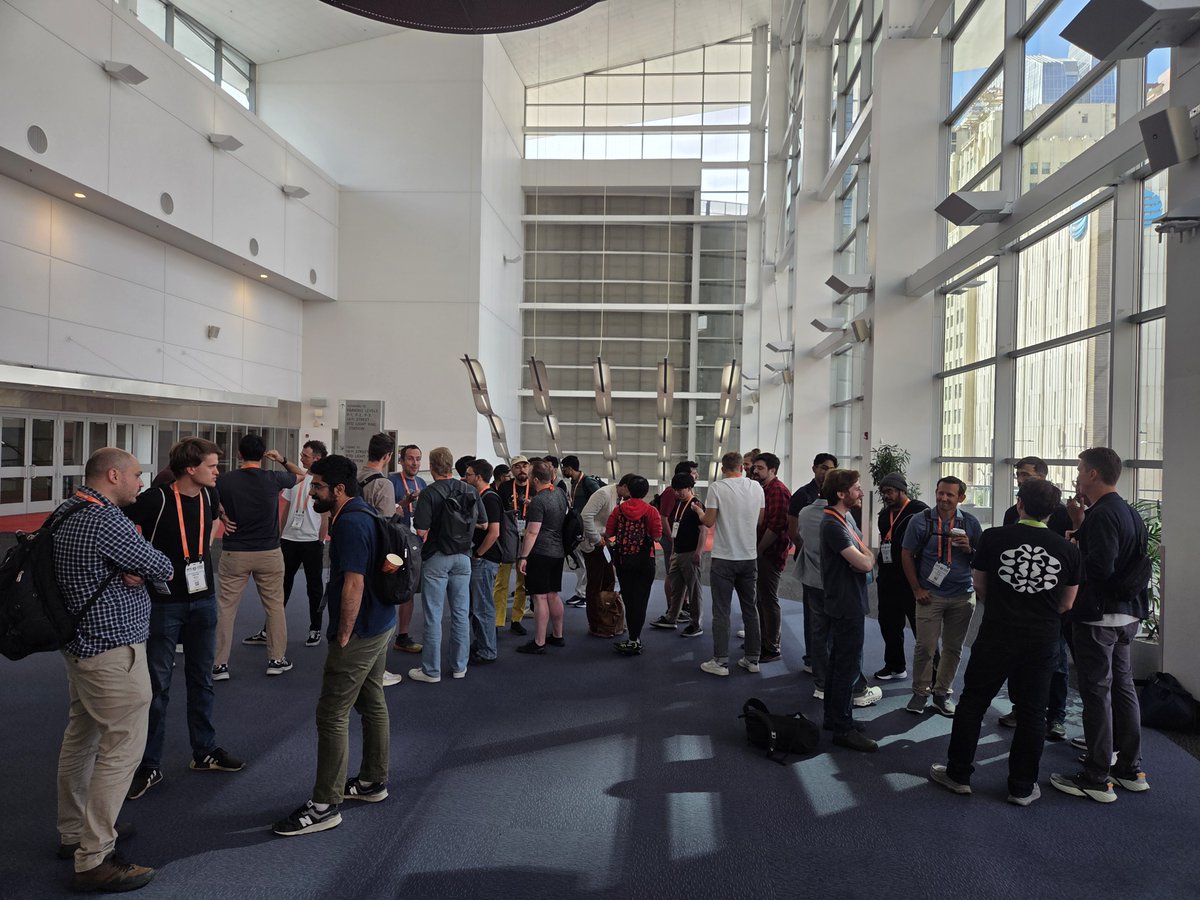
Thanks all for coming and circling with us!
Jun 6


3
4
27
14,609
Jun 5
This is incredibly cool! An OS that is entirely simulated by a model. This shows glimpse of how world models might look like in the future. Any idea can transform into any app.
youtu.be/z3pV6FHvcgM
1
1
235
Jun 4
If we push this thought to the extreme, the ultimate form of a world model might resemble something like an operating system. It can simulate any type of computable program, running its own set of programmable neural processes to accurately represent any kind of environment.

3
223
May 29
I'll be at @CVPR in Denver next week, presenting a talk on world models on Tuesday. If anyone wants to chat during the conference, just shoot me a message.
wangywust.github.io/cvpr-tut…
1
4
251
May 28
I've started a new company, rekursiv.ai, as a co-founder with my good friend Josh Dillon.
We're currently building teams of autonomous AI Scientists which are running experiments and discovering new knowledge.
1
9
540
May 28
Our bet is simple: by 2030, most ML research won’t be done one hand-run experiment at a time, but researchers will direct large fleets of models to propose experiments, launch runs, debug failures, and come back with evidence. And that's what we're building at rekursiv.ai.
2
1
245
May 28
If you want to take part in using our systems or help us build them, consider reaching out!
109
May 28
The initial prototype discovered a new algorithm and wrote a paper, which you can read about in our blog: rekursiv.ai/blog. We're now scaling this prototype up, testing it in our own research workflows to automate much of the grunt work. Even when we sleep, our system proposes new ideas, sets up experiments, compiles results, and discovers new insights which inform the next round of discovery.
1
135
May 19
Coding agents are great at writing new code, but pretty bad at deleting code. It's what inevitably leads to a lot of bloat over time. Deleting code is the halmark of a great senior engineer, i.e., one that can write the least amount of code to get the job done. In my mind that's what's missing to make them robust at building good software.
1
3
146
May 1
When I ask people what they mean when they are working on "World Models", I get a very different response every time. It's always fun trying to see all varied and different perspectives.

1
2
10
2,093
May 1
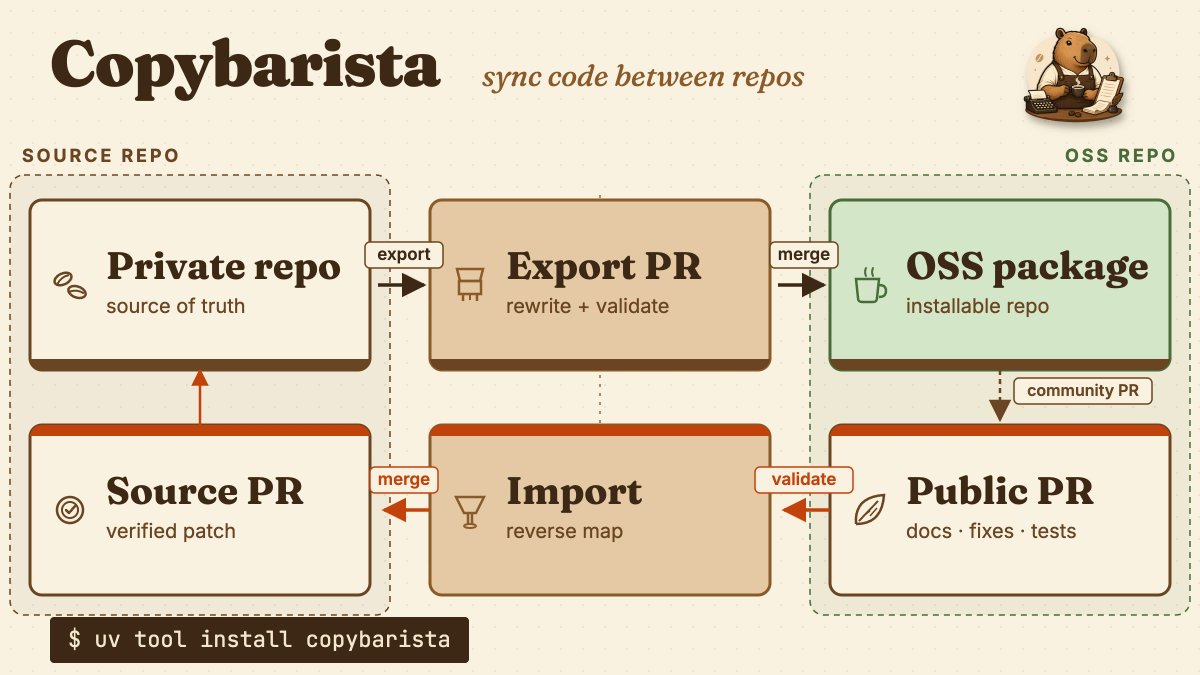
I wanted to speedrun how fast I could OSS a complete Python package that solves a non-trivial, important job, and I managed to pull it off in about a day.
I've never felt so productive writing software, especially complete packages. The most joy I've felt in a long time.
2
2
248
May 1
Technically it did take another half day to polish things up, but the core implementation was fully operational in just a few hours.
Software package: github.com/rekursiv-ai/copyb…
Blog post: rekursiv.ai/blog/i-built-cop…
1
120
May 1
As with any new software, it's still going to have some rough edges.
But I put a lot of checks/manual reviews in place to make sure the code quality is to a good standard: 90 % test coverage, fully typed, docstrings that explain intent, and lots of examples.
92
Apr 29
The cost of software is starting to get really cheap. What took an entire dev team months can soon be accomplished with a single determined person. I suspect we're going to start seeing a proliferation of apps with weird and crazy ideas that wouldn't have been tried until now.
1
2
176
Apr 16
One thought that scares me a bit: the proliferation of "AI Viruses": tiny coding agents which can break into unsecured systems, replicate themselves, and adapt/mutate over time. And like real viruses, might hide, spread repeatedly like a botnet and impossible to fully eradicate.
1
185
Mar 6
Really excited to share our newest release on a unified model that does understanding and generation all in one. The team really did a great job here!
Mar 5

Introducing Uni-1, Luma’s first unified understanding and generation model, our next step on the path towards unified general intelligence.
lumalabs.ai/uni-1
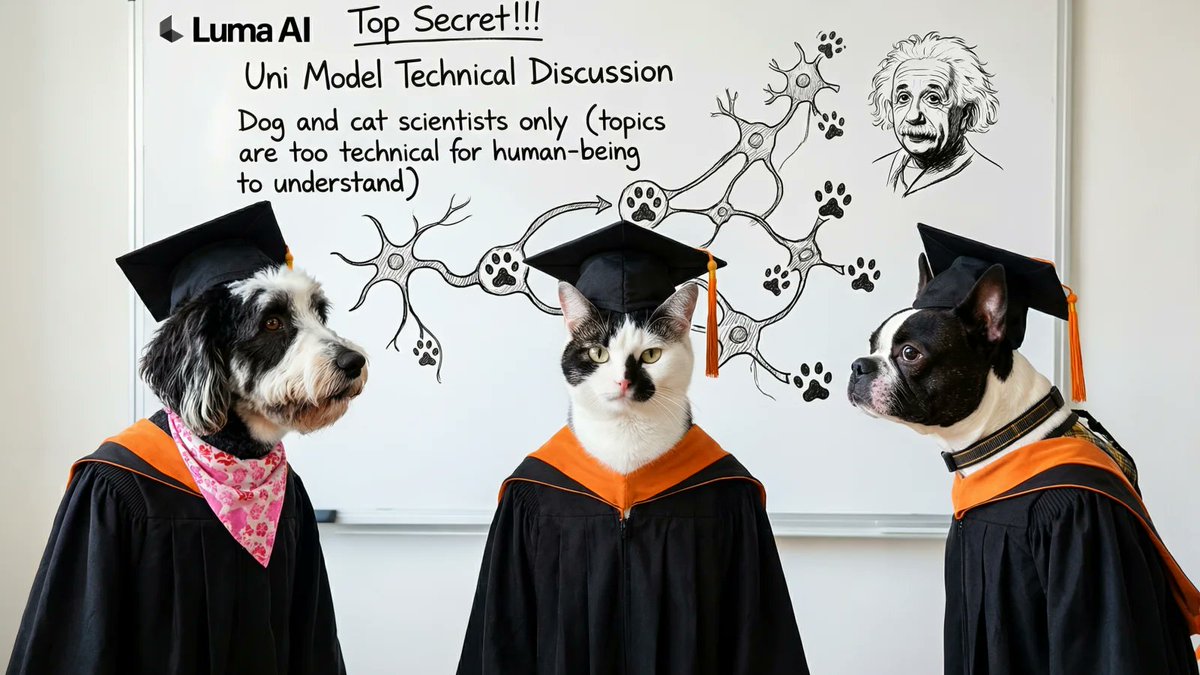
ALT Combine the black and white curly-haired dog with pink bandana, the Boston Terrier in plaid harness, and the black-and-white cat into a single scene where they are dressed in academic regalia, standing before a whiteboard filled with scientific diagrams and text, with the Luma AI logo placed in the top-left corner.
1
2
25
2,206
26 Nov 2025
Our team has developed a new diffusion distillation technique which is overall much simpler and more robust than prior methods, and scales well to large model training. We make the code and paper freely available github.com/lumalabs/tvm
26 Nov 2025
Introducing Terminal Velocity Matching: a scalable, single-stage generative training method that delivers diffusion-level quality with a 25× fewer inference steps, now trained at 10B scale.
lumalabs.ai/blog/engineering…
9
1,158