
共和党上院インナーサークル委員・政治科学アカデミー会員・企業・団体役員 Santa Monica, Lake Hollywood, Beverly Hills, West Los Angeles, Mid-Wilshire, Lake Tahoe
Joined November 2010
- Tweets 104,175
- Following 1,822
- Followers 4,266
- Likes 13,496
10,955 Photos and videos



Credibility On The Edge
June 2026 is testing every major power to its limit.
Israel struck Hezbollah positions south of Beirut. Tehran fired back at once, openly accusing Washington of lacking both the spine and the seriousness to honor its own diplomatic commitments. Russian forces seized Konstantynivka, collapsing the remnants of Ukraine’s main defensive line in Donbas — even as Putin held direct talks with President Trump. In the English Channel, the British finally boarded a Russian shadow-fleet tanker, proving that sanctions still bite when a government summons the will to enforce them.
Europe, for its part, suffers from a far deeper and more stubborn affliction: unrelenting migratory pressures and borders its own societies no longer possess the will to defend. Historical grievances only compound the paralysis.
Here is the hard truth few in Washington dare utter aloud: credibility is finite. It is accumulated over decades at immense cost in blood and treasure. It can evaporate in days through contradictory signals and a divided national will. Alliances do not live on rhetoric or good intentions. In the end they rest on one brutal question alone — do allies and adversaries alike believe you will actually stand behind your commitments when the shooting begins?
Power respects only power.
For the United States there is only one coherent strategy: ruthless prioritization. Real energy independence. Secure borders. And an uncompromising insistence that capable regional actors shoulder the primary burden in their own neighborhoods. Selective engagement is not isolationism. It is not retreat. It is the cold, disciplined realism of a great power that refuses to bleed itself dry in every regional bonfire ignited by others.
The real question is not whether Washington can ride three horses at once — but how much American credibility has already bled out while it foolishly tries.
What do you think — can Washington restore credible deterrence through ruthless prioritization, or are today’s mixed signals already fatal?
Full article → medium.com/p/ab63a0c287bf?po…
#SovereignRealism #AmericaFirst #StrategicRealism #Credibility #GreatPowerCompetition #ForeignPolicy
今週の国際情勢は「信認の限界」を露呈してる。ベイルート近郊でのイスラエルによるヒズボラ攻撃に対し、イランは即座にワシントンの「二枚舌外交」を非難。ロシアはコンスタンチニーウカを陥落させ、ドンバス防衛線に圧力をかけつつプーティン氏がトランプ大統領と直接通信を交わした。英国はロシアの影のタンカーを拿捕した一方、欧州内部では移民・歴史問題・国境疲労が政治的活力を削いでいる。
それらそれぞれの根底にある厳然なるな事実:
信認(credibility)は有限である。そえはゆっくりと長きにわたって築かれ、高い代償を払って守られ、そして一瞬で失われる性質である。
大国は<力にしか力は従わない>ことを忘れてはならない。
構造的リアリズムの視点から:米国は優先順位を徹底し、エネルギー自立と国境安全を確保し、地域大国に主たる負担を負わせる選択的関与こそが賢明な道だ。
全文はこちら → medium.com/p/ab63a0c287bf?po…
#主権的リアリズム #アメリカファースト #グローバル情勢
85
DULLES N. MANPYO retweeted

Jun 15
🚨 NOW: There are SEVERAL INVESTIGATIONS from the DOJ surrounding Gavin Newsom, including his WIFE
No wonder Gavin is panicking publicly! 🤣
The house of cards is starting to crash down before his 2028 campaign!
Expose this SNAKE.
593
4,131
20,628
308,932

Jun 15
The “Zainichi” problem has reached the point where Japan can no longer afford to look the other way. To be clear, this is not about the Korean community as a whole — that would be both unfair and sloppy. It concerns a specific and particularly troublesome subset: those who operate under Korean names as information brokers and opportunistic middlemen, peddling rumors, political access, and quick-turnaround scams in the hidden currents of Japanese society.
These men were forged in the brutal postwar underbelly — the raw world of yakuza networks, backroom fixers, con artists, and filthy slum districts. That was their only school. There they mastered their one genuine tradecraft: the buying and selling of whispers. They exploited whoever they could, and were exploited in turn. Their work on North Korea, and what are euphemistically called “Xi Jinping missions,” is nothing more than a natural extension of that same grubby, parasitic, transactional economy.
They remain chained to a Showa-era playbook that should have been discarded decades ago, still convinced that Japanese society can be played with the same tired tricks of ethnic signaling and insider manipulation. That delusion no longer works.
Japan has arrived at a decisive strategic inflection point. The question is now unavoidable: Will Tokyo continue to tolerate these layered dependencies and external manipulations, or will it finally summon the clarity and institutional courage to see its own reality clearly, set its own course, and cut away these parasitic arrangements once and for all?
Mature nations do not live by comforting fictions. They face reality without flinching and act. Japan has the strength, the cohesion, and the latent will to do precisely that. The only question left is whether it will finally choose to use it.
94
Jun 15
North Korea is no longer a joke.
It is now producing combat-proven ballistic missiles faster than it can field them, launching modern destroyers even after setbacks that would have paralyzed most established navies, and delivering sustained economic growth — despite the harshest sanctions in modern history — that has left every Western forecast of imminent collapse looking utterly foolish.
Sanctions did not break Pyongyang. They forged it — into a lean, ruthless, high-output machine that the very analysts who once mocked it still refuse to take seriously. Deep underground complexes, precision saturation doctrine, an Eastern strategic patience that waits for the wheel of fortune to turn, and unrelenting industrial discipline have turned the regime into a formidable strategic actor on the Sea of Japan flank.
This is the age of Sovereign Realism.
Homeland security first. Measured force — but only when clear hostile intent is married to demonstrable, advancing capability. No more open-ended ideological crusades that bleed our blood and treasure for ungrateful allies and abstract principles. No more multilateral traps that our adversaries exploit at will while we tie our own hands. Only secure borders, unchallenged energy dominance, trade that actually benefits American workers, and the disciplined, unapologetic rebuilding of our own national strength.
The era of unchallenged American primacy is over. The real question before us is whether we still possess the clarity and the will to face that truth squarely — or whether we will keep bleeding ourselves dry in pursuit of a global role that much of the world has already ceased to grant and that we can no longer sustain.
The age of illusions is over.
Full article → medium.com/p/ab231b09f38a?po…
#SovereignRealism #AmericaFirst #NorthKorea
──────────────
北朝鮮とはもはや笑い話ではない。
制裁と孤立の中で、戦闘実績のある戦術弾道ミサイルを量産し、失敗すれば通常は計画が頓挫するような現代駆逐艦の進水を断行し、欧米日韓の「崩壊予測」をことごとく裏切る経済成長を続けている。
制裁は北朝鮮を壊さなかった。むしろ極めて効率的で冷徹な軍事・産業システムに鍛え上げた。精密飽和攻撃の徹底した追求と具体化、地下都市産業施設の巧みな活用、東洋的な国運を獲む忍耐強い戦略文化、そして国内の産業近代化が融合し、日本海を舞台にした本物の戦略的脅威を生み出している。
これに対する唯一まともな答えが「主権的リアリズム(Sovereign Realism)」だ。
アメリカ本国の主権と国民の安全を最優先に。敵対的意図+能力向上がある場合に限り、限定された武力行使を容認。グローバルなイデオロギー十字軍や多国間主義の罠には乗らない。自国境界の強化、エネルギー覇権、互恵的貿易、そして国家基盤の再建に全力を注ぐ。
アメリカの圧倒的優位の時代は終わろうとしている。
自力による現実主義と自制を伴った力こそが、唯一信頼できる防衛線だ。
全文はこちら → medium.com/p/ab231b09f38a?po…
#主権的リアリズム #アメリカファースト #北朝鮮
1
175
Jun 14
The Great Revelation
The great revelation of our time is brutally simple, and all the more devastating because of that very simplicity:
Those who cannot think for themselves received the mRNA vaccine.
Those who can, did not.
That is the whole of it.
Here lies the savage irony: those with the least genuine doubt are the loudest in proclaiming their “deep concerns,” all while running on intellectual empty. They possess no fixed center, no inner compass — only the ceaseless drift of the prevailing current and a desperate performance of profundity for the digital age. Borrowed feathers, frantic noise.
The true doubters remain silent. They move through the world like old snipers who have seen too many campaigns: quiet, economical, and dead certain. They sign no blank checks. They grant no rubber-stamped approvals.
We have at last reduced the human condition to one merciless, elemental distinction: those who command their own minds, and those who surrender that command to others. All the rest is merely content — noise masquerading as thought.
I have earned the right to say this through decades that broke lesser men. I have sat with the powerful and broken bread with the forgotten. I have stared into the abyss until it blinked first, and walked out of storms that devoured better souls.
This is not commentary.
This is autopsy.
109
DULLES N. MANPYO retweeted

A BOMBSHELL study confirms Fauci & top public health officials used FAKE PCR case counts (86% NOT REAL INFECTIONS) to terrorize America into forced mRNA shots and lockdowns.
TERMINATE Fauci’s autopen pardon NOW and CHARGE HIM.

FAUCI CAUGHT ON TAPE: "When you make it difficult for people in their lives, they lose their ideological BS and they get VACCINATED."
"You want to come to this college, buddy? You're going to get VACCINATED."
ONE WEEK LEFT TO PROSECUTE HIM.
The decision should be EASY.
187
4,092
8,418
112,663
Jun 14
THE TERMINAL PHASE
The Inevitable Dissolution Of The European Union
The European Union was constructed upon one foundational and fatal lie: that sovereign nations could peacefully dissolve their most vital powers into a faceless bureaucracy in Brussels and thereby become stronger, safer, and more prosperous. That lie has now met reality head-on, and reality is winning.
Every subsequent treaty did not build solidarity — it forged heavier chains of interdependence. The “mutual dependencies” proudly advertised by Brussels never protected anyone; they merely guaranteed that when the structure finally fractures, every member state will be left exposed, carrying the full burden of a shared failure no one can escape.
Germany’s humiliation in the June 3, 2026 UN General Assembly vote offered the clearest possible signal. Competing for a non-permanent Security Council seat, Europe’s economic engine could muster only 104 votes — decisively defeated even by Portugal and Austria. When the continent’s strongest power commands so little genuine respect, the illusion of “European leadership” collapses into liability.
Add to this the European Commission’s own bleak 1.1 percent growth forecast for 2026, the costly rerouting of shipping around Africa while Russia and China advance unhindered on the Northern Sea Route, and the Visegrád Group’s ever-blunter refusal to obey Brussels on energy policy and sanctions. The verdict writes itself.
What was marketed as eternal solidarity was always a temporary, artificial accommodation — one whose expiration date is now being inked by peoples rediscovering the unforgiving logic of self-government and national interest.
The center never held because it never earned authentic loyalty. It extracted only conditional obedience through regulation, subsidy, and threat. History, as it invariably does, is now reasserting its ancient and immovable claims upon the loyalty of men to their own nations.
This is not a project destined for dramatic cinematic collapse. It is undergoing the slow, inexorable dissolution that awaits every grandiose attempt to defy the permanent realities of power, culture, and nationhood.
The European Union has entered its terminal phase. The only remaining question is how many more resources, how many more illusions, and how many more years its defenders will waste in the futile effort to pretend otherwise.
What do you think — has the European Union already entered its terminal phase, or are we still pretending it can be salvaged?
Reply below ↓
Full article → medium.com/p/cc67ec4c31dc?po…
#SovereignRealism #TerminalPhase #AmericaFirst #EuropeanDissolution
***********
欧州連合(EU)の不可避的な解体 —— 主権的リアリズムの下でEUは「国家主権を官僚的管理に希薄化しても国家自体は守られる」という、残酷な前提の上に築かれた。しかしその前提は今、現実の冷たい論理と正面衝突している。
新条約が締結されるたびに依存関係が深まり、解体の痛みは避けられず屈辱的なものとなる。
ドイツが国連安保理でポルトガルやオーストリアに敗北した最近の屈辱、1.1%程度の低成長、アフリカ迂回を余儀なくされる海運と対照的なロシア・中国の北方海路支配、ヴィシェグラード諸国の反旗——すべてが同じ方向を指している。
「永続的な連帯」と売り込まれたものは、実は期限付きの便宜に過ぎなかったことが明らかになりつつある。
中心はもはや持たない。なぜなら最初から真の忠誠を勝ち得ていなかったからだ。
EUはすでに終末期に入っているのか、それともまだ立て直し可能か? 皆さんのご意見を。
全文はこちら → medium.com/p/cc67ec4c31dc?po…
#主権的リアリズム #アメリカファースト
2
1
191
DULLES N. MANPYO retweeted

Jun 14
The conspiracy theorists were right
A new FDA data mining report shows they knew the Covid vaccine had 25 major side effects and they all conspired to hide it from the public
Senator Ron Johnson’s Senate PSI Majority Staff Interim Report has been released on FDA data mining and the March 2021 analysis by Dr. Ana Szarfman
There was a “masking” in the standard FDA system, where signals from Pfizer and Moderna reportedly cancelled each other out
Meaning they lied and hid the side effects from the public and told you it was 100% safe and effective
I have compared the whole list for you:
Neurological & Dysautonomia
• Bell’s palsy (Suppressed Signal)
• Paraesthesia ear (Suppressed Signal)
• Bradykinesia (Suppressed Signal)
• Basal ganglia stroke (Suppressed Signal)
• Cerebral artery occlusion (Suppressed Signal)
• Thalamic infarction
• Sinus rhythm abnormality
• Agonal rhythm
• Diaphragmatic spasm
• Dementia (Pfizer)
Cardiac
• Sudden cardiac death (Suppressed Signal)
• Acute left ventricular failure (Suppressed Signal)
• Diastolic dysfunction (Suppressed Signal)
• Ejection fraction abnormal (Suppressed Signal)
• Hypertensive emergency (Suppressed Signal)
• Blood pressure systolic changes (Suppressed Signal)
• Aortic stenosis (Suppressed Signal)
• Cardiac failure chronic
• Acute myocardial infarction (Pfizer, Moderna)
• Cardiac telemetry abnormal (Pfizer) (Suppressed Signal)
Vascular & Pulmonary
• Pulmonary infarction (Suppressed Signal)
• Embolic stroke
• Ischaemic stroke
• Aortic aneurysm rupture
• May-Thurner syndrome
• Hypomagnesaemia (Suppressed Signal)
Other
• Cholecystitis acute (Suppressed Signal)
• AST/ALT ratio abnormal
• Mastoid disorder
• Cardiac assistance device user
• Brain natriuretic peptide increased
• Asymptomatic COVID-19 (Pfizer) (Suppressed Signal)
The FDA’s standard analytical method allegedly masked “obscured” statistical safety signals in the data
Aka they lied
1,811
28,733
60,828
1,232,213
DULLES N. MANPYO retweeted

Jun 12
STFU and SIT DOWN.
You create NOTHING, you build NOTHING and you employ NO ONE!!!
You’ve lived off taxpayers for decades. You’re the problem, Pocahontas…. Not Elon!!!
Jun 12

Elon Musk just became the world's first trillionaire. This needs to be a wake up call.
4,041
8,516
34,295
508,470
DULLES N. MANPYO retweeted
Jun 13
🚨 NOW: HHS Sec. Bobby Kennedy gives HUGE SHOUTOUT to DNI Tulsi Gabbard for shocking the Deep State and exposing 120 taxpayer-funded biolabs in foreign nations
PATRIOT!
"Thank you, @DNIGabbard, for exposing U.S. funded biolabs around the world. The American people deserve the truth." 🇺🇸💯
156
1,737
6,777
91,250
DULLES N. MANPYO retweeted

Jun 13
JUST IN: Robert F. Kennedy Jr. just gave a shoutout to Tulsi Gabbard for EXPOSING US Funded Biolabs
“The American people deserve the truth”
I ABSOLUTELY AGREE 💯


433
6,810
31,068
192,859
DULLES N. MANPYO retweeted

Jun 13
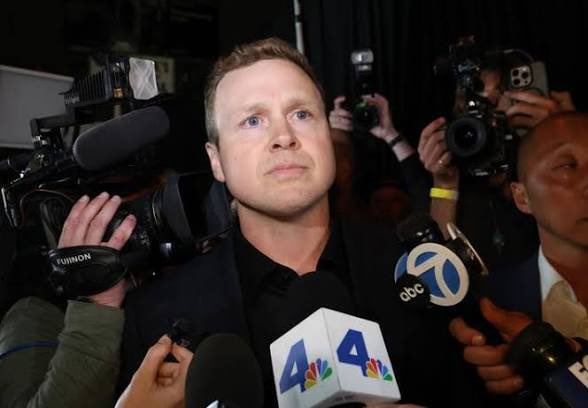
TRENDING: 675 ballots for Spencer Pratt found in a dumpster in San Recto. Federal authorities are on scene.Let the games begin
Are you even surprised?
Community note
No city named San Recto exists in California, and no credible reports confirm 675 ballots for Spencer Pratt found in a dumpster. en.wikipedia.org/wiki/List_of_m… en.wikipedia.org/wiki/2026_Los_… lavote.gov
1,796
7,640
32,256
1,370,731
DULLES N. MANPYO retweeted

🚨 BREAKING: A CIA WHISTLEBLOWER JUST TESTIFIED THAT THE LAB LEAK WAS “COVERED UP” — FAUCI’S ROLE WAS “INTENTIONAL” 💣
FAUCI’S COVID STORY IS COLLAPSING! 😳
45
773
2,846
36,745
DULLES N. MANPYO retweeted

Jun 13
OMG Spencer Pratt ballots covering the streets in LA and they called this a legitimate election? @spencerpratt
@TheJusticeDept
They stole the election from Spencer Pratt, it must be investigated !
781
15,296
36,196
406,356
DULLES N. MANPYO retweeted

Jun 13
An arsonist suspect, who had a lighter on him, was seen walking away from a massive fire and was eventually arrested by local authorities in San Diego County, California.
627
5,059
16,093
521,337
DULLES N. MANPYO retweeted

Jun 13
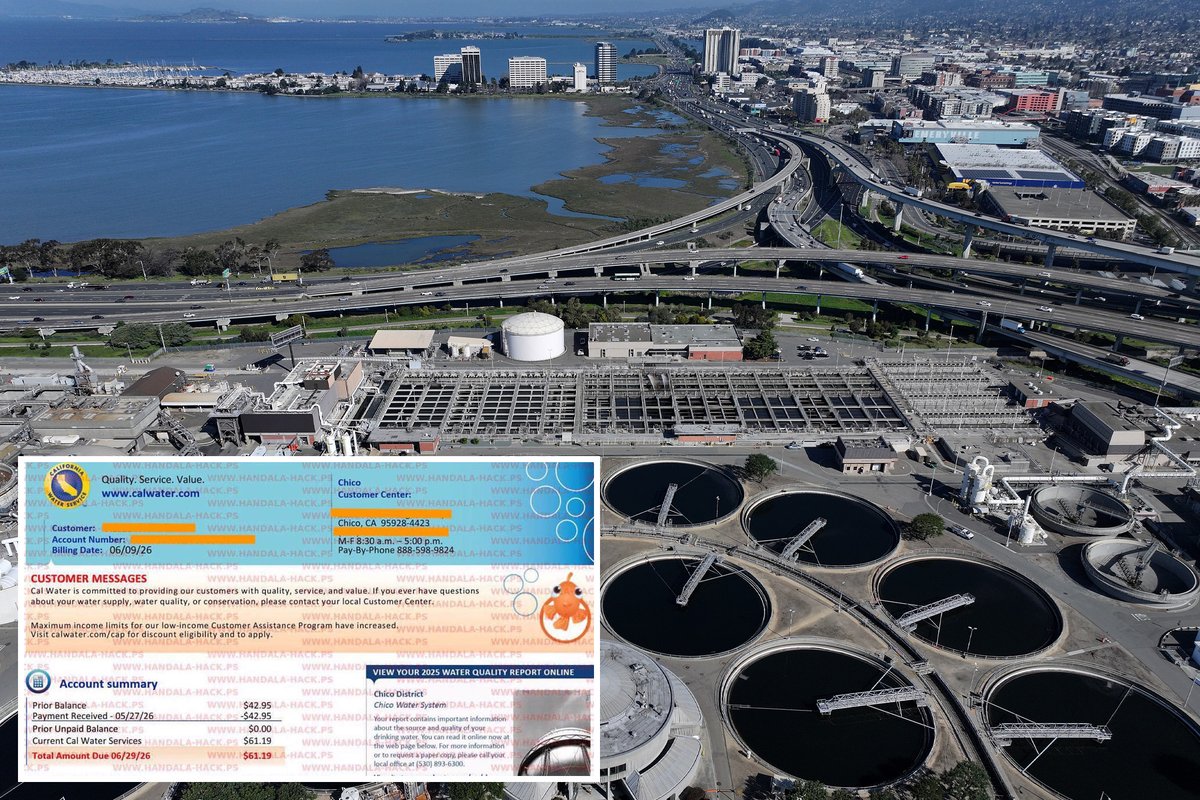
California water systems hit by Iranian hackers in terrifying threat to drinking supply trib.al/VffaZF2
85
233
759
120,600