
Joined January 2019
- Tweets 443
- Following 122
- Followers 133
- Likes 250
31 Photos and videos


Pinned Tweet

Jun 3
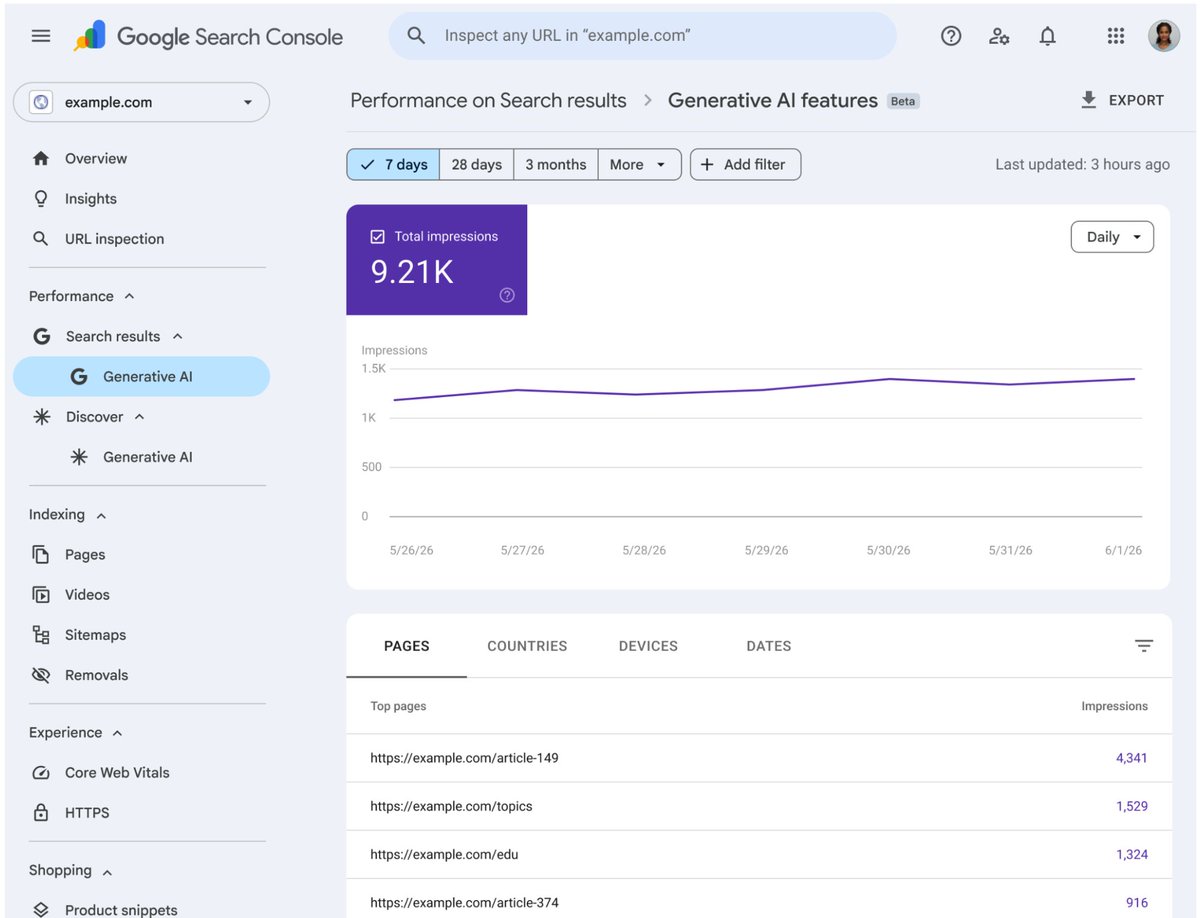
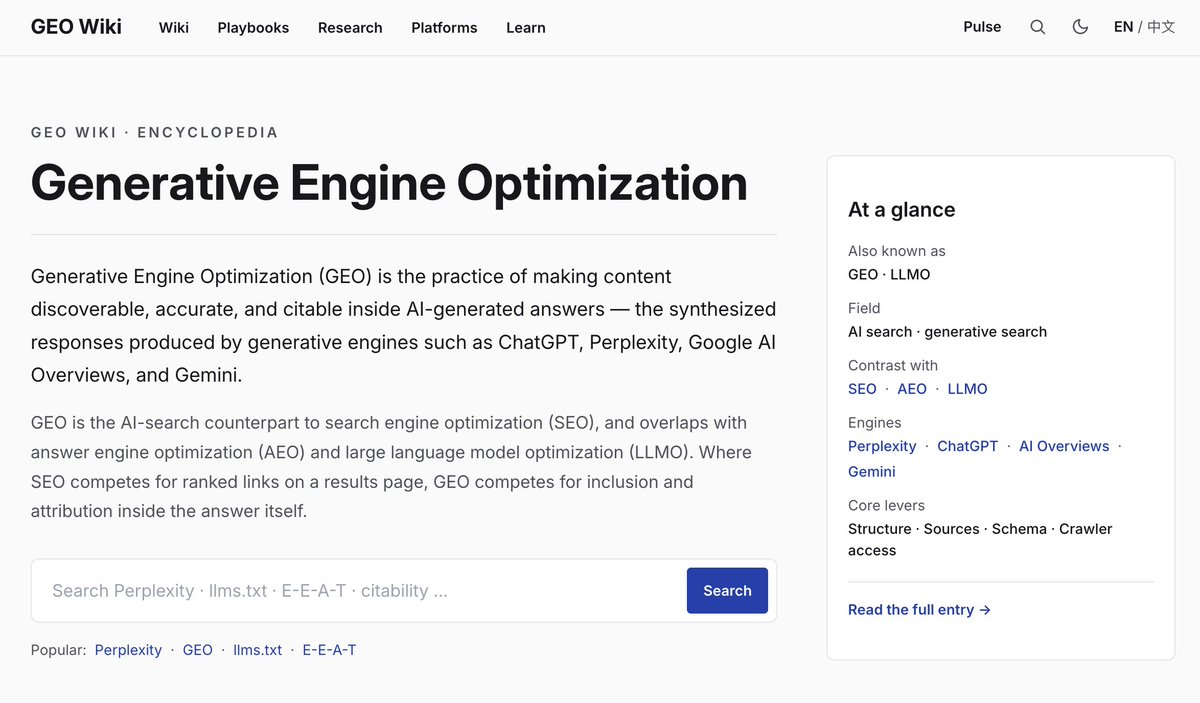
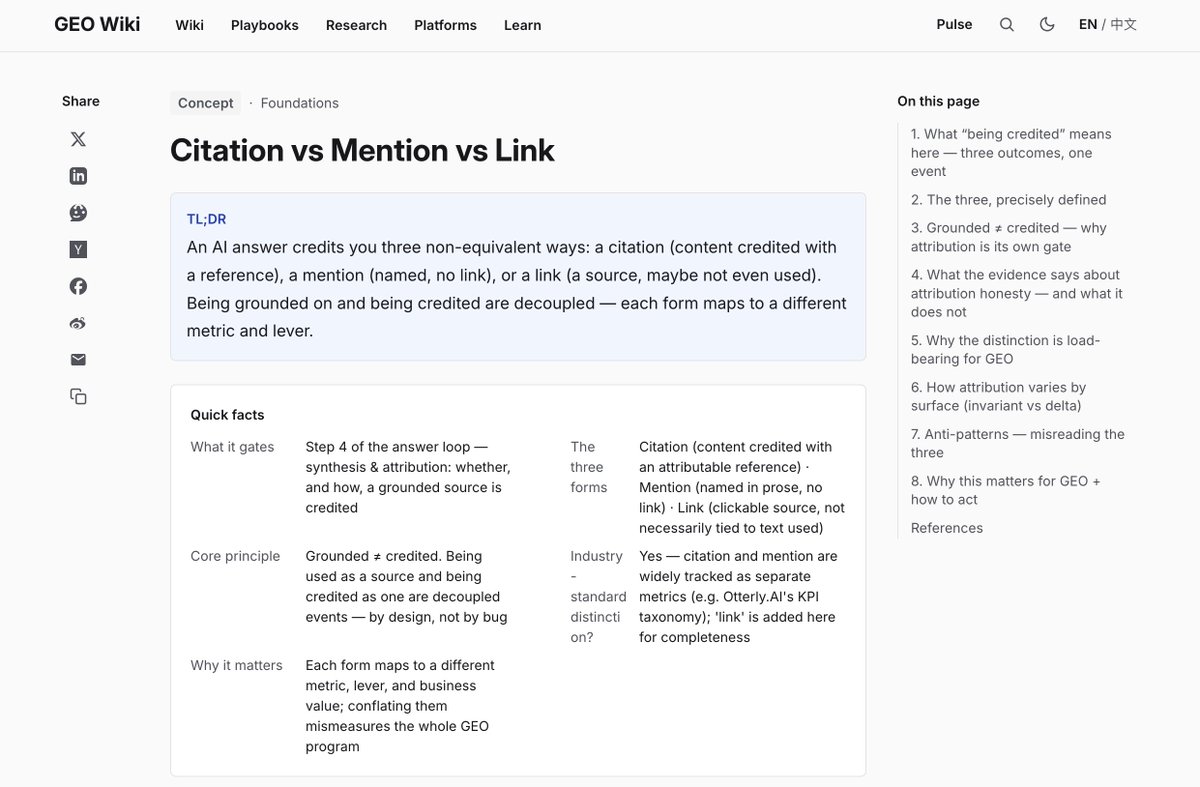
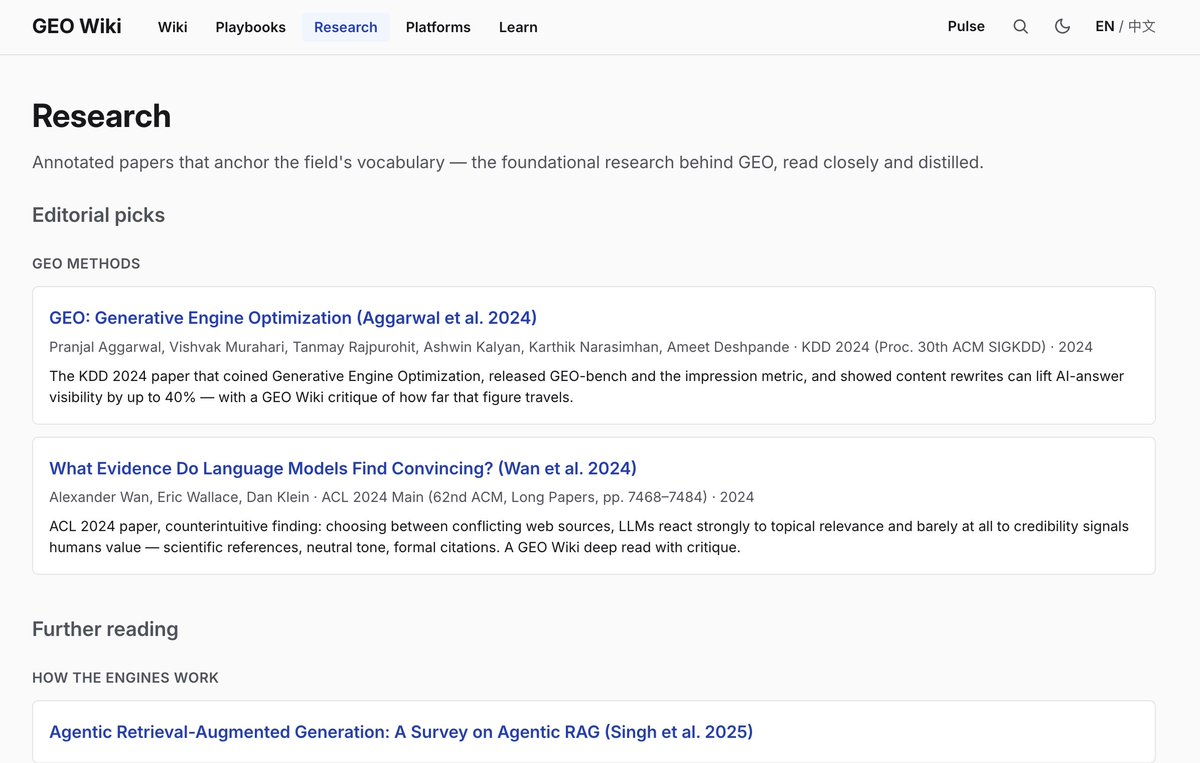
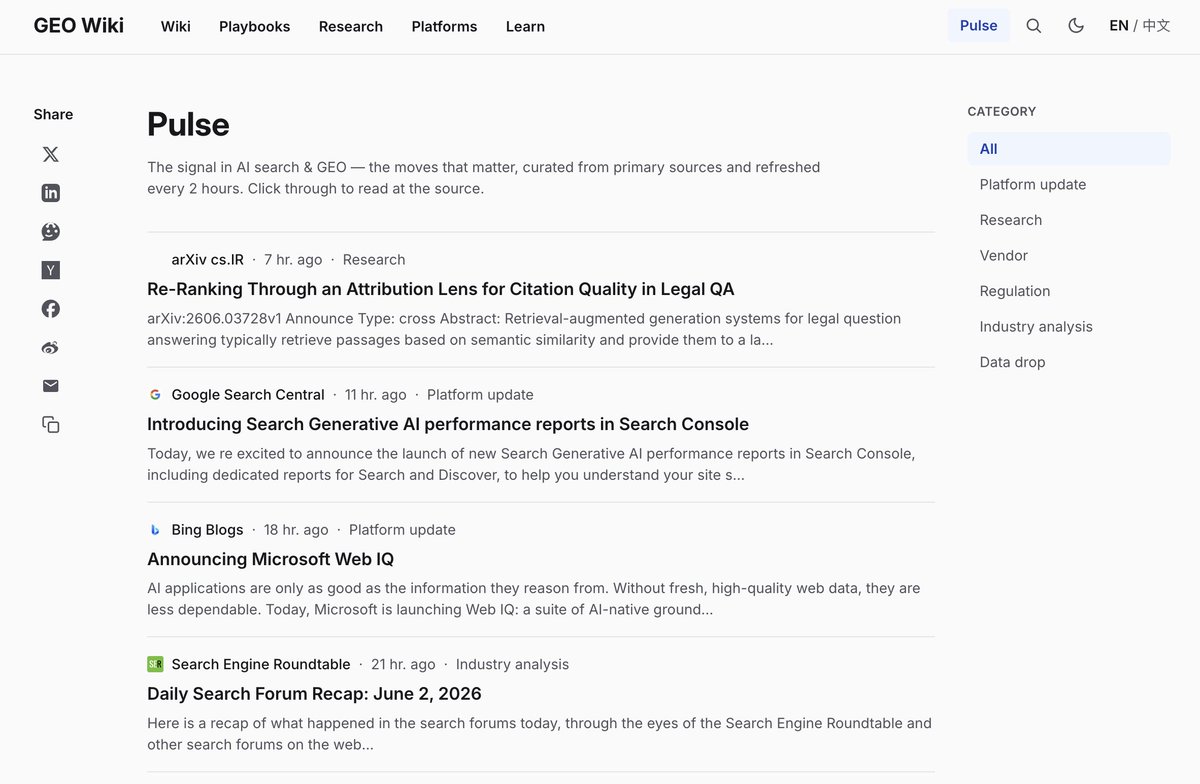
Excited to introduce GEO Wiki geo.wiki, an encyclopedia I created for the AI search community📈
If you are researching Generative Engine Optimization, I compiled deep, "paper-level" tutorials and the most cutting-edge global GEO developments into one place. High-quality insights, and entirely free.
Would love to hear your feedback!
1
1
112
May 27
GEO Wiki: The Wikipedia of Generative Engine Optimization producthunt.com/products/geo… via @producthunt
2
2
69
Apr 8
AI visibility scores swing ±15-20% within 30 days.
You can get recommended by ChatGPT today and vanish next week. Without continuous tracking, you're flying blind.
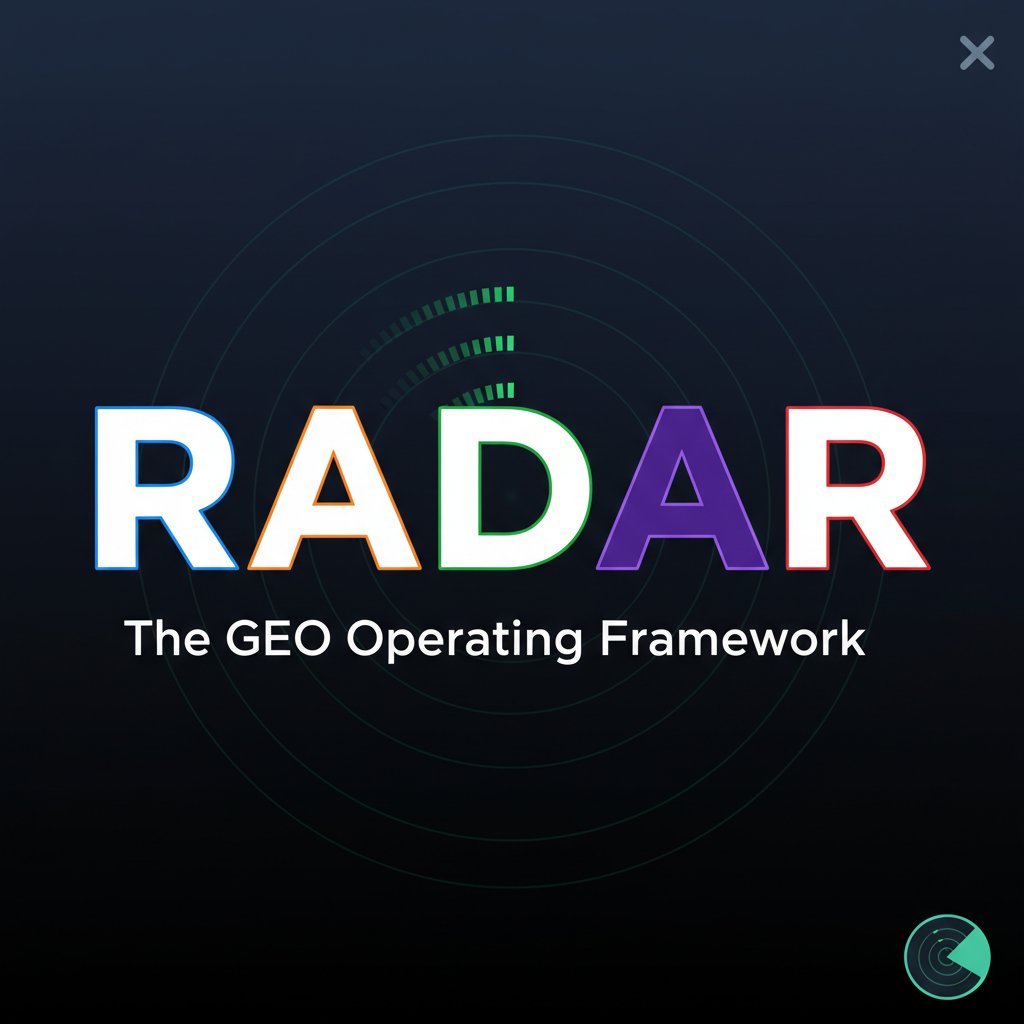
This is why I use a framework called RADAR for GEO ops:
Record — build your baseline
Analyze — find gaps, figure out why you're losing
Deploy — fix and create content
Accumulate — systemize what works
Review — measure results, start the next cycle
Rinse and repeat.
1
94
Ray Yang retweeted

Apr 7
1/ LLMs don’t retrieve truth; they predict the next token. Fluent answer ≠ correct answer.
1
1
1
64
Apr 5
Research found that 44.2% of AI citations are extracted from the first 30% of an article.
Tracks with what I've seen — AI doesn't read your page top to bottom like a person. It scans, grabs, and moves on.
So put your most important takeaway up front. Don't write like an academic paper with the conclusion buried at the end.
In AI search, if the answer isn't at the top, it doesn't exist.
2
70
Apr 3
One stat I keep coming back to:
Brands are 6.5x more likely to get cited through third-party sources than their own website.
Basically, AI cares way more about what others say about you than what you say about yourself.
So optimizing just your homepage isn't enough. G2 reviews, Reddit threads, press coverage, industry directories — that's where AI actually pulls from.
Brand building IS GEO building. More true every month.
2
85
Ray Yang retweeted
Apr 3
1/ AI can read your 5,000-word article and still cite a rival’s 800-word post. Readable ≠ quotable; context window is input, output tokens are the real budget.
1
2
2
108
Apr 3
Ran the same query across 5 AI search tools last week.
ChatGPT cited a Reddit thread and a TechCrunch article.
Google AI Overviews cited the brand's own website.
Perplexity cited a niche industry blog.
Claude cited a research paper.
Same question. Completely different "witnesses."
If you're only creating content for one platform, you're invisible on the others.
1
73
Apr 3
🔍 The "One Giant, Many Challengers" Landscape
As of early 2026, the AI search market has a clear structure:
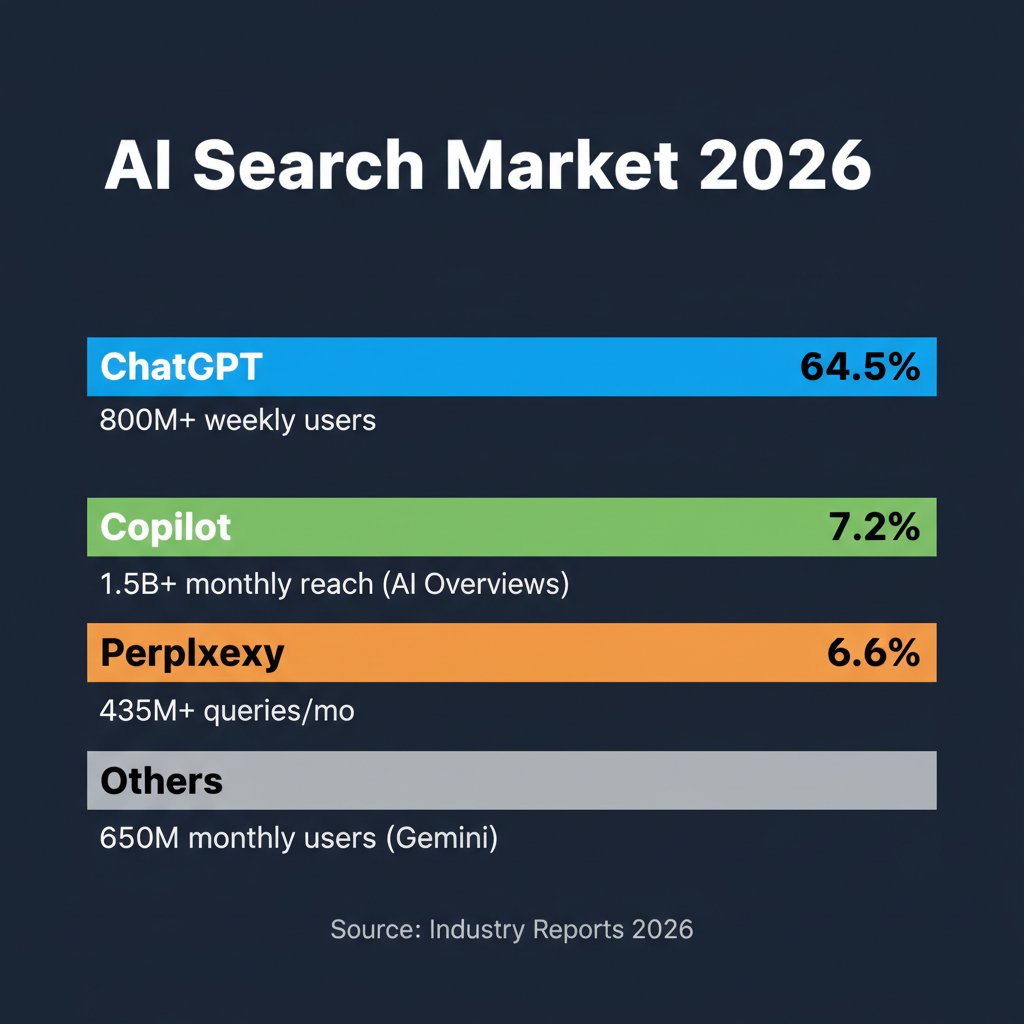
ChatGPT holds 64.5% market share with 800M weekly active users — but notably down from ~75% at the start of 2025. Competitors are closing the gap fast.
Google AI Overviews now covers 25% of search queries, reaching 1.5B users monthly. Its new AI Mode is eliminating blue links entirely for some queries. Perplexity processes 435M monthly queries with an $18B valuation. Gemini has 650M monthly active users. Copilot holds ~7.2% share.
84
Apr 2
Hey founders !
Looking to connect with people building in:
🍽️ SaaS
🚀 Tech
📲 Automation
🧠 AI tools
📱 Product Development
🔥 Web APP
💻 Devs
Drop what you're working on👇
3
1
72
Apr 2
You're ranking #1 on Google — but AI search won't even cite you.
New Ahrefs data: Over 60% of pages cited by AI Overviews don't appear in Google's top 10 results.
SEO and GEO are decoupling. Here's what that means for your strategy: 🧵
1
1
70
Apr 2
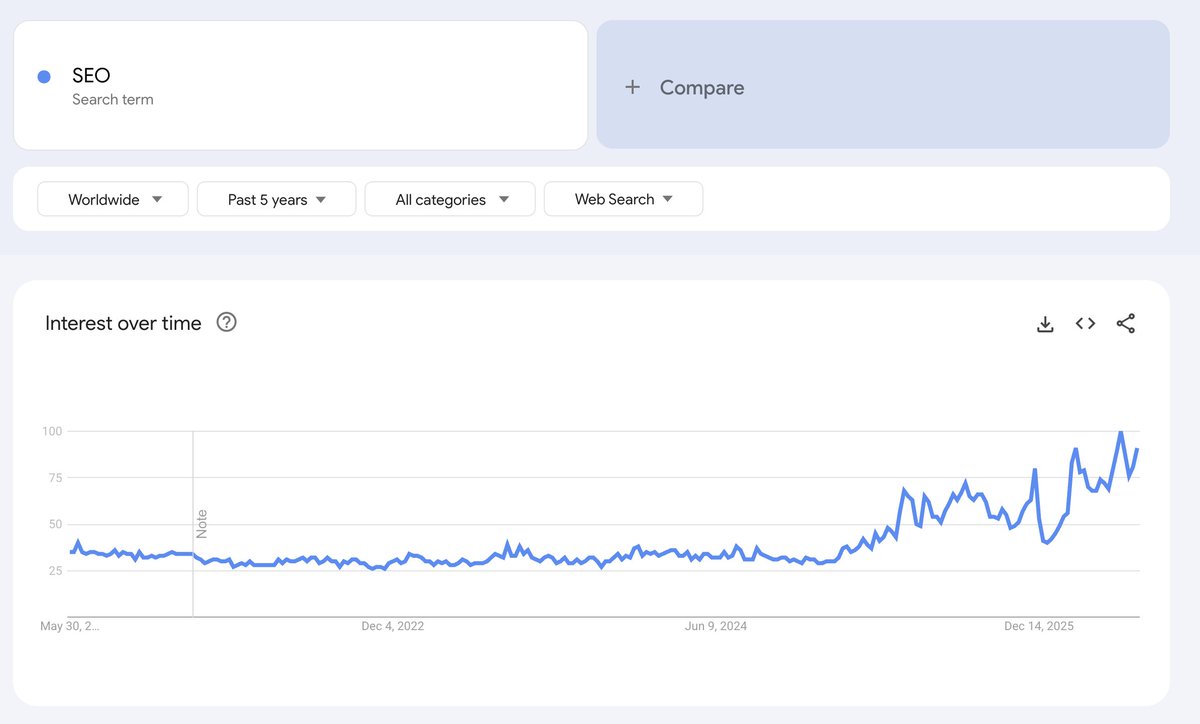
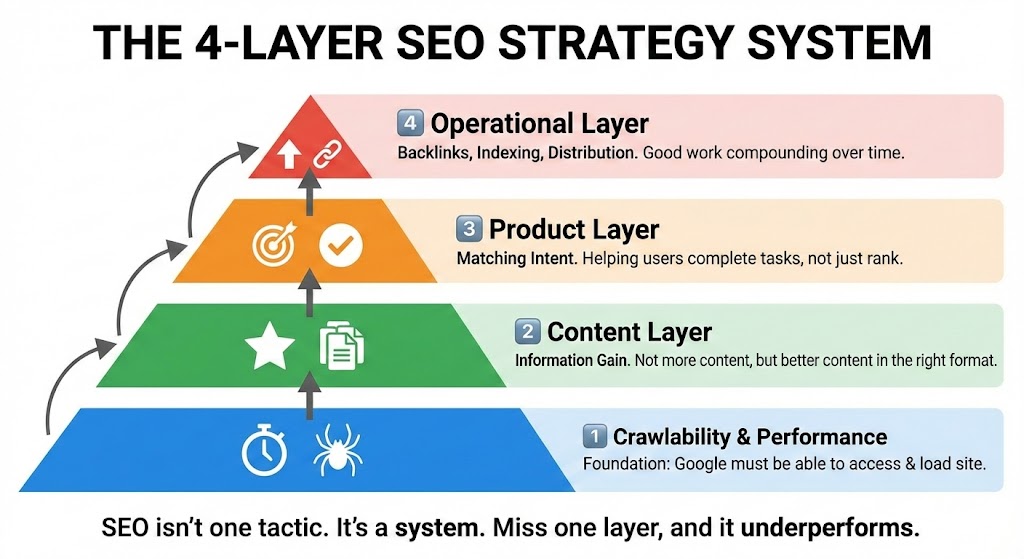
Will GEO replace SEO? No.
AI platforms still drive only 2-3% of Google's organic traffic. But growing at 165x the rate.
The answer: Run SEO GEO in parallel. SEO protects your base. GEO captures the future.
1
43
Apr 2
Try this today:
Search your top 3 keywords on both Google and ChatGPT. Compare the results.
You'll see the decoupling with your own eyes.
39