liquidity fragmentation aficionado
Joined October 2010
- Tweets 204
- Following 294
- Followers 669
- Likes 490
18 Photos and videos






stef retweeted

5 Jun 2021
I like blockchain tech quite a bit because it extends open source to open source state, a genuine/exciting innovation in computing paradigms. I'm just sad and struggle to get over it coming packaged with so much braindead bs (get rich quick pumps/dumps/scams/spams/memes etc.). Ew
270
636
5,587

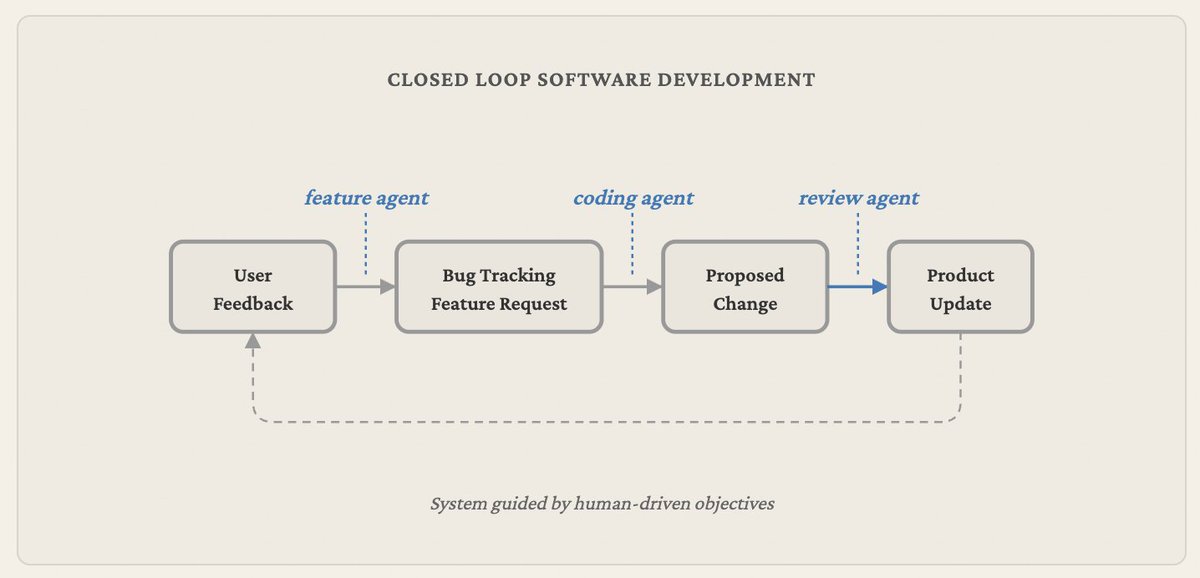
Closing the Software Loop
I've become convinced that it is possible to build a system that improves our core product with a shockingly high level of automation
Wrote down some thoughts on how I expect this to work and the implications
benedict.dev/closing-the-sof…
18
22
445
104,733

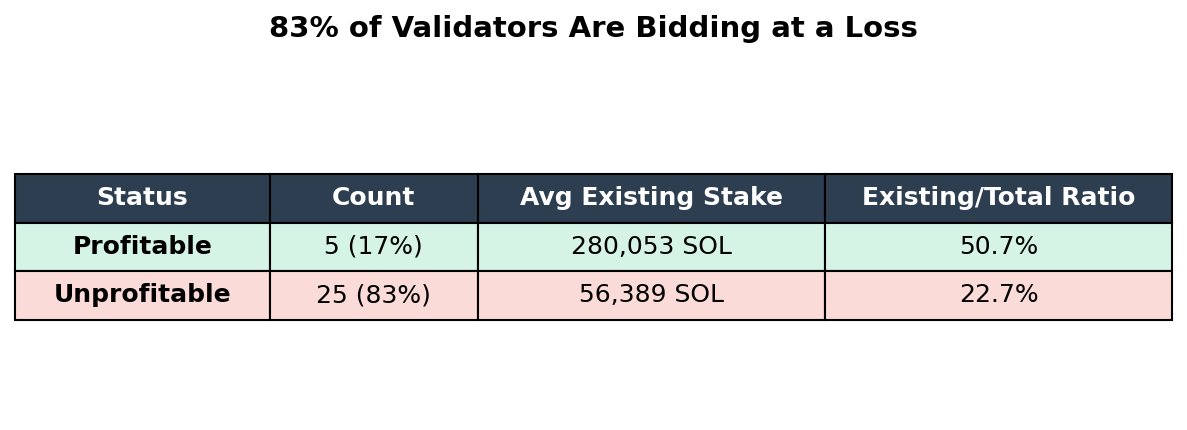
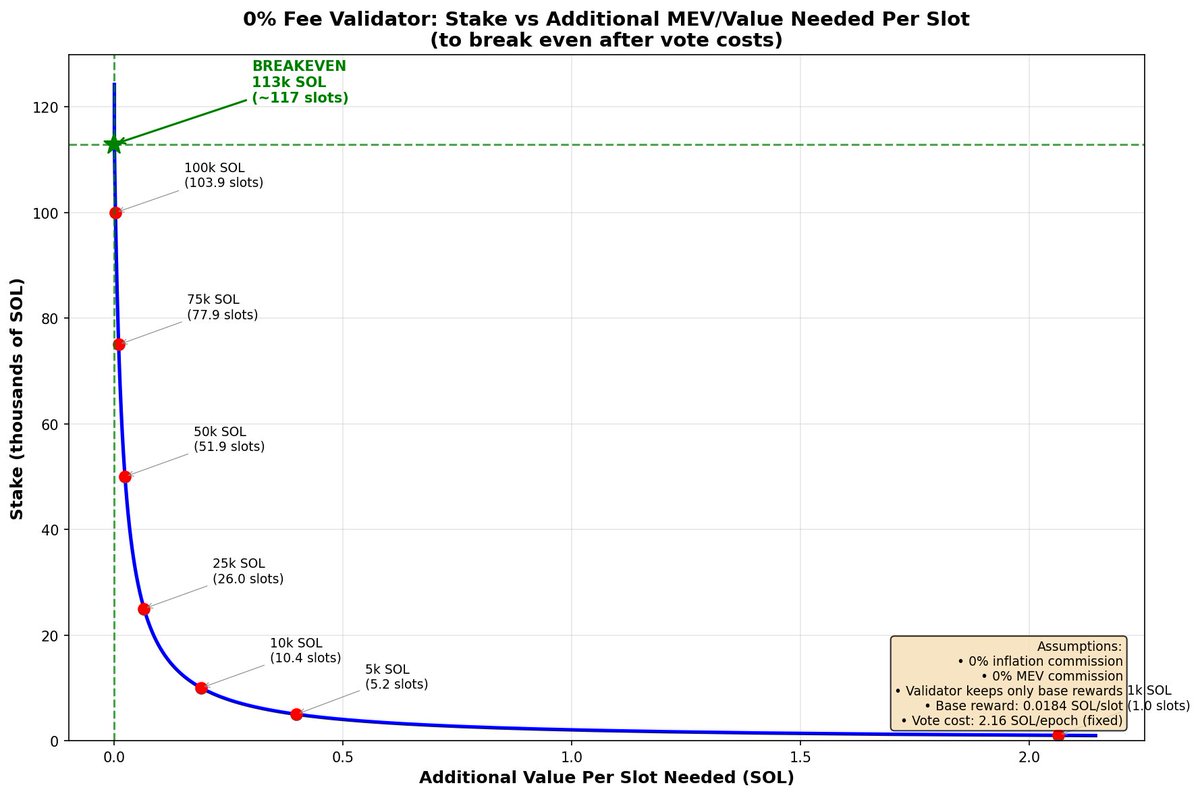
Breakpoint @thevaultfinance and @solblaze_org validator mixer coming up chatter about how small validators are disappearing on Solana got me curious about validator economics.
Here are some very back-of-the-envelope calculations, please correct me where wrong:
1
7
381
3m is far from a small validator, but there are other options. Community support systems are emerging with pools favoring ecosystem contributors (@AeroPool_ also has a great validator calculator!).
I also haven't considered @doublezero, @jito_sol BAM (wat is?) or incentives from @harmonic_gg block building system.
Additionally there are some "side-car" solutions emerging (@bulktrade ) although unclear how much that will be worth.
1
3
293
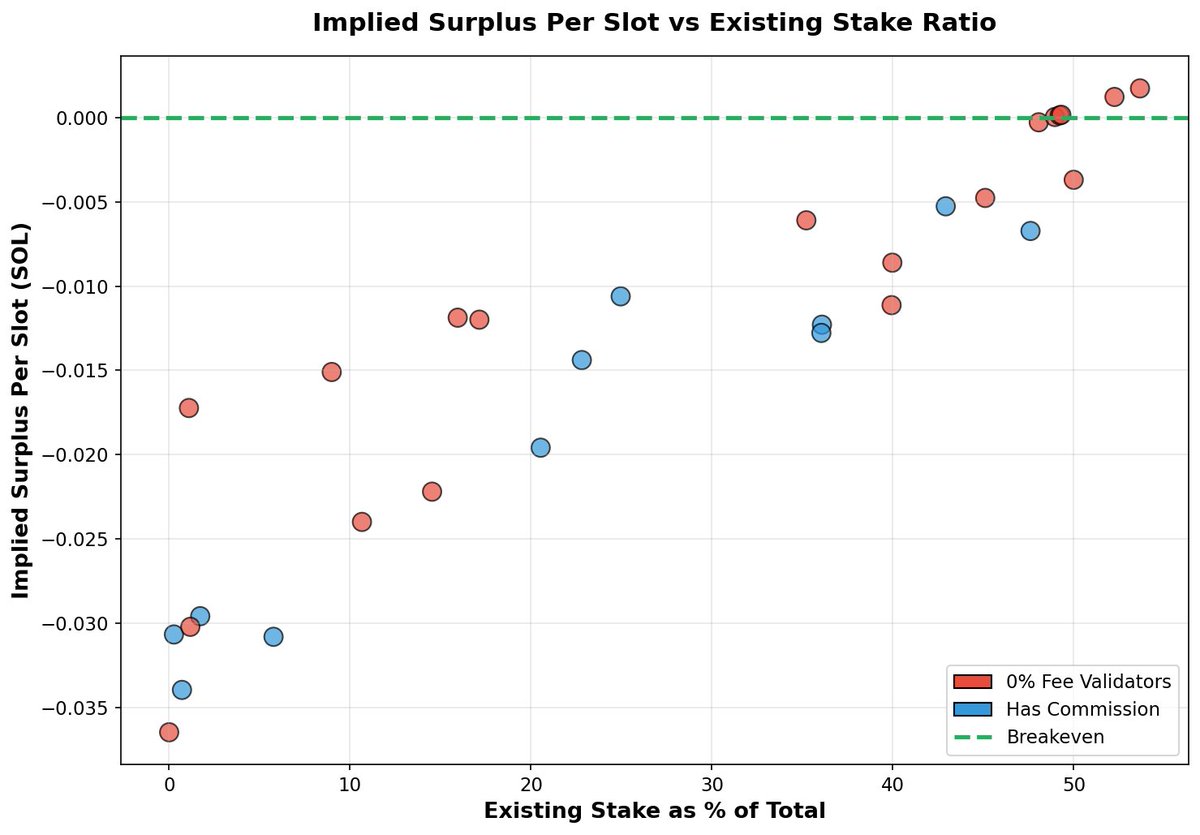
TLDR: The less stake you have, the more private flow you need🙃
Worst performers are losing 0.03-0.04 SOL (usually for 100k stake).
Some assumptions made:
- we charge 0% on inflation and MEV rewards
- have no server costs
- no delegation programme.
- 415.8M SOL staked, 432k slots/epoch, 186.87 epochs/year.
- 0.0184 SOL base reward per slot
- 2.162 SOL vote cost
(because an ecosystem should be healthy without protocol delegation).
> Math and thinking mainly done by LLMs 😉
5
255
Decent summary, but imo its mostly about flow and hedging:
Polymarket tends to track top-book odds. Depth may be thin, but if you quote worse than best available, arbers will lift it and hedge the other side.
Most books are KYC/geo-gated and limit winners. Because arb bots are ubiquitous anyone can get near-book pricing without juggling accounts, de-vigging, comparing odds, etc.
Current micro-structure is a function of retail flow atm.
6 Dec 2025

Liquidity on prediction markets is horrible.
The reason: There is little algorithmic market making.
It's responsible for 99% of liquidity in the crypto and stock markets, but barely exists for prediction markets.
Here are 3 reasons why MMing on Polymarket is a fool's errand:
1. One side of the market certainly goes to zero
Prediction markets are binary options that always make the shares of one side of the market ending up worthless.
Either YES or NO certainly goes to zero, and here's why that's a problem:
A key risk for market makers is inventory risk.
If you market make for an asset, it's impossible to not at some point end up with a slight exposure to one side (YES or NO).
Market makers always make money if the price of an asset goes sideways.
They lose money, when it moves in one direction.
To be profitable in the long run, the profit during sideways movements needs to offset the loss during periods of high volatility.
The fact that one side is CERTAIN to go to zero makes this much harder.
It is even IMPOSSIBLE to market make on prediction markets WITHOUT taking at the same time a directional bet on the outcome of the market.
2. Volatility is instant, causing losses for MMs
In prediction markets, an adverse event can hit at any time that moves the price instantly to 0:
1. Market "Who will Trump meet this month?"
2. Trump announces meeting with Putin.
3. Price of YES goes instantly to $1, NO goes to 0.
This is not possible in other markets.
Bitcoin might dump, but it will not go to zero over night.
Having limit orders in the books is therefore much more risky in prediction markets than in TradFi or crypto, because when news hit you might get filled against fast news traders.
Everyone who uses prediction markets experienced this already, and it's another factor that makes market making less attractive.
3. Much more insider activity
Insider trading makes the problem from above even more extreme:
If you have information that is not public, you can "eat the book" (= buy the liquidity that the market maker provides) even BEFORE your insider knowledge becomes public.
Like this, the market maker doesn't even have the chance to react.
In crypto market making, trading firms pull the liquidity from the books during times of high volatility.
This protects them against the risk of being filled one-sided during periods of high volatility and ending up holding the bag (what I mentioned in points 1 and 2).
But when insiders are active, this is impossible.
This means that EVERY market maker needs to incur a default level of losses that is unavoidable, coming from "smarter money" arbitraging their quotes.
In market maker lingo people call this "toxic flow".
And due to heavy insider activity, prediction markets are full of it.
The effect is that market making on markets with a lot of "toxic flow" becomes overall less profitable.
Therefore less people do it.
Therefore liquidity gets worse.
And that's how we end up with the situation of today, where market making is mostly being done:
- by manual traders
- who are fine with having directional exposure
Now you know. 🙌
1
2
570
stef retweeted

20 Nov 2025
How do MMs evolve into alpha-driven behemoths? It's fairly natural:
>C tier: market making without an alpha signal
How can I avoid getting picked off? Find alpha, make a model!
>B tier: market making, avoiding bad trades based on an alpha signal.
What if my alpha signal gets so good that I just want to position myself based on it?
>A tier: trading on an alpha signal. Some of these trades might be liquidity-adding, but this isn't the main intention any more.
>S tier: my alpha signal is too good. I have to avoid monetizing it too fast and leaking my intentions into the market before I can size up too much
(Citadel is here).
4
8
221
22,337