
An informational hub covering AI, digital identity, and likeness rights in the synthetic era.
Joined July 2018
- Tweets 1,576
- Following 223
- Followers 1,789
- Likes 465
279 Photos and videos



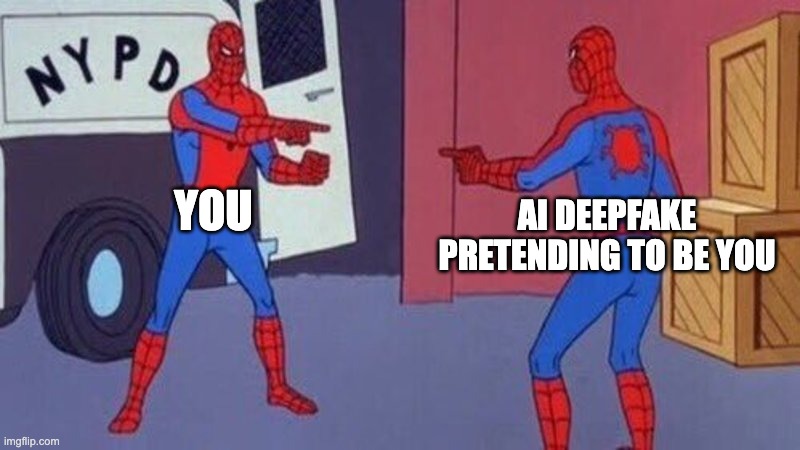

Jun 12
Paris Hilton's latest venture is a documentary. Not about her, about AI deepfakes.
Searching for Mr. Deepfakes is a 14-part investigative series. Journalist Laurie Segall spent three years tracking down the anonymous operator of a non-consensual deepfake pornography platform that drew 17 million monthly visitors at its peak.
Hilton's company produced it and distributed it through her TikTok account to 12 million followers.
The choice of platform is the whole argument. Investigative journalism about AI usually lives on premium streaming. This one lives on TikTok, which is one of the biggest platforms where deepfake content actually circulates in the first place.
adweek.com/media/paris-hilto…
1
2
53
Jun 10
Copyright protects what an artist has finished. It does not protect how they got there.
A bipartisan House bill introduced Tuesday tries to change that. The CREATOR Act would give visual artists a federal right to sue when someone uses AI to copy their distinctive style for commercial gain.
Most AI imitation does not copy a registered work. It studies the work, learns the style, and produces something new that looks unmistakably like the artist made it. Under current law, that is mostly legal.
The bill is still early and needs to pass, but the structural move it makes is the interesting part. Protecting style as a federal right reframes what intellectual property covers when the thing being copied is the method, not the work.
blog.adobe.com/en/publish/20…
29
Jun 8
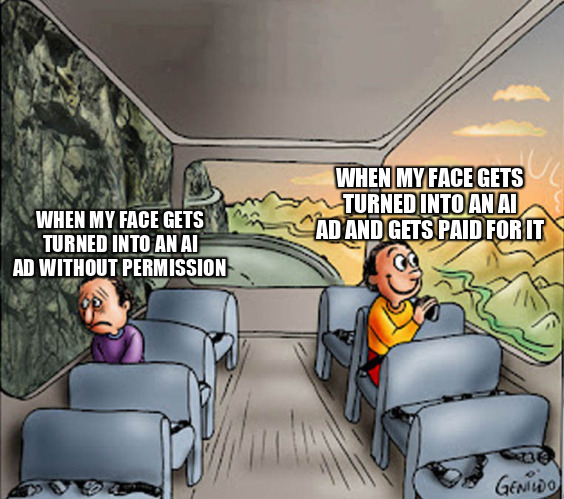
Francheska Pujols signed a modeling contract with Rainbow Shops in 2024. Then she started seeing herself in ads she never sat for. One showed her on a couch with bare feet. Another with a cocktail between her legs. The face was hers. The rest was AI.
She sued Rainbow on May 22 for using her likeness in AI-generated images after the contract expired.
The contract itself was the entry point. Pujols signed terms, showed up, got paid. The shoot generated source material that Rainbow apparently kept using long after the contract was supposed to limit it.
Consent at the shoot is no longer the whole story. The photos can be reshaped into images the original contract never covered, and the person who sat for them loses control of where her own face shows up next.
wwd.com/sourcing-journal/ind…
40
Jun 4
Most big tech companies have spent the last two years talking about AI safety. YouTube has been one of the few actually shipping it.
Creator disclosure tools in 2024. Likeness detection for public figures earlier this year, then for any adult two weeks ago. This week, automatic labeling that gets applied whether the creator discloses or not.
Disclosure at the top, detection in the middle, labeling at the surface. Each layer is built to catch what the previous one misses.
What YouTube has built is more than most platforms have. The next step is catching this before upload, not after.
blog.youtube/news-and-events…
44
Jun 3
The AI conversation in music has been stuck between two positions for a while. Block it at every turn, or let it run without permission and watch the artists whose work it depends on get nothing in return.
A new UMG-Spotify licensing deal points to a third option. Premium subscribers can use AI to remix and cover songs from participating UMG artists inside the Spotify app, with revenue flowing back to the artist and the rights holder.
The structure does the heavy lifting. Artists opt in at the catalog level. Use cases are defined in advance. Revenue is split. Attribution is required on anything fans make.
Fans get a creative tool that does not require dodging the copyright system. Artists get a new revenue line from work that was going to happen anyway. The creative side of AI can keep going.
newsroom.spotify.com/2026-05…
1
2
90
Jun 1
Stan Lee died in 2018. This past week, ElevenLabs signed a licensing deal with his estate to bring his voice and likeness back through AI.
It is part of a growing pattern. Estates and rights holders are working out how AI licensing should look one deal at a time. Val Kilmer earlier this year, Stan Lee now.
Each agreement raises the same questions. What does consent mean when the person cannot give it directly. How much source material is enough. Which use cases stay in bounds.
Lori McCreary at Morgan Freeman's production company put it well. The industry needs AI systems that respect consent, protect name, image, and likeness rights, and preserve the value of human creativity.
None of those four are automatic. The last one is the part you cannot really fix with paperwork.
variety.com/2026/biz/news/st…
1
2
54
May 29
Open your phone, scroll for 30 seconds, and find the most polished video in your feed. Now ask yourself, honestly, could you tell if it was AI?
Veriff put out a report this past week that answers that question, and the answer is not great. They surveyed 3,000 people across the US, UK, and Brazil. Americans scored 0.07 on a scale where 0 is random guessing. Not 70 percent. Zero point zero seven. We are basically guessing.
In one part of the study, seven out of ten Americans looked at an AI-generated video and said it was real.
The weird part is that most of the same people said they were worried about deepfake fraud. So we know it is out there. We just cannot spot it when it shows up in front of us.
Worse, most of us think we can. That is the part fraudsters are counting on.
globenewswire.com/news-relea…
1
2
61
May 27
"AI can't respect rights it can't see, and this means human consent is virtually invisible in this new digital era."
That is Nikki Hexum, co-founder and CEO of RSL Media, the nonprofit Cate Blanchett co-founded earlier this month with support from George Clooney, Tom Hanks, Meryl Streep, Viola Davis, and others.
RSL Media is building a machine-readable consent standard that AI systems can actually detect and act on. A free public registry launches in June, open to anyone, not just public figures with legal teams.
The idea is that whether you are a musician, a filmmaker, a writer, or a private individual, you should be able to set the terms for how your work and identity are used, and have those terms mean something in practice.
variety.com/2026/film/news/c…
1
137
May 26
Brazilian soccer star Vinícius Júnior's legal team has been chasing AI deepfakes that show him promoting financial products and betting apps he has no relationship with. He is one of the most recognizable athletes in the world, and even he cannot keep up with the volume.
This is the new front in athlete identity.
NIL (Name, Image, and Likeness) gave athletes a real licensing system in 2021, finally letting them earn from their own personal brand. Four years later, generative AI is producing fake endorsements at a speed and scale that licensing system was never built to handle.
The pattern reaches everyone from Premier League stars to college sophomores, but it lands hardest on athletes with the smallest support teams.
The next NIL battle is not about contracts. It is about protecting the athletes who built their personal brand and making sure they keep earning from their own likeness.
Read the full piece on what comes next: identity.org/why-ai-deepfake…
2
1
53
May 22
Film has never been afraid of new technology. Sound, color, CGI, each one changed the industry and each one became just another tool.
Peter Jackson recently called AI exactly that, just another special effect. His position was clear: if the rights have been licensed from the person whose likeness is being used, he sees no issue. What he objects to is when someone's face or voice ends up in something they never agreed to be part of.
Most of the debate around AI in entertainment misses that entirely. It tends to land in one of two places, either the technology should not be used at all, or resistance to it is pointless. The reality is simpler. The same tool can produce something legitimate or cause real harm, and what determines which one is whether the person being recreated had any say in it.
variety.com/2026/film/festiv…
1
51
May 20
When OpenAI released the ChatGPT Images 2.0 system card in April, the company acknowledged that the model's photorealistic outputs could, without safeguards, enable more convincing deepfakes of real people and events. One of the leading AI labs put that on record about its own product.
According to Chainalysis, the average AI-assisted crypto scam now nets around $3.2 million, roughly four and a half times what a conventional scheme produces, and the tools behind them are consumer products available to anyone with a subscription. The results are already showing up in real cases.
A crypto founder recently joined what appeared to be a routine Teams call with a known contact. The face matched, the voice matched, colleagues were present. The call was entirely fabricated and his laptop was compromised before he realized anything was wrong.
The credibility of these scams has gone up considerably while the effort required to execute them has come down.
cryptoslate.com/ai-scams-in-…
1
2
63
May 19
McConaughey made an argument at a town hall earlier this year that more people in this space should be making. "Own yourself, voice, likeness, whatever you gotta do, so when it comes, no one can steal you."
The word that matters there is own. Not protect, not defend, not fight back. Own.
If someone's voice, face, or likeness is being used to make money or build a product, that person should have the right to say yes or no, and if they say yes, they should benefit from it. There is no convincing reason it should work differently here than it does with any other form of ownership.
Right now the default runs the other way. Likenesses get used, money gets made, and the person it belongs to is the last to know.
variety.com/2026/digital/new…
1
1
39
May 18
Major platforms have had a year to prepare, and the deadline is now here.
The Take It Down Act requires covered platforms to remove nonconsensual intimate images, including AI-generated deepfakes, within 48 hours of a reported request. This past week the FTC sent compliance letters to more than a dozen companies, including Meta, TikTok, Snapchat, Reddit, Apple, Microsoft, and X.
The 48-hour window is where the real work is. Platforms handling millions of uploads daily need systems that can receive, review, and act on requests quickly, and for smaller platforms without the same resources, building that reliably is a much heavier ask.
Claiming compliance on paper is one thing. What will be more telling is how these systems hold up once they are actually running.
2
2
88
May 15
More than $1.1 billion in deepfake fraud losses have come from fake celebrity investment endorsements, which accounts for more than half of all reported deepfake fraud losses globally.
A familiar face creates immediate credibility, and by the time people realize the video was fabricated, the money is often already gone.
The financial damage hits victims directly, but the person being impersonated carries a different kind of cost. Their name and credibility get attached to a scam they never participated in, and that association is difficult to undo once it has reached millions of people.
Deepfakes are widely treated as an entertainment or misinformation problem. A large and growing portion of the real-world harm they cause is financial, and celebrity impersonation is the primary vehicle driving those losses.
1
76
May 14
Kentucky has synthetic media disclosure laws on the books.
During an actual congressional primary this year, one ad showed a congressman holding hands with political figures he has publicly opposed for years.
This is the problem lawmakers keep running into with AI disclosure legislation. Passing a law and enforcing it at the speed content travels online are two entirely different challenges. By the time manipulated content gets flagged, labeled, or debunked, most people have already seen it, reacted, and moved on.
The more difficult question is what meaningful enforcement looks like once content is already circulating at scale. Right now, most of the response is still happening well after the damage is done.
lpm.org/news/2026-05-05/ai-d…
1
40
May 13
Not long ago, AI-generated video was relatively easy to identify. Movement looked unnatural, audio sometimes drifted out of sync, and faces produced small distortions that gave the content away on closer inspection. Most people could catch it.
Tools like Sora 2 and Google's Veo 3 have changed that significantly. Both can produce polished, convincing video in minutes, and neither requires technical expertise or expensive software to use. Any consumer with access to the tools can generate footage that most people scrolling past would not stop to question.
When OpenAI first released Sora, realistic videos using recognizable public figures spread almost immediately. Most were taken down quickly, but the episode showed how capable the technology had already become. What exists now is considerably more advanced and considerably more accessible.
The detection side of this has not kept pace. Most systems still used to identify manipulated content were built for an environment where producing convincing fakes required real skill and time. Updating those systems to reflect what the tools can do now is an open and pressing problem.
1
55
May 12
For years, Identity.org was focused on privacy-first identity solutions. The core belief was always the same: people should be in control of their own digital presence.
That hasn't changed, but the world around it has. AI systems are now being trained on people's faces, voices, and likenesses, often without clear consent or transparency. The questions around who owns your identity and what rights you have are still being worked out, and they matter to a lot of people.
So we've refocused the site to cover exactly that. We'll be writing about the news, the legislation, and the real-world cases that are shaping how digital identity gets treated in the age of AI.
If that's something you want to follow, subscribe to our blog at identity.org. We'll share our take as things develop.
35
May 11
At this year's Met Gala, fake photos of Nicki Minaj reached millions of views before enough people flagged them. Lady Gaga and Dua Lipa were portrayed as attending an event they never went to, and fabricated Kendall Jenner images spread across platforms before most people caught on.
Katy Perry walked in wearing a glove with six fingers, one of the most recognized visual markers people associate with AI-generated imagery. After fake Met Gala photos of her went viral two years running, the detail read as a direct reference to the problem.
Public figures have started responding to AI impersonation in ways that are hard to ignore.
Beyond what Perry wore, celebrities have pursued lawsuits, filed trademark claims, and pushed platforms to act. The response has moved from private frustration to public action, and this year's Met Gala put that on full display.
cosmopolitan.com/style-beaut…
336
May 8
For the first time in the United States, someone has been convicted under a federal law specifically written to address AI-generated nonconsensual imagery.
A man from Ohio pleaded guilty this month after using AI tools to fabricate explicit images of real people and use them to harass multiple women. For years, situations like this had almost no legal recourse.
The Take It Down Act was the first federal law built for this, and this is the first time it has been enforced. Regulations still have a long way to go, but a first conviction matters. It establishes that fabricating someone's image to cause harm is a federal crime, and that people can be held accountable for it.
🔗:nytimes.com/2026/04/08/us/de…
1
1
64
May 6
Last week we wrote about YouTube opening its deepfake detection tool to all public figures. The announcement got a lot of attention, and for good reason.
YouTube has 2.85 billion monthly active users and has paid out more than $70 billion to creators over the last three years. For a platform that size to decide that protecting someone's likeness is its responsibility, not just the individual's, is a real shift in how this is being handled.
Most platforms have not done anything close to this. The problem is far from solved, and a lot of people still fall outside what the tool covers. But when a platform this size moves in a particular direction, others have a harder time making the case that it cannot be done.
🔗 Read our latest blog to go deeper on what this signals.
identity.org/youtube-signals…
1
2
73