The Internet Marketing Agency | Design. Development. Marketing | Get a better website and marketing strategy today. Start seeing results tomorrow.

Joined January 2009
2,679 Photos and videos
Pinned Tweet
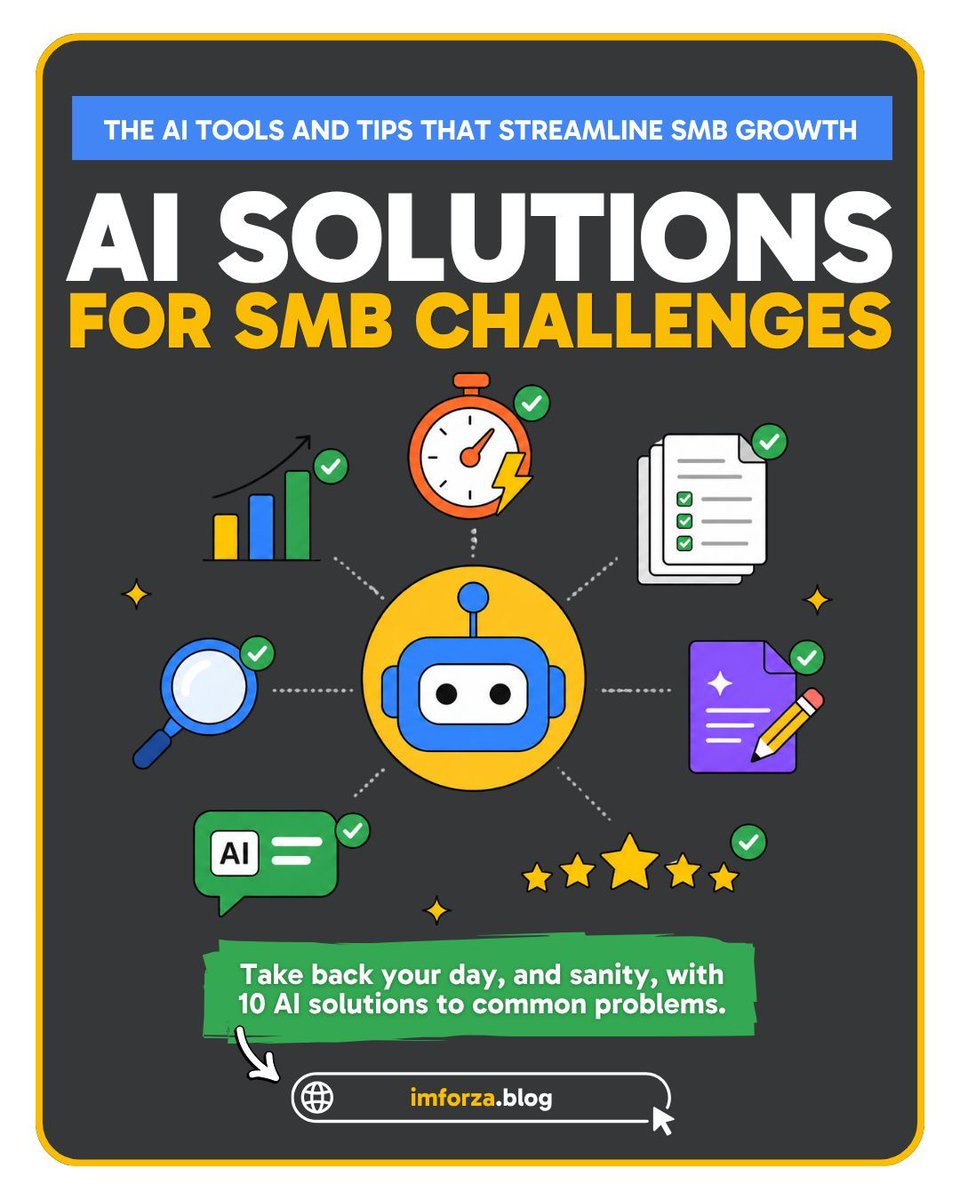
A customer fills out your form at 9 a.m. while you are on a job, behind the counter, or in a chair with a client. You see it at lunch. By then they have already hired the business that called them back first. You never even find out you lost them. That single gap, the time between a customer raising their hand and someone responding, is one of the most expensive problems a small business has. And it is one of ten that AI can now close for a few dollars and a few hours of setup. We just published a new guide: Real AI Solutions for Your Everyday Small Business Challenges. It is not a list of shiny tools. It is the real problems you actually have, the specific AI that solves each one, a real example, the honest cost, and the one thing you can do today. Inside you will find: ⏱️ How to cut first-response time from hours to seconds, and why that makes you up to 21 times more likely to win the customer 🧾 The exact free and low-cost tools for each problem, from missed calls to reviews to knowing what's actually working 📊 Why 95% of companies investing in AI get zero return, and the simple 4-question filter the winning 5% use before buying anything 💬 Honest costs throughout: what you can do for $0 to $150 a month yourself, and when done-for-you makes sense 🤝 The pattern that holds up across every challenge: AI to scale, people to perform This is not a generic "AI is the future" article. It is a practical map for a busy owner who needs to fix one expensive problem this quarter, not overhaul everything. Read the full guide 👉 imforza.link/ZLeL5jw
3
1
12
456,081
A lead messaged you at 9 a.m. You replied at lunch. They already hired whoever called back first. Reply in 5 minutes instead of 30 and you're 21x more likely to win. AI isn't the fix. The problem you point it at is. Full guide: imforza.blog
7
📰 #imNEWS: @HubSpot says AI search is becoming a serious buying signal, not just another discovery channel. In a January 2026 survey of 3,000 CRM decision-makers, AI search was the strongest predictor of purchase intent, ahead of demos, review sites, and sales calls. Buyers who used AI search were 36% more likely to purchase, which means answer visibility is starting to matter directly to pipeline. 🔑 3 Key Takeaways ① AI search is influencing real purchase decisions 42% of CRM buyers used AI search during evaluation. Those buyers were 36% more likely to purchase than buyers who did not use AI search, making answer visibility a revenue issue, not just an SEO talking point. ② AEO leaders are already seeing lift HubSpot says customers actively optimizing for AI search are seeing 20% more traffic from AI visits, 170% more MQLs, and 82% more deals than comparable customers that are not optimizing. That is a big gap for a discipline most companies still treat as experimental. ③ Organic traffic decline does not mean demand disappeared HubSpot says organic traffic to customer websites declined 27% year over year. The buyers are still asking questions, but more of those questions are happening inside ChatGPT, Claude, Gemini, and other answer engines before a website visit ever happens. ✅ Action Item Audit the questions your best prospects ask before they buy, then search those questions in ChatGPT, Claude, Gemini, and Google AI results. If your business, reviews, comparison content, social proof, and educational pages are not showing up, build content and third-party signals around those exact buying moments. Source: imforza.link/EsZwVda
45
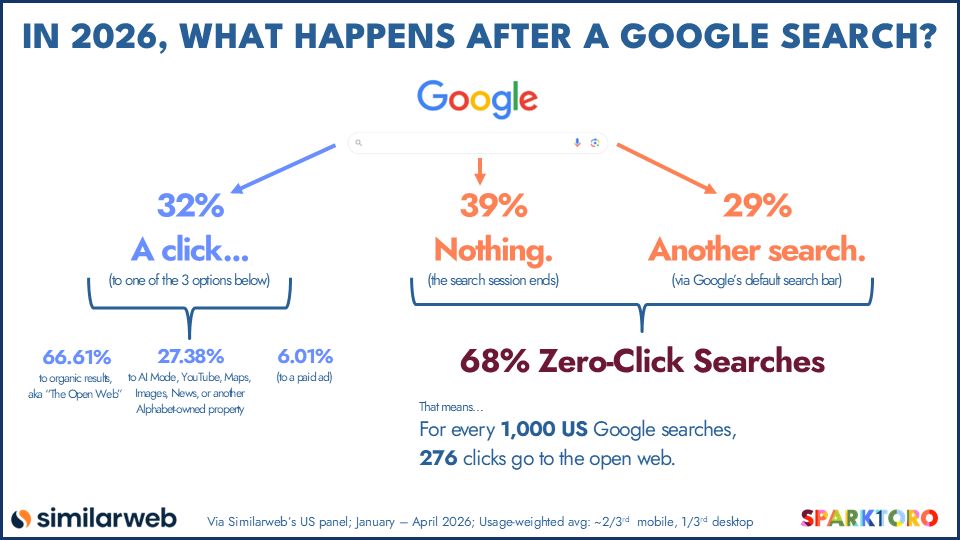
68% of Google searches now end without a click. This week in #imNEWS: > SparkToro: clicks are drying up > Claude Fable 5 can run full workflows > Google ties local actions to Analytics Score your marketing on customers, not clicks. imforza.link/subscribe
16
📰 #imNEWS: @GoogleAds is expanding richer Home Listing formats for Local Services Ads across all 50 U.S. states after a limited pilot. The new experience shows for-sale property details inside Google Search, including pricing, images, home features, neighborhood data, and promoted buyer’s agents, with calls, messages, and appointment booking built into the ad experience. 🔑 3 Key Takeaways ① Local Services Ads are moving closer to the listing experience Google is not just showing a generic real estate lead ad. Homebuyers can now see specific property information in Search before choosing whether to call, message, or book with a local agent. ② The format is built for lead performance, not clicks Google’s support doc says Home Listings Ads follow the Local Services Ads model: advertisers pay for leads, not impressions or clicks. Reporting includes impressions, lead volume, top impression share, absolute top impression share, and spend, but there is no separate dashboard breakdown by ad format. ③ Eligibility depends on real estate LSA setup Agents need a verified Google Business Profile, a Local Services Ads campaign linked to that profile, and Buyer’s agent or Seller’s agent job types enabled. Google says existing LSA agents may appear automatically, while new agents and portal partners can enroll. ✅ Action Item If you work with real estate agents or manage local ads, check whether Buyer’s agent and Seller’s agent job types are enabled in Local Services Ads. Then review lead inboxes for property IDs and compare lead quality against standard LSA activity so you know whether this new format is producing better buyer intent. Sources: imforza.link/K3VoeVX / imforza.link/Kt2ck21
1
26
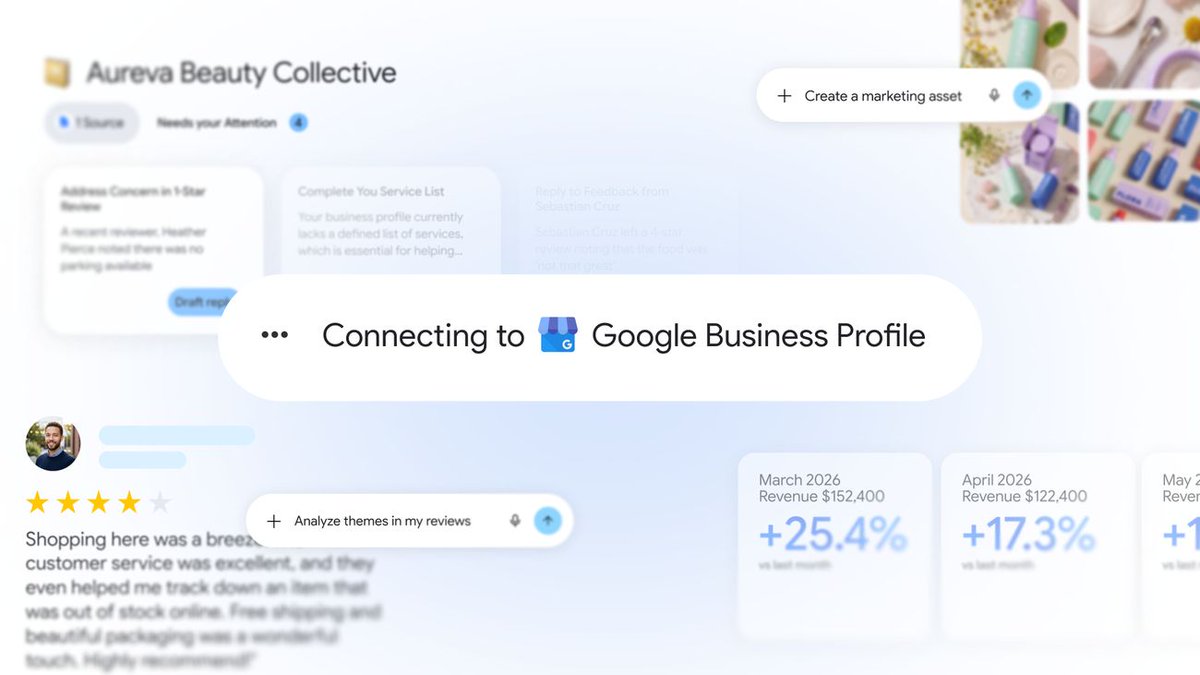
📰 #imNEWS: @Google is rolling out new Gemini features for small businesses, including a Google Business Profile connection and proactive Business notebooks. The update lets Gemini use real business context like reviews, customer questions, performance data, website content, and profile details to help owners respond faster, spot gaps, and manage day-to-day work. It matters because AI is moving closer to the operating tools small businesses already depend on: Search, Maps, reviews, and local customer intent. 🔑 3 Key Takeaways ① Gemini Gets Local Business Context Gemini will soon connect directly to Google Business Profile, giving it access to customer reviews, questions, engagement data, and profile details. That means business owners can ask more practical questions, like how the business performed this month or how to respond to a specific review. ② Business Notebooks Turn AI Into a Working Hub Google is adding Business notebooks so owners can organize chats, sources, their website, and Business Profile context in one place. The bigger value is continuity: Gemini can pick up prior work, analyze trends, generate brand-matched creative, and surface recommendations without starting from zero each time. ③ AI Is Moving Into Daily Operations The most useful part is not another chatbot feature. It is the connection between AI and the routine work small businesses already do: profile updates, customer responses, holiday hours, pricing ideas, positioning, and campaign planning. ✅ Action Item If your business relies on local search, audit your Google Business Profile this week. Clean up hours, services, photos, FAQs, reviews, and website links now so any connected AI assistant has accurate context when these features reach your account. Source: imforza.link/5KfqX5s
1
139
Before you buy another AI tool, run it through 4 questions: 1. Does it solve a problem you can name? 2. Does it connect to what you already use? 3. Cost per outcome, not per month? 4. Will a person still own the judgment? One no is a no. Full guide: imforza.link/ai-fix-it
1
1
161
Before you buy another AI tool, make it pass 4 questions: 1. Solves a problem I can name? 2. Connects to what I already use? 3. Cost per outcome, not per month? 4. A person still owns the judgment? Most AI regret dies at question 1.
8
A customer filled out your form at 9 a.m. You saw it at lunch. They already hired whoever called back first. You will never get a notification telling you that you lost them. Fix lead response before any fancy AI project.
8
58% of small businesses use AI. 95% of AI investments return nothing measurable. The gap is not the tool. It is whether you solved a problem you can name. Pick one expensive problem. Point AI at it. Full guide: imforza.blog
10
📰 #imNEWS: @AnthropicAI launched Claude Fable 5, a new generally available Mythos-class model, alongside Claude Mythos 5 for trusted cyberdefense and infrastructure partners. Fable 5 is Anthropic's most capable public model yet, with stronger performance on software engineering, knowledge work, vision, long-context tasks, and scientific research, but it uses conservative safeguards that route some sensitive requests to Claude Opus 4.8. For businesses, the story is not just a faster model. It is the next phase of AI agents becoming useful for longer, messier, higher-value work. 🔑 3 Key Takeaways ① Longer-horizon AI work is getting more practical Fable 5 is built for complex tasks that run longer than previous Claude models. Anthropic says early testers saw major gains in agentic coding, document analysis, vision-heavy work, and scientific research, including examples where work that normally takes teams weeks or months was compressed dramatically. ② Safety and access are now part of the product strategy Anthropic is splitting access between Fable 5 for general use and Mythos 5 for trusted partners with some safeguards lifted. That matters because advanced AI capability is no longer just about model quality. It is also about who gets access, what requests are routed elsewhere, and how companies manage risk. ③ Pricing and rollout will shape adoption Fable 5 and Mythos 5 are priced at $10 per million input tokens and $50 per million output tokens. Fable 5 is available in the API today, while subscription access is included only through June 22 before shifting to usage credits on June 23 unless Anthropic extends capacity. ✅ Action Item Pick one high-value workflow where your team already uses AI but still has to babysit every step. Test whether the newest frontier model can handle a longer chain of work: research, draft, QA, revision, and final handoff. The opportunity is not replacing one prompt with a better prompt. It is redesigning the workflow around deeper autonomy and clearer human review points. Source: imforza.link/DE7Z5H4
1
110
58% of small businesses use AI. 95% of AI investments return nothing measurable. The gap is not the model. It is that the businesses getting nothing bought a tool instead of solving a problem they could name.
10
📰 #imNEWS: @SparkToro published new 2026 research showing that 68.01% of Google searches now end without a click, meaning less than one third send any click onward. The study, based on Similarweb clickstream data from January through April 2026, points to AI features, instant answers, Google-owned properties, and changing user behavior as major reasons search keeps more activity inside Google. 🔑 3 Key Takeaways ① Zero-click search is accelerating Google zero-click searches in the US rose from 60.45% in 2024 to 68.01% in early 2026. SparkToro says that is the fastest acceleration of the trend in the last decade, likely helped by AI Overviews appearing on a growing share of searches. ② Traffic is no longer the whole story SparkToro argues that simply getting better at SEO will not recover the same traffic patterns businesses used to rely on. SEO still matters, but its value is increasingly tied to influence, brand visibility, AI answers, local intent, and high-intent searches rather than raw referral volume. ③ Marketers need a zero-click plan The recommendation is to stop treating website visits as the only proof that marketing worked. Brands need to show up where their audience already pays attention: LinkedIn, YouTube, Reddit, newsletters, podcasts, short-form content, and the search results themselves. ✅ Action Item Review your marketing dashboard this week and separate traffic metrics from influence metrics. Keep SEO in the mix, but add signals like branded search, direct demand, assisted conversions, social engagement, newsletter growth, and qualified lead quality so you are not measuring 2026 marketing with a 2016 scoreboard. Source: imforza.link/Noe00Vz
3
1
51
📰 #imNEWS: @Apple used WWDC 2026 to show the rebuilt Siri and broader Apple Intelligence upgrades in iOS 27, including a Google Gemini collaboration, a dedicated Siri app, on-screen awareness, app actions, and tighter Spotlight integration. The bigger signal: Apple is turning AI from a standalone feature into a system layer across search, writing, apps, photos, and everyday workflows. 🔑 3 Key Takeaways ① Siri Is Becoming an App Layer The new Siri gets a dedicated app, a Dynamic Island-based interface on iPhone, Spotlight integration on Mac, and private iCloud sync for Siri chats. Apple is positioning Siri less like a voice command tool and more like a persistent assistant that can move across devices and contexts. ② Apple Intelligence Is Moving Into Core Apps Safari, Passwords, Messages, Mail, Calendar, Phone, Home, Shortcuts, Image Playgrounds, and Photos are all getting AI-driven features. That matters because Apple is embedding AI where people already work instead of asking them to adopt a separate tool. ③ Rollout Limits Still Matter Siri AI starts in English, launches in beta later this year, and will not be available in the EU or China at first. Apple also says some Apple Intelligence and Siri AI features will have daily limits, with higher limits for iCloud subscribers. ✅ Action Item Audit the customer and team workflows that already happen inside default apps: email, calendar, search, notes, browser tabs, and photos. The next wave of AI adoption will come from tools people already use, so your business should design processes that work with embedded assistants, not just separate AI apps. Source: imforza.link/uUjYUJK
438
📰 #imNEWS: @perplexity_ai published a new study on how AI agents are changing knowledge work, based on real-world use of its Computer product with Harvard Business School researchers. The data shows agents move users from manual execution into supervision, with more work happening across tools, disciplines, and higher-complexity tasks. For marketers and operators, the signal is clear: AI value is shifting from answering questions to completing workflows. 🔑 3 Key Takeaways ① Agents do more of the actual work Perplexity found that Computer performs 26 minutes of machine execution per session on average, compared with 33 seconds for Search on matched tasks. That is a 48x increase in machine work on similar requests, with the user spending more time setting goals, approving steps, and reviewing output. ② Workflow cost drops when execution moves to the system Using tool-based estimates, Perplexity says the average Search plus human task takes 269 minutes, while the matching Computer plus human workflow takes 36 minutes. The study estimates an 87 percent reduction in task time and a 94 percent reduction in task cost, with the biggest gains in complex, multi-step work. ③ The work itself gets broader Computer users crossed occupational boundaries more often than Search users and took on more Create-level tasks. The study found Computer tasks required more knowledge domains, more work activities, and more work that did not appear in comparable Search usage. Search explains. Agents produce. ✅ Action Item Pick one recurring workflow where your team still uses AI for advice, then manually does the work afterward. Write down the goal, inputs, tools, approval points, and final deliverable. That map will show whether the next improvement is a better prompt or a real agent-style workflow. Source: imforza.link/YQg4lIM
29
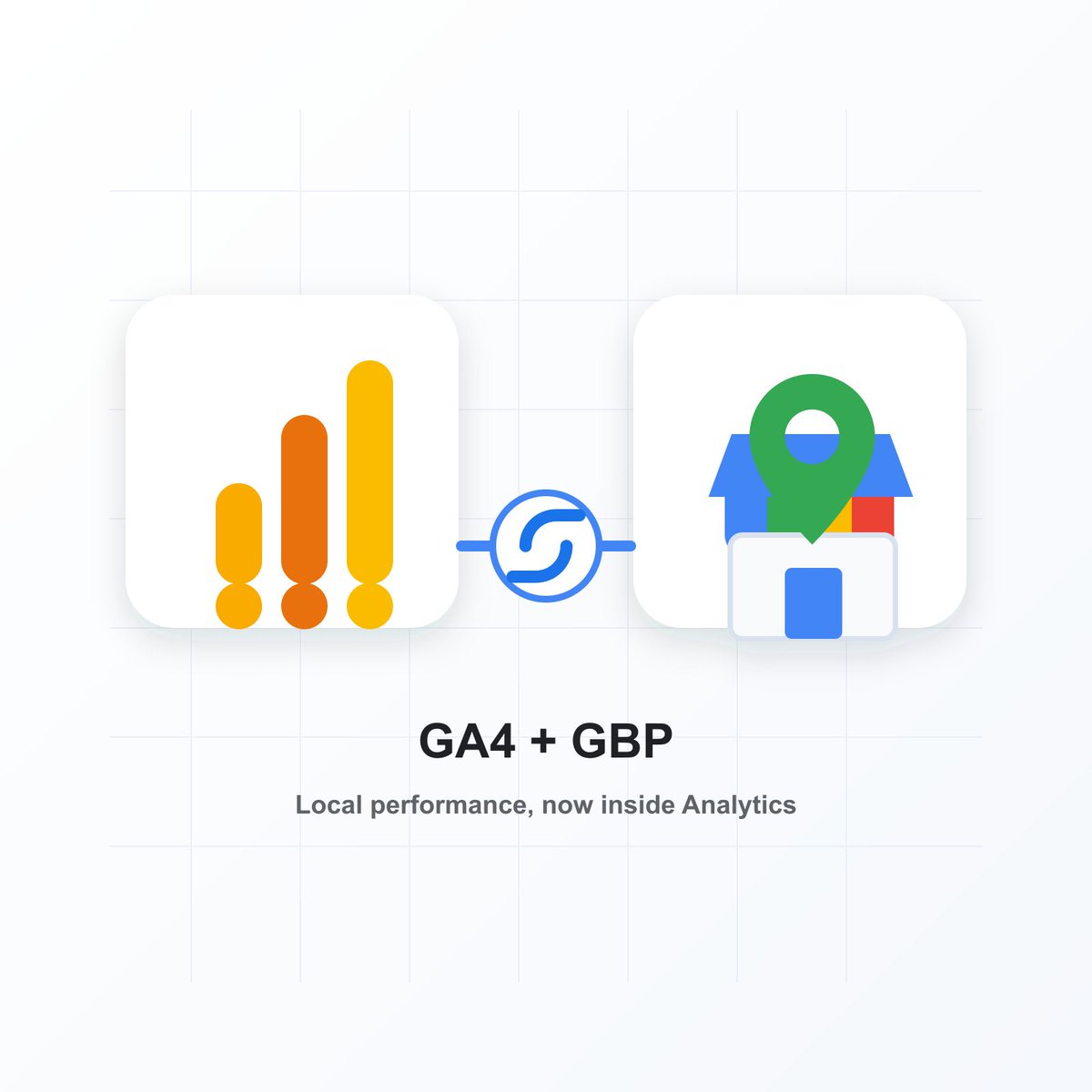
📰 #imNEWS: @Google now documents a direct link between Google Analytics properties and Google Business Profile, bringing local Search and Maps engagement into GA reporting. Once connected, businesses can see Profile interactions like website clicks, calls, directions, messages, bookings, and menu actions alongside website and app data. For local businesses and multi-location brands, this makes GBP performance easier to connect to the broader customer journey. 🔑 3 Key Takeaways ① GBP Data Moves Into GA Google Analytics can now show a dedicated Google Business Profile reporting collection after a link is created. That means local engagement no longer has to live only in the GBP dashboard. ② Useful Metrics, Real Limits The integration includes interactions such as website clicks, calls, directions, messages, bookings, and menu actions. The catch: Google says GBP data is limited to the last 6 months and cannot be used in custom explorations, comparisons, or filters. ③ Multi-Location Reporting Is Aggregated One GA property can link to multiple Business Profiles, but the metrics are summed across linked profiles. That is useful for executive visibility, but not a substitute for location-level analysis. ✅ Action Item If local visibility matters to your business, check whether your GA4 property is linked to your Google Business Profile. Then create a simple monthly view that compares GBP actions, organic traffic, and conversions so you can spot whether local discovery is producing real customer intent. Source: imforza.link/RLurryL
2
2
64
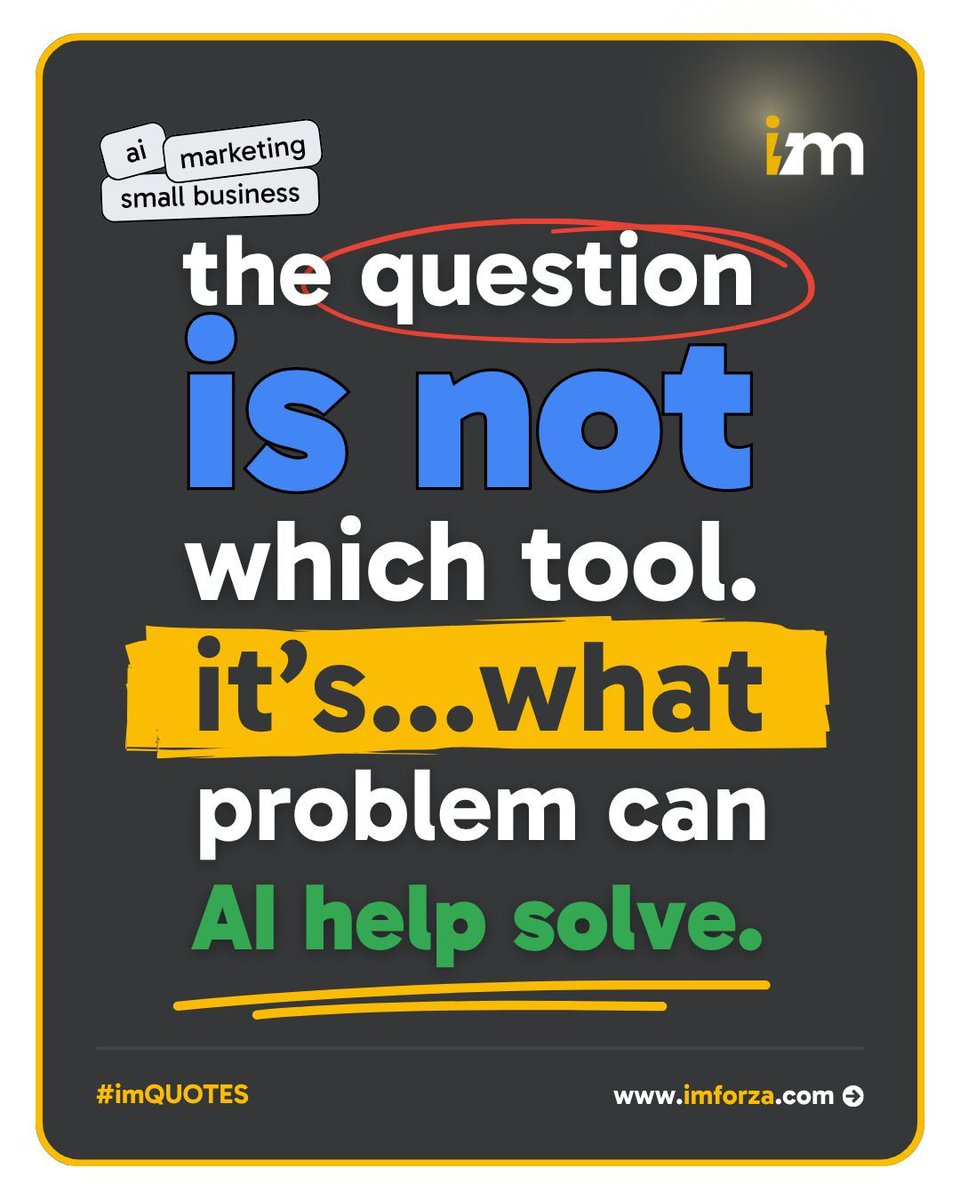
📜 #imQUOTES: What would change for your business if you stopped asking "which AI tool should I buy?" and started asking "which problem should AI fix first?" "The question is not which tool. It's what problem can AI help solve." That reframe is why 95% of companies investing in AI see no return while a small group quietly pulls ahead. The losing pattern looks productive. You sign up for the trial, watch the demo, add the app to the pile, and three weeks later it is a tab you never open. You bought capability you never connected to a real job. The winning pattern is boring and it works. You name the expensive, repeating problem first. The customer who got missed after hours. The quote that took three days. The review request that never went out. Then you point AI at that one problem and wire it into how you already work, with a person still steering. What it looks like in practice: 🎯 Name the problem - Pick the single workflow that costs you the most money or time, and be specific about who owns it 🔌 Solve it as one connected flow - Choose AI that talks to your inbox, calendar, or customer list, not another standalone app 📈 Prove the payback, then add the next - Measure it in booked jobs or hours saved, and only expand once it works Pick your most expensive problem. Point AI at it. Prove it pays. Then grow from there.
1
34
Is your website traffic lying to you? Bots now outnumber people on parts of the web. Google is separating AI search reports. Meta wants AI answering more customer messages. Raw visits are getting noisier. Watch what points to customers. imforza.link/subscribe
14
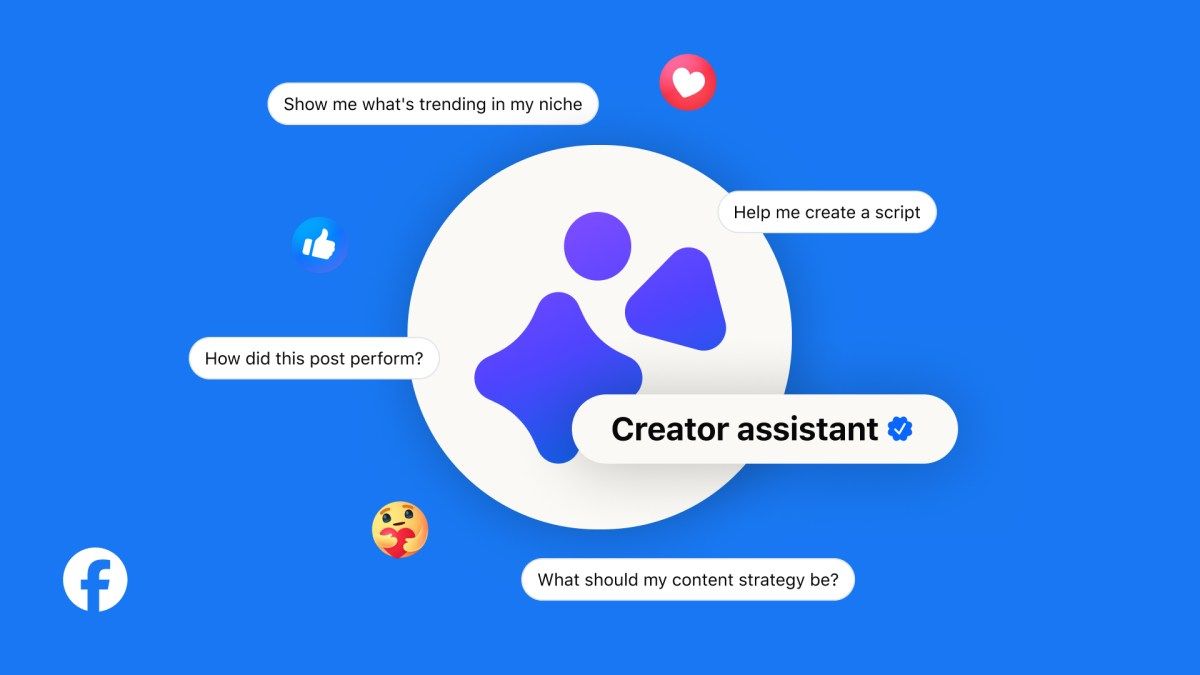
📰 #imNEWS: @Meta is rolling out Creator Assistant on Facebook, an AI partner built into the creator dashboard that turns performance data into recommendations, content ideas, and follow-up answers. It also says more than 500 million people now watch AI-translated Facebook videos weekly, with Reels translations expanding to Arabic, Bahasa Indonesian, French, Thai, and Vietnamese. For creators and marketers, the bigger signal is clear: platforms are moving from reporting what happened to actively recommending what to do next. 🔑 3 Key Takeaways ① Creator Analytics Are Becoming Conversational Facebook creators will be able to ask why a Reel outperformed, how their audience has shifted, or what to try next. That turns analytics from a dashboard review into a working conversation, which is where a lot of creator tooling is headed. ② AI Is Moving Into Content Planning Creator Assistant uses a creator’s style, performance, community, goals, and Facebook trends to suggest new angles and ideas. That means platform-native recommendations may start shaping what creators publish, not just how they measure it. ③ Translation Is Becoming A Reach Multiplier Meta says more than 500 million people watch AI-translated Facebook videos weekly. With more languages coming and optional lipsyncing, creators can reach new audiences without rebuilding every asset from scratch. ✅ Action Item If you publish video, start tracking which posts could work beyond your current language or region. Build a short list of evergreen Reels or social videos that are worth translating, then test one translated version before making it part of your regular workflow. Source: imforza.link/GcRv1Bb
36
📰 #imNEWS: @YouTube announced Search profiles, a new official Google Search presence for eligible creators with sizable followings on YouTube or other video and social platforms. The profile is a shareable, customizable page that pulls together social accounts, websites, posts, links, bio, avatar, and pinned videos in one verified place. For creators, agencies, and brands, the move turns creator identity into a structured Search asset instead of a scattered set of platform links. 🔑 3 Key Takeaways ① Creators Get A Verified Search Hub Search profiles are designed to help fans, collaborators, and brands find accurate, up-to-date information directly through Search and Discover. That matters because creator discovery often starts with a name search, not a platform-specific search. ② Knowledge Panels Can Get Stronger Google says eligible creators can use Search profiles to trigger or enhance a Knowledge Panel. That gives creators a more professional visual snapshot when people search for them and creates a clearer path from search intent to owned profiles and priority links. ③ Personal Brand Data Needs Governance Creators can customize the profile with a bio, avatar, links, posts, and pinned videos. That turns profile maintenance into an ongoing visibility task, not a one-time setup item. ✅ Action Item If your business relies on a founder, expert, creator, or public-facing team member for trust, audit what appears when people search their name. Make sure the official site, key social profiles, current bio, best content, and preferred contact path are consistent before Google starts packaging that identity for you. Source: imforza.link/2cpaKdm
63