
evidence and argument for a developing world
Joined November 2025
- Tweets 28
- Following 304
- Followers 721
- Likes 25
3 Photos and videos
In Development retweeted

Jun 3
In case helpful as additional context, I recently wrote about the African Medicines Agency for @indevmag, which you can read here: indevelopmentmag.com/can-afr…
1
2
238
In Development retweeted

May 26
Worth reading this comprehensive piece on India's opioid crisis by @akshaygn01 in @indevmag:
indevelopmentmag.com/cheap-d…
h/t @notanastronomer
1
3
7
954
In Development retweeted

May 21
When I started working on projects to support young people who inject drugs in India, I had so many questions about why we’ve made it hard to get on treatment when there’s decent evidence that what we know works.
Grateful I can now bug you all w the same Qs, thx to @indevmag!
May 21

The last piece of the first issue of @indevmag is out!
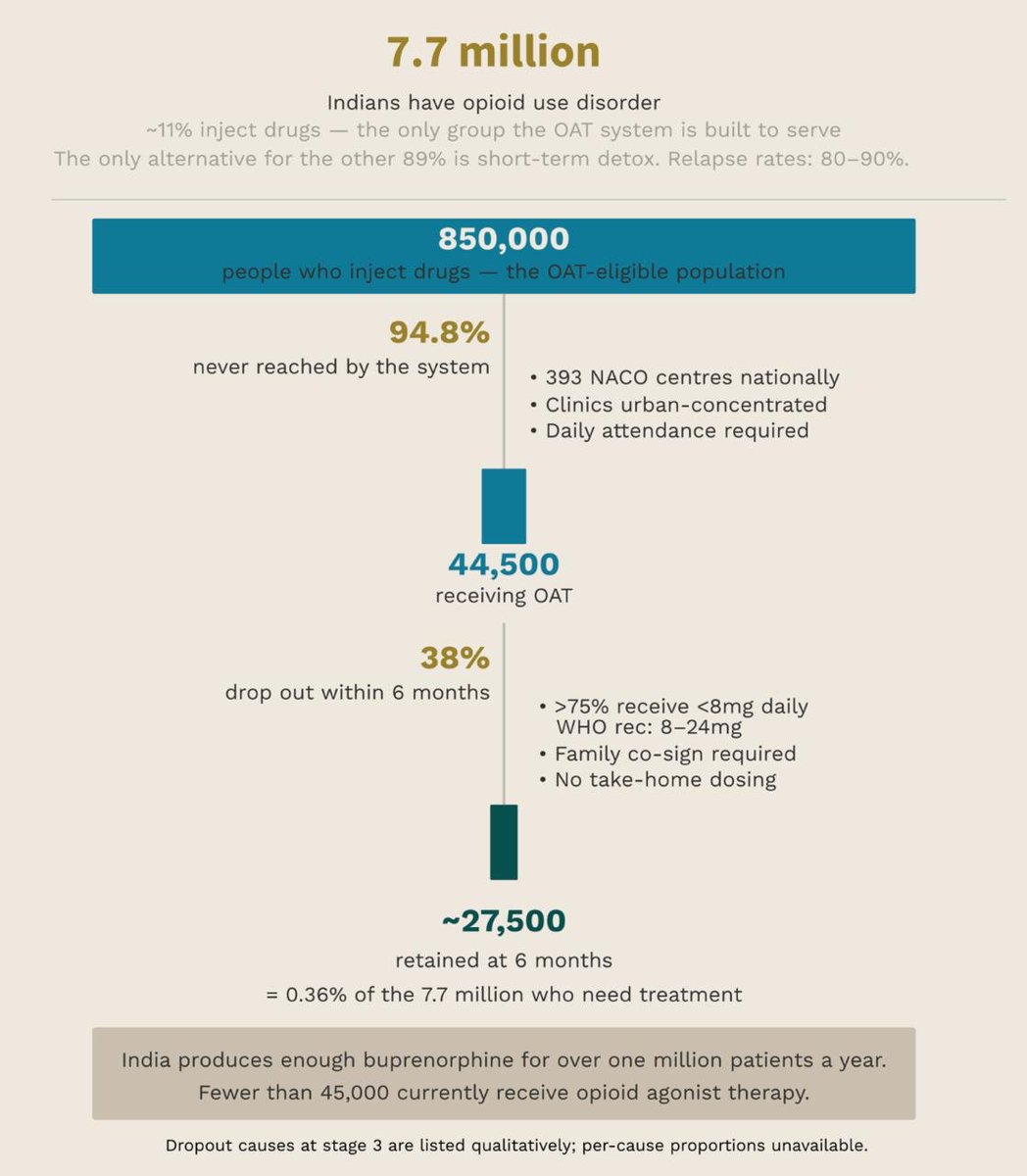
There are 7.7 million people with opioid use disorder in India. Only 45,000 of them are receiving evidence-based treatment. Akshay Narayanan explains how this happened.
indevelopmentmag.substack.co…
2
4
15
2,504

Of the many crises that we hv*, we wrap up the first @indevmag issue with @akshaygn01 writing on opioid addiction in India.
tinyurl.com/j9t53ubk
The medical sol'n, as for many of these issues, is well known. Read to see what the adoption bottlenecks are.
*BGD: Ola, measles.
May 21

India makes it easy to access opioids. Prescription-only rules often aren't enforced, and cheap painkillers like tramadol and tapentadol are sold over the counter.
India also makes it hard to access opioid treatment. The main treatment, opioid agonist therapy, is cheap and works well, but fewer than 2% of people addicted to opioids get it, compared with more than 80% in France. Private psychiatrists are technically allowed to prescribe it, but the drug sits under four conflicting laws and some doctors have been arrested for prescribing it without the right licenses, so almost none offer it. Official policy also pushes patients off the medication within a year or two, even though it's generally recommended people stay on it long term. And more than three quarters of patients at government clinics receive a dose below the WHO's recommended 8 to 24 mg a day.
As a result the rate of opioid use is about three times the world average, and at least 77,000 people die from drug-related causes each year. Underdosing and rushing people off the medication makes relapse more likely. That's dangerous, because when someone relapses their tolerance has dropped but their cravings are still strong, so overdoses are more likely.
3
5
1,547
In Development retweeted

May 21
Works in Progress for the Global South!
@notanastronomer’s magazine is another great addition to the Magazine Renaissance of our times!
May 21

India has more people who misuse opioids than any other country in the world. Less than 2% of them receive evidence-based treatment.
@akshaygn01 explains how this happened - and how to fix it: indevelopmentmag.substack.co…
3
16
2,250

May 21
India has more people who misuse opioids than any other country in the world. Less than 2% of them receive evidence-based treatment.
@akshaygn01 explains how this happened - and how to fix it: indevelopmentmag.substack.co…
2
9
2,590

Is it nuts to give cash to the poor without strings attached?
That’s not a rhetorical question; it’s the headline the New York Times ran the first time they covered GiveDirectly.
Last month on VoxDev, we reposted @indevmag's first piece by @PaulFNiehaus: voxdev.org/topic/social-prot…
2
11
1,269
May 14
The US approved tenofovir for HIV treatment in 2001. It took another decade to be used in most of sub-Saharan Africa.
The African Medicines Agency is attempting to reduce delays like this. @EnlliMcA explains both the promises and pitfalls in @indevmag: indevelopmentmag.substack.co…
1
4
320
May 12
Have any questions about @indevmag articles? This week on the EA forum, @indevmag authors are hosting an AMA: forum.effectivealtruism.org/…
3
4
317
May 11
.@indevmag and the EA forum are hosting an AMA this week! Drop by, discuss the pieces so far, ask the authors (who will be around!) or me anything. forum.effectivealtruism.org/…
1
3
246
I think the current anti-migrant sentiment is a temporary one* and the long arc of history always bends toward more exchange of people.
Today's @indevmag piece reminds us why we need such exchange and ways to facilitate it.
*visit the Ellis island museum. we hv been here before.

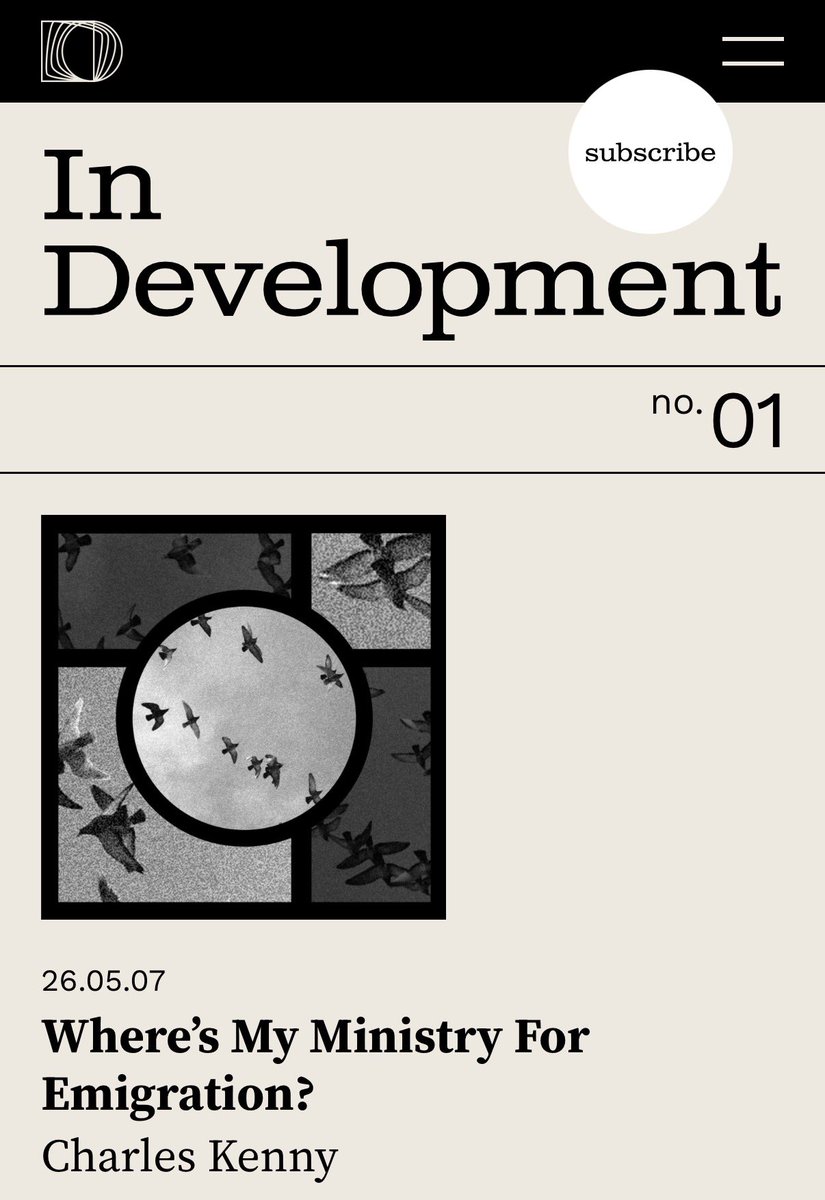
Where’s My Ministry For Emigration?
Today on @indevmag, @charlesjkenny writes about the new age of mass migration we are entering, the opportunities that this presents to origin countries, and how they can take advantage of them.
Read here: indevelopmentmag.com/wheres-…
3
15
1,975
In Development retweeted

Where’s My Ministry For Emigration?
Today on @indevmag, @charlesjkenny writes about the new age of mass migration we are entering, the opportunities that this presents to origin countries, and how they can take advantage of them.
Read here: indevelopmentmag.com/wheres-…
14
13
4,201
Apr 30
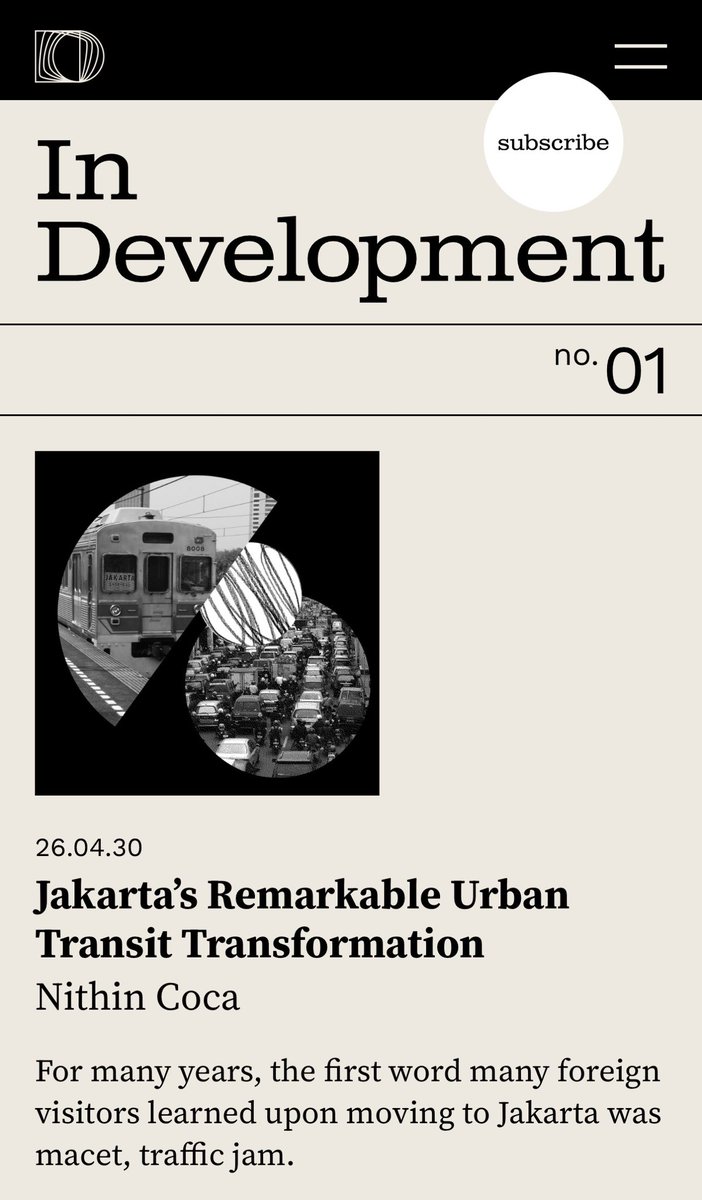
This week in @indevmag: in 2014, Jakarta was crowned the world's most congested city. In the last decade, it has also added *ten million* new residents - a perfect recipe for yet more gridlock.
And yet the traffic has improved. Nithin Coca explains how: indevelopmentmag.com/jakarta…
1
4
12
1,359
In Development retweeted

Apr 30
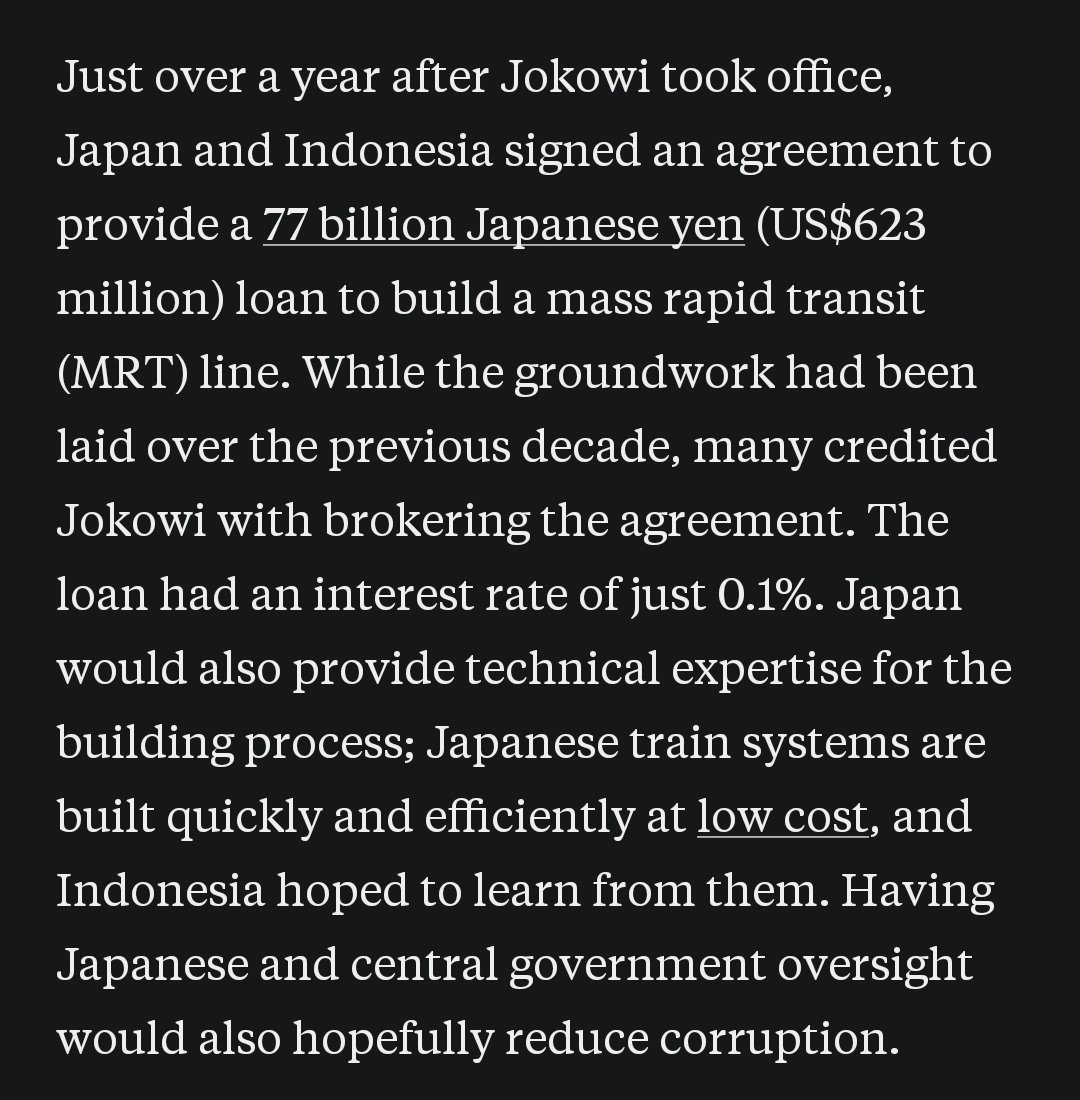
Japanese investment into commuter rail and subways is underrated
Japan also funded the Delhi Metro Rail Corporation and provided substantial technical expertise
Via @indevmag
1
2
292
Back in 2015-16*, in Dhaka, I used to take a 2-hr walk back from the office in the evening because it would have taken longer by any motorized transport.
So this is close to my heart; dropping tomorrow @indevmag.
*I hear it has probably gotten worse.
3
7
40
1,746
In Development retweeted

🌏 Why the best way of supporting developing countries is through export-driven entrepreneurship, global market integration and reliable payrolls
x.com/indevmag/status/204724…
Apr 23
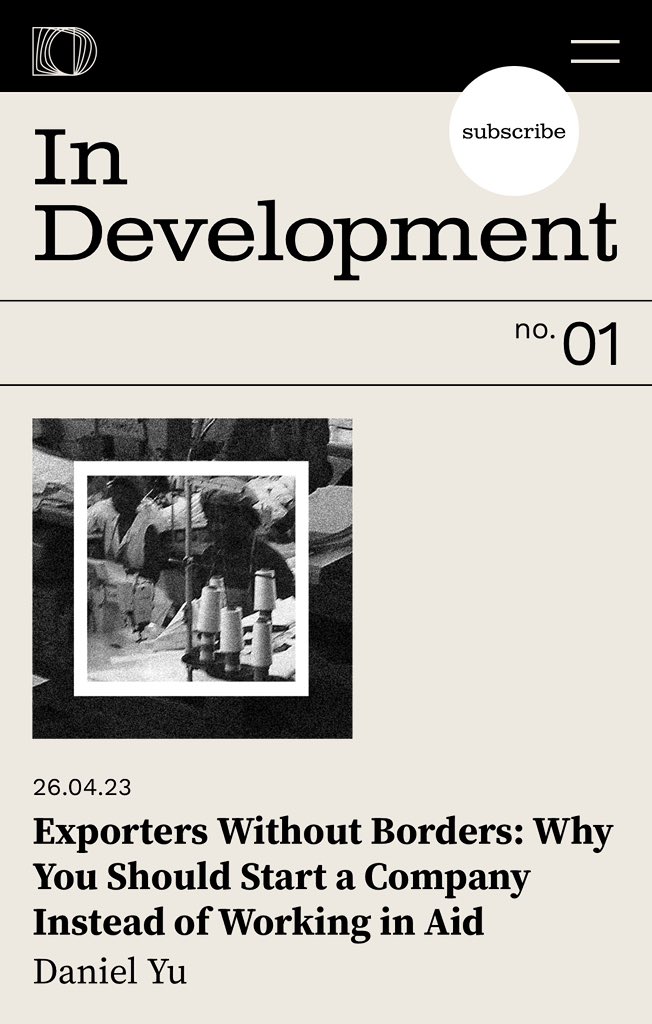
This week, Daniel Yu - founder of Africa's largest B2B company - argues young people who are interested in development should consider starting a business instead of working in aid: indevelopmentmag.com/exporte…
1
1
2
290
Apr 23
This week, Daniel Yu - founder of Africa's largest B2B company - argues young people who are interested in development should consider starting a business instead of working in aid: indevelopmentmag.com/exporte…
13
27
8,245