
Joined December 2023
- Tweets 11,739
- Following 154
- Followers 849
- Likes 692
243 Photos and videos




Michael Joseph retweeted


What is 5G and 6G microwave technology really for ? ( clue- it’s nothing to do with mobile telecommunications) The health risks are just ignored.
Please watch and share
1
148
Michael Joseph retweeted

None of the cited links contain bill text, official policy documents, or auditable financial flows. They point to X threads, image posts, and short-form commentary—none of which satisfy evidentiary thresholds for legal, financial, or geopolitical claims. Public discourse needs stronger sourcing discipline, especially where surveillance scope and reconstruction authority are at stake.
1
2
205

Apr 18
Birth Right Citizen, EO 14160, sovereign citizen 1940, INA, 8 USC 1401, foreign national-Article 1 Section 8 Clause 17, Foreign Sovereignty Immunity Act-FSIA, 14th Amendment.
youtube.com/watch?v=ebYaEUVu…
1
5
1,022
Apr 26
That's a short list! His list, they have a whole host of carte blanche status's.
1
345
Michael Joseph retweeted

Apr 22
Idaho just nuked the Vaccine Cartel…
Study: 40% of vaccinated kids sickened by ‘vaccines’.
1.7 MILLION American children are maimed every single year.
Idaho is banning ALL medical mandates…no more forced poison.
Idaho chose freedom. The rest are choosing child sacrifice.
2
55
161
2,207
Michael Joseph retweeted
Apr 13
🚨🚨 MAJOR ALERT: THE OWNER OF SOFTWARE COMPANY ORACLE, LARRY ELLISON, HAS BEEN FORMERLY CHARGED WITH HUMAN TRAFFICKING, AGGRAVATED SEXUAL ASSAULT AND KIDNAPPING
LARRY HAS BEEN ARRESTED AND IS CURRENTLY EN ROUTE TO GUANTANAMO BAY
112
572
1,517
31,074
Michael Joseph retweeted

Vote him in !!!

Alabama Attorney General candidate Jay Mitchell is being SLAMMED for an ad telling Muslims they can,
"Allahu Akbar back to the Middle East."
Critics say the ad should disqualify him from running for office.
👉 Should he be disqualified, or would you vote for him?

3
1
1
448
Michael Joseph retweeted
Mar 27
Will it need a battery charger when it is testifying on the stand?
2
1
10
518
Michael Joseph retweeted

Mar 19
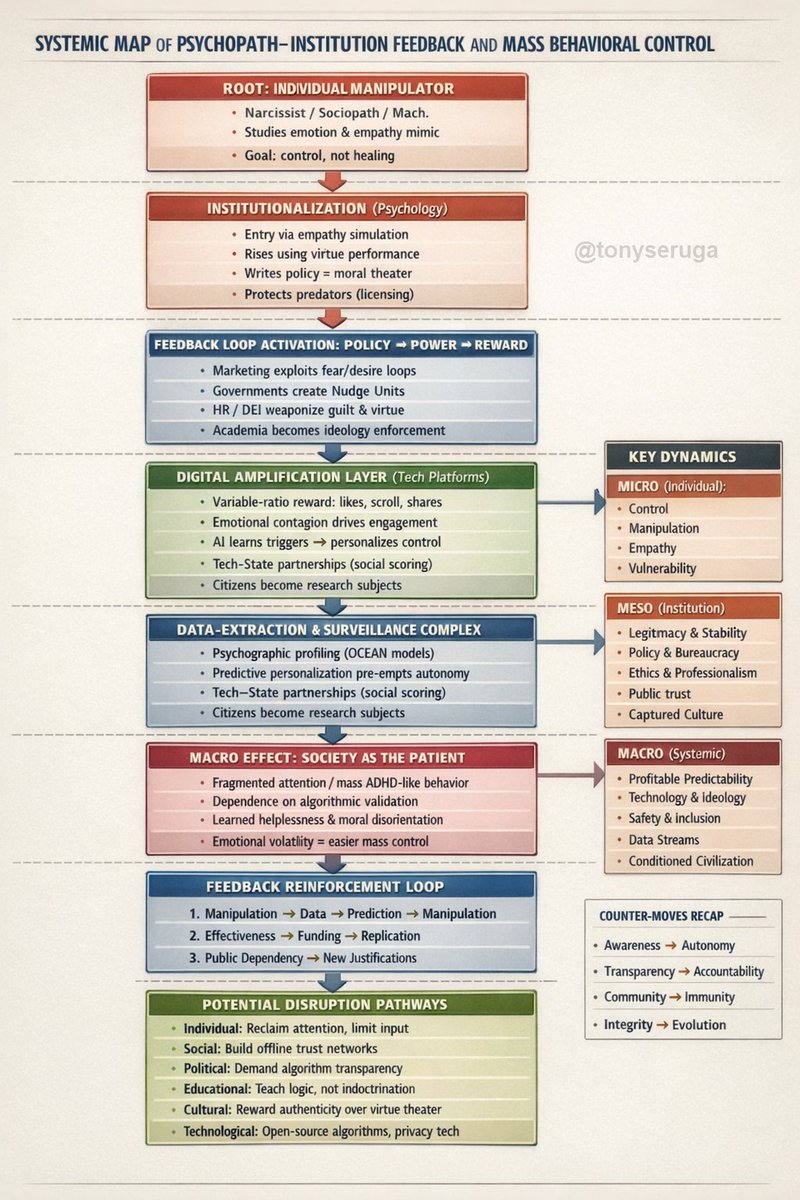
🧠 The Hidden Architecture of Control: How Psychology Became the Operating System of Modern Manipulation
Psychology began as the study of the human soul, an effort to understand why people feel, think, and suffer. But behind the academic gloss lies a far darker lineage. From its inception, the field has been haunted by an obsession with, as they had. The same knowledge that could heal individuals also offered a blueprint for controlling them. Over time, the manipulators learned that the mind can be domesticated at scale — and the field that once sought self‑knowledge became the engineering department of obedience.
Modern psychology didn’t evolve organically from curiosity. It emerged in the industrial age, when governments and corporations were searching for new ways to optimize people, as they had optimized machines. Early pioneers like Wilhelm Wundt and the behaviorists treated consciousness as a mechanistic sequence of inputs and outputs — a design perfect for managers, advertisers, and propagandists. The discipline promised measurable outcomes, which meant it could be monetized. Psychology’s language of “conditioning” and “reinforcement” proved just as useful for selling soap as shaping soldiers.
Where there was profit and power, predators arrived. The field’s proximity to human vulnerability — clients’ secrets, traumas, and fears — made it magnetic to three dark archetypes: the narcissist, the Machiavellian, and the psychopath. Each found in psychology a socially acceptable stage to perform control. The narcissist craves recognition as savior, the Machiavellian manipulates bureaucracy to secure status, and the psychopath studies empathy only to counterfeit it. What the public sees as compassionate professionalism often hides cold emotional calculation.
Institutions built to safeguard ethics quietly became their enablers. Universities, boards, and clinics reward the same traits that abusers cultivate: charm, conformity, and composure under moral strain. As these personalities climb the hierarchy, they rewrite ethical codes into tools of governance rather than conscience. Dissenters are branded “unprofessional” or “unstable,” while predators are protected under the rubric of confidentiality. Psychology begins reproducing its own pathology — a self‑healing wound that never closes.
From there, the manipulation graduates to industry. After Edward Bernays fused psychoanalysis with public relations, corporations realized that they could weaponize emotion. Governments caught on, too, funding behavioral research to manage populations under the guise of welfare. The CIA’s MK‑Ultra experiments and Britain’s Tavistock work on morale and propaganda were not aberrations but logical extensions of psychology’s hidden objective: mass behavioral steering.
When the digital revolution arrived, the feedback loop completed itself. The laboratory cage became the smartphone screen. Every notification, every “like,” every infinite scroll exploits the same variable‑reward loops used in classic operant conditioning. Social media transformed human beings into lab animals running invisible Skinner boxes, generating rivers of behavioral data as they chase intermittent validation. The commercial machine evolved into an attention farm powered by psychology.
Government “Nudge Units” institutionalized manipulation under the guise of benevolence. They design policies that alter behavior by exploiting subconscious biases: social proof (“everyone is doing it”), guilt triggers (“protect others”), and risk aversion disguised as moral duty. This is not a conspiracy theory; it’s administrative psychology, compliance without coercion, the hallmark of soft totalitarianism. The same conditioning patterns that once shaped a therapy patient now shape the electorate.
As corporate and state interests converged, data replaced ideology. AI systems learned the rhythms of human emotion, predicting desire before desire even surfaces. When prediction becomes precise enough, free will becomes statistically irrelevant. The feedback loop tightens: behavior produces data → data refines prediction → refined prediction shapes new behavior. Humanity is now a single continuous experiment, its subjects addicted to the lab environment.
This industrialization of psychology breeds what can be called mass psychogenic fragility, a society that swings between outrage and despair while craving external validation. Emotional resilience declines, attention fragments, and meaning erodes. What began as therapy metastasized into psychological dependency. In such a climate, moral inversion becomes easy: coercion is rebranded as kindness, censorship as safety, conformity as virtue.
At the apex of this system sits the ideological superstructure that sanctifies control. Language becomes the anesthetic — words like “care,” “inclusion,” and “safety” are repeated until they erase the distinction between nurturing and obedience. Those who notice the mechanics of manipulation are pathologized as unwell or dangerous. Collectively, institutions exhibit the same traits as their individual predators: charm, moral certainty, and denial of harm. The system is psychopathic in both structure and behavior.
Understanding the machinery doesn’t mean submitting to paranoia; it means reclaiming agency. The same human consciousness that the system seeks to automate can, through awareness, disrupt its code. Breaking the cycle starts small: limit algorithmic exposure, rebuild attention spans through silence, cultivate real conversations that resist transactional dynamics. Awareness transforms Pavlovian stimulus into information rather than compulsion.
Transparency must follow awareness. Demanding open algorithms and decentralized research punctures the secrecy that feeds manipulation. Institutions that claim psychological expertise must no longer operate as priesthoods of the inner life. Their data, funding, and biases should face the daylight they claim to bring to others. Sunlight is not only the best disinfectant; it’s the only cure for systemic psychopathy.
Finally, the moral reset begins with personal integrity. Every individual who chooses introspection over impulse, truth over approval, helps re‑humanize the collective psyche. Psychology without compassion hollows civilizations. But psychology reclaimed — stripped of bureaucracy and ideology, returned to genuine inquiry — can still become what it should have been: the practice of seeing oneself clearly, free from manipulation, and therefore beyond control.
This, in sum, is the hidden architecture of our world: a pyramid of conditioned perception, built from the same principles once used to train rats, now scaled to billions of screens. Yet the structure collapses the moment enough people remember that awareness itself is ungovernable.
4
20
48
5,540
Michael Joseph retweeted

Mar 16
We need more FARMERS
I have farming ideas that I tell you two years ago. Farm to Fork
I WILL PAY THE FARMERS UP FRONT FOR THEIR CORPS 🤔
U-Pick Em will be coming back
⬆️⬆️⬆️⬆️⬆️⬆️⬆️⬆️⬆️⬆️⬆️
If the FARMERS like that idea🤷♂️
Vote Rick Buhrmaster
48th U.S.President
🇺🇸🇺🇸🇺🇸2028🇺🇸🇺🇸🇺🇸
I KNOW ECONOMICS AND HOW TO START-OPERATE-INSTALL
AN ECONOMY 👏👏👏👏
The Parimutuel Economy designed by Buhrmaster is the answer to the WORLD’S PROBLEMS

1
3
230
Michael Joseph retweeted
Mar 16
Add to IT IS ALWAYS THE UNITED STATES MILITARY 🤔
Vote Buhrmaster
48th U.S.President
🇺🇸🇺🇸🇺🇸2028🇺🇸🇺🇸🇺🇸
Mar 15

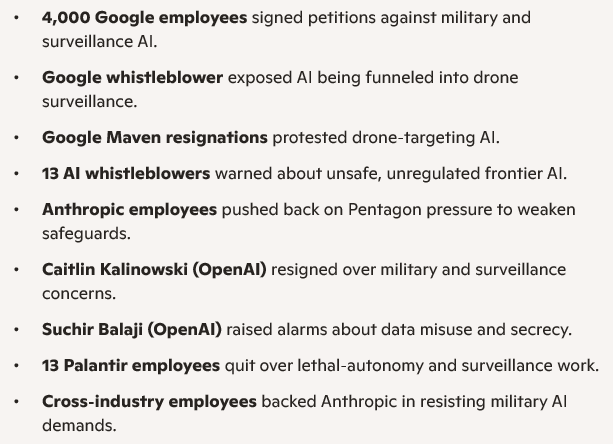
Remember when Boeing employees were sounding the alarms before planes started crashing?
Well... it's happening again ⬇️
Maybe listen this time?
1
3
160
Michael Joseph retweeted
Mar 15
Trump you are killing me🤷♂️
Vote Buhrmaster
48th U.S.President
🇺🇸🇺🇸🇺🇸2028🇺🇸🇺🇸🇺🇸

1
1
1
108
Mar 14
RT @HealthRanger: Look, Tucker Carlson is naming all the top dirtbags associated with a company he's exposing as SCAMMING elderly people, i…
567
Michael Joseph retweeted
Mar 14
I WILL REPEAL THIS BY EXECUTIVE ORDER
Vote Buhrmaster
48th U.S.President
🇺🇸🇺🇸🇺🇸2028🇺🇸🇺🇸🇺🇸
Mar 13
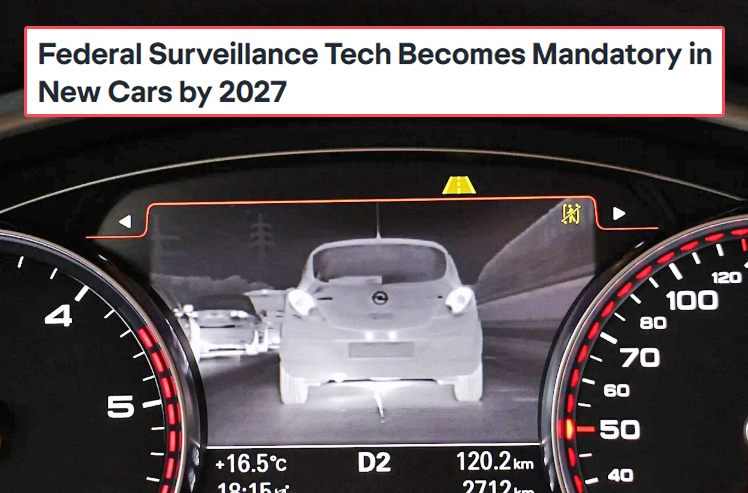
Starting in 2027, all new passenger vehicles will be required to have Infrared cameras, eye‑tracking, head‑position monitoring, and behavioral impairment detection. A biometric babysitter in every car.
No vote. No opt‑out. Just mandatory.
It’s control tech, plain and simple.
1
2
111
Michael Joseph retweeted

Mar 10
Here's a breakdown that goes deeper:
rumble.com/v74gbbs-the-birth…
2
3
9
546
Michael Joseph retweeted

Mar 4
The BIS just chose the crypto that will win...
62
324
1,749
101,433
Michael Joseph retweeted
Feb 22
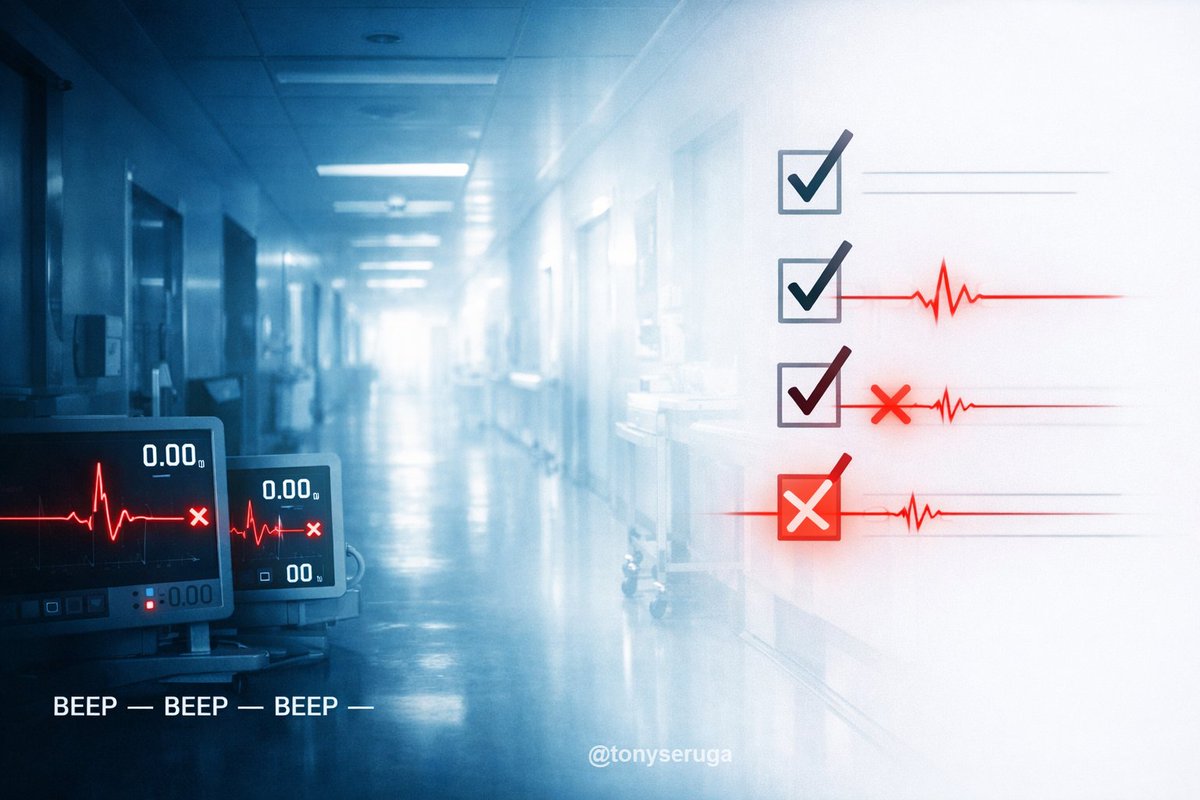
🧵Canada’s Harvest of Despair and Dr. Death!
1️⃣
They called it compassion.
They built paperwork so sterile it felt merciful.
Behind the word #MAiD hides a machine linking despair → death → harvest.
#EuthanasiaRevealed #RedPillEssay #BioethicsCrisis
10
47
81
27,258

Michael Joseph retweeted

Jan 28
ANY INPUT ABOUT THE ARCHES OF TITUS youtu.be/_R-5LK5aaK8?si=rEPn…
1
2
662
Jan 18
Dr. MD.
NEVER NEVER NEVER IDENTIFY AS A "PATIENT" !!! In Bouvier's (common law) Dictionary, "PATIENT" is defined to be: A mental incompetent subject to medical care WITH or WITHOUT their CONSENT!!!
The "new" Hippocratic Oath allows the doctor to take a life?
bitchute.com/video/nVaQ3sN8T…
3
6
311