
Ex BBC/Irish Times journo-Founder/Director Inis Communications PR agency-MPRII-Event host; social justice advocate; ❤️An Gaeilge iniscomm.bsky.social
Joined October 2009
- Tweets 18,593
- Following 2,890
- Followers 2,993
- Likes 9,039
1,285 Photos and videos






Trish Hegarty retweeted

May 15
Whatever the outcome of this (I’m hopeful it’s a nice shiny new building for the hard working people at Radio Foyle) uncertainty around the North West never looks good bbc.co.uk/news/articles/c152…
2
2
9
2,161

May 13
While media headlines focus on Trump, this is what Israel is doing without facing international sanctions #genocide #warcrimes
May 11

Horrifying.
Israel bombed a residential building in Toul, South Lebanon.
Paramedics rushed inside to save civilians trapped under the rubble.
Israel waited for them to enter.
Then dropped another bomb on them.
Israel is hunting down and assassinating medical rescuers.
64
Trish Hegarty retweeted

May 11
Los Angeles, 1946. Maureen O'Hara stood before an immigration clerk, holding papers that would make her an American citizen.
She’d passed every requirement.
The exam was finished. The process complete. All that remained was a signature.
Then she looked down at the documents spread across the desk.
Everywhere she had written “Irish” had been crossed out. Her nationality. Her heritage. Her identity. Gone. In another hand, one chilling word had been inserted instead: “English.”
Again and again.
Irish erased. English inserted.
The woman who fought pirates onscreen and stood shoulder-to-shoulder with John Wayne felt something fierce rise inside her chest.
“I’m terribly sorry,” she said, her Dublin accent cutting through the cold air of the Los Angeles immigration court, “but I can’t forswear an allegiance I don’t have. I have no allegiance to England at all—I’m Irish.”
The clerk stared back, confused and irritated.
This wasn’t how these meetings were supposed to go.
Maureen FitzSimons had been born in Ranelagh, Dublin, on August 17, 1920. She came to America as a teenager after Charles Laughton spotted something extraordinary in her screen test. He persuaded her to shorten her surname, offering O’Hara or O’Mara.
She chose O’Hara.
But she never chose to stop being Irish.
By 1946, Hollywood knew her as the fiery Queen of Technicolor. A woman who performed her own stunts and refused to be reduced to decoration.
But the American immigration system saw only one thing: a British subject.
The reasoning was painfully simple. Ireland had still been tied to the United Kingdom when she was born. Even after the Irish Free State emerged, much of the world—including the United States—continued classifying Irish citizens as British subjects.
To Maureen, it wasn’t paperwork.
It was erasure.
The clerk sent her before an immigration judge, certain he would settle the matter. The judge repeated what the records said. Washington considered her English. Her papers would reflect it.
Maureen stood her ground.
“I cannot accept American citizenship under those circumstances,” she said.
Washington was contacted for confirmation.
The answer returned unchanged: English.
“Your Honor,” she replied, calm but blazing, “I’m not responsible for your antiquated records in Washington. Thank you very much, but I cannot accept citizenship under those conditions.”
She turned toward the door.
She would rather leave without citizenship than sign her name beneath a lie.
Then she stopped and faced the courtroom one last time.
“Do you realize what you’re trying to do to my children and grandchildren?” she asked. “You’re trying to take away their right to boast about their wonderful Irish mother and grandmother.”
The judge threw up his hands in defeat.
“Give her anything she wants on her papers,” he snapped.
Maureen walked out with documents finally marked Irish.
And from that day forward, thousands of immigrants would no longer have their identity erased by the word “British.”
Because one woman refused to let the world decide who she was.

70
976
5,357
227,277
Trish Hegarty retweeted

May 11
Here is my BAFTA speech in full, with the important bit that hasn't been shown.
Also, a heartfelt thank you to everyone who supported us, and to our colleagues who rallied around us. And thank you to @BAFTA and the judges for a great evening and a great honour.
276
4,906
11,921
285,184
Trish Hegarty retweeted

May 11
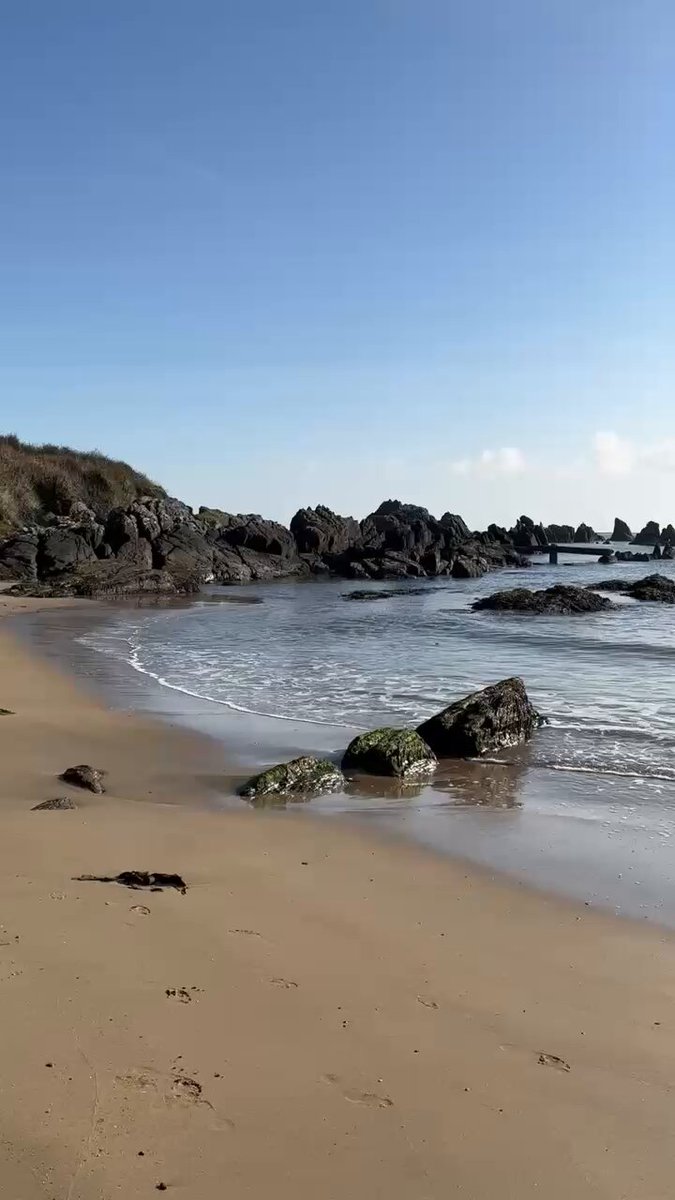
Great views this morning. Looking out from Inishowen Head, Co. Donegal. Taking in Co. Derry, Co. Antrim, Rathlin Island with Scotland behind it and sweeping round to the Scottish islands of Islay and Jura and then back to Inishowen again.
13
51
294
18,028
Apr 21
Why you shouldn’t look online for answers to medical questions: experts found that nearly 20% of chatbot answers were highly problematic, half were problematic, and 30% were somewhat problematic. theconversation.com/half-of-…
21
Apr 14
Very sad news this morning. Suaimhneas síoraí di #moyabrennan rte.ie/entertainment/2026/04…
1
5
183
Apr 10
We need to remember WHO is responsible for this fuel crisis and global disruption: ISRAEL: who launched the war against Iran. They are slaughtering innocents in Lebanon after years of genocide in Palestine. Time for sanctions against Israel now! #BDS rte.ie/news/health/2026/0410…
42
Apr 2
Inis Communications is now closed for the Easter break and re-opens again on 9th April. Wishing all our clients, suppliers and friends a very Happy Easter!
1
30
Trish Hegarty retweeted

Mar 22
Listen to Canadian doctor Ben Thompson:
A doctor in Gaza was forced to strip naked &stand for days by the IDF, urinating & on himself.
He was then only permitted to treat his patients while naked.
They commit war crimes every hour of every day, demonic
183
4,209
9,272
114,755
Trish Hegarty retweeted

Ireland’s offshore and inshore fleets could be grounded in three weeks if the Government does not subsidise marine fuel costs, which have risen by 100%.
This could lead to a shortage of fish, and a threat to over 3,500 jobs. irishexaminer.com/news/arid-…
2
1
483
Trish Hegarty retweeted

Mar 22
Israel is wiping out critical bridge after critical bridge in South Lebanon.
Civilians can’t flee.
Ambulances can’t reach the wounded.
Entire communities are cut off from food, medicine, and essential supplies.
This is intentional.
This is a crime against humanity.
2,924
39,500
96,340
2,434,735
Mar 14
RT @sahouraxo: Israel killed every single paramedic in this photo today in South Lebanon.
12 paramedics slaughtered in one Israeli strike.…
24,638
Jan 29
Shocking report by @CormacJOKeeffe on how a 15-year-old girl had to wait almost a year for therapy after being raped by four teenage boys. It’s time for proper funding to extend @cari_ie services. irishexaminer.com/news/spotl…
196
Jan 28
Rise in reports of sexually harmful behaviour among children
irishtimes.com/ireland/socia…
48
Jan 28
CARI report rise in sexually harmful behaviour among children.
Children at Risk Ireland say increased exposure to online pornography, online grooming, & image-based abuse is having a “real impact” on children. Excellent piece by @CormacJOKeeffe irishexaminer.com/news/arid-…
141
Jan 28
Very important message on the need to talk to children and for a national strategy from interview with Emer O’Neill of @cari_ie on @RTEToday this morning. News clip here: Rise in sexually harmful behaviour among children - CARI via @RTENews rte.ie/news/ireland/2026/012…
65
Trish Hegarty retweeted

Jan 19
In 1967 Theodor Meron wrote a top secret memo for Israel finding West Bank settlements violated the Geneva Convention, "one of the things I'm most proud of," he says. "Had the government at that time followed my advice we would really have been living in a different Middle East."
139
955
2,340
197,258
Trish Hegarty retweeted

Still hard to believe 2025 is complete but we have been busy planning this week & we can’t wait to see you all again for a spraoi-filled 2026!
New Year, New Timetable, Same 'Spraoi' Energy.
Why not make room for one of our classes in your “New Year, New You” plan?!

1
30
Trish Hegarty retweeted
UK Fishing News covers our industry calls for urgent action as fishing opportunities for Killybegs fleet are halved:
#fishingcrisis #CFP #irishfishing fishingnews.co.uk/news/minis…
5
1
185