
Joined September 2021
- Tweets 1,779
- Following 53
- Followers 31,231
- Likes 760
398 Photos and videos









Jun 9
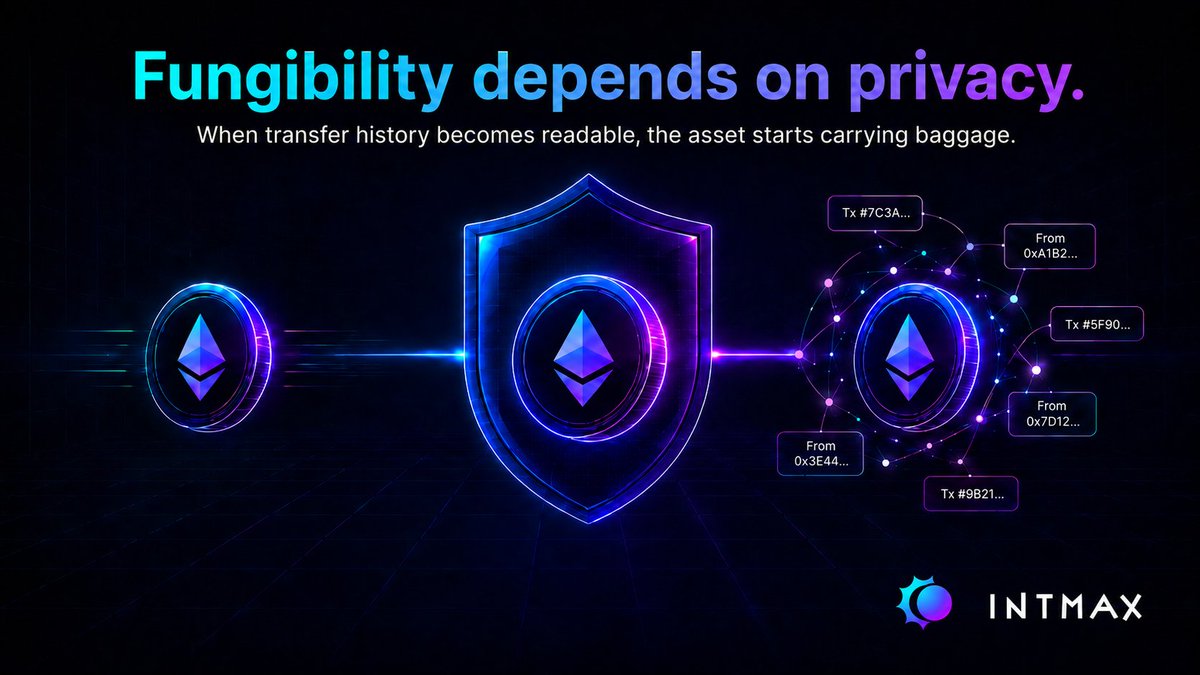
Cash works because it doesn't carry a public history of every hand it passed through.
Onchain assets often do.
When transfer history becomes readable, the asset starts carrying baggage.
Private transfers help money stay fungible.
1
9
569
Jun 3
INTMAX is built for one simple idea:
You should be able to transfer the assets you already own without exposing your financial history.
7
7
5,085
Jun 2
Quantum isn’t breaking Ethereum today.
But IBM just put $10B behind quantum computing, and Ethereum is already mapping post-quantum upgrades.
Serious crypto infrastructure has to be built for the threat model that comes next, not only the one we have now.

IBM to invest $10 billion for large-scale quantum computer by 2029 reut.rs/3PRgmOl reut.rs/3PRgmOl
1
8
1,916
May 27
A transfer you make today could be decrypted by a quantum computer that doesn't exist yet.
That's why @NIST spent eight years standardizing post-quantum cryptography. INTMAX3 is designed around those standards with account auth built for that threat model.
1
9
934
May 26
Most privacy tools put you in a binary: hide your activity or prove you're clean.
INTMAX has a third option: Proof of Innocence allows you to prove your funds aren't from blacklisted sources without revealing your transaction history.
Compliance and privacy aren't opposites.
1
15
1,006
May 20
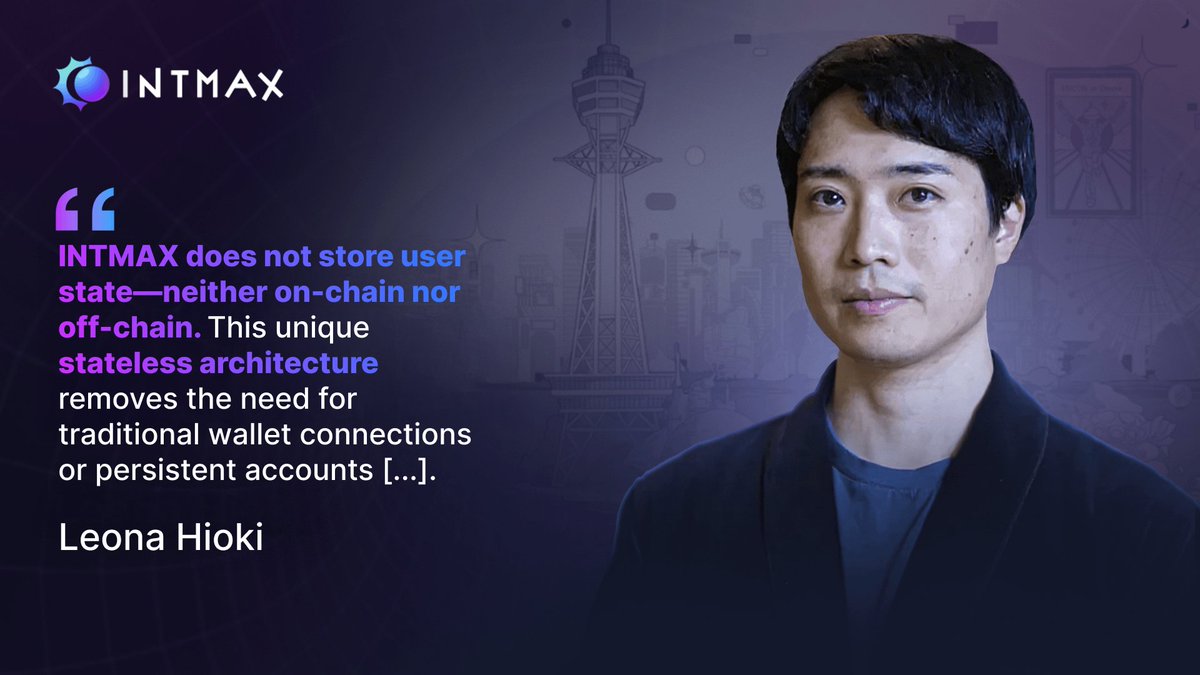
Our new version further advances the stateless privacy model.
Private transfers remain core, but contract-driven transaction insertion opens a new path: logic can request transactions without turning INTMAX into a generic public smart contract chain.
Privacy programmability.
2
14
1,765
May 19
INTMAX3 is designed for privacy beyond today’s assumptions.
With post-quantum account authentication built into the validity path, user updates can be proven without relying solely on classical signature assumptions.
Privacy infrastructure should be built for what comes next.
21
965
May 15
AI agents won’t just browse the internet.
They’ll move value.
And when software starts making payments, privacy becomes infrastructure.
INTMAX is building private-by-default transfer rails for that future.
1
13
851
May 12
Privacy coins are outperforming because the market is waking up to something simple:
Financial privacy has value.
But there is a difference between buying privacy exposure and using private money.
If you need to swap into a different asset to become private, you have changed your position.
USDC should stay USDC.
ETH should stay ETH.
Only the transaction should be private.
2
1
13
1,345
May 12
Privacy is being repriced as a structural property of money.
The question is how to deliver it without forcing users to swap into a different asset.
7
14
1,105
May 6
.@DavideCrapis (EF, dAI lead) in an interview to @CoinDesk: "Ethereum functions as a public, governance-less verification layer for AI."
Verification is half the problem. Settlement is the other half; agents will need to pay each other without making every payment public.
2
3
802
May 6
That's where INTMAX comes in: private transfers with a minimal on-chain footprint — ~5 bytes per transaction.
2
628
May 5
Pool-based privacy has a known failure mode: heuristic deanonymization gets better the longer the pool runs.
A May 2025 paper trained a deanonymization model on Tornado Cash with just 10 labeled examples. It correctly linked mixing transactions to their source ~97% of the time.
1
2
16
1,763
May 5
Source: arxiv.org/pdf/2505.09892
Architecture matters. INTMAX state lives only on the client-side, so there is no shared pool to cluster.
1
625
May 2
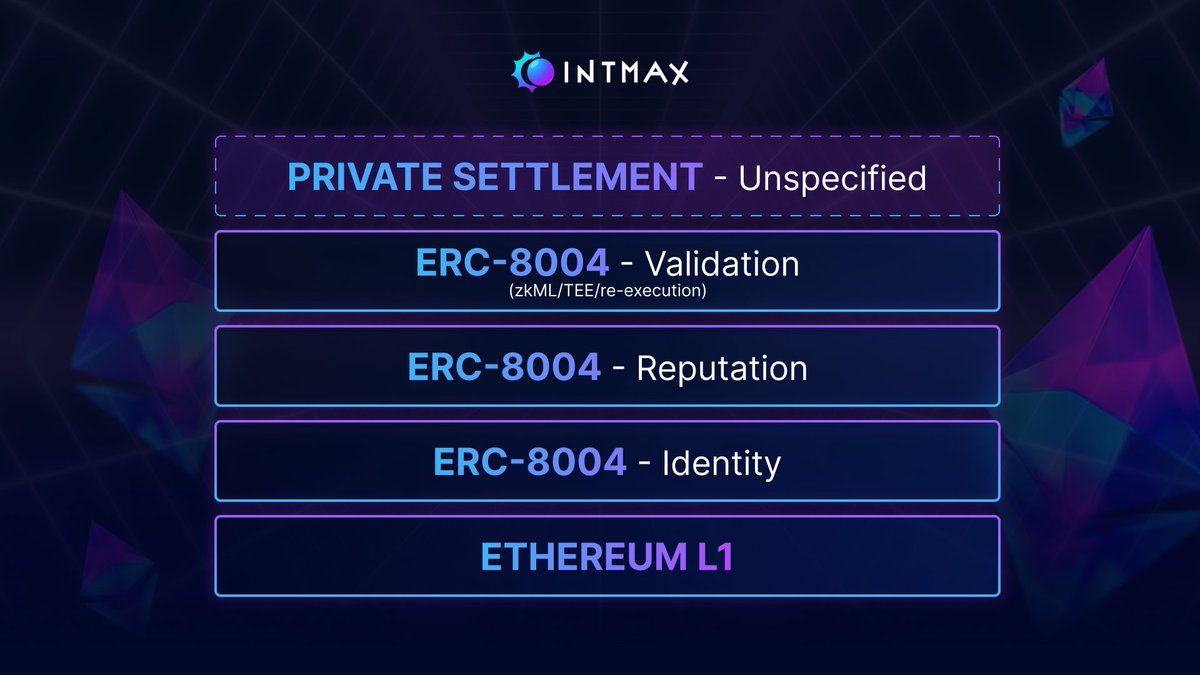
ERC-8004 was ratified in January and deployed to the Ethereum mainnet in February.
It standardized identity, reputation, and validation for AI agents, but the infrastructure it specifies assumes something nobody has built yet.
1
4
11
1,668
May 2
For privacy applications specifically, the rebuild has only one shape. State on every node defeats privacy by design.
The chain state has to live with the user; the chain settles only what has to be public. That's stateless L2 architecture.
1
1
362
May 2
That's the architecture INTMAX has been building for years. What's new is the Ethereum research consensus arriving at the same picture.
We've been here. Glad of the company.
1
432