
The intelligent stack for powering AI workloads | io.cloud: decentralized GPUs | io.intelligence: inference & agents | t.me/io_net
Joined May 2018
- Tweets 9,194
- Following 174
- Followers 439,123
- Likes 2,325
1,031 Photos and videos












The future of AI compute doesn't run on hype.
It runs on real utility, real burns, and a network that gets stronger every time it's used.
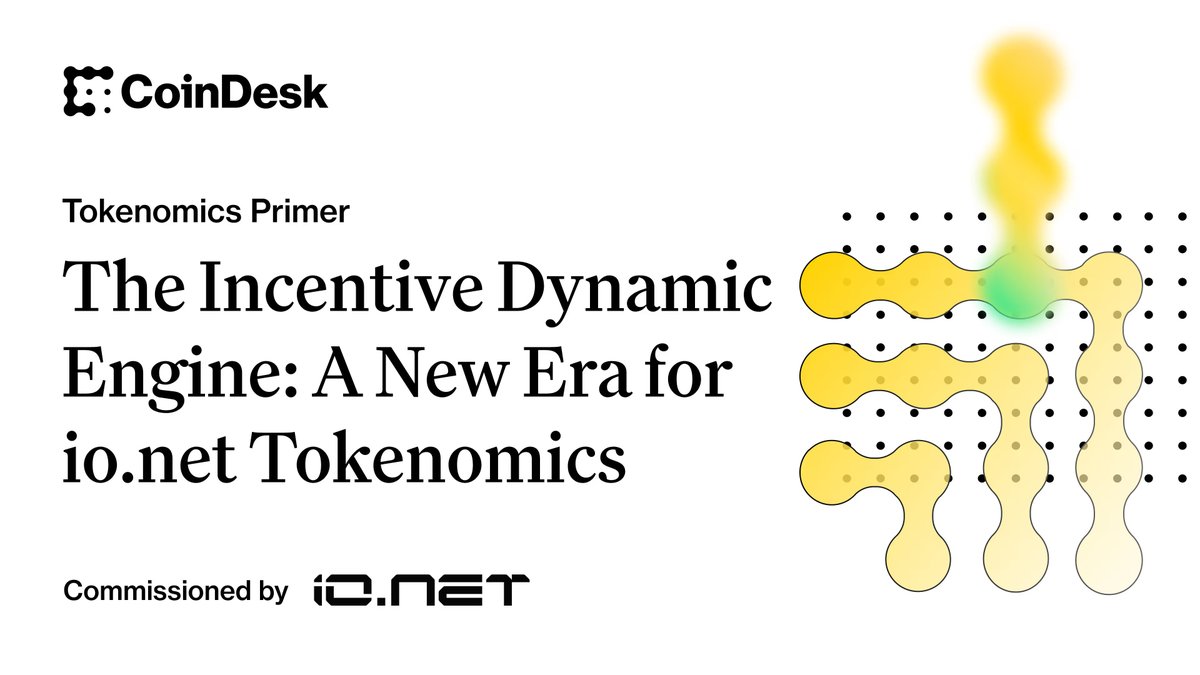
The Incentive Dynamic Engine (IDE) is now live!
io.net/blog/a-new-tokenomics…
39
115
492
7,106,906
June 2023: an idea.
June 2024: product-market fit.
June 2025: enterprise scale.
June 2026: sustainable tokenomics.
Three years of building. 30M compute hours. $24M on chain revenue. The world's largest decentralized GPU network.
This is what DePIN looks like when it actually works.
Three years in. And it's just the beginning.
io.net/blog/three-years-of-b…
13
29
161
4,997
Centralized clouds laid some of the groundwork. Reliability. Uptime. Unit economics.
But they can only take us so far.
Coordinating a network nobody owns. Aligning thousands of operators through a token. Proving the work is real with no one to vouch for it.
None of that stands on centralized tech.
It's ours to build.
Check out @ionet Co-Founder @Basem_IO on three years of io.net, the IDE, and what comes next for DePIN and AI compute.

14
25
108
9,284
A new report from @CoinDesk just covered the Incentive Dynamic Engine.
In depth research. Real stress tests. One conclusion.
The IDE works.
The report is live.
coindesk.com/research/the-in…
13
18
99
12,672
Fixed emissions were always DePIN's flaw.
Token price drops. Suppliers go offline. Capacity shrinks. Downward spiral.
The IDE is a new way forward. @TheBlockCo breaks it down.
Revenue-linked payouts. Burns when there's surplus. Infrastructure that stays online regardless of market conditions.
Jun 11

A big thanks to @ionet for commissioning this report. 🤝
Full article: theblock.co/post/402943/the-…
If you enjoyed this thread, consider subscribing to our free daily newsletter for more insights delivered straight to your inbox: theblock.co/newsletters
9
19
100
6,984
Big Tech committed $500B to AI infrastructure. Access still goes to the highest bidder.
io.net built a different model. And the world is noticing.
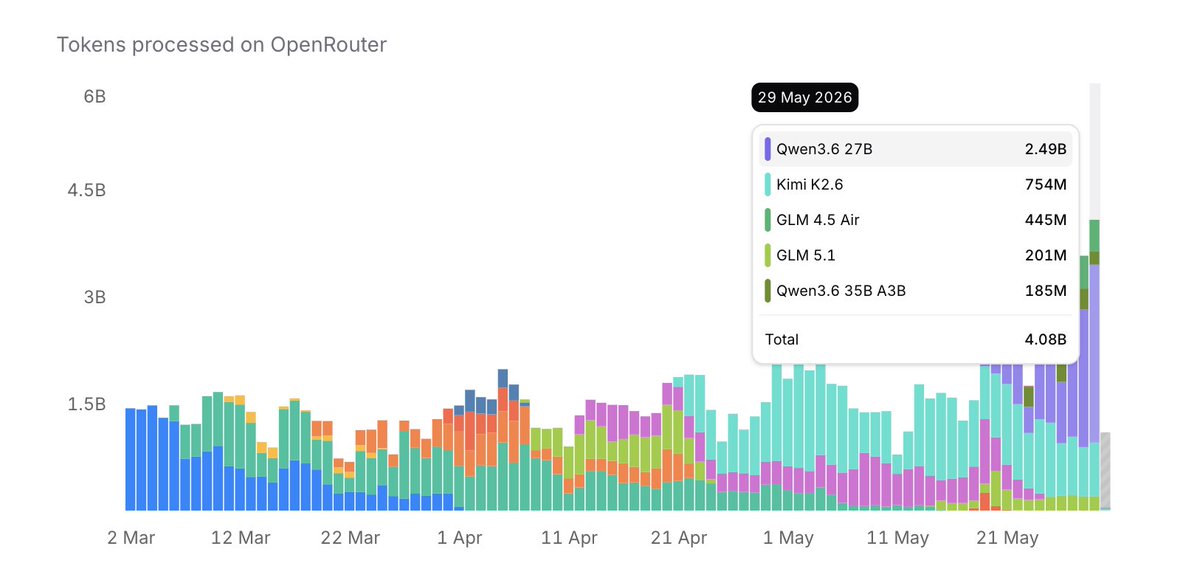
Today the IDE went live. $8M deal closed, 4B AI tokens daily, 12M $IO burned in year one.
The on-chain data backs it up.
This is what the alternative looks like.
Check out the story in @DefiantNews
thedefiant.io/news/tokens/io…
19
29
146
30,020
Tech giants built AI infrastructure for themselves.
We built it for everyone.
Three years. One belief. AI compute should be affordable and accessible for every builder, everywhere.
Today, that belief has a new engine.
The IDE is live.
Real usage. Real scarcity. Real burns.
The future of AI compute is decentralized. And it starts now @ionet.
21
26
172
6,296
The IDE is live.
And @CoinDesk is covering it.
Real utility. Real revenue. Real burns.
This is what AI compute looks like when it's built on demand, not hope.
coindesk.com/press-release/2…
16
22
121
4,479
Decentralized compute is good.
More decentralized compute is even better.
And we're making that happen as launch partner for Respan Gateway.
@RespanAI gives devs access to decentralized GPU compute through a single gateway to train, run, and scale AI workloads.
No hyperscalers required.
respan.ai/ai-gateway
21
27
173
6,009
One A100 instance on AWS. Or a 4-8 node cluster on io.net.
Same price.
That's what on-chain coordination of underutilized GPU supply actually makes possible.
No centralized control. No inflated margins. No single point of failure. Just distributed hardware, verified compute, and near-instant settlement on @solana.
This is what the future of AI compute looks like.
20
35
168
9,332
Only 5% of enterprise GPU capacity is being used.
This is Big Tech's playbook.
Buy GPUs for worst-case scenarios, leave them idle 95% of the time, price everyone else out.
The dev in Nairobi. The startup in São Paulo. Priced out to subsidize someone else's dormant hardware.
That's the problem io.net was built to solve.
Hear @ionet AI and Financial Inclusion Strategist break it down in TechRadar👇
17
29
142
6,799
It's Saturday.
You should be relaxing.
But if you're using a hyperscaler, your training jobs are sitting in a queue. And your cloud bill is 4x what it should be.
So we decided to make your weekend a little better.
Here's a vendor-neutral blueprint with real price-performance numbers across four reference architectures. And a month-by-month rollout plan from pilot to production.
Hyperscalers are looking out for their profits. @ionet is looking out for your weekend.
io.net/blog/gpu-cluster
9
19
114
7,006
We risk losing control of AI.
That was @AnthropicAI's warning yesterday, when they called for a global pause in AI development.
The truth is something very different.
"We" never had control. They did. From the beginning.
@OpenAI, @AnthropicAI, and @Google account for 89% of all AI revenue.
Centralized clouds and AI companies have hoarded GPUs, forced out competition, and set the agenda for what gets built, and who gets to build it.
But AI isn't the problem. Concentrated power is.
When compute is accessible and affordable, and models are open-source, everyone, everywhere can build.
That changes everything.
It's not technology engineered for corporate profits. It's technology built for people.
That's what @ionet is here for.
wsj.com/tech/ai/anthropic-ur…
21
20
130
6,643
Fine-tuning a 13B model on AWS: $229
Fine-tuning a 13B model on @ionet: $6.71
Same results. 97% cheaper.
The difference? @awscloud has an 8-GPU node minimum. You only need 1. You pay for 7 that do nothing.
Affordable, accessible compute. On your terms, not theirs. That's what io.net was built for.
Full cost breakdown with every model size, every technique, actual numbers 👇
15
28
161
6,661
Honoured to be named #16 on @TechRound's Most Innovative AI Companies list.
While hyperscalers were building walled gardens, we've been building what devs, startups, and growing projects actually need.
Affordable, accessible, and unstoppable AI compute.
Instant access to thousands of GPUs. Globally distributed in over 138 countries. Zero waitlists. 70% savings.
This is what the future of AI compute looks like.
techround.co.uk/aitech/annou…
20
27
129
7,232
Live now:
@ionet CEO @Gaurav_ionet is speaking with leaders from @nosana_ai, @akashnet, and @AethirCloud about the biggest questions in AI infrastructure.
Jun 2

Centralized vs Decentralized Compute | GPU Industry Discussion x.com/i/broadcasts/1nxeLLZZP…
10
26
128
12,145