
IOTA Events (no financial advise- opinions are my own)
Joined April 2018
- Tweets 7,049
- Following 837
- Followers 3,387
- Likes 9,349
632 Photos and videos














IOTAevents retweeted

Jun 11
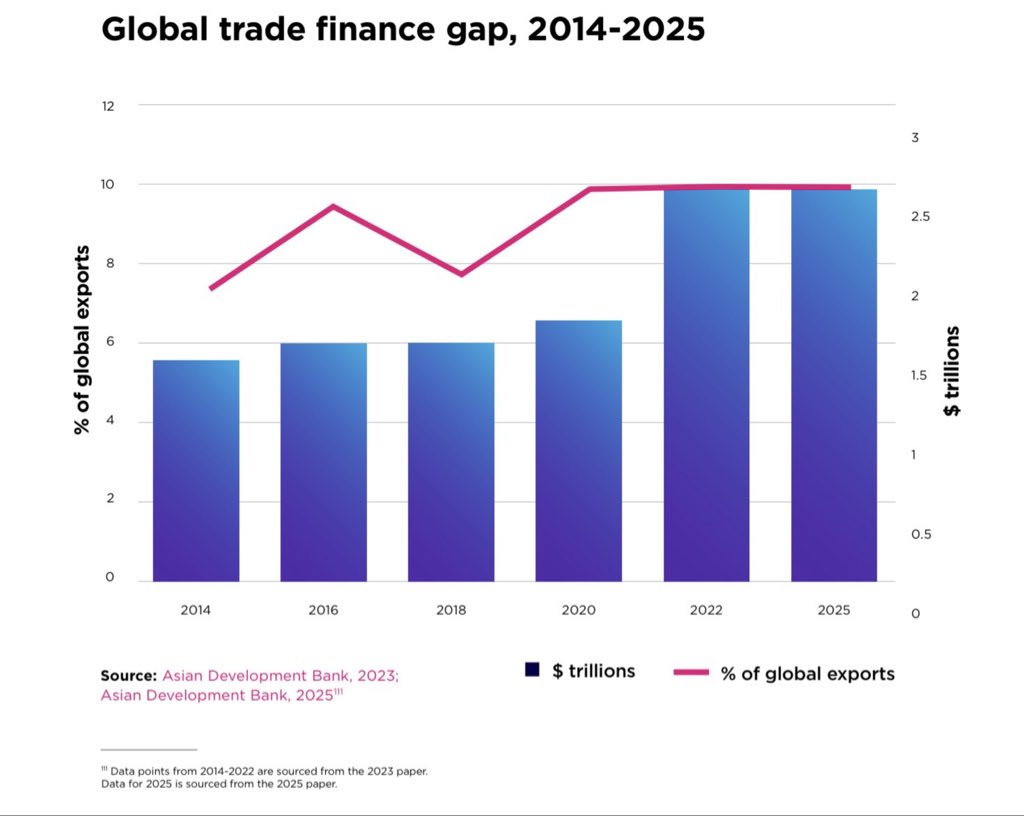
A significant share of the global trade finance gap is caused by outdated infrastructure that slows payments and locks up working capital. Through interoperable digital trade processes and real-time settlement capabilities, @iota and @TWINGlobalOrg help unlock liquidity and make global trade more efficient.
Source: futureoftrade.com
5
25
101
2,624
IOTAevents retweeted
[ICYMI] TWIN Foundation is heading to Bangkok for the UN Paperless Trade Week 2026! 🇹🇭. We'll dive into how decentralized tech is building resilient global supply chains.
📅 10 June 2026 | 🕒 15:15–16:35
📍 UNCC, Bangkok (Hybrid)
Join us in Bangkok or online ⤵️
🔗 unescap.org/events/2026/ptw2…
2
41
148
8,728

"Africa isn't just catching up - it's leapfrogging, getting ahead of other countries."
@DomSchiener, Co-Founder of IOTA, on the opportunity ADAPT represents for Africa to build world-leading digital trade infrastructure.
22
94
368
15,413
"A port can actually trust where the data comes from."
@DomSchiener on what IOTA enables for cross-border trade, at the @wkforum
5
69
316
10,787
IOTAevents retweeted

May 28
Building the digital infrastructure for intra-African trade through ADAPT with leading partners.

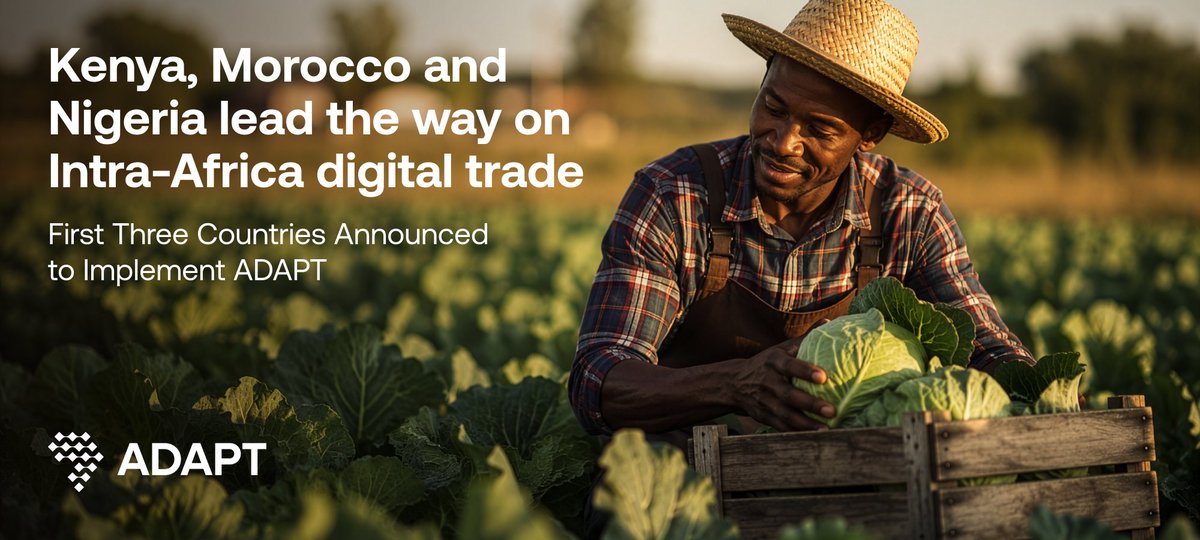
Kenya, Morocco, and Nigeria are the first countries to implement ADAPT, laying the foundation for a shared digital infrastructure for intra-African trade.
🎥 TBI’s Alban Odhiambo speaks to @cnbcafrica about ADAPT, developed by @AfCFTA in partnership with TBI, @wef and @iota
4
23
128
3,684
IOTAevents retweeted

Kenya, Morocco, and Nigeria are the first countries to implement ADAPT, laying the foundation for a shared digital infrastructure for intra-African trade.
🎥 TBI’s Alban Odhiambo speaks to @cnbcafrica about ADAPT, developed by @AfCFTA in partnership with TBI, @wef and @iota
11
66
198
16,187
IOTAevents retweeted

May 27
The invention of the shipping container cut trade costs by 90%.
The data layer of global trade has never had that moment.
Until now.
#TrustedTrade
4
41
132
2,964

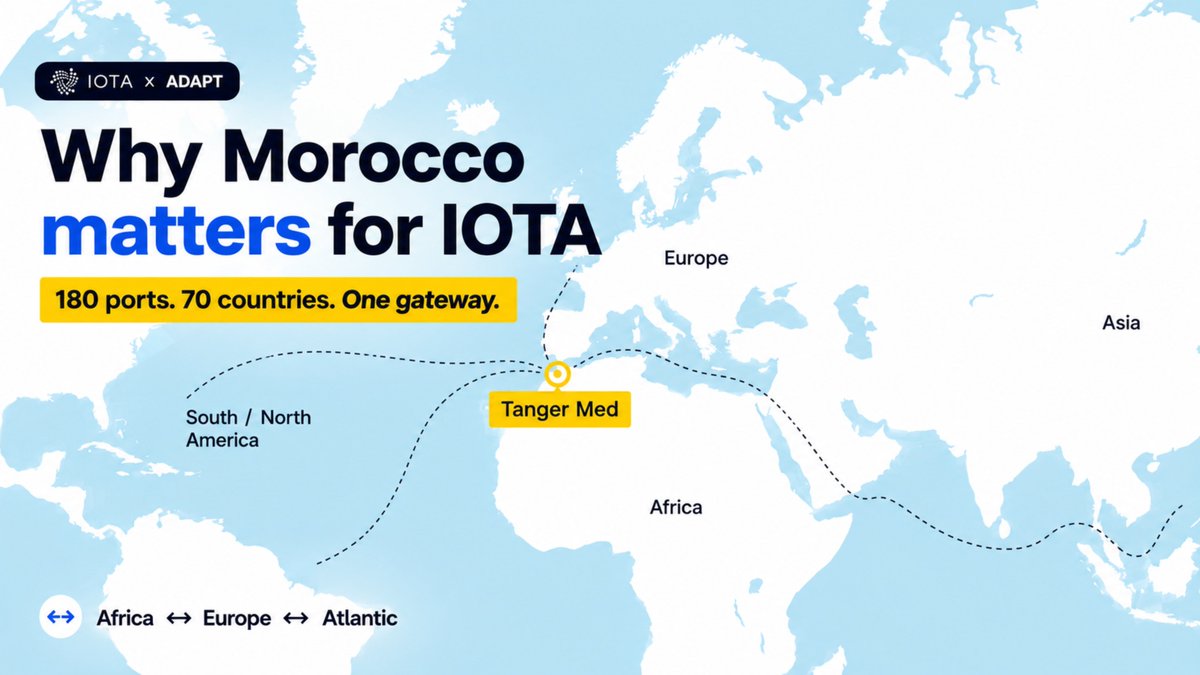
$IOTA’s Morocco move is bigger than people think
🇲🇦Tanger Med port handled 11.1 million containers in 2025
Now ask yourself:
what sits behind every container?
Customs data, Certificates, Invoices, Trade finance...
That is why Morocco matters.
Tanger Med connects 180 ports worldwide and sits at one of the most insane trade positions on the map
Africa below it.
Europe above it.
Atlantic and Mediterranean around it.
This is real leverage,
Because ADAPT is not trying to "move containers."
It is trying to make the trusted data around trade move better.
If documents, identities and payment rails become digital and verifiable,
you are suddenly touching the layer that every shipment depends on.
And Morocco gives that system serious volume to plug into.
➜ 1,200 companies
➜ 110,000 jobs
➜ $15B in exports
That is the part people miss.
IOTA’s opportunity is not just "Africa adoption."
It is being positioned around the infrastructure where global trade already happens.
9
39
189
5,226
We're not competing with national trade systems.
We're building the international highway between them.
A country like Vietnam or Singapore isn't going to trust data from a Korean national system by default.
IOTA changes that - because the trust is in the infrastructure, not just the relationship.
14
98
413
12,591
IOTAevents retweeted
May 25
Border-related admin costs can be as high as 20% of a good's retail price.
One in five dollars. Not from making the thing.
From the paperwork required to move it.
#TrustedTrade
2
23
96
1,823
Watch the full interview, courtesy of Maeil Business Newspaper: youtube.com/watch?v=ZFOZ0eqf…
26
105
6,129
"We're a blockchain company - but our main partners are governments."
@DomSchiener at the @wkforum
10
86
370
8,860
Africa’s digital trade future is being presented at CNBC.
@iota is sitting inside the ADAPT framework.
Alban Jackohango senior advisor from the Tony blair institute on @cnbcafrica
➜ 🇿🇦 South africa is gonna be onboarded soon
➜ Meetings with Nigerian stakeholders starting next week
➜ starting to implement the adapt framework in those three countries (Kenya, Morocco, Nigeria)
➜ last 6 months was project designing and managment so we can "hit the road" beginning second half of this year
➜ ADAPT country implementation forum
goverment and private sector will come together to implement this digital and regulatory sandboxes
➜ main goal of the sandbox: define the usecase and technology frameworks
➜ planned to launch this forums end of June for the three countries
➜ why those countries were choosen first:
1. Regional balance representing every corner of Africa
1-3 additional countries in central and souther africa are possible to represent the whole continent
2. trade activity between those countries are already very active
➜ many countries were interested to be among the first pilot countries
➜ Three countries were choosen to create a blueprint and expand rapidly across the continent
➜ Initially 6 countries were planned for the pilots
➜ But for now three countries were choosen to reduce complexity and start faster
-----------
This is how continental digital trade infrastructure starts: small enough to move fast, big enough to become the blueprint.
3
28
111
3,034

May 21
Africa Is Building a Smarter and More Sustainable Trade Infrastructure
One of the more interesting developments in digital infrastructure right now is happening far away from the usual crypto headlines:
Kenya, Morocco, and Nigeria have become the first countries to implement ADAPT, a new initiative designed to modernize cross border trade across Africa through shared digital infrastructure. The project is supported by the African Continental Free Trade Area Secretariat together with organizations including the World Economic Forum, the Tony Blair Institute, and the @iota Foundation.
What makes this important is that it addresses real economic problems rather than speculative ones.
Today, international trade across many African countries is still slowed down by fragmented systems, paper based documentation, expensive payment networks, and limited interoperability between institutions. According to the initiative, small and medium sized businesses are especially affected, despite representing the vast majority of businesses on the continent.
ADAPT aims to create a shared digital foundation for identity verification, trusted data exchange, and faster payments between countries. In practical terms, this could mean exporters no longer needing to manage large amounts of physical paperwork, customs processes becoming significantly more efficient, and payments settling faster and at lower cost.
A flower exporter in Kenya, for example, could send verified digital trade documents directly to buyers and customs authorities in another country instead of relying on fragmented manual processes. A small manufacturer in Nigeria could potentially access cross border markets with lower administrative barriers and improved payment reliability.
The sustainability aspect is also highly relevant.
Global trade still depends heavily on paper documentation, duplicated verification processes, and inefficient logistics coordination. Digitizing these workflows reduces administrative waste, lowers delays, and cuts unnecessary transport and storage overhead. More transparent supply chains can also help businesses track sourcing, compliance, and environmental standards more effectively.
What stands out here is the shift in focus from speculative crypto narratives toward infrastructure that solves operational problems at scale. Whether people care about blockchain technology or not is almost secondary. The important part is the creation of trusted digital systems that can make trade more accessible, transparent, and efficient for millions of businesses and consumers.
That is the kind of technological progress that tends to matter in the long run 💪
1
4
15
520
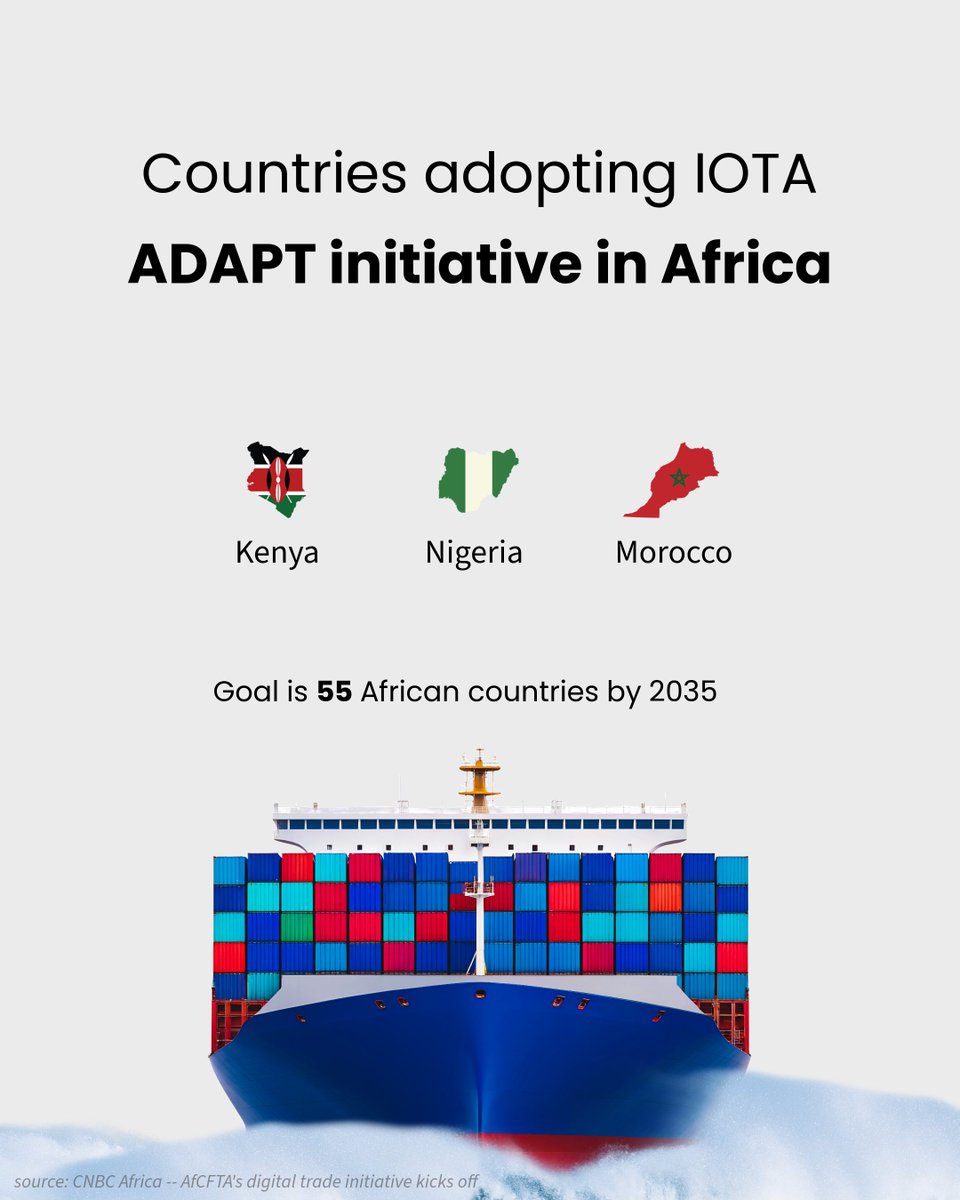
East Africa. North Africa. West Africa.
@iota strategically builds a corridor across Africa
Kenya, Morocco and Nigeria each bring something unique to the table:
🇲🇦Morocco
Gateway layer
Morocco gives ADAPT a serious Europe/Africa/Atlantic trade position.
Tanger Med is connected to 180 ports and is Africa’s largest container port according to Reuters.
🇰🇪 Kenya
Proof layer
Kenya matters because @TWINGlobalOrg / TLIP has already been tested in real trade infrastructure there.
The important part is simple: Kenya already connects trade agencies like KenTrade and the Kenya Revenue Authority through digital trade nodes.
So Kenya is basically the "show it can work" layer.
🇳🇬Nigeria
Scale payments pressure.
With $377 billion GDP, Nigeria is one of Africa’s biggest economies.
Nigeria received over $90B in crypto value according to Chainalysis.
That makes it the largest crypto market in Sub-Saharan Africa.
Stablecoins are already heavily used for cross-border payments and trade-related transactions across Africa, the Middle East and Asia.
This is why the first ADAPT countries matter.
We hear a lot about blockchain finally moving into the real world.
With ADAPT and TWIN, $IOTA is choosing a very specific lane:
the blockchain layer for global trade.
25
107
1,821
IOTAevents retweeted
May 20
What’s hard to grasp is the scale of what is being built here.
This is about establishing the digital and institutional foundation for how trade, identity, data and payments could move across Africa for decades to come.
And every trusted interaction, document exchange, identity verification and settlement flow will ultimately anchor on the IOTA L1.
This is what moving beyond pure crypto speculation looks like: becoming infrastructure for real economic coordination and global trade.

Kenya, Nigeria, and Morocco have been selected as the first countries to implement ADAPT - the Africa Digital Access and Public Infrastructure for Trade initiative.
9
47
179
4,193
May 20
Exciting times!!
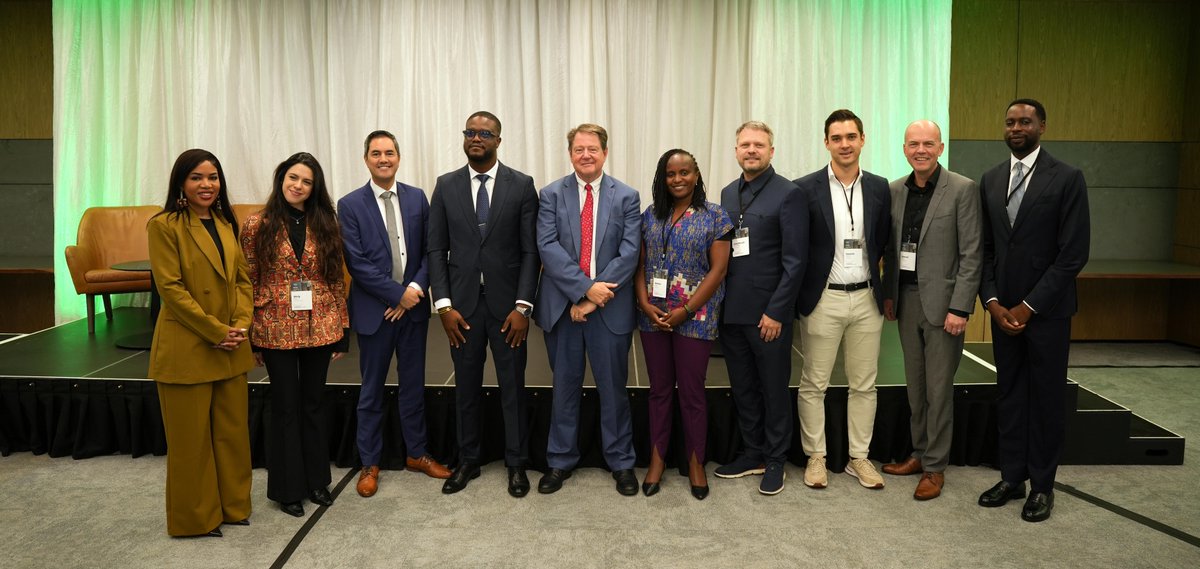
Led by the @AfCFTA, in partnership with the @InstituteGC, the @wef, and the IOTA Foundation, ADAPT is building the shared digital infrastructure for a single African market.
In each pilot country, this means establishing digital identity systems, enabling live cross-border data exchange, and integrating interoperable payment rails.
1
11
198