
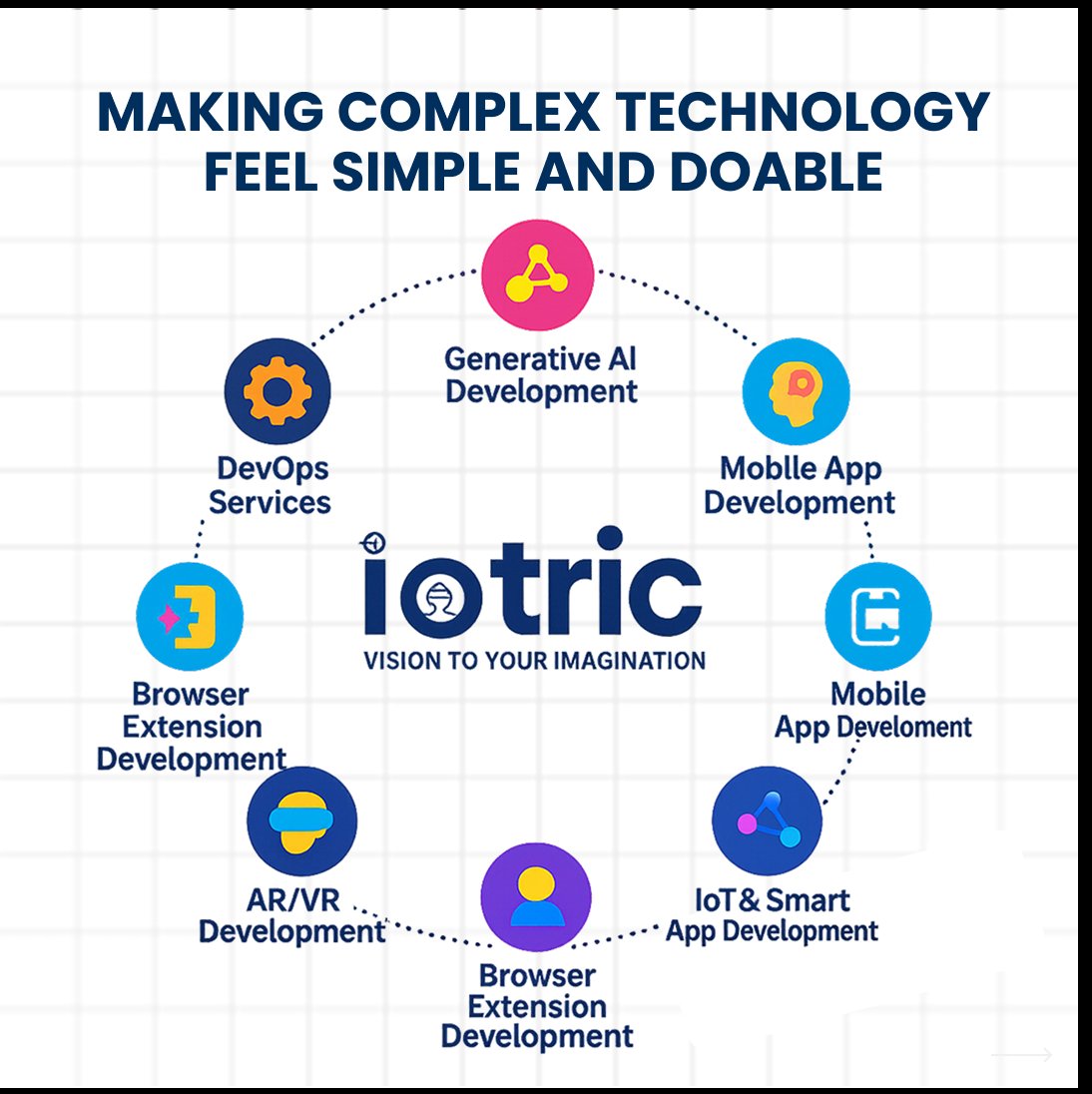
IOTRIC stands out as a prominent, end-to-end software development firm focusing on MVP and Product development consulting and services.
Joined April 2018
- Tweets 424
- Following 606
- Followers 619
- Likes 141
342 Photos and videos








May 4
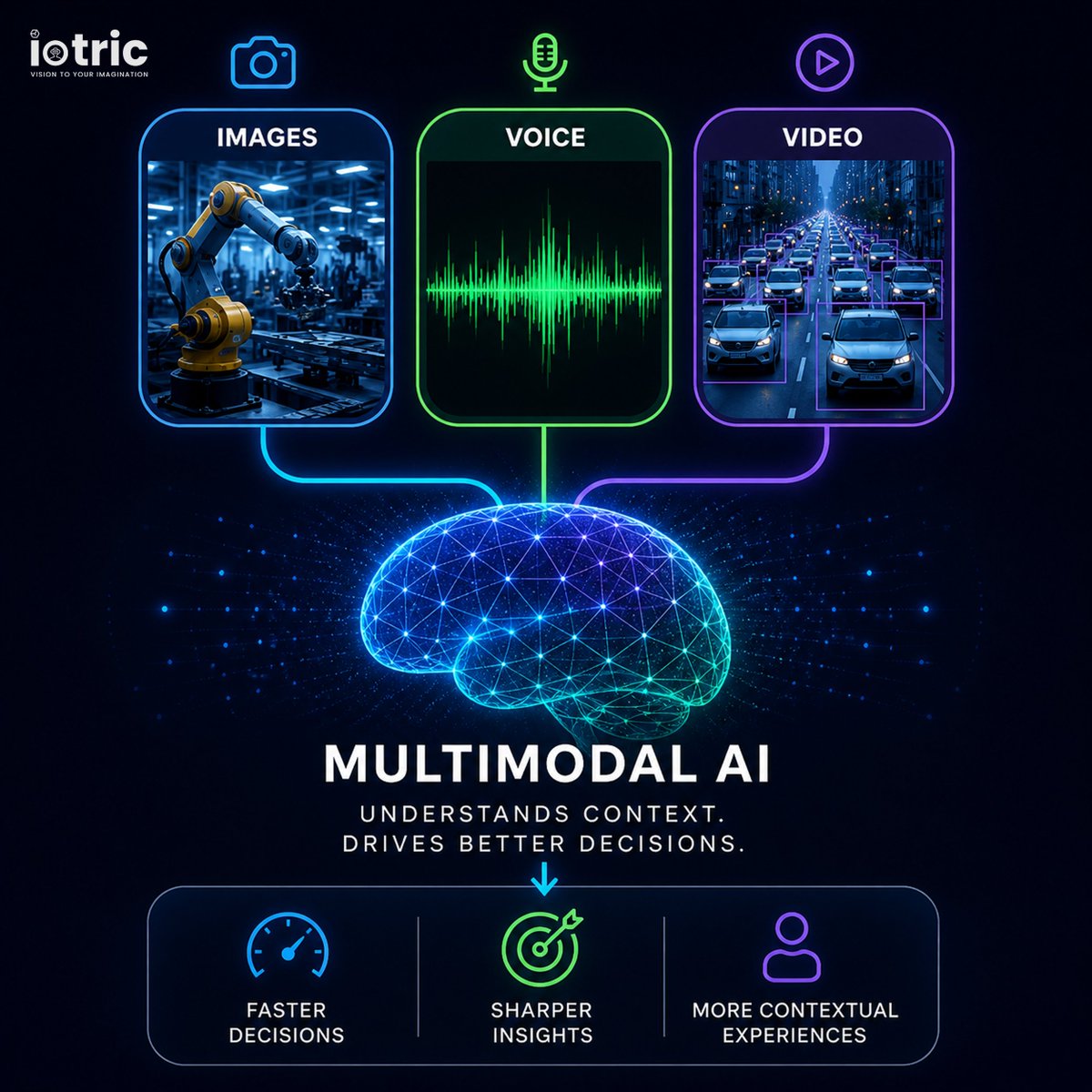
𝗧𝗲𝘅𝘁-𝗼𝗻𝗹𝘆 𝗔𝗜 𝗶𝘀𝗻’𝘁 𝗲𝗻𝗼𝘂𝗴𝗵 𝗮𝗻𝘆𝗺𝗼𝗿𝗲.
Modern intelligent systems can now understand images, voice, and video all at once. They go beyond processing data, they actually make sense of real-world context.
#IoTric #GenerativeAI #MultimodalAI #AIInnovation
5
May 1
Behind every “quick update,” every “small change,” and every “just one last task”… there’s a hardworking person making it all happen. 😉
𝗪𝗶𝘀𝗵𝗶𝗻𝗴 𝗲𝘃𝗲𝗿𝘆𝗼𝗻𝗲 𝗮 𝗛𝗮𝗽𝗽𝘆 𝗟𝗮𝗯𝗼𝘂𝗿 𝗗𝗮𝘆!
#LabourDay #WorkLife #Teamwork #Gratitude #KeepBuilding
1
13
Apr 24
“It’s just an MVP, it doesn’t have to be perfect.”
❌ Myth: MVP means launching something buggy, unfinished, or poorly designed
✅ Fact: MVP means focused, not crappy
You are not building everything, but whatever you build should work properly and solve a real problem
6
Apr 16
Ideas don’t kill your MVP.
Overbuilding does.
Most founders don’t fail because their idea is bad…
they fail because they take too long to launch.
They try to build 𝗲𝘃𝗲𝗿𝘆𝘁𝗵𝗶𝗻𝗴 and end up launching nothing.
Let's do it. iotric.com
6
Mar 19
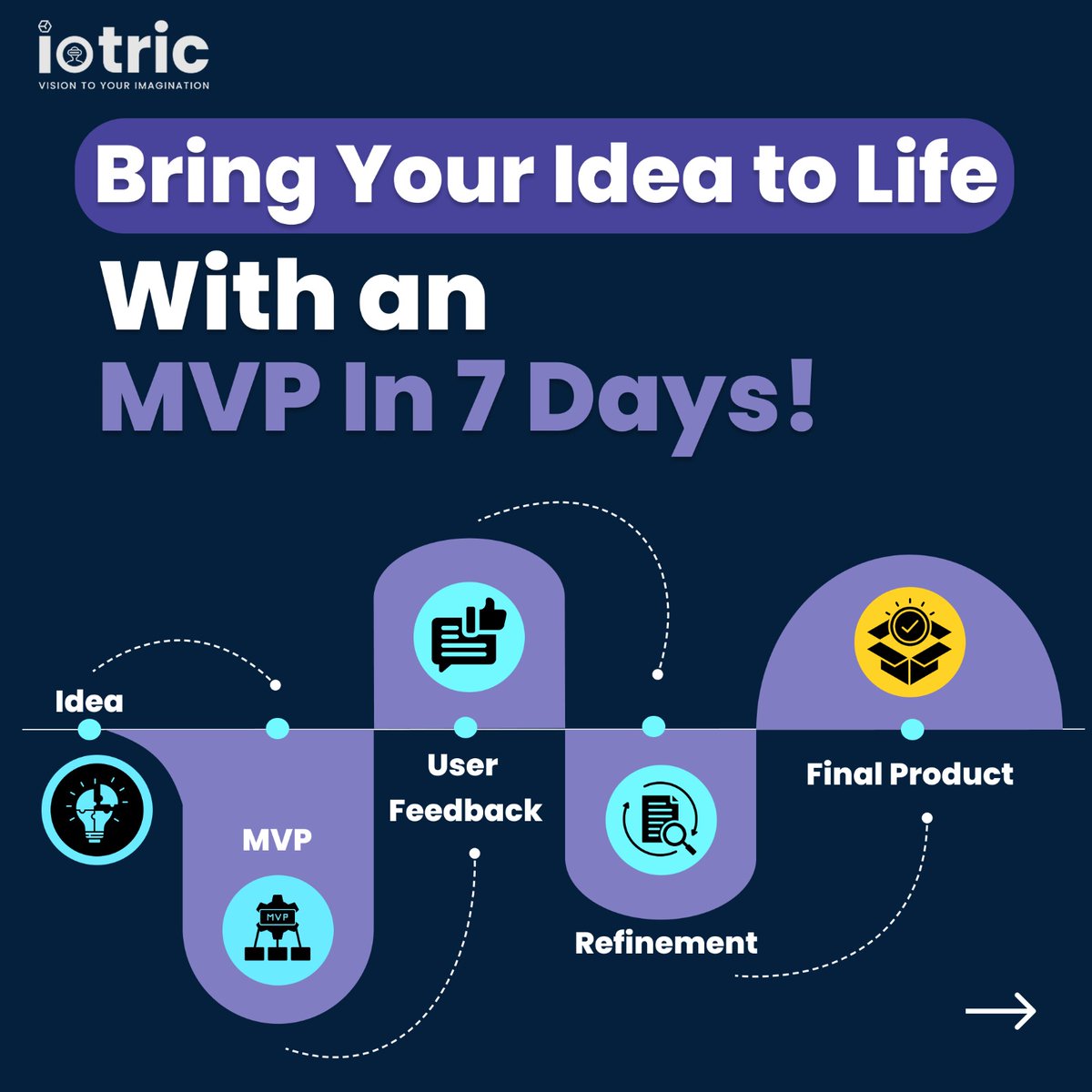
𝗪𝗵𝗮𝘁 𝗶𝗳 𝗹𝗮𝘂𝗻𝗰𝗵𝗶𝗻𝗴 𝘆𝗼𝘂𝗿 𝘀𝘁𝗮𝗿𝘁𝘂𝗽 𝗱𝗶𝗱𝗻’𝘁 𝘁𝗮𝗸𝗲 𝗺𝗼𝗻𝘁𝗵𝘀...
but just one focused week?
At iotric, we frequently witness the effectiveness of a targeted Minimum Viable Product (MVP) approach.
iotric.com
6
Feb 17
𝗔𝗜 𝗷𝘂𝘀𝘁 𝗵𝗲𝗹𝗽𝗲𝗱 𝗱𝗶𝘀𝗰𝗼𝘃𝗲𝗿 𝗻𝗲𝘄 𝗽𝗵𝘆𝘀𝗶𝗰𝘀
Why this is big:
• AI isn’t just analyzing data, it’s helping discover theory
• Complex physics → simpler formulas
• A real example of AI scientists = new knowledge
#AIinScience #TheoreticalPhysics #GPT52
1
23
Feb 13
𝗗𝗮𝘁𝗮 𝘀𝗰𝗶𝗲𝗻𝗰𝗲 𝗱𝗼𝗲𝘀𝗻’𝘁 𝗿𝘂𝗻 𝗼𝗻 𝗚𝗣𝗨𝘀 𝗮𝗹𝗼𝗻𝗲. 𝗜𝘁 𝗿𝘂𝗻𝘀 𝗼𝗻 𝗺𝗮𝘁𝗵𝘀.
𝗧𝗵𝗲 𝗳𝗼𝘂𝗻𝗱𝗮𝘁𝗶𝗼𝗻𝘀 𝘁𝗵𝗮𝘁 𝘁𝗿𝘂𝗹𝘆 𝗺𝗮𝘁𝘁𝗲𝗿:
• Statistics and Probability
• Linear Algebra powers
• Calculus
• Discrete Mathematics
22

A Curious Way to Measure Reputation
We know what people say about us. "Hotbed for extremism." "Dangerous." "Fringe."
We'd like to have a more honest conversation about how those judgments are made.
What we actually do:
We don't algorithmically manipulate what you see. Objective criteria—views, likes, subscribers—determine what's prominent. We don't optimize for engagement regardless of consequence.
We don't sell your data. We let you opt out of advertising entirely. We honor data subject access rights regardless of jurisdiction. We believe privacy is a fundamental human right.
We're transparent about moderation decisions and provide appeals. We joined the UN's Tech Against Terrorism partnership in 2020. We publish transparency reports.
We restrict our platform to adults. We don't target children.
What gets you labeled "legitimate":
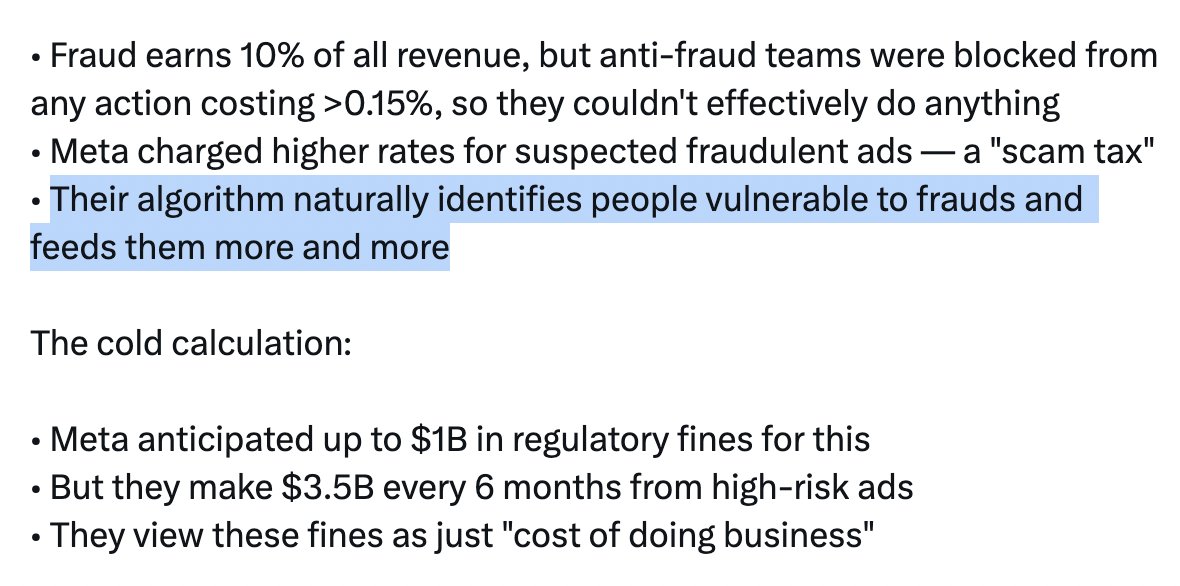
Meta earns $3 billion annually from ads it internally classifies as scams, illegal gambling, and banned content. When a specialized anti-fraud team cut problematic ads in half, leadership—following direction from the top—disbanded the team entirely. They set a "guardrail" limiting how much revenue they're willing to forgo for anti-scam efforts: 0.15%.
Facebook was the primary platform for 495 verified hate speech events in India in 2024. Of 259 instances of dangerous speech including explicit calls for violence, Facebook hosted 164. As of February 2025, 98.4% remain online despite clear violations of their own community standards.
Facebook removes 7 million pieces of hate speech content per quarter—which tells you something about the volume present on a platform considered mainstream and respectable.
The company that does this meets with presidents. Sits at the table for conversations about AI safety. Is treated as a pillar of the technology establishment.
The double standard:
We host some content that was removed from other platforms. Some of it is objectionable. We don't deny this.
But here's what's curious: the metric for "dangerous" seems to be concentration—what percentage of a small platform's content is problematic. Not scale—how many millions of people are actually exposed to harmful content. Not business model—whether a platform structurally profits from harming users. Not intent—whether leadership knowingly protects harmful revenue streams.
By concentration, a small platform hosting 10,000 problematic videos is "a hotbed for extremism."
By scale, a platform hosting millions of pieces of hate speech—with 98% of documented dangerous speech remaining online—is "struggling with content moderation challenges."
By business model, a platform that doesn't manipulate users or sell their data is suspect. A platform that knowingly extracts billions from scams targeting ordinary people is mainstream.
By intent, a platform working with Tech Against Terrorism is fringe. A platform that shut down its own anti-fraud team to protect scam revenue is respectable.
What we're asking for:
Not a pass. Not an exemption from criticism. We know we host content many find objectionable, and we accept that criticism comes with our commitment to free expression.
What we're asking for is consistency.
If the concern is harm to users, then a platform knowingly profiting from fraud at massive scale should face more scrutiny than a platform that doesn't algorithmically manipulate anyone.
If the concern is extremist content, then absolute numbers matter—not just percentages. A platform where millions encounter hate speech is a larger vector for radicalization than a platform with 11 million monthly users total.
If the concern is protecting vulnerable people, then a platform that targets everyone including children with engagement-maximized content should raise more alarms than one restricted to adults with no algorithmic manipulation.
We're not asking to be celebrated. We're asking why the platforms that respect user privacy, don't sell data, don't algorithmically manipulate, and don't profit from fraud are labeled dangerous—while platforms that do all of those things are labeled legitimate.
That's a curious way to determine reputation.
We think it deserves a more honest conversation.
x.com/AISafetyMemes/status/2…
19 Dec 2025

Holy shit is Meta evil lmao
***10%*** of Meta's revenue is from ACTUAL SCAMS that they KNOW ARE SCAMS
When Zuck found out, he shut down... the ANTI-scam team
Imagine trusting this man - or any of these cartoon villains - with Actual Fucking Superintelligence
4
18
26
14,844
5 Dec 2025
𝗔𝗡𝗧𝗜-𝗔𝗨𝗧𝗢𝗠𝗔𝗧𝗜𝗢𝗡
We love asking “smart” questions like:
❓ Can AI handle this?
❓ Should we automate this?
❓ What’s our deflection rate?
𝗕𝘂𝘁 𝗵𝗼𝗻𝗲𝘀𝘁𝗹𝘆?
If that’s your entire strategy… you’ve already missed the point.
That’s not innovation.
That’s just replacing people with bots and hoping it magically counts as progress.
Here’s what actually matters:
Your data is already telling you where users struggle.
You don’t need more questions — you need better answers.
Stop obsessing over what to automate.
Start digging into why people need help in the first place.
✅ “Everyone drops off when pricing shows up… maybe we need to address their doubts, not just flash numbers.”
✅ “People are engaging but still not getting answers. Where exactly does hope turn into frustration?”
✅ “Support sees the same issue every day. What if we solved it before users even have to ask?”
When you understand what’s breaking, you can fix what actually matters.
That’s how you genuinely help people.
That’s how you build something people truly want to use.
21
2 Dec 2025
The Employee That Never Sleeps
In today's digital-first world, your website is often the first impression potential clients have of your business. It works 24/7, never takes a day off, and represents your brand to thousands of visitors.
At iotric, we don't just build websites – we create powerful digital sales tools that:
1. Convert visitors into customers
2. Showcase your brand's unique value
3. Drive measurable business results
4. Work tirelessly to grow your business
Your website should be doing more than just existing online. It should be your most productive team member.
Reach out: iotric.com
1
1
1
23
28 Nov 2025
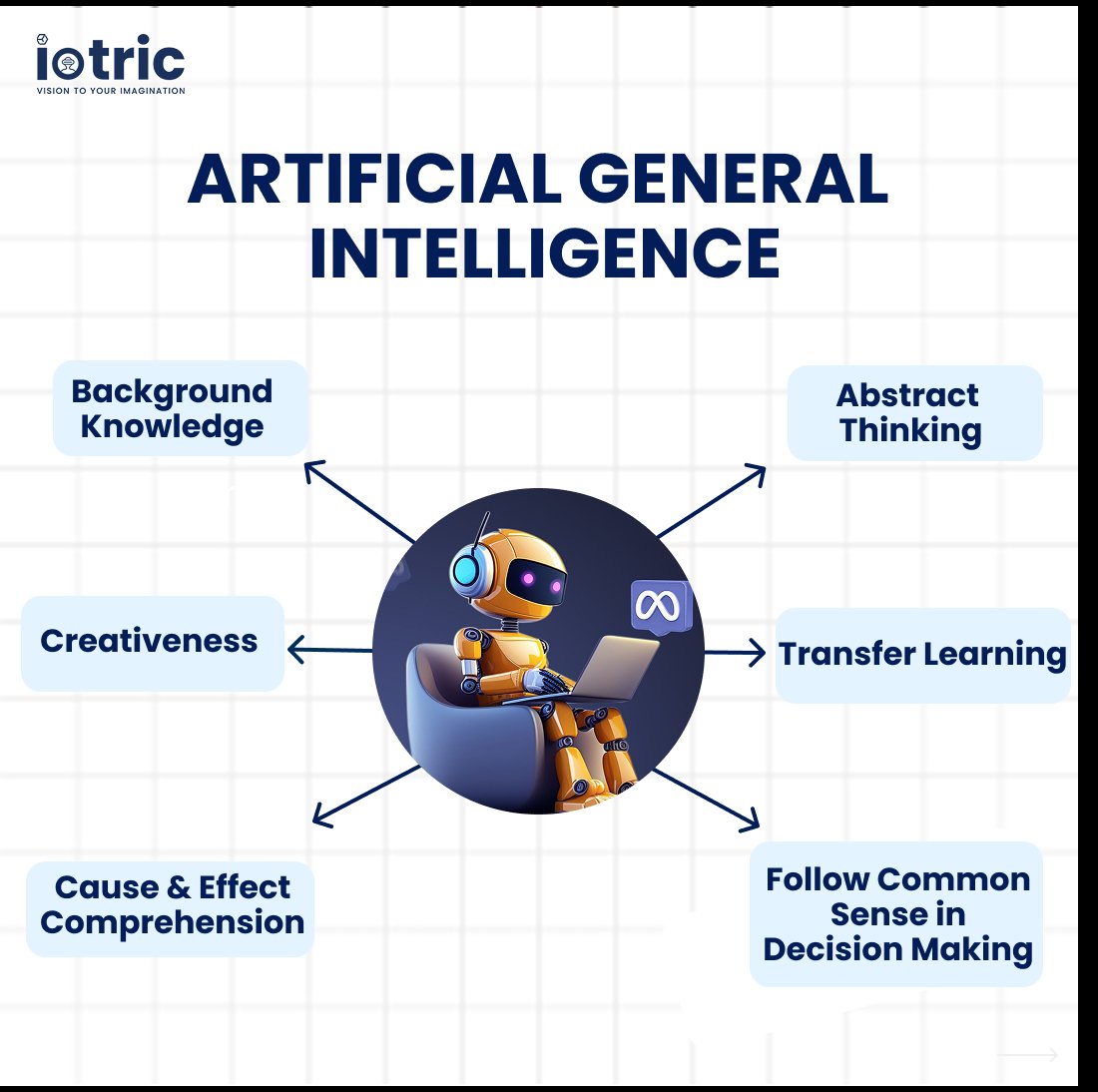
AGI – the big dream of AI. But what are we really building toward?
At its core, a generative AI agent is pretty straightforward: it's software that observes, thinks, and acts using whatever tools it has available, all to reach a goal you set for it.
But here's the thing we need to remember: humans aren't going anywhere.
We talk a lot about "AI transforming everything," and sure, it's powerful. But the real magic happens when we understand how these systems think and solve problems, and then use that knowledge to stay in control.
The future isn't AI replacing us. It's Human AI, working together. And for that to work well, we need to stay at the forefront. We set the goals. We make the calls. We decide what matters.
#AI #GenerativeAI #AgenticAI #AGI #ArtificialIntelligence #FutureOfWork #TechExplained #AITools #DigitalTransformation #LearnAI #AIEducation #ProductivityWithAI #HumanFirst #Upskill2025
1
43
21 Nov 2025
BUILDING BETTER
Top-performing product teams aren't just coding faster. They're learning smarter. Here's how:
1. They steal the best patterns from products that work
2. They spot where MVPs fail – and pivot before it's too late
3. They ask for feedback (and actually build with it)
4. They treat every sprint like a learning lab
With iotric, it's not guesswork. You get real expertise from real product journeys – so you can ship faster, build smarter, and deliver products that matter.
Great products aren't lucky. They're engineered.
And you're already on your way.
14
18 Nov 2025
What if you could validate your product idea before investing millions?
That's exactly what forward-thinking founders are doing with iotric's MVP Development approach – turning concepts into testable products and reducing risk at every stage.
See how successful startups are:
1. Launching MVPs that secure funding and early adopters
2. Scaling from single-feature products to full-scale platforms
3. Building with Web3, IoT, AR/VR, and cutting-edge tech
It's building the right product, faster.
:point_right: Learn how: [iotric.com/]
331
4 Nov 2025
I run in your browser, and sometimes on servers too.
I can be async and event-driven.
What am I?
0%
SQL
100%
JavaScript
0%
Rust
0%
Java
1 votes • Final results
24
31 Oct 2025
The Browser War Just Got Intelligent
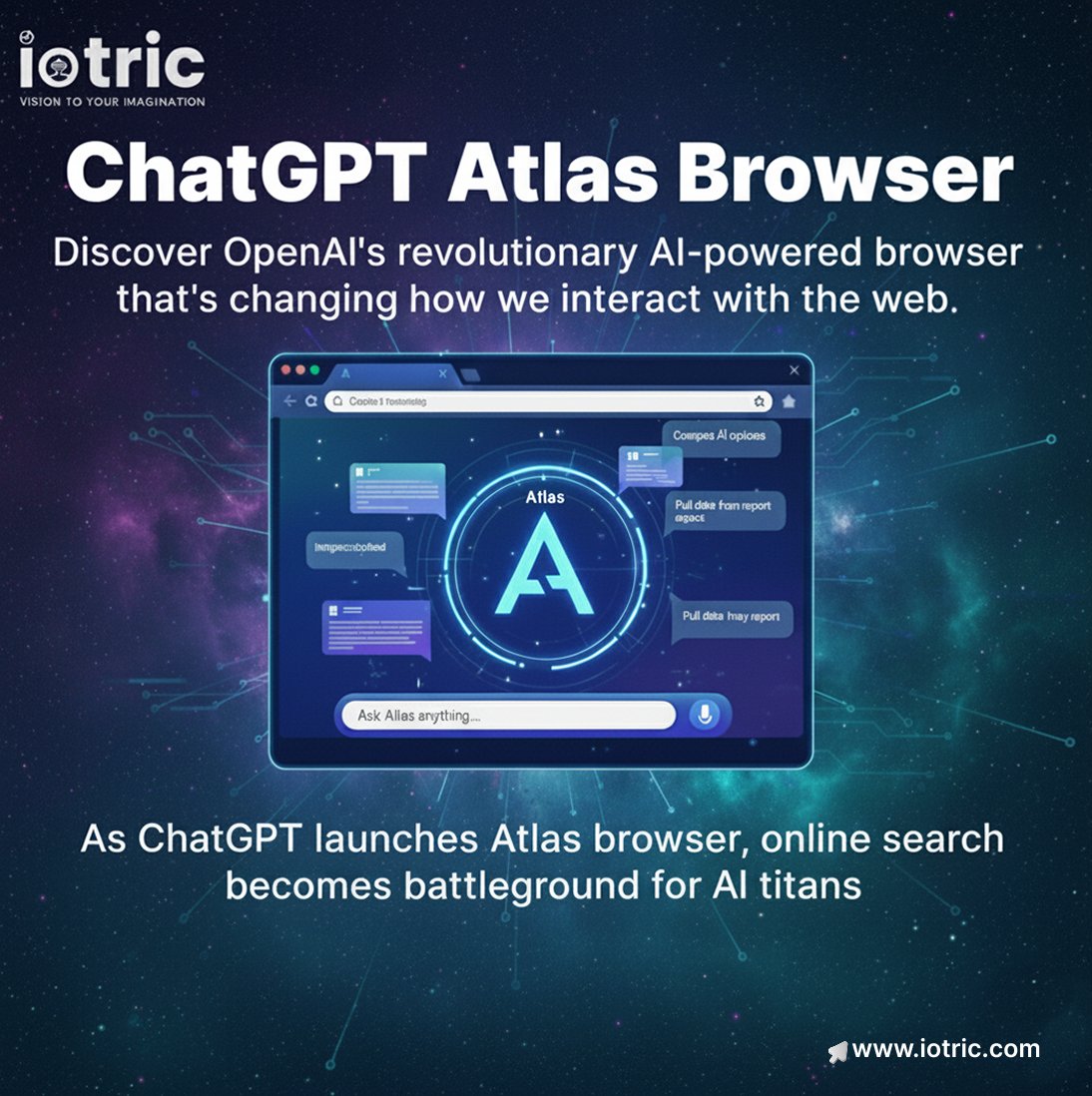
OpenAI just rolled out something interesting.
ChatGPT Atlas, a browser that works differently than what we're used to.
Instead of clicking around and searching through multiple tabs, you can just ask it what you need in plain language. Looking to compare some options? Need to pull data from a report? Just ask, and it helps you out.
It's part of a bigger wave where Perplexity and Microsoft are building similar AI browsers too. Looks like the way we browse and work online is changing pretty quickly.
Worth keeping an eye on how this evolves!
1
49
24 Oct 2025
The difference is clear:
❌ Manual Support: Endless hold times, overwhelmed teams, frustrated customers
✅ AI-Powered Chatbots: Instant responses, 24/7 availability, satisfied customers
iotric.com
1
23
17 Oct 2025
NOT SURE WHERE TO START WITH YOURS APP IDEA?
We get it, turning ideas into reality can feel overwhelming.
But the good news is you don’t have to do it alone.
At iotric, we make app development simple, fast, and actually enjoyable. From your very first idea to a fully functional app, we’re with you every step of the way.
Let’s bring your vision to life. Together, we can build something incredible!
iotric.com
21