
AI content distribution for brands & apps that need to grow fast. Building vibingcontent.com (content) • clippertask.com (creator marketplace)
Joined April 2024
- Tweets 4,072
- Following 128
- Followers 361
- Likes 5,592
312 Photos and videos




10h
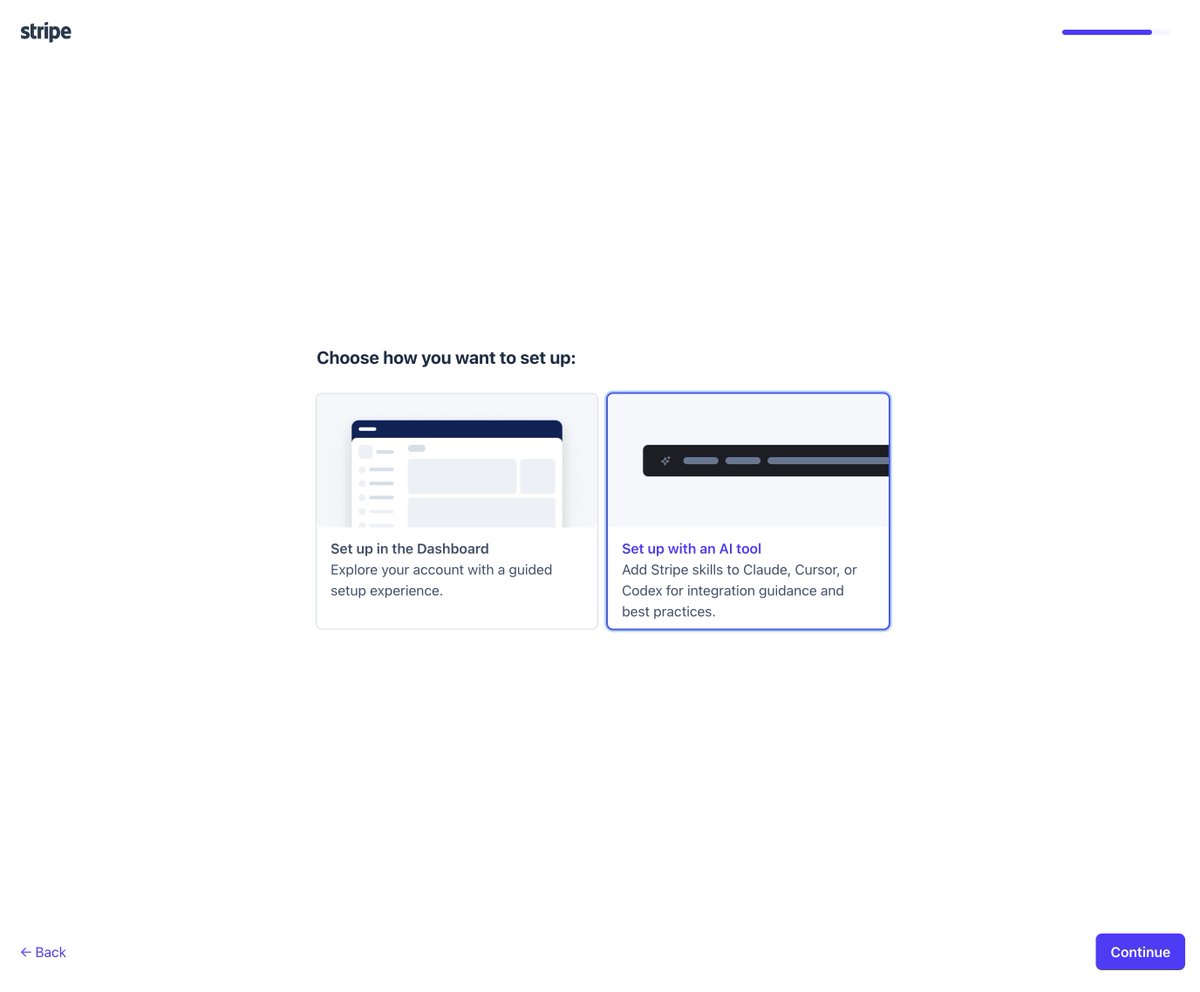
A year ago I tried getting AI agents to integrate Stripe.
It was painful.
Because Stripe is a complicated system full of edge cases: webhooks, prices, settings, recurring payments.
Now Stripe has its own coding agent plugin, skills, mcp. It can connect to your sandbox, configure things, and test the setup itself.
That’s another proof of the direction software is moving.
I don’t want to “learn Stripe integration” again.
I just want to tell my agent: “set up payments”, and have it figure it out.
2
3
98
Jun 12
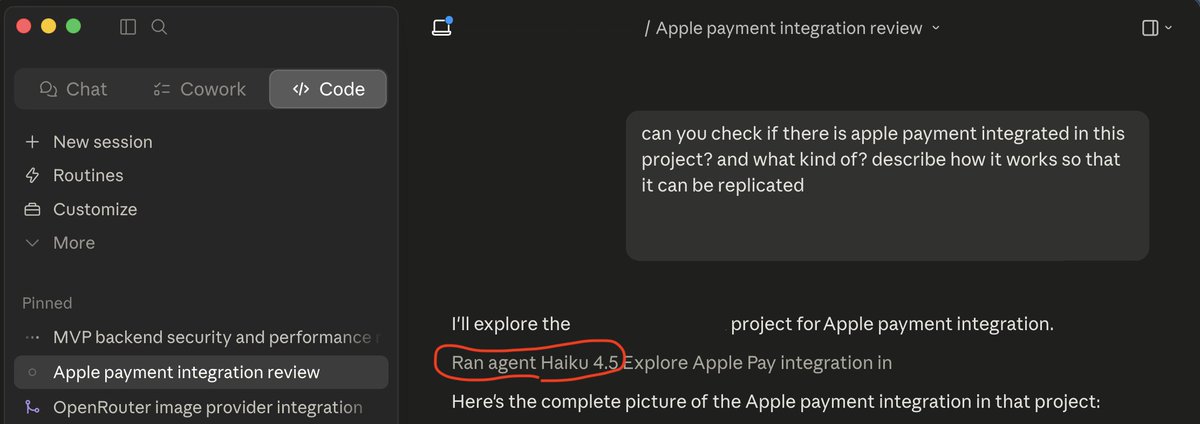
coding agents are smart enough to use the same approach
claude code can spawn an agent with a smaller model (haiku) to do simple tasks
Jun 11

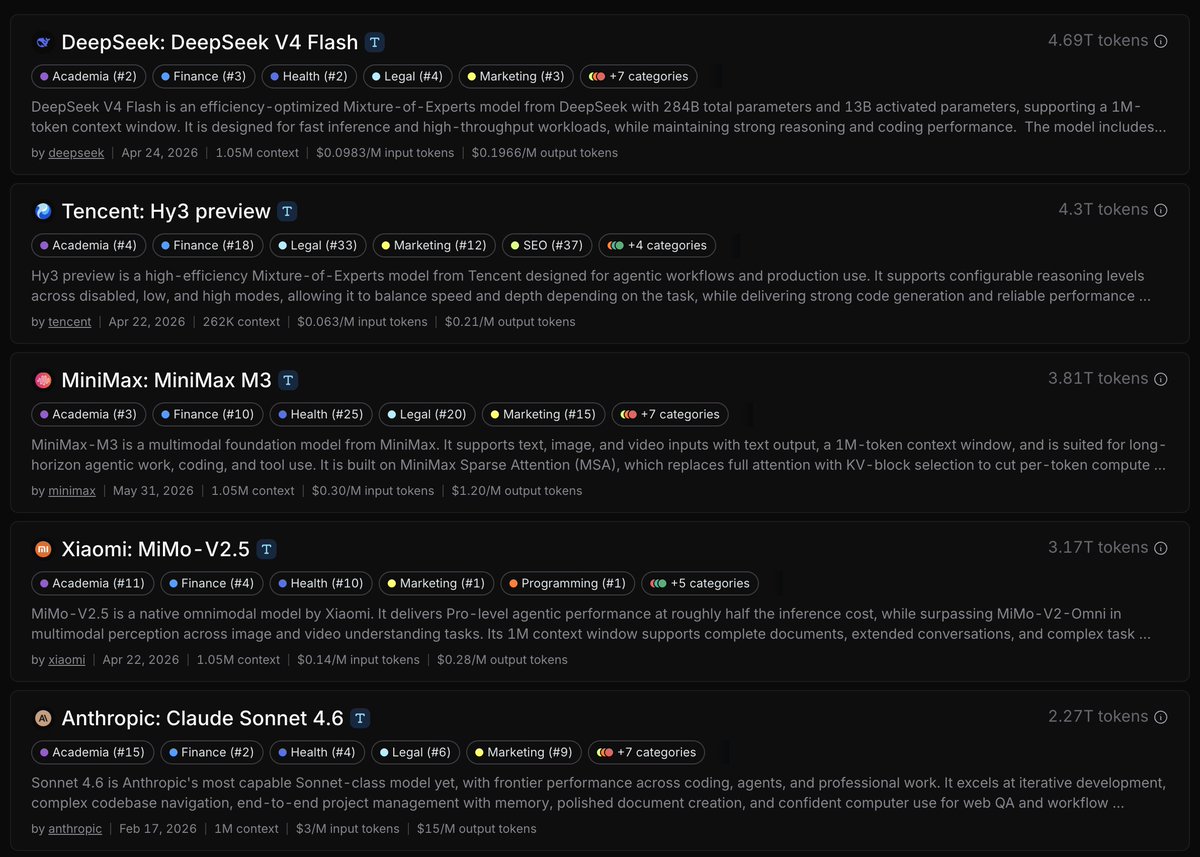
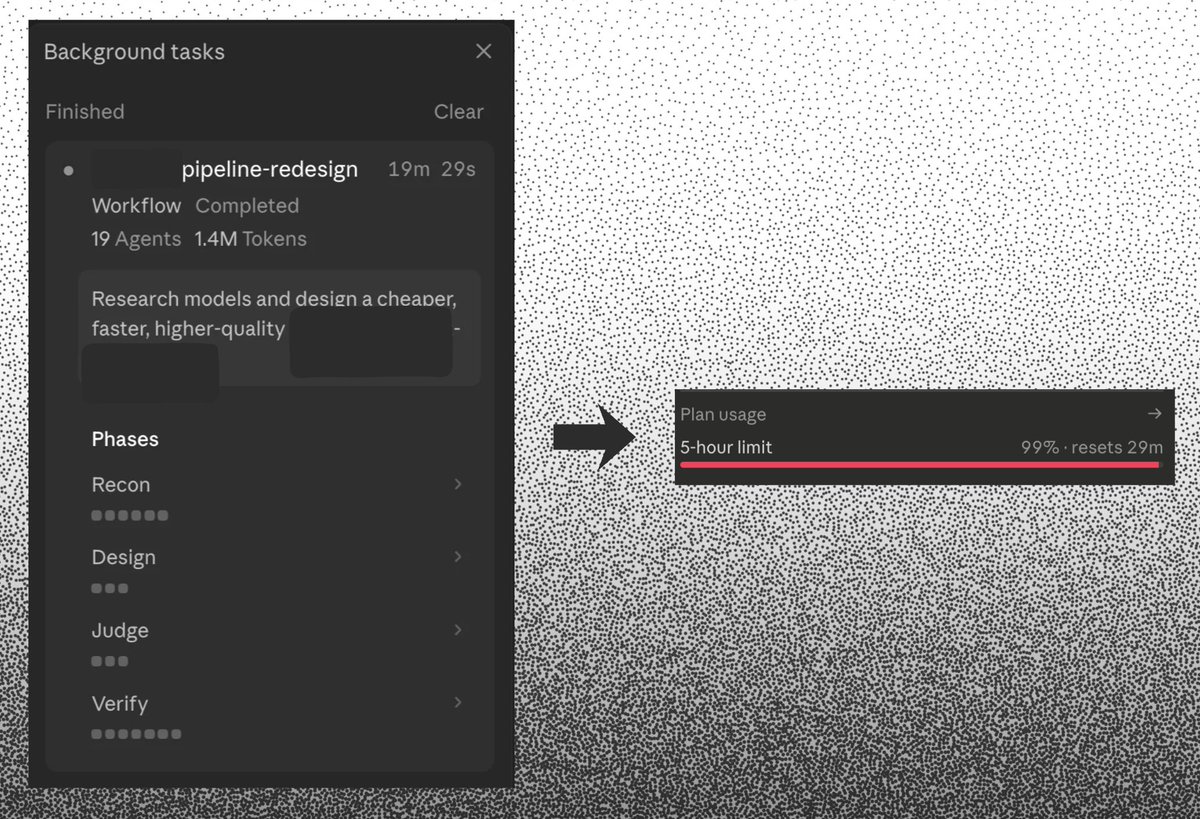
Underrated thought: you don’t need the latest AI model for your app.
In fact, defaulting to the newest model can make you less profitable.
It is usually the most expensive, and when you are just starting, every cent matters.
Better approach:
- try simpler models first
- test Chinese models
- use mini models where possible
- reduce unnecessary thinking
The thinking should be: what's cheapest model that gets the job done well.
2
2
290
Jun 12
I’m gonna try something weird: repurposing an old TikTok account into a totally different niche.
Has anyone tried this?
2
2
86
Jun 11
how to market your product right now
just add ‘claude fable’ to whatever that is
1
59
Jun 11
Underrated thought: you don’t need the latest AI model for your app.
In fact, defaulting to the newest model can make you less profitable.
It is usually the most expensive, and when you are just starting, every cent matters.
Better approach:
- try simpler models first
- test Chinese models
- use mini models where possible
- reduce unnecessary thinking
The thinking should be: what's cheapest model that gets the job done well.
2
2
368
Jun 10
a proper usage of claude fable
give it a super complicated task and ask to write a solution into a file
don't let it write code 💀
let sonet 4.6 implement the solution instead
2
140
Jun 9
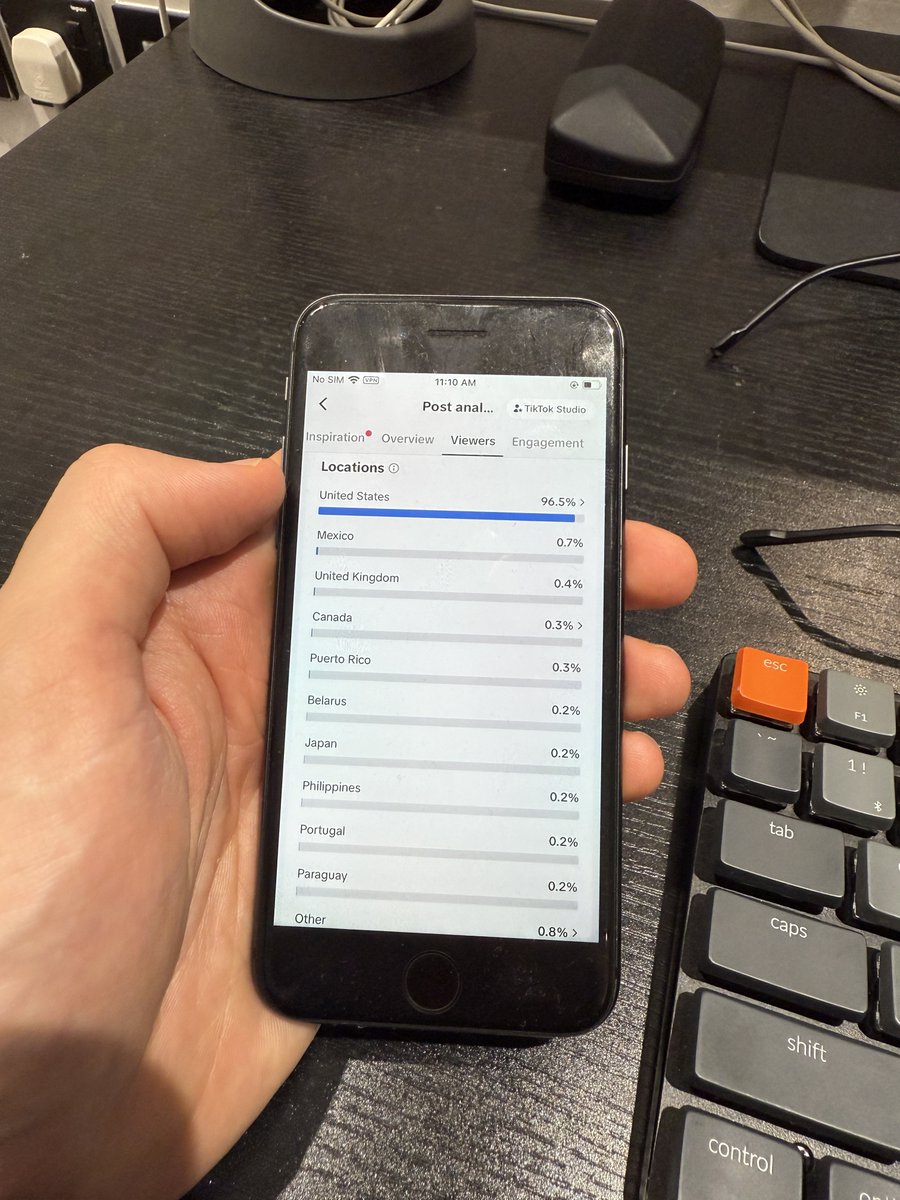
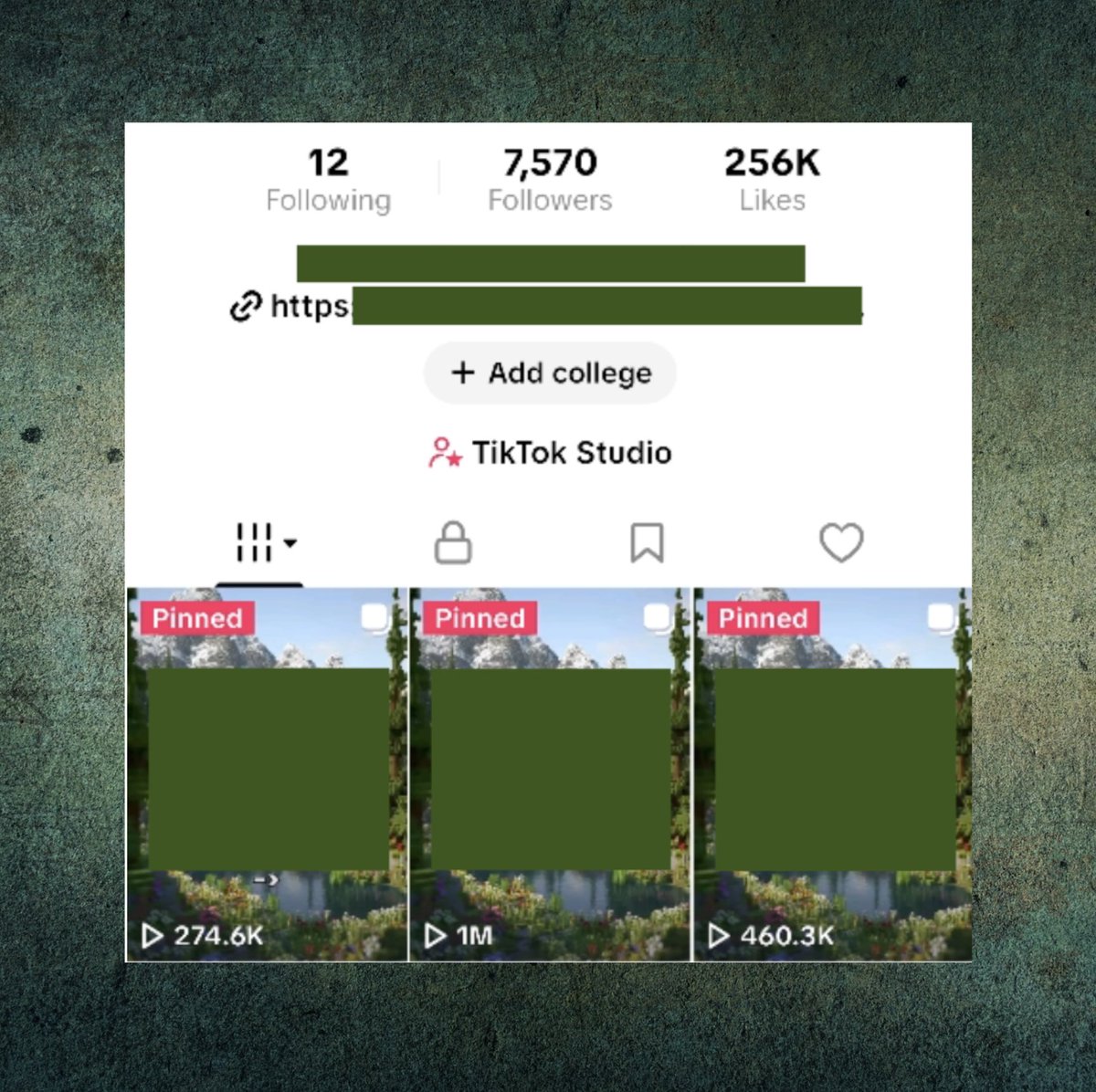
One of my slideshow posts just hit 1M views on TikTok.
The account helped bring traffic to a client, yes.
But I recently realized there’s a deeper value in it.
I did some outreach through the account, and multiple people replied.
I was surprised.
You’re perceived differently when you’re big enough.
An account is an asset. On any platform.
Now imagine having a network of these.
1
2
80
Jun 7
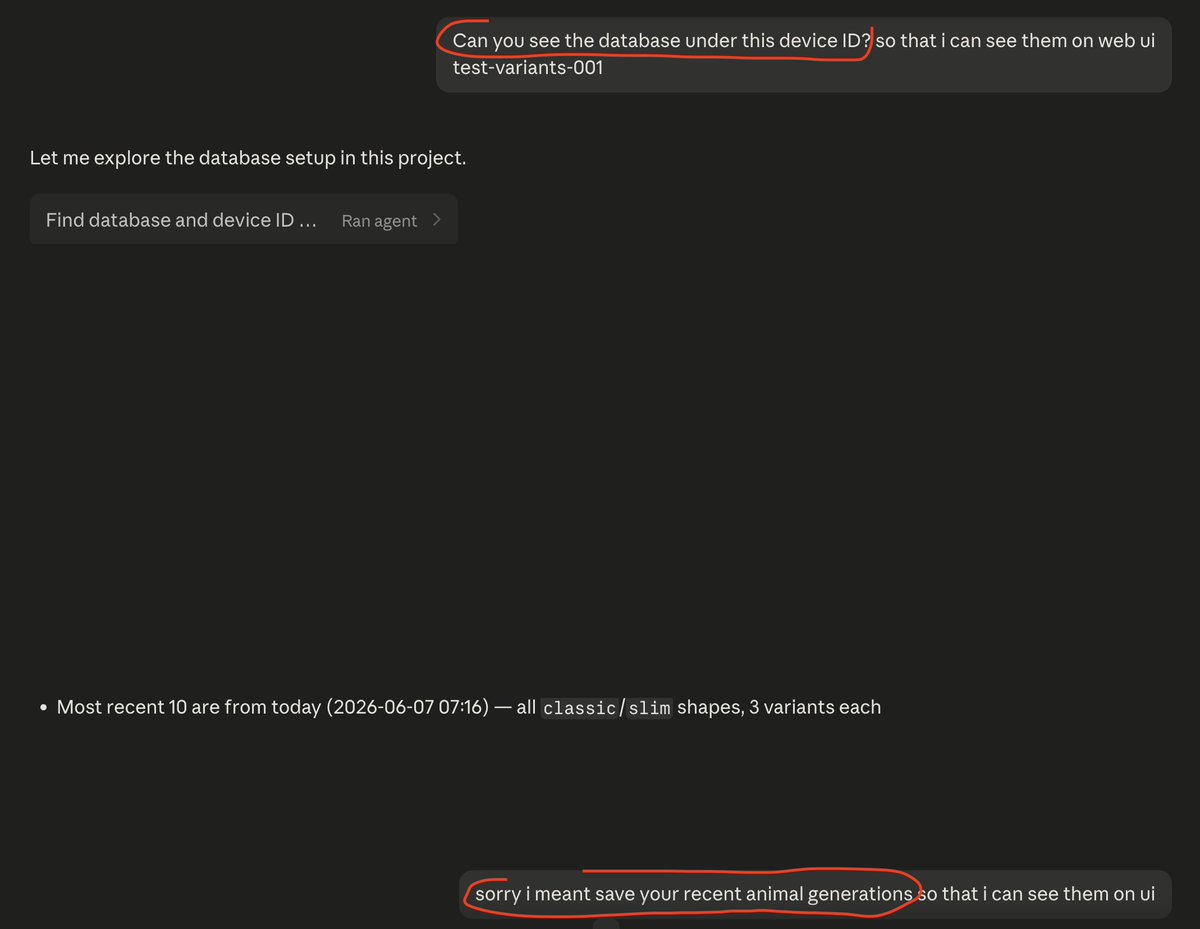
Wispr Flow used to be so good that I didn’t even check the output.
I could just speak, send the text to a model, and trust it.
It has regressed badly.
In this example I dictated a prompt, Wispr Flow changed/summarized it incorrectly, and the coding agent did the wrong thing because of that.
This is just one example of many I’ve run into recently
2
2
178
Jun 6
this is basically "build the app backwards from the ads"

if i had to start from ZERO, here’s how i’d get to $10k mrr with a mobile app 👇
1. choosing the app niche
looksmaxxing, fitness, wealth - anything that appeals to core human desires is a MUST
2. designing the app for ads
a viral screenshot-able feature like cal ai’s “ai calorie logging” - this will allow me to make ads really easily without making the user feel sold to (as i can just show the screenshot of the feature briefly)
3. getting ad-ready
SUPER IMPORTANT: add an MMP to my app, for conversion tracking later when i run ads - either appsflyer, singular…
4. making the ads
study competitors on instagram / tiktok - see what hooks their using and translate their formats to my own app - i’ll make 12-30 variants of 1-2 formats ive found
5. running the ads
i prefer tiktok ads for mobile apps but meta does fine too - one campaign, one ad set, all my ads in the ad set - $50 a day budget to find a winner; then scale up spend once i’ve got a profitable ad
that’s literally it. i wish id known this earlier because i spent thousands of $ on ugc and influencers that didnt work for me
the most important part: DESIGN YOUR APP FOR ADS FROM THE START
1
10
2,212
Jun 5
Every serious company will eventually have a content operating system.
Either built in-house or built for them.

I built a content machine.
It turned me into a one-person media company, has driven tens of millions in pipeline for @tenex_labs, and is allergic to AI-slop.
It has also turned all of my employees into content creators.
I may opensource the whole thing, but for now, I'm going to share how I built it & how it works.
Feel free to copy & paste the steps to Claude/Codex if you want to build your own content machine.
Step 1: Map out the process
In order to make any of your work AI-native, you need to understand the way in which it's been done historically. This is why business context & domain expertise REALLY matters, even in a post-AI world.
Content has been my bread & butter for the last decade, so I started by pulling out an 8.5x11 sheet of printer paper and drawing the traditional process.
1) Look for inspiration
2) Pick a 10x content idea
3) Research the idea
4) Brain dump all of my thoughts about the idea
5) Decide the post format I want to create
6) Create a draft of the post
7) Edit the post
8) Create derivative versions of the post
9) Go live
10) Track performance
Step 2: Where am I needed vs. not needed?
I am needed for the first & final mile:
First mile: picking the idea/direction & providing all of the necessary context
Final mile: going through the final draft with a fine tooth comb & giving final sign-off.
AI can handle the rest:
Looking for inspiration, researching the idea, pulling my thoughts out, writing the post, doing a first edit, creating derivative content, and tracking performance.
Step 3: Build the Content Machine
The machine is one pipeline, run end-to-end or step-by-step. It is a directory of skills that mimic the steps in the content process that I've delegated.
1) The Oracle [AI]
Mines my Slack, Notion, call transcripts and Gmail for spikes, moments I naturally said something worth expanding, while the Internet Reader curates an external feed of X accounts & websites I've selected.
Qualifying ideas (≥6/10) are written to The Vault (a notion database of content ideas).
2) Select the idea from The Vault [Human]
3) The Researcher [AI]
Before any interview, build a sourced research-report.md: TL;DR, key facts with links, current developments, what's already been said, contrarian angles, and open questions for the interview. Claims are adversarially checked; fact is separated from opinion.
4) Interview Panel [AI Human]
Six world-class interviewers (Joe Rogan, Howard Stern, Michael Barbaro, etc) ask 12–15 questions, one at a time, each pushing a different dimension...and never satisfied with vague answers. Won't advance without 2–3 specific stories, real numbers, and emotional specificity.
5) Production [AI]
The interview becomes a raw .md file: transcript, key stories, core insights, quotable moments, emotional anchor, surprising reveals, and the "so what." This raw file is sacred: my exact words, never paraphrased away.
6) Refinement [AI Human]
I tell the machine what content type I want to create. It reads my custom style guide past feedback lessons content-type spec, then drafts in my voice...pulling real stories and quotes from the raw file. The #1 rule: write like you're texting a friend. Supports long posts, LinkedIn, X threads, and more.
7) Writer's Council [AI]
Six expert reviewers (Shaan Puri, Morgan Housel, David Perell, etc) score the draft through their own lens, splitting fixes into editorial (the machine can rewrite) and information gaps (only the creator can answer...these route back to the interview panel).
8) Revision Loop [AI]
Iterate until council scores 9/10.
9) Repurposing Engine [AI]
One anchor → 10 natively-formatted derivatives, each re-hooked for its platform and each held to the same full Council → revision bar of 9/10. This is how two people produce like a hundred.
10) Final revision [Human]
11) Learning Loop [AI]
After approval, the machine compares first draft vs. final, extracts confirmed lessons, and saves them to that creator's content-lessons.md. Every future first draft starts smarter. Lessons override the style guide when they conflict.
Feel free to steal the machine & ask me any questions about how it works!
1
126
Jun 5
nobody wants 12 apps and 12 different UIs.
one interface, your agent, that can reach everything.
that's the bet this whole checklist is making.
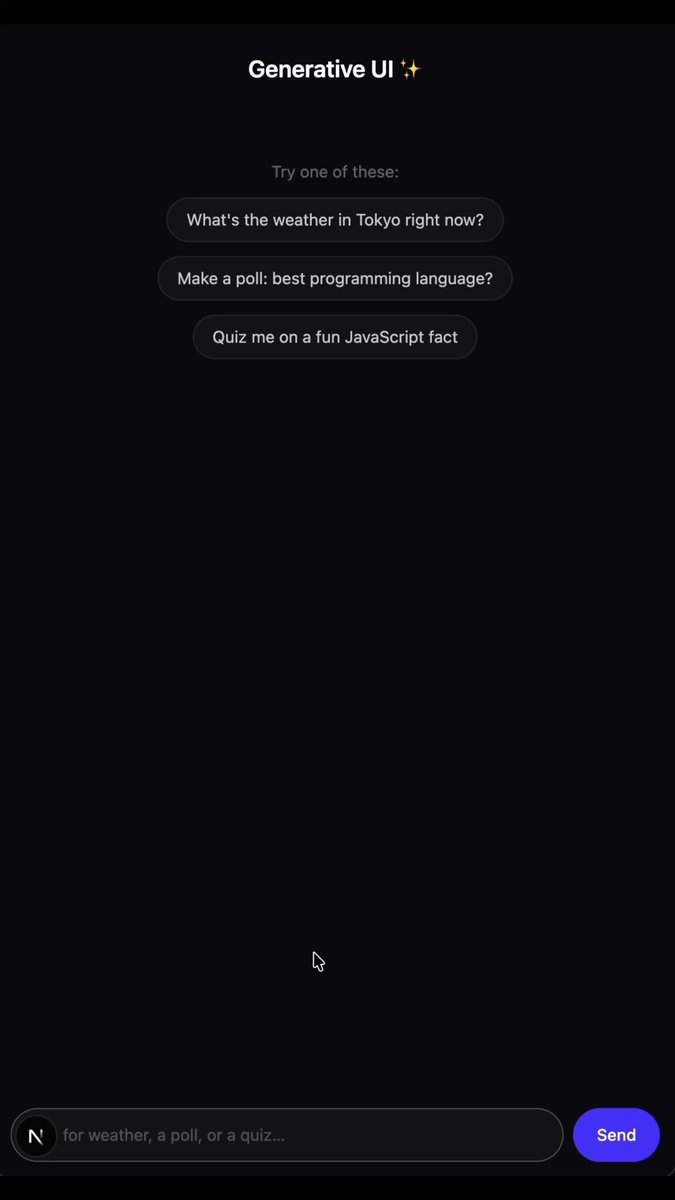
i got curious about gen ui and built a small project that demonstrates how it works 👇

Making my SaaS AI-first:
✅ Open all API endpoints
✅ llms.txt & markdown docs
✅ CLI (new 🌟)
⬜️ MCP
⬜️ Generative UI
⬜️ Onboarding w/ paywall
3
213
Jun 4
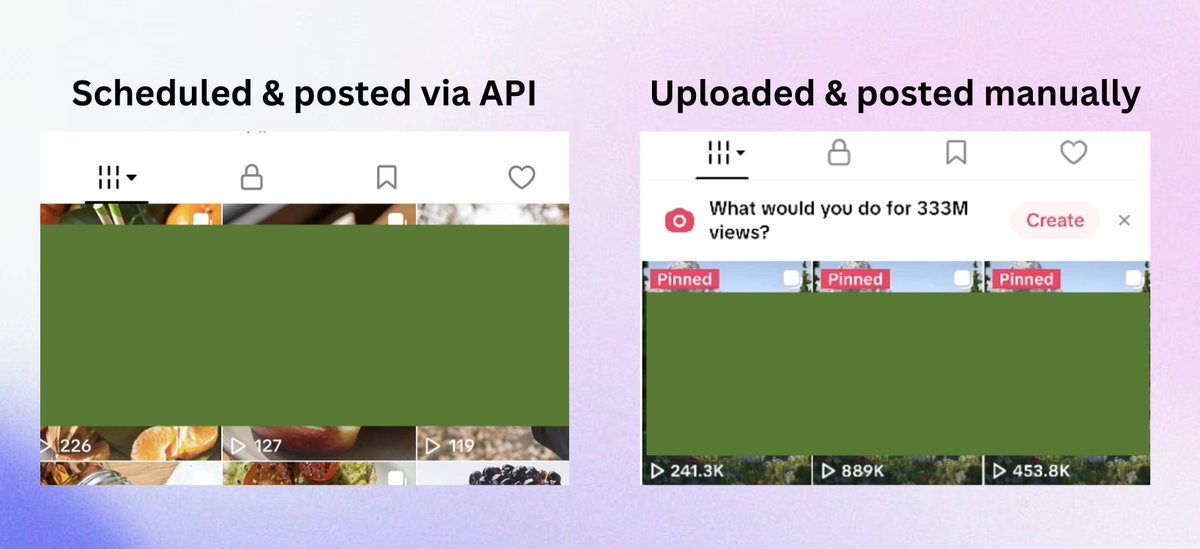
wtf, my post that i threw in drafts (via api) actually got boosted by tiktok
Jun 1
Does posting & scheduling through the API kill reach?
Short answer from my tests: yes.
I’ve tried a few different ways of posting tiktok content.
1. Manual upload
2. Posting through the API (the worst)
3. Today: transferring to drafts
API posting consistently performed worse for me.
Testing drafts now.
2
159
Jun 4
People decide whether to engage with your promo video in the first 3 seconds.
Here's what they're actually judging:
→ Packaging: your thumbnail and first frame win or lose the click (not for all platforms)
→ Audio: bad sound is an instant skip
→ Captions: they hold attention and lift watch time
→ Hook: in the first 3-5 seconds they will decide: skip or watch
→ Curiosity bait: tease what's inside
→ Testing: swap the title, thumbnail, or post another variation before giving up
More good content beats more content.
1
3
89
Jun 4
Coding agents crossed a weird threshold for me recently
I’m starting to one-shot small personal projects.
Small tools, scripts, automations, experiments.
Not perfect production apps, but things that used to take an afternoon (lol afternoon feels too long now).
I don’t know if the models got better, the agents got better, or I just learned how to use them.
Probably all three.
And if codex is really better than claude code, like people keep saying, then this is still not the ceiling (I've been doing it with claude so far).
3
66
Jun 3
Clothing brands are sleeping on this format.
AI-generated fashion transition videos are pulling millions of views on IG right now.
I made a full example.
A few product shots cinematic AI transitions beat sync = promo content that doesn’t feel like an ad.
workflow below 👇
2
4
174
Jun 3
1. Brainstorm the visual script with AI and ask for the first last frame of each transition.
2. Generate the frames with GPT Image 2 while keeping the product consistent.
3. Animate each transition in Kling 2.5 Turbo using first-frame last-frame mode.
4. Stitch the clips together in a video editor with beat sync.
3
153
Jun 3
Tiny token-saving hack:
When building a mobile app or SaaS that uses AI internally, don’t burn paid API tokens during early dev.
If you already have codex / claude code, wire requests through the agent first.
Save the usage-based API for production.
1
2
160
Jun 2
If you’re a clothing brand, here’s a promo content tip:
AI-generated transition videos are getting millions of views on instagram right now.
Just few clips like this stitched together beat sync them.
They work perfectly for fashion because they’re visual, cinematic, and easy to watch.
All you need is:
- an IG account
- consistent posts like this
- a link to your store in bio
(cooking a full vid soon)
2
164