
Founder, CEO at @PhysicalAI. Tech leader and executive, interaction designer, scientist. Google, Disney, Sony before. 2019 National Design Award. TED speaker.
Joined August 2011
- Tweets 3,044
- Following 324
- Followers 4,952
- Likes 1,935
647 Photos and videos




Jun 8
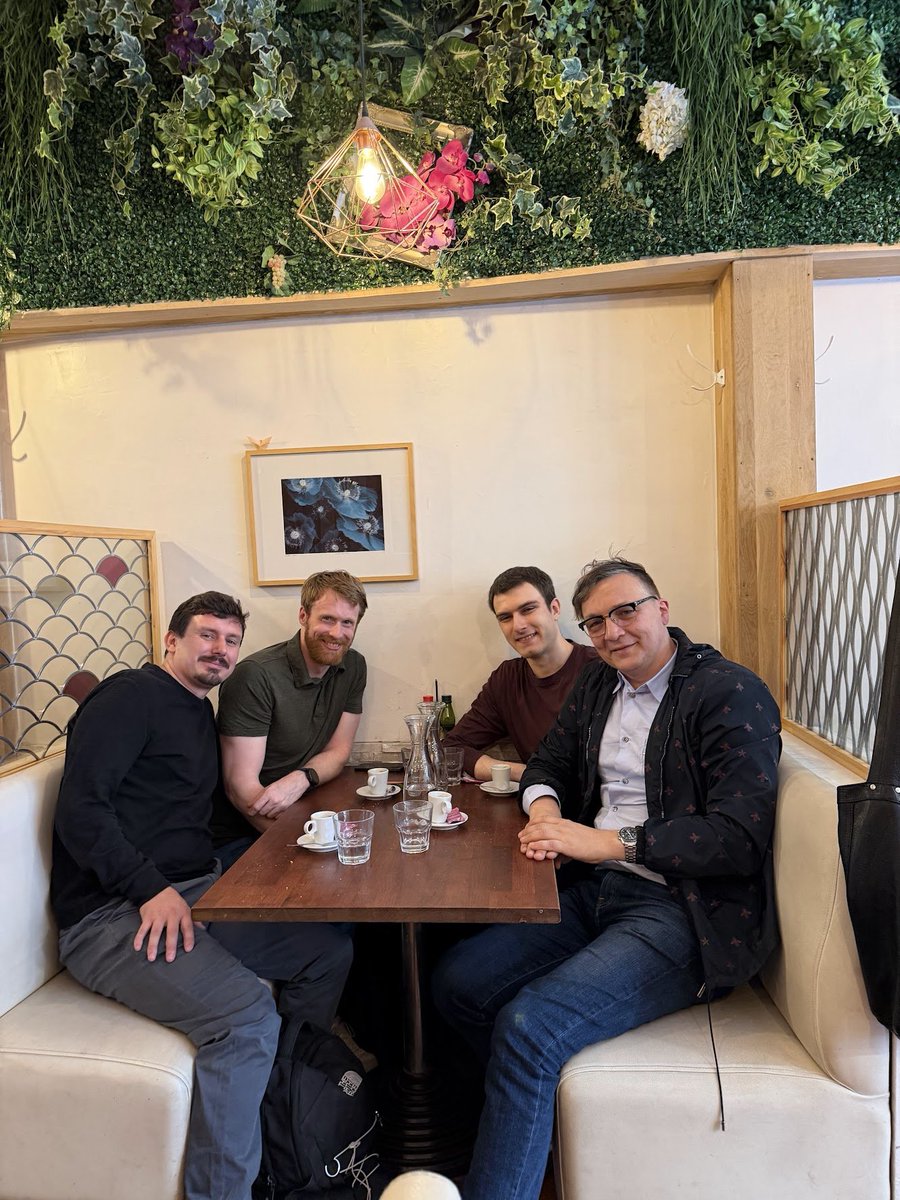
Loved reconnecting with our Europe team. Grateful that folks made the trip to Paris while I was there. The best talent is global, and we should find the best people wherever they are. Different cultures bring unique perspectives, leading to sharper solutions and better ideas. 🌐
5
269
Jun 3
It's not just Americans who love putting their flag everywhere 😉
4
329
Ivan Poupyrev retweeted

May 31
Robotics companies: let us solve repetitive tasks like folding shirts.
Meanwhile, the factory floor:
280
538
10,426
1,655,090
Jun 2
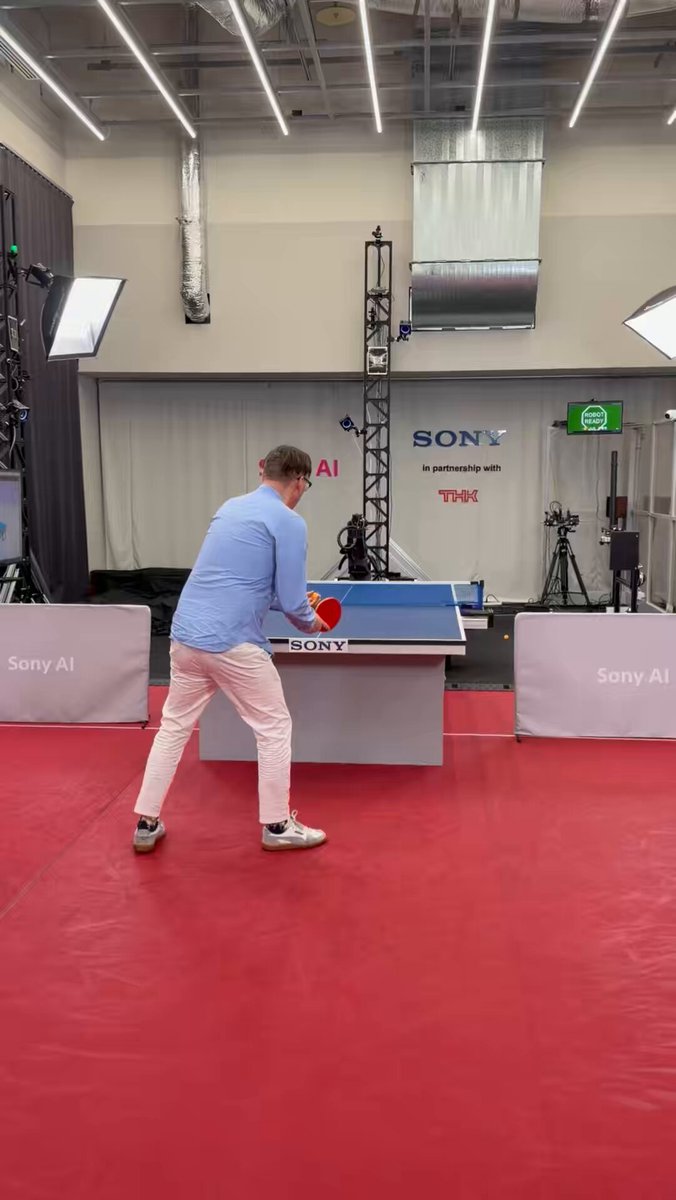
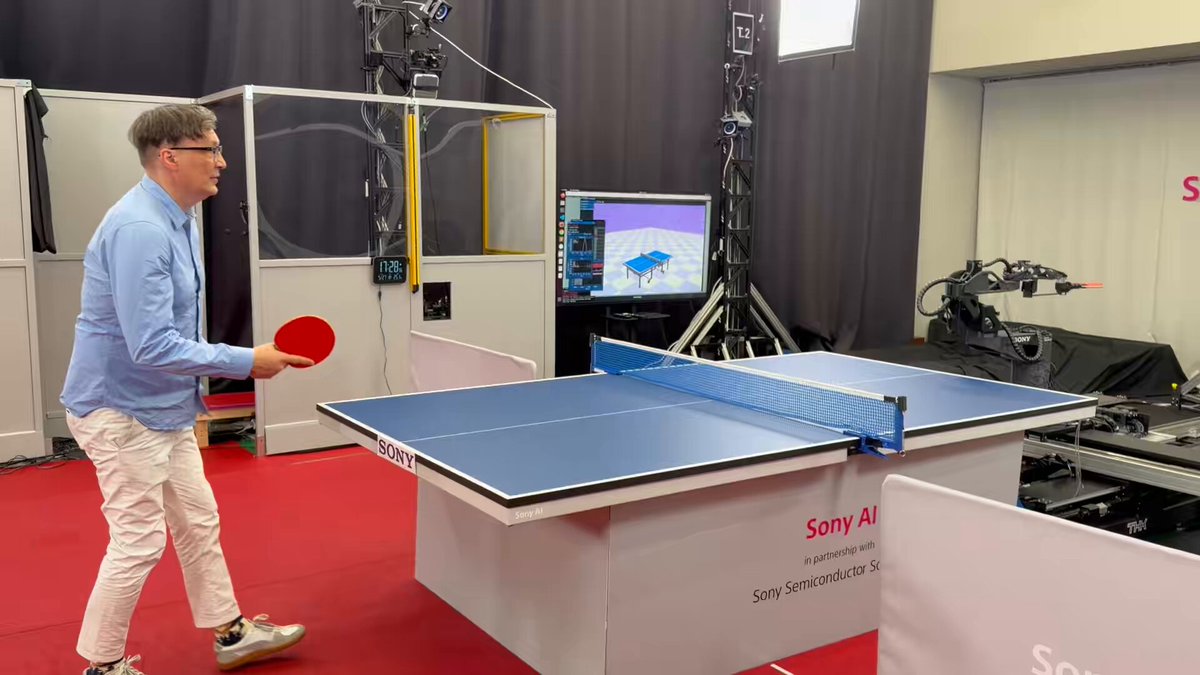
This thing is a killer in competitive mode. It crushes my serves and generates absolutely nasty spin on its own serve.
Apparently, they’re using the standard branding labels on the ball to track spin during training. And this is all pure reinforcement learning. 🏓

6
484
May 31
This thing is a beast. This is an easy mode. @SonyAI_global
Apr 22

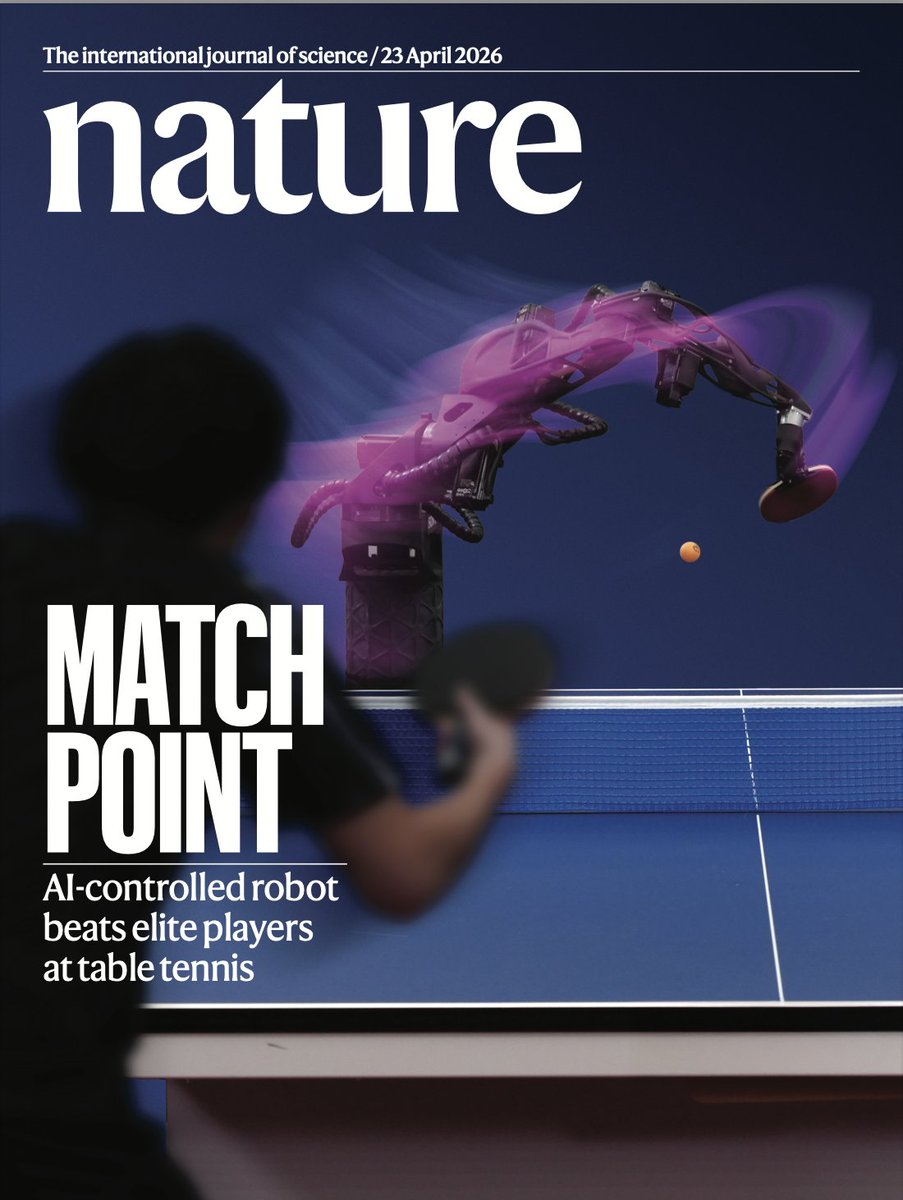
For 40 years, building a robot that could rally with an elite human table tennis player at full speed was an unsolved problem. Sony AI's Ace research project set out to change that—and the results are now accepted for publication in @Nature and featured on the cover.
1
2
27
18,315
May 29
They called internet“information superhighway” at the time, so it looked that way in the movie. Metaphors matter; it’s hard to break free from them once you label things. We use humans as a measurement stick for AI and robots today, but I bet robots and AI in the future won’t resemble humans at all.

1
4
376
May 28
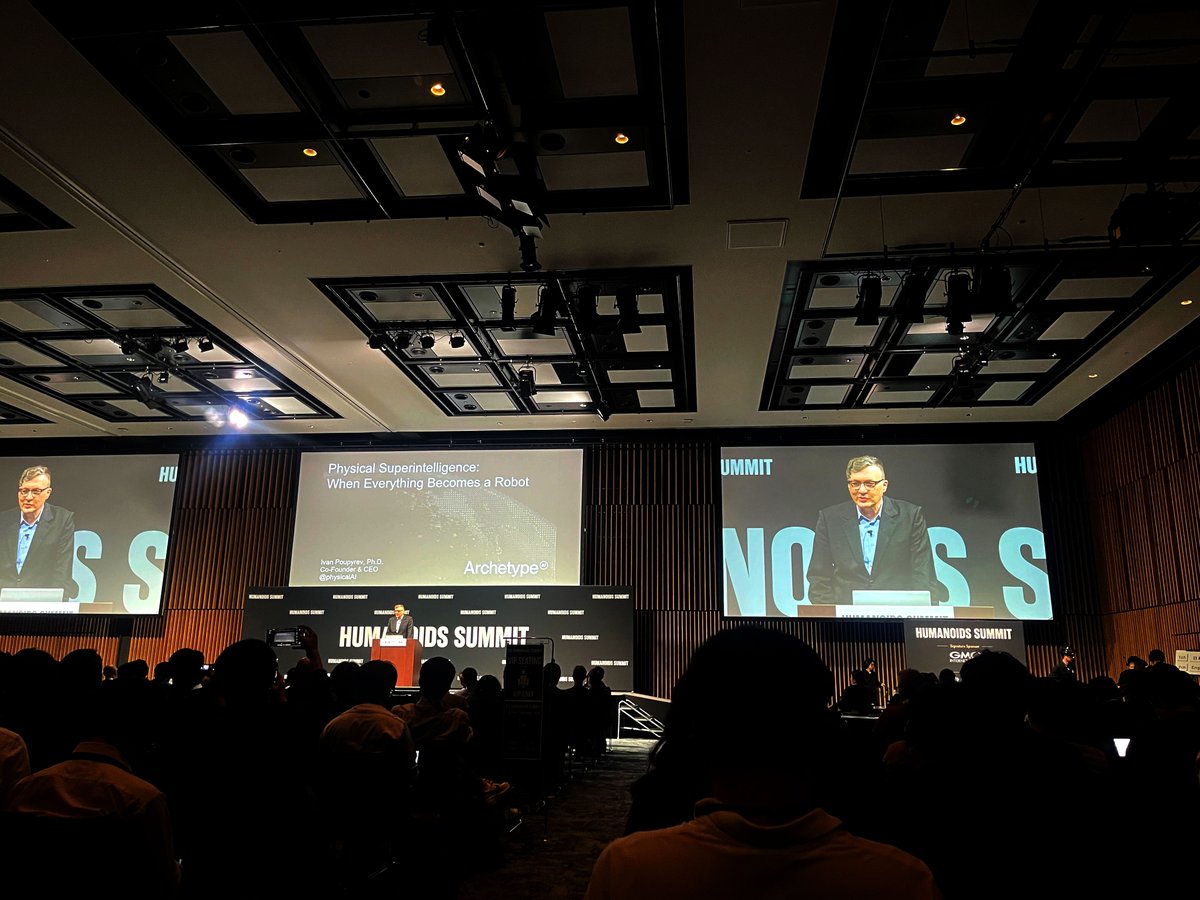
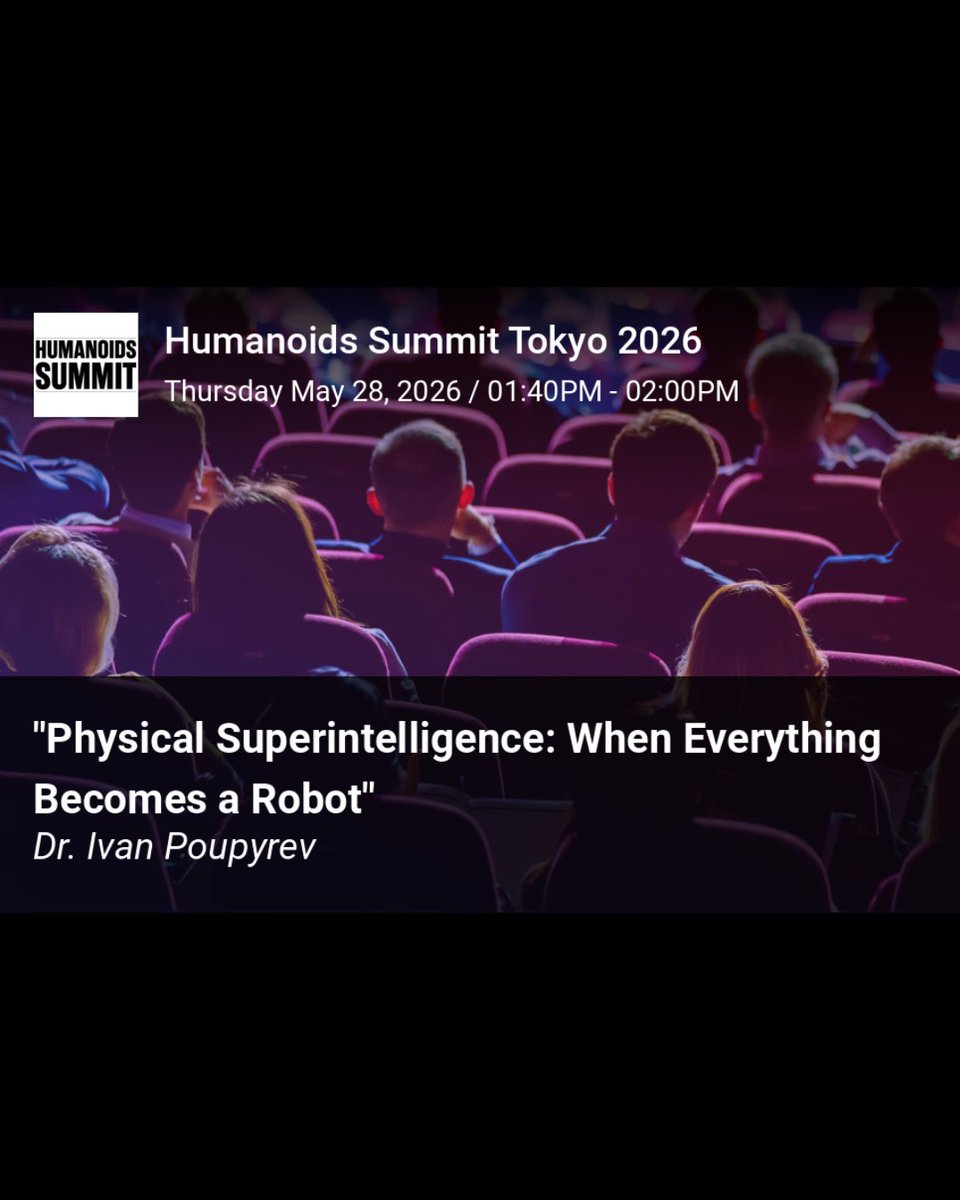
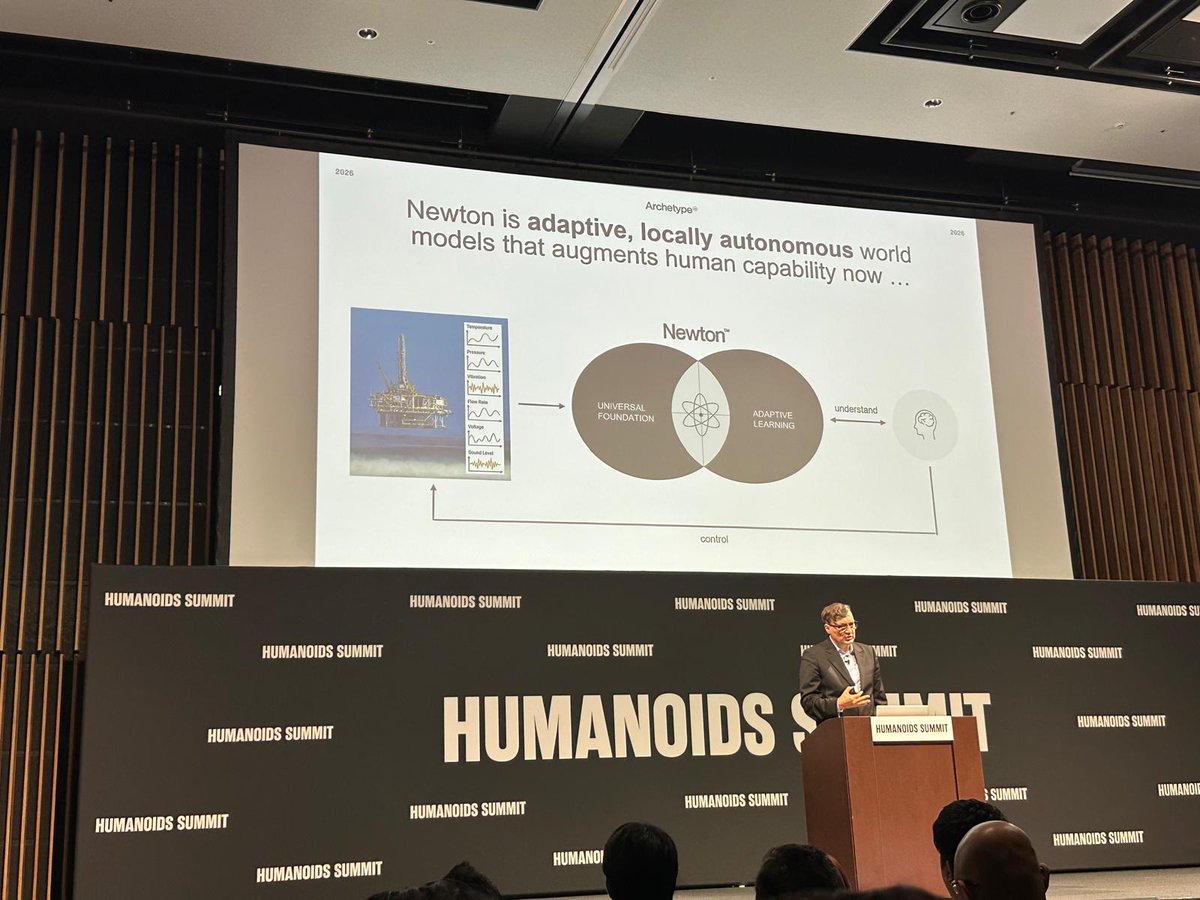
I enjoyed talking at the Humanoids Summit about our recent work on Newton being able to understand the local behavior of physical systems through multimodal observations, i.e., measuring through multiple sensors.
Something we call "autonomous local adaptation" of a general-purpose world model. This allows the model to automate vastly different systems in the physical world with significantly less effort — the model adapts itself. That is the path to automating everything!
May 26
I am speaking at Humanoids Summit Tokyo 2026 about why general-purpose Physical AI is not just about robots — and why the much bigger opportunity is intelligence for the entire physical world! Please check out the details of my talk at: tinyurl.com/4x7a9km8
1
4
268
May 26
There is a lot of talk in the industry about robotics having its "ChatGPT moment."
I don't believe it's coming. At least not in the form people are imagining.
The "ChatGPT moment" wasn't just a great product launch. It was a historically unique distribution event. ChatGPT reached 100 million users in two months. That kind of growth almost never happens with entirely new hardware platforms.
The internet itself took 7 years to reach 100 million users. Smartphones took double that. Game consoles took decades to scale globally to 100 million customers.
In fact, the fastest-growing hardware device ever recorded was the Microsoft Kinect, selling 8 million units in 60 days. Kinect wasn't a new platform, though. It was an attachment riding on top of Xbox, which already had tens of millions of users. Even with that built-in distribution, Kinect itself eventually disappeared. The pattern repeats across technology history.
Lessons learned by shipping platforms in physical world
Explosive adoption happens on top of existing platforms, not from brand new physical platforms that require manufacturing, logistics, regulation, servicing, safety certification, infrastructure, and behavioral change all at once. Robotics is fundamentally a hardware platform and hardware scales slowly.
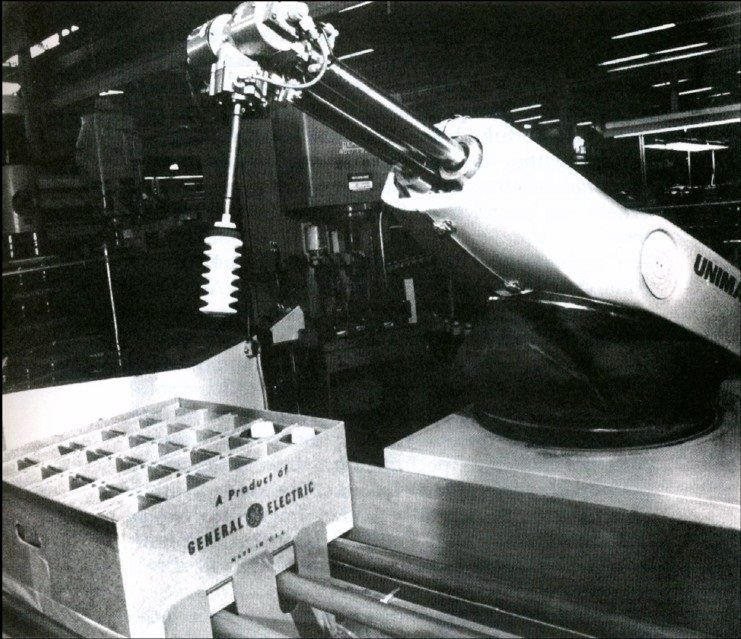
Can the ChatGPT boom happen in the industrial space? Unlikely. To have a ChatGPT moment there needs to be a lot of people accessing the platform in a very short amount of time. Robots have been deployed in industry since 1961 when GM deployed their Unimate robotic arm on production lines, the adaption was gradual, not explosive, so when we look at robotics in industrial space, we will be measuring growth in years and even decades, not viral user curves common for online use cases.
Do not get me wrong, I love robots as much as anyone. I worked with robotic characters at Disney Imagineering. I played with Sony SDR-0 humanoid robot in early 2000th at Sony CSL before it was announced as QRIO, which stood for “Quest for cuRIOsity”. I spent years around embodied systems, building and shipping hardware from Google factories in Shenzhen. And I am afraid that expecting a consumer-internet-style adoption curve from robotics creates unrealistic expectations that can damage the industry through hype cycles and the disappointment that follows them.
However there is a bet where we can approach ChatGPT for Physical AI could happen, but not necessary robots.
Everything is a Robot?
The exciting and interesting opportunity is turning the existing physical infrastructure of the world into software-defined robotic systems by giving them a generalized AI brain.
Let’s take a look at what already exists:
Factories, vehicles, buildings, oil rigs and others are all running on the measurements and data. They have their own perceptual system that captures their context in hundreds in different ways.
These same assets are already software-controlled. APIs and protocols regulate airflow in buildings, processes on factory lines, driving modes in cars, even the water temperature in your washing machine.
These physical assets and devices are missing a general purpose physical intelligence — or a “brain” — a world model that can understand that local physical context by observing it though sensors, adapt to it autonomously, reason, and control to achieve objectives. Whether it's to control a manufacturing process running or actuate or control that physical asset.
With such localized and adaptive physical intelligence why can’t everything become a robot?
Everything IS a Robot!
That would be the real platform transition. Not humanoids replacing everything overnight. An adaptive and autonomous physical world model that can turn any asset in the world into intelligent system.
This is why we are building Newton at Archetype AI. Newton is a Physical AI foundational model that plugs into existing machines and infrastructure and gives it generalized operational intelligence that dynamically and autonomously adapts to any physical situation, machine and environment. One model that can fuse vibration, temperature, current, pressure, and acoustic signatures across assets and sites, without bespoke engineering per deployment. Physical AI Agents built on Newton then monitor, reason, and act on what's happening in the real world.
The robotics revolution is already underway. It just doesn't look like a humanoid walking out of a warehouse on day one. It looks like the $300 trillion of industrial assets the world already owns getting a universal intelligence plugged into it.
If you're in Tokyo this week, come find me at Humanoids Summit 2026. I'm giving two talks on why the real Physical AI opportunity isn't humanoids — it's intelligence for the entire physical world.
ALT Unimate at the GM Inland Fisher plant, 1961. The machine that kicked off a multi-decade industrial robotics adoption curve.
8
267
May 26
I am speaking at Humanoids Summit Tokyo 2026 about why general-purpose Physical AI is not just about robots — and why the much bigger opportunity is intelligence for the entire physical world! Please check out the details of my talk at: tinyurl.com/4x7a9km8
6
452
May 20
Tokyo, I’m headed your way! Looking forward to connecting with friends across the beautiful city. I’ll also be speaking at the @HumanoidsSummit on Thursday. If you’re in the area and would like to learn more about what we're building, send me a DM to meet up.
5
190
May 18
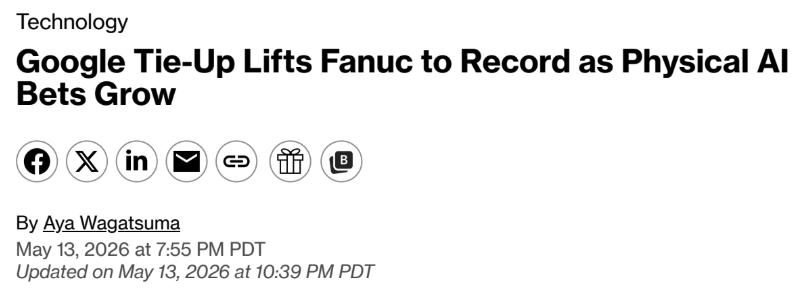
Last week, Bloomberg’s @aya_wagatsuma reported bets on Physical AI are soaring with companies teaming up with Google to build a new AI system for industrial robots.
Robots are only a small part of the Physical AI ecosystem but they often overshadow the conversation. The original promise of industrial AI is that a model large enough and trained on enough data would understand all of your operations, including robotics.
I think we need to broaden the conversation: your operations already contain the data and controls needed to automate themselves. Today, your AI needs a foundation that can listen in its native language. When we move toward this vision, your AI system will learn, sense, compute, and provide insights to your real world problems scaling beyond robotics and into generalized perception and reasoning.
5
332
May 12
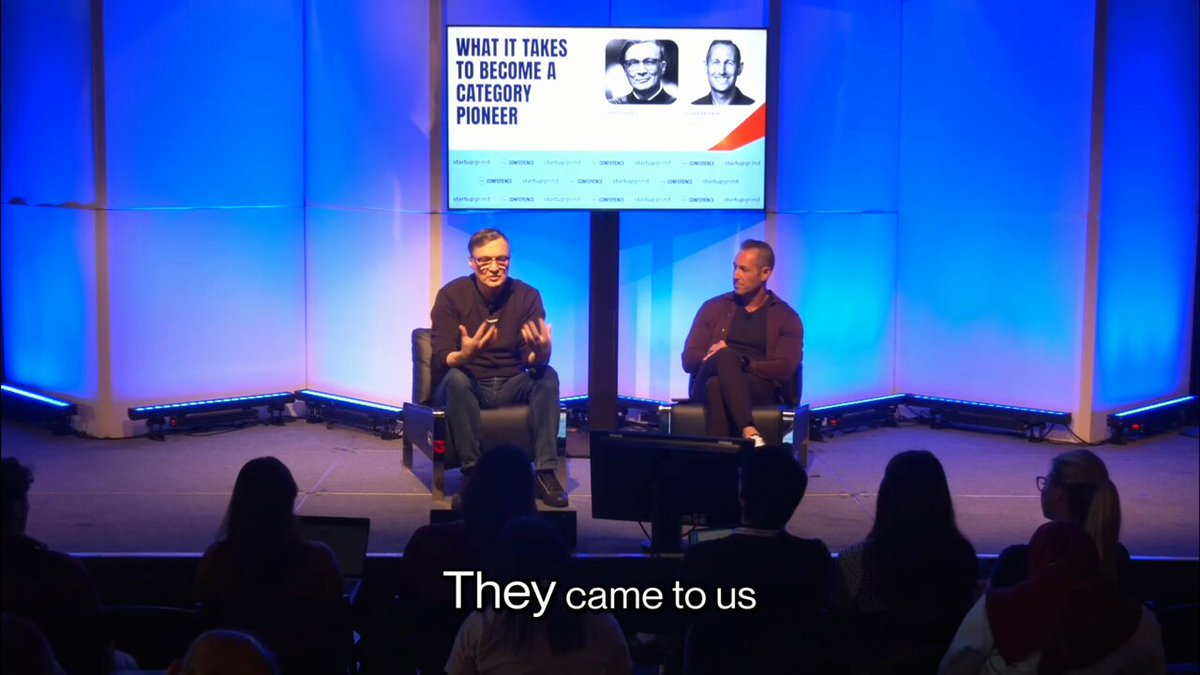
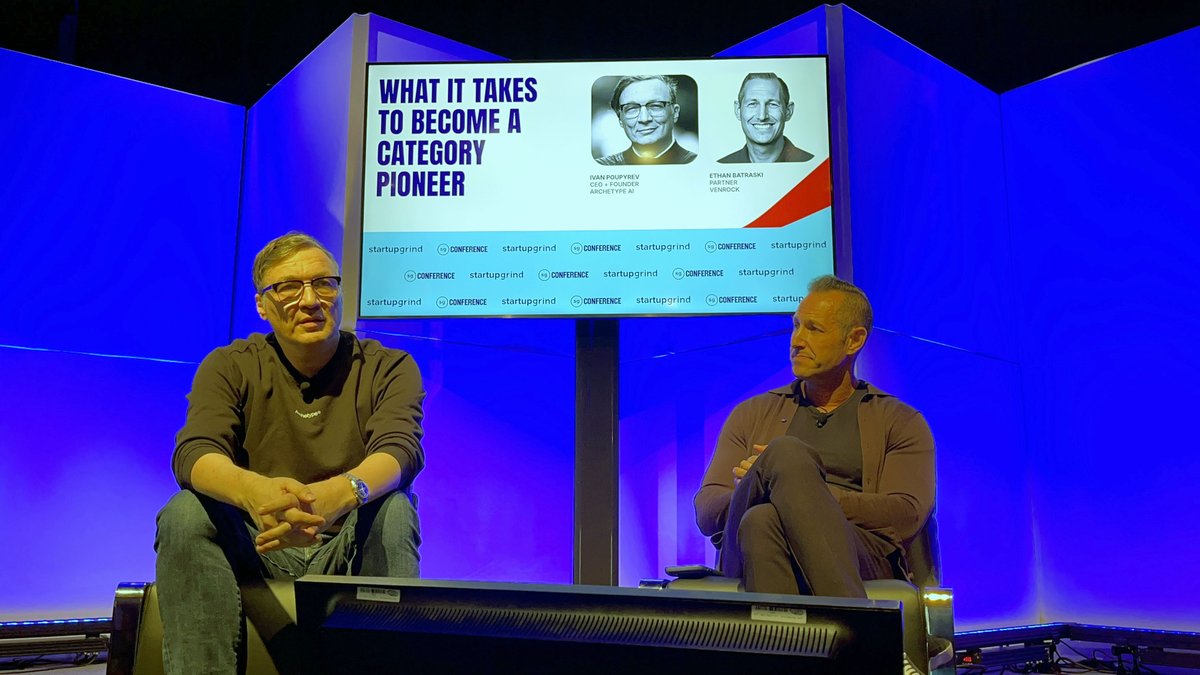
Grateful to @ethanjb and @Venrock for the conversation onstage at @StartupGrind, and for backing our bet on AI for the physical world.
We're surrounded by sensors we understand in isolation, but together they represent physics today's generative models can't reason about. Recent example: a customer asked us to find anomalies in their wind turbine data. Instead of the failure modes they already knew, we had to find the ones they'd never seen.
Newton was able to identify these failures because it has a foundational understanding of physical behavior in complex systems.
5
254
May 8
New demo: Invisible Lost Time in offshore drilling costs $10K–$100K per instance and is often caused by gaps between rig sensors and real-time visibility.
Our new Drilling Monitor, built on Newton World Model, uses open data from Equinor's Volve field (14 North Sea wells, 2007–2009) to address this challenge.
How it works:
🔹 9 sensor channels (ROP, RPM, hookload, flow rate, etc.) stream into Newton in 25-sample windows
🔹 Newton's Process Monitoring Agent embeds each window and runs few-shot classification against 1,000 reference examples to return rig state live: DRILLING or NOT_DRILLING
🔹 No per-well training (one foundation model and live rig state across every well)
Traditional ML needs one model per asset, retrained when conditions drift. Newton fuses multichannel data into a single representation that transfers across wells.
2
9
280
May 6
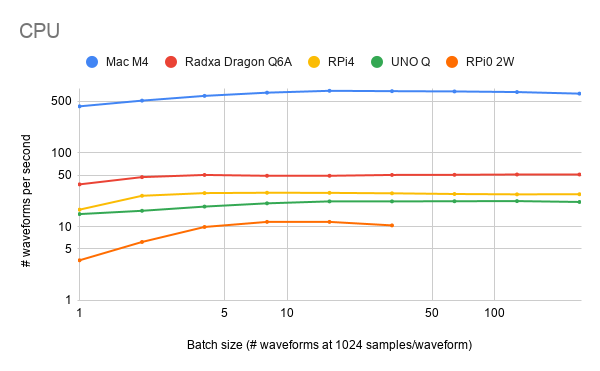
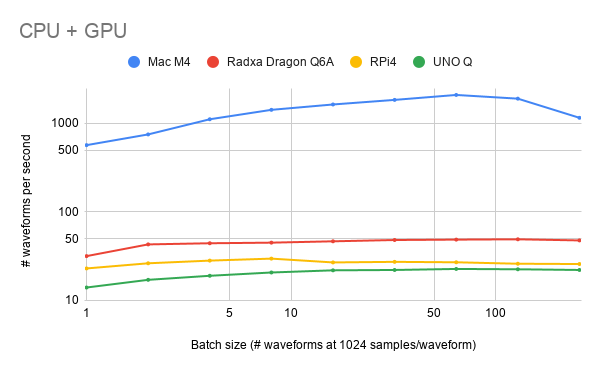
We benchmarked Newton World Model across a number of smaller devices including CPU-only.
The main finding: Newton is deployable across the entire stack. Mac M4 configurations deliver the highest throughput, as expected. The logarithmic chart on the left brings components with very different throughput regimes — including the MAC-class components — onto a single plot.
The chart on the right also shows that CPU-plus-GPU edge servers deliver more than enough capacity for sustained, multimodal monitoring at the site level.
On a constrained CPU like a Raspberry Pi 4, Newton still produces meaningful inference for scoped tasks; that mean it can be leveraged for use cases that previously had no realistic AI path at all.
3
190
May 4
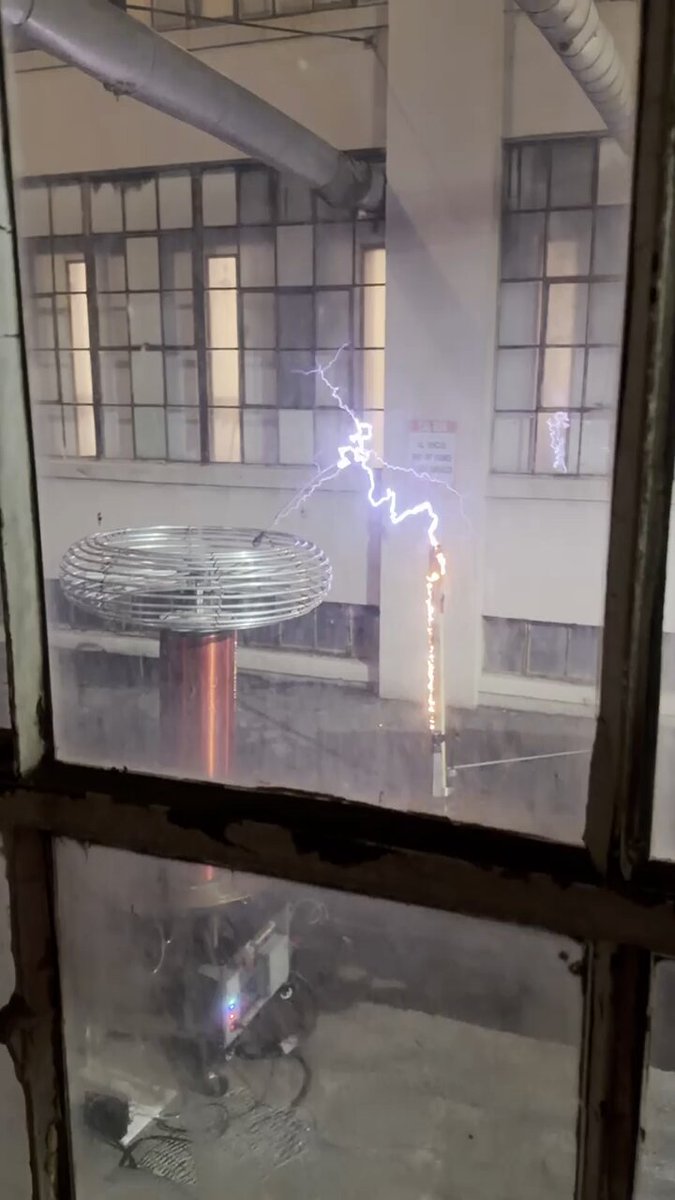
To put this in perspective: there are three fundamental physical mechanisms for practical sound generation: mechanical vibration, unstable airflow, and electromagnetic actuation, i.e. speakers. All the music and sound you hear today is made using one of these three.
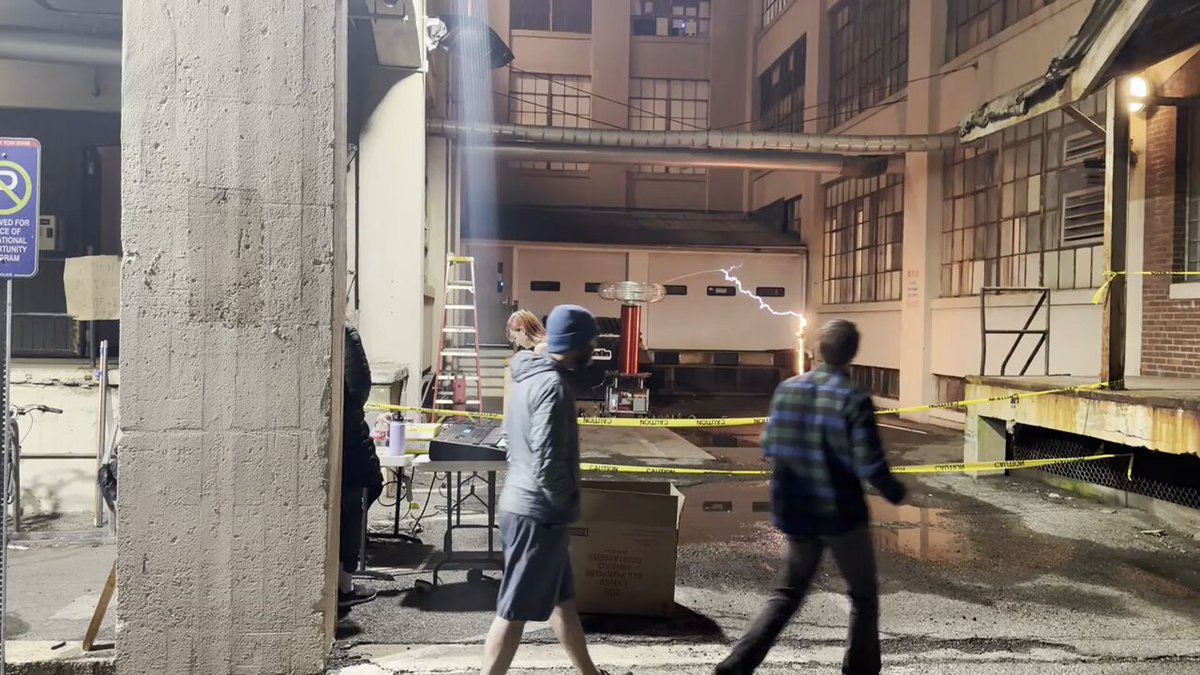
Here is a fourth: plasma. When modulated at audio frequencies, it heats and expands the air rapidly generating audible pressure waves, aka thermoacoustic sound generation. Most of us have heard plasma during a thunderstorm 🌩️. Also you can buy small plasma speakers online, sometimes called ionophones.
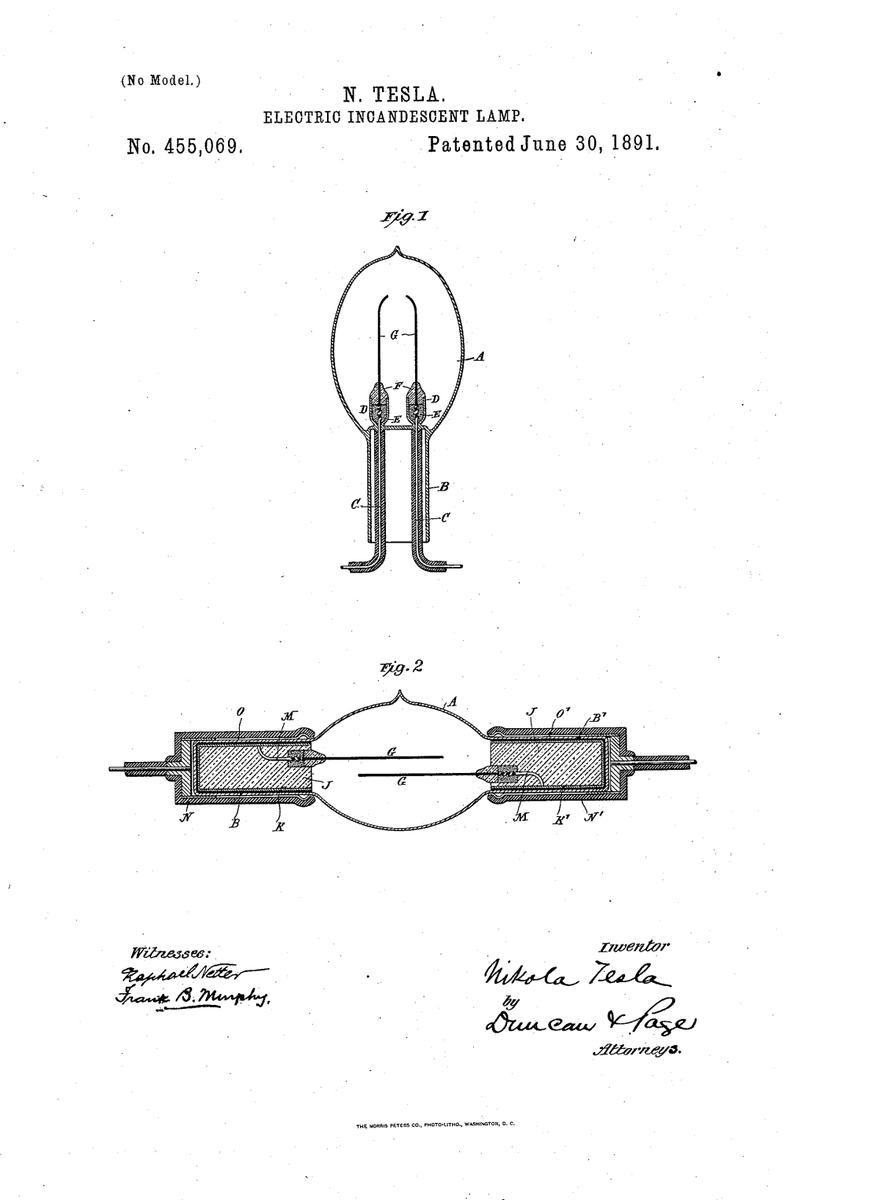
Historically, Nikola Tesla never explicitly talked about making sound with his coils and arcs, though in 1891 he patented a design that some of the ionophones are based on — a light bulb that uses an electrical arc discharge instead of a regular filament developed by Edison. Technically, Tesla's light bulb design does point toward an “eternal life” light bulb concept — a favorite topic of conspiracy theorists arguing about "planned technological obsolescence", science fiction writers and once-popular job interview question at McKinsey.
Fun stuff. Turn the sound on to hear plasma.
May 2
They're modulating electrical arc produced by Tesla coil with an audio wave — the arc itself becomes a plasma speaker so you can play music on it. First time I saw it IRL. Ran into this a couple weeks ago when I was visiting @MIT. Sound On.
9
434
May 2
They're modulating electrical arc produced by Tesla coil with an audio wave — the arc itself becomes a plasma speaker so you can play music on it. First time I saw it IRL. Ran into this a couple weeks ago when I was visiting @MIT. Sound On.
1
15
1,039