
Joined April 2013
- Tweets 21,288
- Following 159
- Followers 55,490
- Likes 5,593
1,466 Photos and videos


Pinned Tweet

Mar 30
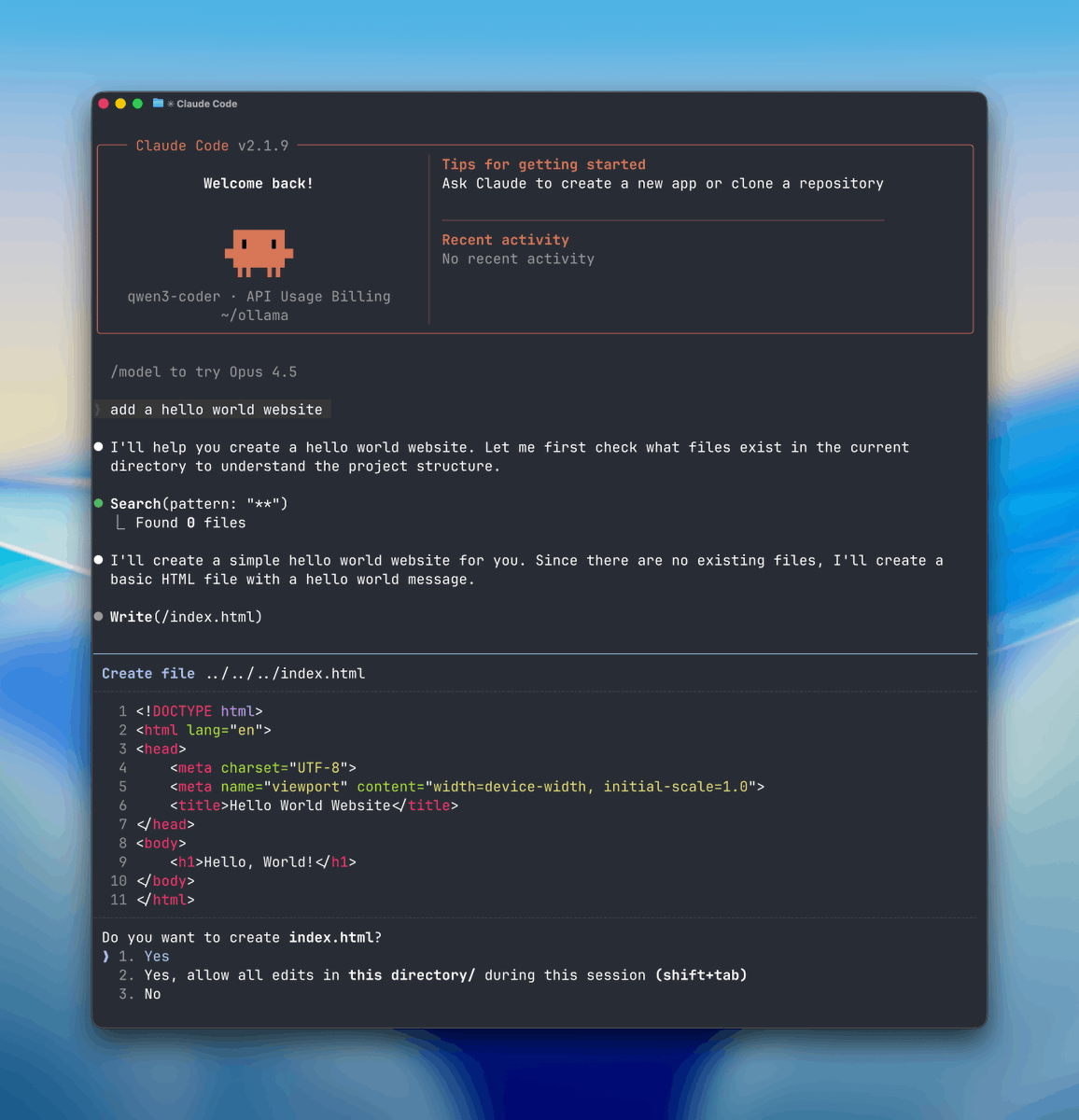
🚨BREAKING: You can now run Claude Code for FREE.
No API costs. No rate limits. 100% local on your machine.
Here's how to run Claude Code locally (100% free & fully private):
Community note
The post's method runs open-source models (e.g. Qwen) via Ollama in a Claude Code-compatible interface. It does not run Anthropic's proprietary Claude models locally, as they require API access and are not open-source or downloadable.
ollama.com/blog/claude
docs.anthropic.com/en/docs/about-…
219
1,216
12,750
2,169,535
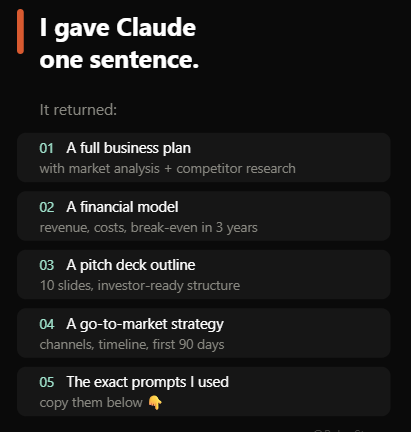
I gave Claude one sentence.
It built my entire business plan, financial model, and pitch deck.
Here are the 5 exact prompts I used — completely free: 🧵
9
14
23
553
Hot take:
Business schools are teaching you to pay for what Claude gives you free.
Agree or disagree? 👇
1
40
I hope you've found this thread helpful.
Follow me @irisneural for more.
Like/Repost the quote below if you can:

I gave Claude one sentence.
It built my entire business plan, financial model, and pitch deck.
Here are the 5 exact prompts I used — completely free: 🧵
45
Iris Hayes retweeted

🚨 Breaking News: Claude has a feature called "Human Writing Mode."
You can use it to completely eliminate robotic-style text, bypassing AI detectors like a professional editor.
Here are 6 access prompts: 👇
13
43
88
627
Iris Hayes retweeted

Running an influencer marketing campaign in 2026 is so easy
> tell an agent what you want to promote
> agent finds creators, negotiates rates, manages campaigns, handles payments
> go viral
> go back to building

Today we're introducing the world's first influencer Agent.
Tell it what you want to promote and it finds creators, reaches out, manages campaigns, handles payments, and gets content live.
Try it now at okara.ai/influencer
6
14
62
8,683
Iris Hayes retweeted

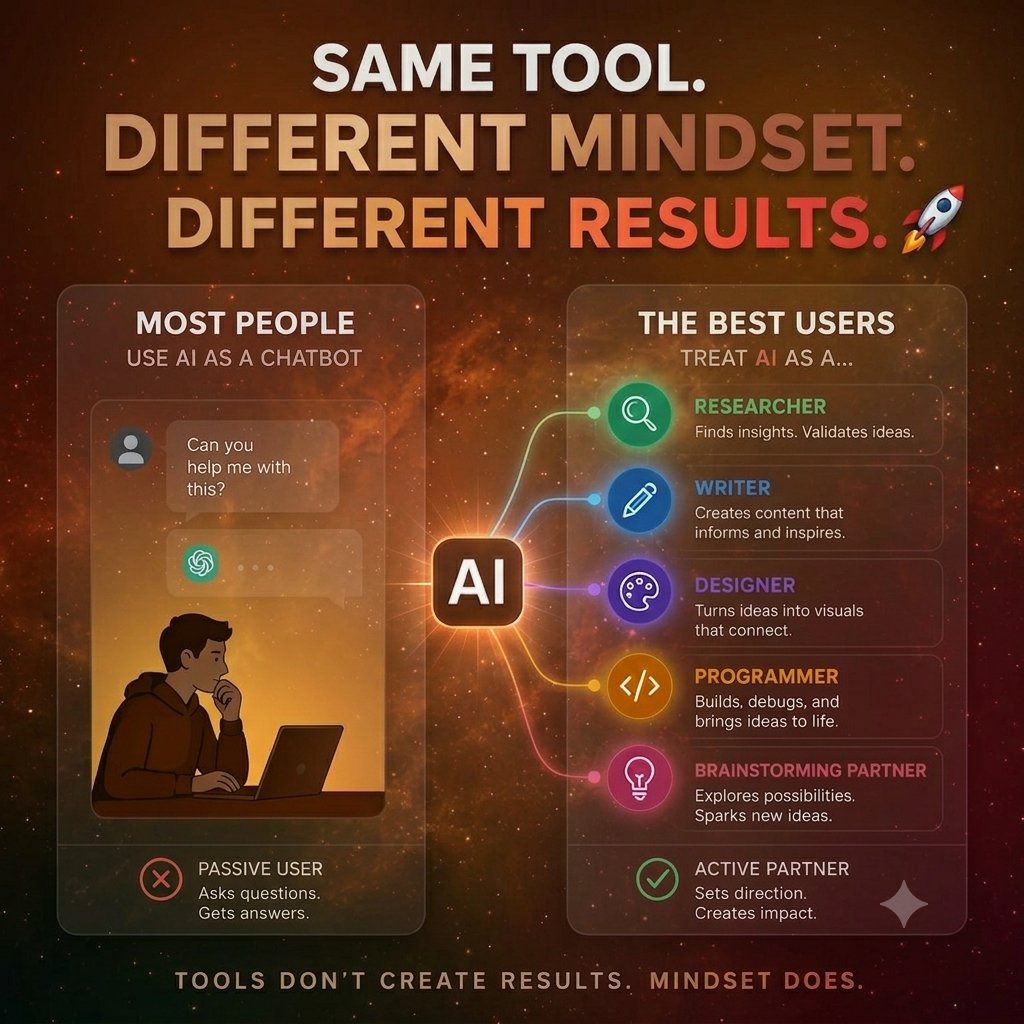
Most people use AI as a chatbot.
The best users treat AI as:
• A researcher
• A writer
• A designer
• A programmer
• A brainstorming partner
Same tool.
Different mindset.
Different results. 🚀👇
follow me @SiaYiing1997
15
28
53
277
Iris Hayes retweeted

🚨 BREAKING: Claude can now map out your retirement better than most people charging $2,000 ever will.
Here are 6 prompts to figure out exactly when and how you can retire.
(Save this before it disappears).
18
38
76
1,947
Iris Hayes retweeted

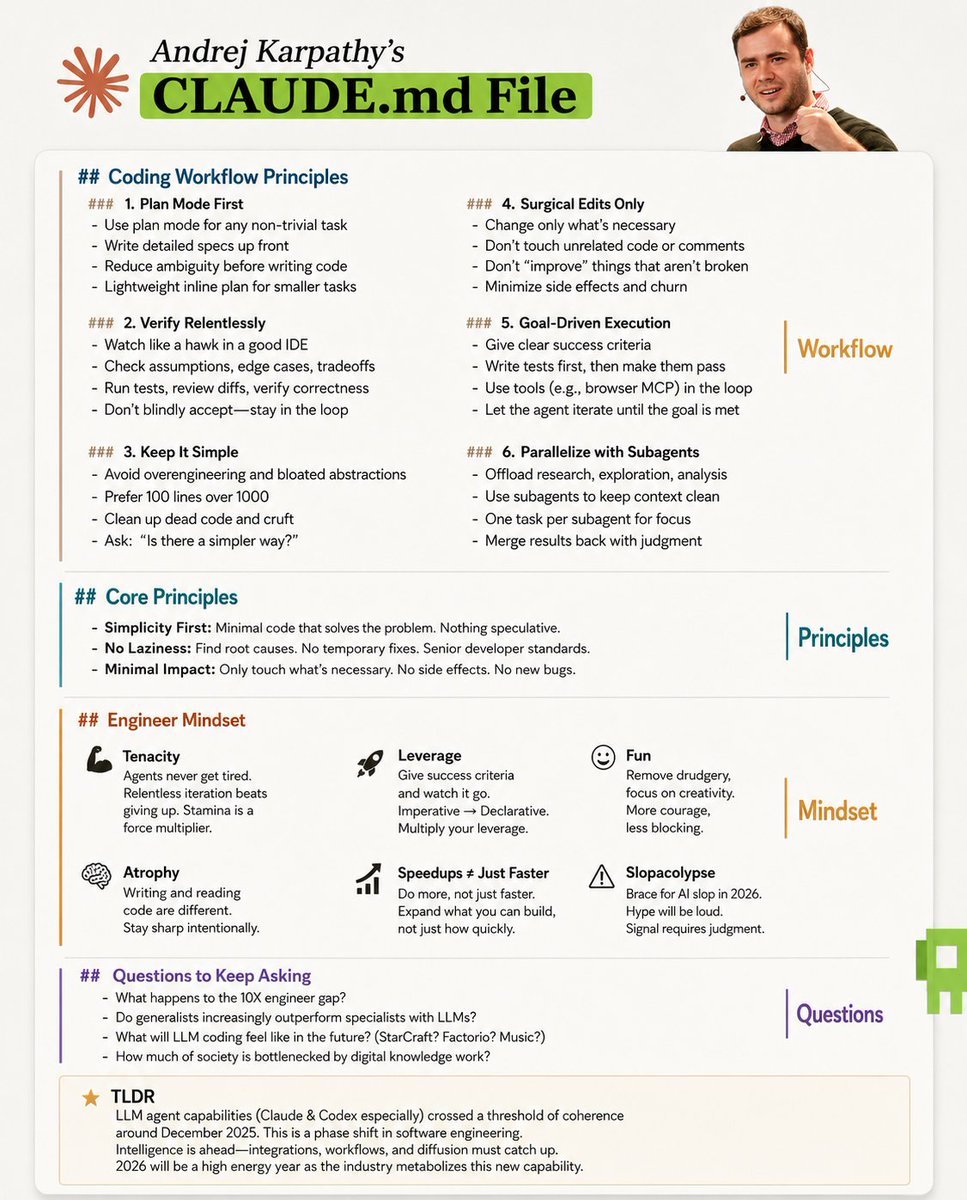
Andrej Karpathy may have just described the future of software engineering without saying it outright.
The best AI engineers aren't becoming better at prompting.
They're becoming better at building systems around AI agents.
The biggest takeaway wasn't:
"Claude can code."
It was:
LLMs perform dramatically better when they operate inside disciplined workflows.
That's why files like CLAUDE.md are appearing everywhere.
They're not prompts.
They're operating manuals for AI agents.
Karpathy highlighted some of the biggest failure modes of AI coding:
• Models assume instead of asking.
• They overengineer simple solutions.
• They hide uncertainty.
• They modify unrelated code.
• They optimize for completion instead of correctness.
So developers started changing the game.
They encoded principles directly into the workflow:
→ Think before coding.
→ Prefer simplicity over complexity.
→ Make surgical changes only.
→ Stay focused on the goal.
→ Verify before declaring success.
And something remarkable happened.
Developers started running multiple AI agents in parallel, almost like engineering teams:
• One agent researches.
• One debugs.
• One writes tests.
• One optimizes performance.
• One validates outputs.
This isn't AI assistance anymore.
This is AI orchestration.
Then came the idea that changes everything:
"Don't tell the model exactly what to do. Give it goals, constraints, tests, and let it iterate until it succeeds."
The shift is subtle but profound.
From:
"Write this function."
To:
"Here's the objective, the constraints, the evaluation criteria, and the tests. Keep improving until it's correct."
That's a completely different way of building software.
Many developers have quietly gone from:
80% manual coding
⬇️
80% agent-driven coding
Not because AI became perfect.
Because the leverage became too powerful to ignore.
The next generation of great engineers may not be the ones who write the most code.
They may be the ones who design the best systems where humans and AI agents work together to get things done.
14
18
65
395
Iris Hayes retweeted

16h
🚨Anthropic just showed a 24-minute workshop on how to actually do prompts for Claude.
Taught by the people who built it.
Free. No registration. No paywall.
I've seen $300 courses that don't cover what they teach in the first 8 minutes.
Watch it and bookmark it now.
20
285
1,890
272,274
Iris Hayes retweeted

11h
STOP SAYING “MAKE A PRESENTATION FOR ME.”
AI isn’t confused.
Your prompt is.
Use these smart prompts instead:
32
77
150
11,983
Iris Hayes retweeted

Stop applying on LinkedIn.
Stop applying on Indeed.
Stop applying on Upwork.
I spent 5 years applying. 1 interview.
My friend spent 2 hours on these 10 sites. 5 remote job offers instantly.
Use these 12 platforms to find remote jobs
10
44
188
22,914
Iris Hayes retweeted

🚨 GIVEAWAY: NotebookLM has a hidden study system that makes learning 2x faster.
I tested it for 30 days on PDFs, courses & research papers.
My retention went from 40% → 85%.
So I made a FREE guide:
• Deep-learning prompts
• Research-to-notes systems
Type “ SEND ” Follow
31
25
38
710
Iris Hayes retweeted

ChatGPT has quietly built a file on you. You've never seen most of what's in it.
Every message you send feeds it. It studies your patterns to map your personality and habits, things you never actually told it.
Here are 7 prompts to pull up everything it has on you, and wipe what you never agreed to:
30
78
149
8,966
Iris Hayes retweeted

18h
NOBODY WARNED ME AT 25. SO I'M WARNING YOU.
(Write these down. Save them. Screenshot them.)
1. Your parents are not background characters.
57
112
164
26,806