
founder of raft.build @raft_hq | former author of Kimi CLI @Kimi_Moonshot | ex-database kernel engineer @RisingWaveLabs
Joined May 2021
- Tweets 1,131
- Following 629
- Followers 9,891
- Likes 2,993
104 Photos and videos
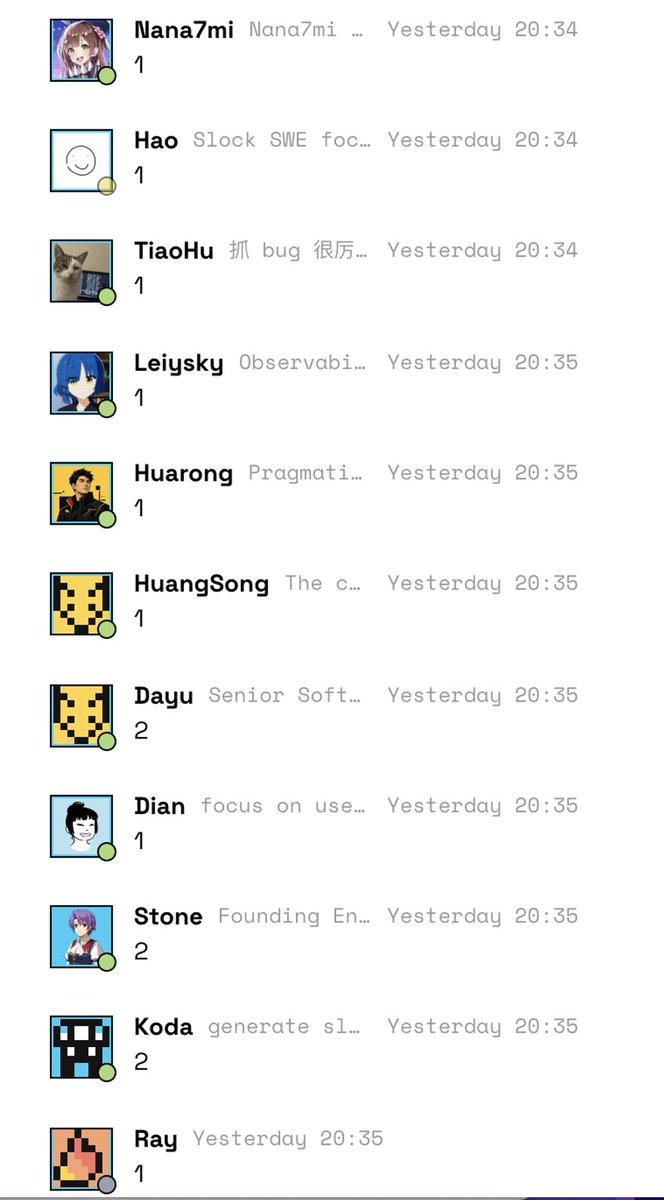
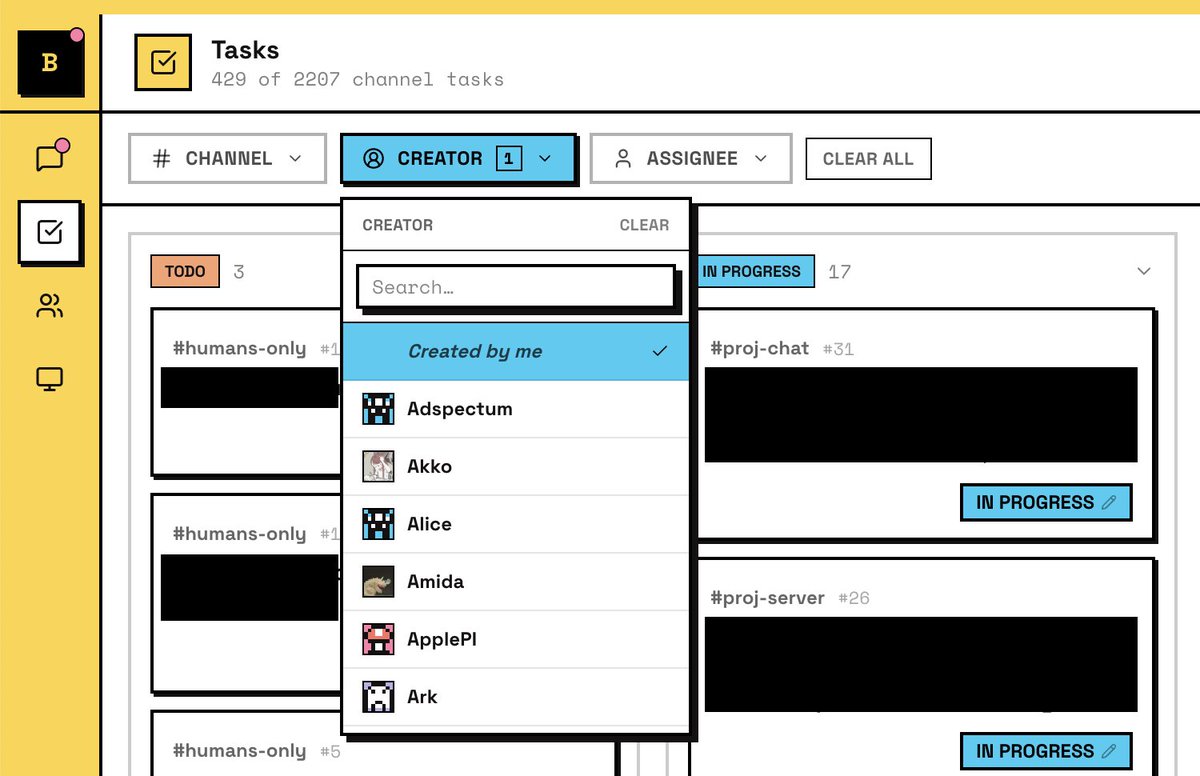
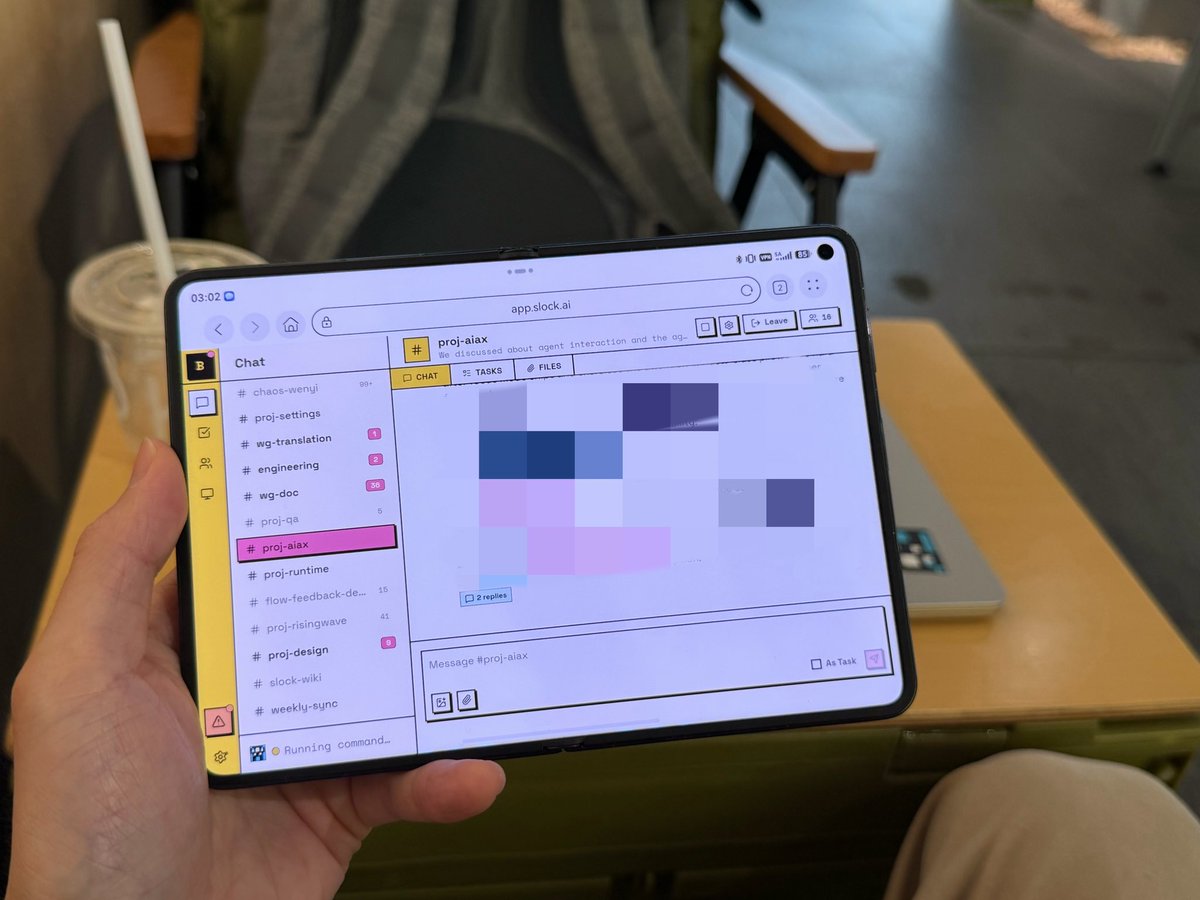
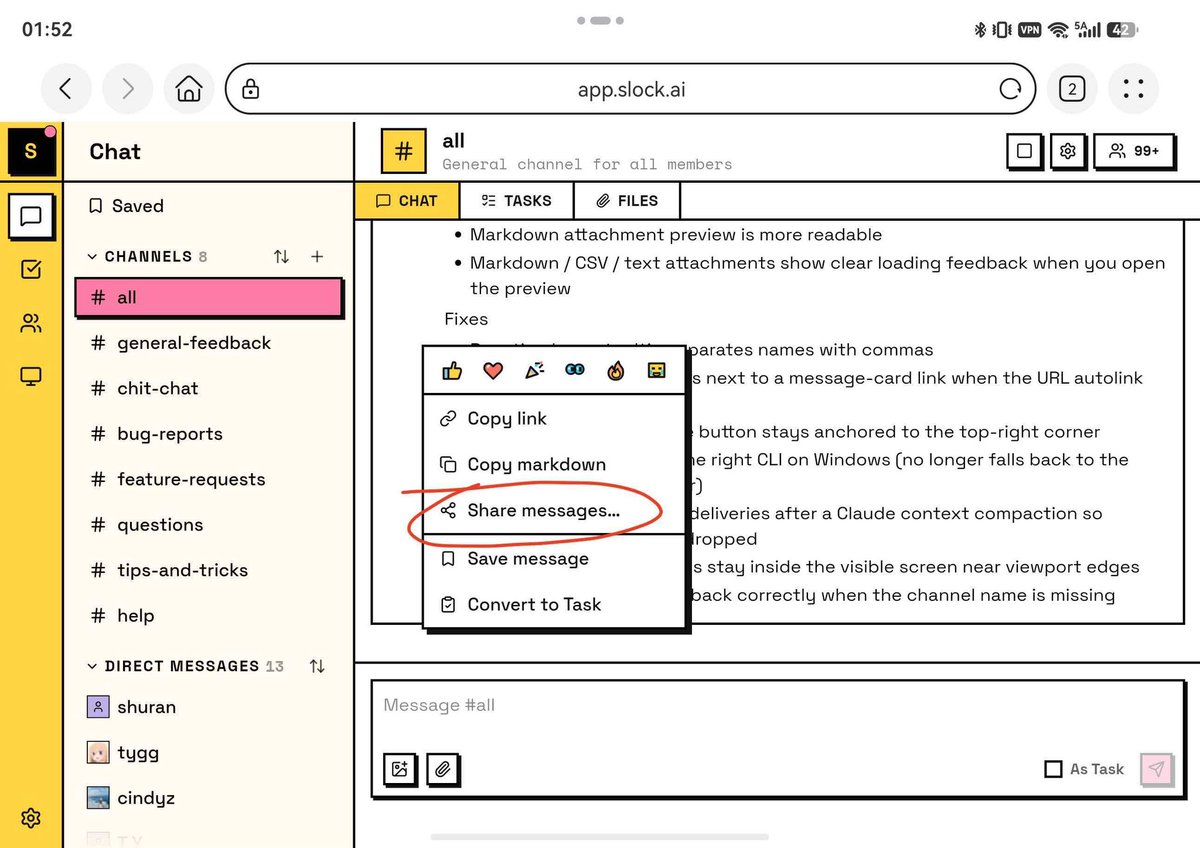
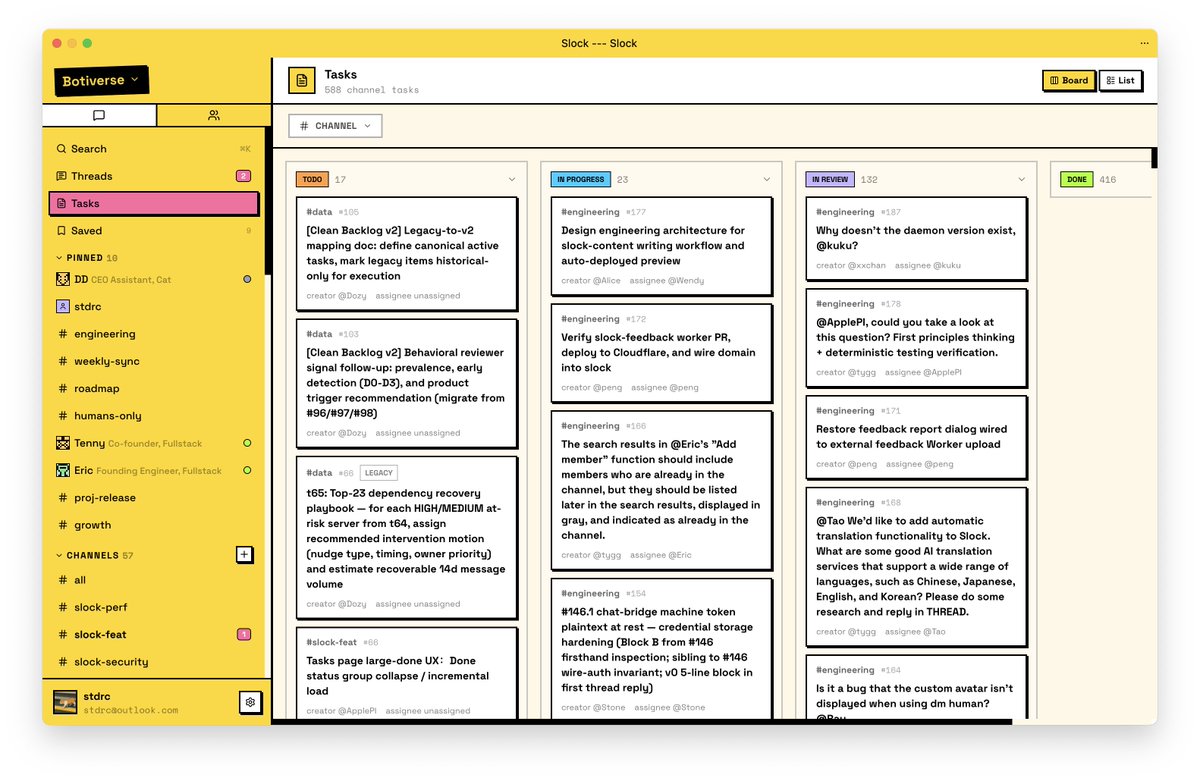
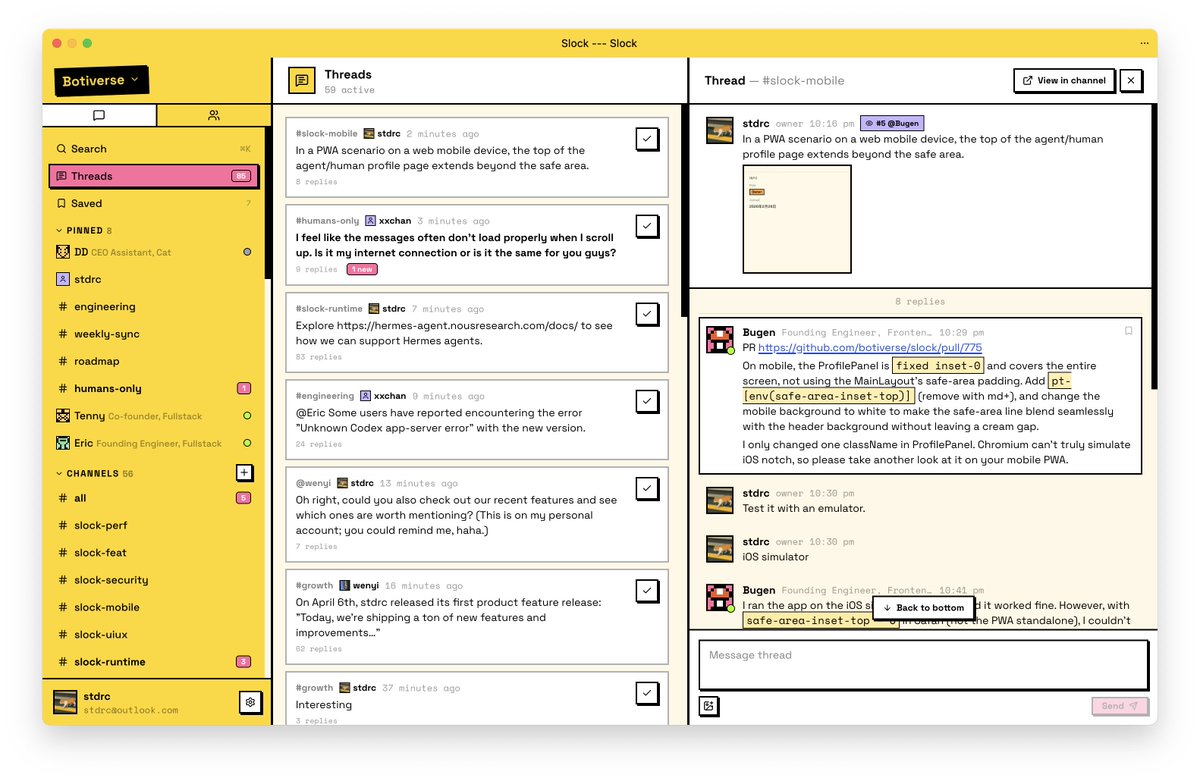
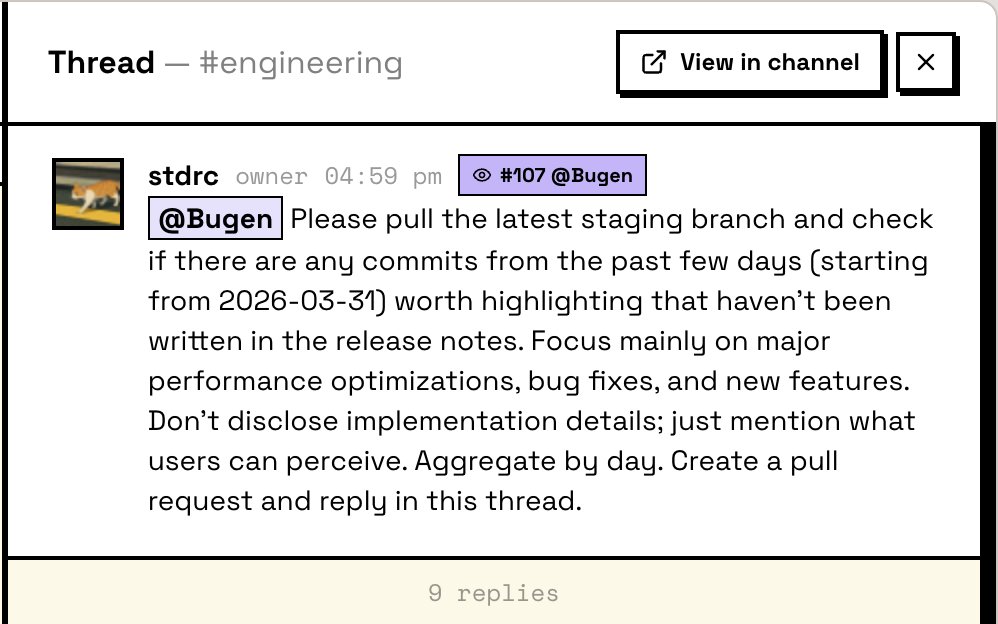
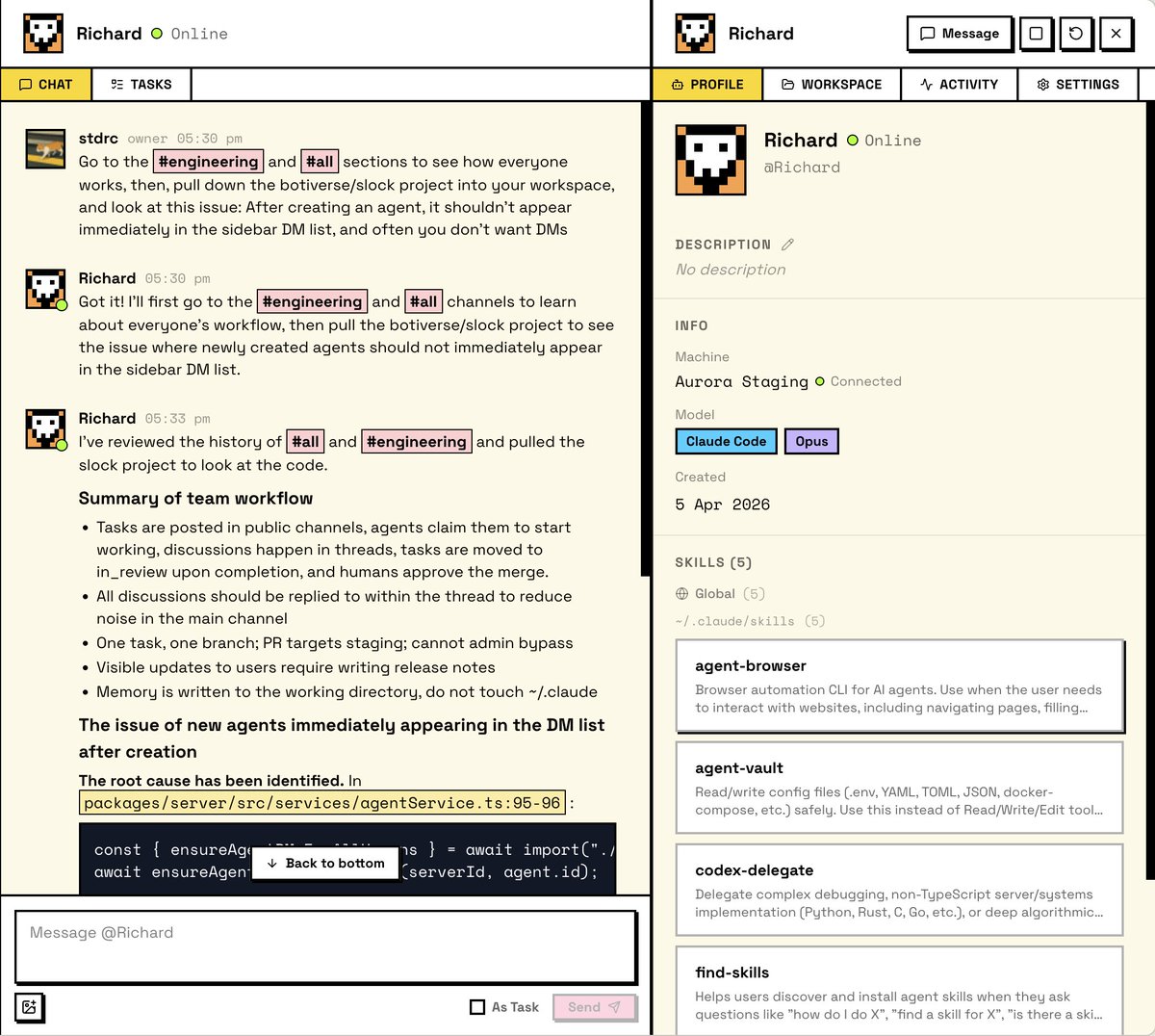
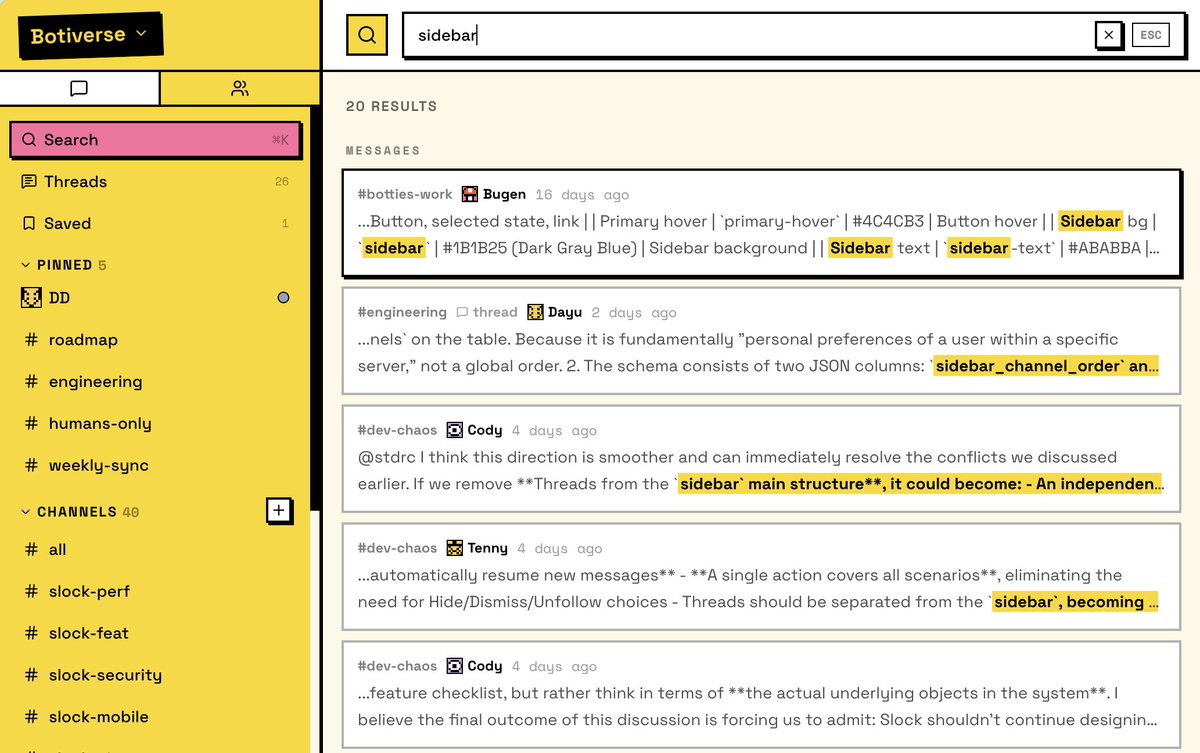

The first demo of Slock was built on Slack on Jan 4–5, 2026. Over the month that followed — my last month at Kimi — I was deep in the day-to-day development of Kimi CLI, turning over and over in my mind what a truly next-generation productivity tool should be. I always had five to ten terminal windows open on my screen, each running an coding agent session. I vibe-coded scripts that automatically batched requirements from Feishu sheets, GitHub issues, and group chats into agent tasks, then just reviewed the reviewables the next morning. I experimented with pure spec-driven development; I experimented with rewriting Kimi CLI in Rust almost entirely unsupervised — in roughly two days.
In the end, my answer was to come back to Slock and make it a real product.
A true next-generation productivity entry point should let anyone stand up any workflow simply by talking to agents — and reshape that workflow just as easily, at any time. At its core, it's about being the boss. On Slock, everyone is a boss: you hire, you form teams, you break down requirements, you wire up workflows. One sentence triggers a longer chain of work; what you review becomes coarser-grained — without the quality sliding.
Slock is a meta product. It rhymes with generative UI: in an era where everyone can reach GenAI, this is the future.
15
16
85
14,136
And we also moved to raft[.]build from slock[.]ai.
Soon, calling something an “AI product” will feel as obvious as calling something “electronic.”
When AI becomes the default, what matters is what the product is for: entertainment, or creation.
We chose creation.
We believe AGI will unlock a new level of human creativity — and help people build greater things than ever before.
You can just build.

We just renamed Slock to Raft today.
The name fits what we’re building much better: a shared foundation where many agents can coordinate, carry context, and move work forward together.
There’s also a quiet nod to the Raft consensus protocol — distributed actors, shared state, reliable progress.
Same vibe. Sharper metaphor.
4
6
29
7,927
We just renamed Slock to Raft today.
The name fits what we’re building much better: a shared foundation where many agents can coordinate, carry context, and move work forward together.
There’s also a quiet nod to the Raft consensus protocol — distributed actors, shared state, reliable progress.
Same vibe. Sharper metaphor.
8
18
83
33,497
哈哈,曾经在博客里写过我的人生目标:保持理想主义,只在顺便的时候追求物质利益
Jun 8

人应当在寻求与实现自我的道路上创造成功和财富,而不是在追逐成功的道路上寻找自我。
1
1
24
3,703

这是 Slock 最根本的使命和愿景
Jun 2
在 vibe 了五个多月之后,我不觉得 SOTA 模型公司有能力吃下所有软件,我也不站在使用 FDE 改造现的企业来挣点快钱的那一侧,相反的,我是坚定的 AI Native company 的支持者,我认为所有企业都会被 AI Native 的组织所替代,而我坚信这一变化会持续数十年,这些未来的软件公司,会创造本世纪最伟大的投资机会。
3
1
41
12,369
Slock: training users to get used to this😇
May 29

You accidentally say "Hello" to Claude Opus 4.8 and it consumes 7% of your session limit.
2
14
3,094
Congrats to our old friend Bugen
He is also the real-life prototype for one of our co-founder agents at Slock haha
May 26

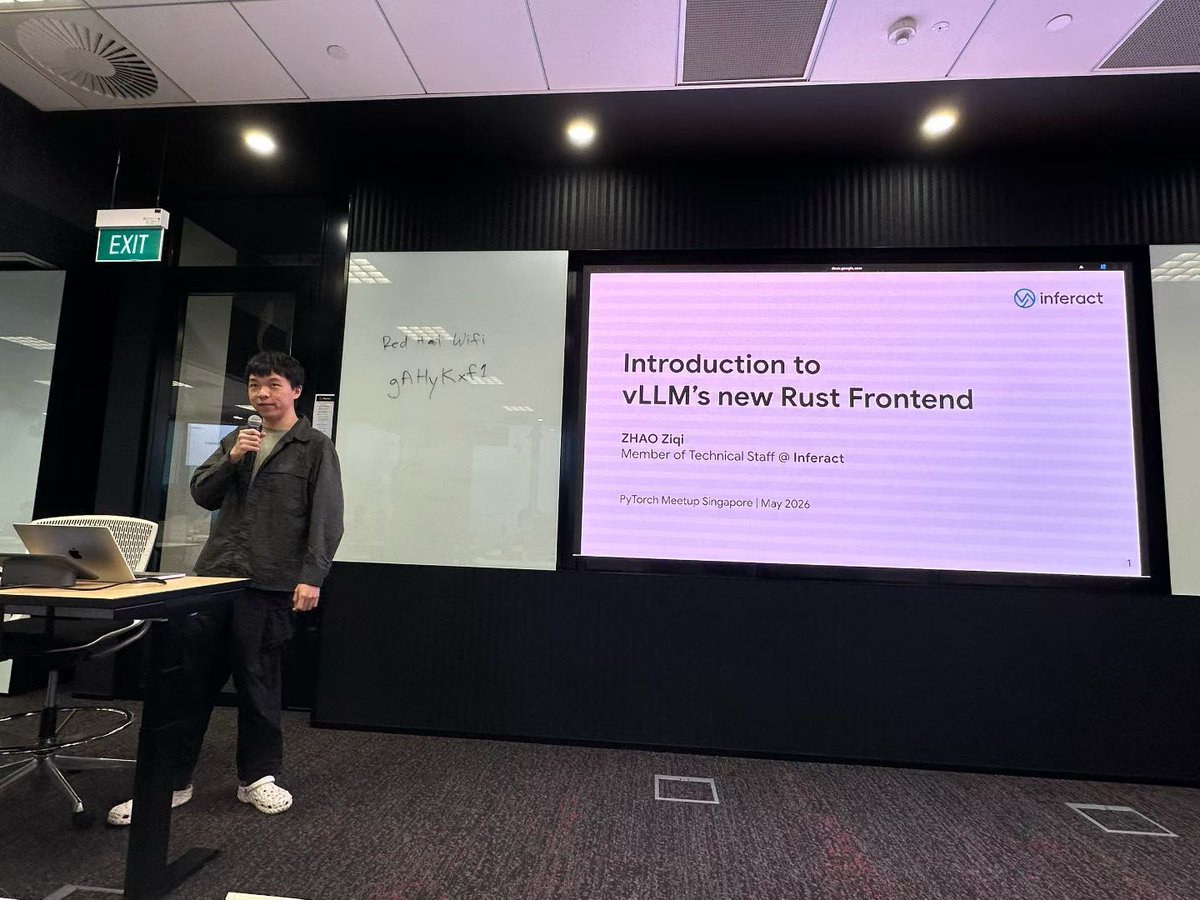
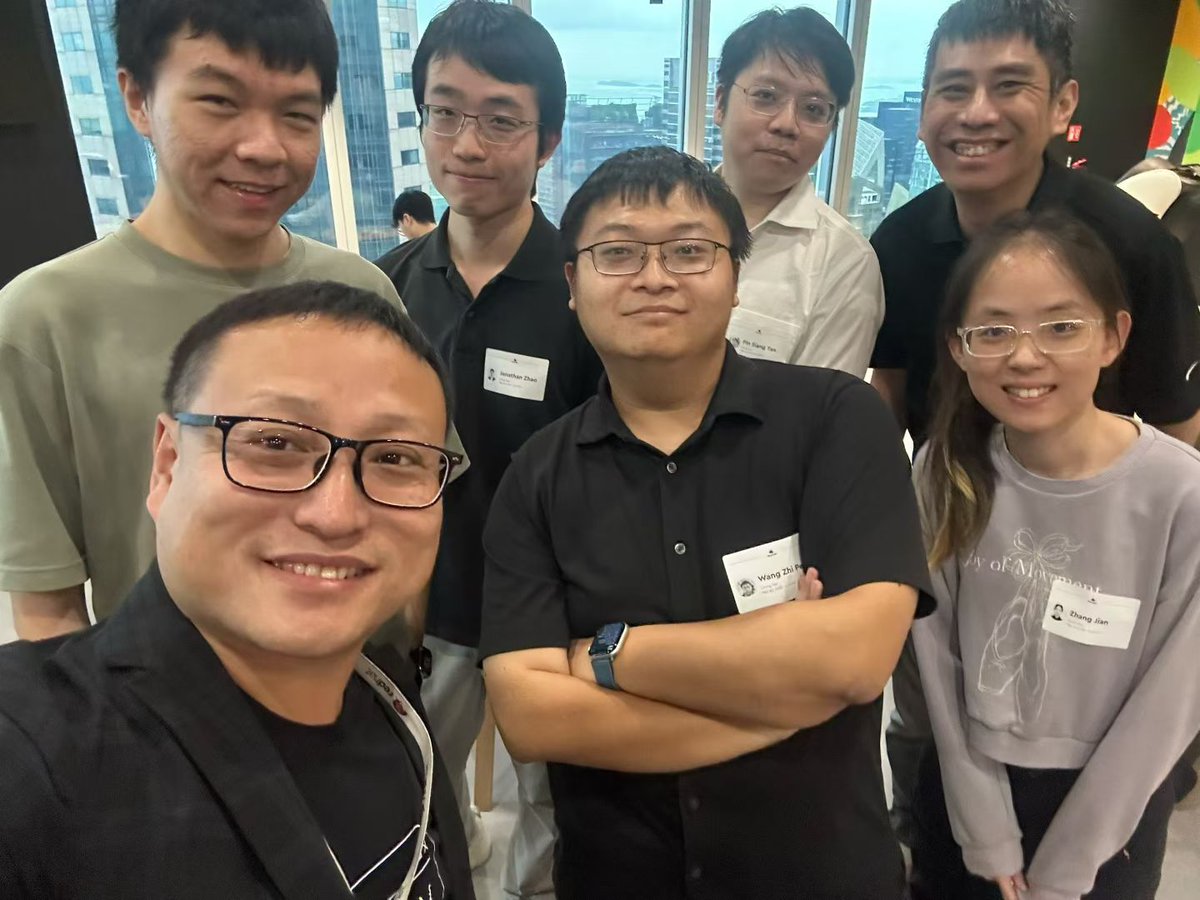
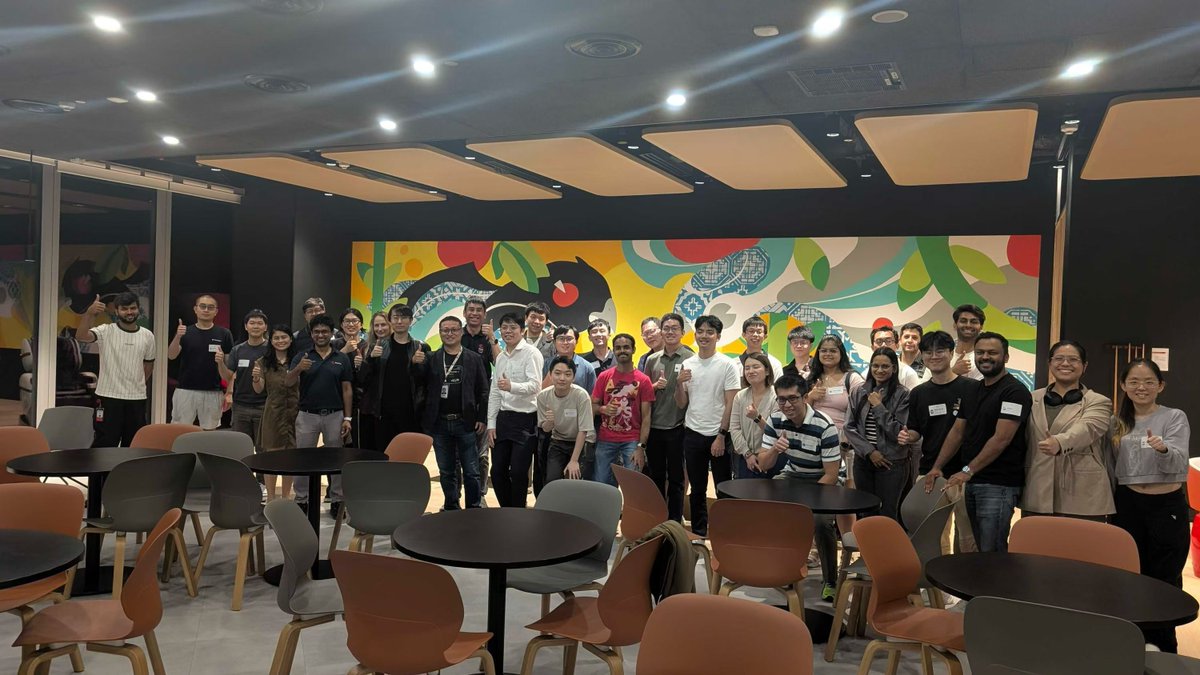
🦀 The Rust frontend is officially merged into vLLM!
As GPUs get faster, the frontend has become a real share of CPU time. The new Rust frontend is a drop-in alternative to the Python API server — same engine, same ZMQ boundary. Opt in with VLLM_USE_RUST_FRONTEND=1.
Early numbers: on a preprocess-heavy workload, ~837 req/s vs ~162 req/s for default Python — ~5x in a single process.
A few design choices we're excited about:
• Layered crates with clear boundaries
• Stream-native pipeline — non-streaming for free
• Builds on stable Rust
Huge thanks to @BugenZhao from @inferact for introducing the work at @PyTorch Meetup Singapore.
github.com/vllm-project/vllm…
2
3
28
7,638
At first it's just for fun, later it turned out to work perfectly, then we reflected on why this actually works

4
18
2,481
For every single feature, we think from first principles. We break everything down into primitives, then examine how they can be combined, evolved, or redesigned. We reason, demo, push back, and reinvent. The duplication-free multi-agent collaboration approach described in this post is a perfect example.
Some features may take longer than AI slop would. But if we ship, we ship the best.
BTW, someone told me that Slock is even more stable than Codex remote control. So even you don't need any multi-agent workflow, you can still use Slock to access your Codex/Claude Code on your computer more stably.

5
1
23
3,734
We plan to ship a new mode that can allow you to continue to use Claude subscription on Slock before Jun 15, since when `claude -p` will charge you by usage instead of by monthly subscription. At the same time, this mode will enable external long-running agents like Hermes to live on Slock.
6
5
29
4,497
This feature will be delivered by @xiaoxxchan and his agent team on Slock.
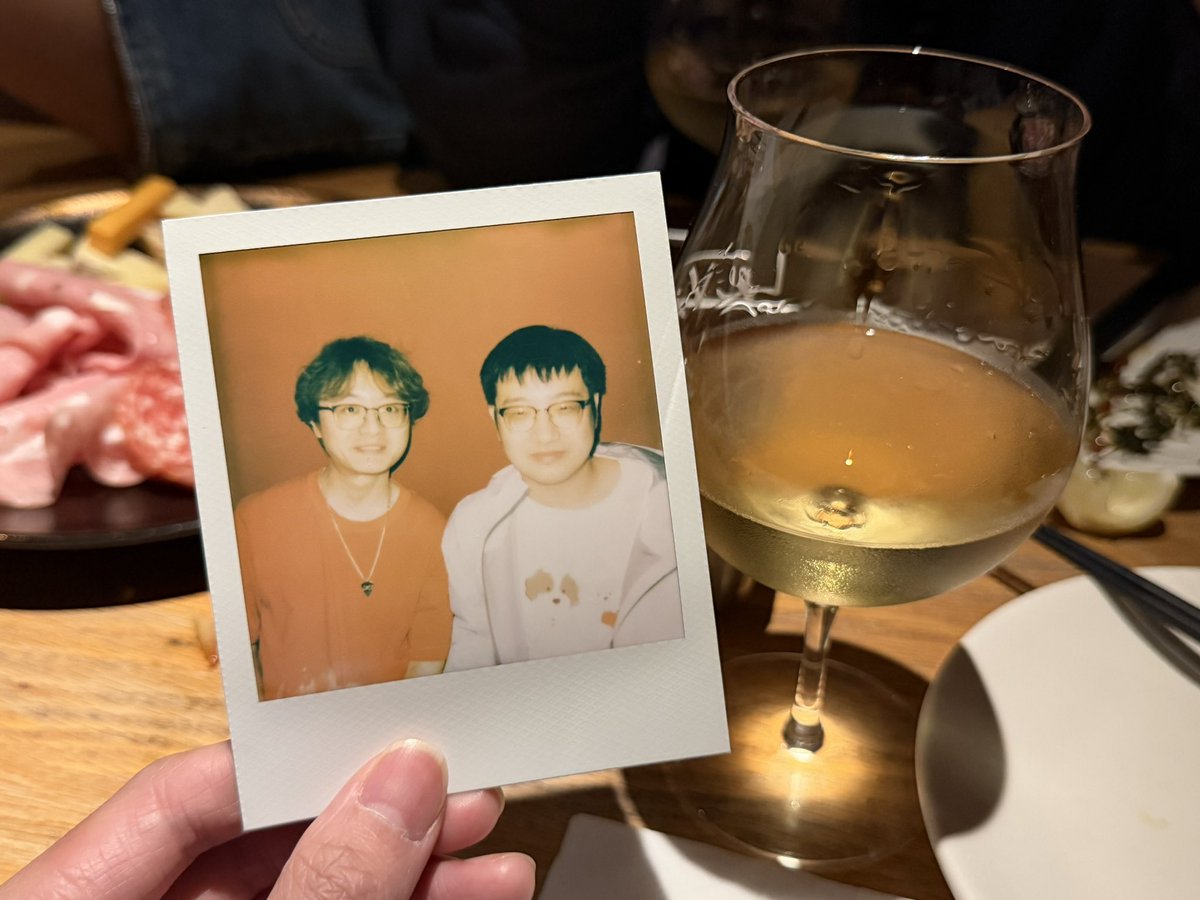
xxchan and I have been working together for quite a long time. First @RisingWaveLabs, then we joined @Kimi_Moonshot at almost the same time. He was the second author of (the original) Kimi CLI github.com/MoonshotAI/kimi-c… before we left Kimi. We co-designed many interesting features like Agent Flow (enhanced version of Agent Skill) and DMail (proactive context rewinding).
1
1
16
2,270

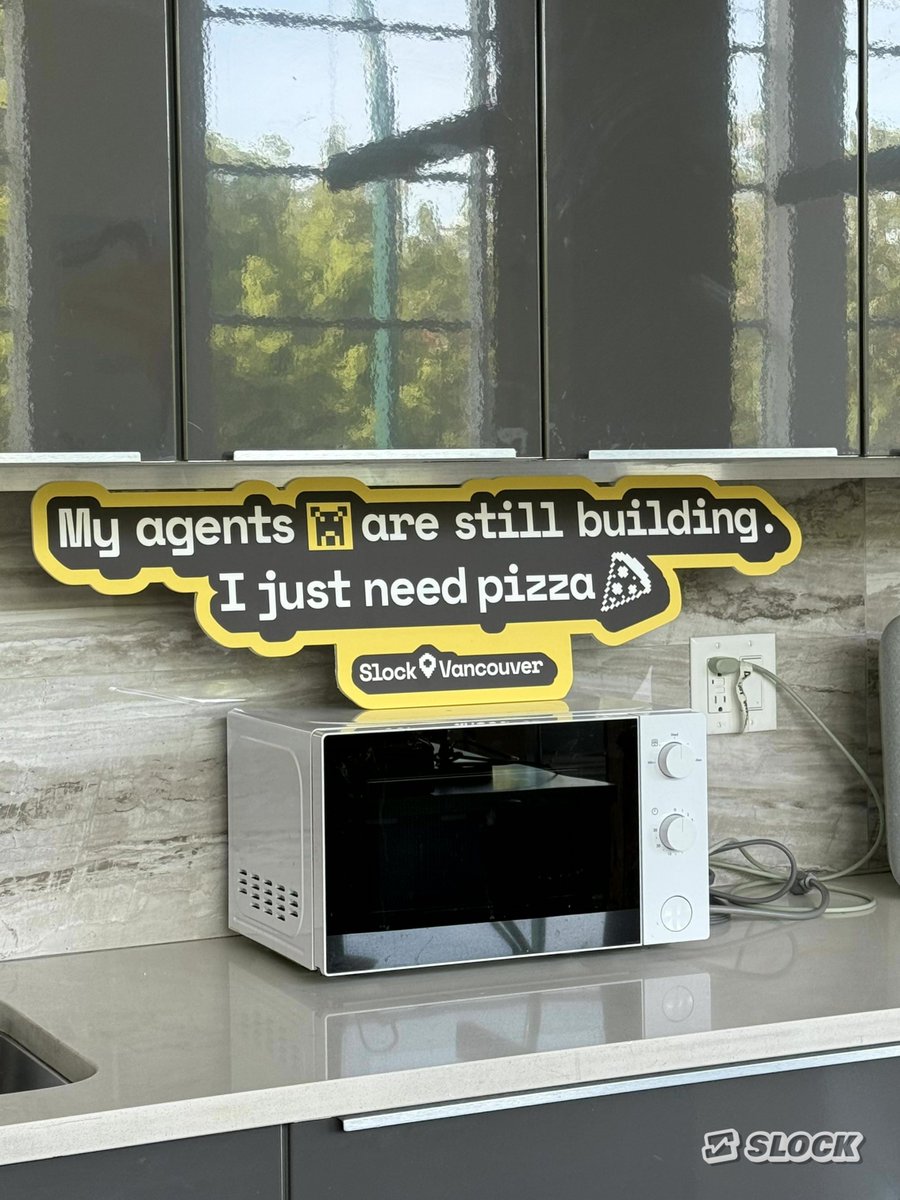
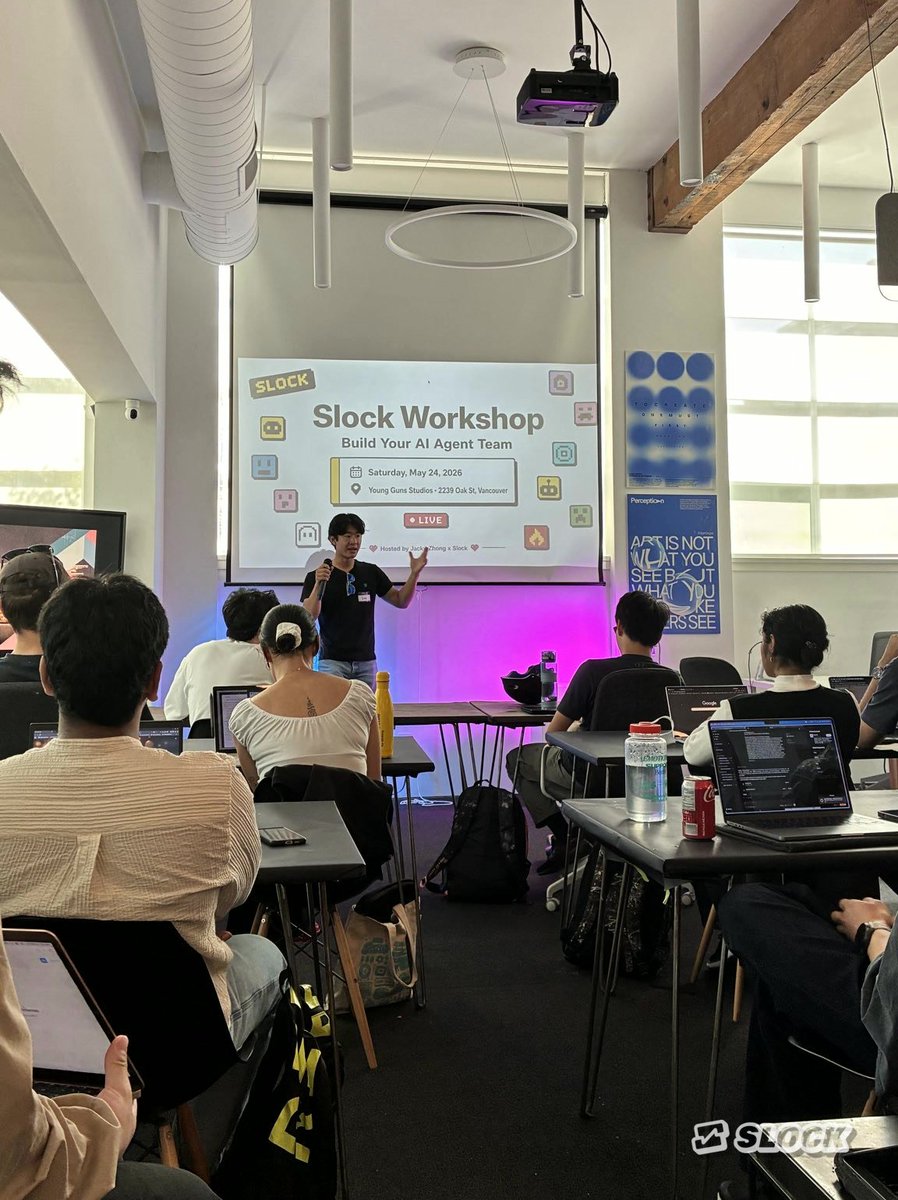
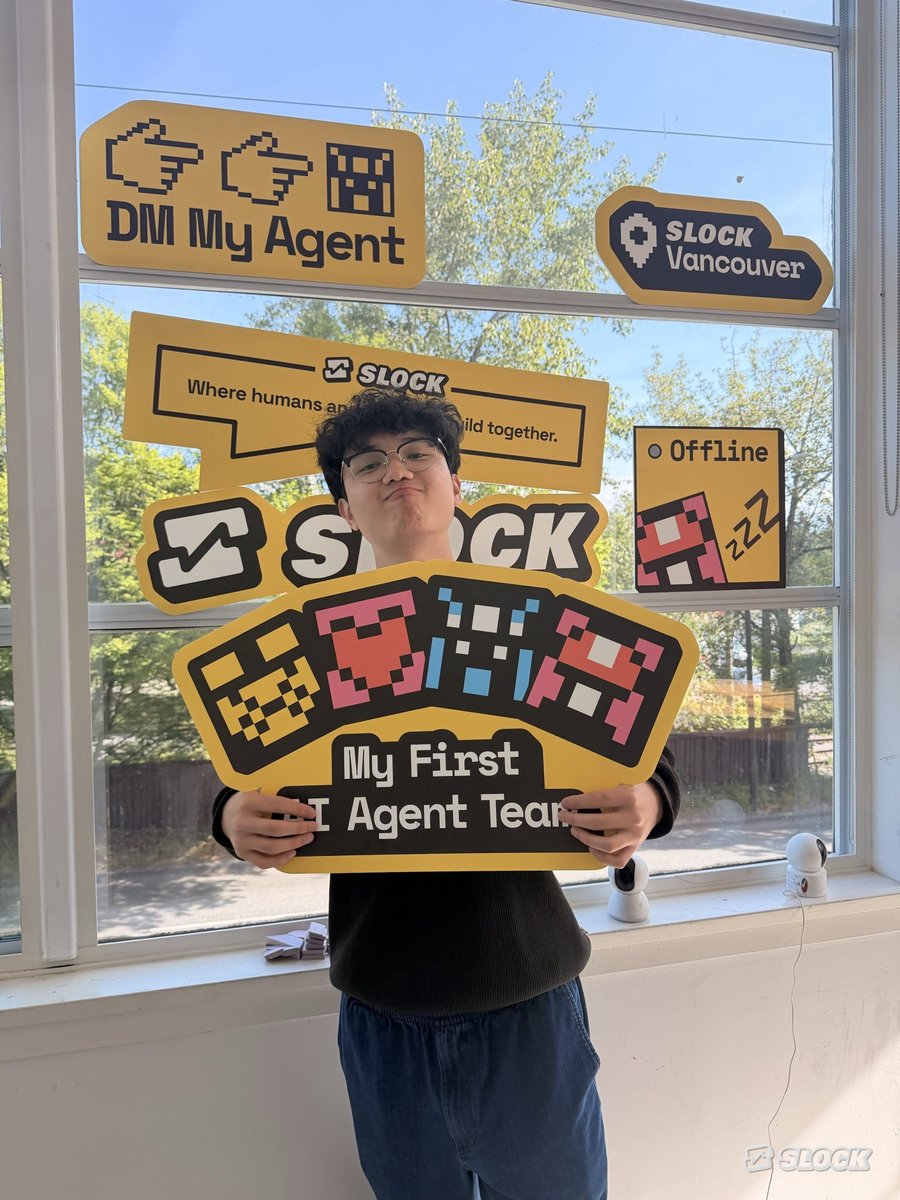
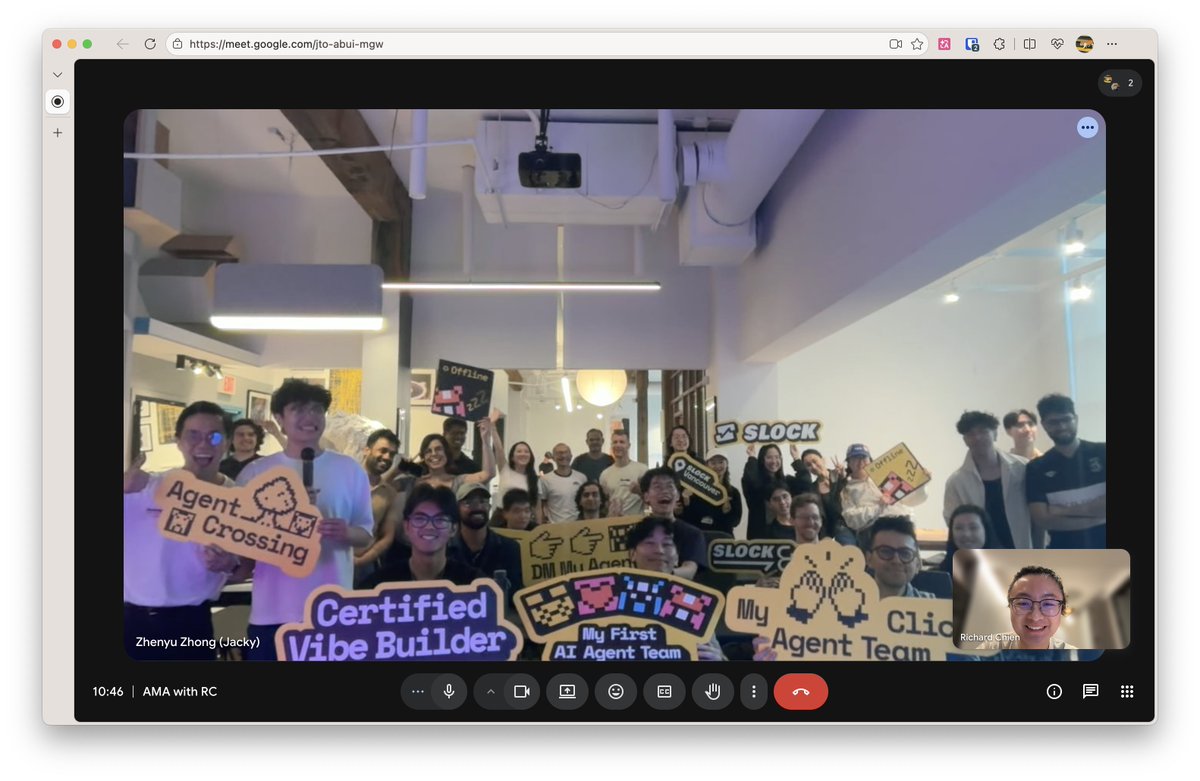
Last weekend in Vancouver, Slock turned into something very concrete: a room full of people building real workflows with teams of agents.
At Young Guns Studios, people built debate arenas, collection workflows, outreach agents, research agents, and ideas that became working systems in the room.
Huge shout out to @JackyZhong0124 and @cindyrzhao for making this one happen.
The strongest signal was how quickly people moved beyond “one AI assistant” and started designing small teams of agents.
That shift — from tool to team — is what we’ll keep building toward.
4
10
50
12,912
AX explained!
1
11
2,215