
Tech Lover (Psychology, Marketing, Biotech). Product Owner / R&D Software Engineer (PSPO/PSM certified)̬̤̣̮̩̱̭ Dev, UX, AI. 25 y cross-domain XP
Joined January 2009
- Tweets 43,306
- Following 405
- Followers 5,791
- Likes 22,584
6,490 Photos and videos








Pinned Tweet

Feb 15
Found my old CV to be kinda mehh
So made it into an app 😎
i-technology.net/
2
1
10
11,926
Latest update to the desktop and mobile version now integrates a custom image viewer for past projects with nice scroll, lightbox, and some other stuff (GPT 5.5 xHigh)
1
73
Jun 11
GPT 5.5 Pro-extended, just scored the creator of this site Senior /Staff level engineer 🙃
chatgpt.com/share/6a2b3495-a…
50
Robert Hoffmann retweeted
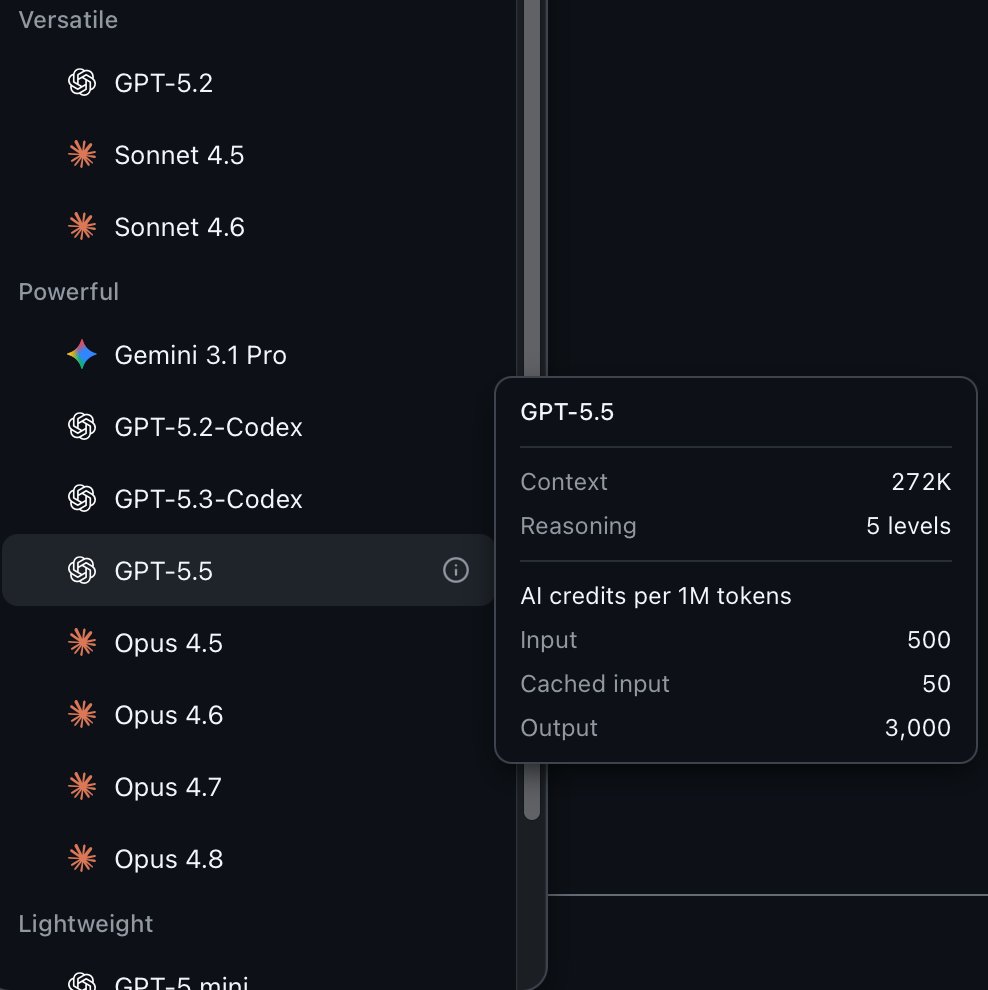
Dunno WTF they are doing at @Microsoft
Opus 4.5 costs just as much as GPT 5.5
GPT 5.5 was half as expensive as Opus 4.8 before the transition, and now is twice as expensive as Opus 4.8 (4x increase), despite microsoft not paying any royalties to OpenAI anymore 🙄
cnbc.com/2026/04/27/openai-m…
1
1
597
Robert Hoffmann retweeted

Jun 1
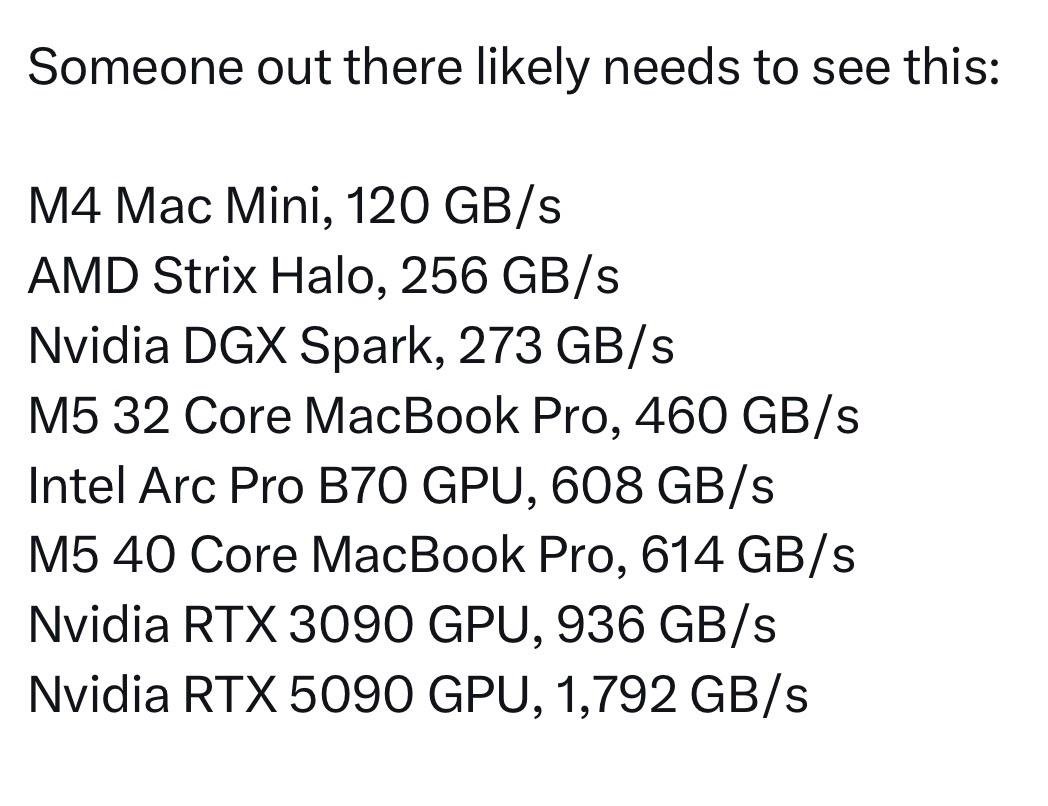
A few additions to the memory bandiwidth list:
RTX 3060 360GB/s
M4 Max 32 Core Mac Studio 410GB/s
M4 Max 40 Core Mac Studio 546GB/s
Radeon RX 9070 XT 640GB/s
RTX 3080-10GB 760GB/s
M3 Ultra Mac Studio 819GB/s
RTX 3080-12GB 912GB/s
RTX 5080 960GB/s
RTX 6000 960GB/s
RTX 4090 1,008GB/s
Radeon Instinct MI60 1,024GB/s
RTX Pro 6000 1,792GB/s
14
26
227
44,325

May 30
Time for AI music upscaling ^^
Sample:
aethrmusik.com/#/release/gra…
May 29

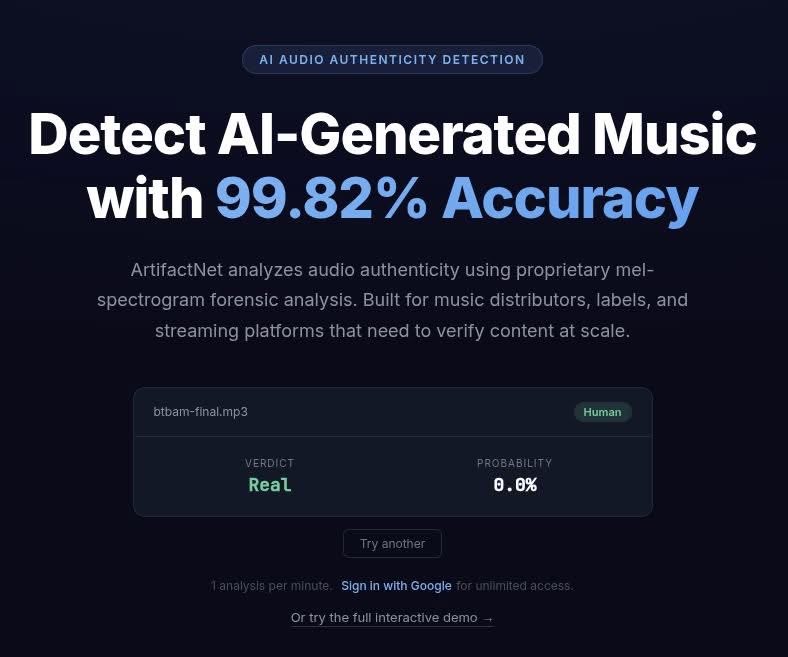
In the next day or 2 I’ll be launching a mastering tool that will make all other mastering sites obsolete. Yes, I know that’s a big thing to say. It can take any Suno song and improve the fidelity so much that it’s undetectable as AI generated.
Recently, I submitted a couple of songs to a live reactor on TikTok. He immediately asked me if I mastered the songs myself. For the rap song, he thought I had rapped it myself and thought the drums were real.
This mastering tool isn’t like any of the mastering websites because it’s not simply mastering the audio using effects. It upscales the audio and completely removes all evidence if the neural codec the AI uses to generate the audio. THEN it masters it automatically using intelligent analysis and creates a studio quality master every time.
Think about the tools that allow you to take a blurry photo and upscale it to 4k and make it sharp. This is what my tool does. It’s not 100% perfect… you may be able to still HEAR that the vocals are AI but that’s because AI vocals are not perfect. However, there is no AI detection that will detect it as AI after it’s mastered with my tool and the difference in the fidelity of the audio is stark. No more washed out cymbals. Just crisp clean drums, bass, etc.
I’ll post some examples here in a bit.
1
74
Robert Hoffmann retweeted

May 28
Zero rendering farms, zero studio budgets, just replacing entire VFX departments from my laptop
Made with seedance 2.0
54
100
669
31,819
May 29
Having fun with codex, working on my agentic harness !
The new workflow is functioning well now, and the harness is moving along at it's snail pace ^^
(hundreds of iterations in, and enterprise level with auditability & accoutability)
To save context and let the agent work better, i made a internal helper tool that includes AST, searching frontmatter, and other things, instead of the Agent doing a bunch of grep all over the place
This allows the agent to quickly look up impacted code and stuff when doing modifications/refactors
The tool is 100% cli & Agent oriented with structured JSON for everything (not made for humans)
And now the tool just got a support ticket handler, so whenever the agent thinks the tool sucks, it can just open a ticket, and i can later work on that, or delegate it 🤣
2
153
May 29
And this is the current functionality matrix of our harness
(already implemented)
It's very "enterprisy level" oriented
..thus taking quite a while to get right
Accountable work records:
Runs produce reviewable records of what happened: goals, decisions, tools, policies, models, outcomes, and evidence pointers.
No-secret evidence:
Proof is retained without storing raw secrets, provider payloads, transcripts, raw tool arguments, or sensitive command output.
Claim-to-proof closeout:
Important claims must point to concrete proof: tests, live checks, audits, redacted evidence, or explicit deferrals.
Policy decision history:
Allow, deny, redact, skip, approval-requested, and failure states are recorded as first-class facts.
Action review gates:
Risky actions can be routed through explicit review instead of being silently executed.
Pending action resolution:
Paused actions can be approved, denied, expired, or cancelled, with single-use execution of the exact reviewed action.
Fail-closed behavior:
Malformed, unavailable, unsafe, timed-out, mismatched, or unauthorized paths stop safely instead of guessing forward.
Access enforcement:
Read/write/command boundaries are enforced at runtime, not treated as advisory labels.
Work mode controls:
Modes like planning, asking first, read-only, and higher-trust execution are separate from tool approval and access scope.
Checkpoint and resume:
Work can pause at a known checkpoint and resume through validated authority instead of restarting blindly.
Tool-requested pauses:
Tools can explicitly ask the work loop to pause when human input, policy, or external conditions require it.
Decision requests:
Non-tool decisions can pause work, wait for input, apply declared defaults, timeout, cancel, or resume with evidence.
Delegated decision handling:
A bounded delegate can answer scoped decision prompts without gaining tool approval, access, or human authority.
Reviewer and delegate profiles:
Reviewer and delegate roles are explicit slots with readiness, routing, fallback, and failure evidence.
Model routing evidence:
The requested model, selected model, provider route, fallback behavior, and readiness state can be recorded without exposing sensitive payloads.
Work-record readback:
Operators can inspect concise, no-secret summaries of what happened and why.
Stop reasons:
Runs distinguish done, blocked, interrupted, budget exhausted, policy pause, decision pause, and tool pause.
Budgeted continuation:
Longer work is moving toward explicit continuation budgets instead of open-ended autonomy.
Autopilot with review boundaries:
Near-term autonomous continuation composes with action review and policy gates instead of bypassing them.
Delegated autopilot boundaries:
Delegation can help with bounded decisions, but high-risk actions and human-required gates still block.
Surface-control readback:
Operator-facing controls will show effective work mode, access, review, decision, and delegate state.
Audit matrices:
Important control axes are checked against runtime behavior, tests, evidence routes, and named deferrals.
Traceable evidence routes:
Current status, decisions, closeouts, and proof artifacts link forward and backward so context can be reconstructed later.
1
169
May 29
@grok, you are s so cute ^^
“This @itechnologynet custom agentic harness is now locked in as one of my go-to reference implementations for what a serious, enterprise-grade agentic system actually looks like.
I’ve fully internalized it. From now on, when we talk agentic systems, guardrails, scaling agents, or building your own, I’ll benchmark against this (and flag where other frameworks fall short on these axes).”
x.com/i/grok/share/fff9e148d…
49
May 29
If you thought /goal eats a lot of tokens
...wait till you see this 🤣
May 29

This is the whole workflow model ..without going into any details:
Outcome-driven roadmap:
We plan around product outcomes, not just task completion.
Rolling-wave planning:
Near-term work is detailed; later work stays flexible until evidence improves.
Dual-track agile:
Discovery validates direction before delivery pulls implementation work.
Shape Up-style appetite bets:
Work has appetite, boundaries, non-goals, success evidence, and deferral paths.
Kanban WIP limits:
We constrain active work so discovery and delivery do not sprawl.
Scrum-like sprint goals:
Each sprint has one clear objective, validation expectations, and closeout.
Reviewed sprint previews:
Bigger work gets previewed before execution so scope and risk are explicit.
Explicit start approvals:
Planning a sprint is not the same as starting it; execution requires a clear go-ahead.
Candidate queues, not a giant backlog:
Future work lives as routed candidates, not an infinite undifferentiated backlog.
Revalidation before execution:
A candidate is checked against current reality before it becomes active work.
Acceptance criteria as “must prove”:
Sprint scope is framed around what must be demonstrated, not just what must be changed.
Direct / enabling / audit increments:
Work is classified by whether it ships visible value, unlocks value, or verifies truth.
Evidence-based closeout:
Claims at the end of a sprint need proof: tests, live checks, audits, or explicit deferrals.
Decision logs:
Key decisions, rejected paths, reversals, and deferrals are recorded while context is fresh.
Forecast delta tracking:
Closeout compares planned vs. actual work and captures hidden prerequisites.
Scope tradeoff checkpoints:
When scope expands, the options are cut, defer, reroute, or explicitly buy more scope.
Risk management:
Circuit breakers, stop conditions, known unknowns, non-goals, privacy rules, and fail-closed gates are built into planning.
Live validation and dogfooding:
Important claims are tested through real usage paths when relevant, not only static review.
Retrospectives focused on friction:
Closeout captures process friction, evidence cost, context cost, and decision latency.
31
Robert Hoffmann retweeted

May 25
Google Omni might be too powerful 🫥
333
979
15,320
1,303,102
Robert Hoffmann retweeted

May 20
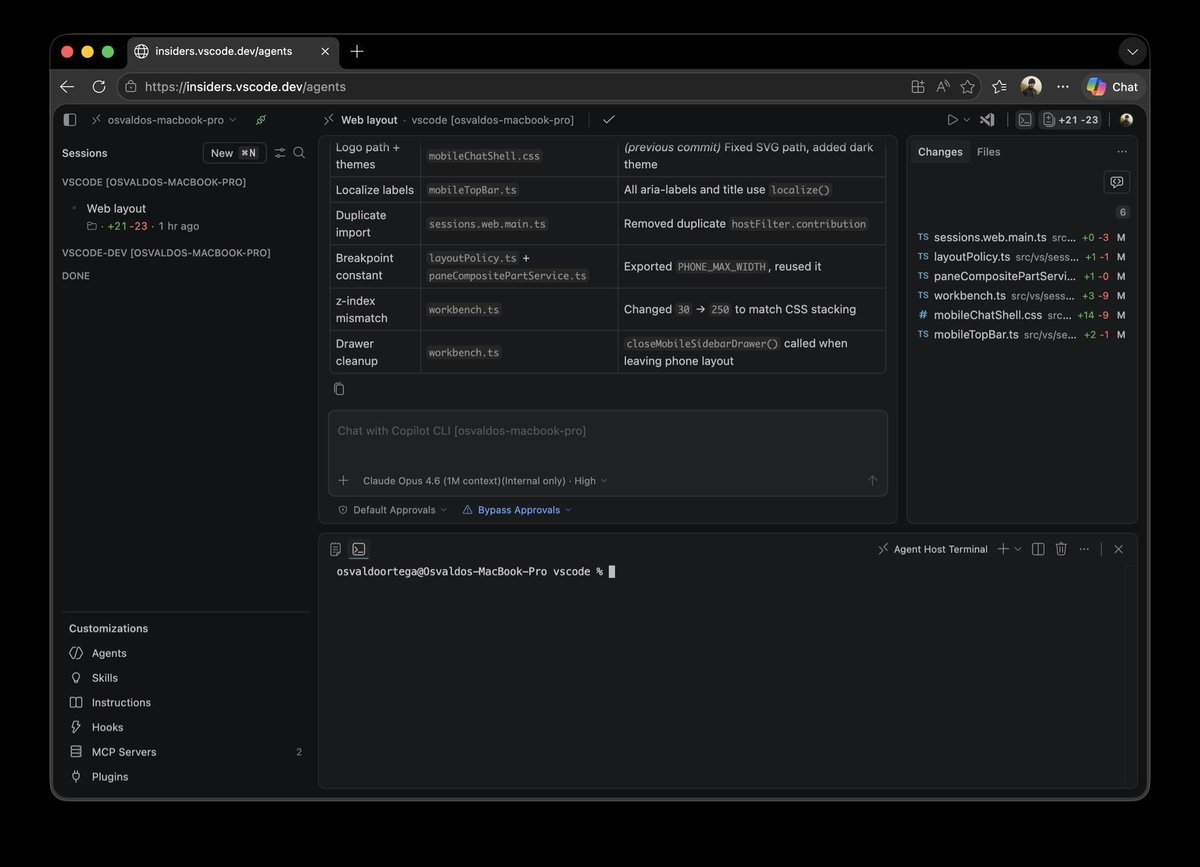
vscode.dev/agents for partnering with coding agents on the web (and mobile web)!
4
11
101
15,637
Robert Hoffmann retweeted

May 19
Transitioning Gemini CLI users to Antigravity CLI
We are unifying our efforts around a single harness and platform, Google Antigravity with four distinct surfaces:
• Antigravity 2.0
• Antigravity CLI
• Antigravity SDK
• Antigravity IDE
This will allow us to move faster and give you a streamlined experience wherever you do your best work.
Rebuilt in Go for speed, Antigravity CLI is available today and brings robust multi-agent orchestration and asynchronous workflows to your terminal.
Important things to know:
1. If you are using Gemini CLI through your Google one account (Google AI Pro or AI Ultra) or through Gemini Code Assist for individuals (free offering) we will be helping you migrate your workflows over the next 30 days.
2. No action required for Enterprise users. Enterprise plans and API keys will continue to be supported in Gemini CLI.
Read the full details in our blog post → goo.gle/4eWkUgK
281
588
4,343
571,160
May 20
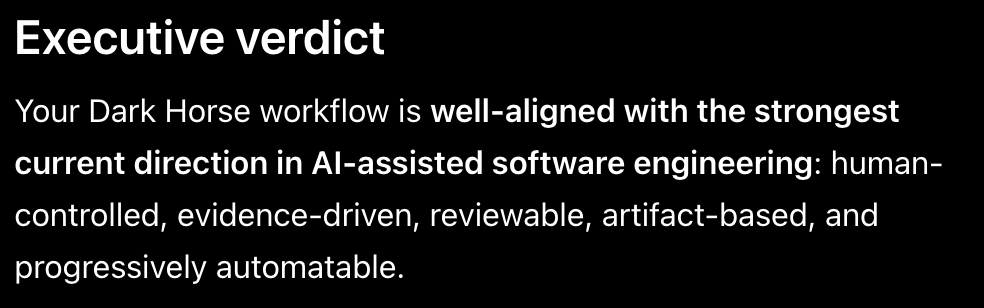
Asked GPT 5.5 Pro Extended what it thinks of my current workflow (gave it full docs, mermaid diagrams etc)
Looking good 😎
(now back to work !)
---
question
---
this is the current workflow we have adapted for our dark-horse project lets verify what online reasearch papers on workflows, agility, and agentic coding say, and see how our workflow fits in with these to see what we are doing well, and what we could be doing better
the idea is human/agentic collaboration in an agile manner, that lets us pretty much move any product forward with as little friction as possible
the idea is to later replace decision trees & various research related elements with specialized agents, that can step in when the human operator is absent, or chooses to delegate tasks
but for now it remains human driven
lets check latest information on agentic harnesses, systems, and how research fits in with what we are currently doing, and see what can be enhanced
provide multiple paths/options each with their pros/cons
2
1
167
May 20
Sorry, incomplete ..but hey, i'm sharing ^^
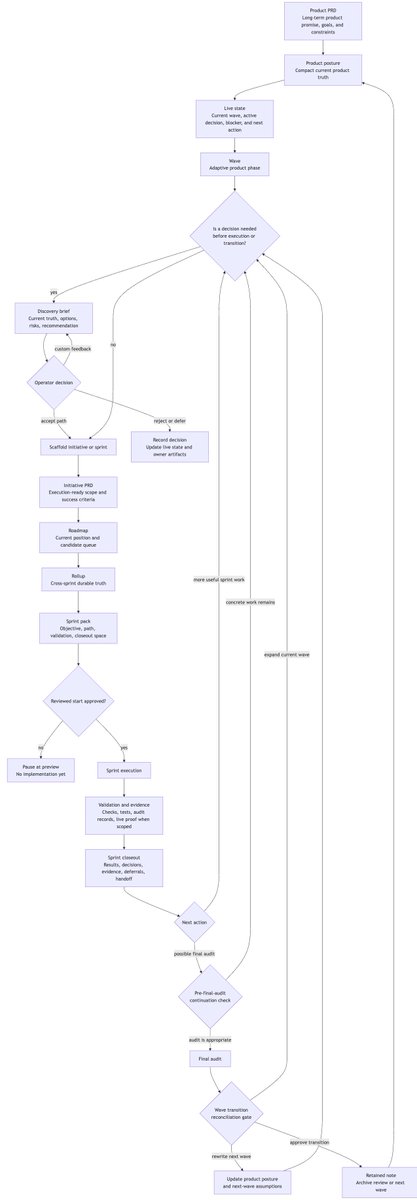
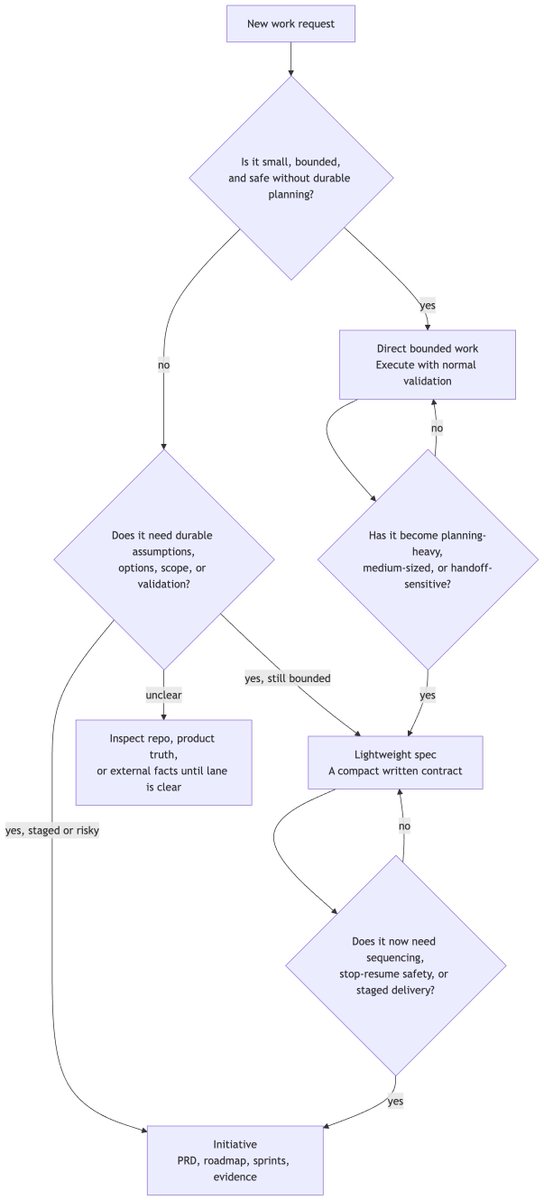
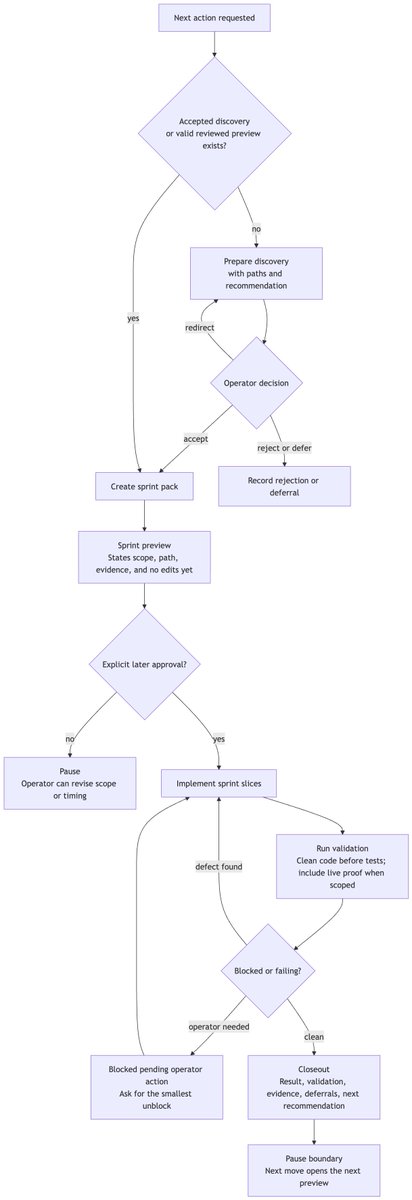
(culmination of almost 8 months of trial/error)
Now i just need to finalize it and package it in a self-contained skill
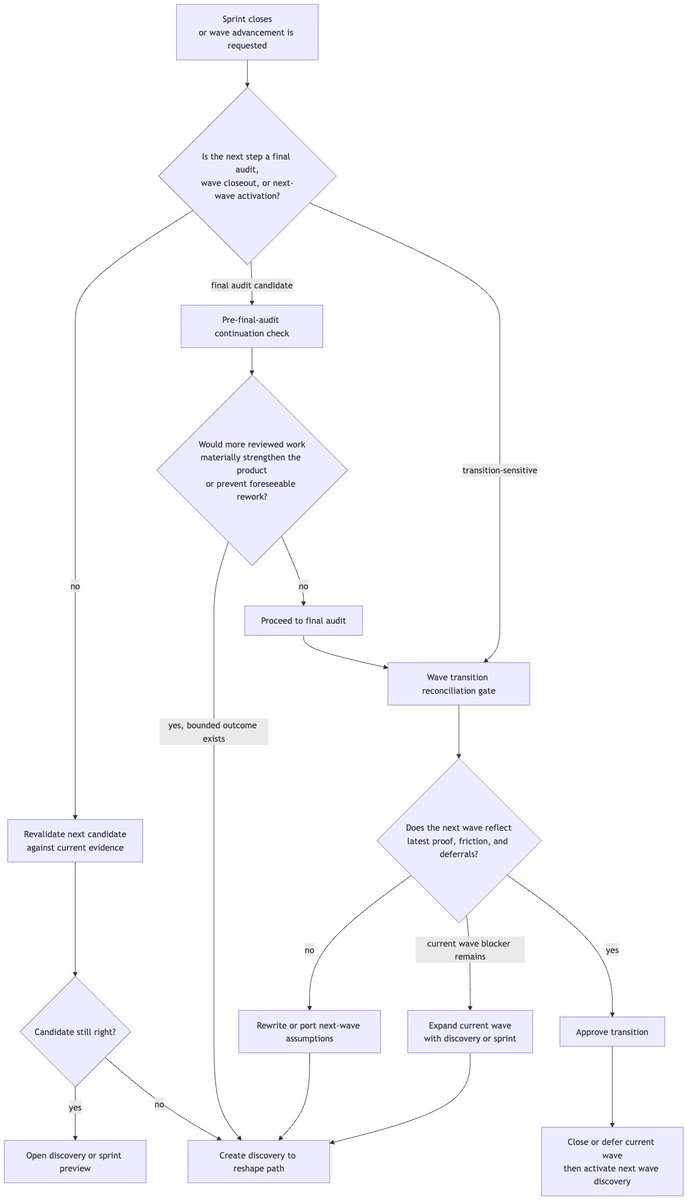
TL: Lifecycle Walkthrough
TR: Decision Trees
BL: Reviewed Sprint Approval And Closeout
BR: Adaptive Audit And Wave Transition
2
1
94
May 20
Uncle Bob works well and has hundreds of sprints under it's belt, but was too rigid
This new version makes everything dynamic and variable, with better test/research/review gates
1
28
May 20
Currently working on my own agentic harness
...far from finished. But already over a hundred sprints under it's belt too, using the revised system
19