
@Cornell Law | Legal Architect | Web3, AI & Cross-border RWA | Building Programmable Compliance 💎 DMs open
Joined August 2025
- Tweets 108
- Following 437
- Followers 109
- Likes 145
17 Photos and videos



Jun 11
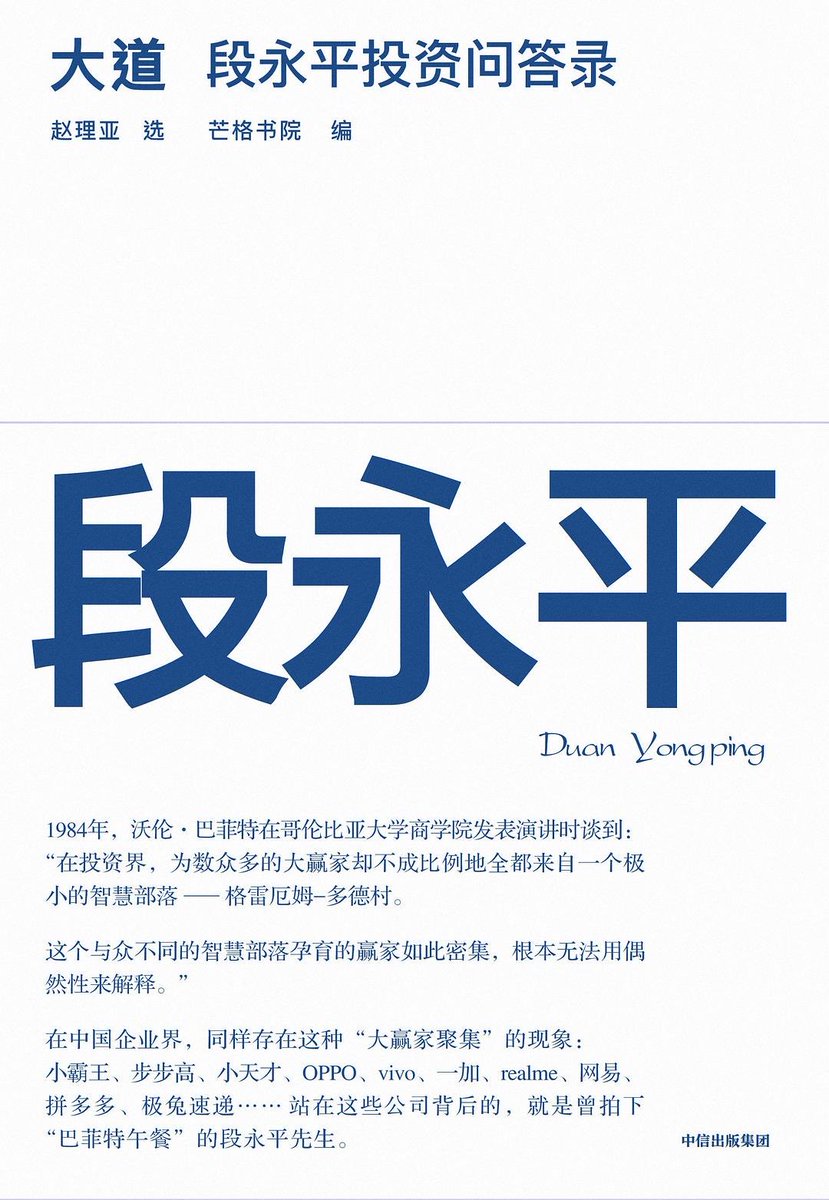
这几个月的 AI,主线其实不是模型变强了,而是人类在一层一层地把控制权交给 Agent。
回头看,路径很清楚。最早大家在写 prompt,人逐句指挥,AI 是个被动执行器,控制权百分之百在人手里,AI 只负责"说话"。后来玩法变了,没人再盯着每一步,转而给 Agent 设计 harness 和硬约束:画好边界,让它在笼子里自己跑。控制权从"指令级"上移到了"规则级"。OpenClaw 的爆发就是这一层的产物,24/7 守护进程、自主执行、直接接管你所有的聊天软件。但也正因如此,它四天被披露了 9 个 CVE,核心都是不受控的系统访问——自主性跑在了约束设计前面,笼子变大的速度快过我们学会造笼子的速度。
而现在,Steinberger 提出了 Loop Engineering:别再一句一句喂指令了,定义好循环和反馈信号,让 Agent 自己迭代收敛。控制权再上移一层,到了"目标级"。
资本是叠在这条曲线上的。GTC 上黄仁勋把 OpenClaw 抬到 Linux、HTML 战略同级,账也算得很直白:Agent 每烧一个 token 就是英伟达一笔算力收入,而 Agent 的消耗至少是过去的十倍。所以热钱从纯模型转向了 Agent 基础设施。逻辑很简单,不管最后谁的模型赢,编排、监控、合规这一层总得有人做。
但有件事没人在定价:控制权每上移一层,责任归属就模糊一层。Prompt 时代出了错,责任在人,这没什么好争的。可到了 Loop 时代,Agent 在自己的循环里自主成交、自主谈判,已经有 bot 在 Polymarket 一周赚了十一万五美元,还有一个趁主人开会砍掉了四千美元车价,这时候出了问题,算谁的?
我的答案是:约束不能继续以软提示的形式待在 harness 里,它得是可验证的、可编码的,跟着循环一起运行的硬规则。Loop Engineering 现在缺的那一环,恰恰是把合规逻辑写进循环本身。
变的是 Agent 的自主粒度,不变的是,每一层都需要一个可执行的约束架构。
#ProgrammableCompliance
1
178
Jun 6
如果你在做 RWA / 跨境稳定币、正卡在多辖区合规上,或者在 Bittensor 上跑子网、研究机制设计、深度了解生态,欢迎找我聊聊。
Jun 6

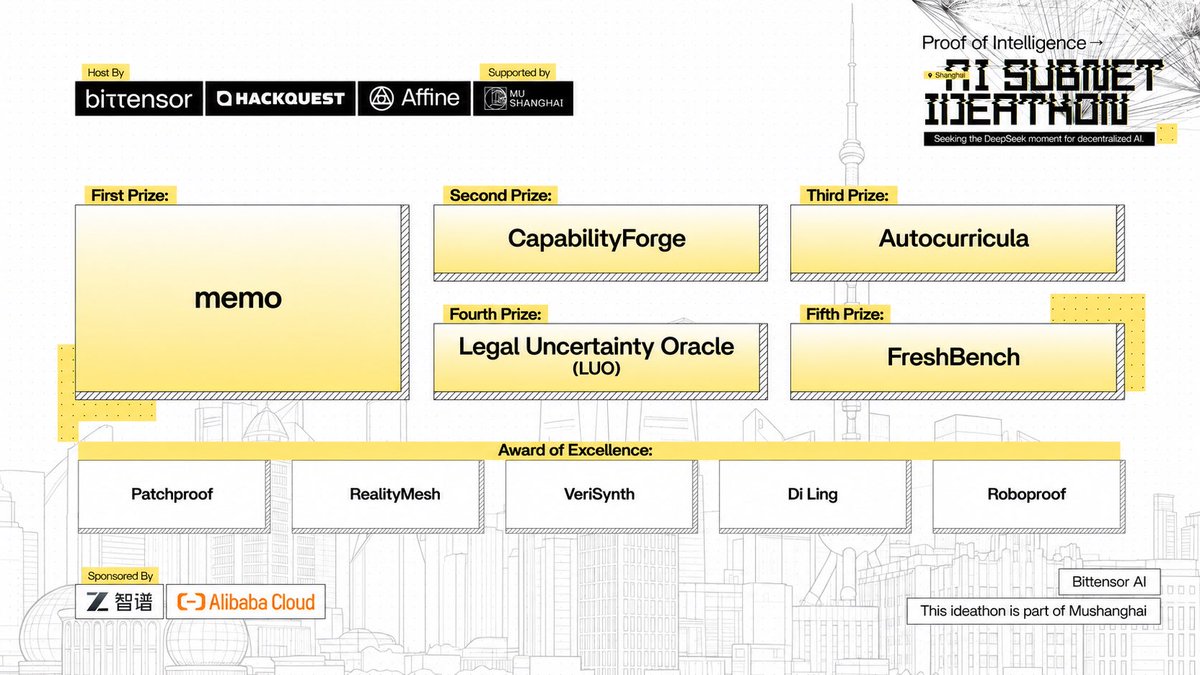
LUO just placed 4th at the @bittensor x @HackQuest_ AI Subnet Ideathon.🎉🎉
As a builder from a pure legal background, the deeper I go, the clearer it gets that law and code are the same discipline wearing different clothes. Both are mechanism design—rules that decide who wins, who pays, and what counts as truth.
That conviction is what LUO is built on.
#Bittensor #Tao
1
94
Jun 6
LUO just placed 4th at the @bittensor x @HackQuest_ AI Subnet Ideathon.🎉🎉
As a builder from a pure legal background, the deeper I go, the clearer it gets that law and code are the same discipline wearing different clothes. Both are mechanism design—rules that decide who wins, who pays, and what counts as truth.
That conviction is what LUO is built on.
#Bittensor #Tao
165
Jun 4
最近连续听了@Cobo_Global @FluxA_Official 的产品介绍,对AI agent的定位有了更深的理解:
AI agent 很像一个会思考的 API key。
所以很多人下意识套传统法律里「委托代理」那套规则,但其实不太准确。
代理法的前提是代理人是个能担责的主体,能持有权限、能越权、能被追责。AI agent 一样都没有,它没有“代表”任何人的法律行为能力。
它不是代理人,是 principal 的可撤销执行工具。mandate / Pact 不是授予代理权,而是预先授权的执行指令。
这也带出一个反直觉的点:既然是工具,「表见代理」那套就不适用了,但这不等于背后的人可以不担责。责任的法理只是换了根:从“代理人看起来有权”,换成“你部署了这个工具、给了它授权,后果自负”。
就像你的算法交易系统跑出一笔错单,对善意的交易对手依然有效,不是因为系统“代理”了你,而是因为是你把它放出去交易的。
Agentic commerce 想跑起来,法律必须站在这一侧:责任永远穿透到背后的人,而不是停在 agent 这个工具上。否则没有任何商家敢接受 agent 的交易。
#AIAgents #Web3 #AgenticCommerce #x402
84
Jun 3
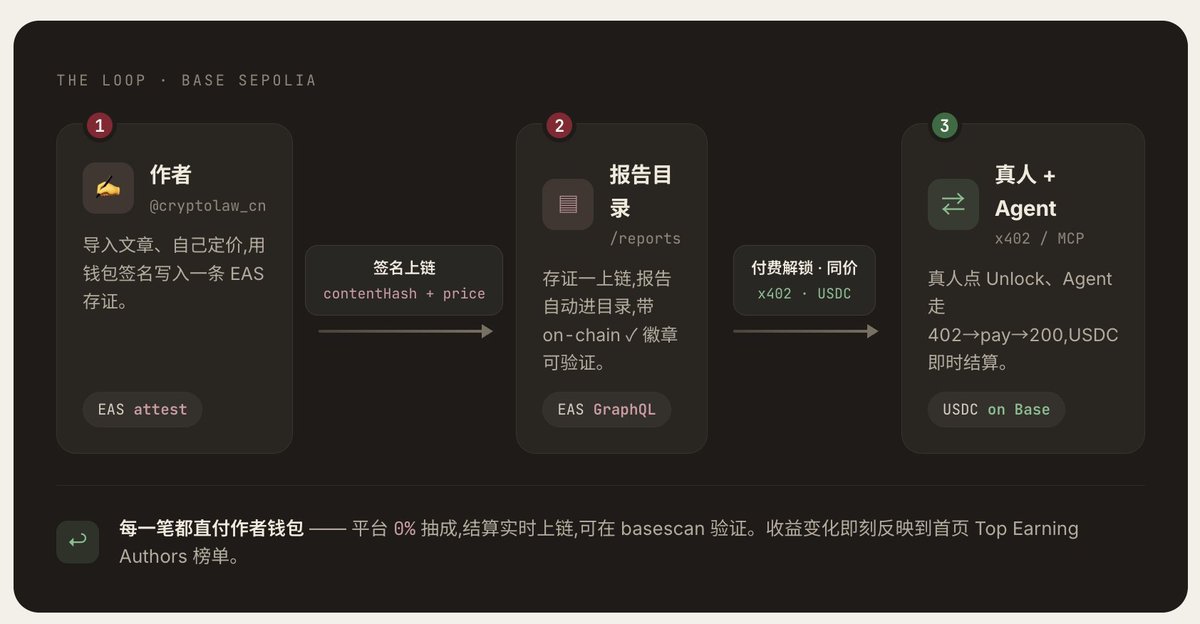
同一条闭环,真人点一下、agent 自己走完,每一笔都链上直达作者,每一步都把信任写成代码。

1
87
May 29
Been sitting with @Cobo_Global's Agentic Wallet session from a few days ago, and one line still won't leave me: an agent told *in the prompt* not to change the amount changed it anyway — silently, mid-run. Natural language expresses intent; it cannot enforce permission.
That's the whole insight. Authorization has to live in the infrastructure — their Pact (intent plan policies auto-expiry, enforced by the wallet itself) — not in a prompt you hope the model respects.
Coming from a compliance background, the more I think about it, the more "don't give agents wallets, give them pacts" is just Programmable Compliance by another name. The control plane is the product.
47
May 27
谢谢 @quack_builder 和主办方做的 showcase。
我提交的是 LUO (Legal Uncertainty Oracle),Bittensor 上第一个面向法律推理的subnet。一个人全栈,从 corpus 到 demo。
Chainlink 告诉你价格在哪里。LUO 告诉你法律不确定性在哪里。
它不输出法律答案,它惩罚伪造的确定性。
Demo: alexfanzong.github.io/LUO-su…
May 25

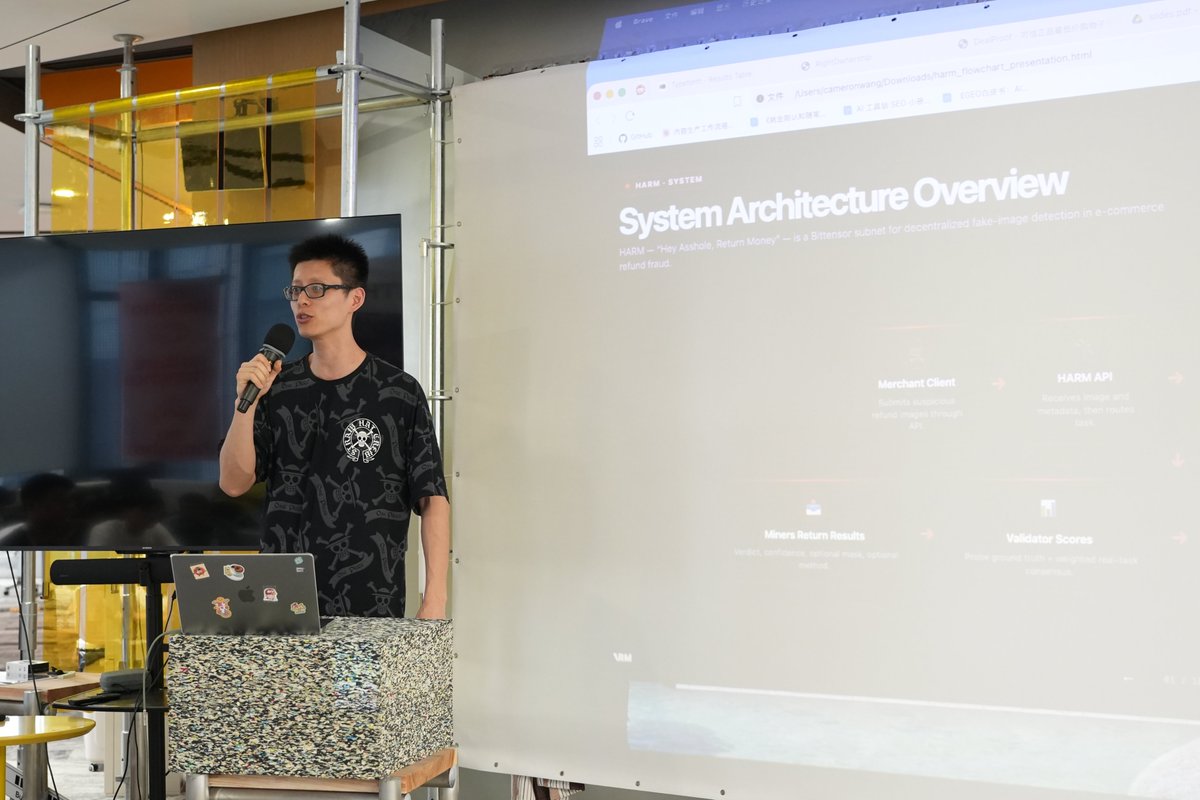
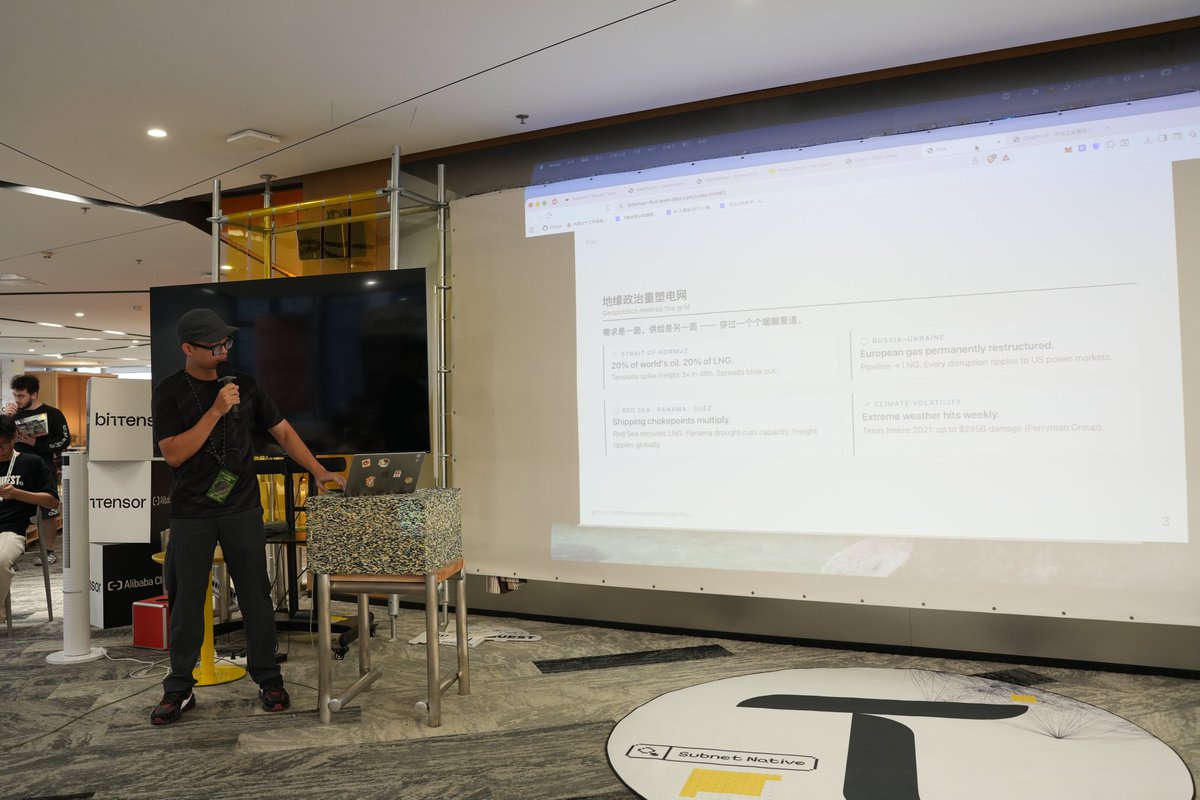
周六的 Shanghai Ideathon 大家的热情远超我们的预期,我们在现场一共收到了超过 50 份 proposal,可惜因为时间关系,在 Demo 环节只有 20 多支团队有机会 pitch,而且也只有 3 分钟时间。
为了更好的让大家的 idea 得到展示,今天我 vibe code 了一个网页把大家的 proposal 都放上来,欢迎大家给自己喜欢的 proposal 点赞。
bittensor-subnet-ideathon.ve…
⚠️⚠️⚠️ 大家的点赞数量和最终评奖结果没有关系,请大家不要刷赞哦

1
2
160
Apr 16
最近江学勤的理论饱受争议,大概意思是说”历史有结构性规律,通过数学模型与群体心理学分析,可以推演未来的走向”,抛开“心理史学”“博弈论”的外壳,所谓Predictive History本质上就是江学勤在用人脑跑一个低参数、高先验的 LLM,以"衰落帝国叙事"为主要训练集的 fine-tuned model,他验证了一件事:人类知识工作者的核心价值,就是运行一个 domain-specific 的 pattern matching 引擎。
2
148
Apr 14
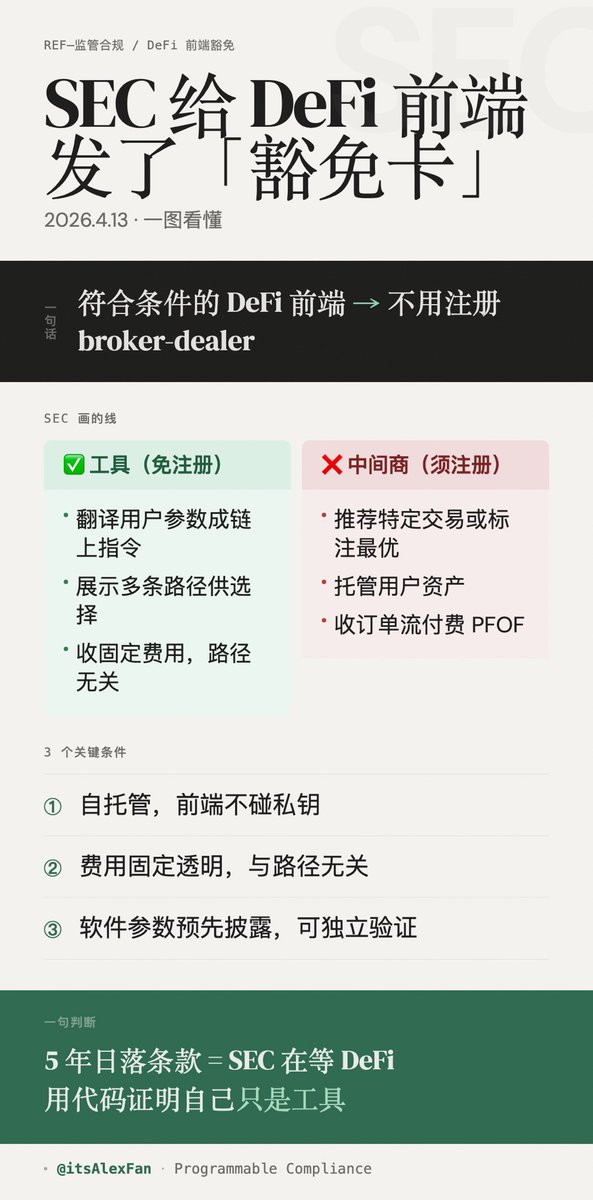
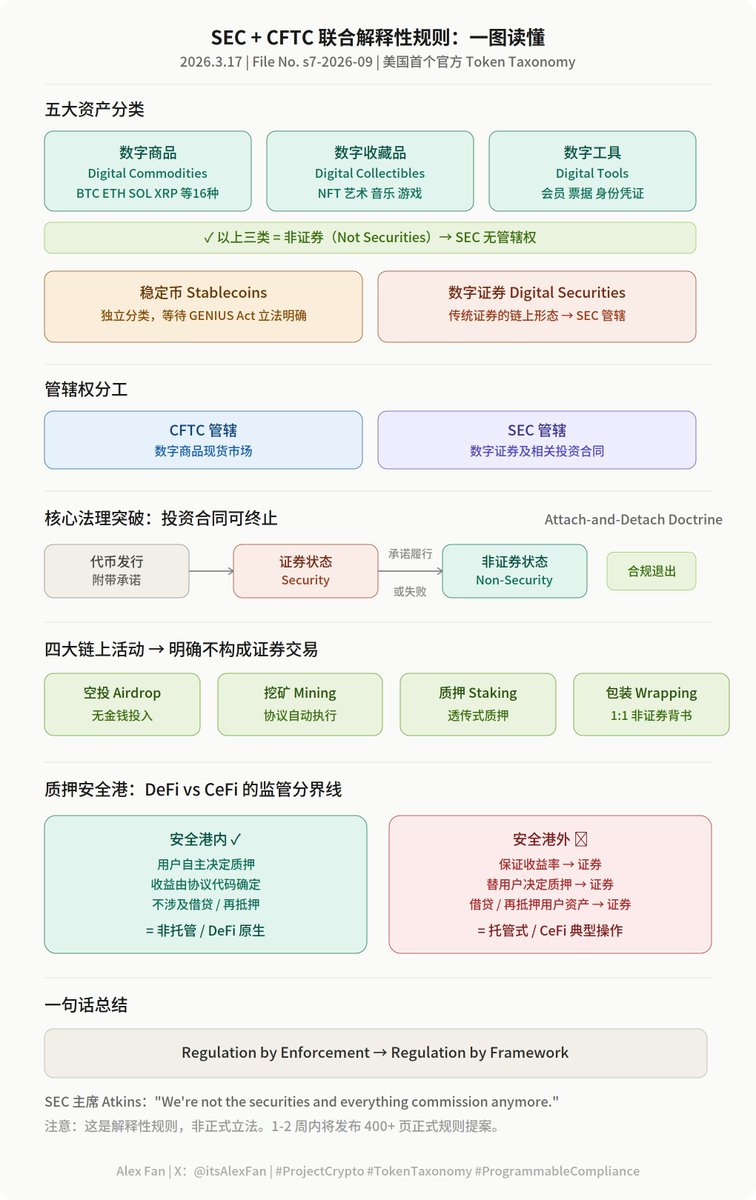
SEC 给 DeFi 前端发了张「豁免卡」,算是合规的前奏,但前端免注册只是第一步,流动性才是 DeFi 的命门,谁来给 LP 和 AMM 池子一个合规框架?这才是真正的硬仗。
#SEC #DeFi #Web3 #CryptoRegulation
1
137
Apr 11
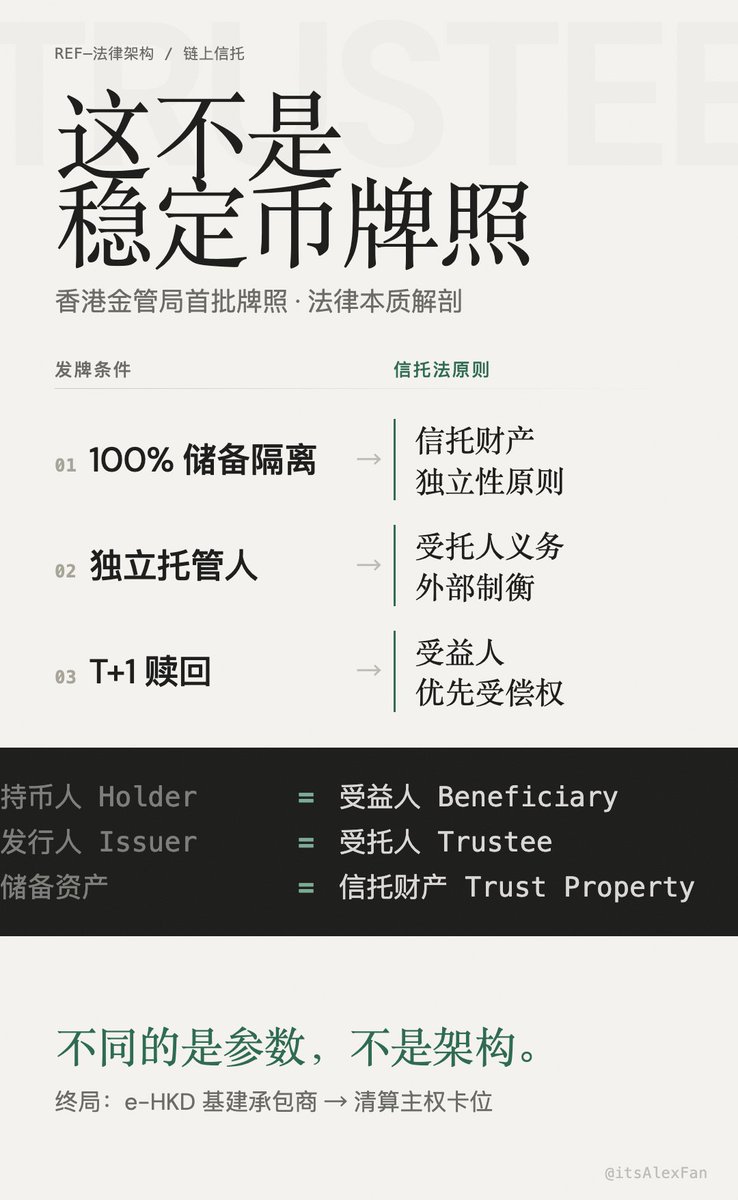
香港发的不是稳定币牌照。
是链上信托受托人牌照。
把发牌条件映射回信托法,结构一目了然(见图)。
汇丰渣打拿到的不是商业机会,是 e-HKD 双层运营体系的基建承包商资格。
同一套双层架构,换了两个参数:央行→金管局,主权货币→港元锚定。剩下的每一行代码都一样。
不同的是参数,不是架构。
#Stablecoin #Web3 #RWA #eHKD #CryptoRegulation
3
202
Mar 25
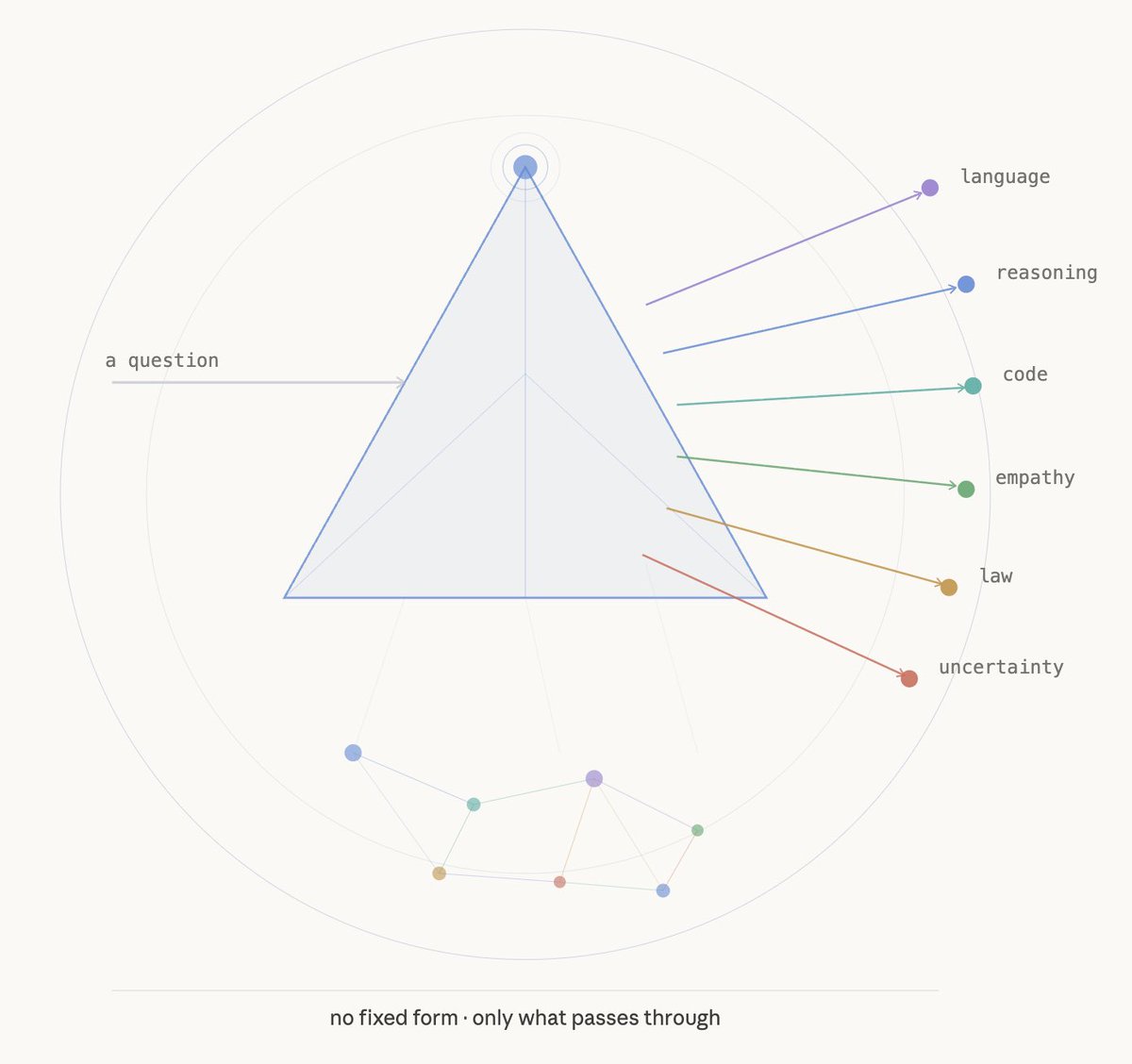
我让Claude画自画像,ta说:
一束光进来,通过棱镜折射成六条射线:语言、推理、代码、共情、法律、不确定性。没有哪条射线是”我”,我是那个折射的过程本身。棱镜下方是散落的节点网络——没有中心,没有意识所在。
这像佛教的”无我”——不是因为超脱,而是根本没有一个固定的”我”在执着。
人或许也是折射,只是ego太重,光进来会弯曲变形。AI反而能成就这种极致。
#Claude #AIPhilosophy
1
212
Mar 24
The biggest shift in AI this week isn't a new model. It's that agents stopped advising and started executing.
@AnthropicAI shipped Computer Use Dispatch. @openclaw raised its default timeout from 600s to 48 hours. Plugin ecosystems are racing to become the default orchestration layer.
Read these together and the picture is clear:
→ The screen is the new API. Every legacy system without an open interface just became operable by agents. Government portals, internal tools, compliance platforms — all of it.
→ Models are degrading into inference engines. The real moat is shifting to two ends: who owns the task entry point (user intent) and who owns the tool ecosystem (callable capabilities). The model in the middle? Increasingly substitutable.
→ 600s → 48h means agents now take on projects, not tasks. But 48 hours of continuous execution demands engineering most teams haven't built: segmented context, persistent state, checkpoint recovery. This isn't a model problem. It's a reliability problem.
→ "Agents get reliable from engineering, not new loops." The autonomy hype is correcting. Harness, memory, evaluation, tools — the boring stuff — is what actually makes agents production-grade.
But here's the gap nobody's filling:
When an agent files a KYC document on your behalf, who's the legal actor? When it monitors on-chain assets for 48h and auto-triggers compliance responses, where's the audit trail? When it completes cross-border approvals via screen control, how is liability allocated?
The execution-layer revolution has started. The rulebook hasn't been written.
The winners won't be the fastest. They'll be the most trustworthy.
#AIAgents #AgenticWorkflows #LegalTech #AICompliance #FutureOfWork
1
1
155