
IxDF (Interaction Design Foundation) is Global Leader in Online Design Education. We were founded in 2002 and have over 1.2 million enrollments.
Joined March 2009
- Tweets 21,016
- Following 1,985
- Followers 63,375
- Likes 12,155
9,830 Photos and videos
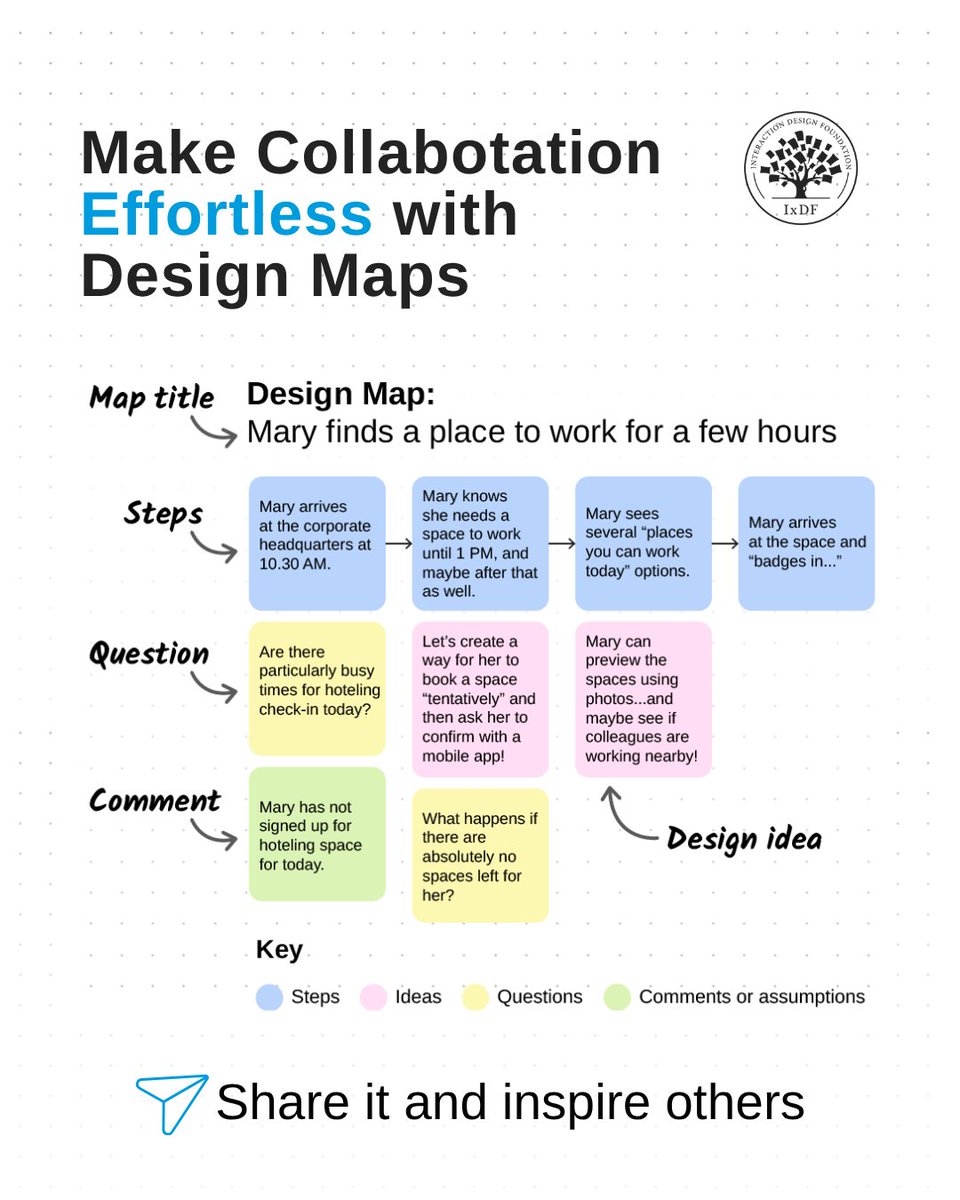




Design maps bring together the who, what, and how of your design process, helping your team stay aligned from idea to implementation. ✨
They connect user needs, ideas, questions, and design decisions into one shared view that teams can understand and build from.
When everyone works from the same understanding, collaboration becomes smoother, decisions become clearer, and implementation becomes easier.
📌 Design maps help teams stay aligned, so important decisions and user needs remain visible throughout the design process.
Learn how to create design maps in our course, Object-Oriented UI Design: Build Interfaces Users Love 👇
🔗 ixdf.org/courses/object-orie…
#UXDesign #Collaboration #DesignProcess
2
119
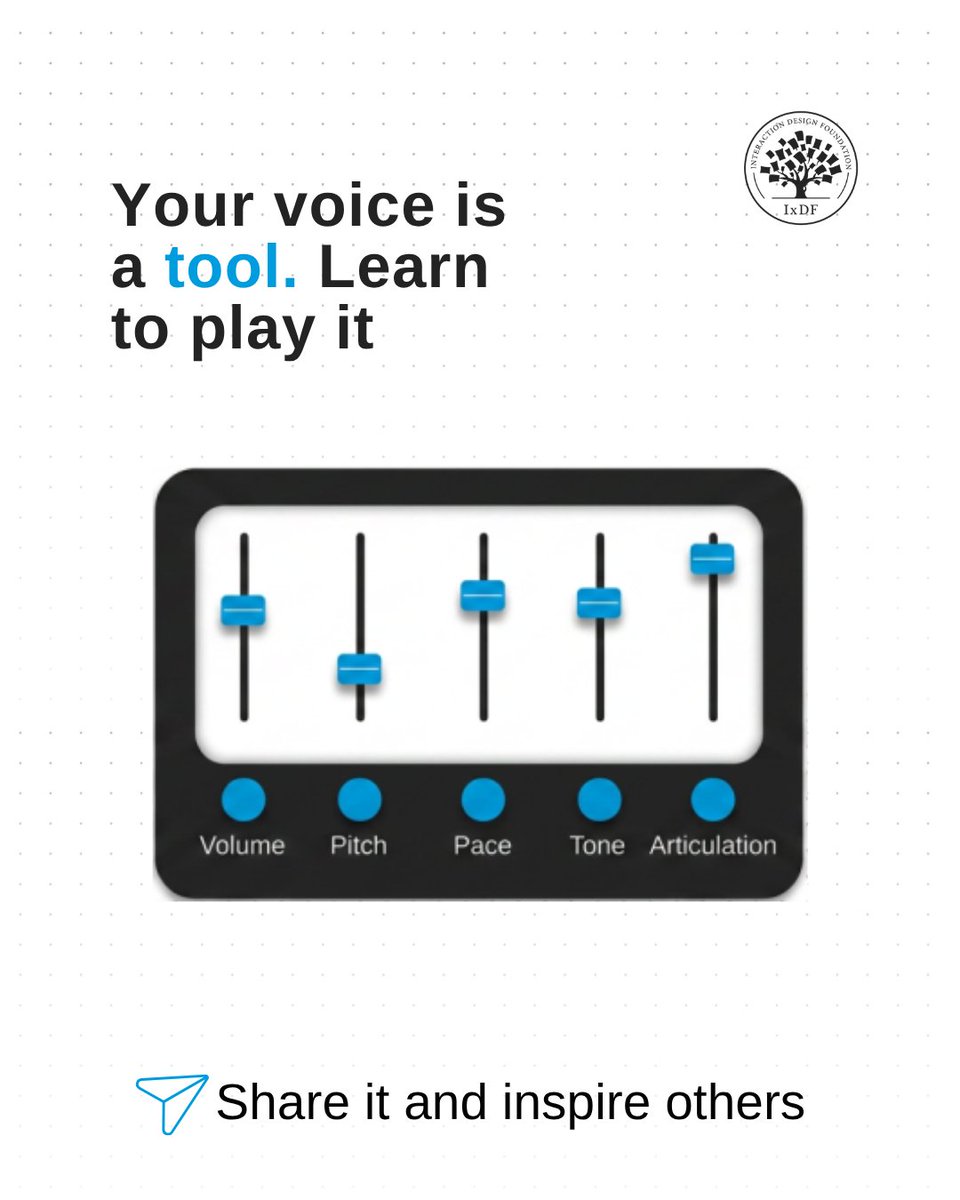
It’s not what you said, it’s how you said it. 🎙️
Ever wondered why the same idea can land differently depending on who says it?
The same message can sound confident, inspiring, uncertain, or forgettable depending on how you express it.
Volume, pitch, pace, tone, and articulation all influence how others perceive what you're saying.
And sometimes, the most powerful communication tool isn't speaking at all.
A well-timed pause gives your audience time to process, creates anticipation, and helps your key points stand out.
Great communication isn't just about sharing information. It's about helping people hear, understand, and remember it.
Learn practical techniques to present with more confidence, clarity, and impact in our course, Present Like a Pro: Communication Skills to Fast-Track Your Career👇
🔗 ixdf.org/courses/present-lik…
#CommunicationSkills #PublicSpeaking #PresentationSkills
2
4
243
You can’t get the exact same output twice.
And sometimes that output is wrong.
So how do you design products that users can trust?
Join Paavan Buddhdev, Product Designer at Granola, and learn how to design AI-powered products that people can understand, trust, and use with confidence.
You’ll discover how to:
✅ Apply practical design patterns that help users trust AI-powered features
✅ Explore practical approaches to prototyping AI features in Figma and code
✅ Learn how to adapt your designs to what AI can and can’t reliably do
✅ Get a behind-the-scenes look at how a real AI feature goes from Figma file to shipped product
Trust is one of the most important principles when designing AI-powered products. Learn how to design for it.
🗓️ Wednesday, June 17, 2026
⏰ 18:00 UTC
📹 Can't attend live? You'll get the recording to watch anytime.
👉 Save your spot now: ixdf.org/master-classes/how-…
#UXDesign #ProductDesign #DesignThinking
313
How often do we blame people for problems that good design could have prevented? 🤔
When something goes wrong, it's easy to call it "human error." But as Alan Dix explains, people have limits, constraints, and predictable ways of interacting with the world. Good design takes those realities into account.
👥 People are at the heart of every design decision. The more we understand how they think, behave, and interact with technology, the better equipped we are to create experiences that fit naturally into their lives.
That's one of the foundations of Human-Computer Interaction and great UX design.
Learn from Alan Dix, pioneer of Human-Computer Interaction, in our course Human-Computer Interaction: The Foundations of UX Design 👇
ixdf.org/courses/human-compu…
#UXDesign #HumanComputerInteraction #UserExperience
3
2
247
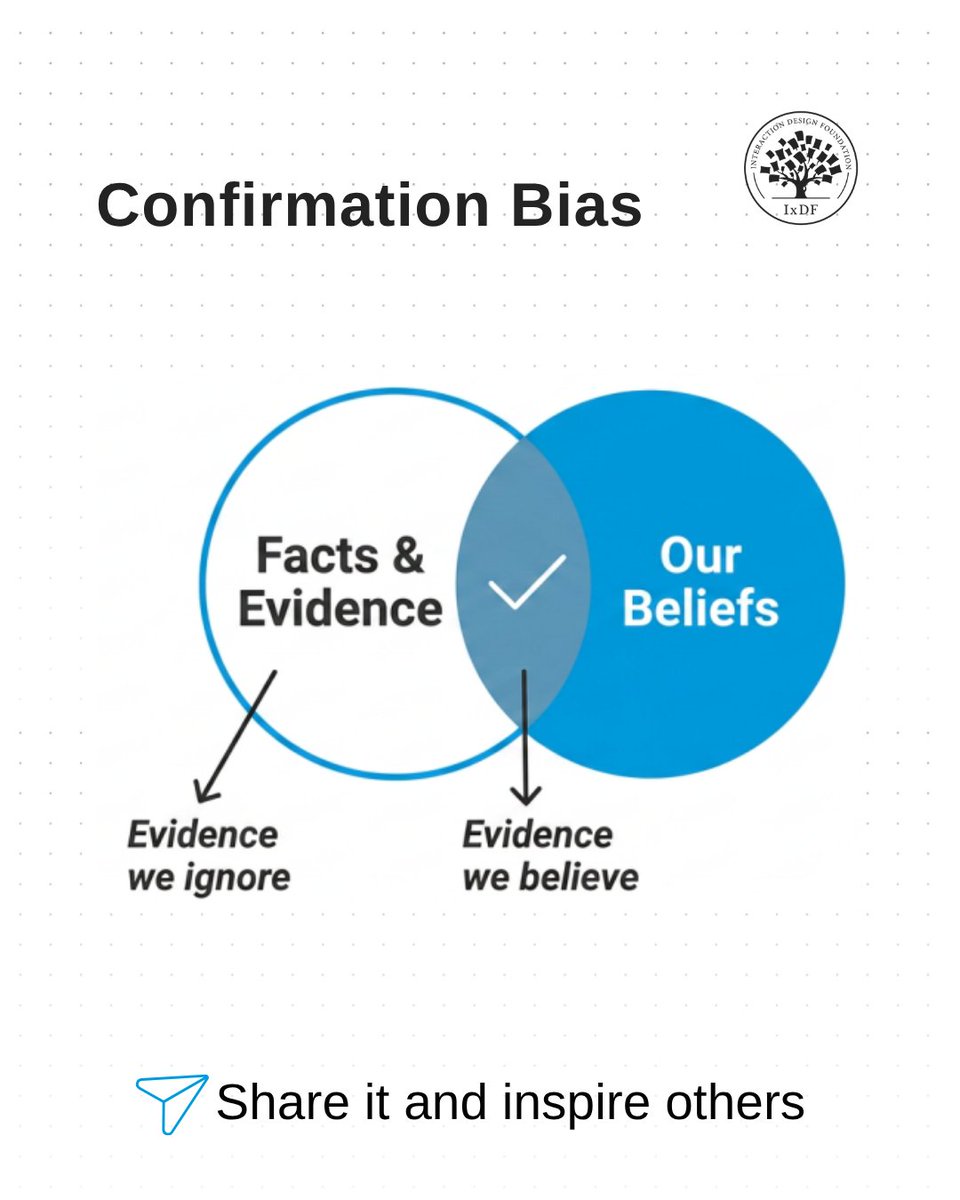
How often do you challenge your own conclusions? 🧠
Confirmation bias can make us focus on evidence that supports what we already believe while overlooking information that points us in a different direction.
It can influence how we interpret research, analyze feedback, and make design decisions. Often, this happens without us realizing it.
Good design requires curiosity, not certainty.
While we can't eliminate bias completely, we can recognize it, question our assumptions, and stay open to what the evidence is telling us.
📚 Explore the full definition of Confirmation Bias in our Open-Source Design Library:
ixdf.org/literature/topics/c…
#UXDesign #UserResearch #DesignThinking
1
5
229
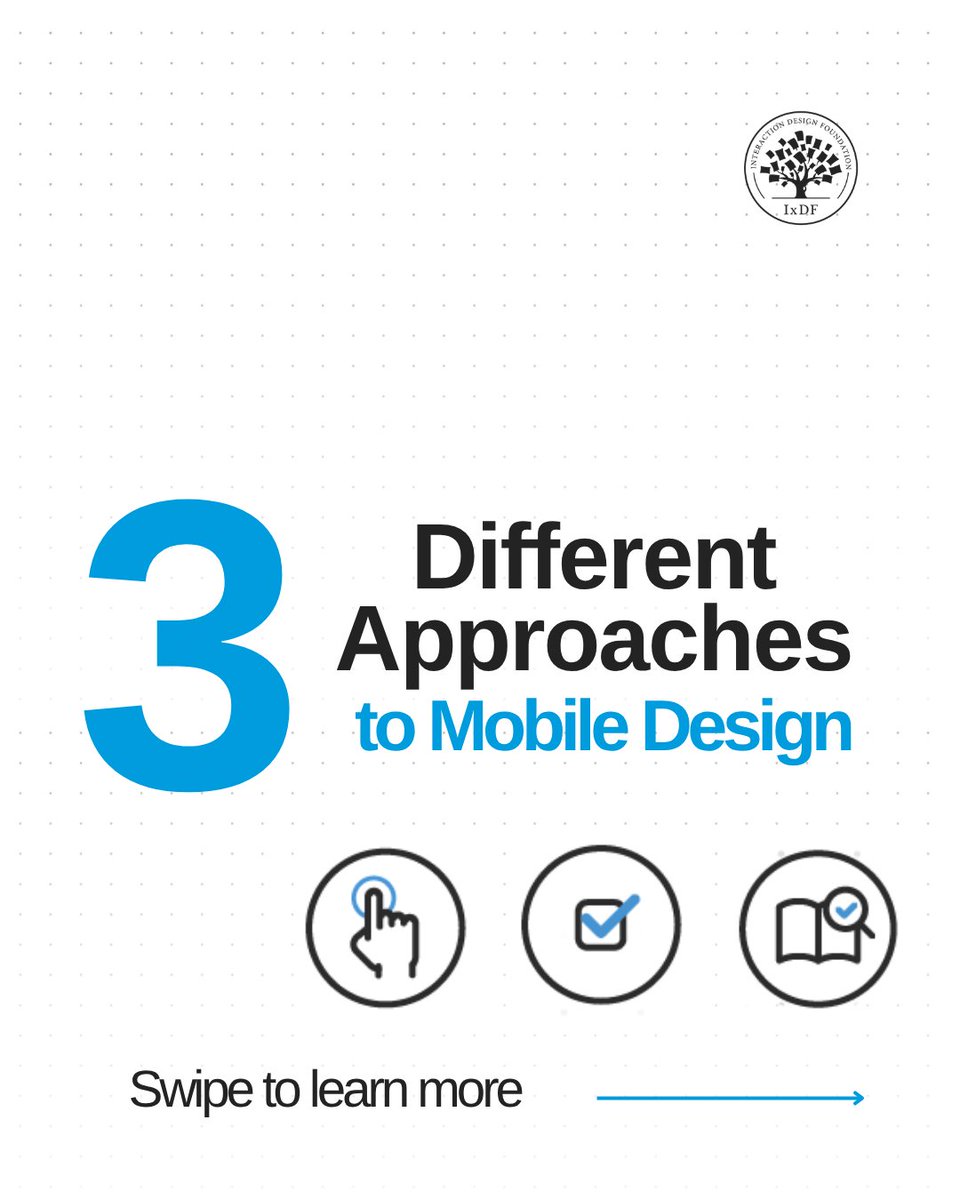
Designing for mobile isn't always about starting in the same place. 📱
Different products, user needs, and goals require different approaches.
Sometimes it makes sense to start with the mobile experience itself and design for small screens and real-world contexts first.
Sometimes the priority is helping users complete a key task as quickly and easily as possible.
And sometimes the content should shape the experience from the beginning because it's the main reason people visit your product.
👉 Swipe through to explore three approaches to mobile design: Mobile-First, Task-First, and Content-First.
Understanding when to use each approach can help you create mobile experiences that better support your users' needs and goals.
Learn more in our course, Mobile UX Strategy: How to Build Successful Products 👇
🔗 ixdf.org/courses/mobile-ux-s…
#MobileUX #UXDesign #UserExperience
2
4
385
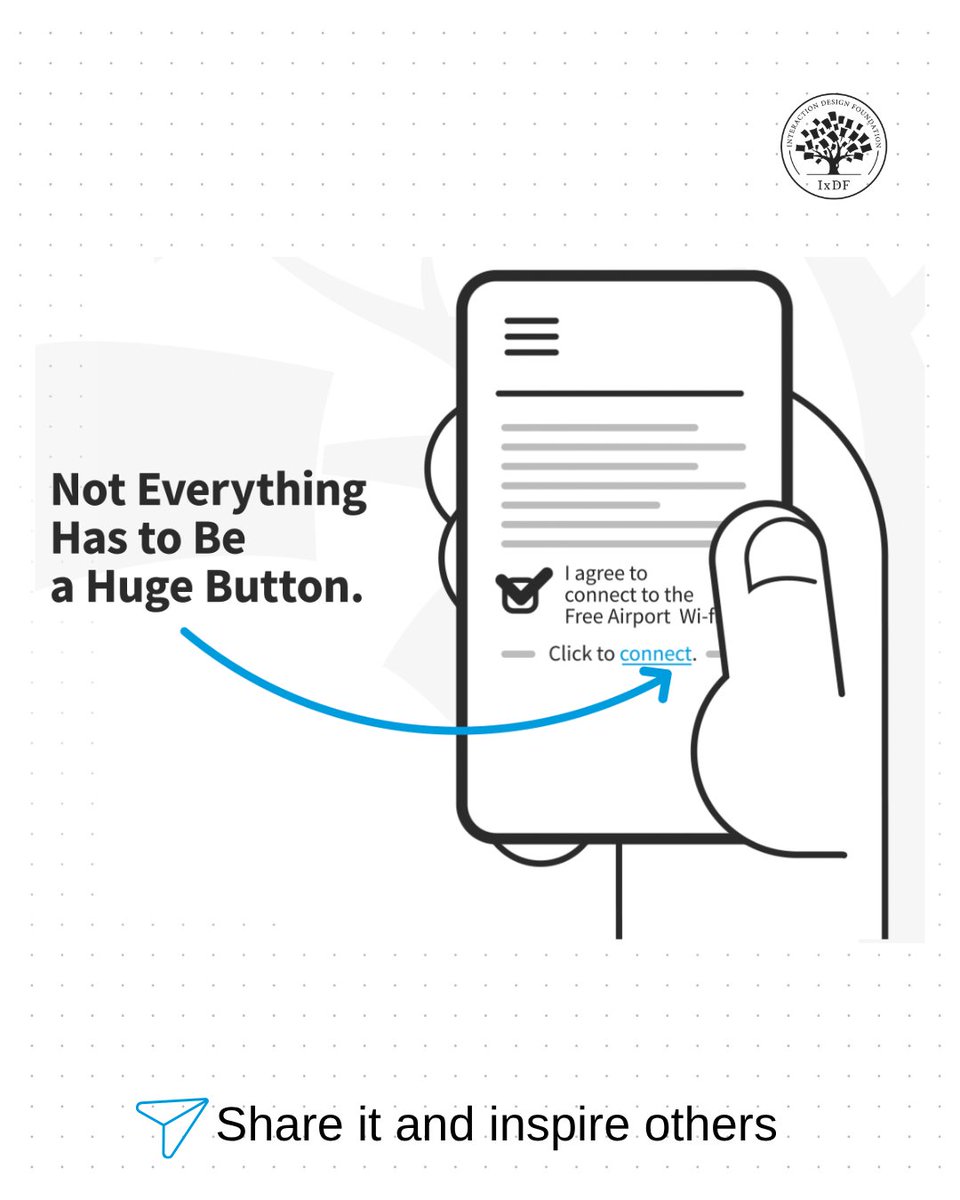
Not everything has to be a huge button.
Good mobile UI isn't about making every element bigger or louder. It's about helping people understand what matters most by giving each element the right amount of attention.
The size, placement, and prominence of an element should reflect its role in the experience. When everything competes for attention, nothing stands out.
Learn how to create clear, intuitive mobile interfaces in our Mobile UI Design course.
Learn more 👇
ixdf.org/courses/mobile-ui-d…
#UIDesign #UIUXDesign #UserInterface #UXDesign
2
281
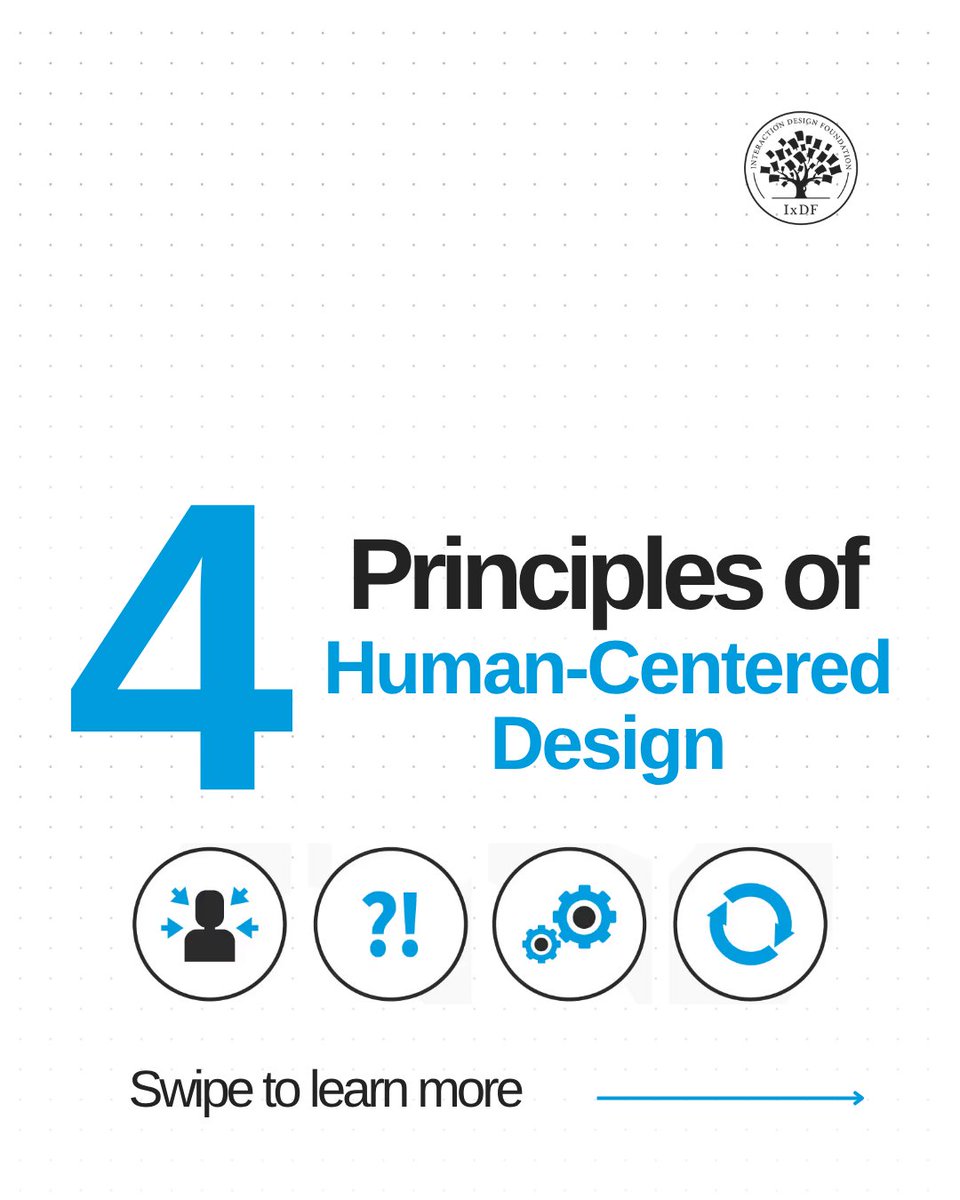
Human-Centered Design sounds simple.
👥 Put people first. Understand their needs. Solve the right problems.
But many products, services, and experiences fail because teams focus on symptoms instead of root causes, jump to solutions too quickly, or overlook the broader systems their designs are part of.
Human-Centered Design helps us step back and ask better questions before we start designing.
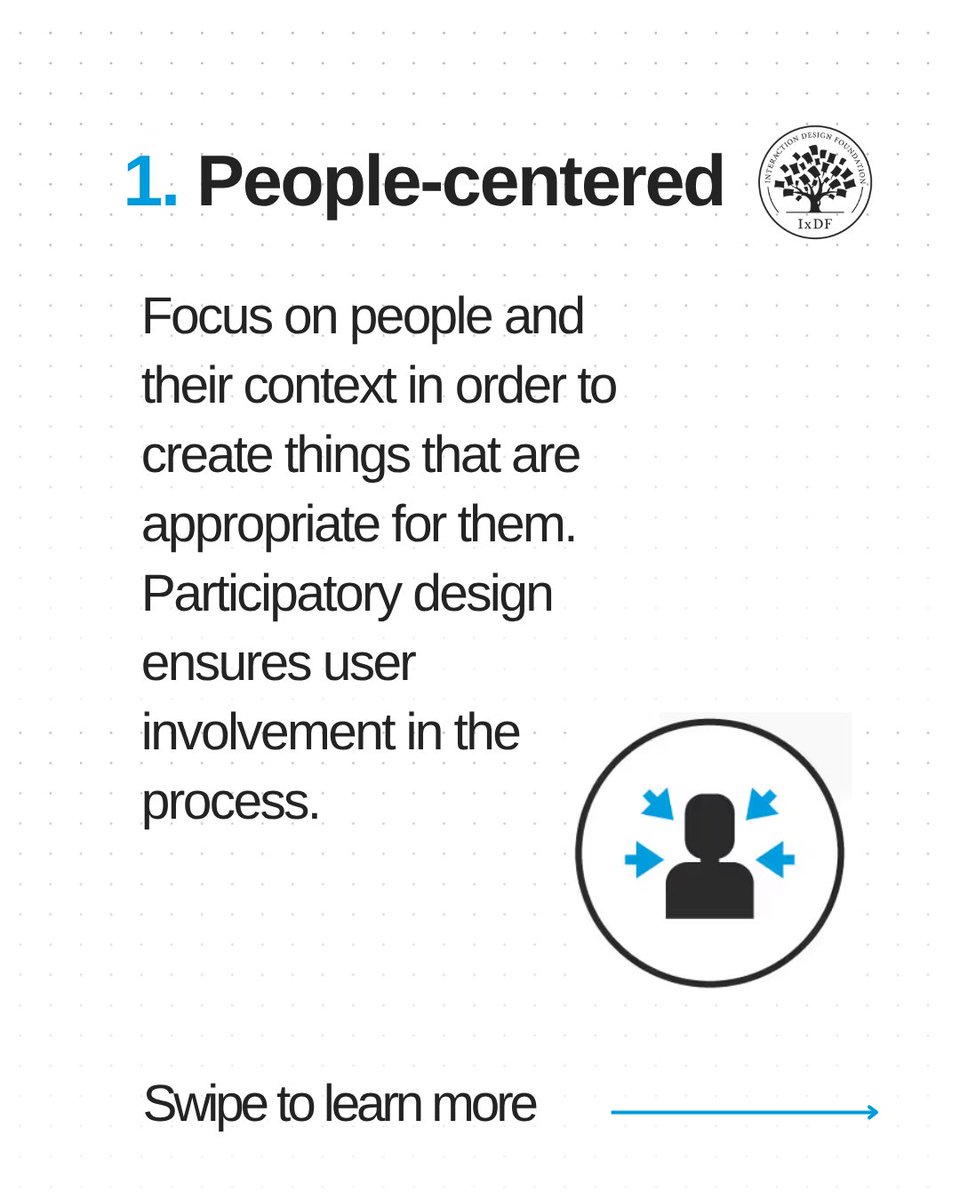
👉 Swipe through to discover four principles that can help you create solutions that better meet the needs of the people you're designing for.
Don Norman helped popularize the term "user experience" and encouraged designers to focus on people, not just users. He believed designers should understand the people they design for and the context in which they interact with products and services.
📚 Explore the full Human-Centered Design topic definition in our open-access UX Design library:
🔗 ixdf.org/literature/topics/h…
#UserCenteredDesign #UXDesign #DesignThinking #LearnUX
2
5
421
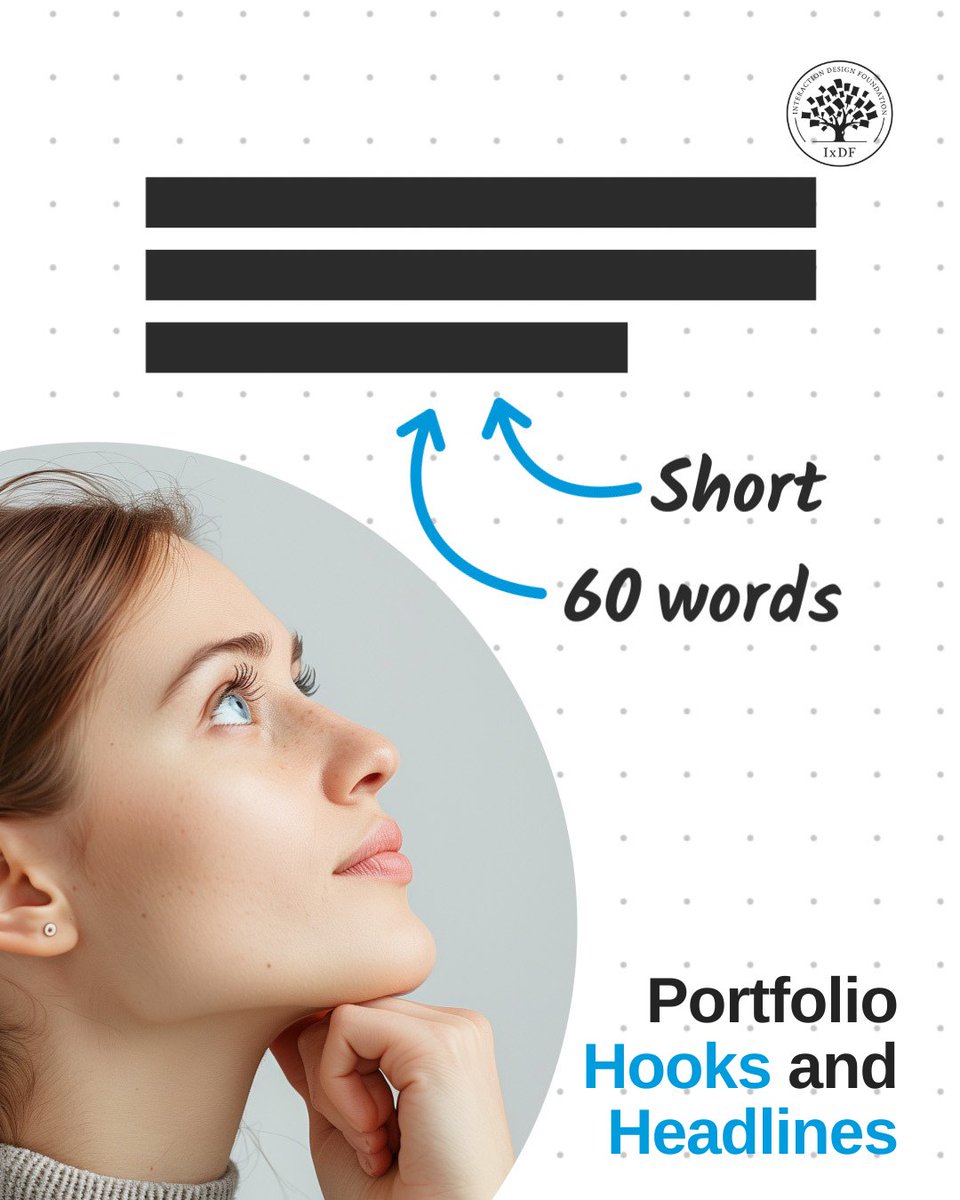
Can you describe who you are as a designer in 60 words or less? 👀
Your headline is often one of the first things hiring managers see when they land on your portfolio.
A strong hook does more than grab attention. It helps hiring managers quickly understand who you are, what you specialize in, and the value you can bring to their team.
Whether you highlight your skills, industry experience, achievements, or the impact of your work, your headline should make it easy for hiring managers to understand what sets you apart from other candidates.
In our course, Build a Standout UX/UI Portfolio: Land Your Dream Job, you'll learn how to craft hooks and headlines that capture attention, communicate your strengths, and make a strong first impression.
Learn more 👇
🔗 ixdf.org/courses/build-a-sta…
#UXDesign #UXCareer #DesignPortfolio #CareerGrowth
2
380
You open the font menu.
Scroll. Scroll. Scroll.
You hope something jumps out.
In the end, you choose your usual: Roboto. Again.
Sound familiar?
Typography is everywhere in your UI, but many designers still struggle to explain why one typeface works better than another.
Join Oliver Schöndorfer, Typography Expert, Speaker, and UX Designer, and learn how to make typographic decisions that improve usability, accessibility, and visual clarity.
You'll discover how to:
✅ Choose typefaces that work in UI
✅ Build hierarchy, rhythm, and flow through typography
✅ Balance personality with usability
✅ Explain and defend your decisions during design reviews
You'll also follow a live redesign of a banking app and see how typography shapes usability, navigation, clarity, and the overall user experience.
🗓️ Thursday, June 11, 2026
⏰ 16:00 UTC
📹 Can't attend live? You'll get the recording to watch anytime.
👉 Save your spot now:
ixdf.org/master-classes/own-…
#UIDesign #UserExperience #Masterclass #DesignThinking
2
343
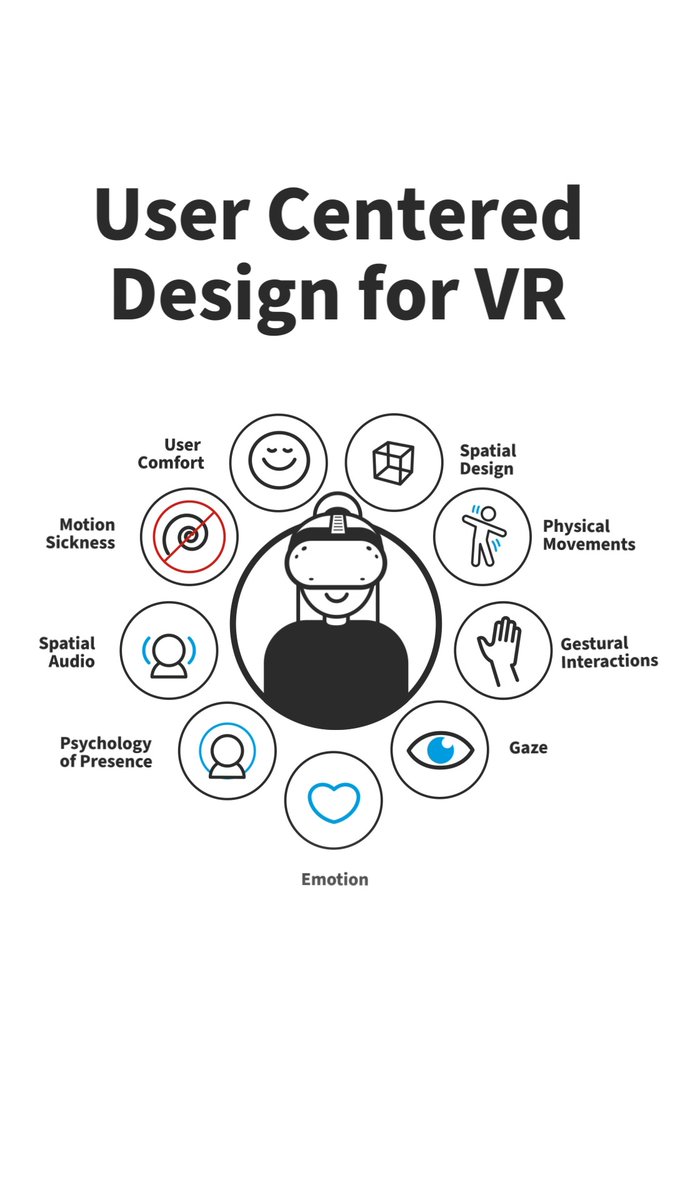
In VR, users don't just look at interfaces; they live in them. 👓✨
Designing for spatial environments means moving beyond flat screens. When users can manipulate objects, navigate spaces, and interact naturally, traditional UX considerations change.
That's why user-centered design is so important in VR.
To create seamless immersive experiences, designers need to consider several key aspects of user-centered design in VR:
🧠 User comfort and motion sickness
📐 Spatial design and spatial audio
👁️ Gaze, movement, and natural interactions
💙 Emotion and the psychology of presence
When we place users at the center of the virtual world, we move beyond creating technically impressive spaces and design experiences that feel meaningful, intuitive, and engaging.
👉 Explore key UX design principles and discover how they shape the immersive world of VR in our UX Design for Virtual Reality course:
ixdf.org/courses/ux-design-f…
#UXUI #VRDesign #VirtualReality #UXDesign #ImmersiveDesign
3
362
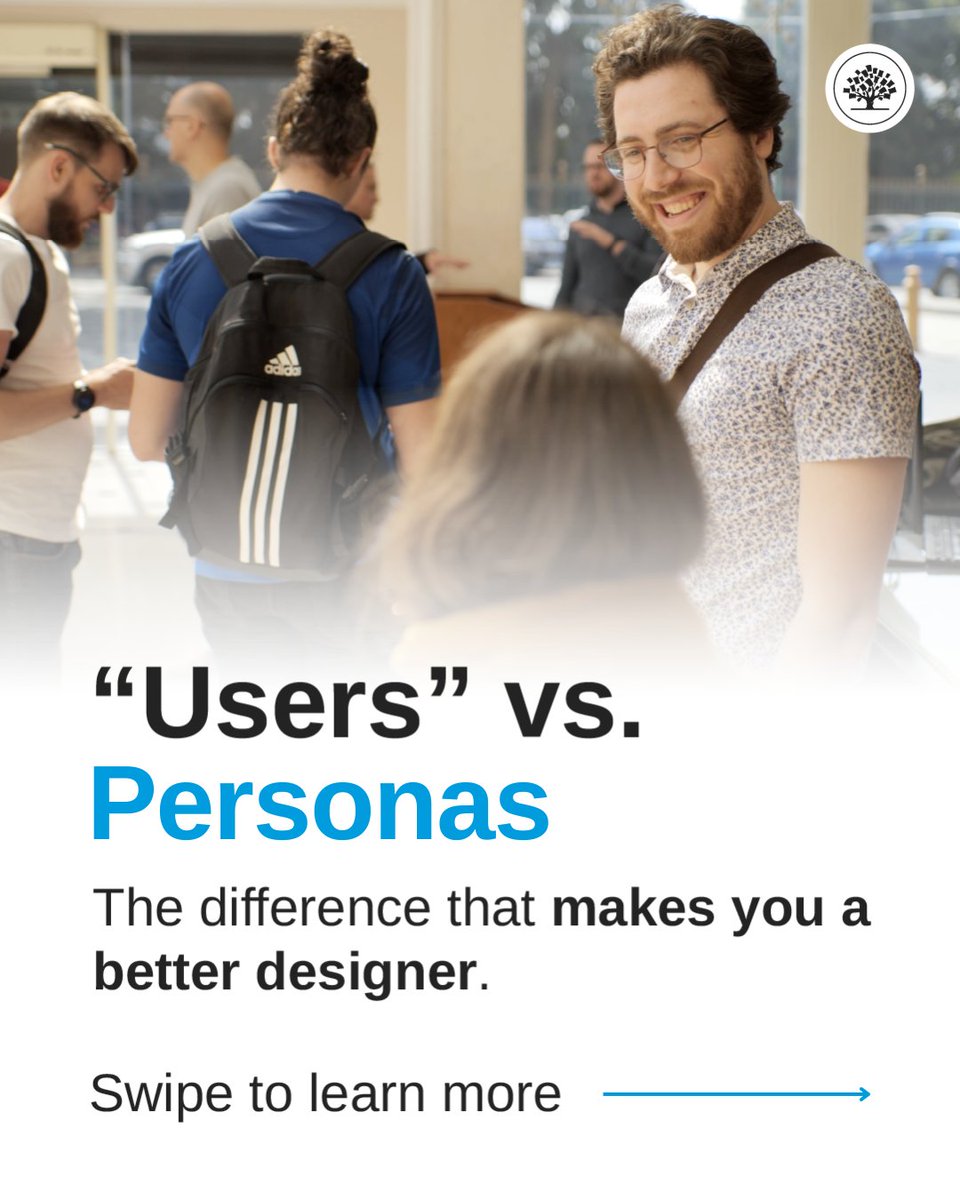
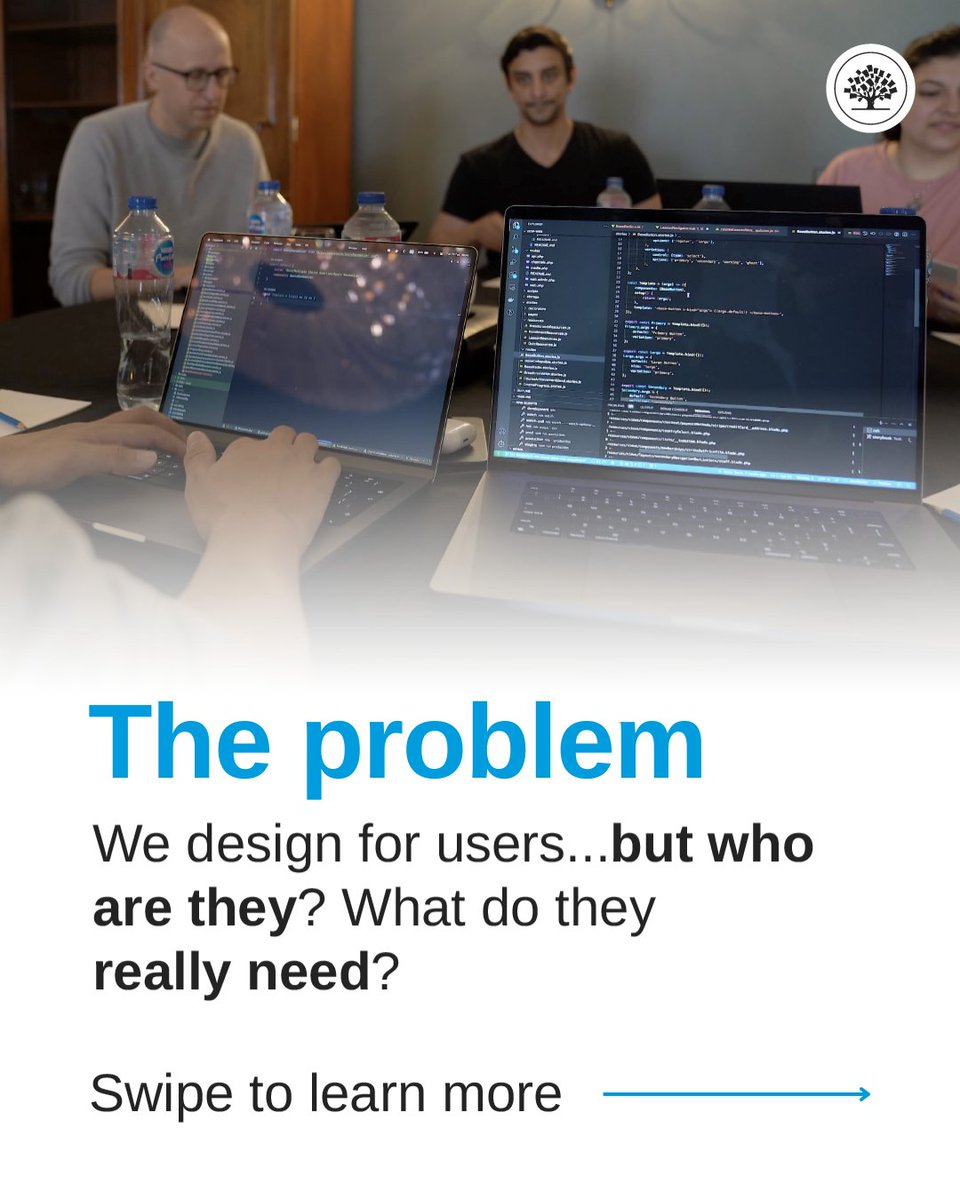
Did you know there's a difference between designing for "users" and designing for personas? 👀
It may seem like a small distinction, but it can completely change how teams make design decisions.
When we think about "users," it's easy to make assumptions about what people need, want, or expect.
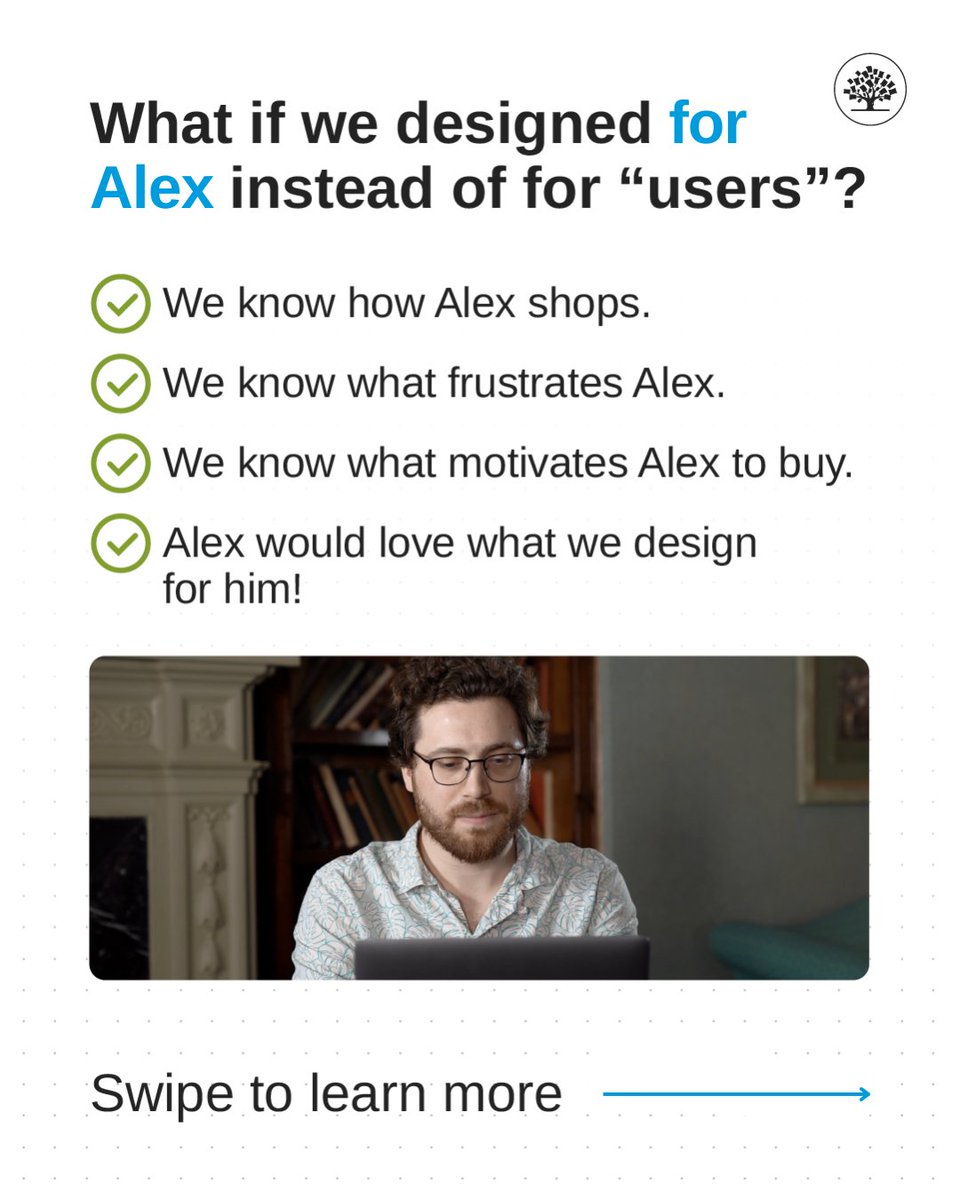
Personas help us see the people behind the product more clearly.
They are research-based representations of users with shared goals, behaviors, motivations, and challenges, helping teams better understand who they're designing for.
And because people naturally empathize more easily with individuals than with groups, personas can help teams see users as real people rather than an abstract group.
Personas help teams:
✅ Build empathy for the people they serve
✅ Reduce assumptions about user needs and behaviors
✅ Prioritize the features that matter most
✅ Recognize that different users have different needs and abilities
Great design starts with understanding who you're designing for.
👉 Learn more in our Personas and User Research: Design Products and Services People Need and Want course: ixdf.org/courses/personas-us…
#UXDesign #UserPersonas #UserResearch
1
1
1
301
Over 60% of people decide whether they like a new product based on color. 🎨
That's why choosing a color palette isn't just about making a design look good.
It's about shaping perceptions, communicating personality, and creating the right emotional response.
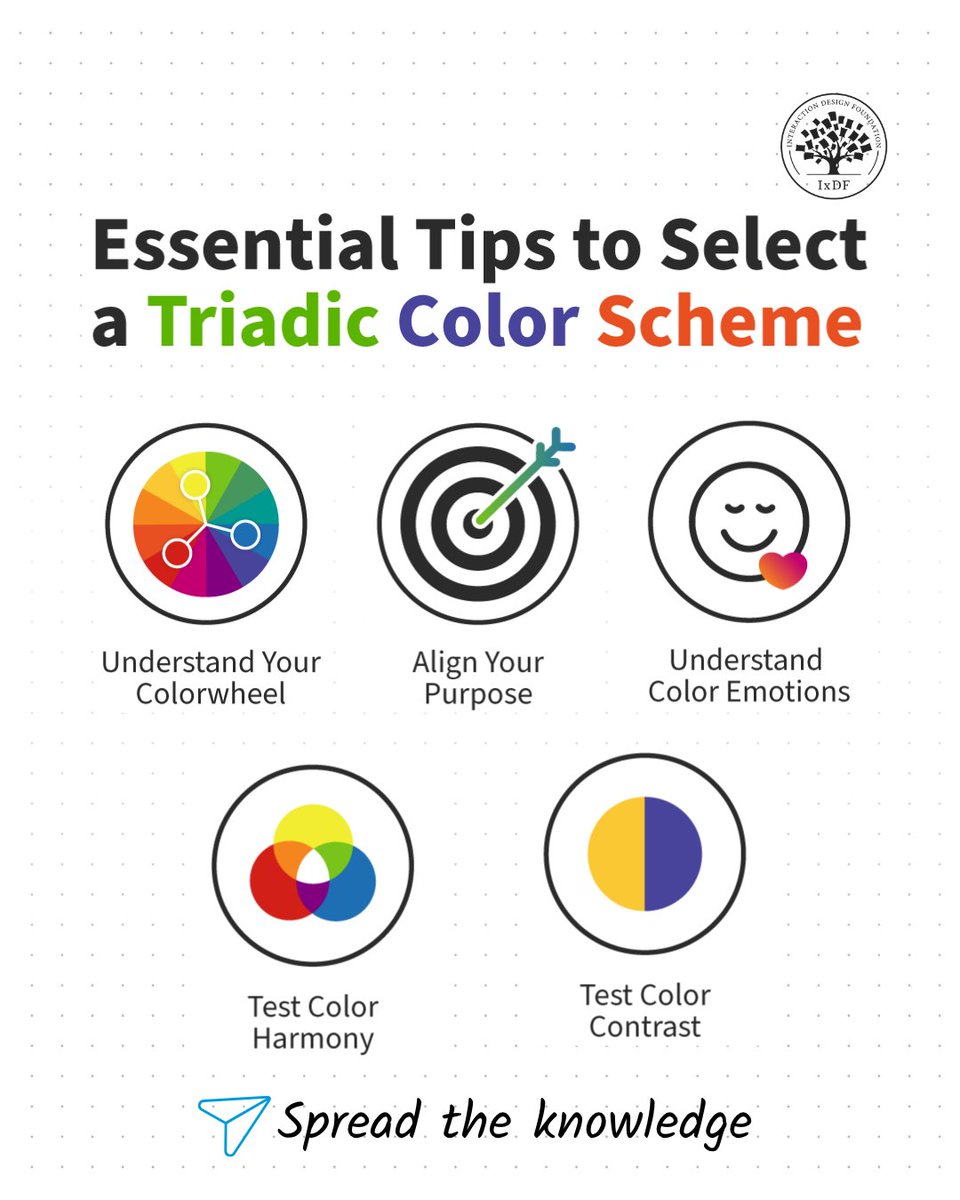
One way designers create balanced, vibrant color palettes is through a triadic color scheme: three colors positioned evenly around the color wheel.
Before choosing a triadic color scheme, make sure you:
🎨 Understand the color wheel
🎯 Align your colors with your project's purpose
💙 Consider the emotions colors evoke
⚖️ Test color harmony
♿ Test color contrast and accessibility
The right color combination can help your design stand out while creating a cohesive and memorable experience.
Learn how to build effective triadic color palettes and apply them to your own designs.
👉 Read the full article: ixdf.org/literature/article/…
#triadiccolorscheme #visualdesign #designtips
1
3
406
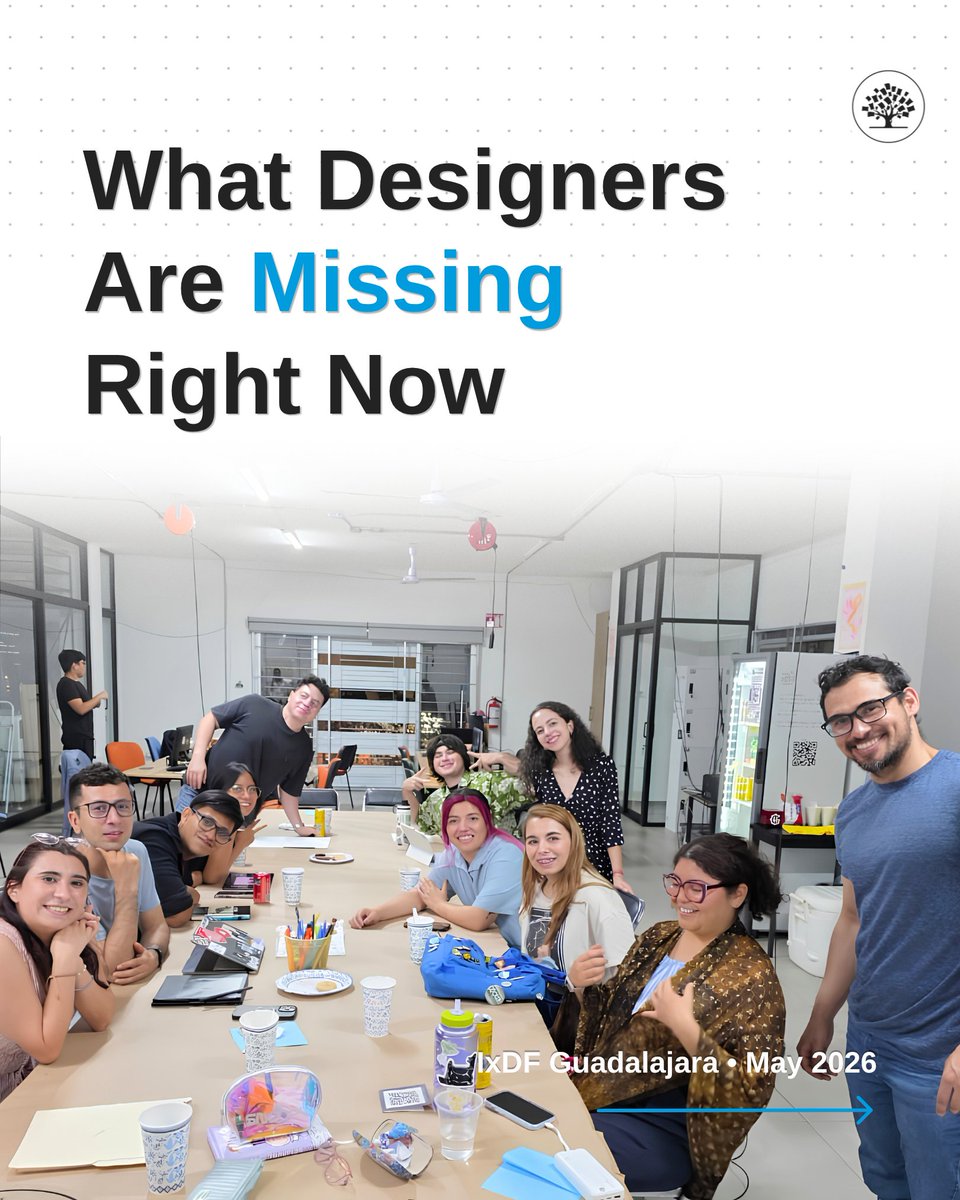
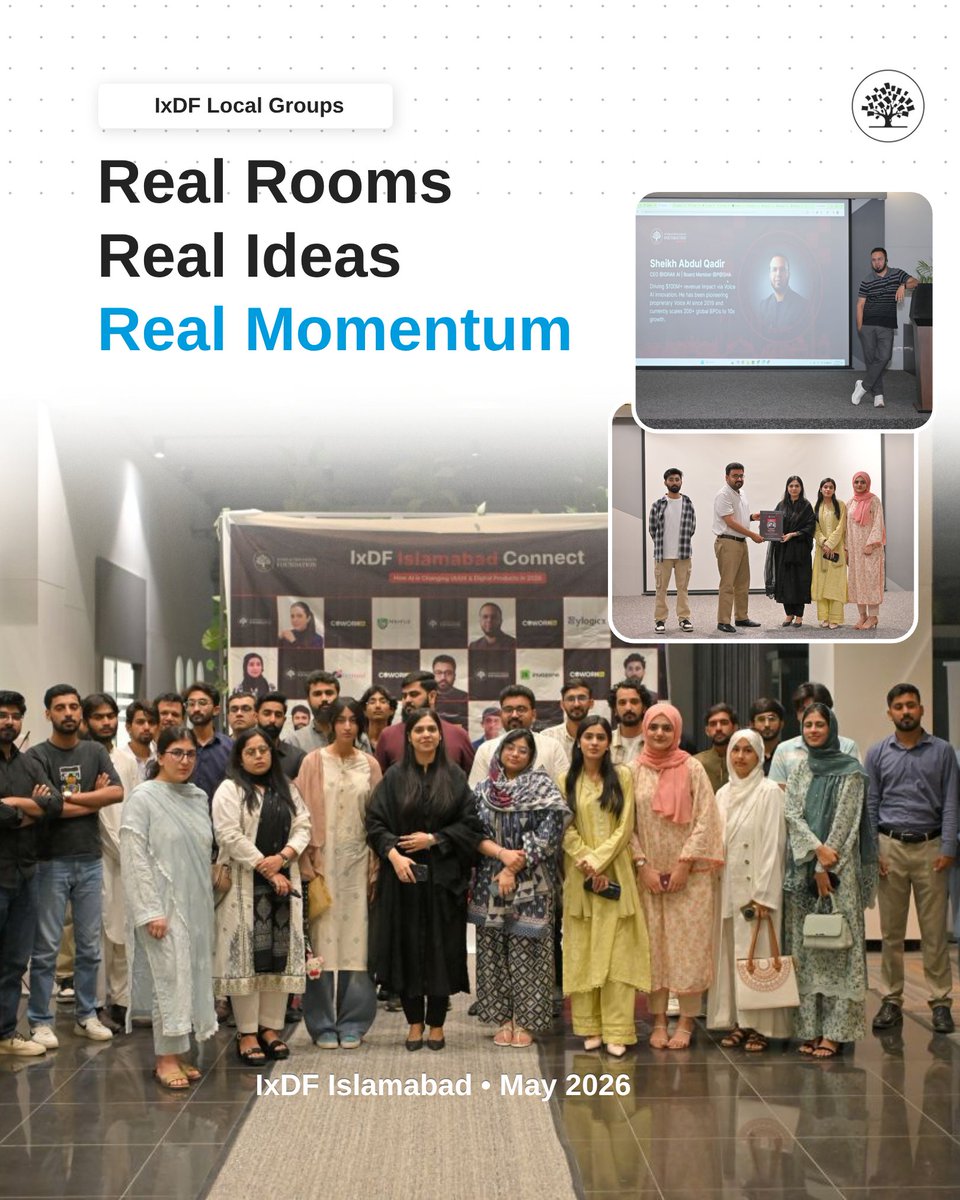
This past May, IxDF Local Groups brought creatives together in cities around the world for talks, workshops, discussions, networking, learning, and community.
Take a look to see what many designers are missing and what our local groups give them.
IxDF Meetups are free to attend. Find your local design community → ixdf.org/meetups
#IxDF #IxDF Local Groups #DesignCommunity #UXDesign #CreativeCommunity #DesignMeetup


4
450
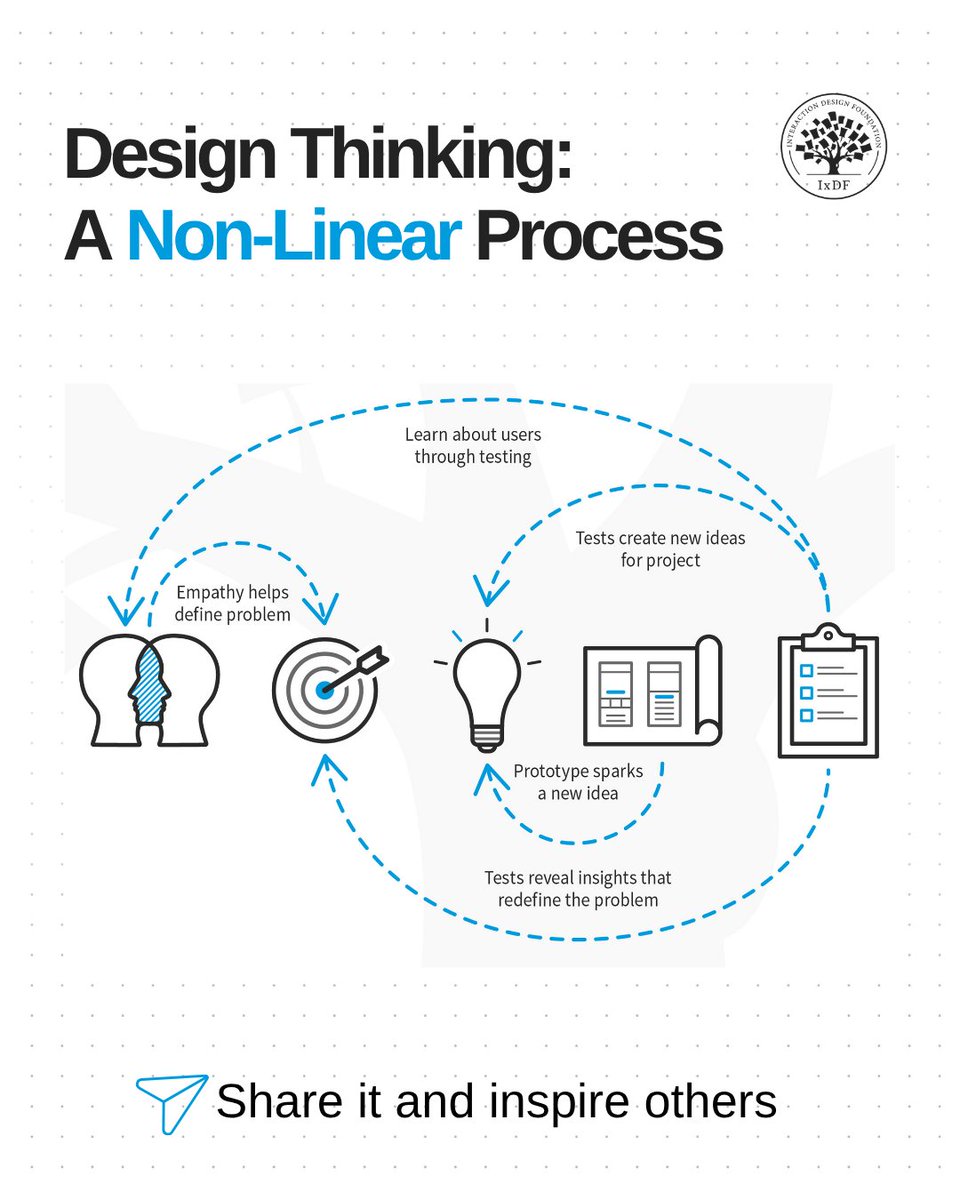
One of the things that makes Design Thinking so powerful? It's a non-linear process. 💡
What you learn during testing can change your prototype.
A prototype can spark new ideas.
New ideas can redefine the problem you're trying to solve.
That's why the most effective teams move back and forth between stages as new insights emerge.
Design Thinking helps you:
✅ Understand people more deeply through empathy
✅ Challenge assumptions before jumping to solutions
✅ Explore multiple ideas before committing to one
✅ Learn through prototyping and testing
✅ Continuously refine your understanding of the problem
The goal isn't to move through five steps once. It's to keep learning until you find the solution that best serves your users. 💙
👉 Learn more in our Design Thinking: The Ultimate Guide course
ixdf.org/courses/design-thin…
#UXUI #DesignThinking #Empathy
2
4
428
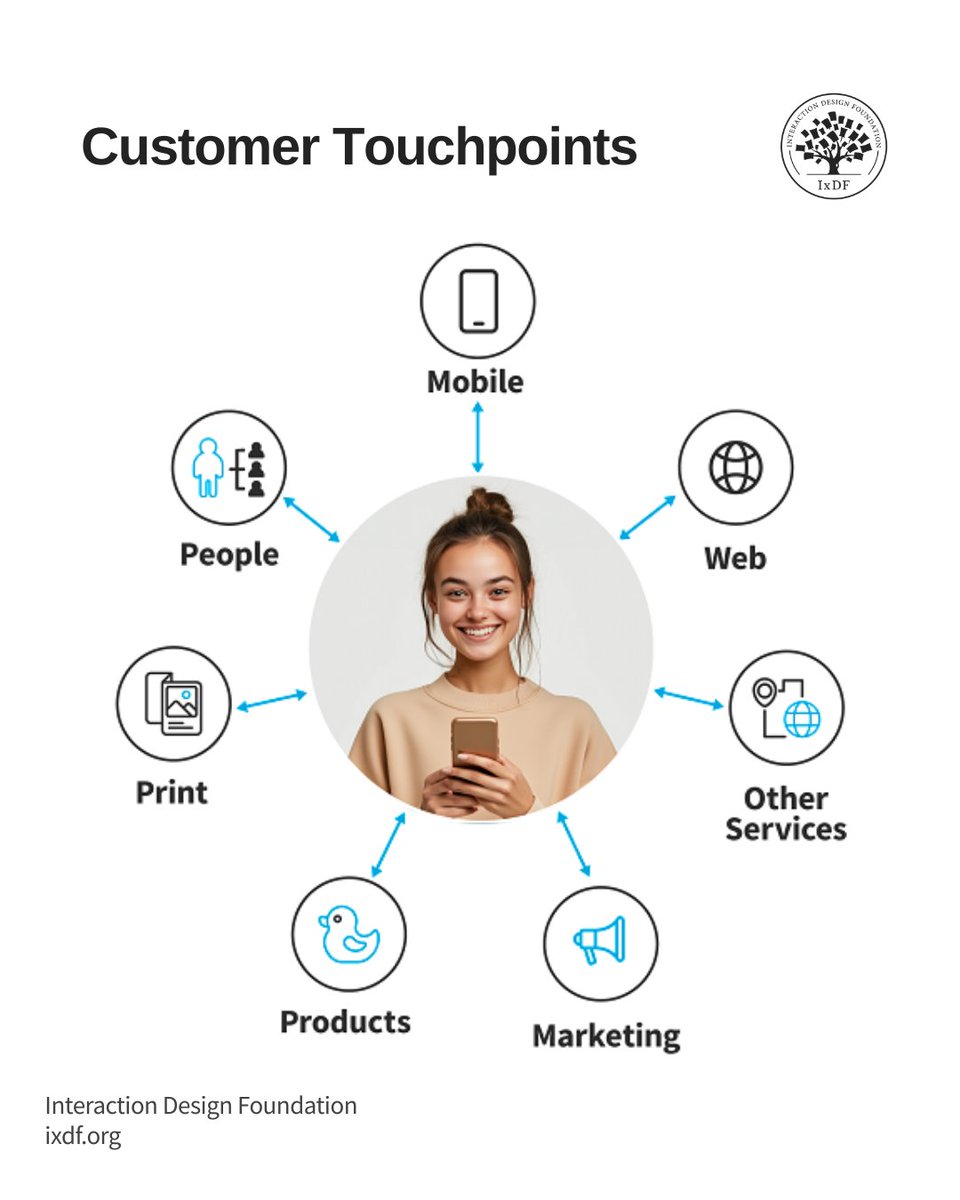
Your next customer interaction might last only a few seconds. ⏱️
A search result. A map. A product page. A checkout button.
These brief interactions may seem small, but they often happen when people want to know something, go somewhere, do something, or buy something right NOW!
These are called micro-moments: intent-rich moments where users turn to their devices expecting fast, relevant, and helpful experiences.
The brands that understand these moments can meet users exactly where they are, with exactly what they need.
In this topic definition, you'll discover:
✅ What micro-moments are and why they matter
✅ The four types of micro-moments designers should understand
✅ How micro-moments and microinteractions work together
✅ Practical ways to design faster, more seamless experiences
When you understand what users need in the moment, every touchpoint becomes an opportunity to deliver value. 💙
👉 Explore the full topic definition:
ixdf.org/literature/topics/m…
#UXUI #uxdesign #userexperience
1
2
381
“They just click here and buy.”
Every UX designer knows it's rarely that simple 😅
What sounds straightforward in a meeting often becomes much more complex once you start mapping users, touchpoints, decisions, and edge cases.
That’s why journey mapping matters.
It helps teams see the experience from the user's perspective, uncover friction points, and align around what people actually go through.
Because great experiences don't happen by accident.
They happen when you take the time to understand the journey. 💙
#designmemes #UIUX
1
3
305
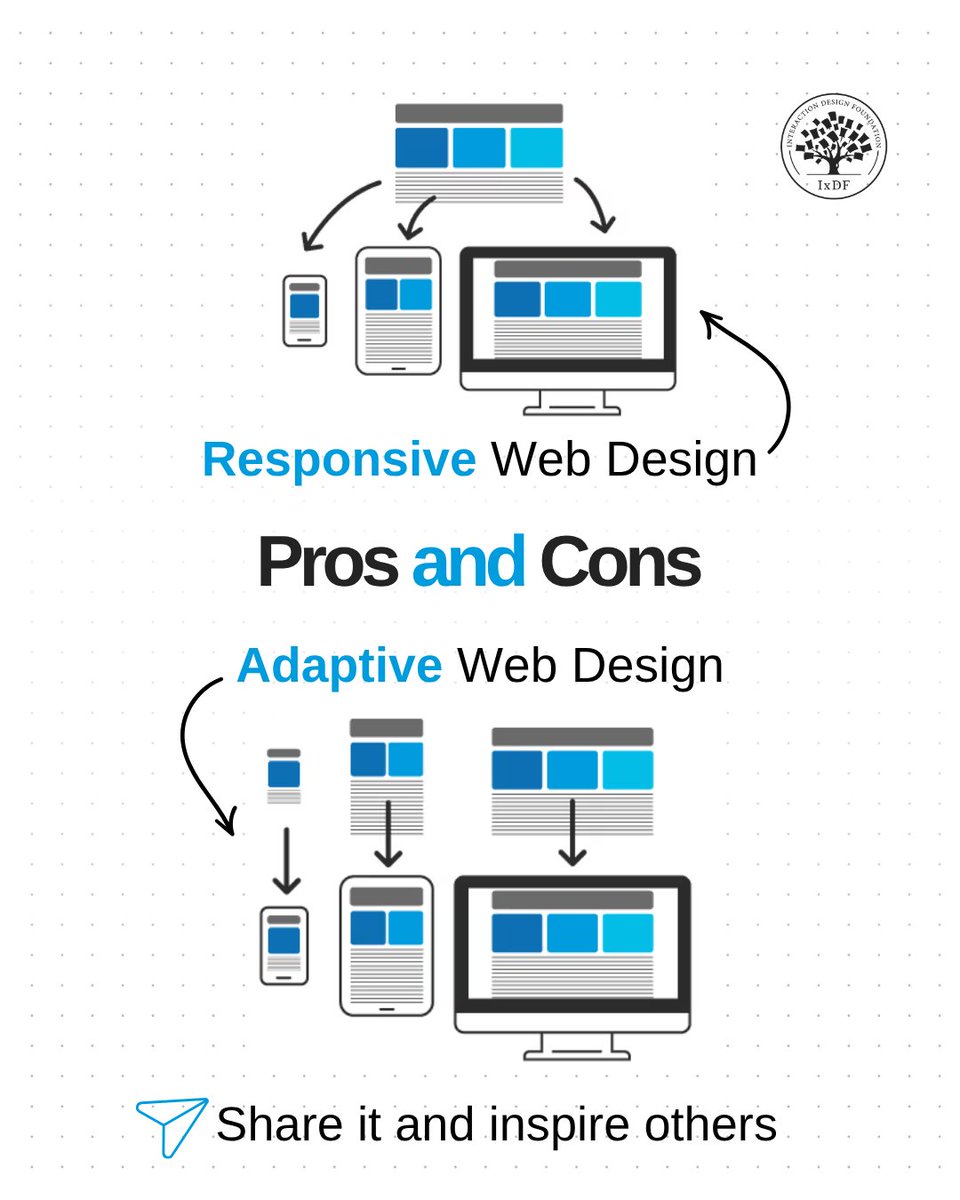
Choosing the right approach can completely change the mobile experience. 👀
👉 Responsive design uses flexible layouts that adapt fluidly to different screen sizes.
👉 Adaptive design uses fixed layouts designed for specific devices or breakpoints.
In mobile UX, choosing between responsive and adaptive design isn’t about picking a “better” option.
It’s about understanding your users, your content, and the contexts in which people use your product.
In this article, you’ll explore:
✅ The pros and cons of responsive vs. adaptive design
✅ Key mobile UX principles for smartphones and tablets
✅ How to design for micro-moments and mobile behaviors
✅ How to validate and improve your mobile experiences
The best mobile experiences feel effortless across every screen, interaction, and moment. 📱
Read the full article here:
🔗 ixdf.org/literature/article/…
#UXUI #UIDesign #WebDesign
1
247
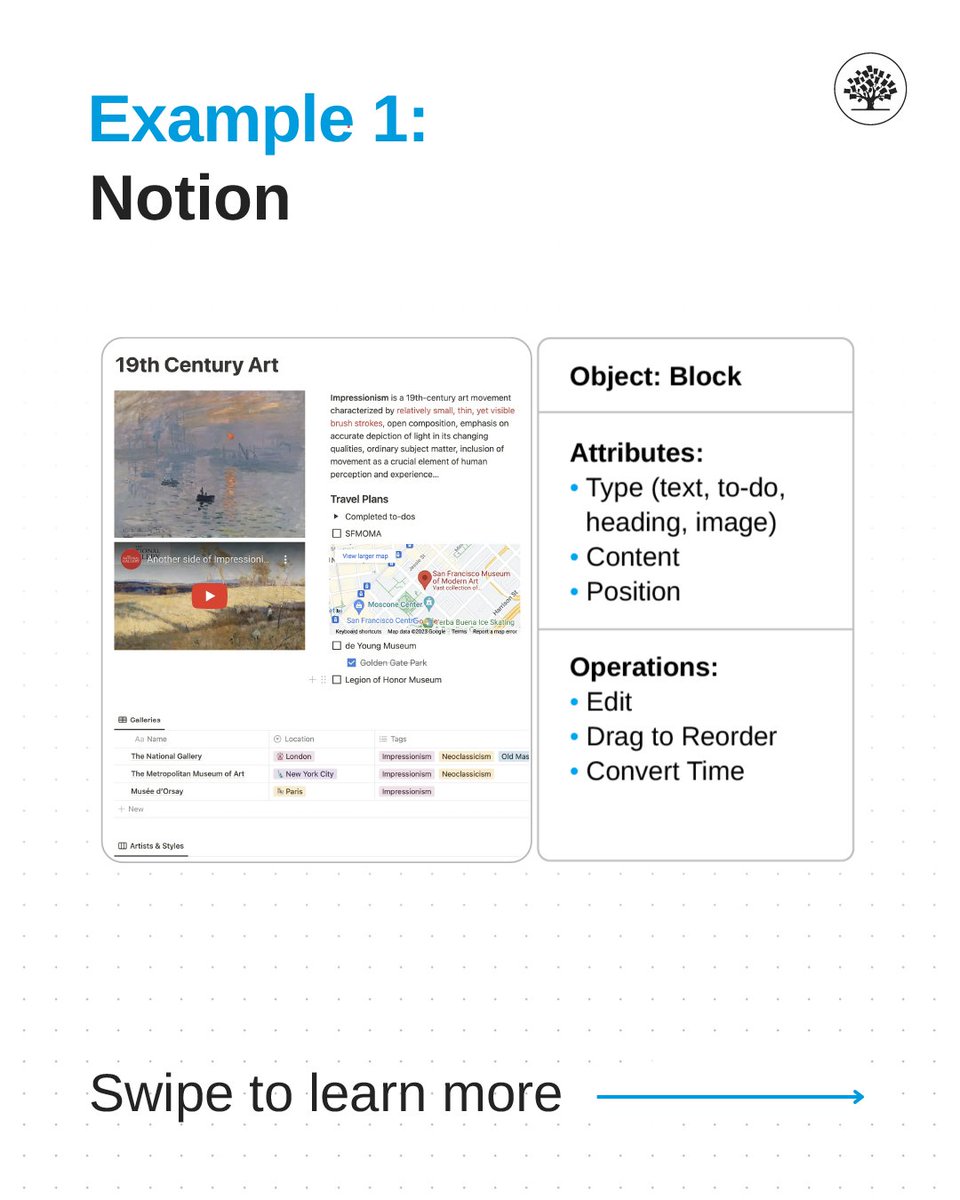
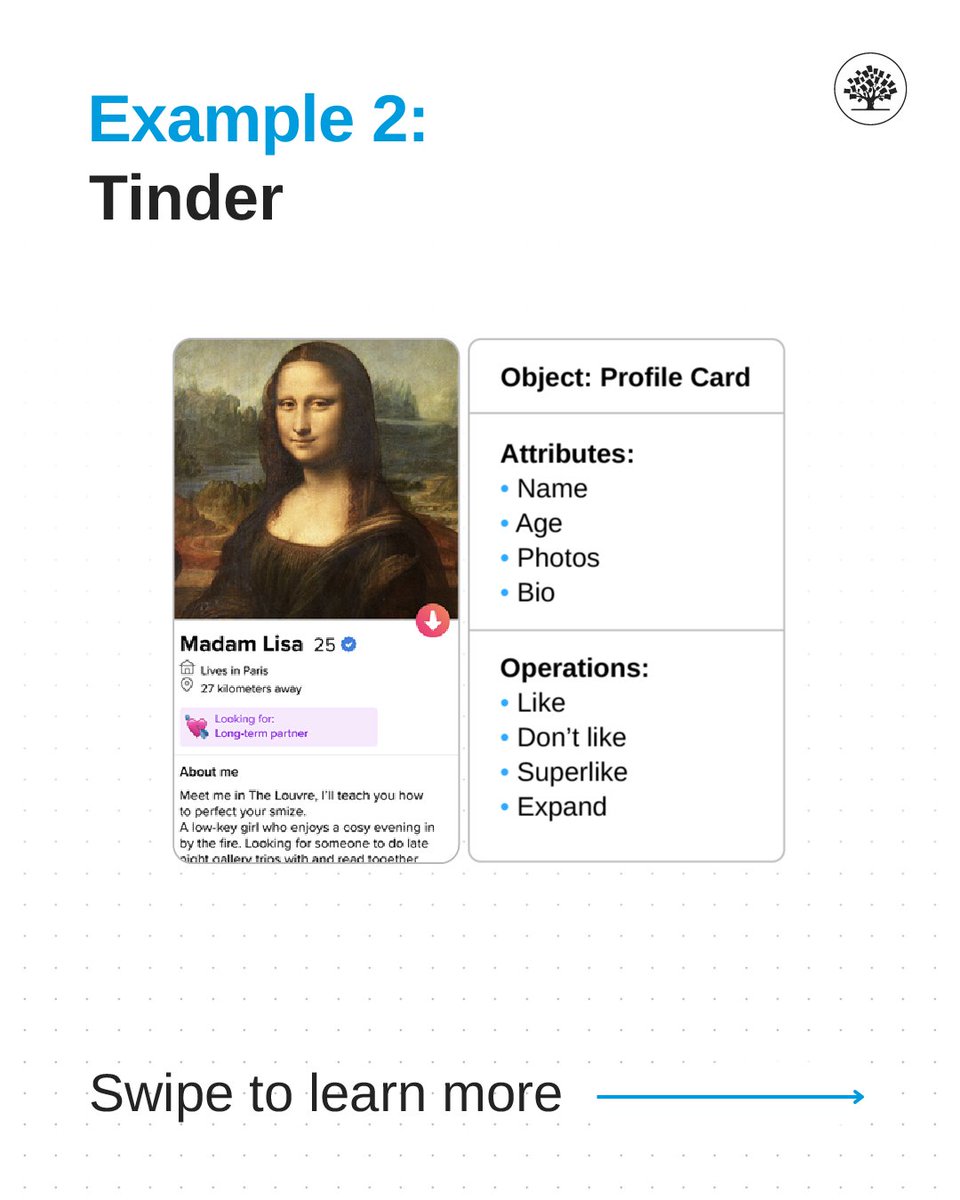
Want to learn the design principles behind 3 interfaces users love? 👀
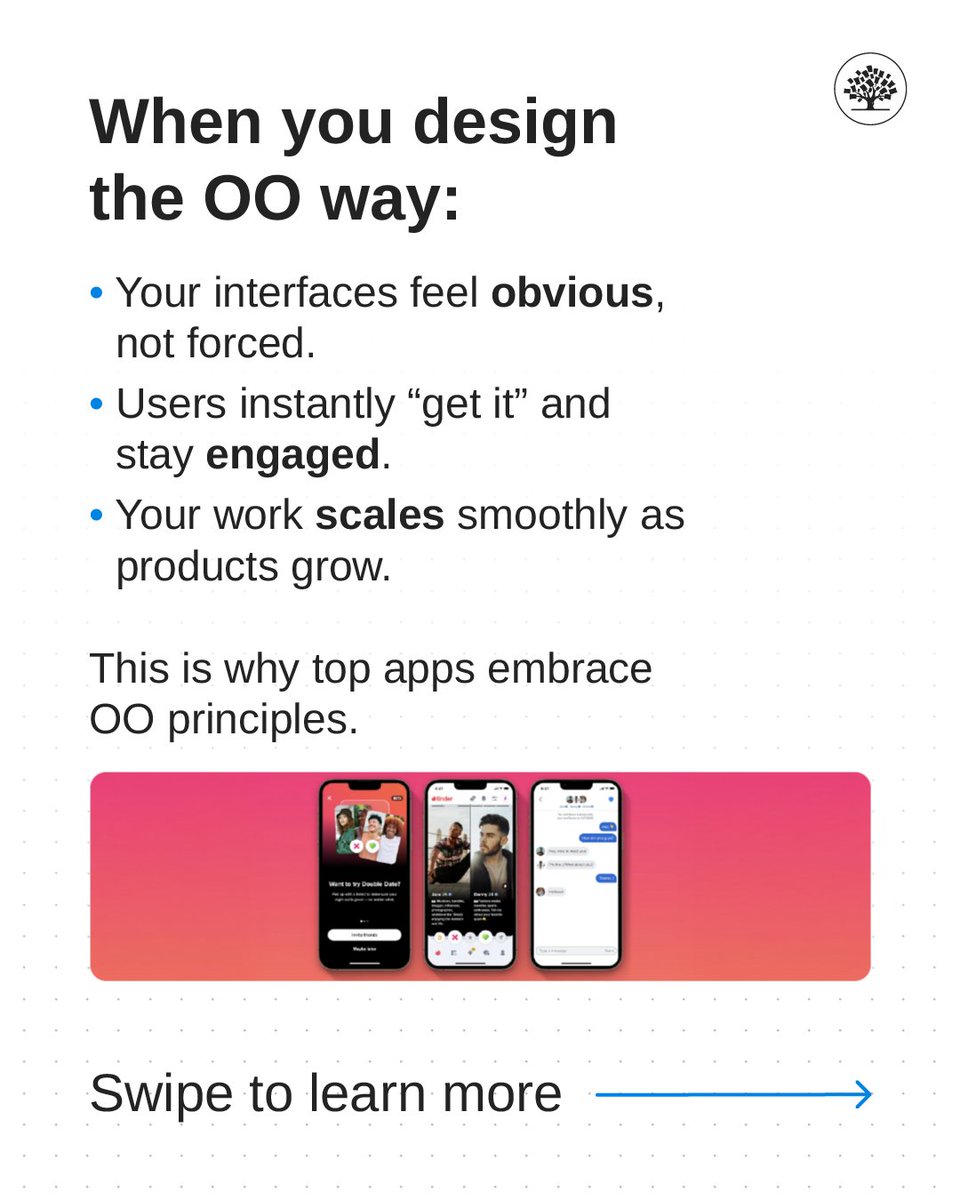
Object-Oriented UI design works so well because it matches users’ mental models, makes interactions feel natural and direct, and keeps design clear, scalable, and aligned with development.
In this carousel, you’ll explore 3 examples of object-oriented interfaces you’ve probably already used: Notion, Tinder, and Trello, and see how they structure interactions around objects people instantly understand.
With great interfaces, users stay engaged, interactions feel intuitive, and products scale more smoothly over time. That’s why many of today’s best products embrace object-oriented UI principles. 💡
Want to learn how to apply these principles in your own work?
👉 Explore our course:
Object-Oriented UI Design: Build Interfaces Users Love
🔗 ixdf.org/courses/object-orie…
#UIDesign #UXUI

7
524
Do you know how designers can adapt to new technologies? 👀
The future of design isn’t about competing with technology.
It’s about learning how to work alongside it.
Today, some of the biggest shifts shaping design include:
✔️ Generative technologies like AI
✔️ New communication technologies that change how teams collaborate
✔️ Advanced materials and tools like 3D printing
As Don Norman explains, the role of designers becomes even more valuable when technology handles repetitive tasks, and people focus on creativity, strategy, and human needs. 💙
The future of design belongs to people who know how to guide technology toward meaningful outcomes.
Want to explore how design, AI, and emerging technologies are shaping a better future?
👉 Learn more in our course:
Design for a Better World with Don Norman
🔗 ixdf.org/courses/design-for-…
#UXUI #AIDesign #DesignThinking
1
1
4
373