
Joined January 2022
- Tweets 16,492
- Following 6,528
- Followers 2,939
- Likes 24,303
1,777 Photos and videos






Home 🧩 ⚛️ 🦄✨️💹👑 retweeted

May 25
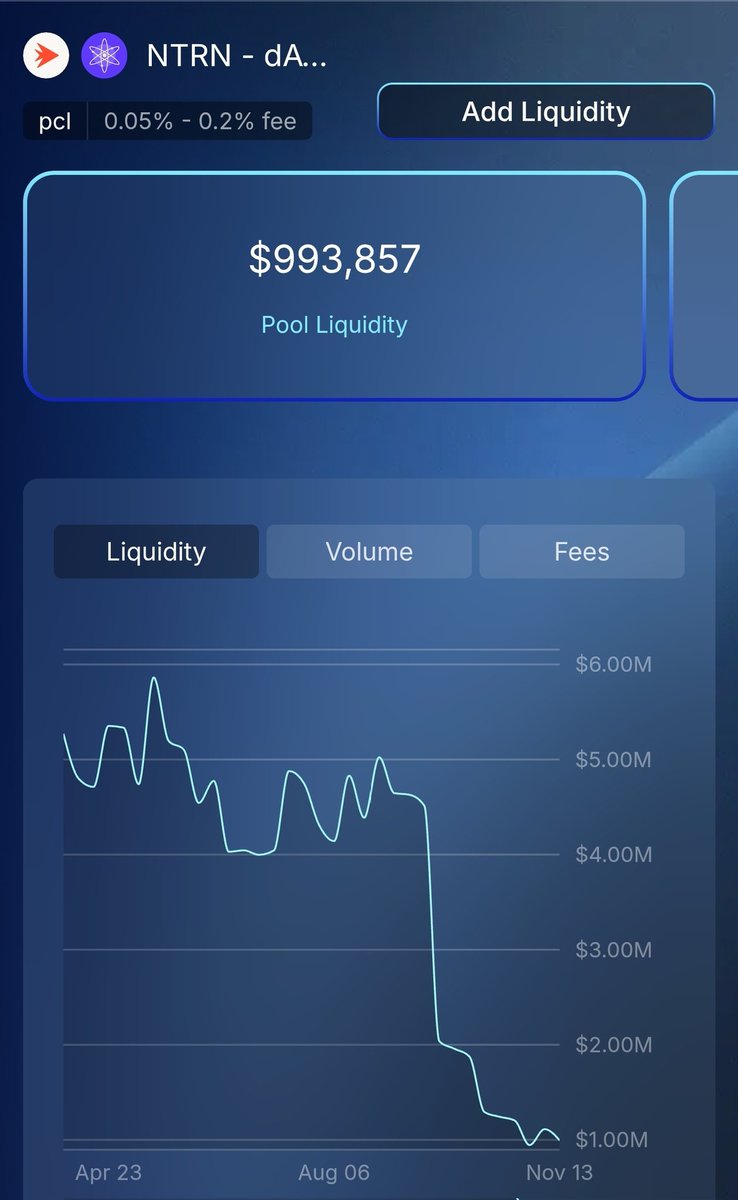
Repeat after me: Gno.land is THE next-generation smart contract platform.
7
17
80
1,793
Home 🧩 ⚛️ 🦄✨️💹👑 retweeted

Apr 22
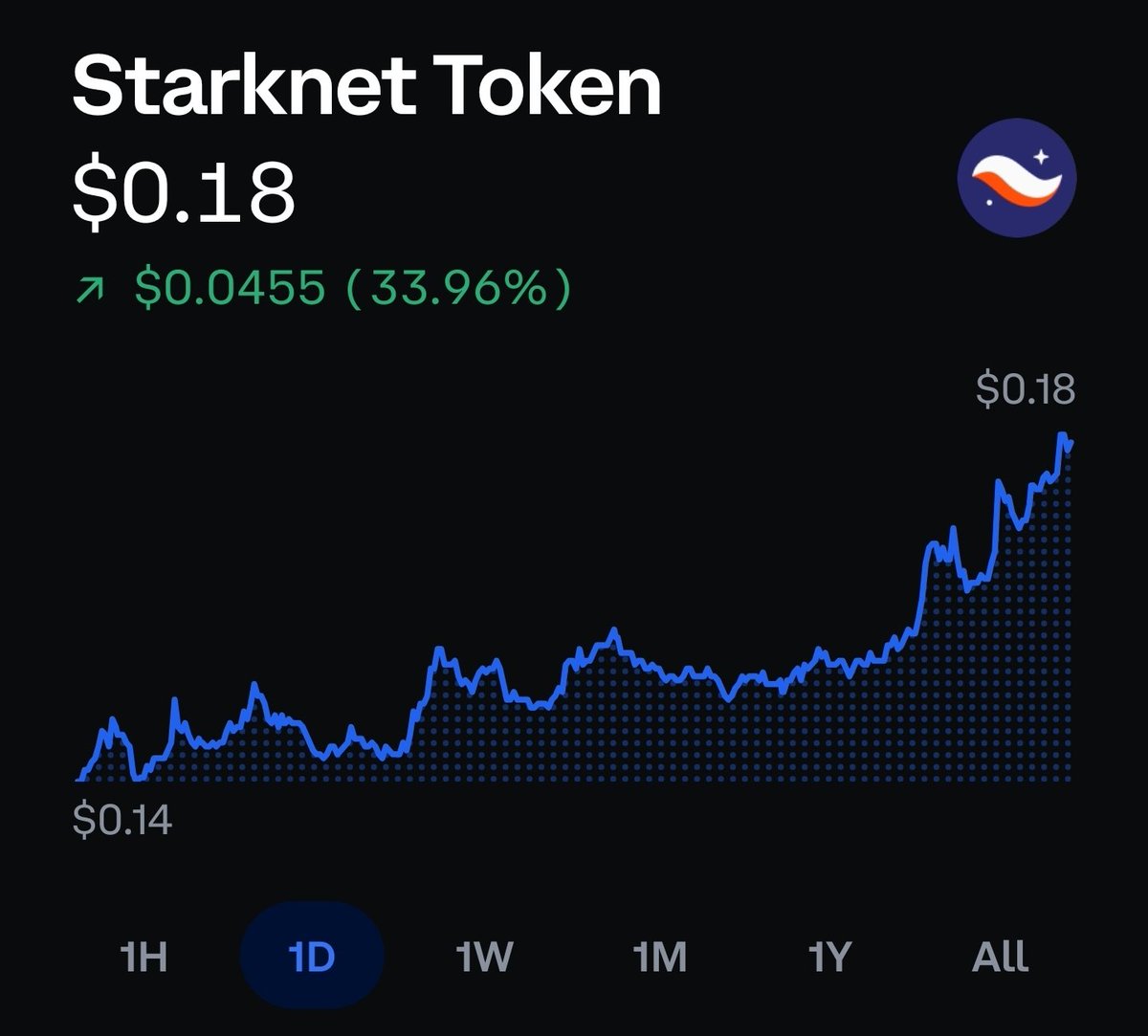
Cosmos had Akash, Secret, and working DeFi.
In a parallel universe Cosmos is running the AI conversation in crypto
15
11
83
8,455
Home 🧩 ⚛️ 🦄✨️💹👑 retweeted

Apr 18
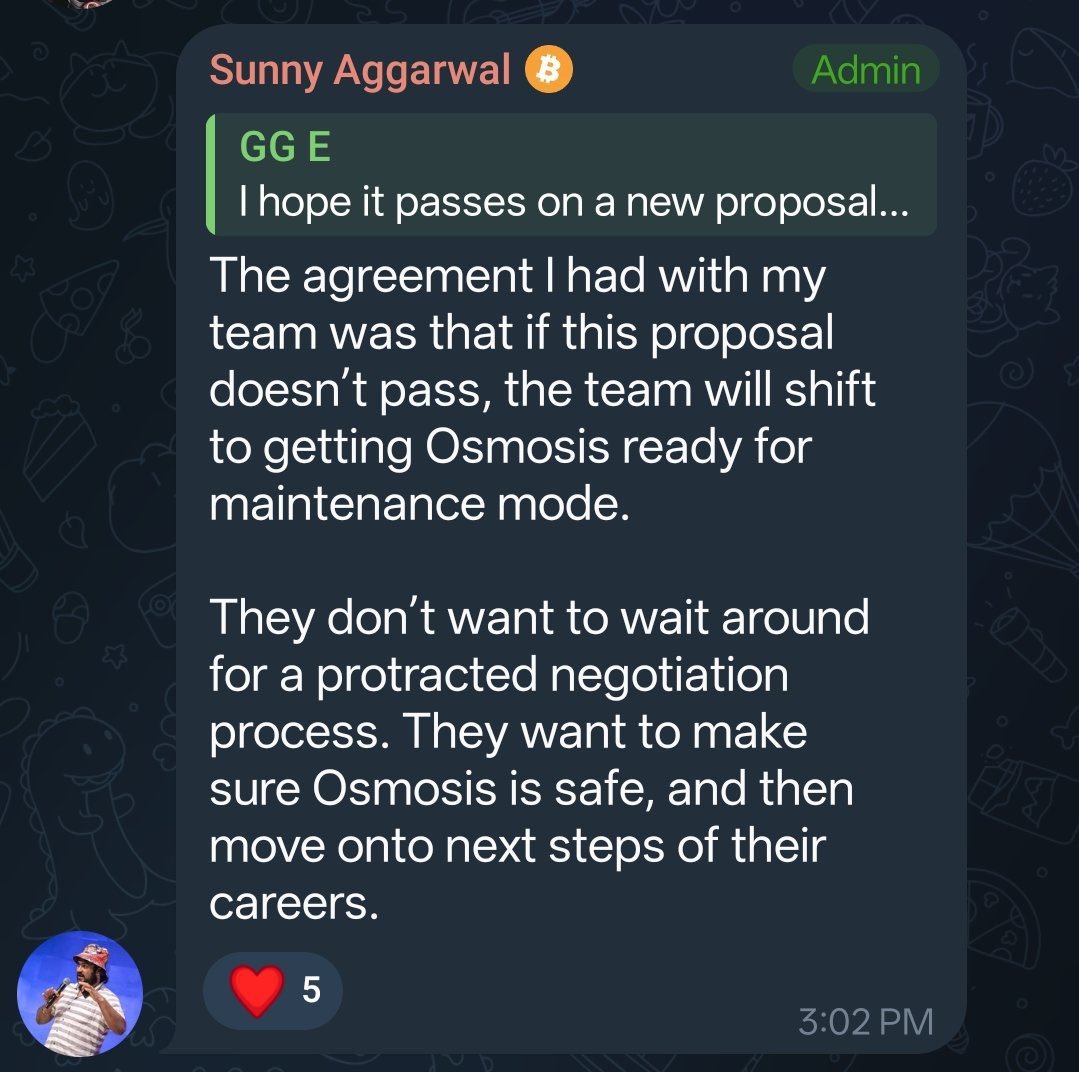
cosmos is like succession, but everyone is poor

As expected.
Goodbye Osmosis.
Goodbye Cosmos.
Likely the final nail.
3
3
84
9,221
Home 🧩 ⚛️ 🦄✨️💹👑 retweeted

Apr 15
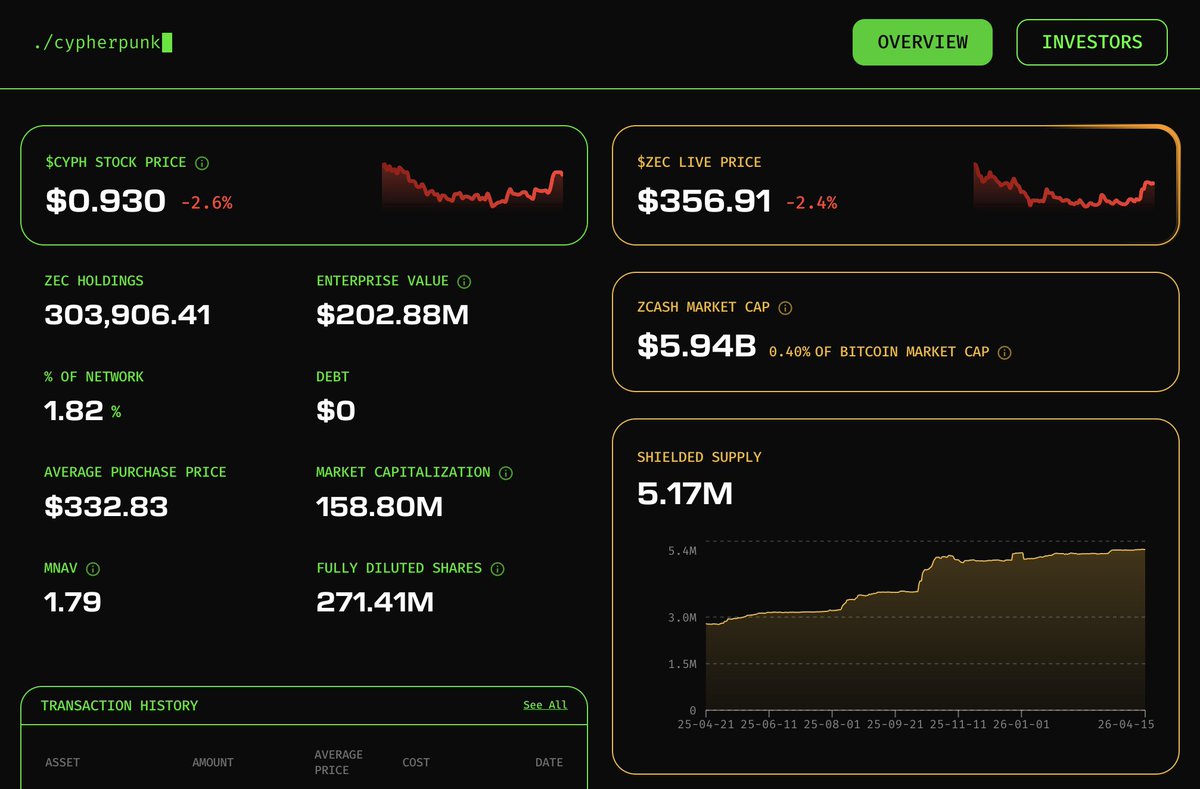
Today we launched our new website and investor dashboard with key metrics.
We've also purchased an additional 9,163.32 ZEC at an average purchase price of $234.63 per ZEC.
This brings our total ZEC holdings to 303,906.40, at an average price of $332.83.
Onward.
58
112
529
83,448
Home 🧩 ⚛️ 🦄✨️💹👑 retweeted

"We staked $ATOM and received many $1000 airdrops per wallet"

24
18
213
18,169
Home 🧩 ⚛️ 🦄✨️💹👑 retweeted

Apr 9
Zcash. $CYPH
@ Grayscale has put an excellent thread on why Zcash is the correct solution to privacy. They’re launching a spot $ZEC ETF.
However, if anyone points out that $CYPH Cypherpunk Technologies listed on Nasdaq is a better way to gain not just ZEC exposure, but

🚨JUST IN: GRAYSCALE BULL-POSTING ABOUT ZCASH
In a recent post, @Grayscale praised @Zcash's approach to privacy...
In particular it's opt-in/opt-out model where users are given a "choice between shielded or transparent behavior based on needs".
The post was made to promote Grayscale's own $ZEC Trust product, which operates under the ticker $ZCSH
1
2
21
2,115

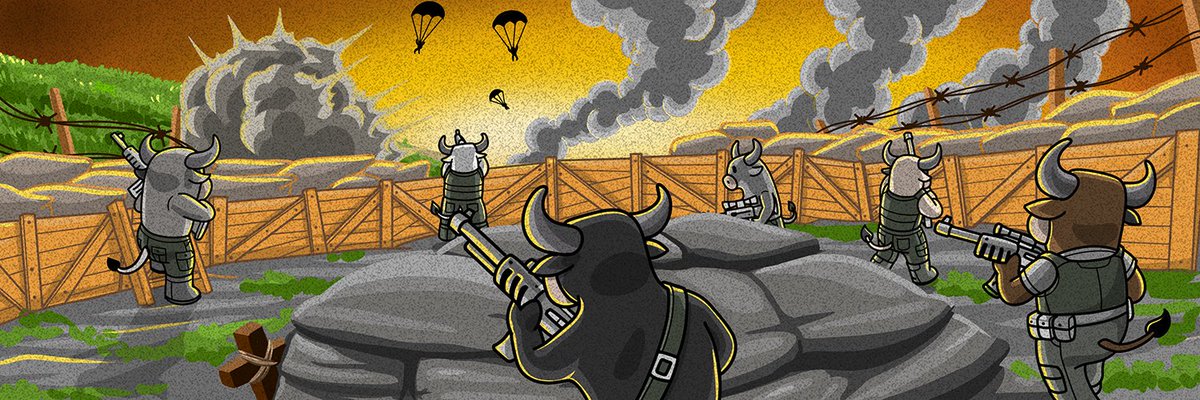
Fill out this form for $MOO airdrop 👇
Form → moobulls.fun/airdrop
Just 24 hours
4,117
3,738
4,930
161,301


Home 🧩 ⚛️ 🦄✨️💹👑 retweeted

26 Nov 2025
Me when I first heard of Bitcoin in 2010
347
2,683
19,411
665,403
Home 🧩 ⚛️ 🦄✨️💹👑 retweeted

22 Nov 2025
So I met @jaekwon once and we recorded it.
This was 2 years ago.
Some of what Jae says has come to pass.
Now that @_gnoland is imminent, you may be interested:
youtu.be/mo4hhVbrGhg?si=uHBg…
2
6
37
4,404
Home 🧩 ⚛️ 🦄✨️💹👑 retweeted

23 Nov 2025
Come join the fun. t.me/youwillatone
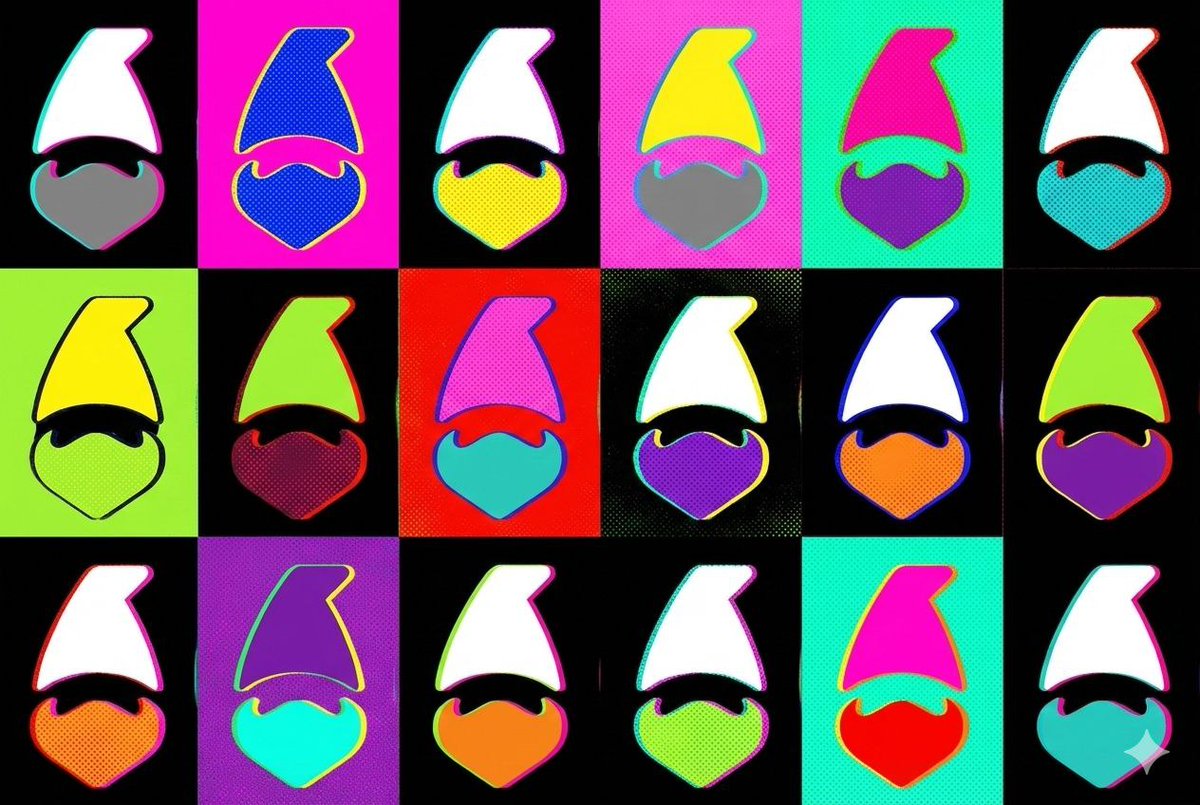
Gino Warhol. Of @_gnoland "Gnome Diptych "

7
19
862

22 Nov 2025
👀
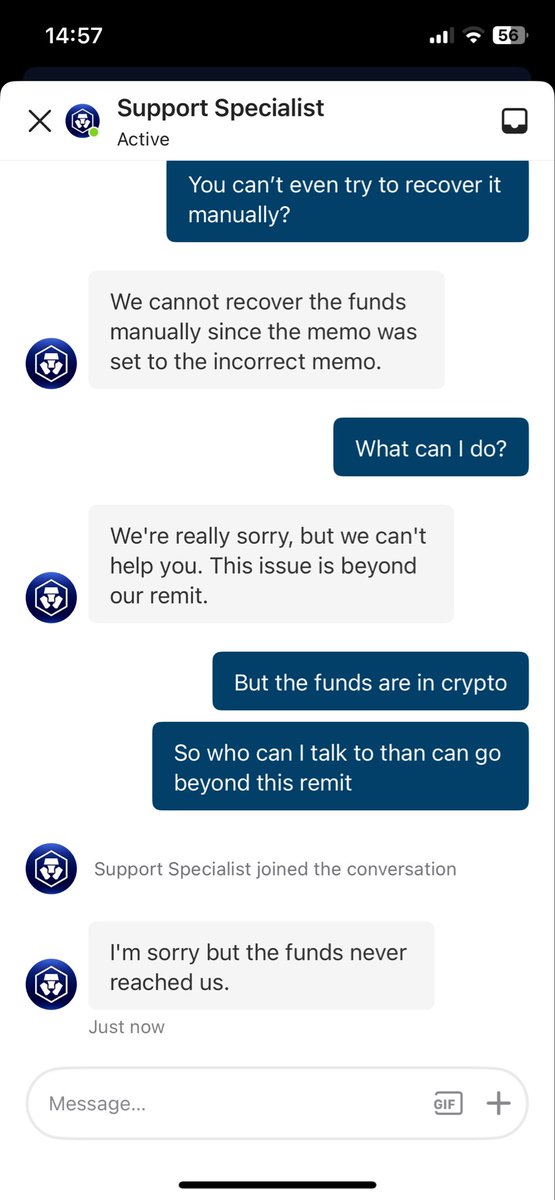
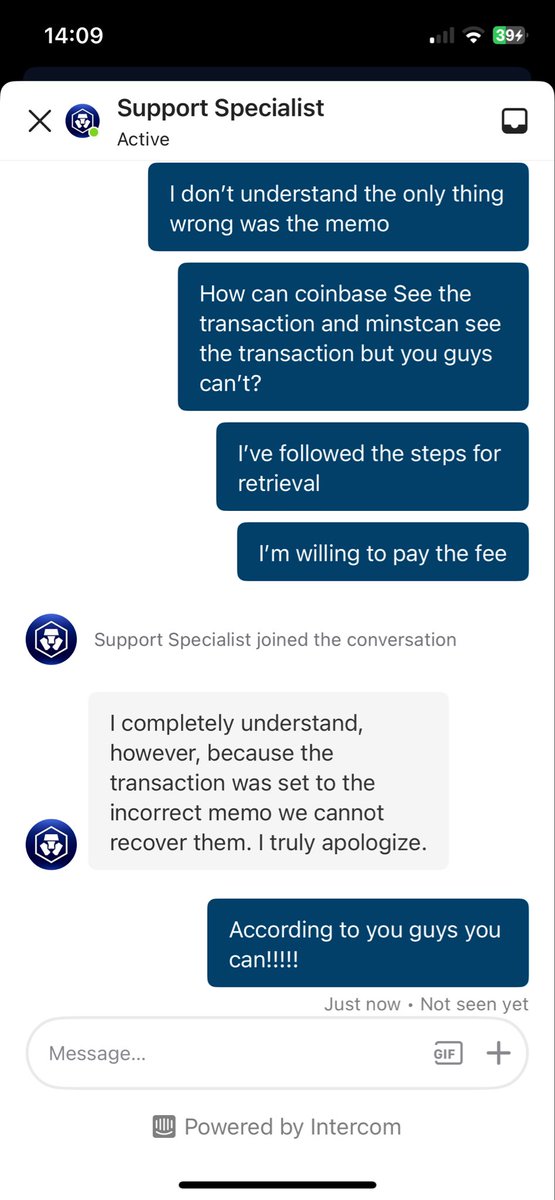
Crypto.com is claiming that because the memo was wrong in the $atom transaction that there is no way to recover the funds. This is outrageous and not what the memo is for, and Crypto.com is abusing its users.
Is it class action lawsuit time?
@cosmos @_atomone
105
When I pitched Cosmos back in 2017 everyone thought I was crazy or too ambitious. Now we have an IBC network of blockchains and I coined that term.
So I was right, I saw the future, right?
I foresaw "Classical BFT" in 2013 w/ the first Tendermint white-paper, not published in academia but the first to apply BFT research to blockchains. I was right, I also coined that term, and now we have so many blockchains because Tendermint made PoS chains legitimate like proof-of-work. I was right about betting on Go too. (see mapofzones.com).
But I'm not done yet. The best is yet to come.
I *know* programming languages. Before I got into crypto to disrupt the old banking world order (mission accomplished) I was in love with programing languages. I grok languages more than I know blockchains. (AI too, but I'm not there yet, there's so much to fix first).
You like Rust now, but AI is making "memristors" a thing. This AI bubble is going to burst (just like I said it would), but it will become *real* with memristors.
And the gno.land ecosystem of Gno code will benefit and be 100x faster than anything else because the GnoVM is basically a memristor simulator. It's a new paradigm of computing that removes two layers of complexity and more or less allows you to express the logic you want in the most succinct way possible. Also it's a blockchain smart contract platform, so really it's a multi-user language based operating system.
You know how many people in the world can really design a multi-user language well? Maybe a dozen at most.
Gno is the new C.
This is the biggest bet in the world, it is my life, and I can't wait for you all to get it. It's coming guys. About to put the capstone on it. Hold my wine.
$ATONE for staking and voting.
$PHOTON for payment.
$GNOT for storage.
p.s. For the speculators out there... I used to be a speculator too, trading options and vix instruments etc. I put all that and poker aside and focused on building instead. Trust me; stop gambling in zero sum games and build toward the heavens. Diamond hands, guys. My tokens are HODL coins, not for speculating. Stop gambling and build something.
7 May 2025

Explain This to Your Kid
Alright, let’s break it down in a clear and simple way, as if talking to kids, what AtomOne’s tokenomics is, what the ATONE token is, and how it connects to PHOTON. We’ll keep it fun and easy to understand!
What is AtomOne?
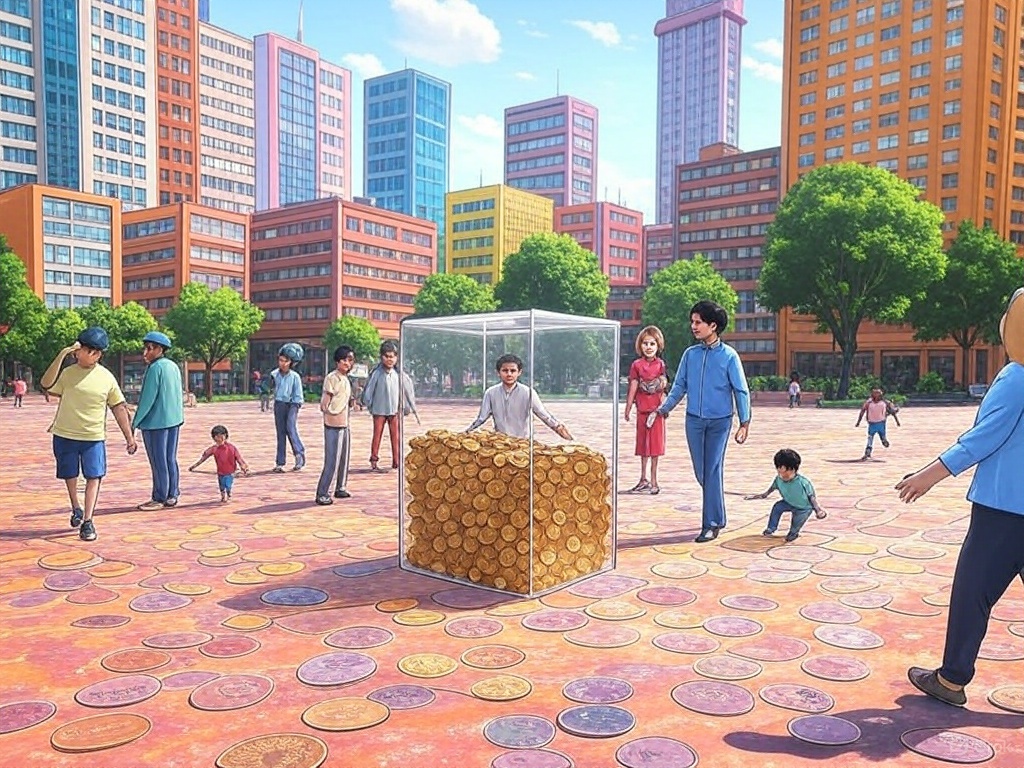
Picture AtomOne as a cool, modern city on the internet where people can trade things, vote on rules, and build stuff together. This city is part of a bigger place called Cosmos, which is like a country full of connected cities. AtomOne was created because some people in Cosmos wanted a simpler, safer, and better-organized city, so they built this new version.
What is tokenomics?
Tokenomics is like the rulebook for how money and valuable things work in this city. It’s like when you play a game with coins and need to know how to earn them, what you can buy, and what happens if you lose them. For AtomOne, the “coins” are the tokens ATONE and PHOTON.
What is the ATONE token?
ATONE is like a special coin in the AtomOne city. People use it for three big things:
Voting on rules: If you have ATONE, it’s like having a ticket that lets you say what rules you want in the city (like what buildings to make or which roads to fix).
Keeping the city safe: To help protect the city, you “lock up” some of your ATONE coins. It’s like putting your coins in a safe to show you’re serious about keeping the city secure.
Earning rewards: If you lock up your ATONE coins in the safe, you sometimes get extra coins as a thank-you for helping the city stay strong.
To keep things fair, new ATONE coins are made slowly over time. Each year, there can be up to 20% more coins (so there aren’t too many) and at least 7% more (so there are enough for everyone). These rules are like laws that keep the city running smoothly.
What is the PHOTON token?
PHOTON is another coin, but it’s simpler and used for everyday things in the city. For example, if you want to send a message or trade something with someone, you pay with PHOTON. It’s like ATONE is the coin for “big stuff” (voting, security), while PHOTON is for “everyday stuff.”
Here’s the cool part: PHOTON is made from ATONE. If you want PHOTON, you have to “burn” (destroy) some ATONE, and in return, you get PHOTON. It’s like trading a big dollar bill for smaller coins. But there’s a limit: there can never be more than 1 billion PHOTON coins, so they don’t get out of control.
How are ATONE and PHOTON connected?
ATONE and PHOTON are like siblings working together in the AtomOne city:
ATONE is the “powerful” coin that helps organize and protect the city. Without ATONE, the city wouldn’t work well.
PHOTON is the “practical” coin used for quick and simple things, like payments.
You can turn ATONE into PHOTON, but not the other way around, because PHOTON is less “powerful.” It’s like trading a gold coin for silver coins, but you can’t make gold from silver.
This system makes the city both well-organized (with ATONE) and easy to use for everyone (with PHOTON).
Why does it matter?
Think of AtomOne as a place where everyone can decide together what to do, without needing a big boss. ATONE and PHOTON are like tools that help people work together, stay honest, and keep the city safe. It’s like a big game where everyone follows the rules, and if they play fair, everyone can win!
15
38
125
11,513
17 Nov 2025
i'm fully out. done. this will be my last post for the next few years.
de-risked and clipped out of every position around 7-8 days ago at the pico top. i advise you do the same. genuinely think it's fully over.
we had a LOT of fun this cycle, but it's time to sober up. i'll be taking my usdc to the bank and spending some much deserved time with my family.
i hope you guys came out with some profit, i've personally timed almost every swing perfectly.
genuinely wanted to give a sincere thanks to all of you for playing.
to my friends, i'll be offline for the next few years, but you know where to reach me.
see you soon.

i'm fully out. done. this will be my last post for the next few years.
de-risked and clipped out of every position around 7-8 days ago at the pico top. i advise you do the same. genuinely think it's fully over.
we had a LOT of fun this cycle, but it's time to sober up. i'll be taking my usdc to the bank and spending some much deserved time with my family.
i hope you guys came out with some profit, i've personally timed almost every swing perfectly.
genuinely wanted to give a sincere thanks to all of you for playing.
to my friends, i'll be offline for the next few years, but you know where to reach me.
see you soon.
149
Home 🧩 ⚛️ 🦄✨️💹👑 retweeted

15 Nov 2025
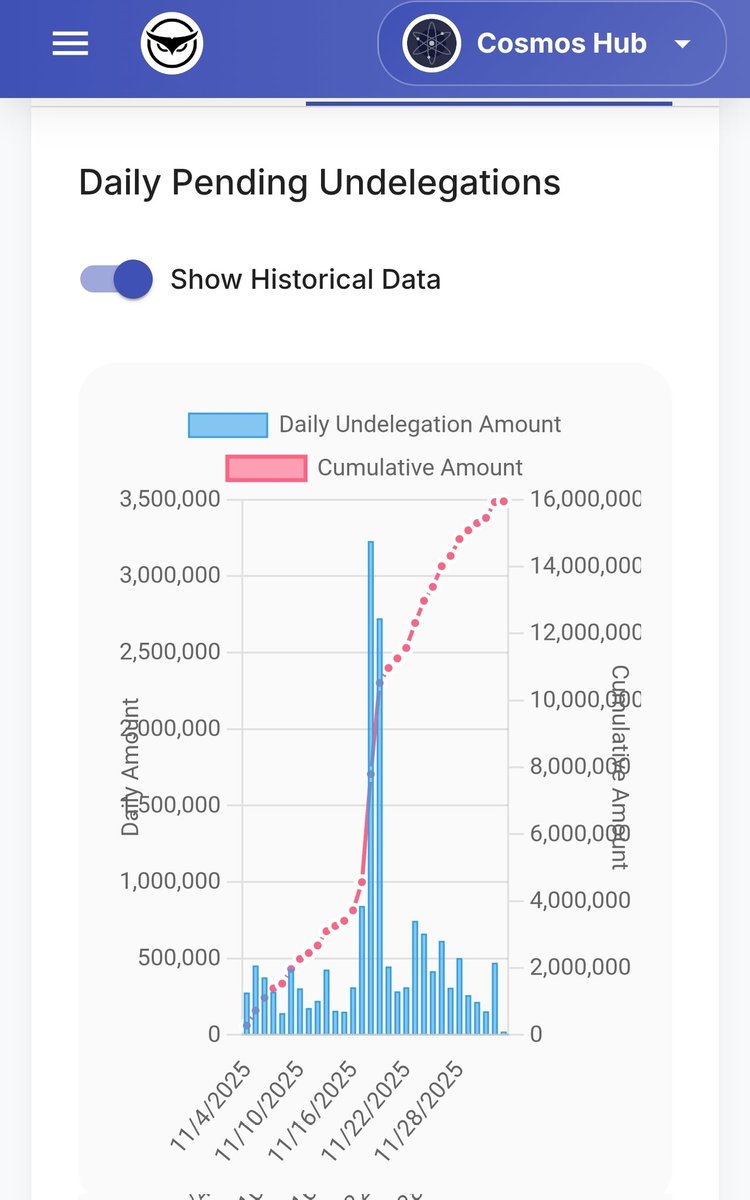
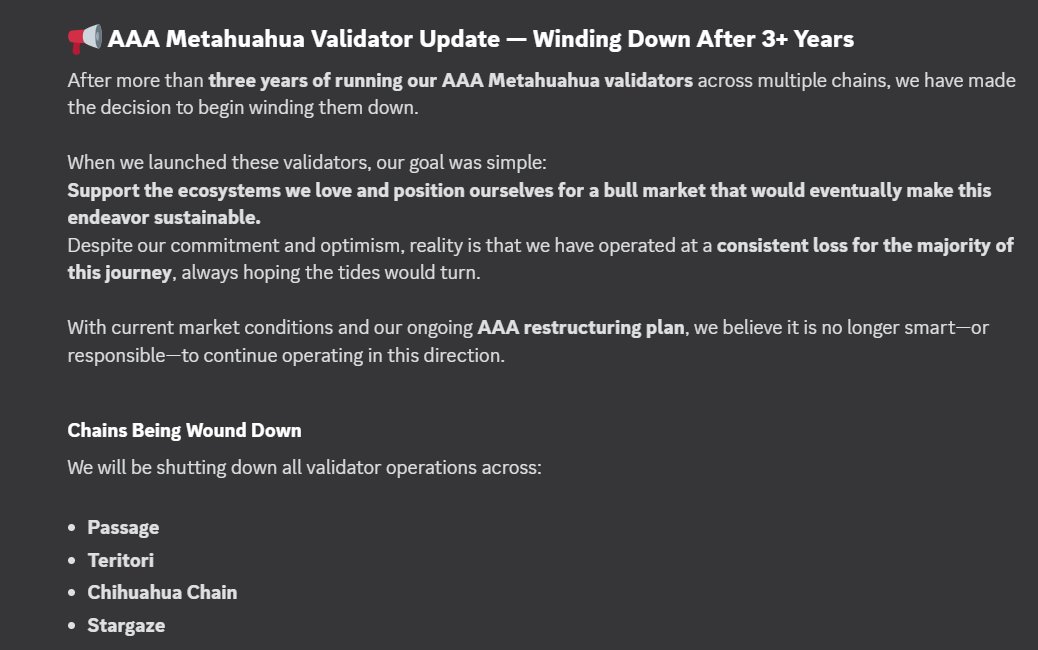
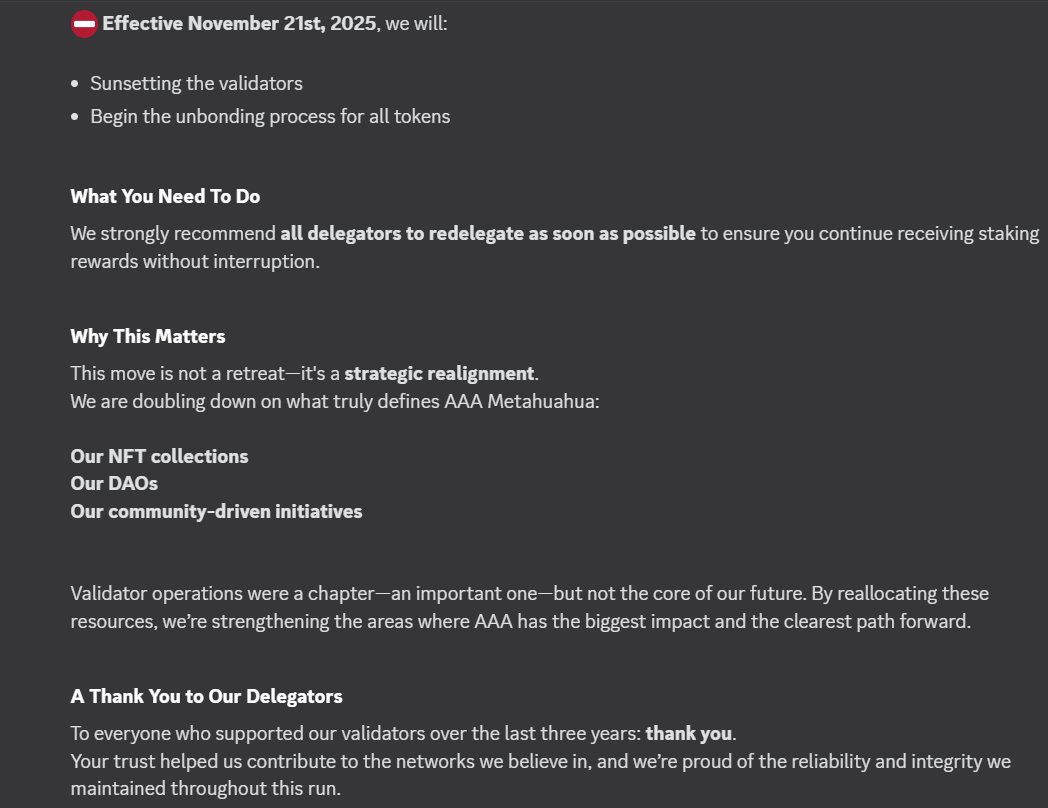
📢AAA Validators are officially winding down after 3 years across all chains as of Nov 21st.
📉Market conditions made this path unsustainable, moving forward our energy will be focused on our NFTs & DAOs
⚠️Please redelegate ASAP
Thank you all for the support 🙏
Details👇
12
31
2,684