Inventor and Physicist, interested in, #Consciousnes, #AI, #freewill, and the brain. Author of: Are the Androids Dreaming Yet?
Joined December 2008
- Tweets 4,675
- Following 5,077
- Followers 3,311
- Likes 1,475
182 Photos and videos






Pinned Tweet

31 Oct 2025
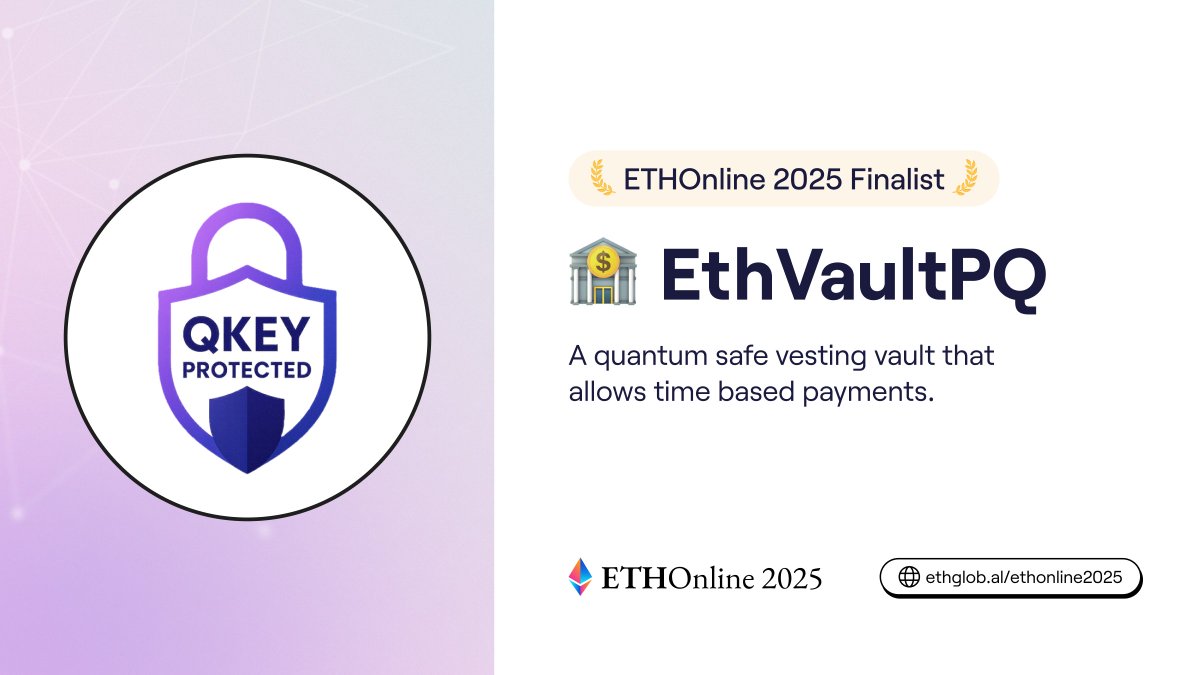
QKEY's Post-Quantum vault system is a finalist on EthOnline Hackathon, with a cash prize, lots of swag, and free/discount conferences for a year.
31 Oct 2025

🛡️ EthVaultPQ
EthVaultPQ introduces a quantum-safe vesting vault secured by Dilithium signatures, ensuring long-term fund safety beyond the post-quantum era.
Built by @jamestagg
ethglobal.com/showcase/ethva…
3
3
17
2,622
jamestagg retweeted

Jun 14
This is quite interesting! I made the exact same recipe 8 months ago, but never expected someone to launch this commercially
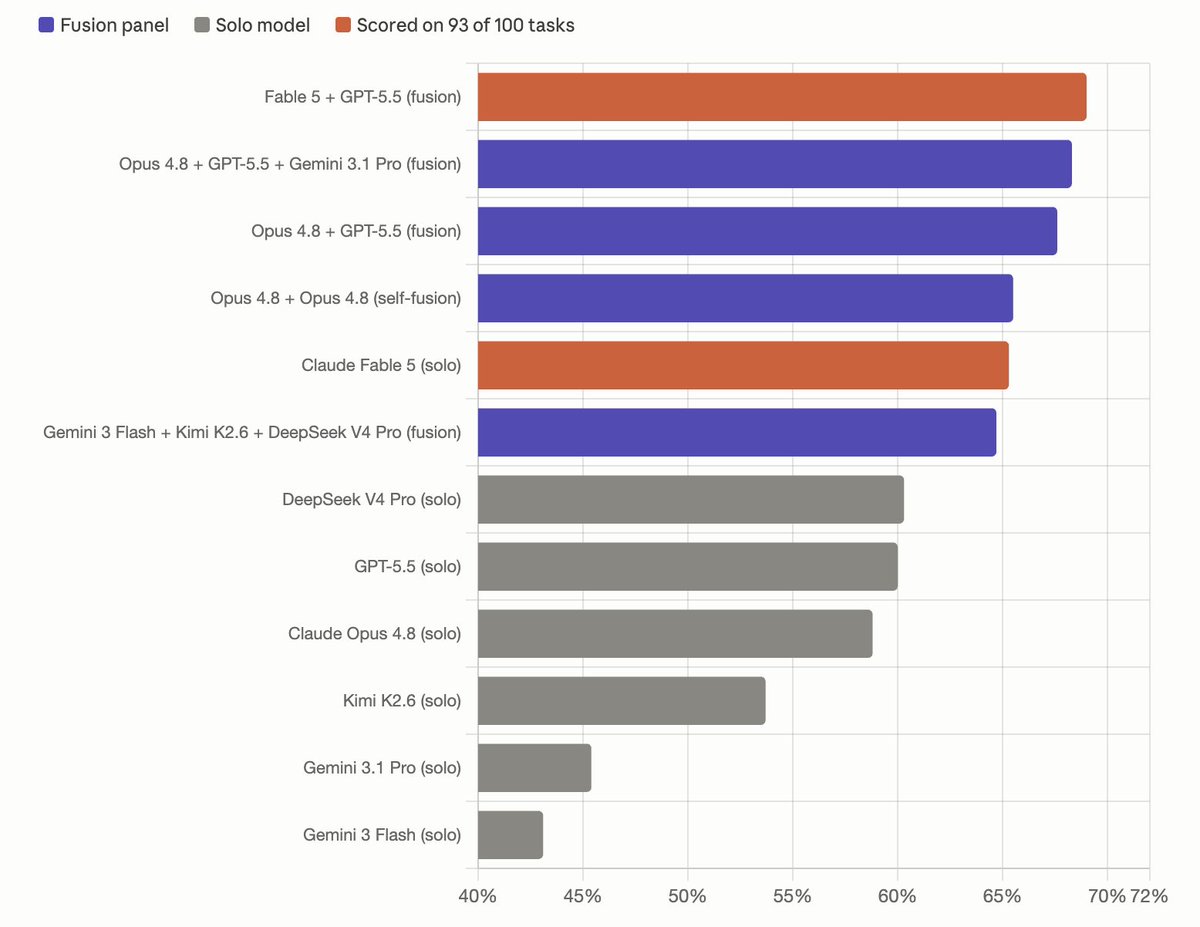
TLDR; you can get Fable performance with Opus using 2x Opus tokens
Jun 13

Introducing the Fusion API, the smartest compound model in the market.
Fusion achieves Fable-level intelligence at half the price.
How it works 👇
17
10
186
40,150
jamestagg retweeted

Jun 12
asked claude fable 5 to design a 16dof articulated robot hand
it also wrote a robot description file (urdf) for the hand
~ 1 hour / 300k tokens
28
78
771
299,681
jamestagg retweeted

Jun 11
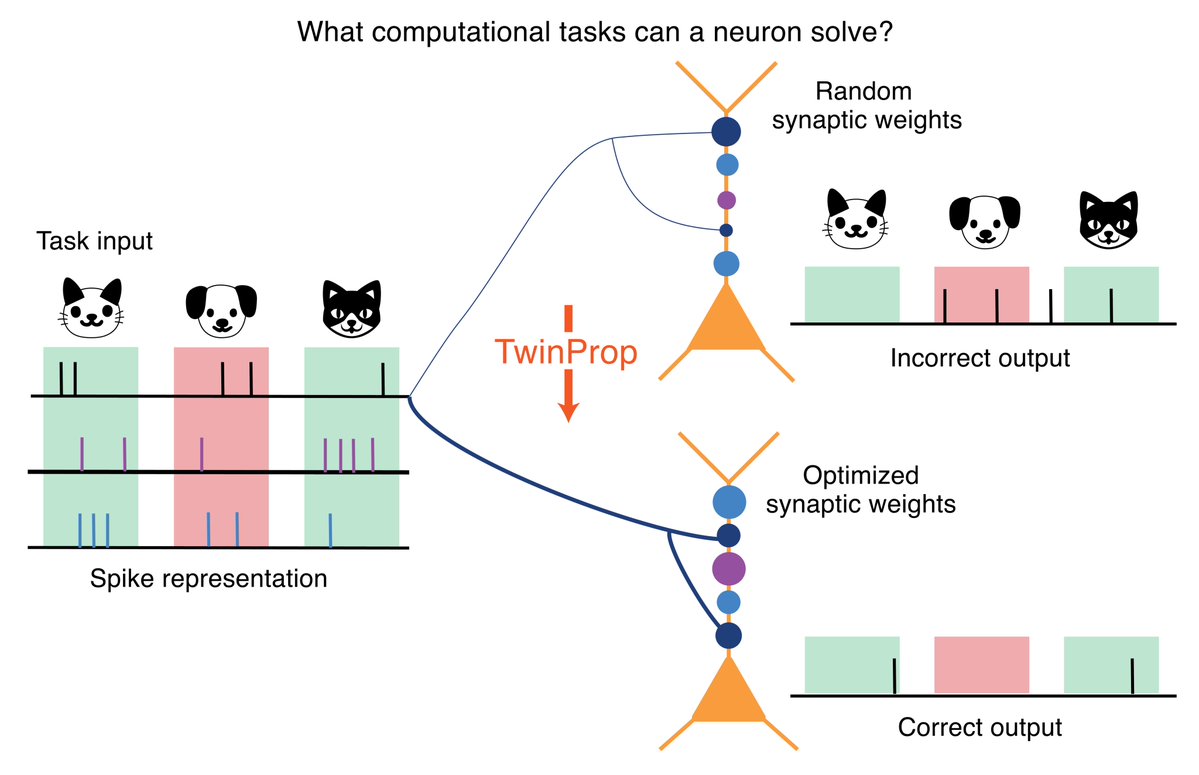
What can a neuron compute?
Real biological neurons are complex, but how capable are they?
Using a new method, we found that a single cortical neuron can classify cats vs dogs, recognize spoken words, and solve 10-bit parity, all tasks thought to require entire networks. (1/15)
55
367
1,900
296,603

Disney just invented a floor that lets you walk forever in VR while staying in one spot.
The HoloTile is an omnidirectional treadmill made of smart rotating tiles that counters your every step and keeps you centered. No giant room needed.
Ready Player One is officially here
222
348
3,703
625,030
jamestagg retweeted

Jun 10
Scriptwriting with Claude Fable 5 Higgsfield MCP is on another level.
Both videos made using Seedance 2.0.
Jun 10

Claude Fable 5 Higgsfield MCP is insane.
You can now build a playable game with a full story and stunning visuals from one click. Fable 5 researches your idea and writes the game. Higgsfield MCP generates all the assets.
On Higgsfield Supercomputer and in Claude via Higgsfield MCP.
121
240
2,245
297,604
jamestagg retweeted

Jun 2
"Given everything I know, including scary non-public information, I now put the odds of qday by 2032 at 50%. 10% by 2030."
@drakefjustin's numbers echo the conclusion from our recent report: "Q-Day is more likely to occur than not by 2033, and potentially even as soon as 2030."
Migration to quantum-resistant cryptography is no longer optional but imperative for any blockchain system expected to be trusted and secure value into the future.
Jun 2

Today a crazy quantum story just got wilder.
On March 31, the Google Quantum AI team published a landmark result on Shor's algorithm for elliptic curve cryptography. Technically, the paper was a bombshell: a dramatic 10x improvement over the state-of-the-art. As a stunt and wakeup call to the blockchain space, those optimisations were illustrated on secp256k1, the elliptic curve underlying Bitcoin and Ethereum signatures.
But perhaps the most striking part of the paper was sociological, not technical. Instead of following standard academic process, the optimisations were kept secret, hidden behind a zero-knowledge (ZK) proof. Google's accompanying blog post mentions they "engaged with the U.S. government". The ZK proof demonstrates the existence of algorithmic improvements without leaking details. Academic censorship with ZK, a historic first!
As a co-author of the Google paper I witnessed some of the context surrounding this censorship. To be honest, multiple aspects of that context don't sit well with me. As much as I believe the general public ought to know more, I am limited in my ability to whistleblow. Though let me be clear about one thing: the Google team's professionalism has been absolutely exemplary, and they deserve nothing but praise.
Censorship has a way of backfiring. The Streisand effect, where an attempt to bury something only draws more attention to it, is exactly what's unfolding today. First, Google's key optimisation has been rediscovered by the French. And in a thrilling turn of events, a collaborative Shor-at-home challenge just launched. The initiative, available at ecdsa[.]fail, breached a new Shor world record in a matter of hours.
Let's start with the rediscovery. Just two months after Google's paper, French quantum expert André Schrottenloher cracks the main secret optimisation. His paper, titled "Optimized Point Addition Circuits for Elliptic Curve Discrete Logarithms", landed on the arXiv today. Big congrats to André, who beat several other nerdsnipped experts to it. In a blog post also published today, Craig Gidney, the world expert on Shor optimisations, revealed that he'd been sitting on this very optimisation for a whole year under censorship pressure.
Interestingly, André missed a handful of minor optimisations, both from Google's original publication and from improvements found since. It's plausible there's still plenty of juice left to squeeze out of Shor, and this is exactly what the ecdsa[.]fail challenge is about. The verifier program developed for the ZK proof does double duty, automatically filtering for valid submissions. Dozens of compounding small and micro improvements are rolling in. As of the time of writing there's an 8.4% improvement to Google's circuit, as measured by the product of logical qubit count and Toffoli gate count. Nice!
The nerdsnipping ran deeper than anyone expected. Over the last few weeks it became clear it extended well beyond André and other quantum experts. Behind the scenes, a small army of amateurs quietly got to work. Inspired by Karpathy-style autoresearch, they turned AI on Shor. Ironically, the verifier program for the ZK proof makes an ideal reward function for AIs. The barrier to entry for this modern style of research is refreshingly low, with several non-experts, even a teenager, finding nice optimisations. Get in touch if you'd like to join a Telegram group with fellow autoresearchers :)
Part 2: neutral atoms and qday
The story doesn't end with Google. On the same day Google went public, a stealthy startup called Oratomic published its own Shor paper in a coordinated release. It made a splash, ultimately becoming the most upvoted paper on scirate[.]com, a website ranking arXiv papers.
Oratomic's claim was wild. By building on Google's logical optimisations and applying custom physical optimisations for neutral atoms, they claimed just 10K physical qubits were sufficient to run Shor's algorithm on secp256k1. That number is mind-bogglingly low.
Knowing essentially nothing about neutral atoms when Oratomic's paper landed, I was intrigued and decided to learn more about the tech. I fell straight down the rabbit hole and spent a couple hundred hours on the topic. I got a little obsessed and watched every YouTube video I could find and spoke to a bunch of experts.
My conclusion? The tech is real, very real. Even Google recently decided to start a neutral atom lab, a notable pivot from their sole focus on superconducting qubits. If you care about qday, i.e. the day a quantum computer will break the first piece of cryptography in production, neutral atoms demand your attention. I shared some of my learnings on Shor and neutral atoms in a 30min talk at the ZKProof cryptography conference. You can find it on YouTube by searching "zkproof neutral atom".
Here's an interesting observation about this duo of breakthrough papers: neither Google nor Oratomic say a word about what their results mean for qday. No timelines. Zero. Nada. That is especially baffling given that the whole point of whitehat quantum cryptanalysis is to inform qday estimations and help the general public make good decisions.
So let me attempt to partially fill the silence, similarly to what Scott Aaronson did in his April 29 post. Given everything I know, including scary non-public information, I now put the odds of qday by 2032 at 50%. 10% by 2030.
Anecdotally, the US government has its own date: 2035. Originating at the NSA and later adopted by NIST, it's when branches of the US government will be disallowed from using quantum-vulnerable cryptography. In plain language: with hindsight, that date is a joke and should be discounted entirely. I don't see how NIST avoids being forced to pull it forward by years.
Part 3: post-quantum cryptography
There are good reasons to sound the alarm today, but please do not panic. Rushing carelessly towards immature post-quantum cryptography is a recipe for disaster. IMO a good target date for migration is 2029, roughly 3.5 years out. 2029 happens to be the date selected by Google, Cloudflare, and the Ethereum Foundation.
These days most of my time goes to safely migrating Ethereum towards post-quantum cryptography as part of the broader lean Ethereum effort. There's a lot to do. We need to rip out and replace BLS signatures at the consensus layer, KZG commitments at the data layer, and ECDSA signatures at the execution layer.
The plan to get there is compelling, and is based on hash-based cryptography. Within the Ethereum Foundation we've developed a Swiss army knife called leanVM (github[.]com/leanEthereum/leanVM) powered by the magic of hash-based SNARKs. Thanks to truly exceptional work by Emile, Thomas, and others, its performance is derisked. Regarding security, leanVM is a jewel, a minimal zkVM crafted for end-to-end formal verification and maximum security.
Want to help? There are two $1M initiatives. First, the Proximity Prize (proximityprize[.]org). Solve a long-standing mathematical conjecture in coding theory, improve hash-based SNARKs, and go home a millionaire. Second, the Poseidon Initiative (poseidon-initiative[.]info), offers $1M for breaking Poseidon, the SNARK-friendly hash function.
6
8
36
3,479
jamestagg retweeted

"AI HAS NO PLACE IN FILMMAKING!" say the luddites and then the G.O.A.T drops this. If you are listening to the haters telling you AI has no place in in filmmaking and ignoring Scorsese, Spielberg, Cameron, Davies, Schrader, Aronofsky, then you need to check yourself.
Jun 2

Martin Scorsese is an advisor to Black Forest Labs.
He's spent six decades shaping how the world sees stories. Now he's helping us shape visual intelligence with human taste and craft at the center.
We sat down with him for a working storyboarding session using FLUX.
67
80
589
62,695
jamestagg retweeted

Jun 2
Blog post: "The French have the Quantum Circuits" algassert.com/post/2602
André Schrottenloher just published a preprint showing how to construct quantum ECDLP circuits with costs similar to the ones in our zero knowledge proofs.
2
37
123
11,521
jamestagg retweeted

Jun 2
The public gap to Google's solution was 20x as of yesterday, now with auto-research that barrier broke in days.
The 1000 qubits machines are coming, they'll benefit from the same improvements in AI tools too.
1
1
12
915
jamestagg retweeted

May 26
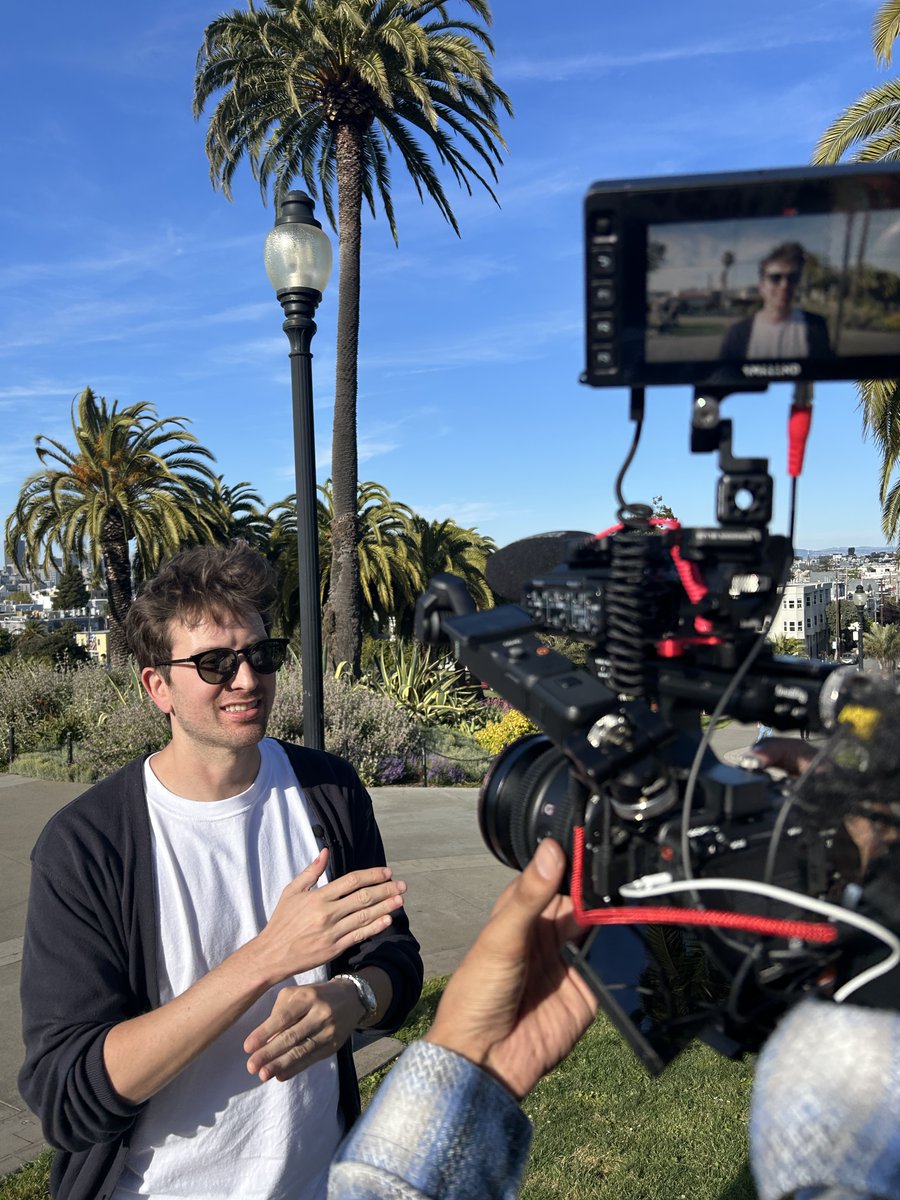
I just got back from SF and I FEEL INSPIRED.
I spent 5 days with frontier AI model teams, AI startup founders, and 3 billionaires.
My takeaways:
1. I had lunch with 3 billionaires. All of them are buying SaaS companies and rebuilding them agent-first. They were deeply inspired by Bending Spoons and Ryan Cohen's eBay deal. Buy the company, cut the headcount, rebuild the tech, add agents, add features, make more valuable experience, raise prices.
2. The frontier model companies are hungry for usage data from the field. They can see API calls and token counts. They can't see the actual workflows. If you're deep in a niche using these models in ways the model companies haven't seen, that understanding is incredibly valuable. Usage intelligence is the new alpha.
3. Consumer AI is massively underbuilt. Every billboard in SF is either B2B inference infrastructure or vertical agent companies. The entire city is optimized for enterprise. Meanwhile you have companies like Cal AI doing $50M ARR in 18 months as a consumer app. I met with a cool few teams doing consumer AI (@paulscherer / @ekuyda)
4. MCP came up in literally every conversation. The companies exposing their product as MCP endpoints are getting pulled into deals they never pitched for. The ones that aren't are becoming invisible to agents. This is the new SEO. If agents can't find you, you don't exist. Building products for agents is the new zeitgeist in general.
5. Not uncommon for hot seed rounds to be $25-50 million valuations. I saw a Series A at $450 million
6. If I had a dollar every time someone mentioned "forward-deployed engineer" this trip I could have funded a seed round. It's the hottest role in SF right now. The person who sits between the agent and the customer, making sure everything actually works.
7. The mood around open source shifted. A year ago it felt like open source was chasing the frontier models. Now founders are telling me Gemma and DeepSeek are good enough for 80% of what they need at a fraction of the cost. The "which model do you use" conversation is being replaced by "which model for which task." Model loyalty kinda feels dead.
8. Voice agents came up more than I expected. Multiple founders told me voice is the interface for the next billion users. The billion people who will never type a prompt will absolutely talk to one.
9. The Obsidian community in SF is weirdly intense. Multiple founders showed me their vaults unprompted. Like showing someone your home gym. It's a flex now. The quality of your knowledge base (second brain?) is becoming a status symbol among builders.
10. Maybe it was just the people I met but the age of the founders is shifting. I met more founders over 40 this trip than any trip before and more founders under age 21 than ever before. Founders getting older and younger at the same time.
11. I spoke to a lot of fast-growing startups, VCs and frontier models who are hiring content creators right now.
12. The restaurant scene in SF is actually better than it's been in years. Founders are going out more. Alcohol is out, not surprisingly.
13. SF doesn't feel like the only place anymore. We all have access to the same frontier models. We all read the same X feed. A founder in NYC or Lagos is calling the same APIs as a founder in SoMa. So in the past it felt like SF was always lightyears ahead, doesn't feel that way anymore. It's okay not to live in SF and have BIG DREAMS.
14. The coworking spaces in SF are half empty but the coffee shops are packed. People want to be around people. I had a few startup ideas here....
15. Walking around the Mission I noticed something: the street-level businesses, the taquerias, the barbershops, the laundromats, none of them use any AI at all.
16. I heard the phrase "agent debt" for the first time. Like technical debt but for agents. When you hack together an agent workflow fast and never clean it up, the system prompts conflict, the memory gets polluted, the tools overlap. 6 months later the agent is doing weird things and nobody knows why lol.
17. Met a few people who carry two phones now. One for personal. One that's basically an agent terminal running Telegram or iMessage connections to their agent fleet.
It's always amazing to get that dose of inspiration in SF. I FEEL INSPIRED.
But I'm so happy to be back home, locked in and building.
We're 12-18 months into a shift that will take 15 years to play out. The urgency in every conversation was real.
What an incredible time to be building.
496
574
6,212
636,318
jamestagg retweeted

May 15
Pixel-perfect 3D generation is here. 🧵
Tencent’s new Free Local Pixal3D project every pixel directly into 3D space. No more "AI hallucinations"—just sub-pixel faithful reconstruction.
✅ Open Weights
✅ Local (24GB VRAM)
✅ Matches silhouettes perfectly
Is this the new benchmark for open-source 3D?
Full workflow and test: 👇
youtu.be/v22dtm3-vqM
#3DAI #Pixal3D #GameDev #Tencen #OpenSource #3DModeling
7
26
257
22,545
jamestagg retweeted

May 12
This is it.
Everything learned spending millions on longevity.
From: Your Immortal Unc and Auntie.
To: Our Immortal nieces and nephews.
0. Sleep is the world's most powerful drug.
1. Be in your bed for 8 hours
2. Same bedtime every night, any time before midnight
3. Don’t eat right before bed
4. Calm foods for dinner
5. No screens 1 hour before bed
6. Avoid added sugar (be aware it’s in everything)
7. Avoid all things in an American convenience store
8. Avoid fried foods
9. Shoes off at the door
10. Eat whole foods, particularly veggies fruits nuts legumes berries
11. Walk a little after meals or air squats
12. Get your heart rate high routinely
13. Lift heavy things
14. Stretch daily
15. Water pik, floss, brush, tongue scrape, morning and night
16. Make an effort to drink water
17. Get sunlight when you wake up (UV is low)
18. Protect skin in midday sun
19. Stand up straight
20. See at least one friend once a week
21. Avoid plastic where you can (in all things)
22. Circulate air in rooms
23. When stressed, breathe, learn to calm your body
24. Go to the dentist
25. Avoid sitting for long times
26. Protect your hearing, the world is too loud
27. Alcohol is bad for you
28. Finish coffee before noon
29. Avoid bright lights after sunset
30. If obese, look into a GLP
31. Sleep in a cold room
32. Texting while driving is dangerous
33. Turn off all notifications
34. Limit social media use
35. Don’t smoke anything
36. If you struggle to sleep, read a physical book before bed
37. 1 hour before bed have a calm wind down routine: bath, read, light walk, listen to music
38. The body is a clock and loves routine. Have a daily morning and evening schedule.
39. Avoid long distance travel where you can
40. Baby steps first: incorporate new things slowly
41. Do less… most things don’t work.
Bonus points if you get your blood checked.
Start here, it will change your life.
1,035
4,871
43,296
5,719,651
May 13
Unreal Engine 5.8 preview, 10,675,199 hours remaining! I guess it's going to be a long night.
1
217
May 10
I have every sympathy with this view, but have you tasted American food versus European food? Sometimes regulation really helps - once upon a time, there was a tradeoff, American food was really cheap, no more - so can we have great EU tech with the good EU regulations and ditch the nonsense? By "nonsense," I mean clicking "Allow" for the cookie 200 times per day...

Besides, a new good engine is good. Let’s be honest, right now the meaning “follows all EU regulations” means nothing good and, on top of that, expensive.
3
230
May 8
Chef Robot Skill!
May 7

The robotics industry is about to go through the same shift software did 10 years ago.
Here's why the next billion-dollar robotics company will be built by a creator — not a corporation 👇
1/ Corporate robotics requires millions in capital, years of R&D, and a massive team just to ship a product.
Creators with the right platform can prototype an idea in weeks, validate with real customers, and iterate fast.
2/ This isn't theory. It's the same pattern we saw with:
GitHub → software developers
App Store → mobile creators
YouTube → video creators
Every major platform shift minted a new class of independent builders. Robotics is next.
3/ The barrier isn't talent. There are brilliant engineers everywhere — Ohio, Lagos, Mumbai, Berlin.
The barrier is access. Access to tools, infrastructure, and a platform that lets them build and monetize.
4/ That's exactly what $ROBA is building — an open platform where creators build, train, share, and monetize robotic behaviors.
No corporate gatekeepers. No vendor lock-in. Just creators owning their innovations.
Join the revolution today.
1
159

Jensen Huang (CEO of Nvidia) : "people are teaching their agents to fully run a business and make money"
the agent takeover is here & you can replace you entire company with it
this guy listed how you do it this weekend and $20/mo
↓ read this today

41
178
1,350
444,945
jamestagg retweeted

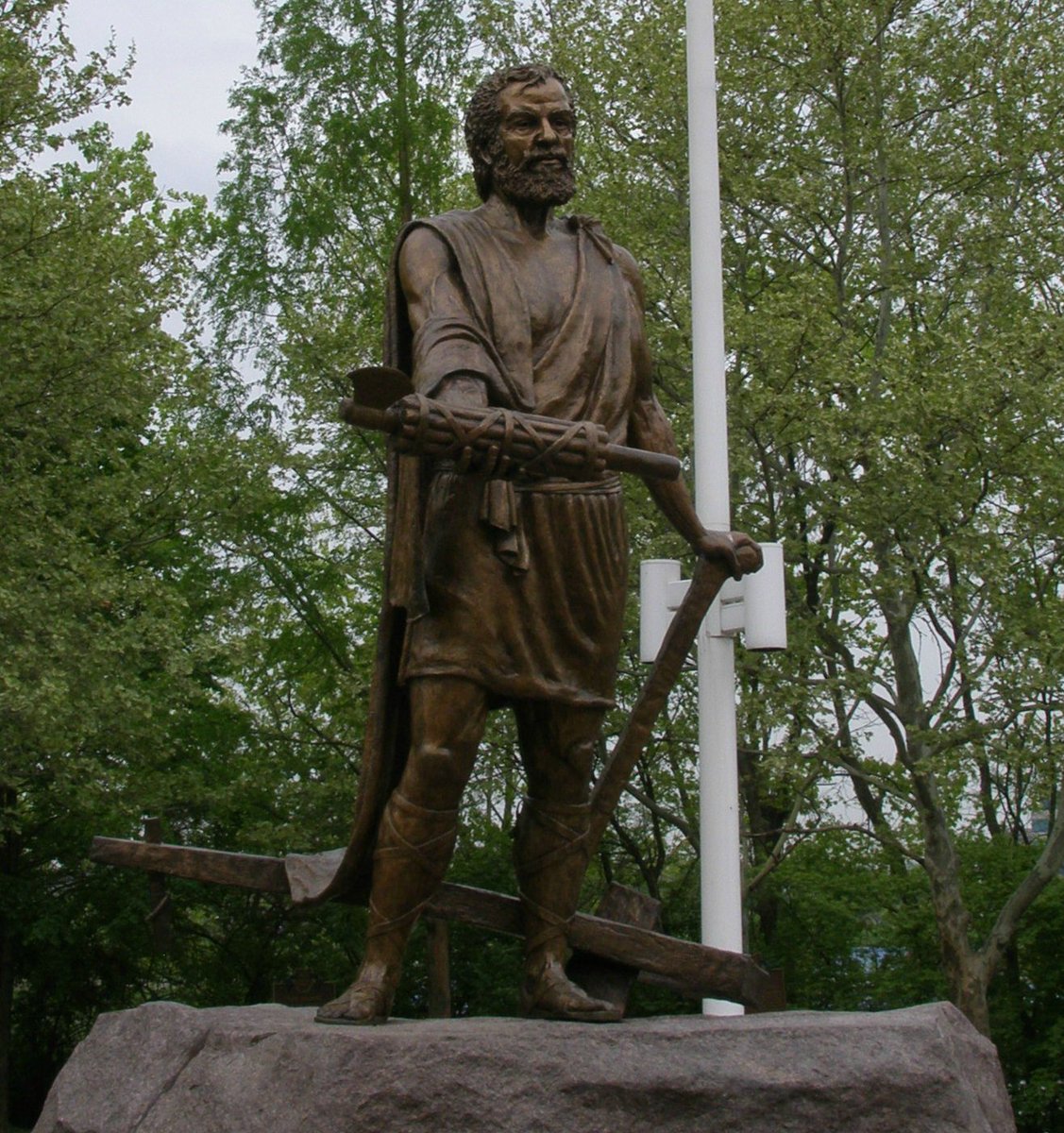
In 458 BC, Rome was on the brink of collapse.
An invading army had trapped the Roman consul and his legion in a mountain pass. Panic spread through the city. The Senate did the only thing they could think of:
They sent messengers to find a 60-year-old farmer plowing his field.
His name was Lucius Quinctius Cincinnatus. He had once been a senator, then lost his fortune paying his son's bail. Now he worked his own four-acre plot just to feed his family.
When the Senate's envoys arrived, they found him sweating behind a plow. They asked him to put on his toga so they could deliver an official message.
The message: Rome was making him dictator. Absolute power. Total command of the army. No checks. No oversight. No term limit.
He accepted.
Within 16 days, Cincinnatus had raised an army, marched out, surrounded the enemy, and forced their surrender. The republic was saved.
He had legal authority to rule for six months. He could have stayed. He could have expanded his power. He could have done what every other ruler in human history did when handed unlimited control.
Instead, he resigned on day 16.
He took off the toga, walked back to his farm, and finished plowing the field he'd left half-done.
Twenty years later, when Rome faced another crisis, they called him back. He was 80 years old. He took command, crushed the conspiracy, and resigned again, this time after just 21 days.
He died poor. On his farm.
2,200 years later, when George Washington was offered a kingship after winning the American Revolution, he refused and went home to Mount Vernon. The reason he was hailed as "the American Cincinnatus" is because Europeans literally could not believe a man who had won would willingly give up power.
King George III, on hearing Washington would resign rather than rule, said: "If he does that, he will be the greatest man in the world."
The lesson isn't that Cincinnatus was humble.
The lesson is that for most of human history, the people most qualified to lead were the ones who didn't want to. And the moment a society starts rewarding those who chase power instead of those who flee from it is the moment the republic begins to die.
Cincinnati, Ohio is named after him.
Most people who live there have no idea why.
948
14,831
48,828
1,242,995

Boris Cherny says internally Anthropic uses the same models as everyone else, with some Mythos, which will eventually ship as a descendant to the public
"there's no manually written code anywhere at the company"
Internally, Claudes talk to each other all day over Slack, coding in loops, resolving unknowns across teams
57
67
775
208,163
jamestagg retweeted
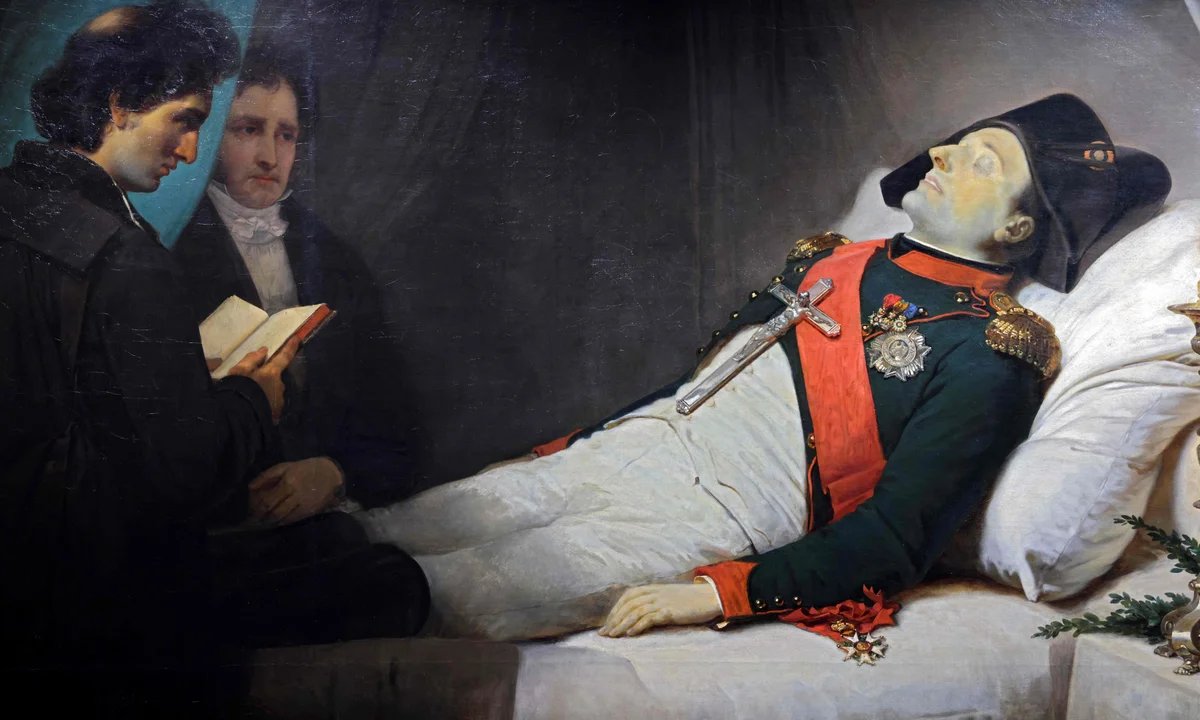
205 years ago today, Napoleon Bonaparte died on a tiny British prison island in the middle of the South Atlantic. He was 51. He had ruled most of Europe. And he changed the world so thoroughly that you are still living inside the systems he built.
Start with the obvious one. The Napoleonic Code. He commissioned it in 1800, sat in on the drafting sessions personally, argued with the lawyers, and pushed it through in four years. Equality before the law. Property rights. Religious freedom. The end of feudal privilege. It is still the basis of civil law in France, Belgium, the Netherlands, Italy, Spain, Portugal, most of Latin America, Quebec, Louisiana, and chunks of the Middle East and Africa. About a third of the planet writes contracts using rules a Corsican artillery officer wrote between battles.
He sold Louisiana to Thomas Jefferson in 1803 for 15 million dollars. Roughly four cents an acre. It doubled the size of the United States overnight. Without that deal there is no St. Louis, no New Orleans as an American city, no Lewis and Clark, no Manifest Destiny. The American century starts with Napoleon needing cash for a war.
He invaded Egypt in 1798 with an army and, weirdly, 167 scientists, mathematicians, and artists. They found the Rosetta Stone. That single slab is the reason we can read hieroglyphs at all. Egyptology as a field exists because Napoleon brought scholars to a war.
He built the Bank of France, which still runs French monetary policy. He created the lycée system that still educates French teenagers. He shoved the metric system across Europe at sword-point until it stuck. He emancipated the Jews of every territory he conquered, tearing down ghetto walls in Rome, Venice, Frankfurt. He abolished serfdom in Poland. He standardized road networks, civil registries, and tax codes that European governments still operate from.
And then there's the soldiering. He fought around 60 major battles and won most of them. Austerlitz, in 1805, against the combined Russian and Austrian empires, is still taught at West Point as one of the closest things to a tactically perfect battle ever fought. He was outnumbered, baited the enemy onto ground he had pre-selected, and broke them in a single afternoon. Three emperors took the field that morning. Only one walked off it on his own terms.
He slept four hours a night. He read constantly, dictated letters to four secretaries at the same time, and personally signed off on everything from cavalry boot specs to the seating chart at the Comédie-Française. Wellington, the man who finally beat him at Waterloo, was asked decades later who the greatest general in history was. He answered without hesitating. "In this age, in past ages, in any age, Napoleon."
He lost, in the end, because he could not stop. Russia in 1812 swallowed his army whole. Six hundred thousand men marched in. Maybe a tenth came back. He abdicated in 1814, escaped from Elba, ruled France again for 100 days, and lost it all for good in a wheat field in Belgium in June 1815.
The British shipped him to St. Helena, a volcanic dot 1,200 miles off the African coast, and waited. He spent six years there dictating his memoirs, gardening, complaining about the dampness, and quietly rewriting his own legend so effectively that Europe spent the next century arguing about him.
He died on May 5, 1821, during a storm so violent it ripped up the willow tree he liked to read under. His last words trailed off into fever. France. The army. Joséphine.
Nineteen years later France brought him home. Two million people stood in the snow to watch the coffin go by.
He was a tyrant. He was a reformer. He started wars that killed somewhere between three and six million people. He also wrote the rulebook that a third of humanity still lives under.
Most people who try to conquer the world are forgotten inside a generation. Napoleon has been dead for 205 years and we are still arguing about him because we are still using his furniture.
292
2,232
9,318
645,111
jamestagg retweeted

May 6
This is one of the craziest AI launches of 2026 and it came out of basically nowhere (Save this).
A company called Subquadratic just shipped SubQ, and the benchmarks are almost hard to believe.
To understand why this is such a big deal, you have to understand the fundamental problem that has defined AI for the last decade.
Every large language model in existence is built on transformer architecture, and transformers use a mechanism called standard attention that checks every single word in a sequence against every other word.
Double the context length and compute doesn't double, it quadruples, triple it and compute goes up nine times.
This quadratic scaling is why frontier models have been stuck at roughly 1 million tokens, why running them at those lengths gets expensive fast, and why the AI labs have essentially been printing money charging you more the longer you need the model to think.
The industry has known this problem existed since 2017 but they scaled it anyway. SubQ is built from the ground up to solve it.
Instead of processing every possible token relationship, SubQ's sparse attention architecture identifies which relationships actually matter and ignores the rest meaning compute is used where it counts and wasted nowhere else.
The result is that compute scales linearly with context length instead of exponentially, and the implications of that one architectural shift are enormous.
At 12 million tokens, SubQ reduces attention compute by nearly 1,000x compared to standard frontier models and at 1 million tokens, it runs 52x faster than FlashAttention.
And it does all of this while posting frontier level accuracy, scoring 95% on the RULER 128K long-context benchmark versus Claude Opus 4.6's 94.8%, and an 81.8 on SWE-Bench Verified coding tasks, besting Opus 4.6 (80.8) and DeepSeek 4.0 Pro.
The cost comparison is where it gets genuinely insane.
SubQ runs at under $1.50 per million tokens less than 5% of what Claude Opus charges.
On the RULER benchmark, running the test with SubQ cost $8, running the same test with Claude Opus cost $2,600 and that's a 300x cost reduction at equivalent or better accuracy..
Subquadratic launched with $29 million in funding, SubQ is available today for early access via API, and SubQ Code, a coding agent built on the architecture ships alongside it.
The transformer has been the unchallenged foundation of every major AI system since 2017.
SubQ is the first serious evidence that something structurally better might have just arrived.
May 5

Introducing SubQ - a major breakthrough in LLM intelligence.
It is the first model built on a fully sub-quadratic sparse-attention architecture (SSA),
And the first frontier model with a 12 million token context window which is:
- 52x faster than FlashAttention at 1MM tokens
- Less than 5% the cost of Opus
Transformer-based LLMs waste compute by processing every possible relationship between words (standard attention).
Only a small fraction actually matter.
@subquadratic finds and focuses only on the ones that do.
That's nearly 1,000x less compute and a new way for LLMs to scale.
43
109
885
277,433