Joined October 2011
- Tweets 2,040
- Following 876
- Followers 390
- Likes 2,304
324 Photos and videos






Jun 12
I was the 7th of 9 kids.
At the time it felt like noise. Big chaotic house, never any quiet.
Looking back, it was one of the biggest advantages I've had.
When you're the youngest, you watch other people go through life before you do.
What the oldest tried that didn't work. How the middle ones figured out careers, money, relationships. Real problems become familiar years before they're yours.
I watched six versions of life play out before it was my turn. My siblings absorbed the learning curve so I didn't have to.
That's an advantage you can't manufacture.
So now I recreate it on purpose. I spend $70k a year on masterminds and operator communities, for the same reason being the seventh kid was valuable: you watch people further along decide in real time, and absorb what you haven't lived yet.
The environment shapes what you think is possible. I learned that at home before I learned it in business.
1
49
Jun 12
Something switches when you become a parent.
The legacy stops being about you. There's a small person you're building for now.
What it did for me: a hard stop at the end of the day.
I used to burn three hours on a client problem that didn't need it. There was always more time. Not anymore.
That constraint made me sharper. More selective about my focus. More honest about what actually moved the needle versus what just felt productive.
The business didn't suffer. It grew. Because of the constraint, not in spite of it.
I still work hard. If anything, fatherhood made me hungrier. But the hours mean something different now.
What forced you to get more intentional with your time?
1
2
39
Jun 11
The internet rewards constant output.
Post more, share more, be everywhere, always.
There's an implicit assumption that if you're not producing, you're falling behind.
I don't think that's true.
The most useful thinking I do doesn't happen at my desk. It happens when I've stepped away long enough to actually let the mind reset.
Founders talk a lot about protecting their time. We optimize calendars, batch meetings, cut unnecessary calls. But we don't talk much about protecting mental space.
Actual quiet. An activity that requires your full attention and has nothing to do with revenue.
Leaving you with one of the things I do when I need to stop.
1
30
Jun 11
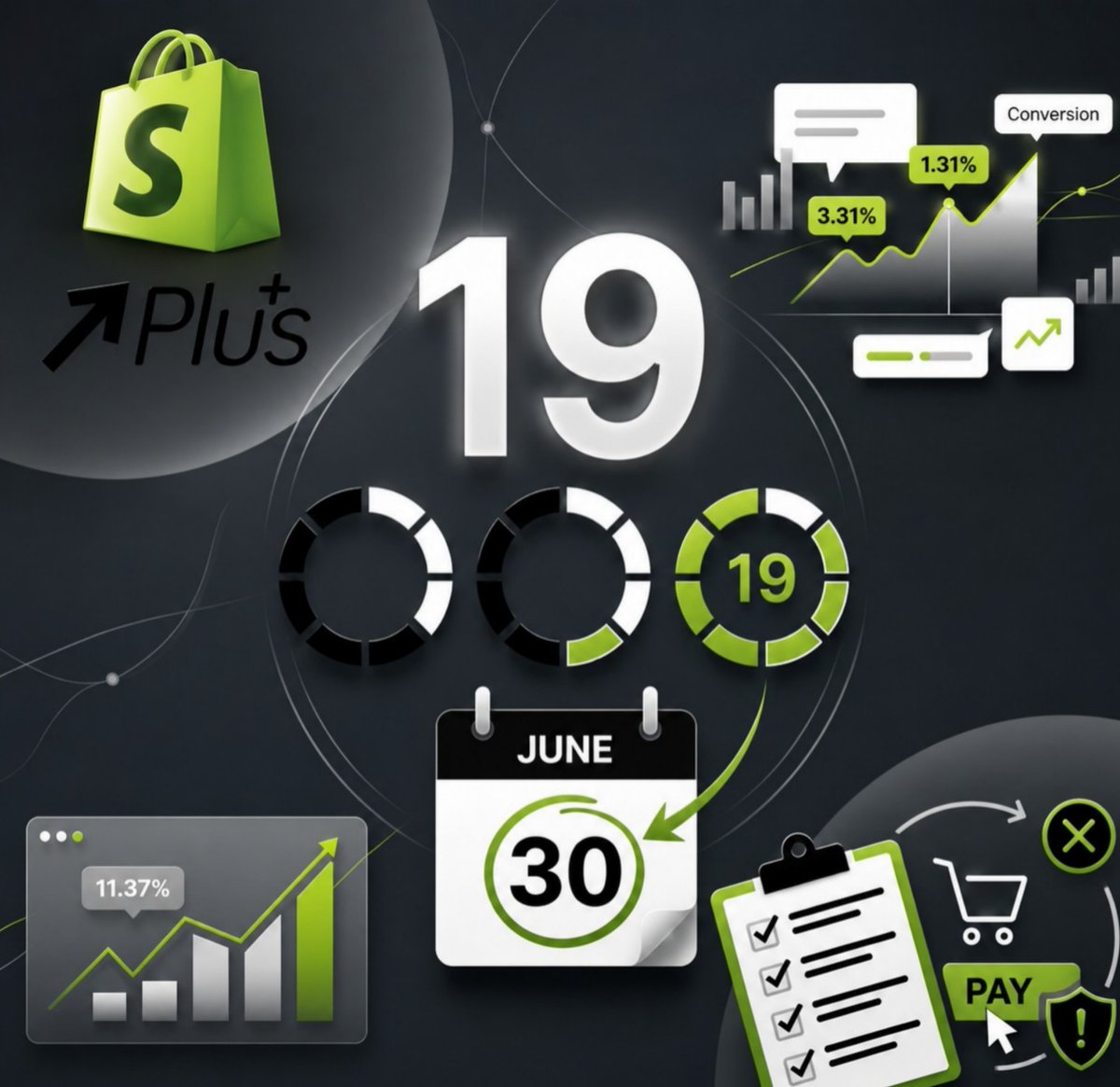
Shopify Plus stores, you have 19 days.
Shopify Scripts stop executing June 30. Discounts, shipping rules, payment logic, B2B checkout, all of it reverts to default.
No error message. You'll find out when your conversion data stops making sense.
Check now:
Shopify admin → Apps → Script Editor.
If it's there and active, you need to migrate.
Checkout is the one place a silent failure is unacceptable.
Link below if you need help.
lanternsol.com/contact-us
1
3
54
Jun 10
The best remote team members aren't the most independent.
They're the best communicators.
Autonomy matters. But what separates high performers from people who quietly stall is how they handle uncertainty.
In an office, blockers surface naturally. In a distributed team, confusion left unspoken turns into a week of misdirected work.
Silence is the most expensive problem in a remote team.
1
30
Jun 10
Three values run everything we do at Lantern Sol.
Evolution. Communication. Ownership.
Evolution is the one most agencies claim but few actually practice. The business we work in changes faster than almost any industry.
The team that was excellent three years ago isn't automatically excellent today.
We invest in staying current, new tools, formats, and ways of thinking, because the moment you stop learning, you start falling behind.
Communication is the one that separates good agencies from great ones. A great result with poor communication still feels like failure to the client.
We're 100% distributed and 100% online. Communication isn't optional. It's the product.
Ownership is the hardest one to build into a team.
Ownership means my team approaches your business the way I would.
They don't wait to be told what's wrong. They find it. They think like operators, not vendors.
Of the three, which do you think is hardest to maintain as a company scales?
21
Jun 10
Running a distributed team across several continents has taught me something I didn't fully understand when I started.
Management and leadership aren't the same thing.
Management is making sure things get done.
Leadership is making sure the people doing them want to do their best work.
When I hired my first employees, I thought my job was to direct.
But a team doesn't grow that way. People don't grow that way.
What changed for me was realizing that when I put someone on a project, I'm not just assigning a task.
I'm giving them a chance to build something. To develop a skill they'll carry forward.
The result of that shift: I have people on this team who've been here since the beginning of Lantern Sol.
That doesn't happen when you treat people like contractors. It happens when you treat them like the future of the company.
The team is the business. Everything else is downstream of that.
1
33
Jun 9
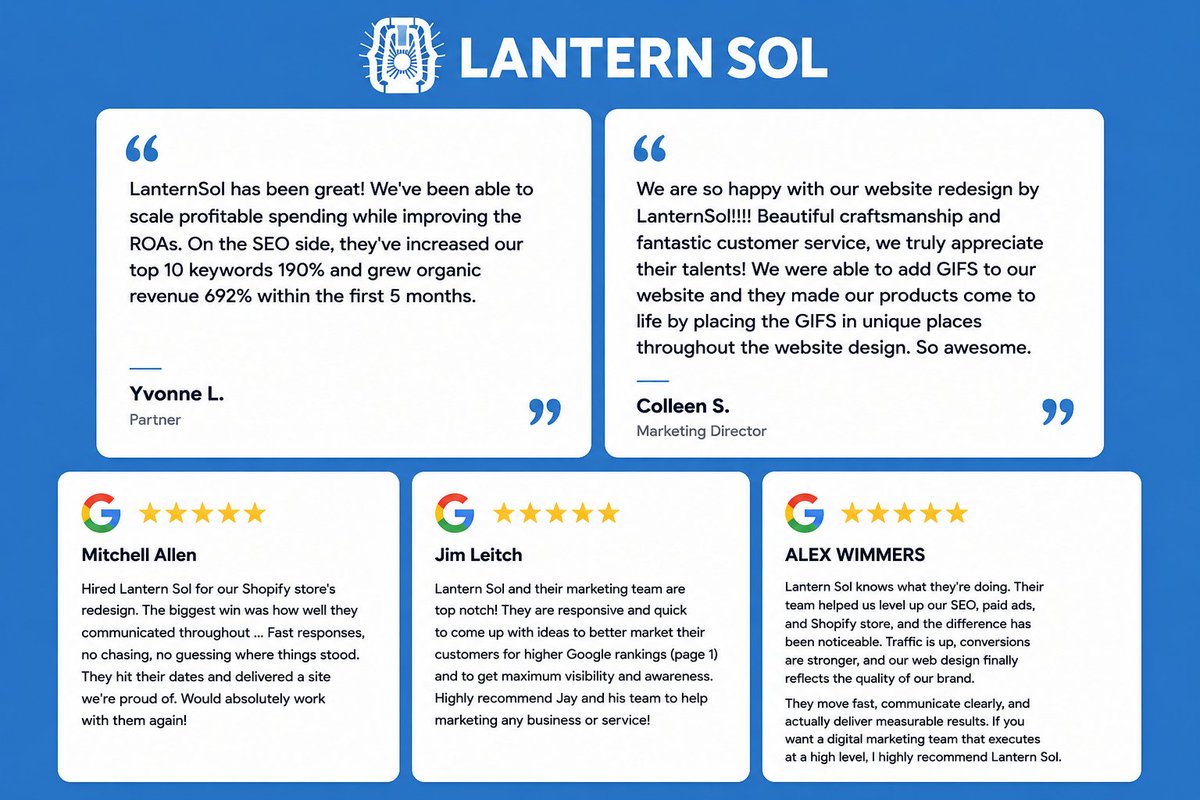
Did you know Lantern Sol has 500 five-star reviews across Google, Shopify Experts, and Clutch?
Every single one. Five stars across the board.
That's not luck. That's the standard we hold ourselves to on every project.
If you're a Shopify brand looking for a partner you can actually trust, contact us at lanternsol.com/
58
Jun 9
One channel question every founder eventually asks: which one do I actually prioritize?
One distinction decides it.
Is your product searched for, or does it need to be discovered?
Search intent already exists → Google.
Needs to be seen first → Meta or TikTok.
Have any existing audience → Email, fastest path to early revenue.
The most expensive mistake: $500 into Google, $500 into Meta, $500 into TikTok. 30 days later, “ads don't work.”
None of those channels had enough data. You ran three inconclusive experiments at the same time.
Pick one and actually learn something.
Which would you go all-in on first?
2
2
66
Jun 9
“Shop Now” is not a CTA. It's a missed opportunity.
The button is the second most important thing in your email.
First you get the open. Then you need the click.
“Shop With Free Shipping” and “Claim My Offer Before Friday” do something. “Shop Now” tells me nothing.
Benefits over commands. Urgency over suggestion.
What's the best CTA you've ever clicked or written?
17
Jun 8
Most Shopify founders respond to a revenue plateau by increasing their ad spend or modifying the creative.
It's the biggest leverage, right?
And more traffic means more sales, right?
The problem is that it's also the most expensive lever you can pull, and it only works if the underlying store is actually converting.
Let me show you what I mean with a real example.
I audited a brand not long ago.
They had 154,000 monthly sessions, $465 average order value, 0.37% conversion rate. Run the math and that's roughly $264,000 in monthly revenue.
Solid numbers. But the store had real conversion issues: page structure was off, the product pages were cluttered, navigation was making customers work too hard.
Now watch what happens when you change just one number. Keep the traffic exactly the same. Move the conversion rate from 0.37% to 0.5%, that's an increase of less than two tenths of a percent.
That single change takes monthly revenue from $264,000 to $348,000. That's $84,000 more per month from the same number of visitors.
Annualized, that's over a million dollars in additional revenue without spending an extra dollar on acquisition.
The reason I walk through this math with almost every brand I audit is because the numbers make something visceral that would otherwise feel abstract. A 0.13% improvement in conversion rate sounds meaningless.
But when you multiply it across 154,000 sessions at a $465 AOV, it stops sounding like a rounding error.
Most of the conversion leaks I find in audits aren't technically hard fixes. They're just easy to ignore when traffic is the metric everyone's watching.
The stores that compound their growth are the ones that fix the foundation first, then pour more traffic into a system that's actually built to convert it.
If you want to know where your conversion leaks are, that's exactly what we look at. lanternsol.com/contact-us
3
1
59
Jun 8
Imagine handing someone a book with no title on the cover.
That's what you're giving Google if your homepage doesn't have an H1.
An H1 is the single most important signal you can give a search engine. It says: “this is what this page is about.” Without it, Google has to guess. And when Google guesses, you lose.
This is a repetitive pattern. The homepage has a beautiful design, a compelling headline, strong photography. But the heading structure is wrong. The H1 is missing. The meta title is just the store name. The meta description is blank or auto-generated.
Here's what you should check today:
Open your homepage. Right-click anywhere, hit “Inspect,” and search for H1. If there's nothing there, or if your H1 is something like “Welcome to our store,” that's a problem.
Your H1 should contain your most important keyword. The actual term people type into Google to find what you sell.
Same thing for your meta title. That's the headline in your search result. It should include your primary keyword and give someone a reason to click.
31
Jun 8
The welcome series is the most important email sequence you'll ever build.
It's the only sequence every single subscriber sees.
Most brands blow it. They send a 10% discount code, maybe a “thanks for subscribing,” and move on.
But to be honest that looks more like a transaction rather than a welcome.
What I would do:
Start with your brand story. Why did you build this?
Subscribers opted in because something caught their attention. Don't waste that moment on a coupon.
Also counterintuitively, a simple text-based only email performs better vs something overly designed.
Then lead with social proof. If someone just discovered your brand, they don't trust you yet.
Let your customers do the talking and pull your best reviews. Let them do the selling.
Then educate. If your product solves a real problem, show people how. Tutorials are key here. Create demand through education, not discounting.
Discount last, if at all. You can still offer an incentive. Just don't lead with it. Your brand is worth more than that.
Done right, the welcome series should drive 10–15% of total store revenue on its own. If your business does $2M a year, that's $200K–$300K tied to this one sequence.
Check your welcome series this week and have a look at what the first thing a new subscriber sees.
50
Jun 5
Running an agency with 50 active clients means the work will fill every hour you give it.
The thing nobody warns you about is that the work fills the hours whether or not the hours produce anything.
A few years in, the lesson I keep relearning is that the best work happens after the time off, not in spite of it.
The things I step away into:
• Family. The clearest filter for what actually matters. Easy to lose perspective on a Tuesday afternoon. Harder to lose it across a Sunday with my daughter.
• Fitness. The one non-negotiable on the calendar. The days I skip it are the days I notice it.
• Languages. Picking up a language slowly is one of the few skills that humbles you on a regular schedule. You can't shortcut it.
• Piano. The one I'm coming back to. I live it because there's no finish line with it. Infinite styles and ways to play. I can do it late into life. And on any given day it's a vehicle for whatever I'm actually feeling, not a task to complete, just something to channel into.
These are all important because they let me return to the work as a person rather than as a function.
If the only time you stop is when your body forces you to, the business is going to take more than it's giving back.
37
Jun 5
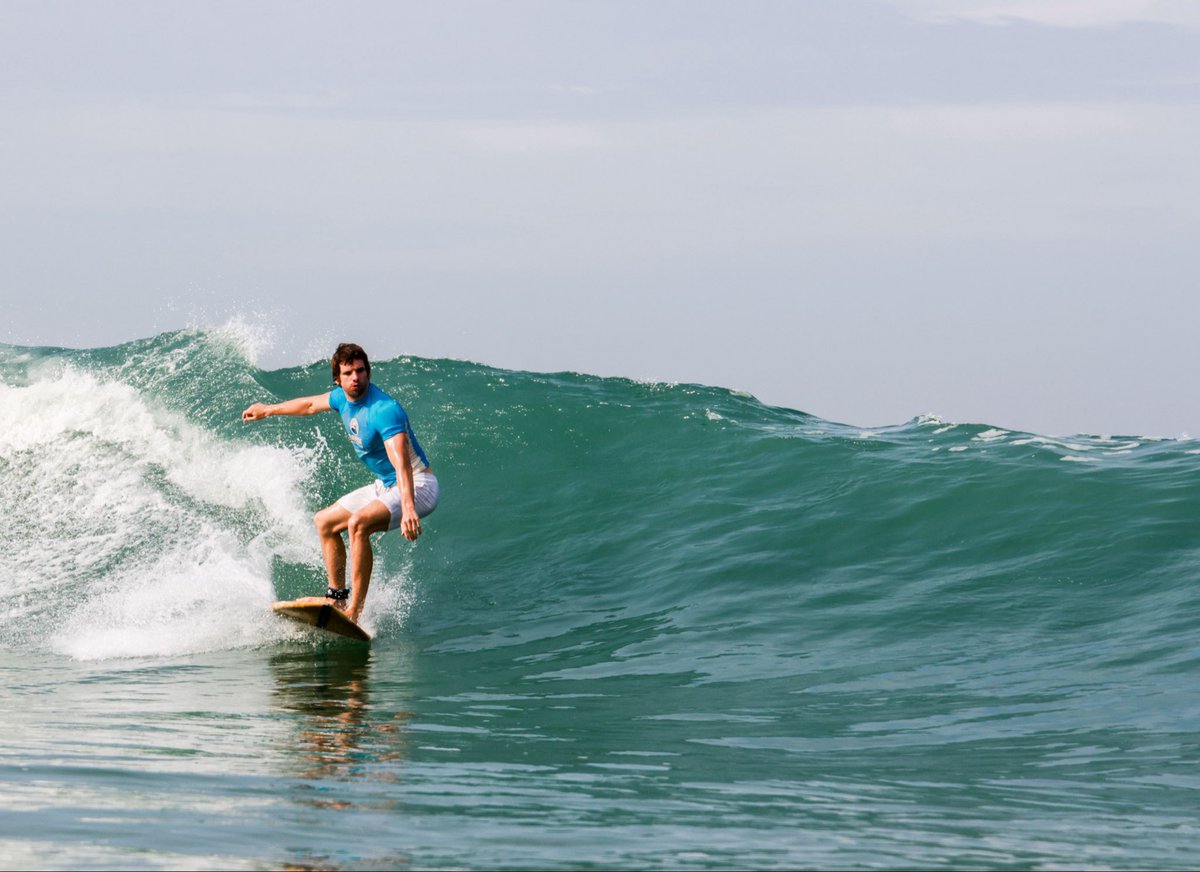
I started surfing last year. Living in Brazil, you'd be crazy not to.
The thing nobody tells you about surfing is that 90% of it is paddling.
Riding the wave is the easy part. Everything else is paddling out, fighting current, getting into position, timing the set, eating it, paddling back out.
The first month I was exhausted before I'd caught a single decent wave.
What I've noticed, six months in:
The days I crush it and the days I get dumped on the ground feel almost identical from the outside. It’s the same person each time afterall. The variable is the conditions and where you are in the lineup.
You can't control the conditions.
You can control showing up, paddling out, and being in position when the right wave comes.
I think about that a lot with the business.
Some weeks the deals close. Some weeks they don't. Nothing about the team or the offer changed. The variable is timing and what's happening in our clients' worlds that we have no visibility into.
The operators who win long term are the ones who keep paddling out.
1
43
Jun 5
My grandpa took his first piano class at 82.
This is a photo of him at his recital surrounded by kids aged 7 to 12.
He's the oldest student in the room by about 70 years.
And I come back and think about that photo often.
It's the cleanest reminder I have that there's no finish line on learning.
He could have decided at 82 that the chapters were closed. He picked up something new instead, and let himself try it for the first time in front of others.
The older I get, the more I notice that the people who inspire me are the ones still showing up to something they're not good at yet.
A grandfather starting piano at 82. A sibling switching careers in their 40s. A team member learning a new skill because the work asked them to grow into it.
Someone in a mastermind room admitting out loud that they don't know how to solve the problem they came in with.
The people around you are the people meant to inspire you. Pay attention to the ones who never stopped being students. They're showing you what's possible.
There's no finish line and that's the point.
28
Jun 4
One of the biggest things on my mind right now: ranking higher inside AI.
Shopify just put real numbers behind why this matters.
In Q1 2026, shoppers arriving from AI tools converted at nearly 50% higher rates than organic search visitors, and spent about 14% more per order.
More than half of them landed straight on a product page, versus only about 20% of organic search visitors.
And the volume isn't small anymore. AI referral sessions on Shopify stores grew more than 8x year over year.
Orders from them grew nearly 13x.
Here's why those conversion numbers make sense to me. People trust AI.
When the smartest, most trusted advisor someone has tells them to buy your product, they're not arriving skeptical. They're arriving pre-sold.
That's an enormous advantage, and it goes to whichever brands the AI decides to recommend.
So the question stops being “how do I rank on Google” and becomes “how do I become the brand AI cites.”
It’s a different game, and most brands haven't started playing it.
1
106
Jun 4
A founder told us this week that our reviews were the reason they reached out.
They had been vetting agencies for their brand and ours was the only one with every single review at five stars.
It's the thing we hear most often from new clients. Not our pricing. Not our case studies. The reviews.
Why?
Because anyone can pitch results.
Anyone can build a case study deck.
But you can't fake 500 five-star reviews across Google, Shopify, and Clutch.
That's the kind of social proof that takes years to build and one bad month to lose.
We've protected it on purpose.
Every project gets full attention. Every client gets a real team.
That's the only way to keep the bar where it is.
If you're a Shopify brand doing $3M and you're evaluating partners, that's the kind of standard we'd want you to hold every agency to.
50
Jun 4
SMRTFT is the case study I come back to more than any other.
When we started working together, organic was an afterthought.
Six months in, organic traffic was up 8,296%.
The headline number is loud, so let me show the work.
Three pillars, run in parallel:
• Technical SEO. Site speed, crawl issues, schema, internal linking structure. Boring foundational work that most agencies skip because it doesn't show up in a dashboard well. It's the unlock for everything else.
• Backlinks. We benchmarked SMRTFT against the closest competitor. Competitor had ~4x the referring domains. We built a backlink strategy targeted at closing that gap with real publications, partner sites, and earned placements. Not link farms.
• Content built around revenue keywords. Not vanity keywords. Not high-volume terms that don't convert. We mapped the keywords customers actually used right before buying, then built content that ranked top three for those specific terms.
On the paid side over the same window: 6.42x Facebook ROAS, 6.1x Google ROAS.
SMRTFT crossed $30M in revenue.
The reason this worked was because we treated SEO, paid, and CRO as one system instead of three separate line items.
1
40
Jun 3
Why did I start Lantern Sol?
The honest answer is I got bored. Two months of not building were already a lot.
I'd spent 12 years in ecommerce.
Co-founded a fitness brand, bootstrapped it to $25M, and exited.
The knowledge had nowhere to go.
Watching other founders make the same mistakes I'd already made, and not being able to do anything about it, felt worse than just getting back to work.
So I started doing what I'd done for one brand, for many.
I knew what worked on @Shopify, I knew what didn't, and I knew there were founders out there bleeding money on the things I'd already figured out the hard way.
Six years later, the agency has 30 people across multiple continents and 50 active clients. I took what I learned building the first business and put it to work for as many founders as I could.
That's still the whole job
1
1
82