
CEO and Co-Founder, @AlvaEnergyIo
Joined March 2017
- Tweets 4,266
- Following 1,773
- Followers 4,102
- Likes 4,483
253 Photos and videos

James Krellenstein retweeted

Jun 13
New York has:
- SoaceX IPO yesterday
- Knicks game 5
- Brazil v Morocco World Cup
- Brooklyn Pride
- Hare Krishna Parade
and it’s still less overwhelmed than SF is for JPMorgan
23
17
1,067
133,380

May 12
a very 2026 moment. engineer: "are you sure we can use this many tokens?" me: "you are not using enough".
263
James Krellenstein retweeted

May 4
Have a podcast coming with @jbkrell this week that will melt you're freaking mind
3
3
29
4,481
James Krellenstein retweeted

Feb 17
Worth a listen - - #nuclear uprates. Also, friendly jab:
@Dr_Keefer: If you could simplify this for non-engineers?
@jbkrell: Hold my beer. If we can increase delta t, and increase mass flow across the core at the same delta t, we get more units of energy/sec
@alvaenergyio
Feb 17

The Most Overlooked Opportunity in Nuclear?
Why Nuclear Power Plant Uprates Beat Everything Else in the Race for New Capacity.
Recent conversations about the budding nuclear renaissance often begin with the same list. Microsoft restarting Three Mile Island, tech companies partnering with advanced nuclear reactor vendors or the proposed Japanese funded US AP1000 fleet build.
These announcements generate headlines, volatile valuations and investor decks.
Meanwhile, forty Westinghouse pressurized water reactors (PWR) sit at roughly the same thermal power output they were commissioned at decades ago, operating within design margins calculated on transistorized computers before integrated circuits existed.
Together, these plants hold between 6-10GW of additional capacity, the equivalent of eighteen to thirty 300MW SMRs, that could be unlocked faster and cheaper than any other nuclear source and perhaps even faster than new gas.
My conversation with returning guests Robb Stewart (@nuclear_robb) and James Krellenstein (@jbkrell), CTO and CEO of Alva Energy (@alvaenergyio), made the case that power uprates at existing PWR plants represent the lowest-hanging fruit in the sector, bypassing the megaproject risks and nuclear supply chain rebuilding that make new nuclear construction so daunting for utilities.
The components turn out to be far more manageable and anticlimactic than new build nuclear: non-safety-related secondary side equipment such as feedwater heaters and condenser tube bundles, alongside nuclear-grade steam generators that the fleet has already learned to replace during their month long scheduled outages using well-rehearsed industrial choreography.
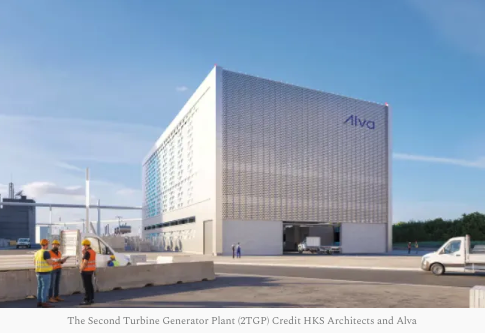
Alva’s approach avoids the traditional uprate bottleneck by building a separate standardized 250MW Second Turbine Generator Plant (2TGP) building diverting incremental steam from an uprated core without touching the existing turbine centerline.
Most of the construction happens on a conventional, non nuclear island using mature supply chains and firm fixed price engineering, procurement, and construction contracts, leaving the outage window limited to a short tie in during a normal refueling cycle.
Compared to a cohort of first of a kind nuclear steam supply system startups that accessed public markets through SPAC mergers and achieved substantial valuations in the hundreds of millions on compelling nuclear narratives this approach sounds deliberately boring.
But perhaps boring is what our current moment demands. The question is whether the American nuclear zeitgeist can resist the allure of novelty long enough to pluck the low hanging gigawatts hiding in plain sight.
1
1
12
1,014
James Krellenstein retweeted

Feb 17
Listen to two of our co-founders @nuclear_robb and @jbkrell discuss our tech on @Dr_Keefer's podcast.
Feb 17
The Most Overlooked Opportunity in Nuclear?
Why Nuclear Power Plant Uprates Beat Everything Else in the Race for New Capacity.
Recent conversations about the budding nuclear renaissance often begin with the same list. Microsoft restarting Three Mile Island, tech companies partnering with advanced nuclear reactor vendors or the proposed Japanese funded US AP1000 fleet build.
These announcements generate headlines, volatile valuations and investor decks.
Meanwhile, forty Westinghouse pressurized water reactors (PWR) sit at roughly the same thermal power output they were commissioned at decades ago, operating within design margins calculated on transistorized computers before integrated circuits existed.
Together, these plants hold between 6-10GW of additional capacity, the equivalent of eighteen to thirty 300MW SMRs, that could be unlocked faster and cheaper than any other nuclear source and perhaps even faster than new gas.
My conversation with returning guests Robb Stewart (@nuclear_robb) and James Krellenstein (@jbkrell), CTO and CEO of Alva Energy (@alvaenergyio), made the case that power uprates at existing PWR plants represent the lowest-hanging fruit in the sector, bypassing the megaproject risks and nuclear supply chain rebuilding that make new nuclear construction so daunting for utilities.
The components turn out to be far more manageable and anticlimactic than new build nuclear: non-safety-related secondary side equipment such as feedwater heaters and condenser tube bundles, alongside nuclear-grade steam generators that the fleet has already learned to replace during their month long scheduled outages using well-rehearsed industrial choreography.
Alva’s approach avoids the traditional uprate bottleneck by building a separate standardized 250MW Second Turbine Generator Plant (2TGP) building diverting incremental steam from an uprated core without touching the existing turbine centerline.
Most of the construction happens on a conventional, non nuclear island using mature supply chains and firm fixed price engineering, procurement, and construction contracts, leaving the outage window limited to a short tie in during a normal refueling cycle.
Compared to a cohort of first of a kind nuclear steam supply system startups that accessed public markets through SPAC mergers and achieved substantial valuations in the hundreds of millions on compelling nuclear narratives this approach sounds deliberately boring.
But perhaps boring is what our current moment demands. The question is whether the American nuclear zeitgeist can resist the allure of novelty long enough to pluck the low hanging gigawatts hiding in plain sight.
2
5
16
1,340
James Krellenstein retweeted

Feb 13
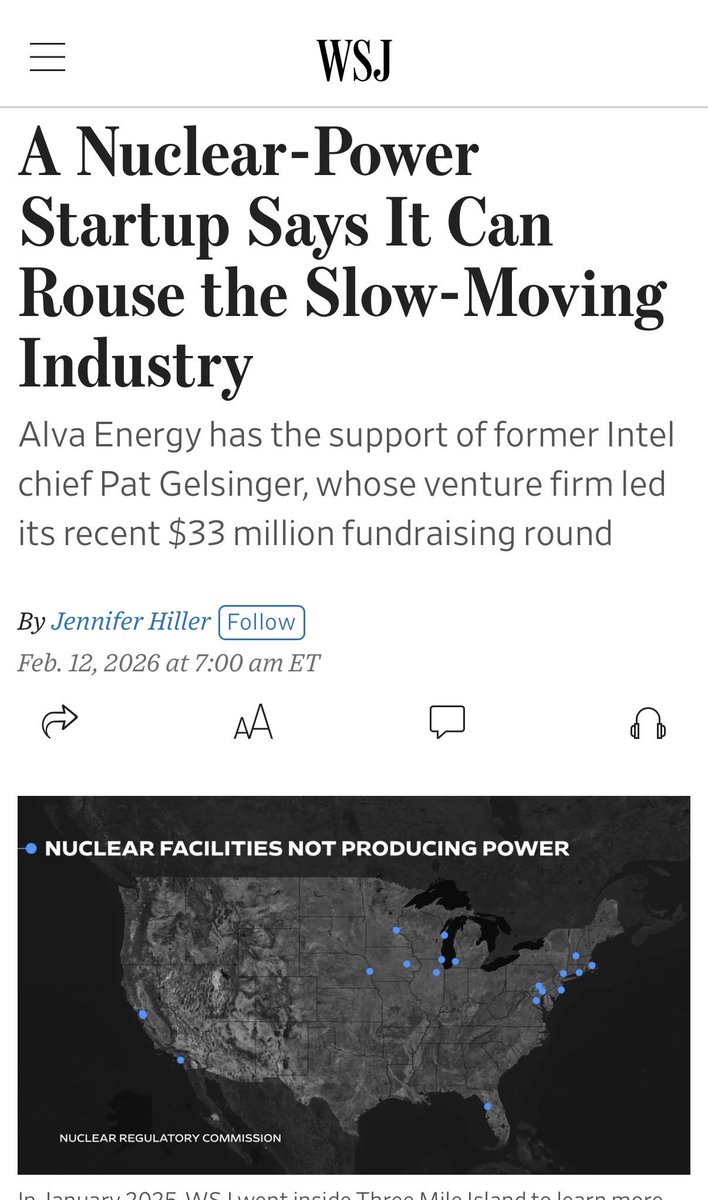
I’m happy to announce that I have joined @alvaenergyio on their Series A!
Alva has the fastest path to deploying 10 GW of nuclear in the near future.
They’re not counting on technological breakthroughs or licensing reforms.
Alva goes into existing nuclear reactors and increases their output by 20 - 30%
That means getting about 200 - 300 MW—roughly the size of a small modular reactor—more electricity per power plant, but in 18 months!
11
20
201
25,816
James Krellenstein retweeted

Feb 14
The Wall Street Journal covered the exciting news that Alva Energy, a nuclear energy startup company co-founded by James Krellenstein (@jbkrell), had raised $33 M in venture capital. The company has the goal of adding approximately 10 GWe of nuclear electricity generating capacity by uprating existing Pressurized Water Reactors by 200-300 MWe, requiring 30-40 individual projects.
Uniquely, Alva believes they can dramatically improve the economics of power uprates with a several step process that minimizes cost and revenue-killing down time. Their public estimates indicate a cost per project of ~$1 B and a project duration of 5 years.
Here is my understanding of the basic concept. Please share thoughts and corrections.
Build a medium sized electricity generating steam plant adjacent to the operating unit while the unit continues to operate.
During a properly selected outage window, replace existing steam generators and connect the new steam plant as an additional path for the steam generated by the plant.
Use modern control systems that can dynamically balance steam flows for the new steam turbine configuration. It will include the existing ~1000 MWe turbine-generator and the 200-300 MWe turbine-generator.
The reactor will need to be modified and the operating license amended to produce the additional 600-900 MW of thermal energy. Current NRC operating licenses are for MWth, not MWe.
Power uprates are not uncommon, but they became rare during the period between 2008 and 2023 when there was so much excess capacity on the grid that nuclear plant owners were closing reactors. They couldn't sell power the power they produced for a profitable price in an over supplied market. In that situation, investing hundreds of millions in new capacity made no sense.
According to @Jennifer_Hiller's WSJ article, Alva is targeting PWRs. It believes that most of the potential uprate capacity in BWRs has either been exploited or soon will be through existing processes. BWRs – obviously – do not need steam generator replacements as part of an uprate project.
It's no secret that electricity demand is growing again or that there are customers who are keenly interested in contracting for more of the clean firm power that nuclear reactors produce in abundance.
Note: If you are, like me, a @DecoupleMedia fan, you might feel like you know Alva Energy's co-founder quite well. James has been a frequent guest on @Dr_Keefer's popular nuclear energy/geopolitics/climate change podcast.
A gift article link to the WSJ article is available in the comments.
5
8
49
8,448
James Krellenstein retweeted

Feb 14
Decouple will be publishing a detailed interview with CEO @jbkrell and CTO Robbie Stewart next week all about nuclear uprates and Alva’s Energy’s unique approach.
Feb 14

The Wall Street Journal covered the exciting news that Alva Energy, a nuclear energy startup company co-founded by James Krellenstein (@jbkrell), had raised $33 M in venture capital. The company has the goal of adding approximately 10 GWe of nuclear electricity generating capacity by uprating existing Pressurized Water Reactors by 200-300 MWe, requiring 30-40 individual projects.
Uniquely, Alva believes they can dramatically improve the economics of power uprates with a several step process that minimizes cost and revenue-killing down time. Their public estimates indicate a cost per project of ~$1 B and a project duration of 5 years.
Here is my understanding of the basic concept. Please share thoughts and corrections.
Build a medium sized electricity generating steam plant adjacent to the operating unit while the unit continues to operate.
During a properly selected outage window, replace existing steam generators and connect the new steam plant as an additional path for the steam generated by the plant.
Use modern control systems that can dynamically balance steam flows for the new steam turbine configuration. It will include the existing ~1000 MWe turbine-generator and the 200-300 MWe turbine-generator.
The reactor will need to be modified and the operating license amended to produce the additional 600-900 MW of thermal energy. Current NRC operating licenses are for MWth, not MWe.
Power uprates are not uncommon, but they became rare during the period between 2008 and 2023 when there was so much excess capacity on the grid that nuclear plant owners were closing reactors. They couldn't sell power the power they produced for a profitable price in an over supplied market. In that situation, investing hundreds of millions in new capacity made no sense.
According to @Jennifer_Hiller's WSJ article, Alva is targeting PWRs. It believes that most of the potential uprate capacity in BWRs has either been exploited or soon will be through existing processes. BWRs – obviously – do not need steam generator replacements as part of an uprate project.
It's no secret that electricity demand is growing again or that there are customers who are keenly interested in contracting for more of the clean firm power that nuclear reactors produce in abundance.
Note: If you are, like me, a @DecoupleMedia fan, you might feel like you know Alva Energy's co-founder quite well. James has been a frequent guest on @Dr_Keefer's popular nuclear energy/geopolitics/climate change podcast.
A gift article link to the WSJ article is available in the comments.
2
7
74
5,202
James Krellenstein retweeted

Feb 12
Thrilled to announce our first investment in Alva Energy. Proud to back @jbkrell @nuclear_robb Garrett Wilkinson and the elite team they have assembled.
We have supported Alva since its inception because we believe it represents one of the most credible pathways to meaningfully expanding clean, firm power at scale. With an experienced execution team, a repeatable delivery model, and proven technology, Alva is positioned to play a central role in the next chapter of #nuclear energy. Much more to come on this one! To learn more visit alvaenergy.io
Feb 12

Exclusive: The startup Alva Energy says it knows how to kick-start the slumbering nuclear-power industry—and former Intel CEO Pat Gelsinger is backing its efforts on.wsj.com/4bN5SZ7
1
5
20
4,001
James Krellenstein retweeted

13 Aug 2025
I’m not a regular mom, I’m a rad mom 💅🏼
Congrats @isabelleboemeke on launch day!
Rad Future: The Untold Story of Nuclear Electricity and How It Will Save the World is out NOW!! 🩵⚡️

9
22
269
18,605
8 Aug 2025
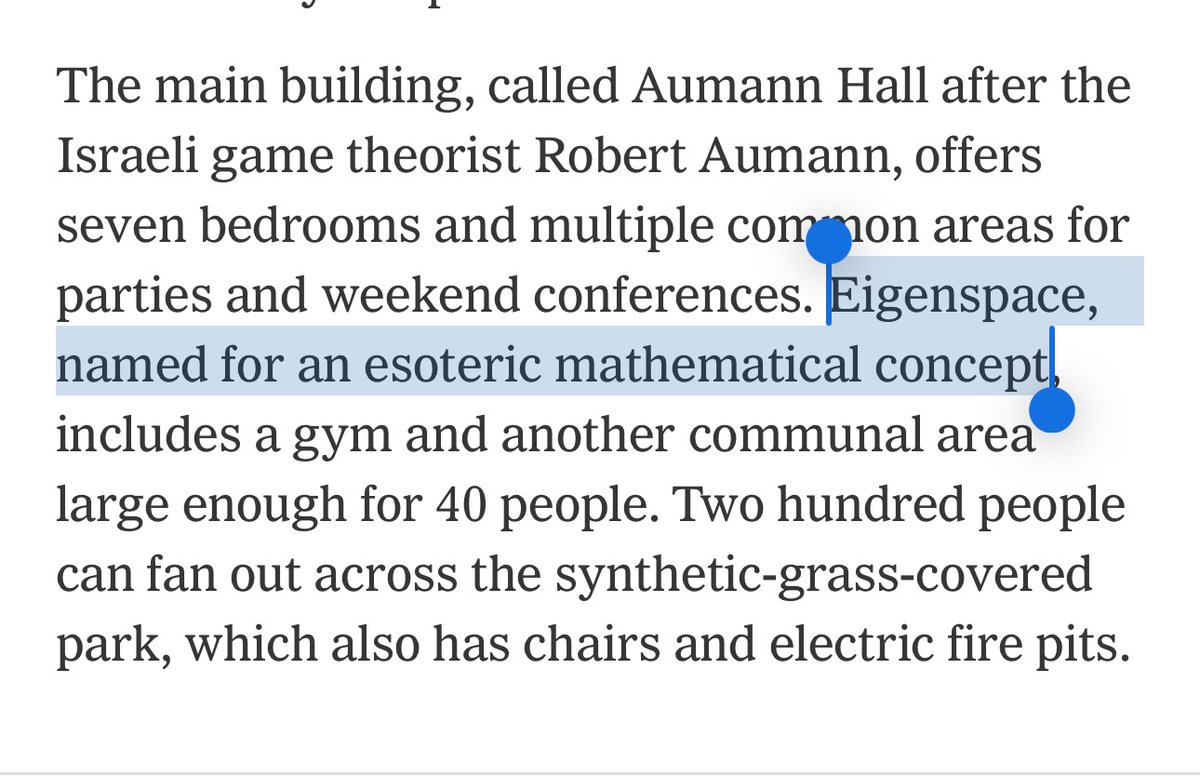
as someone who uses their eigen* (space, spectrum, vector, value etc.) in everyday conversation, I still think it is right to describe this as "esoteric" for a general audience. What pct of the US readership has taken Lin Alg?

2
2
11
1,675
James Krellenstein retweeted

27 Jul 2025
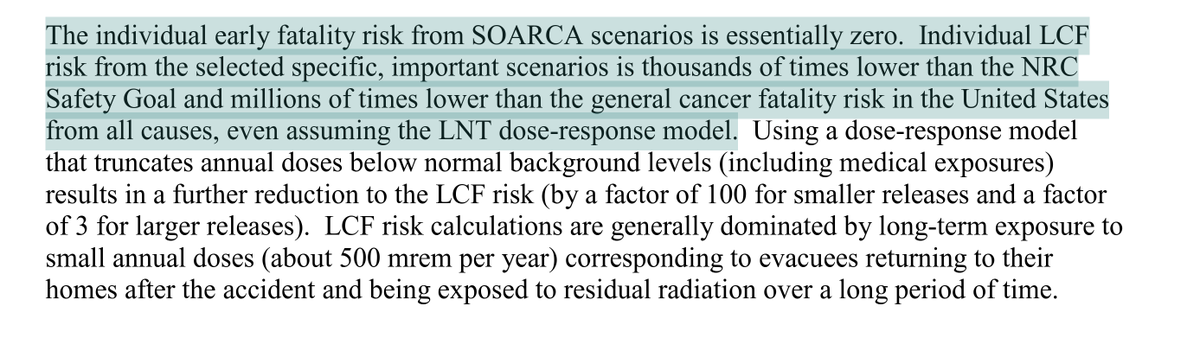
Have you seen the NRC's SOARCA report from 2012? They and Sandia took their best severe accident models as coded up in MELCOR and MACCS2 and ran the most challenging accident scenarios for large realistic PWR and a BWRs, (including their required safety procedures and systems, of course).
The NRC said "the early fatality risk from SOARCA scenarios is essentially zero" (link in comments).
Damn, nuclear reactors are really safe.
9
13
63
7,180

#NRCAdvisory: We've published a direct final rule to extend the duration of reactor design certifications from 15 to 40 years. federalregister.gov/d/2025-1…
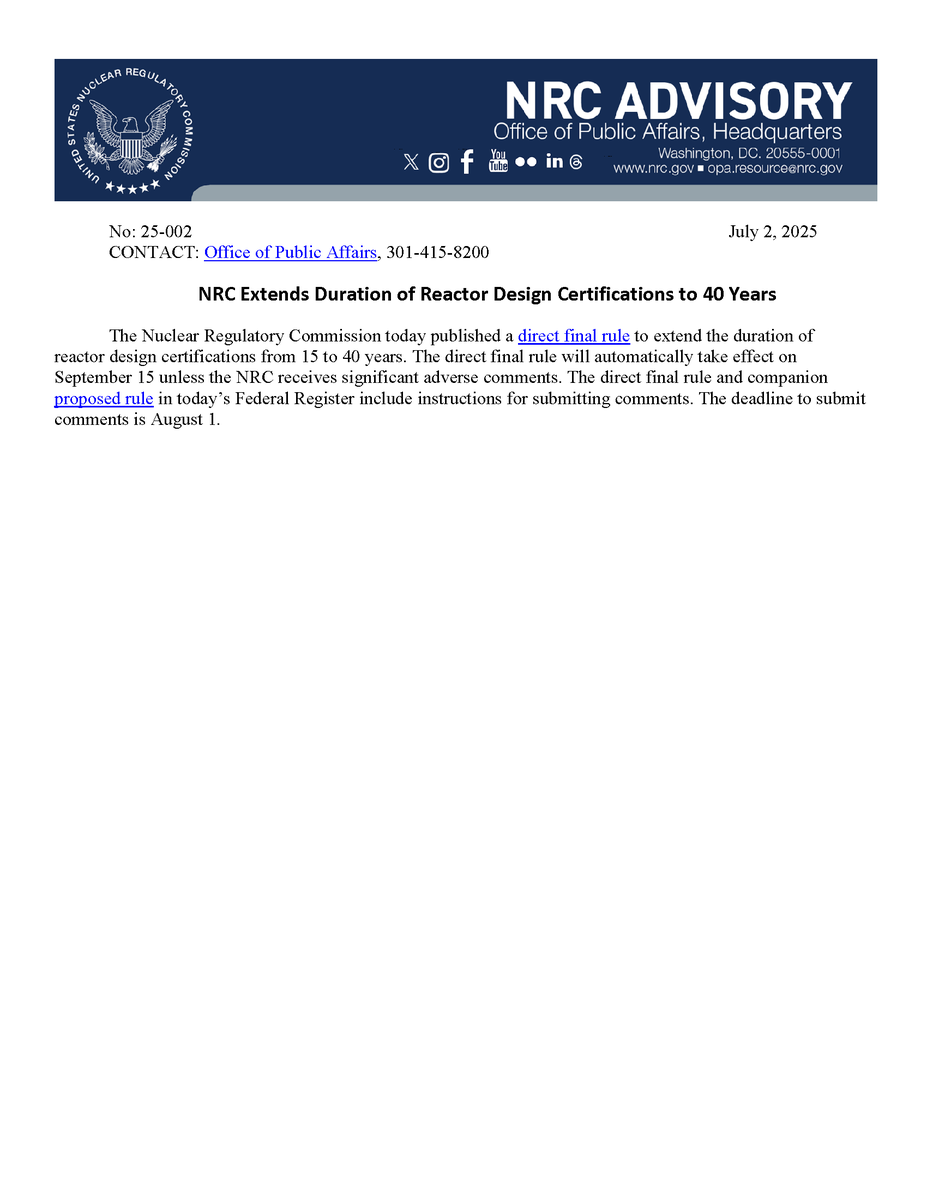
ALT Image is a screenshot of an NRC Advisory document.
2
14
79
32,317
1 Jul 2025
…is this venture capital summer or the AP1000s?
1 Jul 2025

likely in italy part of next week for reasons related to running a hardware startup ... not VC summer.
I swear.
1
8
1,258
25 Jun 2025
Since 2018, Seqyoah 1 and 2 have an average capacity factor of 89% and 87% respectively. Dare we ask Ed, if that is not "reliable 24/7 baseload" power, what other source of clean baseload operates at that capacity factor or higher?
25 Jun 2025

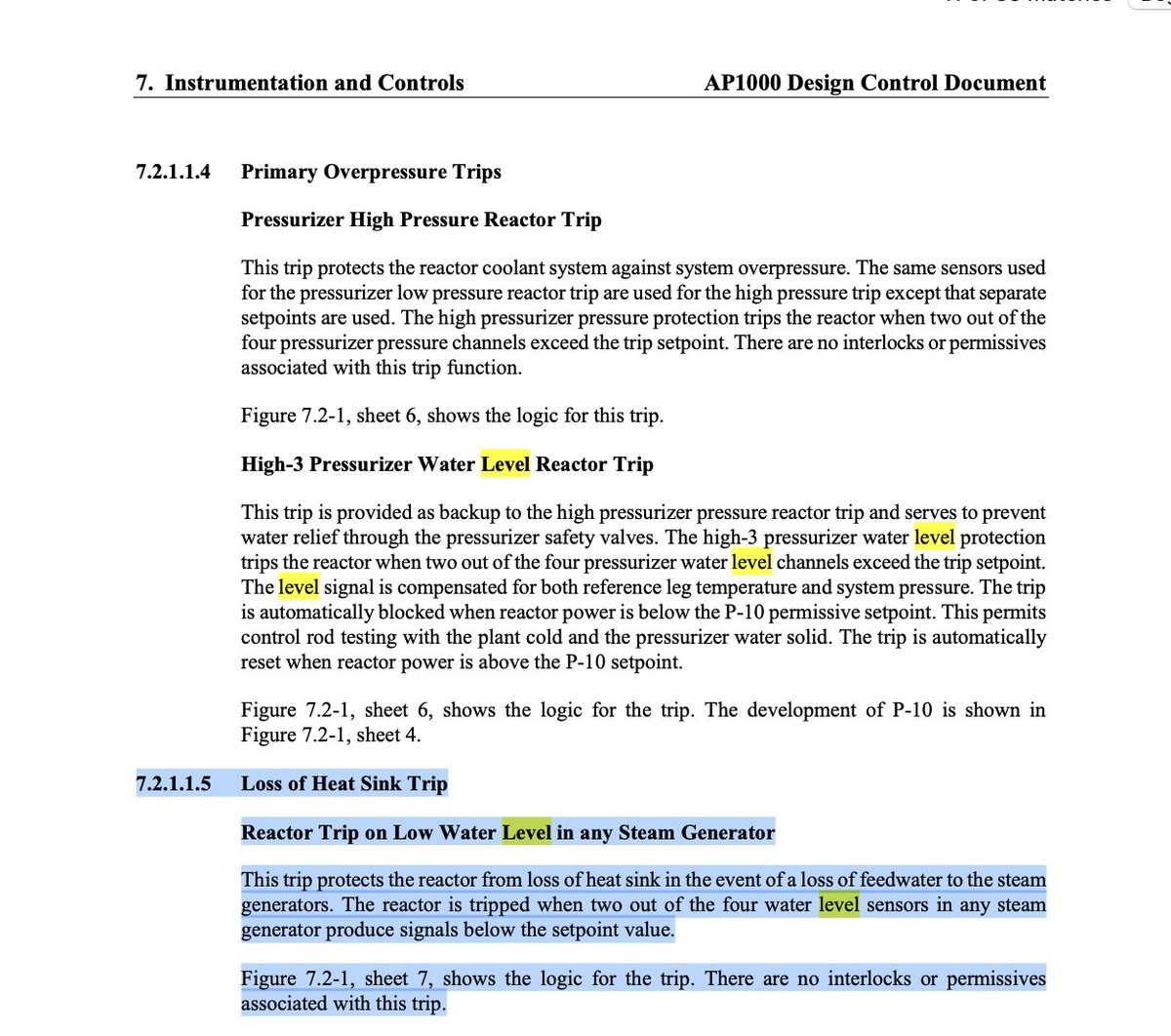
From today's @NRCgov event reports, we now know that both Sequoyah #nuclear reactors in #Tennessee were manually scrammed yesterday because of lowering steam generator water levels due to secondary system malfunctions. Both still down today. Not exactly reliable 24/7 baseload.
1
7
25
1,872
24 Jun 2025
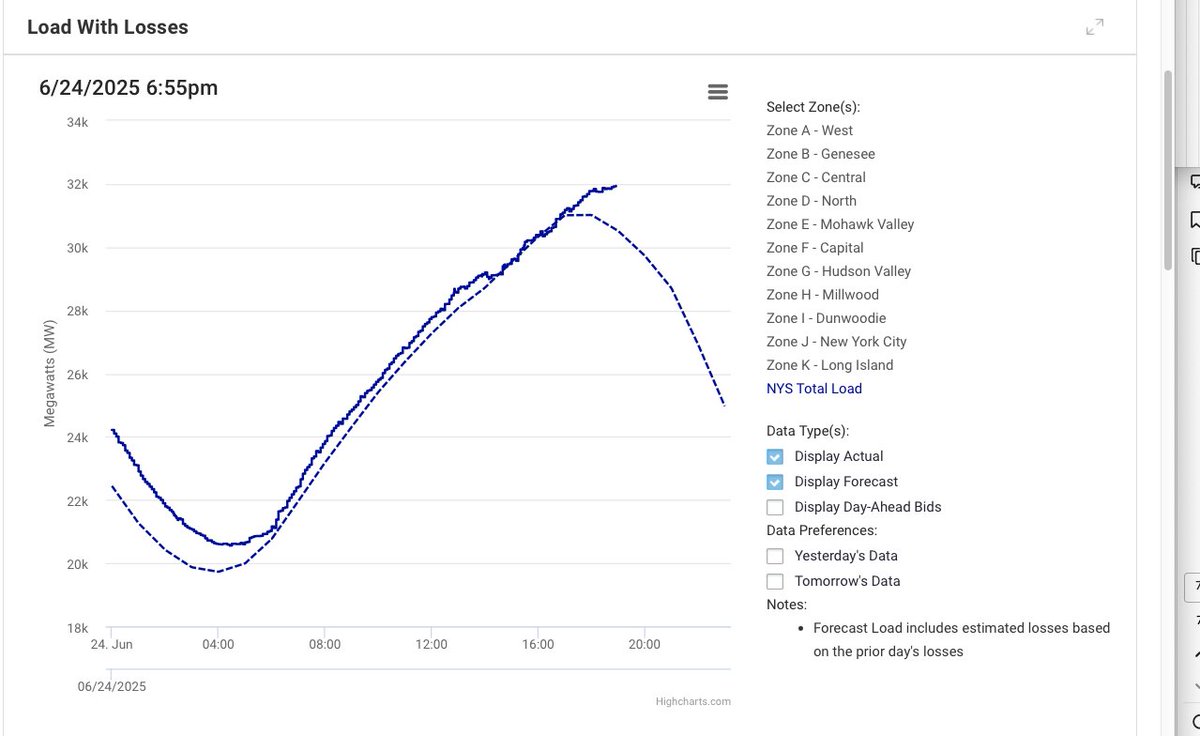
NYISO is in Orange Emergency Configuration. Could of really used Indian Point today...
2
10
26
7,533
James Krellenstein retweeted

24 Jun 2025
Learning-by-doing, the sought after but never achieved cost-reduction path for new nuclear. Let's unpack some key factors that @Dr_Keefer and I discussed on @DecoupleMedia:
1
3
11
5,256