
Building @ensdomains. Distilling the complicated into the simple. Curious about ZK, dabbling in crypto(graphy)
Joined December 2010
- Tweets 12,044
- Following 674
- Followers 11,524
- Likes 16,165
490 Photos and videos




Pinned Tweet

21 Aug 2021
Thread of my threads distilling the complicated into the simple.
Previous topics include:
- Zero Knowledge Proofs
- EIP-1559
- Rollups
- ETH2 and the merge
I’ll add new threads here for easy referencing for myself and others.
36
98
558
Jun 13
RT @ensdomains: The internet still needs names.
The biggest shift today is who needs them now. 🧵
39
jefflau.eth retweeted

Jun 8
OK, so I became one of those people: Claude diagnosed my sleep disorder.
Here's the story.
I'd been sleeping worse and worse since hitting my mid-30s. I've been averaging 5:30-5:45 a night for a couple years now, while in my 20s I was getting 7 hours a night. I figured it must be stress, sleep hygiene, perhaps just aging--or maybe I'm one of those freaks of nature who doesn't actually need much sleep.
Eventually I bought an Oura ring and started tracking sleep, figuring "what gets measured gets optimized." But it didn't optimize anything, it mostly just showed me high-resolution charts that, yeah, my sleep sucks. It never pointed out anything obviously wrong other than how little I was sleeping.
Nothing seemed to help. Phone in another room, eye mask, blackout curtains, white noise machine, nothing seemed to help. My body just didn't want to sleep more than 6 hours a night.
Eventually I decided: fuck it. I'm pretty productive, maybe this is all I need. People say humans need 7-9 hours a night, but that's averages right? I'm probably just an outlier.
I stopped worrying about it.
Later I mentioned to an acquaintance that I was tired since I had woken up multiples times in the night.
They said: multiple times? That's really weird. You shouldn't be waking up multiple times in the night at your age.
Weird? That's not weird.
Is that weird?
That evening I asked Claude: is it weird for an in-shape mid-30s male to be waking up multiple times a night?
Answer: yes, that is weird. If you aren't sleeping enough and waking up multiple times a night, that usually means something is wrong. You should look into getting a sleep study.
I asked it what a sleep study measures, and if any of that data already lived in my Oura ring. Sure enough, some of it did--not sleep study grade, but enough for a first cut.
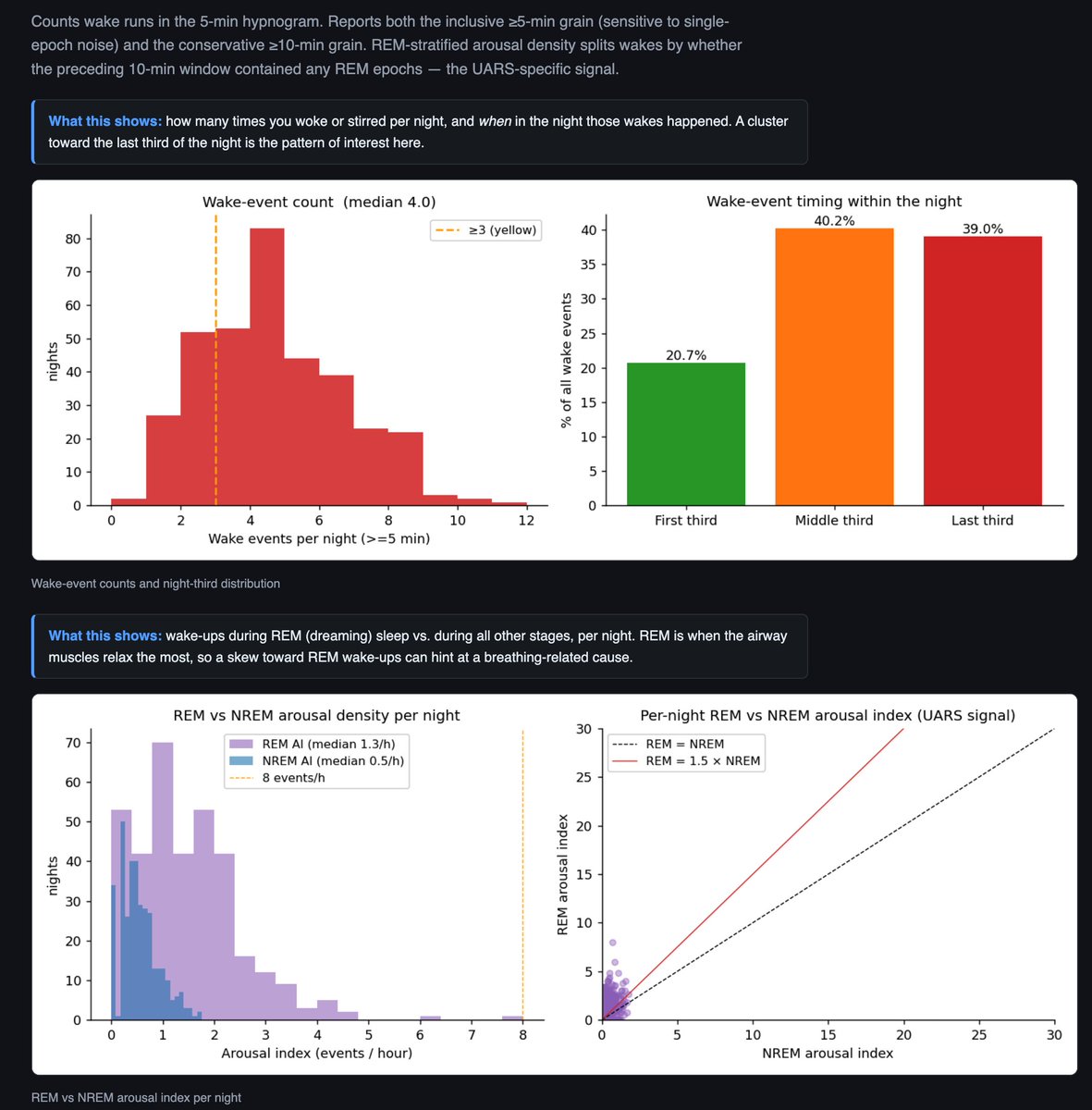
So I busted out Claude Code, since I would want Claude to have maximum access to tools for this. I had it figure out how to pull from the Oura API (using personal access tokens, ask your Claude for instructions) and pull down all of my sleep data. I then had it use Python to statistically analyze everything (heart rate, SpO2, wake events, sleep stages), test multiple hypotheses, and generate a dashboard full of charts, while explaining everything it was doing so I could follow along.
After 30 minutes of slicing and dicing, a hypothesis emerged: UARS, upper-airway resistance syndrome, a mild cousin of sleep apnea.
No way. Sleep apnea?
I don't snore, I'm not overweight. No way I have sleep apnea. This is the first time I've ever heard this.
Claude walked me through it. UARS is milder than full-blown sleep apnea. In UARS, your airway doesn't collapse, it just narrows, particularly in REM sleep when the muscles in your throat relax. This causes your oxygen to gradually drift down over the course of REM sleep, until your brain yanks you awake before it becomes a full apnea. In your 20s the muscle tone in your throat keeps your airway open, but as you age that tone slackens, which can trigger this effect, fragmenting your sleep.
It looks exactly like this: waking up disproportionately during REM sleep multiple times a night. That actually tracked; I realized that almost every time I woke up in the middle of the night, it was out of a dream.
Claude was clear that the Oura ring data was not dispositive, because it wasn't able to measure breathing disruptions per hour (RDI), which you'd get in a sleep study. Do a sleep study, get the RDI number, and then we'll have our smoking gun.
It pointed me to an FDA-approved at-home sleep study device (with finger probe and chest sensor) called WatchPAT for $200. After one night of recording, I got the results back to the next day:
Mild sleep apnea, likely UARS. Dammit Claude. Nicely done.
Here's the takeaway, and why I'm posting this: I'm a textbook "no way it's me" case. UARS often shows up in healthy, normal weight people who don't fit the apnea stereotype, and often gets missed for that reason.
It's easy to attribute poor sleep to insomnia or anxiety or stress, and there's an infinite supply of influencers who will pitch you reasons to feel like your sleep ritual is the problem. If you just got that red light glasses, or the blackout curtains, or took that sleeping peptide, maybe you'd be able to fix your sleep.
Roughly 10-15% of adults have some form of sleep apnea, and vast majority of them (80% ) are undiagnosed. If this might be you, run your fitness tracker data through your neighborhood frontier LLM. You'll thank yourself later.
184
61
1,455
162,525
jefflau.eth retweeted

May 27
Updates since then:
* Deepseek v4 is out. There *is* a 2-bit quant that can run within 90 GB ( huggingface.co/antirez/deeps… ), and it works, however it's only fast on Apple hardware (I've head ~35 tok/s). On AMD, it's ~7 tok/s. IMO actually taking the effort to properly support more than one hardware manufacturer is a great example of the difference between mere "decentralized AI" and genuine "CROPS AI". I hope we can become better at this.
* github.com/vbuterin/messagin… also has alpha telegram support now. However, the path to adding your account is quite janky
* github.com/Luce-Org/lucebox-… looks promising as a way to run "dense" models (eg. Qwen 27B) more efficiently. It's janky, but on my 5090 laptop it seems to be ~2x more tok/s than llama.cpp
* VoxTerm (local AI recording, no third-party servers) continues to be developed github.com/dmarzzz/VoxTerm
And there's a lot more projects coming on the horizon.
One other thing that has been on my mind is that there's actually a lot of intersection between "CROPS ethereum access layer" and "CROPS AI". For example, we want a ZK way to make (paid) calls to remote LLMs. But if we have this, then it's just as useful for solving another problem: private RPC reads in Ethereum.
Another example: application-specific finetuned LLMs. Leanstral ( mistral.ai/news/leanstral ; I get ~38 tok/s on AMD) fits into < 70 GB, but can hold its own against 1T models on writing Lean code. Things like this are a huge boon for writing more secure code ( vitalik.eth.limo/general/202… ). We should have models finetuned for Ethereum-related use cases as well.
Apr 2

My self-sovereign / local / private / secure LLM setup, April 2026
vitalik.eth.limo/general/202…
263
197
1,548
375,890
jefflau.eth retweeted
May 24
Some of my perspective on where the @ethereumfndn is going.
First of all, this is only my own view. The board is not just me, and I have no extra special powers on the board that the other board members do not. @aerugoettinea is the one executing much of this transition. My input has been largely on technical questions. The board is in the process of expanding, and my own power within the org will continue to decrease, which is honestly what I want.
The 2025 era brought many important improvements to EF and its ability to execute. Many issues were resolved, and EF continues to benefit from its improved efficiency and greater focus on concrete goals to this day. And so with those problems resolved, early this year, the largest remaining hole that I perceived was something different nagging at me: I would regularly spot people saying things like "vitalik says these beautiful things about ethereum needing to be decentralized, and have privacy, and be a sanctuary technology, but why do the EF's actions not reflect that?"
Now, you may have been hearing something different. You may not have been sensing a feeling of crisis at all, and maybe were hearing people saying that finally we were taking execution and BD seriously and the main task for us is to keep going that way and be even better and faster. Then probably there is genuine difference between you and me, in what kinds of criticism I take most seriously, and what kinds of critics through their criticism are most able to make me feel pain.
As an analogy, let's briefly switch over to a different domain.
One belief you can have about Google is that it is a success story, and has brought a lot of good to humanity in organizing the world's information. Another belief you can have about Google is that they had a beautiful idealistic beginning, but at some point the corruption of mainstream corporate attitudes seeped in, and they slowly bit by bit completely abandoned the "don't be evil" slogan.
My belief on Google specifically is probably somewhere between the two. BUT, if you had taken me back in time to ~2008, and offered me a button to press to make Google one or two standard deviations more "dogmatic", eg. give Richard Stallman permanent veto power over some key policies, I would immediately press it.
Why? Because a choice for one company is not a choice for the world, or even one country. Google existed and exists in the context of a technology industry generally drifting away from early idealistic don't-be-evil roots and toward greed for financial gain, totalizing visions of accelerated superintelligence, infiltration by sociopaths, and craven capitulation to (or worse, active participation in) government pressure for ideological control, surveillance and war. And so *one company* doing something different, positioning itself to be what George Bernard Shaw calls the Unreasonable Man, resisting the trend of the times, would have been better for freedom, balance of power and stability of society as a whole, than *all* large companies bending to dominant trends. This is a part of my version of pluralism.
This line of thinking is not just mine, but I also is not too far off from what Aya and others had in mind with the Mandate.
Now how does this all get to the role of the EF?
EF is not a "center of Ethereum", rather EF is "one node, with a defined purpose, alongside other nodes". We've always said that the EF should be the latter, but many in the Ethereum ecosystem (and even within the EF) wanted us to be the former. Now, we are taking action to ensure that we will be the latter.
This is particularly important because EF is a limited organization, with limited resources and limited organizational capacity. The EF has only ~0.16% of all ETH (less than many other individual ETH holders), whereas among other blockchains it's common for "the central foundation" to have 10-50%. Fiscally, the EF was originally designed to fulfill a limited work scope defined in the token sale docs and other pre-launch materials (building the chain software; getting through Frontier, Homestead, Metropolis, Serenity), which was fully completed in 2022; it was not designed to be an eternal steward.
And so today, the EF is choosing to use its remaining resources to pursue longevity over breadth (yes, this means we sell less ETH). The EF focuses *specifically* on those activities critical to the success of ethereum as a censorship/capture-resistant, open, private and secure system, that would not happen otherwise. This means making hard choices, and in some cases even activities that we highly approve of and people that we highly respect becoming outside of the EF. People of great technical talent, public respect and even alignment with the mission and CROPS being outside of the EF is in fact necessary if we want important tasks to be able to attract outside capital. This also means the EF taking opinionated stands culturally.
This is all intended in cooperation with all other parts of ethereum. We recognize that many other parts of the ethereum world highly respect CROPS and related values. But highly respecting is not the same as choosing to specialize and totally dedicate to a domain (Compare in a different domain: I think reducing animal cruelty is important, and I like vegan food, but am not full unconditional vegan myself)
EF is still in a transition period, and we expect its new long-term form to stabilize over the next few months. What are the guiding principles of this new form? Again, I am only one person, but I can give my answer from a technical perspective (there are also critical non-technical aspects).
At the core, *Ethereum must be impressive*. We are living in an age of highly intelligent AI and all kinds of other technological acceleration. "Status quo EVM, with a hard fork or two a year to optimize for short-term needs of users" is not interesting.
To some, "impressive" means: 250ms latency and 1M TPS. I think Ethereum trying to go that route is a mistake. Being as fast and as scalable as possible, and only a small epsilon more decentralized than the others, is a route to mediocrity, and if we try it we will lose.
I think Ethereum should scale. But I think Ethereum should strive the hardest to be deeply impressive in a different dimension: the CROPS dimension. This means things like:
* Provably bug-free Ethereum. This is a goal that all cybersecurity researchers would have thought is absurd and impossible, up until roughly 6 months ago. Now, it's on the cusp of being possible, thanks to AI-assisted formal verification. So we should be frontrunners in doing this.
* Available chain consensus. Ethereum is, and with lean consensus will cotninue to be, the ONLY chain that has both (i) traditional-BFT style properties that it's safe under asynchrony up to a high level of fault tolerance, and (ii) the bitcoin PoW-style property that under synchrony it's safe up to 49% attackers. As far as I can tell, literally no other chain has this or is planning for it; bitcoin goes for (ii) only and most other chains go for (i) only. Some will remember I fought hard for this, Unreasonably insisting that it is not OK for ethereum to rely on social consensus and hard forks to rescue ethereum from 34% of nodes going offline. It's OK for chains like hyperledger, bnb, solana, tempo, etc. It's not OK for bitcoin or ethereum or eg. zcash.
* Intermediary minimization. The fact that smart contract wallets, protocols like railgun, etc have to send transactions through intermediaries to get included onchain is honestly embarrassing, and it's a constant point of fragility. Hence the work on FOCIL and EIP-8141 (and 7701 and years of work before) to make transaction sending intermediary-minimized with public mempool and strong inclusion properties, in a truly general-purpose way, that covers not just eg. secp256r1, but also privacy protocols and much more. Kohaku is pushing intermediary minimization at the user layer, pulling Ethereum away from the dystopian status quo world where our wallets don't even verify the chain, send our private data out to a dozen third-party servers, and toward a brighter CROPS future.
Some of these goals are Unreasonable - maybe Ethereum would be "fine" getting only 50% of the way - what if we depend on intermediaries, but make it easy to switch? But going 50% of the way would not make Ethereum Deeply Impressive in the CROPS way. So we push for 100%.
Fortunately all these goals are compatible with high TPS, this is a major focus of research (esp. on scaling the state). Well-designed L2s can also help, especially L2s optimized for specific applications (eg. high-volume trading, privacy...). These goals are even compatible with significantly lower slot times, thanks to Raul's work on erasure-coded P2P, and many other optimizations.
The most high-value "product" of the ethereum blockchain, financially speaking, is ETH the asset. Ethereum secures $250 billion of ETH. The types of properties of Ethereum that I mentioned above are very good for ETH the asset. Nearly 90% of my net worth is in ETH, and most of the remainder is ~$40m of onchain fiat of which every dollar has already been allocated for some open-source biotech or software or hardware initiative. That said, there are aspects of supporting ETH the asset - *necessary* aspects even - that are outside the scope of the EF. This is where we need other heroes (some of whom hold more ETH than the EF does) to step in and help. EF has been recently thinking more about how it will relate to other such organizations, and give them needed initial support.
EF will be a smaller ship than in previous years, a more opinionated one - in some cases more opinionated in ways that might be difficult to comprehend - but a longer-lasting one, and one suited to making sure that ethereum brings something meaningful to the world. We are grateful to all those inside and outside the EF who are helping to make this happen.
1,615
1,642
7,888
4,104,575
jefflau.eth retweeted

May 11
[Social Proposal] ENSv2 Pricing: 5 Character Name Adjustment, Multi-Year Discounts, Grace Period Change
... Now live on snapshot
discuss.ens.domains/t/social…
Apr 23

re: [Temp Check] ENS v2 Pricing: 5-Character Name Price Adjustment & Multi-Year Discounts
"We’ve been listening closely to everyone’s feedback... ... We’ve amended our proposal as follows:"
discuss.ens.domains/t/temp-c…
10
12
44
6,625
May 4
RT @ensdomains: It’s our birthday 🎉
9 years of ENS on Ethereum, naming the internet one .eth at a time.
May the 4th be with you ✨ https:/…
163
Apr 25
Because names have more meaning than
0x0fCa5194baA59a362a835031d9C4A25970effE68
A human movement needs a human meaningful name
Apr 24

defiunited.eth is now open for contributions. All contributions are going towards DeFi United relief efforts to restore rsETH and safe DeFi.
defiunited.world/
3
6
56
2,102
Apr 24
RT @ensdomains: ENSv2 is coming.
A new foundation for names, built for integrations and subnames at scale.
What will you build? https://t…
86
Apr 18
RT @ensdomains: Security notice: please avoid visiting any eth(dot)limo links for now.
The ethlimo team is currently investigating an inci…
32
jefflau.eth retweeted

Apr 18
our domaim appears to have been compromised and the eth.limo domain has been hijacked. We're actively working with all parties involved to assess the situation and remediate the problem.
15
76
240
56,142
jefflau.eth retweeted

Mar 17
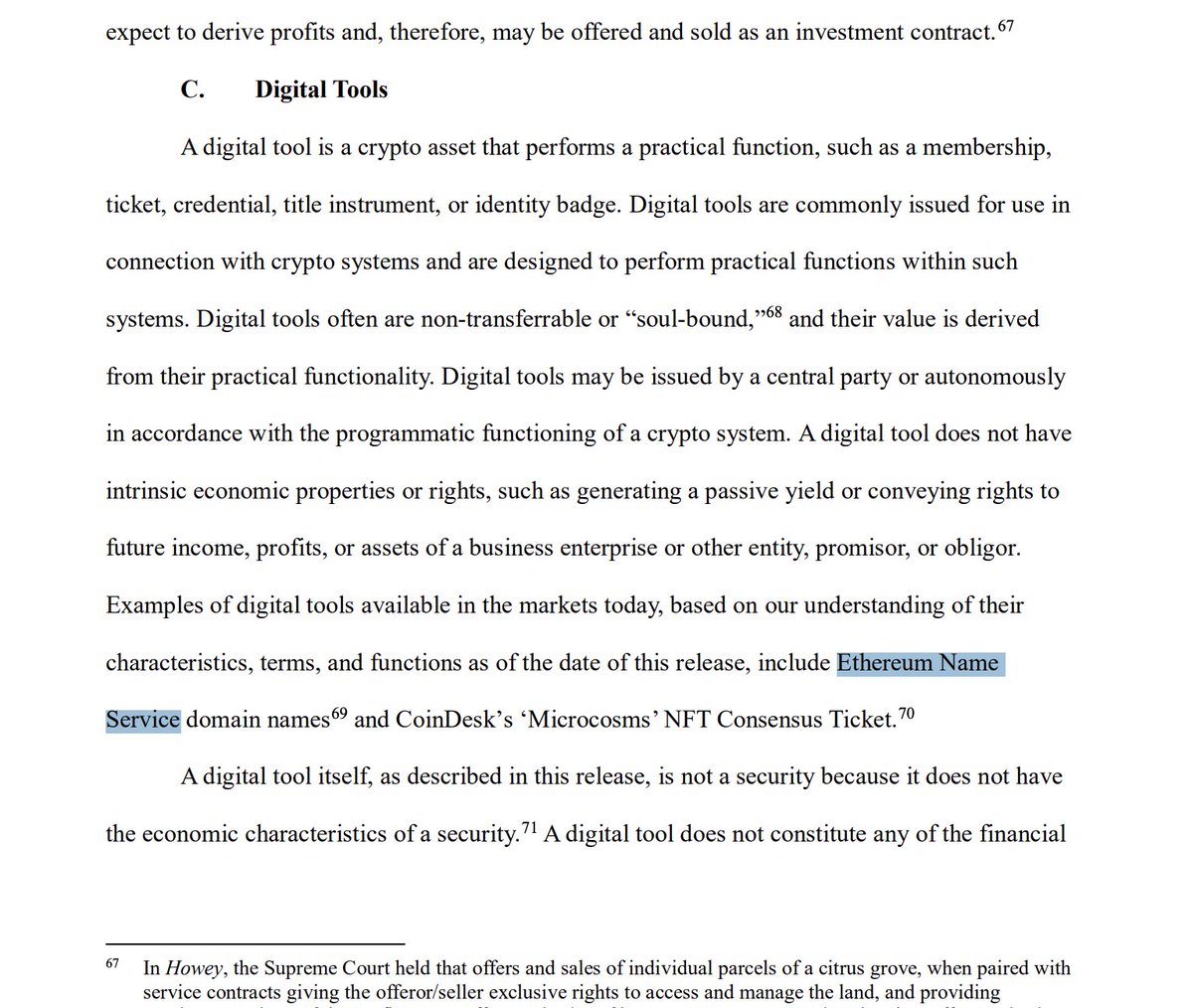
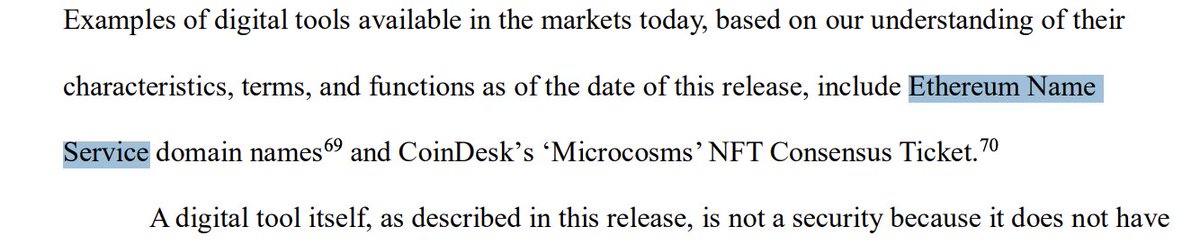
incredible seeing the SEC cite @ensdomains as a premiere example of a legitimate digital tool using blockchain technology 🔥🔥🔥🔥🔥🔥🔥🔥🔥🔥🔥🔥🔥🔥🔥🔥
54
106
461
28,949
Mar 13
Just use ENS
Mar 13

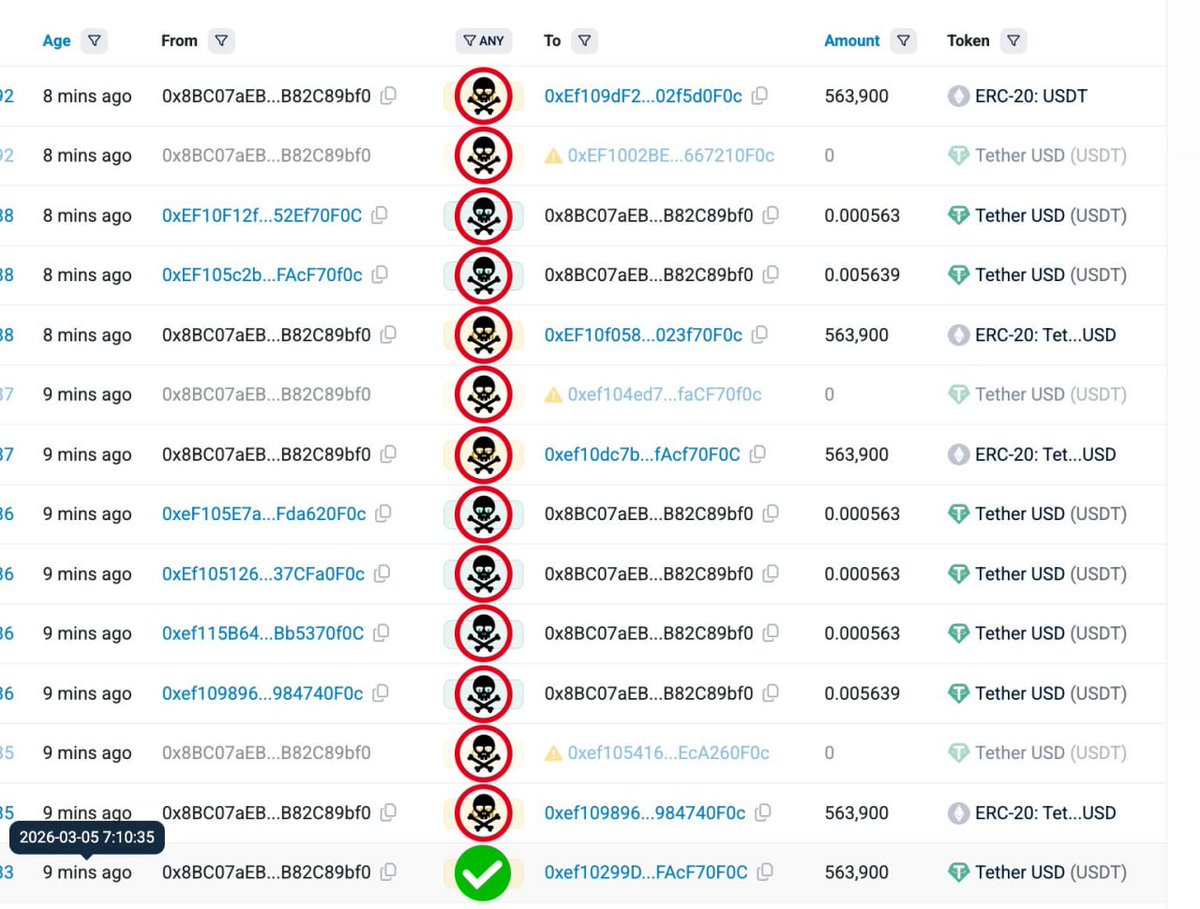
Etherscan reports that Ethereum address poisoning has become industrialized. Driven by lower costs post-Fusaka upgrade (Dec 3), USDT dust transfers surged 612%. Historical data (July 2022–June 2024) reveals ~17 million attempts and over $79.3M in losses. Attackers leverage automated lookalike addresses and dust/zero-value transfers to pollute transaction histories. Despite a marginal 0.01% success rate, the massive scale of these operations ensures high profitability. x.com/etherscan/status/20320…
9
12
60
8,751
jefflau.eth retweeted

If you recently bought a [name].crypto or [name].agent domain name from a third party naming service, this is important to know:
These domain extensions (and many others that sound fun/cool) are not anchored to the global DNS root- meaning no one actually controls or guarantees them!
ICANN (the body that governs real internet domains) could assign .agent to a completely different registry tomorrow. This means that now two systems claim to have the same domain string, and your wallet and a browser would resolve it differently.
Ironically, this actually makes things MORE dangerous since someone could lose funds sending to a name that resolves to two different places depending on context. This is called 'name collision', and avoiding name collision is how the internet can operate functionally in the first place.
Always check the IANA's root zone database (link in second tweet) before you purchase a domain name. If the TLD isn't listed there, it's not anchored to the global DNS root, meaning that you don't actually own what you think you own since its not 'real' internet infrastructure.
Mar 5

Launching a new .whatever namespace is easy. Building naming infrastructure that works across wallets, apps, exchanges, and the web is much harder.
Why ENS chose to extend the existing internet namespace instead of inventing new roots ⤵️
ens.domains/blog/post/ens-wa…
45
29
137
21,070
Feb 7
ENS has always been an Ethereum aligned application, and that was true even if we went to Namechain.
Now that L1 is becoming the most attractive place to stay, there’s no reason to lose all the benefits of directly being on Ethereum.
Feb 6
It's a good decision!
ENS names and records are a form of state that is central to the Ethereum ecosystem, the state is limited in size and there is high value in it being as accessible as possible from anywhere.
It's also a semi-financial application, in the sense that buying and holding ENS names has a cost, and ENS names can become very valuable objects.
With the expanded scaling roadmap, Ethereum L1 is the ideal place for these applications.
More generally, I expect that the optimal architecture for decentralized identity and social (the general space I see ENS being in) is to have this kind of per-user account and profile data on L1, and to have special-purpose L2s, likely much simpler than full EVMs, to handle user actions (eg. actions on social platforms).
9
10
152
12,145
Feb 6
RT @ensdomains: Another day, another alpha launch.
The ENS Explorer Alpha is now live on Sepolia.
This is a new, comprehensive tool and t…
111
jefflau.eth retweeted
Feb 6
ETH is a store of value and one of the most important apps on ethereum.
602
1,000
7,711
1,134,432
jefflau.eth retweeted
Feb 6
It's a good decision!
ENS names and records are a form of state that is central to the Ethereum ecosystem, the state is limited in size and there is high value in it being as accessible as possible from anywhere.
It's also a semi-financial application, in the sense that buying and holding ENS names has a cost, and ENS names can become very valuable objects.
With the expanded scaling roadmap, Ethereum L1 is the ideal place for these applications.
More generally, I expect that the optimal architecture for decentralized identity and social (the general space I see ENS being in) is to have this kind of per-user account and profile data on L1, and to have special-purpose L2s, likely much simpler than full EVMs, to handle user actions (eg. actions on social platforms).

A quick update on ENSv2: we have made the decision to deploy ENSv2 exclusively on Ethereum L1 and to cease development of Namechain.
To be clear, ENSv2 will still ship. The only thing that’s changed is that instead of deploying ENSv2 on our own L2 stack, it will be deployed on L1.
It is important to note that ENSv2 is ultimately an upgrade to ENS as it exists today — it’s still ENS! Regardless of where it ultimately gets deployed, it does not fundamentally change ENS the protocol nor does it change any part of our mission and ultimate goal of building the identity layer on Ethereum. The design for ENSv2 was always intended to work fully as designed, whether deployed on L1 or L2. Our product roadmap does not change.
We have detailed progress on the ENSv2 Hub to show what exactly v2 will mean for you, and what the team has been building: giving each name its own registry (making your .eth names more powerful and customizable to your own rules!), building two brand new apps from the ground up (both deployed to testnet this week), and much more. I am so excited for this release (soon!) and think it will completely change the way you interact with your own ENS names.
The timing of this decision coincides with a broader discussion about the role of L2s in Ethereum. I continue to believe that L2s play a vital role in extending the value of the world computer that is Ethereum, and ENS will continue to support as many chains as possible. In fact, very soon anyone will be able to register a .eth name regardless of which EVM chain they are on — meaning that even if your assets live on Optimism or Arbitrum, it’s a one-click process (no bridge, no gas tokens). We also continue to believe in a multi-chain world beyond EVM chains (a reminder that ENS has and always will support your addresses across major chains like Solana, Bitcoin, and more).
We have published the detailed rationale for the decision to stay on L1 on our blog, and I encourage you to read it (in the QT here!)
The .eth stays on 🫡
471
327
2,193
394,443
jefflau.eth retweeted
A quick update on ENSv2: we have made the decision to deploy ENSv2 exclusively on Ethereum L1 and to cease development of Namechain.
To be clear, ENSv2 will still ship. The only thing that’s changed is that instead of deploying ENSv2 on our own L2 stack, it will be deployed on L1.
It is important to note that ENSv2 is ultimately an upgrade to ENS as it exists today — it’s still ENS! Regardless of where it ultimately gets deployed, it does not fundamentally change ENS the protocol nor does it change any part of our mission and ultimate goal of building the identity layer on Ethereum. The design for ENSv2 was always intended to work fully as designed, whether deployed on L1 or L2. Our product roadmap does not change.
We have detailed progress on the ENSv2 Hub to show what exactly v2 will mean for you, and what the team has been building: giving each name its own registry (making your .eth names more powerful and customizable to your own rules!), building two brand new apps from the ground up (both deployed to testnet this week), and much more. I am so excited for this release (soon!) and think it will completely change the way you interact with your own ENS names.
The timing of this decision coincides with a broader discussion about the role of L2s in Ethereum. I continue to believe that L2s play a vital role in extending the value of the world computer that is Ethereum, and ENS will continue to support as many chains as possible. In fact, very soon anyone will be able to register a .eth name regardless of which EVM chain they are on — meaning that even if your assets live on Optimism or Arbitrum, it’s a one-click process (no bridge, no gas tokens). We also continue to believe in a multi-chain world beyond EVM chains (a reminder that ENS has and always will support your addresses across major chains like Solana, Bitcoin, and more).
We have published the detailed rationale for the decision to stay on L1 on our blog, and I encourage you to read it (in the QT here!)
The .eth stays on 🫡
Feb 6
ENSv2 will be deployed exclusively on Ethereum.
ens.domains/blog/post/ens-st…
88
102
840
408,581
Feb 6
RT @ensdomains: ENSv2 will be deployed exclusively on Ethereum.
ens.domains/blog/post/ens-st…
250
Feb 5
RT @ensdomains: Claiming an ENS name will get a lot simpler with ENSv2.
The ENS App Alpha is now live on Sepolia
Faster registration, sta…
165