
Writer & writing professor. Built Profsy to teach the writing process, not replace it.
Joined April 2011
- Tweets 610
- Following 508
- Followers 144
- Likes 912
Photos and videos
Pinned Tweet

Apr 23
10 years teaching college writing taught me one thing. Students don’t fail because they can’t write. They fail because nobody ever taught them the process. Today I’m launching the fix. Profsy.com
35
Jun 15
Parents sometimes worry a structured writing process will make their kid's essay sound like everyone else's. I understand the worry. It's backwards. The thing that flattens a college essay isn't too much structure. It's the blank page.
1
18
Jun 15
A student carrying the whole weight of "write something that gets you into college" doesn't get more creative in front of an empty document. They freeze. What they're short on isn't creativity, it's working memory: planning, writing, and judging all compete for the same attention
1
8
Jun 15
A process doesn't tell the student what to say. It builds the conditions where they find out what they have to say. Freedom and a blank page is not a gift to a nervous 17-year-old. A structure they can move inside of is.
7
Jun 11
Every June a senior tells me they're stuck on the college essay. It's almost always for the same reason: seven topic ideas and can't pick one, or none and can't think of any. Both are the same problem.
1
17
Jun 11
So I don't help a frozen student choose. I have them freewrite ten minutes on the two topics that pull hardest, and we watch which one keeps producing. The soccer injury is an event. The next week, when she didn't know who she was without the team, is a topic. Full guide linked.
1
16
Jun 5
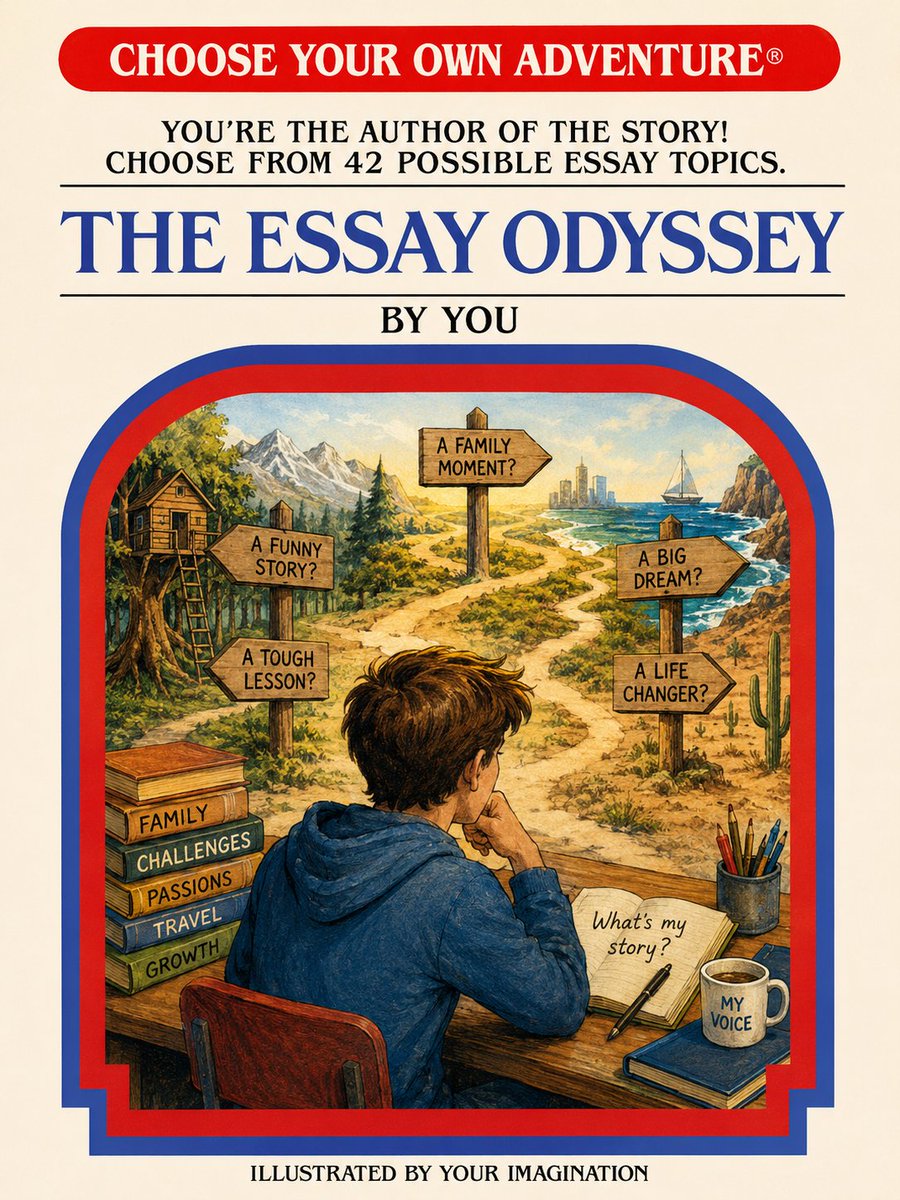
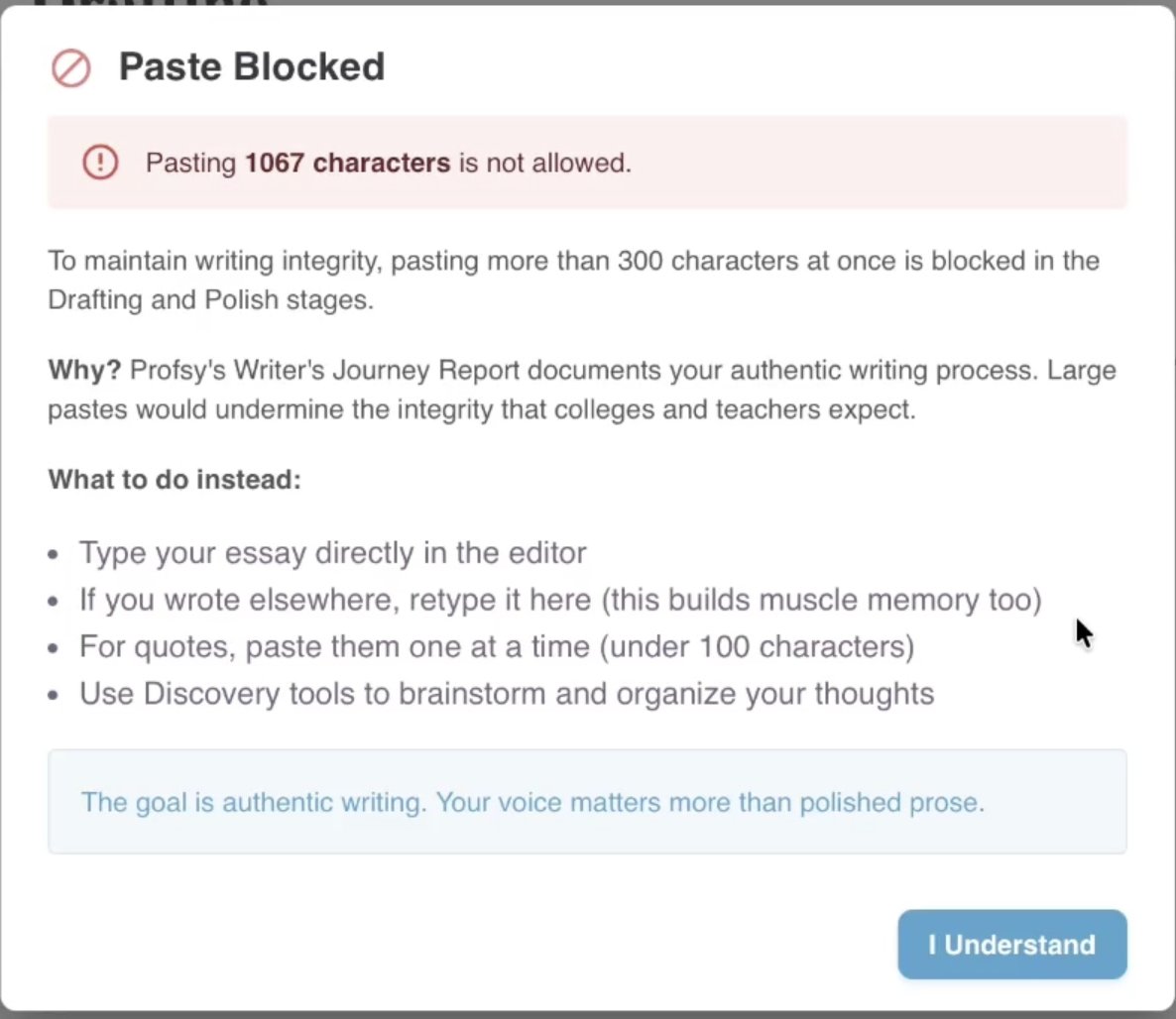
The most common question I get about Profsy is what stops a student from writing the essay in ChatGPT and pasting it in. The answer: the platform won't let them.
1
11
Jun 5
It's not a feature added to the system. It's how the system is built. Fifty years of writing research says forming a sentence is forming a thought. If the sentence is already formed when the student arrives, the thought never happens.
1
7
Jun 5
Most of the AI-and-essays conversation is about detection. It's the wrong approach. If the platform protects the act of composing, there is nothing to detect. The essay stays a record of the student’s thinking.
5
May 13
Revision means re-seeing. Most students think it means fixing. They read the draft, swap words, tighten transitions. The essay gets cleaner. It sounds exactly the same. That's editing. It's not revision.
7
May 11
In ten years of teaching college writing, I gave the same note more than any other: delete your first paragraph. Not because it's bad. But when you're drafting, you're still talking yourself into what you're saying. That paragraph is scaffolding. Once you know, it can come down.
1
14
May 11
So often, the essay opens at paragraph two, sometimes three. The student just couldn't see it because the warm-up at the top was blocking the view. If your kid has a draft that isn't working, have them read it starting from paragraph two. Don't change a word. Just start there.
9
May 1
Common App Prompt 3 is the most misunderstood prompt on the application. It asks students to reflect on a time they questioned a belief. Most students write a neat arc. Used to believe X. Then Y happened. Now I believe Z. That is not what the prompt asks for.
1
22
May 1
Read the prompt again. “What prompted your thinking?” is the question. The outcome is one line at the end. The body of the essay lives in the questioning itself, the part where the student is still inside the discomfort, where they do not know yet what they think.
1
19
May 1
The strongest essays stay in the question. The weak ones rush to an answer. If your kid is writing Prompt 3, don't ask, “What did you end up believing?” Ask, “What did it feel like to not know yet?” That's the essay.
1
16
Apr 28
If you’ve paid for a college essay coach and your kid came back with a cleaner draft, you didn’t get coaching. You got editing. Editors work on the writing. Coaches work on the writer. The two are different jobs and most of the consulting industry only sells the first one.
1
21
Apr 28
In ten years of teaching college writing, the students who got better were the ones who I asked questions of, not the ones whose drafts I marked up. They were the ones who thought about who they were as writers and what their process was.
1
4
Apr 28
Here’s the test. Read your kid’s third draft. Then read their first. Are they more themselves on the page, or less? If less, the person they’re working with is editing.
4