
CEO and Founder of @emcd_io –cc: hello, world.
Joined September 2017
- Tweets 3,555
- Following 438
- Followers 935
- Likes 12,782
54 Photos and videos

And no visionary carries it all alone. Beside Musk stands Gwynne Shotwell: President & COO, employee #11. He sets insane goals and deadlines. She turns them into rockets and NASA contracts.
1
1
19
What wiped out #Zcash this week had been sitting in its code since 2022.
Not the market, not panic. A flaw buried in the foundation that waited four years and surfaced at the worst possible moment.
A thread on why I'm spending my time on boring things.
1
1
63
The most common team mistake: confusing "we've started" with "we're aligned on the outcome."
From the outside, all this fuss over expectations and scope looks like bureaucracy. In reality it's infrastructure you don't notice while things are good.
1
14
Then things turn bad, and it turns out that was the only thing holding everything up.
Under pressure, you don't rise to the level of your expectations. You fall to the level of your preparation.
Build the foundation while it's quiet.
14
Everyone knows Laszlo Hanyecz spent 10,000 BTC on two pizzas on #BitcoinPizzaDay. Almost nobody knows that 12 days earlier he published the first public GPU miner. Hashrate took off fast, and with that early edge he stacked tens of thousands of BTC while most of the network was still grinding away on CPUs.
Then... Satoshi slid into his DMs.
1
1
77
Satoshi's message was blunt: GPU mining threatened the whole "anyone can mine #Bitcoin on a home laptop" dream, and it was centralizing the network way too fast.
Laszlo didn't dump out of guilt, though. Back then the coins felt basically worthless, so he just kept spending freely, the legendary pizza included. By his own estimate he blew through close to 100,000 BTC in 2010 on pizza and random buys (some mined, some gifted by early forum OGs).
1
1
67
16 years later, almost all Bitcoin hashrate sits with industrial miners and big pools, pretty much the scenario Satoshi was sweating about.
Yet that same jump from laptops to industrial scale is exactly what dragged #Bitcoin from a fraction of a cent to an ATH north of $126,000.
So which dream are we even talking about? The "mine-on-your-laptop" version really did fade, exactly like Satoshi feared. But Bitcoin itself as a fortress? Laszlo didn't ruin that one. He sent it. Arguably no GPU era means no ASICs and none of the security we lean on now.
1
49
Michael Jerlis (jerlis.eth) retweeted

May 22
Pizza Day always gets framed as the moment someone “lost billions.”
But honestly, I think that misses the bigger point completely.
Back then crypto had almost no real financial access attached to it.
10,000 BTC bought two pizzas because the infrastructure simply didn’t exist yet.
Now look at where things are moving.
Retail users can suddenly access markets and narratives that used to stay locked behind private funds and institutions for years.
That shift feels much bigger than the old pizza story.
You can already see it with things like the SPACEX(PRE) setup on @MEXC.
The subscription entry opened around $650 while other markets were already pricing the same narrative closer to $790 and even $838.
Only 7,700 tokens available too, which explains why people started watching the supply side closely before the May 21 deadline.
TradFi related activity across crypto platforms keeps growing because users want access to markets that previously felt unreachable without institutional connections.
Feels like Pizza Day was never really about “what was lost.”
It was the beginning of crypto slowly expanding what ordinary people could actually reach financially.
And now we’re starting to see what that next phase looks like in real time.

🍕One pizza. Infinite opportunities.
#BTCPizzaDay reminds us: the right vision at the right time creates legends. 👀
Don’t just watch history. Position for the next opportunity. ♾️
🧵👇
89
7
119
3,674
Michael Jerlis (jerlis.eth) retweeted

22 May 2025
Jercos is the real hero of Bitcoin Pizza Day. He's the visionary bitcoin carnivore who was the first to dump carbs and stack sats

Today we honor Laszlo, but we also honor Jeremy Sturdivant (Jercos), who accepted those trillion sats!!!
Be like Jeremy, accept sats for your goods and services.
Happy pizza day!!!
29
16
243
27,296
Michael Jerlis (jerlis.eth) retweeted

May 13
The Old Bitcoin Mining Model is Dead
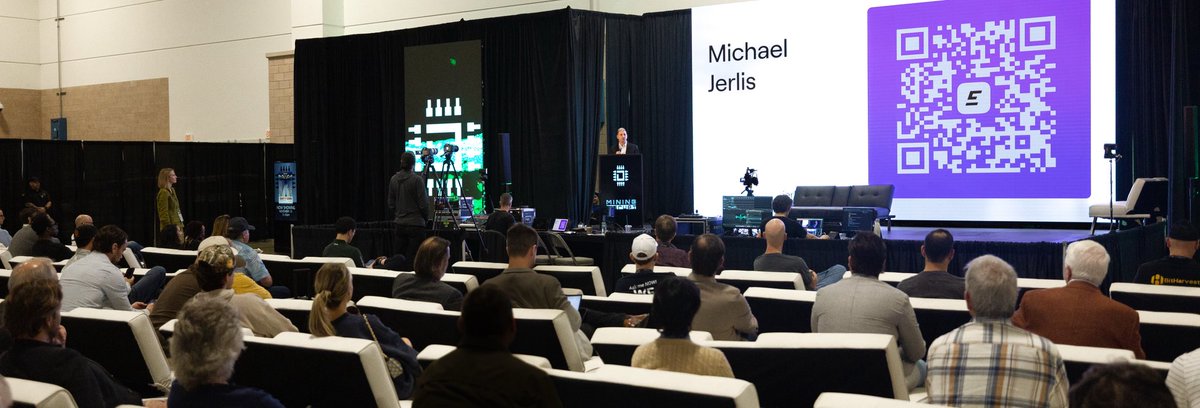
We sat down with @jerlis_here, founder & CEO of @emcd_io, at @consensus2026 Miami last week.
From the pressure of Bitcoin halvings to the rise of institutional mining and AI compute, he broke down why the old mining model is dead and what the next era of mining looks like.
Stay tuned for the full episode. 🎙️
3
3
8
1,232
In 2015, #CoinDesk hosted the first #Consensus in New York.
~500 people. No ETFs. No Wall Street.
CoinDesk had been founded two years earlier by Shakil Khan, an early investor in BitPay and member of Spotify's early team. Jon Matonis, then ED of the #Bitcoin Foundation, joined as contributing editor and gave the project industry weight.
1
2
3
125
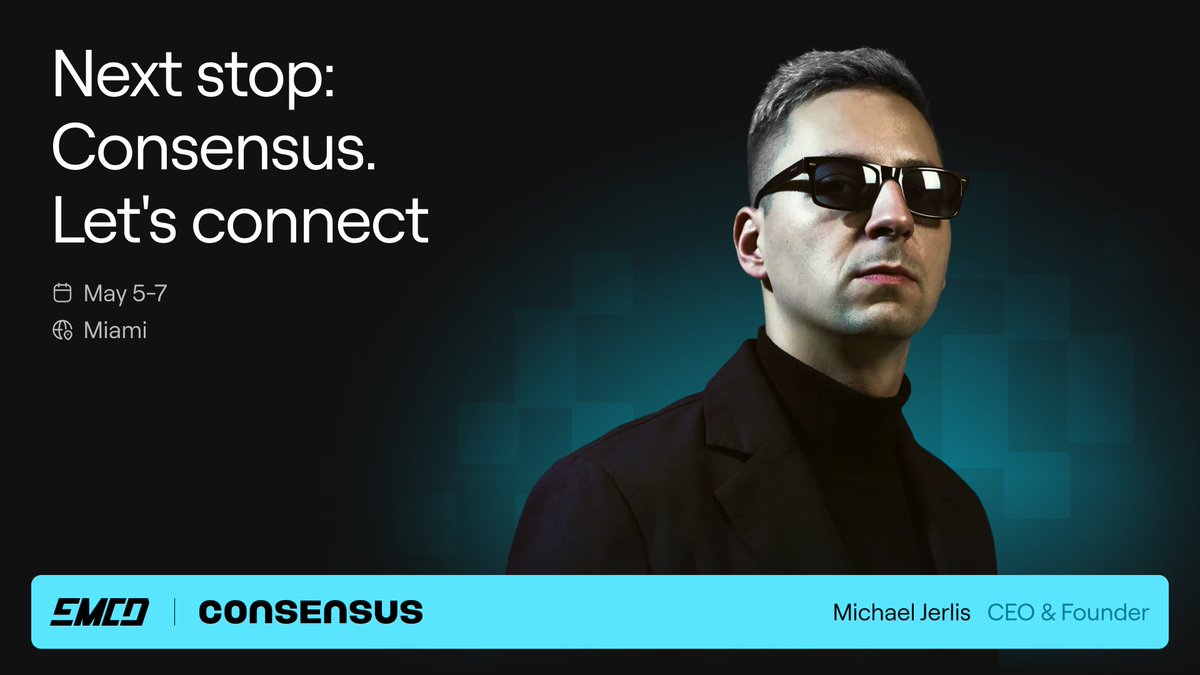
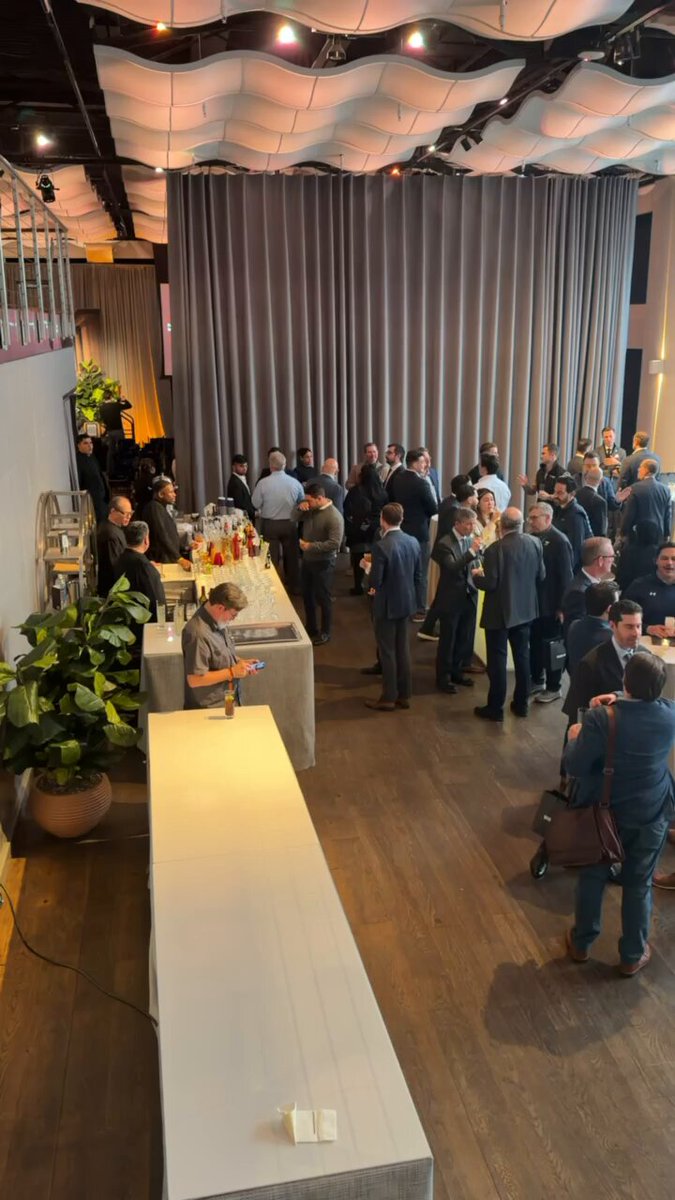
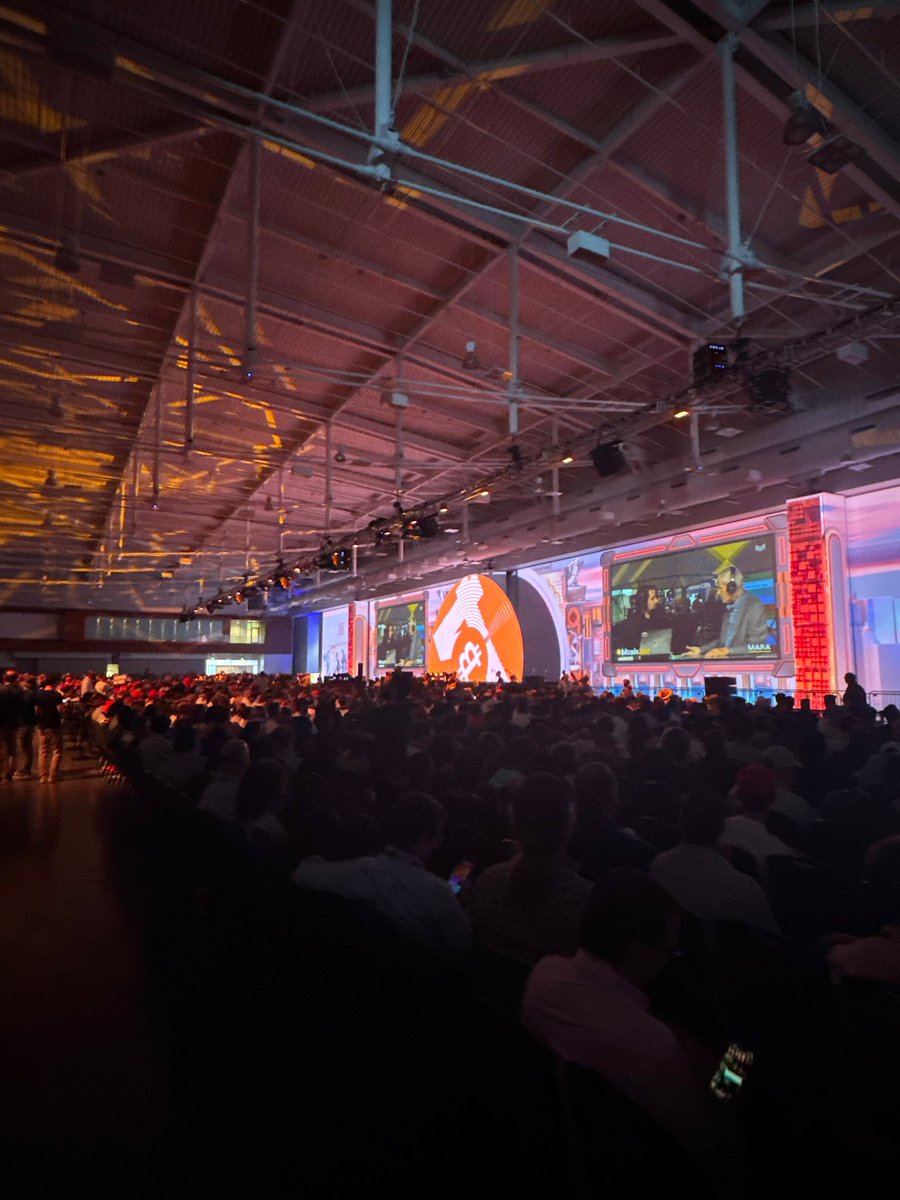
11 years later, May 5–7, the Miami Beach Convention Center hosts 20,000 attendees and 500 speakers.
For the first time, Morgan Stanley and JPMorgan are joining as official sponsors.
Institutionals are already ~35% of the audience, collectively managing ~$10T in AUM.
1
1
61
9 years at EMCD taught me one thing about every major transformation: technology solves 20% of the problem. Business processes solve the other 80%.
The same law applies to AI. Plug an LLM into your workflow expecting productivity to multiply? It won't.
Rebuild the process first.
1
58
Second: agent lifecycle management.
15,000 agents today. 30,000 next year. Who tracks which still work, which are outdated, which quietly ship errors to production?
Without governance, that's technical debt that costs more than the automation ever saved.
1
42
Third: who learns faster, executives or juniors?
A 22-year-old intern often handles the tool as well as a seasoned CTO. Give juniors access and authority, and the business has a shot. Route everything through four approval layers, and competitors get there first.
The choice is binary. Either you rebuild your operating model, or competitors rebuild it for you.
30