
Civic builder, urbanite | Cofounder @USDResponse | alum Tech Policy Fellow @AspenInstitute @CodeForAmerica @yale | Taker of field trips, believer in people.
Joined December 2008
- Tweets 5,262
- Following 2,348
- Followers 2,538
- Likes 11,157
352 Photos and videos








Pinned Tweet

30 Aug 2022
Some big news @USDResponse & for me personally - today we launch our search for our next CEO, and in Dec I'll be transitioning from full-time to an org advisor.
This is the best team & mission imaginable. You should apply.
usdigitalresponse.org/press-…
30 Aug 2022

🥳 Big news at @USDResponse: After hitting major milestones, we’re looking for our next CEO to help guide USDR to our next chapter.
❤️🔥 What’s more, we’re thrilled to announce that @pahlkadot is joining our board of directors!
usdigitalresponse.org/press-…
10
29
121
Jessica Cole retweeted

📢@CodingItForward is seeking mentors to support early-career technologists for Summer 2026. If you have 3 years of full-time public interest tech experience, help us uplift the next generation!
Apply by Friday, May 15 docs.google.com/document/d/1…
3
2
380
24 Oct 2025
Listened to an education talk where they said they focused on limiting student device use while walking the halls/campus and that change alone led to so many more nourishing interactions.
Wondering how that would feel at a city scale. A “no devices en route” intervention?
3
167
23 Oct 2025
love the idea of hosting a community-wide baby shower to connect people with resources, as featured in today's @newhavenindy newhavenindependent.org/2025…
146
16 Oct 2025
Are there any programs where newer CEOs/EDs/board members get to shadow the workings of established boards for a meeting or two?
If not, there should be.
3
2
238
16 Oct 2025
Would be such a public good to pass on some of the tacit experience and norms that otherwise only gets carried through much larger institutions
113
21 Aug 2025
The work to be done in this world is so interesting and meaningful. Some days I can’t believe we get to do it.
5
325
20 Aug 2025
must read @pahlkadot, featuring @MattMahanSJ
"I want to find the politicians who are reforming the machinery of government so that it actually works, describe how they spend their time..and how they conceive of their jobs that’s different from others."
eatingpolicy.com/p/better-po…
4
11
2,073
Jessica Cole retweeted

5 Jun 2025
So this is a great question.
State capacity is an annoying political science term, and classically the definition is something like “a state’s ability to achieve its goals.” If you’re assessing early states, you’re asking a couple basic questions about state capacity:
- Can they collect taxes? Or grain?
- Can they muster men for an army?
If they can, they have “high state capacity” in those domains. As you get closer to the present day, states try to do more things, so you’re measuring the state’s “capacity” to do those things: like providing a social safety net, or to regulate a given market. It often implies a particular focus on implementation. The king says, “Let it be done.” Okay. Now what? How does “it” actually get “done”?
Also, state capacity gets used in the modern day to talk about governance generally, at multiple levels. Although NYC is a city, you could talk about the fact that trash gets dumped out on the street as a failure of state capacity.
State capacity is a pretty contestable term, obviously. Do we want more state capacity? For most people, it depends on the domain: maybe you want the state to be better at deporting people who are here illegally, but worse at regulating crypto. Or vice versa.
I write statecraft.pub for a couple reasons. For one, I’m just interested in how policy actually happens. I think the stories of the people who are told by Congress or the President “go do this thing” can actually be quite fascinating.
But I’m also pretty convinced that a lot of things people think are problems with policy are actually problems with state capacity. Often, the American people have tasked the government with doing something, and we just don’t do it very well, because we haven’t built a system that would be able to do it well.
So the project is an attempt to figure out if that’s true — and how we can fix American state capacity if it is.

5 Jun 2025

you guys… what is state capacity… I’ve been afraid to ask
6
12
112
23,847
Jessica Cole retweeted

17 Feb 2025
⏰ The application for our summer 2025 Science & Technology Policy Fellowship closes tomorrow at 11:59pm PT! This full-time, paid opportunity introduces Fellows to real-world policy training and a tight-knit network. Don’t miss your chance to apply 👇: aspenpolicyacademy.org/Fello…

ALT Science & Technology Policy Fellowship; June 3-June 27; Aspen Policy Academy; The Aspen Institute
1
1
427
5 Jan 2025
Hosting an annual reflection ritual for friends today for the 11th(!) yr. Repeated community is so forever precious.


5
799
20 Dec 2024
Get in, state capacity crew. This is the deep dive! From some of the best.
@pahlkadot @ad_greenway & tons of collaborators
20 Dec 2024

🚨Massive new report from @pahlkadot @ad_greenway:
Our roadmap for effective, efficient government.

1
5
27
3,597
20 Dec 2024
AND a Statecraft? An embarrassment of policy wonk riches @rSanti97 @IFP x.com/niskanencenter/status/…
20 Dec 2024
BONUS: @pahlkadot and @ad_greenway just chatted with @rSanti97 today about some of the report highlights.
Check it out:
statecraft.pub/p/what-can-th…
2
5
1,719
20 Dec 2024
5 days ago my friend forgot her fancy hot cocoa mix at my apartment.
4 days ago, I began a tradition of having a 3pm cup of hot cocoa each workday.
…when do I tell her.
3
269
Jessica Cole retweeted

30 Nov 2024
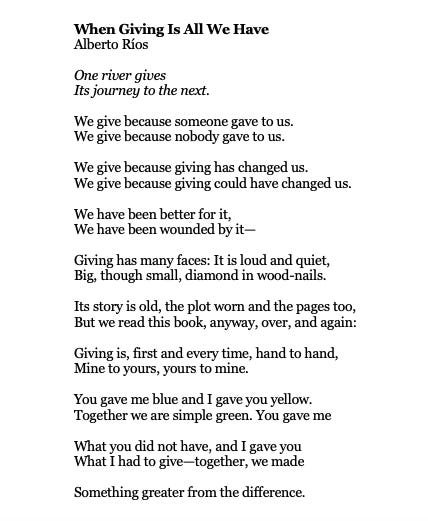
"We give because someone gave to us.
We give because nobody gave to us."
97
424
24,239
Jessica Cole retweeted

2 Sep 2024
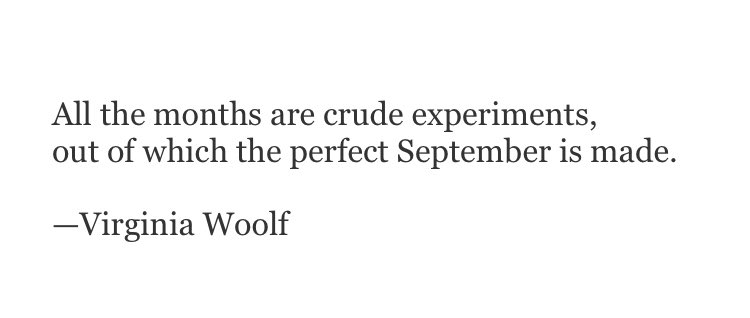
Woolf was feeling it.
6
121
977
44,258
14 Aug 2024
Ferries: the gift that never stops giving

Ferry service may experience minor delays through tomorrow, August 15, due to the presence of a juvenile humpback whale in Boston Harbor.
1
3
10
1,106
12 Aug 2024
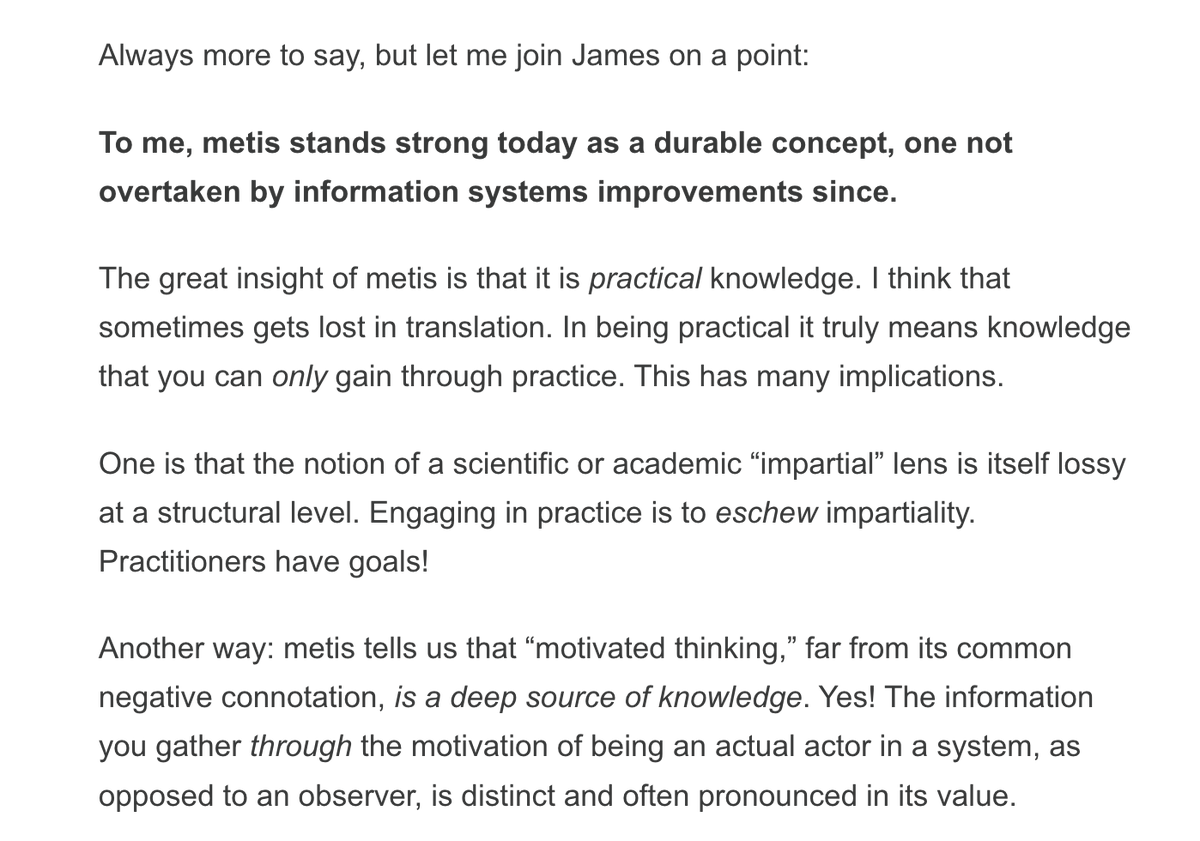
"The information you gather through the motivation of being an actual actor in a system, as opposed to an observer, is distinct and often pronounced in its value."
@allafarce, as usual daveguarino.substack.com/p/j…
(worth sticking around for SNAP reddit system detangling at end)
11 Aug 2024

I've had a tiring week, but I finally wrote a bit in the newsletter on James C. Scott and why the concept of metis is enduring (if misunderstood at times.)
1
4
850
12 Aug 2024
.@keeshlauria just released fall apps for his Improvisational Indian Cooking Class: docs.google.com/document/d/1…
He's one of the best teachers I've ever had. Posting here bc I can't keep track of all the people who wanted the link after hearing me rave this spring.
1
5
945