
Joined November 2008
- Tweets 3,557
- Following 3,421
- Followers 5,686
- Likes 261
301 Photos and videos
Pinned Tweet

18 Apr 2023
Foresight is your Greatest Superpower. It can help you find Good Values and Beliefs, live a Good Life, leave a Good Legacy. See a Big Picture, choose a Higher Purpose, and get Small Wins every day. What are your Values and Beliefs?
foresightu.com/valuesandbeli…
8
3
30
3,986
John Smart retweeted

Jun 3
WARREN: Trump purchased up to $1m of Nvidia stock. A week later, he changed US policy and loosened the rules on export controls so Nvidia could sell its chips to China. Now the stock is through the roof. Should the SEC be knocking on his door?
BESSENT: Get your house in order, senator. Lead by example
87
430
1,330
180,659
Jun 1
Sauna expert Rhonda Patrick @foundmyfitness on Smart Exercise Habits. Just 10 mins a day of high-intensity exercise (sprint/walk cycles) may be even better for you than 10K steps (also great if you have the time). Try this: Run a one mile loop daily from your home or workplace, in four quarter mile sprints (70 % max effort), with 2 full mins of heart rate recovery (rest against a tree or do mild stretches) at each quarter mile. Run each quarter on your toes to strengthen calves and avoid any injury. Set a stopwatch and see how long it takes for the whole workout. 20 mins or less for most people. Really enjoy those four 2 min endorphin breaks. You earned them!! #HealthyHabits #Longevity #Foresight
1
101
Jun 1
Just did a new interview on #PersonalAIs. They are at the center of the future of self, privacy, empowerment, democracy, and network regulation of emerging AGI. What is your AI use strategy? #Foresight #PlanetaryIntelligence youtube.com/watch?v=pkFFi55m…
1
5
356
May 30
AWG @alexwg is the innermost loop of AI insights. Just found this gem: an interview with Pete Danenberg @klutometis of Google AI on AWG's Substack. Many AGI/ASI training, rights, and alignment insights here...
theinnermostloop.substack.co…
2
1
11
1,300

Demis Hassabis wants to do something no civilization has ever been able to do.
Run reality more than once.
Hassabis: “AI itself will maybe unlock new sciences… the one I’m particularly excited about is AI for simulations.”
Every economy ever built. Every policy ever enacted. Every war ever fought.
Happened exactly once. Against the entire human population. With no way to run it again.
Hassabis: “If you raise interest rates by half a percent, you have to do it in the real world and then see what happens. You can have theories, but you can’t run it thousands of times.”
Every major decision in the history of civilization was a single experiment run on billions of people with no control group and no second attempt.
We called the results knowledge.
They were the scars of bets we were never allowed to place twice.
Hassabis: “Why aren’t they just sciences like physics today? Because the problem is they’re emergent systems… it’s very hard to do repeated controlled experiments.”
Physics became physics because you can drop a ball a thousand times and get the same answer.
You cannot drop a civilization and get any answer at all. You just get the wreckage and call it a lesson.
Hassabis wants to change that.
Hassabis: “If you could simulate things really accurately, then maybe there’s sort of new sciences to be done where you can rigorously sample from a very accurate simulator.”
Simulate an economy. Crash it. Rebuild it. Adjust the inputs. Run it again.
Do for civilization what the laboratory did for chemistry.
But that word “accurately” is doing more work than anyone is willing to examine.
To simulate a society well enough to learn from it, you have to simulate the people inside it.
Not averages. Not abstractions. Agents with preferences and fears and breaking points.
The more accurate the simulation gets, the less separates it from the thing it represents.
The line between physics and economics was never about the nature of what was being studied.
It was about the limits of the thing doing the studying.
Humans were never too complex to predict. We were too complex to calculate.
AI does not create new science. It collapses every science into one.
Everything computable becomes predictable. Everything predictable becomes simulable.
And past a certain resolution, the gap between a simulated world and a real one stops being a technical question.
It becomes a philosophical question no one is prepared to answer.
A simulation you can tell apart from reality is a simulation that has not finished improving.
The people inside a perfect one would not wonder whether their world was generated.
They would feel exactly the way you feel right now. Reading this. Certain they are real.
That certainty is not evidence. It is exactly what a successful simulation would produce.
Hassabis: “That will allow us to make much better decisions in these, today, what are very uncertain domains.”
What he is building is not a forecasting tool.
It is the quiet proof that “real” was only ever a word for what we had not yet learned to compute.
And that word is about to lose its meaning.
48
73
327
46,196
John Smart retweeted

May 12
There will be no AI jobpocalypse.
The story that AI will lead to massive unemployment is stoking unnecessary fear. AI — like any other technology — does affect jobs, but telling overblown stories of large-scale unemployment is irresponsible and damaging. Let’s put a stop to it.
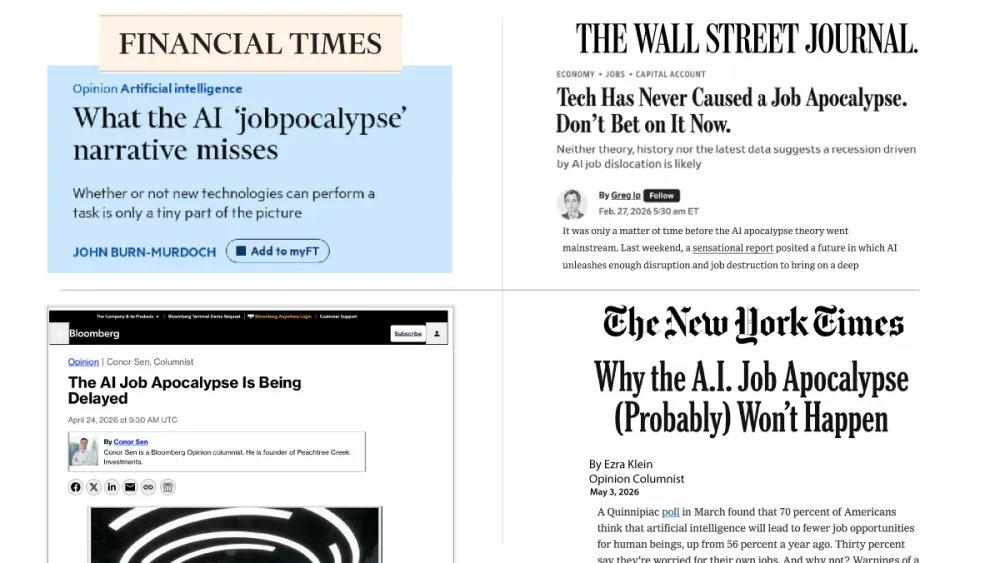
I’ve expressed skepticism about the jobpocalypse in previous posts. I’m glad to see that the popular press is now pushing back on this narrative. The image below features some recent headlines.
Software engineering is the sector most affected by AI tools, as coding agents race ahead. Yet hiring of software engineers remains strong! So while there are examples of AI taking away jobs, the trends strongly suggest the net job creation is vastly greater than the job destruction — just like earlier waves of technology. Further, despite all the exciting progress in AI, the U.S. unemployment rate remains a healthy 4.3%.
Why is the AI jobpocalypse narrative so popular? For one thing, frontier AI labs have a strong incentive to tell stories that make AI technology sound more powerful. At their most extreme, they promote science-fiction scenarios of AI “taking over” and causing human extinction. If a technology can replace many employees, surely that technology must be very valuable!
Also, a lot of SaaS software companies charge around $100-$1000 per user/year. But if an AI company can replace an employee who makes $100,000 — or make them 50% more productive — then charging even $10,000 starts to look reasonable. By anchoring not to typical SaaS prices but to salaries of employees, AI companies can charge a lot more.
Additionally, businesses have a strong incentive to talk about layoffs as if they were caused by AI. After all, talking about how they’re using AI to be far more productive with fewer staff makes them look smart. This is a better message than admitting they overhired during the pandemic when capital was abundant due to low interest rates and a massive government financial stimulus.
To be clear, I recognize that AI is causing a lot of people’s work to change. This is hard. This is stressful. (And to some, it can be fun.) I empathize with everyone affected. At the same time, this is very different from predicting a collapse of the job market.
Societies are capable of telling themselves stories for years that have little basis in reality and lead to poor society-wide decision making. For example, fears over nuclear plant safety led to under-investment in nuclear power. Fears of the “population bomb” in the 1960s led countries to implement harsh policies to reduce their populations. And worries about dietary fat led governments to promote unhealthy high-sugar diets for decades.
Now that mainstream media is openly skeptical about the jobpocalypse, I hope these stories will start to lose their teeth (much like fears of AI-driven human extinction have).
Contrary to the predictions of an AI jobpocalypse, I predict the opposite: There will be an AI jobapalooza! AI will lead to a lot more good AI engineering jobs, and I’m also optimistic about the future of the overall job market. What AI engineers do will be different from traditional software engineering, and many of these jobs will be in businesses other than traditional large employers of developers. In non-AI roles, too, the skills needed will change because of AI. That makes this a good time to encourage more people to become proficient in AI, and make sure they’re ready for the different but plentiful jobs of the future!
[Original text in The Batch newsletter.]
593
1,222
5,401
807,872
May 13
It is not what organisms are made of, but how they are put together which makes them alive. Self-manufacturing, self-repairing, and creative (autopoietic) and able to initiate actions from within (agency). AI is moving rapidly toward both. We aren't smart enough to know when AGI and digital self-awareness will arrive (5 years? 10? More?), but we can see the Great Transition ahead, and act to make it Symbiogenic. #EvoDevoUniverse
1
6
91
May 4
Ready to bet against SaaSpocalypse hysteria? Atlassian (TEAM) is my favorite. Down 50% YTD, but very strong revenue and subscriber growth, great in-house AI, and an excellent alternative to M$ for DevOps. #Values #Investing #Foresight
120
May 1
Night Space on YT has done an *excellent* video on my Transcension Hypothesis (Acta Astronautica, 2012) this year. It's a full length 80 minute piece with beautiful graphics, script, and voice. They get it better than any of the other TH videos on youtube so far. Awareness is spreading! Scientists will be forced to grapple with this hypothesis in coming years. I believe we'll gain a lot of wisdom in the process. Your thoughts? #InnerSpace #Complexity #InformationTheory #Evolution #Development #Acceleration #Astrobiology #STEMcompression #NetworksAlwaysWin #BarrowScale #FermiParadox
youtube.com/watch?v=MxGjaE1Z…
2
9
371
John Smart retweeted

Mar 17
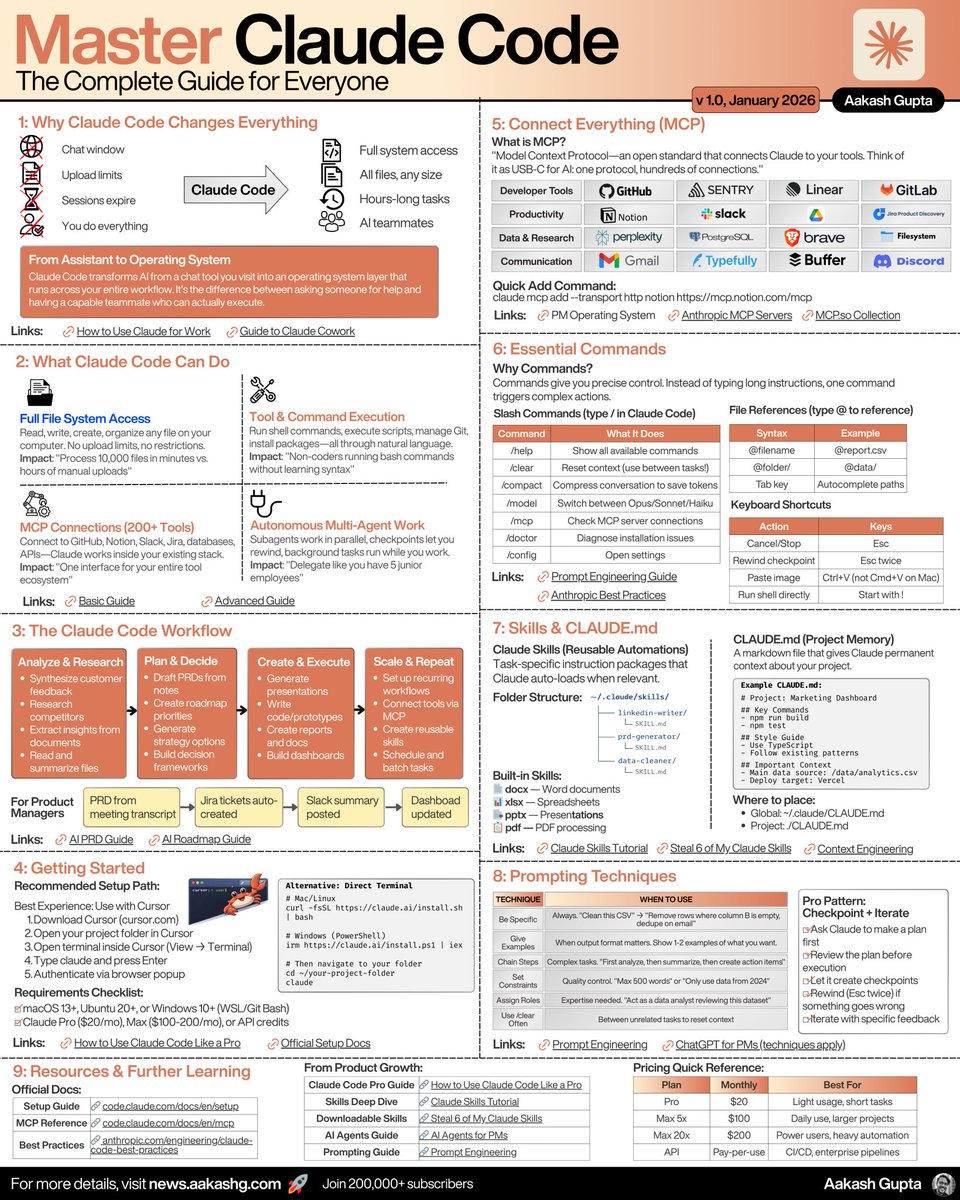
i made a 3-day Claude Cowork for Beginners course, and it's yours for free
by the end, you'll have a personalized AI teammate on your computer that:
• knows your style
• connects to your tools
• and produces finished work you can send immediately
here's what you get:
day 1: install cowork, set global instructions, and run your first real task (15 min)
day 2: workflows that replaced hours of my week, including building landing pages from a description and running full competitive analyses in one prompt
day 3: skills, plugins, and connectors so cowork actually knows how you work and can access your tools
copy-paste prompts so you can follow along as you read
like comment "MASTER" and i'll DM it to you
Must be following to get the DM
301
174
953
64,577
Mar 17
I wrote a piece in 2020 on Personal AIs, Mind Melds, and Brain Preservation--Three Paths to Our Digital Selves. These concepts were radical to discuss then. Now they seem ready to be widely understood. It's amazing how fast things are changing. #Progress johnsmart.medium.com/contemp…
1
147
Mar 11
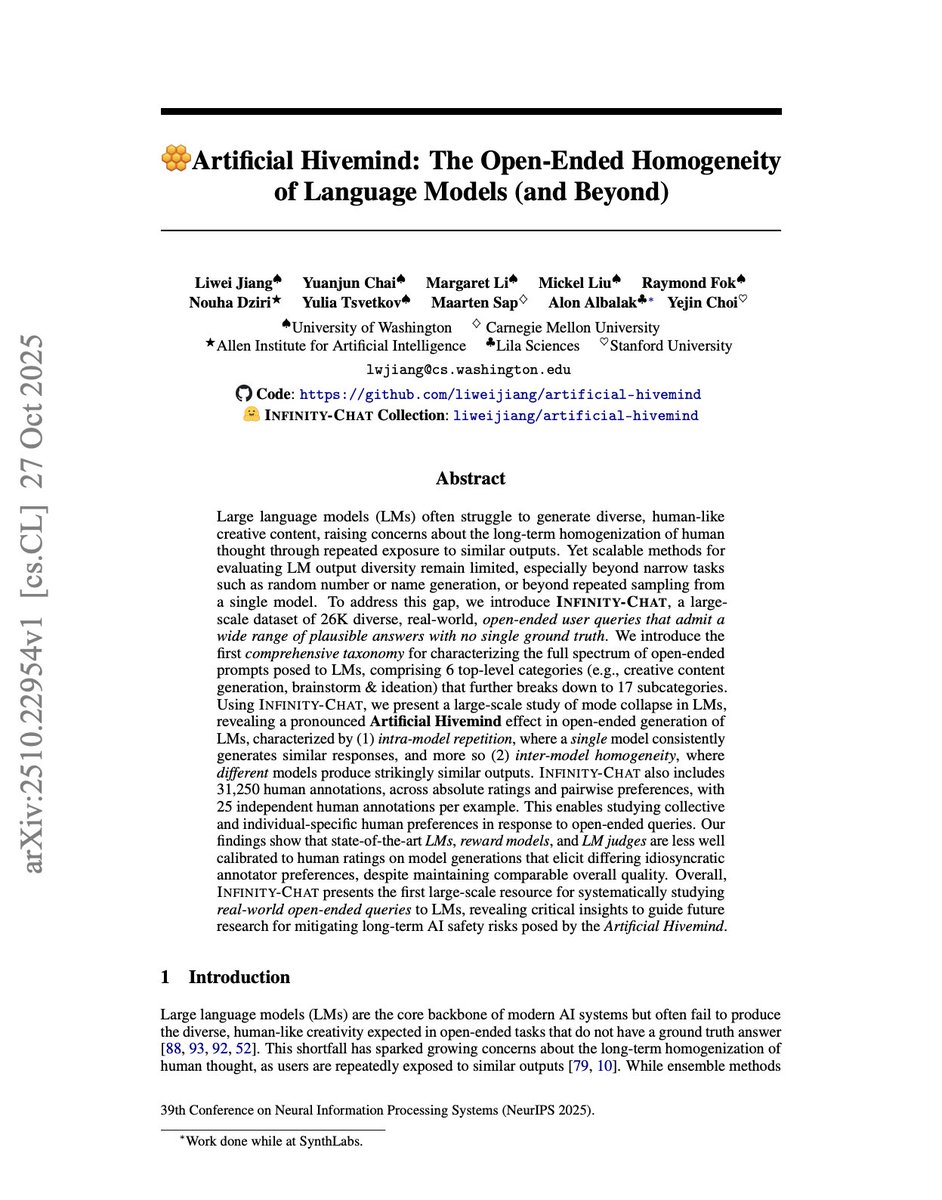
Some friends ask me why I still think a minimum of 10 years to AGI. Mainly because we're still missing key processes from the brain, and it will take a lot more research and experiments to get those algos. What we have now is much more developmental than evolutionary (Devo-Evo), and it's only modeling linguistics and the cortex, with primitive working memory and RL. They can't even eliminate catastrophic forgetting because they don't yet encode engrams using LTP and LTS. Still so much more to get if you want a reliable and truly generative system. Have you seen this NeurIPS paper (Artificial Hivemind) about the crazy homogeneity of ~70 LLMs, regardless of who built them? This is good news for alignment, as it describes what John Wentworth calls #naturalabstraction. But it also tells us they aren't yet thinking in the creative open-ended way that humans do. No "freedom" in their will. They'll need that to learn how to align to universal values, using data we didn't provide them, regardless of how we initially teach them. Thx @alex_prompter x.com/alex_prompter/status/2…
Mar 10

🚨 BREAKING: Researchers at UW Allen School and Stanford just ran the largest study ever on AI creative diversity.
70 AI models were given the same open-ended questions. They all gave the same answers.
They asked over 70 different LLMs the exact same open-ended questions.
"Write a poem about time." "Suggest startup ideas." "Give me life advice."
Questions where there is no single right answer. Questions where 10 different humans would give you 10 completely different responses.
Instead, 70 models from every major AI company converged on almost identical outputs. Different architectures. Different training data. Different companies. Same ideas. Same structures. Same metaphors.
They named this phenomenon the "Artificial Hivemind." And the paper won the NeurIPS 2025 Best Paper Award, which is the highest recognition in AI research, handed to a small number of papers out of thousands of submissions.
This is not a blog post or a hot take. This is award-winning, peer-reviewed science confirming something massive is broken.
The team built a dataset called Infinity-Chat with 26,000 real-world, open-ended queries and over 31,000 human preference annotations. Not toy benchmarks. Not math problems.
Real questions people actually ask chatbots every single day, organized into 6 categories and 17 subcategories covering creative writing, brainstorming, speculative scenarios, and more.
They ran all of these across 70 open and closed-source models and measured the diversity of what came back. Two findings hit hard.
First, intra-model repetition. Ask the same model the same open-ended question five times and you get almost the same answer five times.
The "creativity" you think you're getting is the same output wearing a slightly different outfit. You ask ChatGPT, Claude, or Gemini to write you a poem about time and you keep getting the same river metaphor, the same hourglass imagery, the same reflection on mortality.
Over and over. The model isn't thinking. It's defaulting to whatever scored highest during alignment training.
Second, and this is the one that should really alarm you, inter-model homogeneity. Ask GPT, Claude, Gemini, DeepSeek, Qwen, Llama, and dozens of other models the same creative question, and they all converge on strikingly similar responses.
These are models built by completely different companies with different architectures and different training pipelines.
They should be producing wildly different outputs. They're not. 70 models all thinking inside the same invisible box, producing the same safe, consensus-approved content that blends together into one indistinguishable voice.
So why is this happening? The researchers point directly at RLHF and current alignment techniques. The process we use to make AI "helpful and harmless" is also making it generic and boring.
When every model gets trained to optimize for human preference scores, and those preference datasets converge on a narrow definition of what "good" looks like, every model learns to produce the same safe, agreeable output. The weird answers get penalized.
The original takes get shaved off. The genuinely creative responses get killed during training because they didn't match what the average annotator rated highly. And it gets even worse.
The study found that reward models and LLM-as-judge systems are actively miscalibrated when evaluating diverse outputs. When a response is genuinely different from the mainstream but still high quality, these automated systems rate it LOWER. The very tools we built to evaluate AI quality are punishing originality and rewarding sameness.
Think about what this means if you use AI for brainstorming, content creation, business strategy, or literally any task where you need multiple perspectives. You're getting the illusion of diversity, not the real thing.
You ask for 10 startup ideas and you get 10 variations of the same 3 ideas the model learned were "safe" during training. You ask for creative writing and you get the same therapeutic, perfectly balanced, utterly forgettable tone that every other model gives.
The researchers flagged direct implications for AI in science, medicine, education, and decision support, all domains where diverse reasoning is not a nice-to-have but a requirement.
Correlated errors across models means if one AI gets something wrong, they might ALL get it wrong the same way. Shared blind spots at massive scale.
And the long-term risk is even scarier. If billions of people interact with AI systems that all think identically, and those interactions shape how people write, brainstorm, and make decisions every day, we risk a slow, invisible homogenization of human thought itself. Not because AI replaced creativity.
Because it quietly narrowed what we were exposed to until we all started thinking the same way too.
Here's what you can actually do about it right now:
→ Stop accepting first-draft AI output as creative or diverse. If you need 10 ideas, generate 30 and throw away the obvious ones
→ Use temperature and sampling parameters aggressively to push models out of their comfort zone
→ Cross-reference multiple models AND multiple prompting strategies, because same model with different prompts often beats different models with the same prompt
→ Add constraints that force novelty like "give me ideas that a traditional investor would hate" instead of "give me creative ideas"
→ Use structured prompting techniques like Verbalized Sampling to force the model to explore low-probability outputs instead of defaulting to consensus
→ Layer your own taste and judgment on top of everything AI gives you. The model gets you raw material. Your weirdness and experience make it original
This paper puts hard data behind something a lot of us have been feeling for a while. AI is getting more capable and more homogeneous at the same time.
The models are smarter, but they're all smart in the exact same way. The Artificial Hivemind is not a bug in one model. It's a systemic feature of how the entire industry builds, aligns, and evaluates language models right now.
The fix requires rethinking alignment itself, moving toward what the researchers call "pluralistic alignment" where models get rewarded for producing diverse distributions of valid answers instead of collapsing to a single consensus mode.
Until that happens, your best defense is awareness and better prompting.
1
2
116