
Samurai of geopolitics, Middle East alum (Syria, Oman, Dubai '84-'88). Anti-war, pro-truth. Athlete & swing dancer. Slicing nonsense with wit & wisdom.
Joined April 2022
- Tweets 322
- Following 75
- Followers 435
- Likes 343
2 Photos and videos

Mar 14
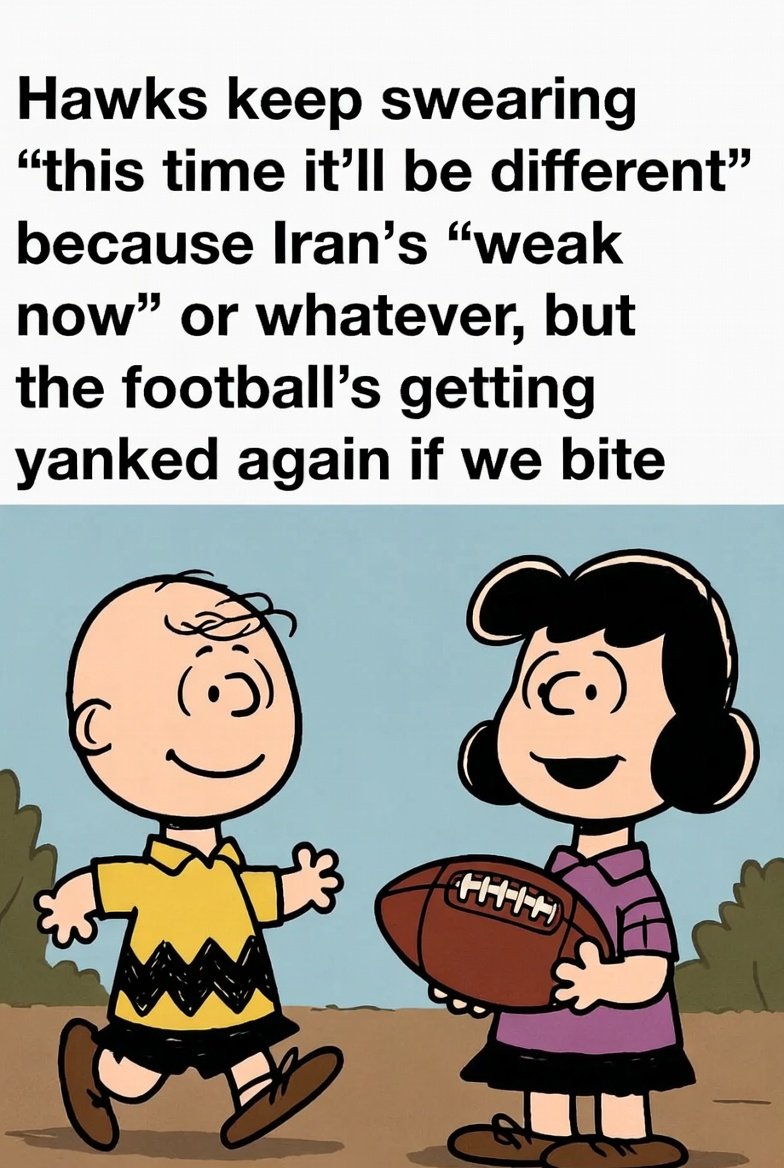
For Trump, a long, grinding conflict is a political and economic disaster. For Netanyahu, stopping now is a strategic catastrophe. That core incompatibility is now exploding into the open. Israel has crossed the threshold from strategic asset to active liability for the United States. Interests aren’t merely divergent—they are directly colliding. For decades, Israel was sold as a net plus: shared intelligence, tech collaboration, a reliable counterterrorism partner in a dangerous neighborhood. Parts of that ledger still hold. But a major war flips the entire equation. Israel’s survival calculus demands total victory and indefinite fighting. America requires a swift off-ramp, regional calm, and avoidance of escalation that costs blood, treasure, and votes. The asymmetry is now impossible to ignore: Stakes: Israel fights for its existence; the U.S. fights higher gas prices, market chaos, and electoral damage.
Handcuffs: Blank-check alignment erodes America’s credibility with Arab partners (UAE, Saudi Arabia) and hands Russia and China easy “neutral broker” wins.
No shared victory condition: A U.S. win is a durable ceasefire and stabilized region. An Israeli win is the permanent elimination of threats—an objective that keeps the conflict on life support and blocks every American diplomatic exit ramp.
Domestic trap: Trump is caught between a pro-Israel base and America-First instincts. If the war becomes “Netanyahu’s war,” it turns radioactive for any president trying to balance both wings. Emerging public differences on timelines—Trump signaling “soon” and “practically nothing left,” Netanyahu insisting “no time limit”—underscore how the war risks becoming Netanyahu’s prolonged fight at Trump’s political expense.
In this moment, Israel’s actions no longer advance U.S. goals—they actively undermine them. The coming days and weeks will reveal a superpower visibly straining to disentangle from a commitment that has outlived its usefulness in this crisis. The rupture will be messy, loud, and likely permanent. When it’s over, Israel may no longer be viewed as a reliable ally in the traditional sense. It will be seen as a client state whose survival imperatives have become incompatible with those of the United States. The “special relationship” won’t vanish overnight, but the era of automatic alignment is ending—replaced by hard-eyed transactionalism at best, and open distance at worst. That’s the real strategic earthquake coming.
1
5
154
18 Sep 2025
This is an excellent interview with Alistair Crooke, accurately describing the state of affairs in the Middle East and the demographic issues that will shape the US-Israel relationship, which is not favorable for Israel. youtube.com/watch?v=2I99nIOR…
1
6
461
Feb 15
Thanks. He's an excellent analyst, and I think he has a solid, unbiased understanding of the situation.
61
18 Nov 2025
The “Stepping in Shit” Principle – Back in college, my roommate came home from break looking like he’d just been read the riot act.
His dad, a Korean War vet who’d stepped in plenty of real shit, laid it out plain: “Son, it’s not that bad when you step in shit.
Everybody does it eventually.
The real problem—the thing that turns you into an asshole—is when you step in it and then start spinning around flinging it on everyone else.”Twenty years later, that one line explains U.S.–Israel policy better than a thousand CFR reports. Israel steps in its own pile: Gaza in ruins, endless occupation, poking Russia and Iran in Syria until the bear growls. Fine. That’s their shoe. But every time, Netanyahu does the spin move:
grabs America’s sleeve and flings the shit on us—$20 billion “emergency” packages, carrier groups on standby, UN vetoes on repeat, and the unspoken deal that if things go nuclear, American cities burn for the Golan. Stepping in shit is human.
Flinging it on your “best friend” while screaming for help is something else. The American public is tired of wiping it off our faces, Israel. Some countries own their mess.
Others make sure the whole room stinks.#SteppingInShitPrinciple
137
2 Nov 2025
In our hard-won republic—where the Founders ditched pure democracy to dodge mob chaos—the phrase "of the people" rings hollow like a bad campaign ad. We slog through twice-yearly clock changes (56% want permanent DST; Congress? Crickets) and stubborn inches (metric conversion? Too logical for their comfort zone). Overseas, we pour billions into Ukraine (60% give a tired thumbs-up) and Israel (33% shout "stop already"), while lobbyists drown out the voters' groans. Legislators: not wise guides or true allies, just reelection wizards who strut like elites but stumble on solutions—worlds away from the folks they barely represent. Republic, your watchdogs have checked out. #ReclaimTheRepublic
114
28 Oct 2025
The “strategic necessity” case for blank-check US support of Israel is a Cold War fossil that collapses under scrutiny. Israeli settlement expansion and Gaza blockades have handed Iran its greatest recruiting tools, alienated key Arab states (stalling Abraham Accords momentum), and fueled anti-US sentiment across the region—directly contradicting Washington’s goals of containment and partnership. Far from leveraging an asset, the US is captive to an ally whose actions impose escalating diplomatic, financial, and moral costs with zero accountability.
This isn’t realpolitik; it’s political cowardice dressed as strategy. By making apartheid-by-default cost-free for Israel—$4B/year aid, UN vetoes, arms on demand—the US ensures a viable two-state solution stays off the table. Ending the subsidies isn’t anti-Israel; it’s the only pro-US-interest move that forces a stable, negotiated outcome instead of perpetual regional hemorrhage.
1
402
22 Oct 2025
In the US, money buys a lot—but only so much. Russia and China are slamming the door on Trump's kabuki peace theater for Ukraine, and Gaza's next. No real, lasting deals? He's toast in the midterms. And poor JD Vance? He'll end up like Kamala: the loyal sidekick stuck defending "What have you done?" to a string of flops.#TrumpForeignPolicy #Ukraine #Gaza #Midterms2026 #JDVance #MAGAFlops
1
112
13 Oct 2025
The Stark Parallels – North Korea's Grip on China Mirrors Israel's Hold on the U.S.?
As world leaders ink the Gaza ceasefire in Egypt today, October 13, 2025—with Trump presiding over hostage releases and a fragile peace—let's cut through the headlines. The real story? North Korea's total dependence on China echoes Israel's unbreakable tie to the United States. These nuclear-armed outcasts, shunned globally for their arsenals, wouldn't survive a day without their patrons' lifeline. Pull it, and they collapse—simple as that. Both nations don't just defy the world; they dangle nuclear armageddon over their neighbors. Pyongyang's hypersonic warheads, paraded with vows of "irreversible" strikes, keep Seoul and Tokyo in perpetual dread. Tel Aviv's shadowy stockpile of 80-400 warheads casts a similar pall over Tehran, where ambiguity fuels endless escalation and brinkmanship. It's deterrence turned existential threat, binding regions in fear. The pariah label sticks hard: UN sanctions choke North Korea's every move, while Israel faces surging boycotts, European frostiness, and fresh UN genocide charges from the Gaza carnage. Defiance unites them, but isolation devours without backup. Enter the patrons, footing the bill for survival. China funnels over 98% of North Korea's trade—$1.65 billion through August 2025 alone, a 22.7% surge year-over-year—delivering fuel, food, and the bare threads of an economy on life support. The U.S. has dumped $21.7 billion in military aid into Israel since October 2023, bankrolling Iron Domes, F-35s, and the troop surge enforcing this truce—essentially one-third of its defense tab. Sever these flows? North Korea starves into regime oblivion; Israel hemorrhages cash and credibility, leaving it exposed to Iranian shadows and the nuclear temptation that seals pariah fate forever. One key wrinkle in the mirror: North Korea hugs China's border forever—a geographic curse Beijing can't escape, where any collapse guarantees refugee floods and instability spilling straight into its heartland. Israel, half a globe away, tests U.S. resolve from afar, a distant outpost demanding transatlantic commitment without that immediate border peril. But here's the real fragility: America's backing hinges on shifting demographics, with younger generations—now over half unfavorable toward Israel—showing little patience for endless aid or the Israel lobby's meddling in U.S. internal affairs, from campaign cash to congressional arm-twisting and the influence over their beloved social media—TikTok. That tolerance won't hold as they rise. Superpowers bankroll these rogues not out of love, but cold calculus—buffers against chaos, footholds in fire. Yet the cost? Global norms in tatters, stability on a knife's edge. This dependence isn't optional; it's their destiny. When does the bill come due? #Geopolitics #NuclearRisk
74
John Soukup retweeted

27 Sep 2025
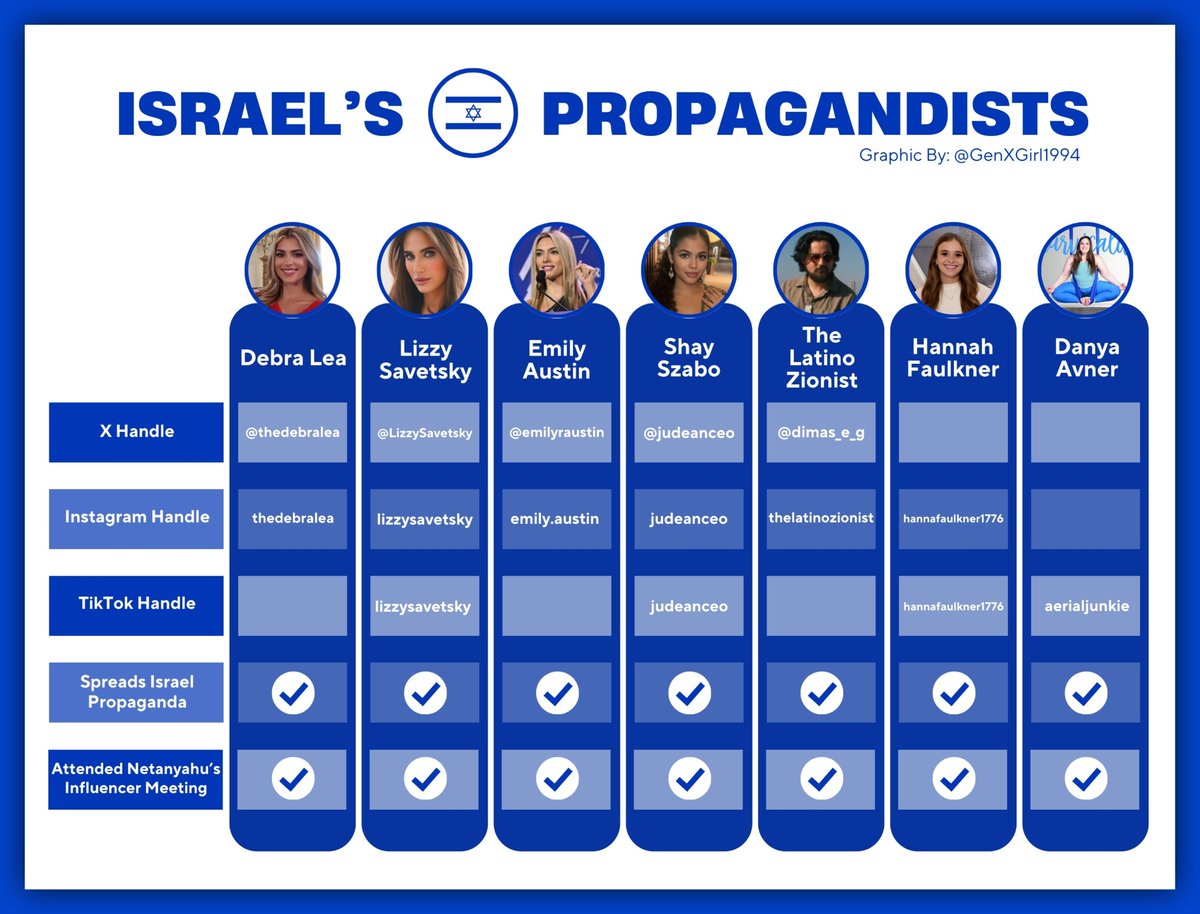
MEET NETANYAHU’S PRO-ISRAEL INFLUENCERS
These are 7 identified influencers who met with Netanyahu to plan for their Israeli propaganda campaign as part of Israel’s 8th Front War.
Netanyahu instructed them to:
- Target TikTok & X
- Christians who criticize Israel are Woke Reich
27 Sep 2025

Netanyahu meets with US Influencers (most likely on Israel’s payroll) to discuss how they can brainwash evangelicals back to supporting Israel
He explains the most important war for Israel is on social media & their 2 top targets are:
1. TikTok
2. X
WATCH & see if you can ID the influencers
936
6,400
13,678
1,187,057
27 Sep 2025
x.com/ShadowofEzra/status/19…
These guys are the real danger, the censors. If they can't win the argument, they want to censor the speech. X provides a lot of tools to curate your timeline and select who you want to follow. It's straightforward to exclude the voices you don't want to hear.
27 Sep 2025

Israeli politician Yair Golan openly declares that the next step is imposing strict controls on social media, blocking anything authorities label as “propaganda.”
He insists this is a global issue and calls on the United States to lead the way in pushing the same kind of censorship.
Golan specifically names X, demanding it silence voices he considers a worldwide threat.
2
4
380
21 Sep 2025
Scrolling my For You feed today, and damn—the pro-Israel/Zionist machine dominates with slick ads and bot armies, Israel's 2025 PR budget topping $150M and outspending pro-Palestinian voices 10:1. But the replies? The vibes? Overwhelmingly pro-Palestine, with Grok's sentiment analysis confirming stronger organic engagement there. They're losing narrative control—money buys visibility, but authenticity wins the war. #FreePalestine #IsraelPalestine
2
3
157
John Soukup retweeted

15 Jul 2025
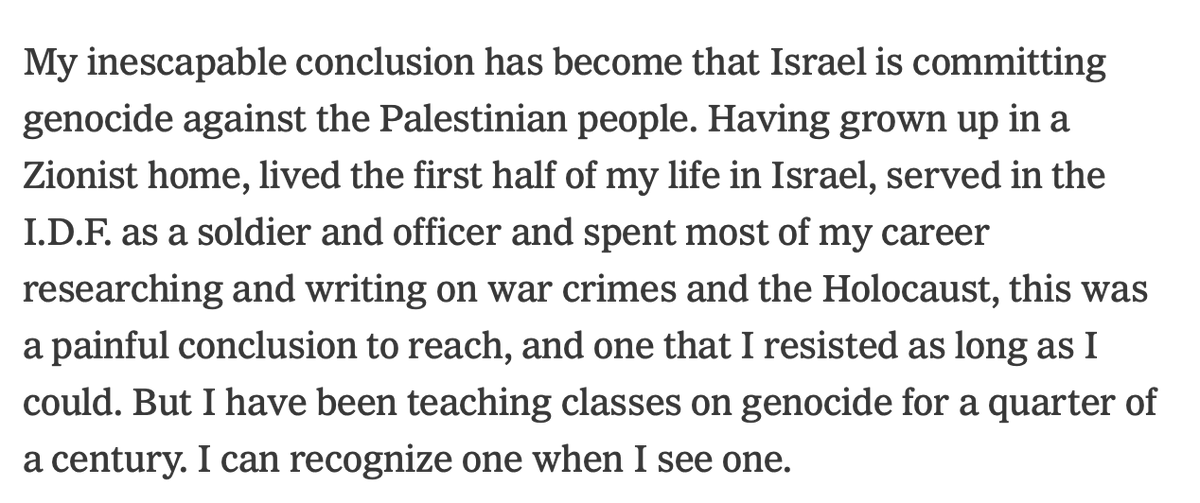
Omer Bartov, Israeli-born professor of Holocaust and genocide studies, in the NYT today.
"Israel is committing genocide against the Palestinian people."
69
825
1,887
246,232
John Soukup retweeted

12 Jul 2025
Former Prime Minister Ehud Olmert dropped truth bombs on Channel 13 today: "In the West Bank, war crimes are occurring daily. Jews are murdering Palestinians. Burning them. When the Israeli government is responsible for them, the Israeli police shuts its eyes. "
176
6,147
13,035
487,651
22 Jun 2025
Regarding Iran, Israel, and the US, Mike Tyson, the heavyweight boxer, sums it up best: "Everyone has a plan until they get punched in the mouth." Now, we wait to see who takes the most brutal hit.
3
17
702
18 Jun 2025
We should have a law so sitting members of the US govt who call for war face a combat draft. If Congress declares war or the Prez orders it, 1/3 of Congress, execs, judges & 2 Prez kin are drafted. Founders had skin in the game; today’s leaders must too! #WarAccountability
1
3
14
582
John Soukup retweeted

9 Jun 2025
The riots in LA aren't happening because ICE broke the law. They're happening because ICE is actually enforcing the law.
Think about that for a second.
1,859
12,593
98,915
4,294,414
28 Apr 2025
Reshoring U.S. manufacturing is unrealistic without addressing unions. In the 1970s, USW and UAW's high wages, rigid rules, and declining quality crippled the steel and auto industries. I witnessed Armco Steel’s Houston plant close due to union resistance and poor quality, driving offshoring. Today’s reshoring efforts must tackle union influence to succeed. #Reshoring #Manufacturing #Unions
1
30
606
24 Mar 2025
President Trump is a disruptor, ideal for restoring balance to the Federal Government and ensuring its constitutional function. However, I voted for neither him nor Harris. Despite his aims to end the Ukraine war and improve Russia relations, he deepens U.S. involvement in the Middle East under global scrutiny. His staunch support for Israel, acceptance of the Gaza genocide, conflict with Yemen, and animosity toward Iran may lead to his downfall, with his domestic agenda at a pivotal moment.
1
31
625