
Football intelligence & applied AI. Designing systems that turn information into decisions. Former @kaagent • @nkdomzale. MSc Sport Management. American.
Joined March 2010
- Tweets 4,395
- Following 663
- Followers 5,969
- Likes 13,327
601 Photos and videos




Player value and market value are different things.
Navigating between both is what separates recruitment from scouting.
Jun 14

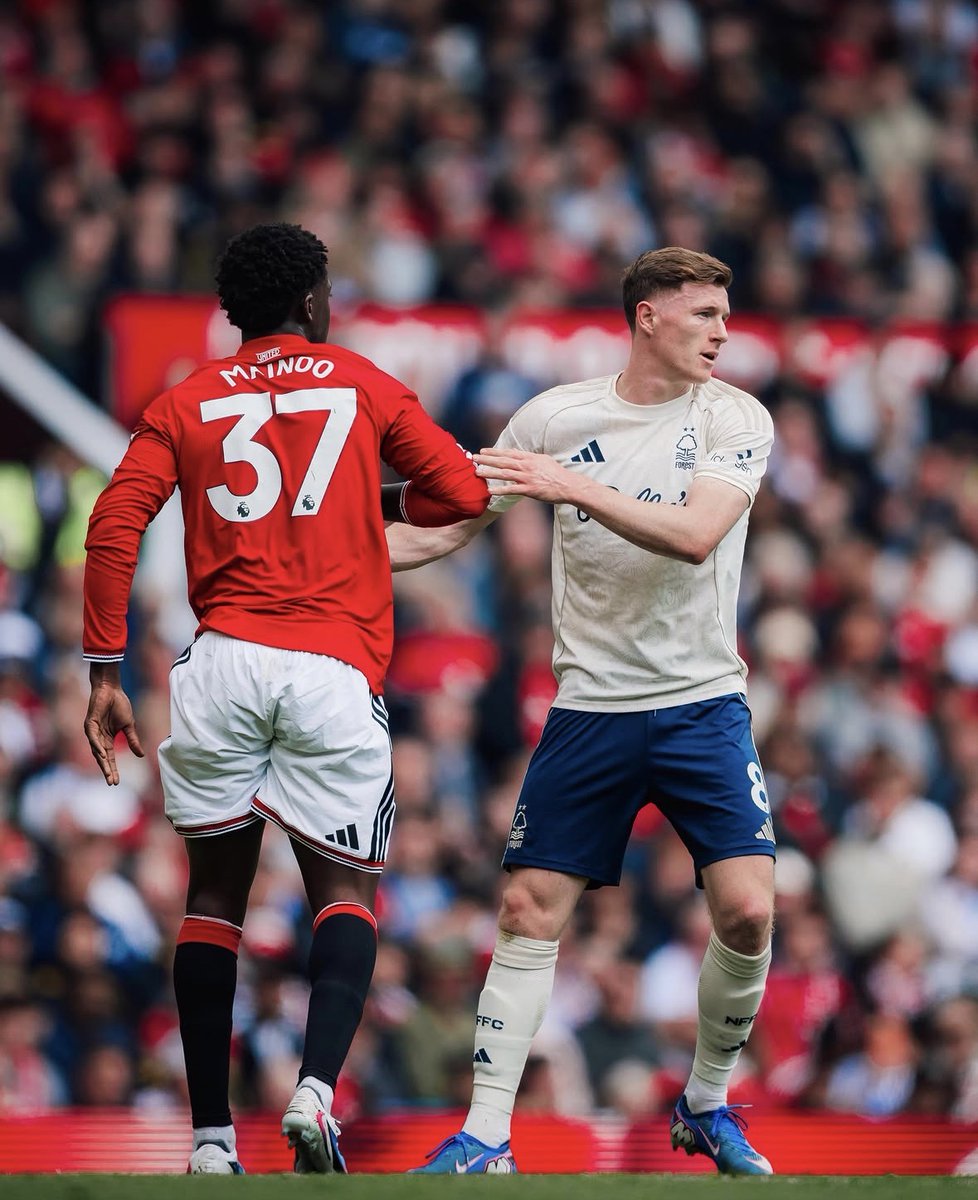
Premier League clubs fear Elliot Anderson’s £100m-plus proposed move to Man City will inflate the summer transfer window.
Industry insider: “Anderson’s move is going to have a knock-on effect in terms of what clubs ask for players. It could make the market more difficult.” [@Matt_Law_DT]

1
5
1,417
The evaluation of a player's ability and potential are inputs - not anchors - for determining market value.
The anchors are comparable deals (Declan Rice) and power dynamics between the seller and potential buyers (leverage).
x.com/jonathanstoop/status/2…
Jun 7

Across the top 5 leagues, Elliot Anderson ranks in the 99th percentile (per 90) for:
– Ball recoveries (volume of loose ball pickups)
– Defensive action regains (conversions of defensive actions into possession)
– Line-breaking passes completed
– Line-breaking passes into tight space (≤2m)
He's excelled with every opportunity he's had in men's football - no reason to suggest that trend wouldn't continue and there are key signals to argue that he will scale to the highest level.
His eagerness is accelerate the game can be naive at times but indicates a strong mental profile with the confidence to demand the ball and the ability to do something valuable with it.
Worth noting that he's only had 2 seasons of playing >2000 minutes. He's developed exponentially in a short amount of time. He's still learning the nuances of playing a deeper role in midfield after initially breaking through as an attacking player - his career trajectory thus far indicates he'll continue to improve if there's opportunity to improve.
His market value is like a composite score of his impact across every area of the pitch, and he impacts every area of it.
Here's the split if you break down his impact across each quarter of the pitch using OBV:
– Defensive Third: 24% of his actions; OBV: 2.00
– Mid-Low: 27% of his actions; OBV: 1.10
– Mid-High: 27% of his actions; OBV: 2.15
– Attacking Third: 21% of his actions; OBV: 3.43
The truest benchmark he has in the market is Declan Rice who sold for £105M and proved to be worth the investment. Forest will hold for this price as long as they can - I don't expect a bidding war to drive the price. I can see City wanting to do the deal quickly but at a discount.
3
462
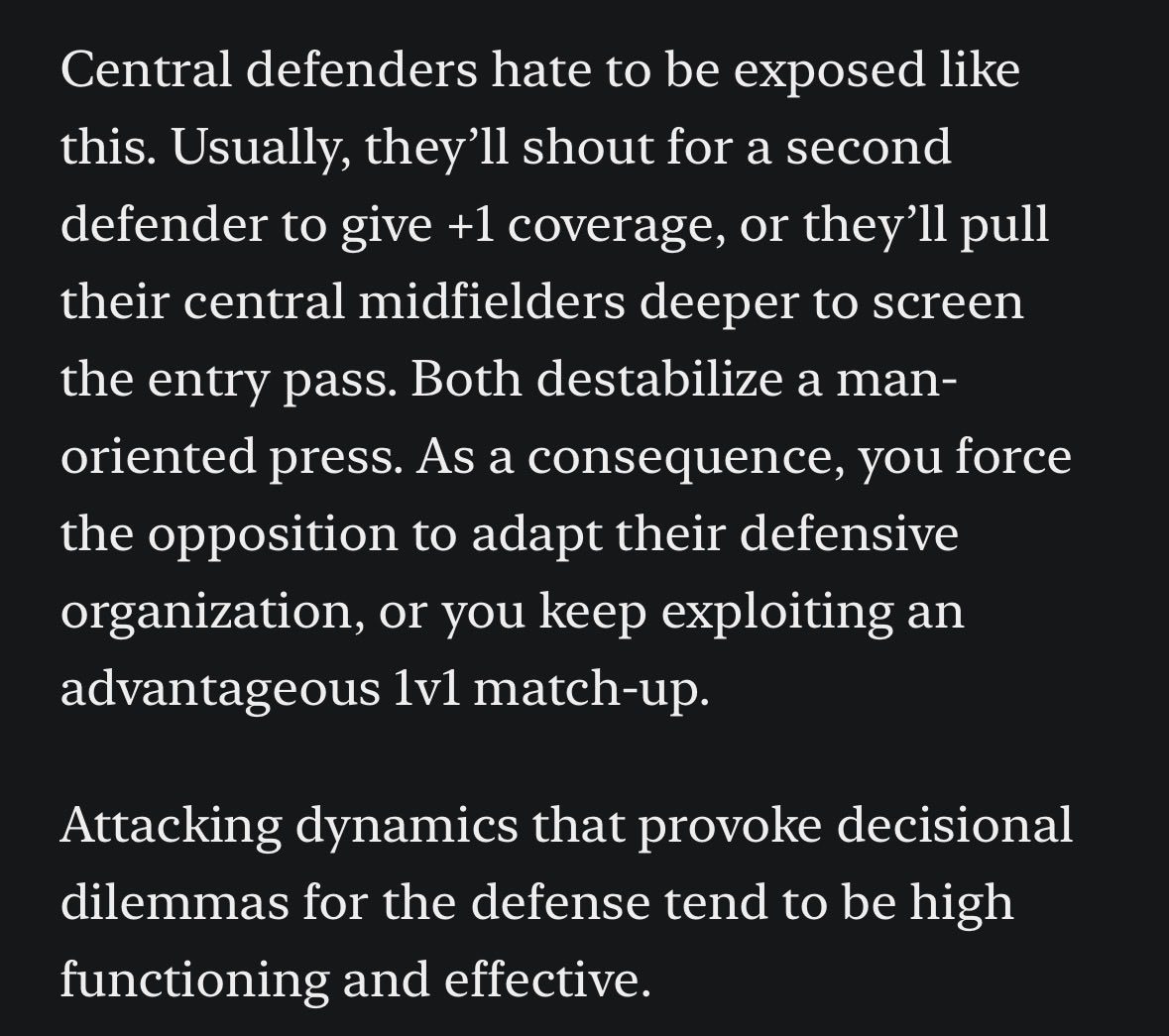
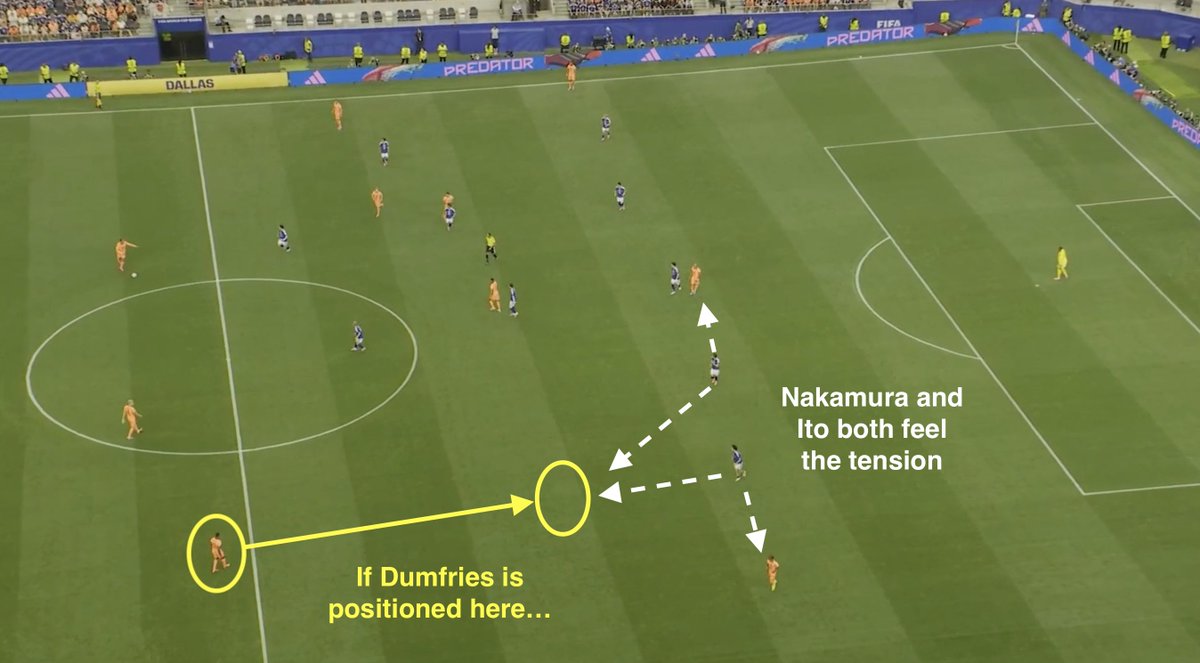
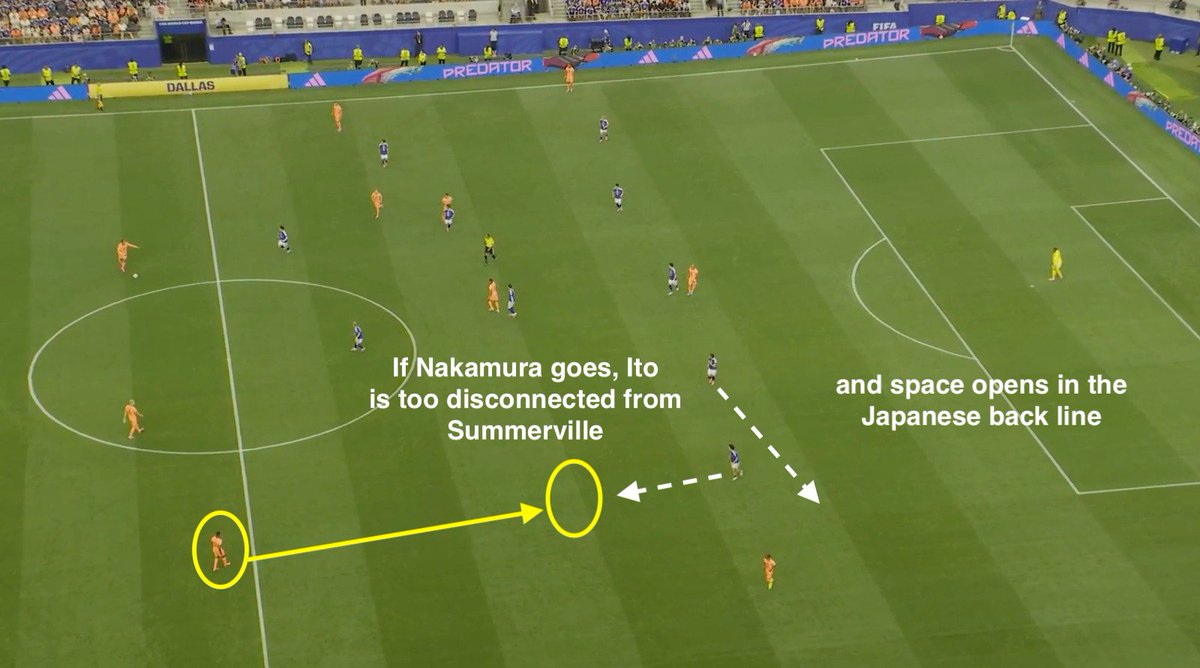
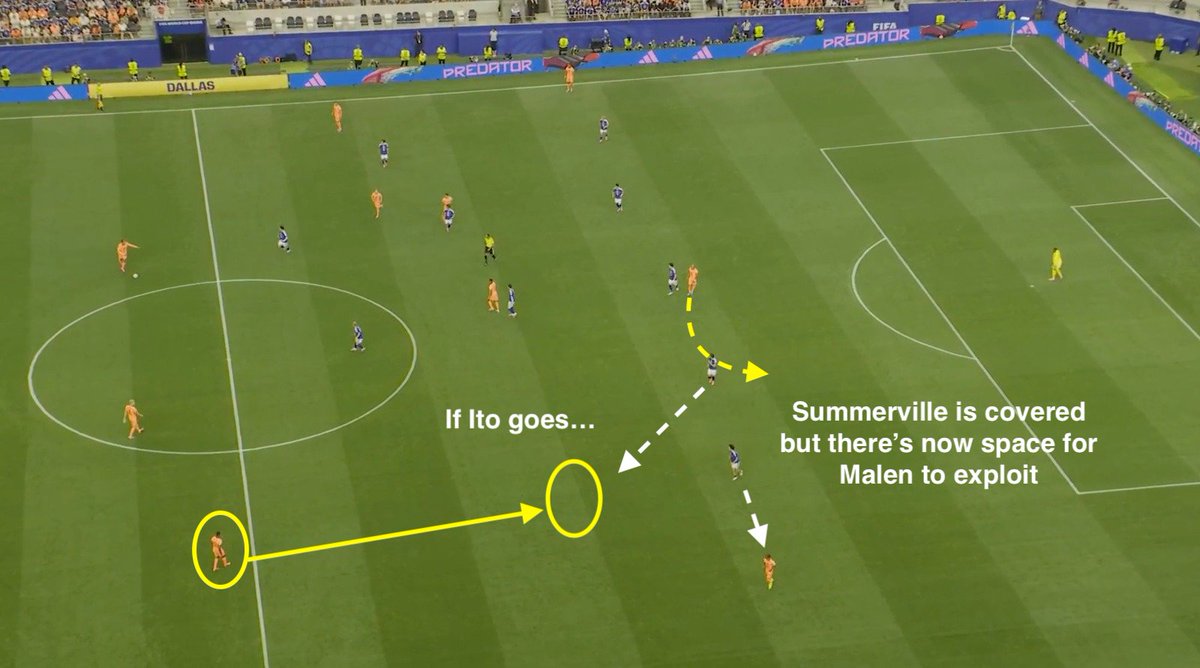
The "tension" Jon mentions is analogous to a fundamental attacking principle: deception.
High-functioning attacking teams create doubt for defenders with deceptive positioning, timing, and changes of speed and direction. Attacking is the art of provoking bad decisions.
Jun 15

Imo one of the concepts that doesn't get talked about enough in conversations about positional systems is the idea of creating tension. The best positional teams are the ones where the players recognise where to position themselves to create the greatest tension for their oppos.
1
2
56
9,310
I dive into some of the mechanics beneath this in my Advanced Pivot article.
19 Dec 2025
THE ADVANCED PIVOT – full article here:
jonathanstoop.substack.com/p…
3
705
Jonathan Stoop retweeted

Jun 13
🇺🇸🧊 Gio Reyna trivela. Perfect angle
71
844
15,219
1,835,859

Jun 12
My in-depth scouting report on Esmir Bajraktarević from a couple years ago:
Now playing for PSV and representing Bosnia (not the USMNT) on the biggest stage.
5 Apr 2024
Comprehensive Player Report: ESMIR BAJRAKTAREVIĆ
––Right Winger/Attacking Midfielder
––New England Revolution
––3/10/2005
––USA U23
In-depth insight into one of MLS' emerging talents. Feedback appreciated.

8
2,426
Jonathan Stoop retweeted

Jun 12
My USMNT starting 11 if our best athletes played soccer since birth
GK: Matt Freese
LWB: Jedi Robinson
CB: Tim Ream
CB: Chris Richards
CB: Alex Freeman
RWB: Sergino Dest
DM: Tyler Adams
CM: Malik Tillman
CM: Weston McKennie
AM: Christian Pulisic
ST: Folarin Balogun
66
65
2,072
251,912
Jun 12
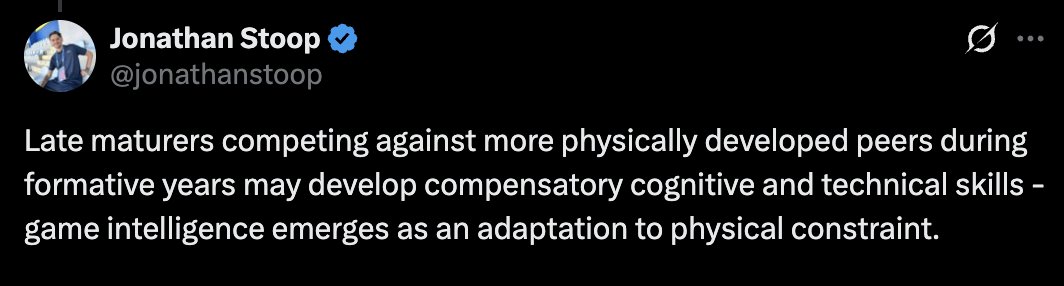
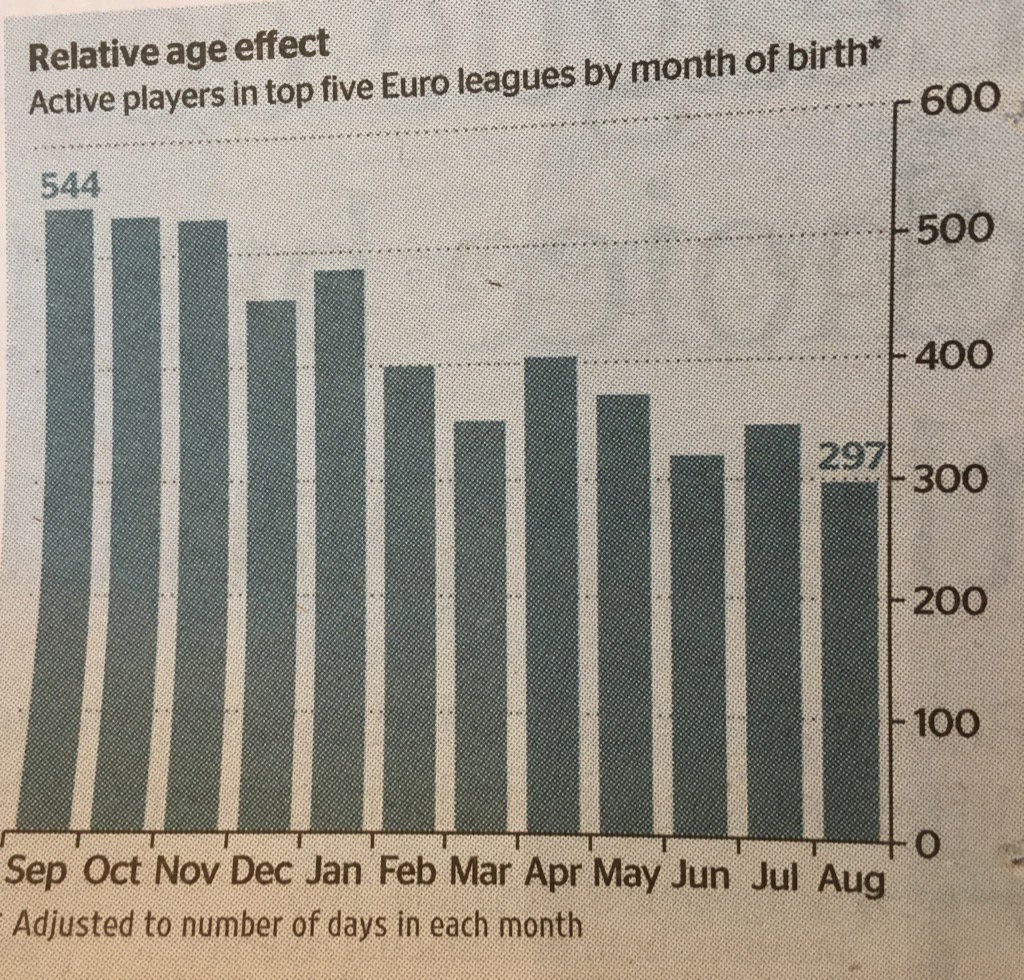
One of the mechanisms behind this phenomenon:
Jun 11

The huge effect month of birth has on likelihood of making it as a top footballer
From Fink Tank by @Dannythefink in Times
1
1
17
3,441
Jonathan Stoop retweeted

Jun 9
Why @jonathanstoop is a one of a kind 🧠
Jun 9
I flagged this middleman pattern back in early 2024.
x.com/jonathanstoop/status/1…
1
2
1,652
Jun 9
The Zadok Yohanna deal from AIK to Brighton is a clean case study for two recruitment principles:
1. Clubs that make confident decisions from small sample sizes have an edge
~50% of Yohanna's total professional minutes (580') came in the last two months. Most clubs would prefer to wait for the sample to grow before making a move, but by the time it does, the price has already moved to reflect the larger sample size. Brighton (and other clubs, possibly because they trust Brighton's strategy) act earlier because they bet on their ability to analyze sparse information and make projections from a small sample size. The uniqueness of each player makes this principle a case-by-case application, but after watching Yohanna on Wyscout, this is a player where a 30 game sample size would only confirm - not deny - what the first 10 already show. Paying a fee that looks inflated relative to the player's experience and current level is rational when you're confident in a sample (or your analysis of that sample) that everyone else considers too thin.
2. There is lucrative business in being the middleman
AIK signed Yohanna out of Nigeria, gave him a platform in European football, and sold the proof of concept at a significant multiple. Scandinavia has become the connective tissue (middleman) between the West African market and bigger European leagues - sourcing the talent and letting buyers pay for the network connection rather than build those relationships themselves. This type of arrangement carries a better risk profile for the buyer and an enormous return for the seller, which is why it keeps repeating. The middleman's real product is their leveraged position within the supply chain that connects two markets who otherwise don't interact with each other.
Source where the information is this, decide before the market adjusts, and price on your own conviction.
6
9
120
22,457
Jun 9
I flagged this middleman pattern back in early 2024.
x.com/jonathanstoop/status/1…
11 Jan 2024
Tromsø and Sarpsborg have recently sold teenagers ––signed directly from West Africa in 2023–– for quite substantial fees.
- Malick Diouf → Slavia Prague (€2.7M)
- Christopher Bonsu Baah → Genk (€5.2M)
Lots of ROI for clubs that can be "middlemen" between Africa and Europe.
1
5
4,241
Jun 8
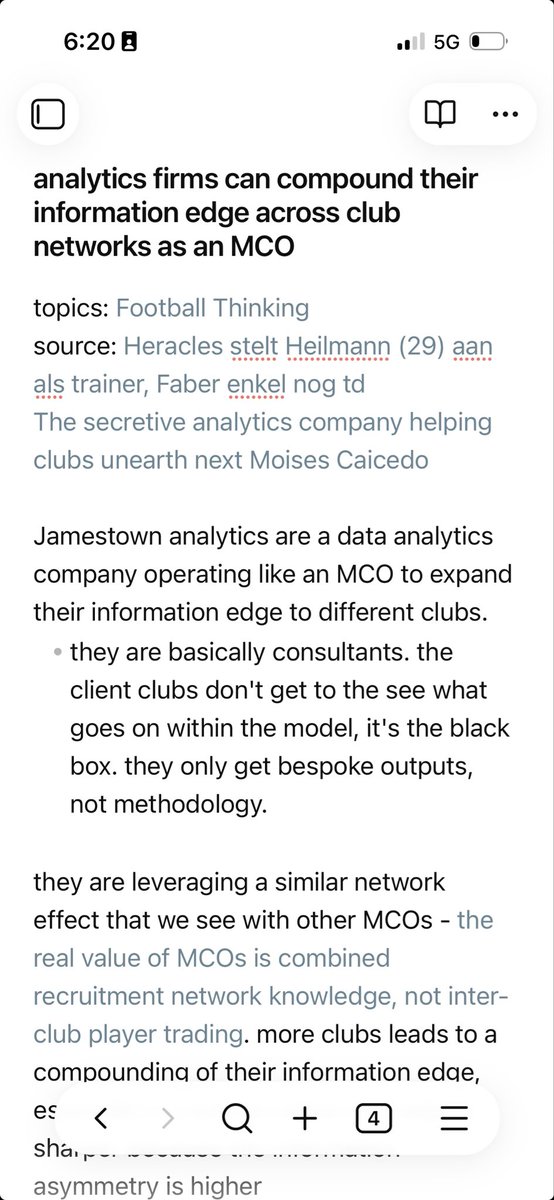
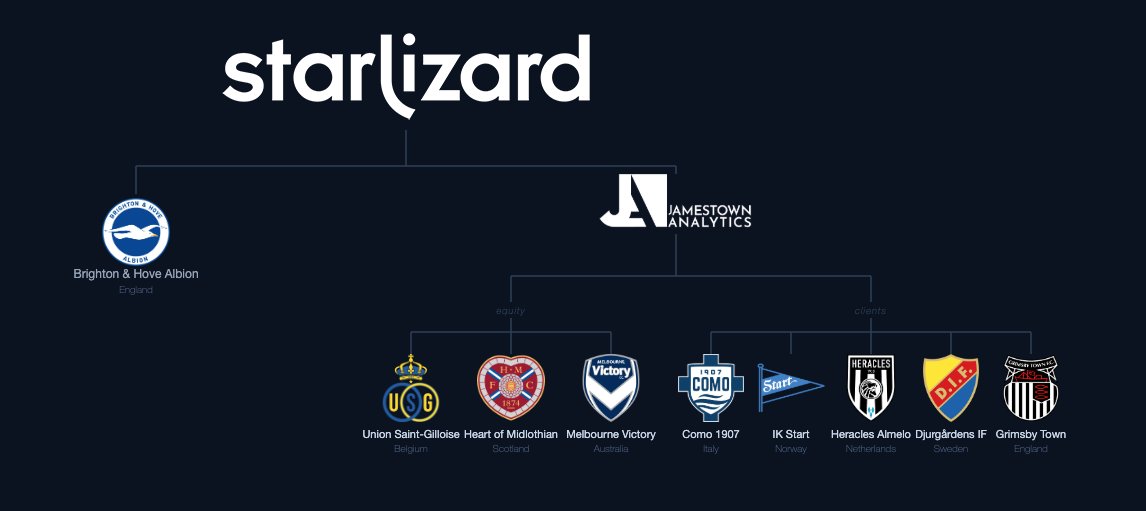
Jamestown Analytics are a spin-off of StarLizard - Tony Bloom's betting operation - running the multi-club ownership playbook with the same information edge that gives Brighton their recruitment advantage.
They inherited StarLizard's data infrastructure and are deploying it across a growing portfolio of clubs through two relationship types: equity stakes and client contracts.
The portfolio's structure of one club per country is designed with geographic exclusivity to protect their edge in each market they enter.
Club operators under Jamestown get bespoke outputs but never see inside the model or the methodology - it's a black box and highly classified.
The MCO mechanism is how the edge compounds. Each new market adds a useful node within their network and their advantage is sharpest where information asymmetry is highest: developing markets and second-tier leagues.
The rate at which their portfolio is growing indicates the confidence they (and clients) have in their proprietary data's long-term edge ahead of the market.
7
14
192
42,870
Jun 8
This the the model's principle: exclusive data is an advantage in the information game of player recruitment. x.com/jonathanstoop/status/2…
Mar 17
The real MCO advantage isn't inter-club player trading.
The edge is combined recruitment network knowledge.
Recruitment is an information game. Especially at lower levels where information is asymmetric. MCOs can compound this advantage with players, staff, and executives.
1
3
4,671
Jun 7
Across the top 5 leagues, Elliot Anderson ranks in the 99th percentile (per 90) for:
– Ball recoveries (volume of loose ball pickups)
– Defensive action regains (conversions of defensive actions into possession)
– Line-breaking passes completed
– Line-breaking passes into tight space (≤2m)
He's excelled with every opportunity he's had in men's football - no reason to suggest that trend wouldn't continue and there are key signals to argue that he will scale to the highest level.
His eagerness is accelerate the game can be naive at times but indicates a strong mental profile with the confidence to demand the ball and the ability to do something valuable with it.
Worth noting that he's only had 2 seasons of playing >2000 minutes. He's developed exponentially in a short amount of time. He's still learning the nuances of playing a deeper role in midfield after initially breaking through as an attacking player - his career trajectory thus far indicates he'll continue to improve if there's opportunity to improve.
His market value is like a composite score of his impact across every area of the pitch, and he impacts every area of it.
Here's the split if you break down his impact across each quarter of the pitch using OBV:
– Defensive Third: 24% of his actions; OBV: 2.00
– Mid-Low: 27% of his actions; OBV: 1.10
– Mid-High: 27% of his actions; OBV: 2.15
– Attacking Third: 21% of his actions; OBV: 3.43
The truest benchmark he has in the market is Declan Rice who sold for £105M and proved to be worth the investment. Forest will hold for this price as long as they can - I don't expect a bidding war to drive the price. I can see City wanting to do the deal quickly but at a discount.
1
25
12,882
Jun 7
"Good players are always actively making decisions" is portable scouting principle. Players who scale upward are rarely passive.
x.com/jonathanstoop/status/2…
Feb 24
Kim Hellberg: "I need players that are always aware of making decisions, in every situation... that's what we need and that's what we are training on."
Good players are always actively making decisions.
Active players impose the game on opponents, reactive players are imposed on by the game.
8
2,372
Jonathan Stoop retweeted
Feb 13
Brighton's in-house data provider (StarLizard) is totally classified. My assumption is that it captures some unique variation/distillation of xT (expected threat) that signals a strong value judgment of the player's ability.
Someone like Eiran Cashin would rank extremely high in that dataset because he has an exceptional passing range, despite what I would consider "deal-breaking" weaknesses.
The fundamental difference at Brighton is that the data's opinion is weighted far more than human opinion.
Feb 12

🚨 Critics believe Brighton have squandered around £300m over the past four transfer windows due to the club’s determination to be governed by data.
It’s believed the club were warned off Eiran Cashin, but signed him regardless due to strong data reports.
[@Matt_Law_DT]
#bhafc
24
43
1,337
710,122
Jun 4
I profiled Ayto as a system and process builder based on his work at Arsenal.
It’s bizarre that he was hired in the first place if Tony Bloom is doubling-down on his StarLizard model and methodology.
🚨 Jason Ayto’s departure was caused by fundamental differences over Tony Bloom’s data-dominated recruitment operation.
Ayto was accustomed at Arsenal to data, video analysis and scouts out in the field, all playing more or less equal parts in signing a player. The different approaches were discussed at length when Ayto was appointed.
It gradually became clear over the months leading up to the summer transfer window that Brighton’s overriding focus on data would be an insurmountable sticking point for both parties. They will not budge on their methods, which Ayto found too restrictive.
The decision did not come as a total surprise to him.
[@AndyNaylorBHAFC]
#bhafc

1
3
34
14,972
Jun 4
More on StarLizard.
The signal I’m getting from this is that Bloom is doubling-down on his proprietary model’s moat despite what I predict will be a disruptive next few years in the data analytics landscape.
Feb 13
Brighton's in-house data provider (StarLizard) is totally classified. My assumption is that it captures some unique variation/distillation of xT (expected threat) that signals a strong value judgment of the player's ability.
Someone like Eiran Cashin would rank extremely high in that dataset because he has an exceptional passing range, despite what I would consider "deal-breaking" weaknesses.
The fundamental difference at Brighton is that the data's opinion is weighted far more than human opinion.
3
1,727
Jonathan Stoop retweeted
12 Sep 2023
Some nice bits of Middlesbrough's Hayden Hackney ('02) in possession on his England U21s debut:
1
3
18
5,717
May 31
I wouldn’t be surprised to see other teams use hydrations breaks like this at the World Cup.
3 minutes for a quick video analysis session.
1
3
42
3,788