
Associate editor and columnist, The Sunday Times
Joined July 2010
- Tweets 16,905
- Following 2,860
- Followers 19,042
- Likes 19,856
616 Photos and videos


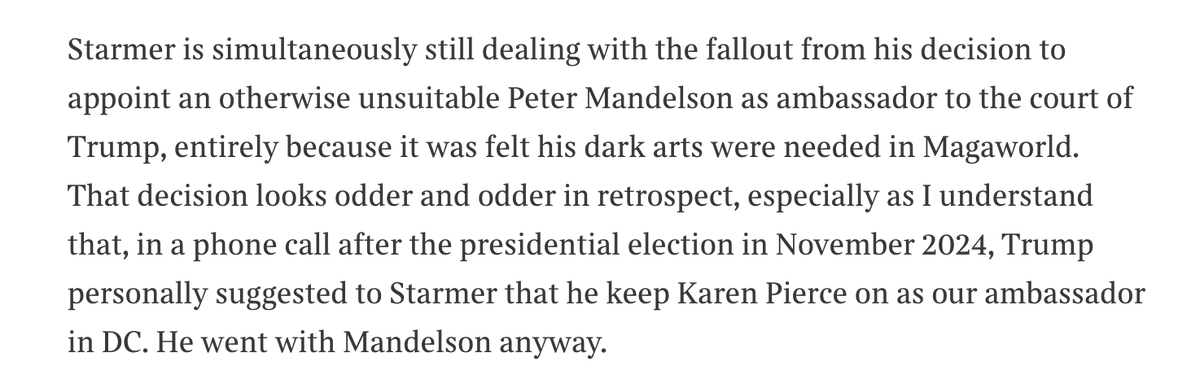
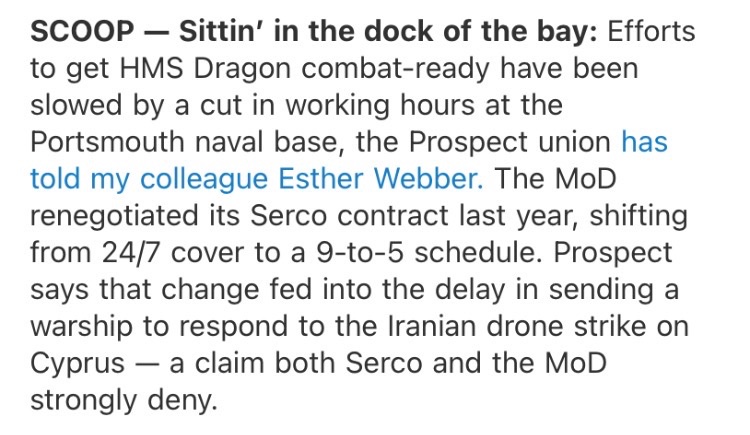
Josh Glancy retweeted
🚨EXC: Senior Burnham advisers are lobbying Shabana Mahmood to be his chancellor
– Efforts accelerated in recent days amid concern about Ed Miliband entering No11
– BUT Mahmood has told them them she still doesn't want it – she is determined to remain home secretary and see her immigration reforms through
30
30
288
64,934

Jun 2
It is odd in retrospect that Labour MPs voted in favour of releasing documents that have shed very little light on the appointment of Peter Mandelson, while also causing considerable embarrassment for their own government
3
5
35
31,686
May 31
Such a joy having Craig Brown regularly in the pages of The Sunday Times again. This piece on The Rolling Stones is superb
thetimes.com/culture/books/a…
6
3
18
5,889
Josh Glancy retweeted

May 31
Wes Streeting interview with @joshglancy has lots of policy:
- suggests cut in employers' NI for younger workers
- allow North Sea licenses (thinks Miliband will do so)
- supportive of Burnham on devolution & public control
All leadership policies here:
docs.google.com/spreadsheets…
2
5
33
6,468
May 31
Considering the state and stakes of geopolitics, it's notable just how parochial and introverted Britain's current political debate has become

The Labour leadership essays were all good at presenting us the domestic choices we face on things like Net Zero and devolution but blank or evasive on our choices in geopolitics. I think anyone seeking to be Prime Minister needs a clear answer to these four sets of questions on China, the United States, Europe and the Middle Powers and to explain how their choices to each add up as a strategy.
1. China — 🇬🇧🇨🇳
First, is the mega-trend reshaping the world order the deepening of a Chinese-led axis of complimentary grievances between Beijing, Moscow, Tehran and Pyongyang, with consequences for worldwide democracy and the balance power? Or is the geopolitical balance turbulent but essentially balanced between US and Chinese alliances? Following on from that, do we actively embrace the promise of cheap goods, cheap electrification and new science tie-ups with the Chinese techno-industrial state despite the risks that poses to hollowing out wider European manufacturing? Or are we in fact concerned about that and the way China has weaponised monopolies such as rare earth and actively seek a global techno-industrial coalition to balance the playing field and protect Western industries? This is a choice: if you believe the Chinese-led axis is our riskiest mega-trend you will prize Western or European unity at higher costs. And if you believe Chinese industrial overcapacity is a risk to European manufacturing you need to push certain tariff walls up giving higher costs on Chinese green goods like electric cars.
2. The United States — 🇬🇧🇺🇸
Are we long America, seeing the country as in many ways a rising power when it comes to tech and military capacity, and riding out the Trump turbulence whilst seeking to build ourselves into their 21st century techno-industrial state like we did into the 20th century military-industrial state? Or do we think we have an America problem, with the superpower we have built our grand strategy around increasingly coercive towards us, thus requiring us to build up our autonomy by investing our way longterm out of our critical security dependencies? This is a choice and not something you can ultimately balance: if you think the US is increasingly coercive and unreliable you don’t want to build yourself totally into its AI system.
3. Europe — 🇬🇧🇪🇺
Is our economic policy towards Europe based on a long-term strategy of maximising strategically chosen areas of divergence such as AI, biotech and financial services at the calculated expense that has to other sectors limited access to the Single Market and thus accepting the hard cap on how deep relations with the EU can go? Or is our policy one of seeking maximum benefit for the economy as a whole through maximum convergence with the Single Market, with the consequence being a rule-taker relationship like Switzerland or Norway, putting us on a path to this imbalance tilting us towards eventually rejoining? This is a choice: if you believe our priority is divergence sectors it means picking winners and accepting a hard cap on how much access the rest of the economy gets to the EU — or the other way round a hard cap on how far that divergence can go.
4. Middle Powers — 🇬🇧🇦🇺🇨🇦🇯🇵🇰🇷🇧🇷🇮🇩🇲🇽
With the limited diplomatic and time resources we have are we focusing our diplomatic efforts on the only Middle Powers we can actually integrate with and build joint capabilities with, which are the CANZUK countries, and Japan and South Korea, through efforts like a genuine CANZUK grouping or Japan and South Korea in a new “Democratic 10” grouping? Or are taking a more expansive approach trying to invest efforts more broadly on Global South players like Mexico, Brazil or Indonesia who might not share our read on geopolitics or want to build up joint capabilities with us but are significant geoeconomic players nevertheless? This is a choice: on sub-priority issues we have limited PM, FS, NSA time and making something of either strategy requires UK prioritised initiative.
4
6
19
13,185
Josh Glancy retweeted

May 30
Winning over Haigh and Angela Rayner is key to Labour’s welfare fight thetimes.com/uk/politics/art…
8
2
7
3,062
Josh Glancy retweeted

May 31
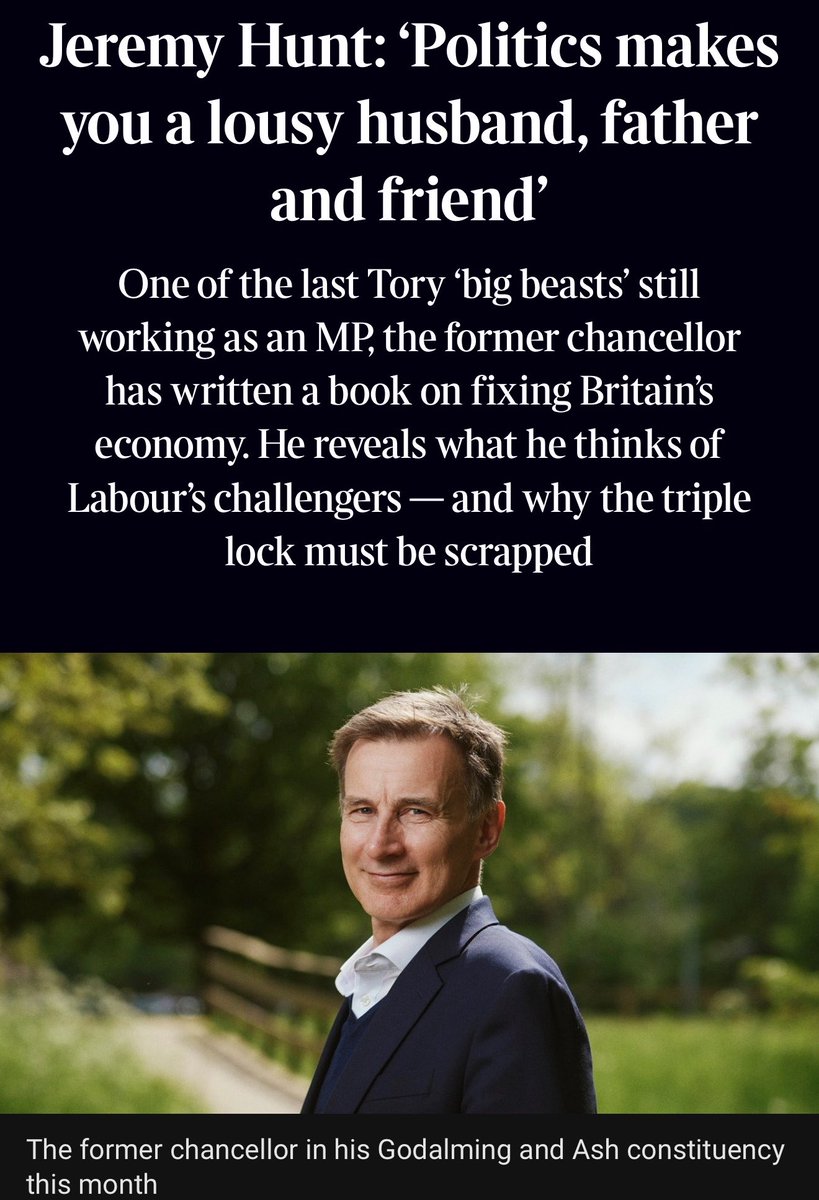
My new book ‘Can we be rich again? is out on Monday and featuring in today’s Sunday Times. Here’s the interview in which Josh Glancy asks me about the book, politics, families and the future of the Conservatives
thetimes.com/article/db81176…
77
18
123
42,798
May 31
Alan Milburn and Pat McFadden are creating a permission structure for Labour to make welfare cuts. When the time comes, they must take it, or watch Farage/the Tories do it their way
My @thetimes column
thetimes.com/uk/politics/art…
4
6
19
3,808
May 31
For this week's Sunday Times Magazine, I interviewed Jeremy Hunt about his new book. He was remarkably candid on the strains of life in politics
thetimes.com/uk/politics/art…
1
6
2,081
Josh Glancy retweeted

May 31
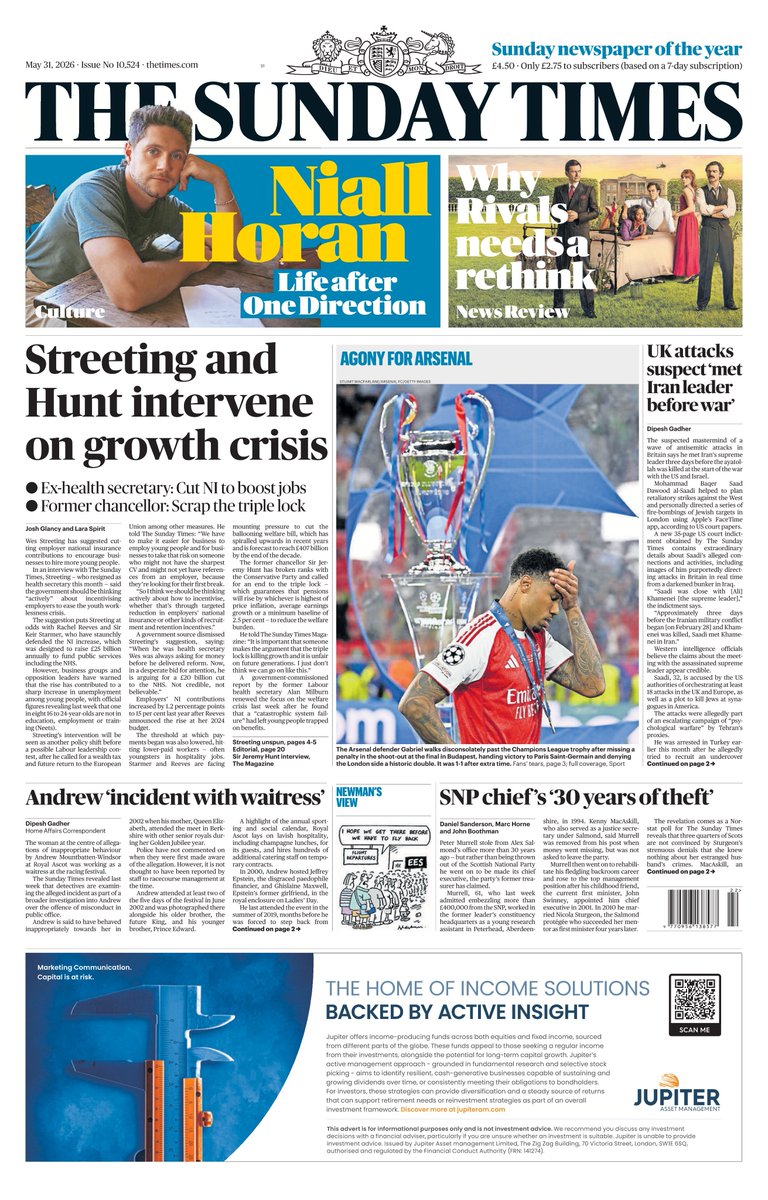
🇬🇧 Streeting and Hunt intervene on growth crisis
▫The former minister may want to give Tony Blair a ‘flea in his ear’ but he is effusive about Andy Burnham, his theoretical leadership rival
▫@joshglancy @lara_spirit
▫tinyurl.com/265xlvd7
#frontpagestoday #UK @thetimes
1
2
837
May 31
EXC
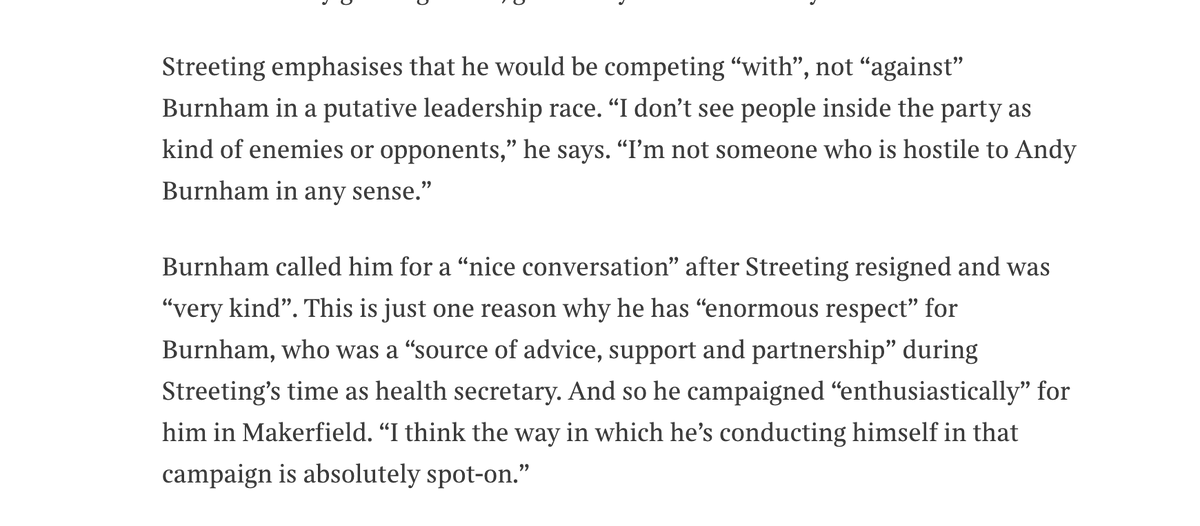
I spent two hours with Wes Streeting on Friday. Unbound from cabinet, he had much to say
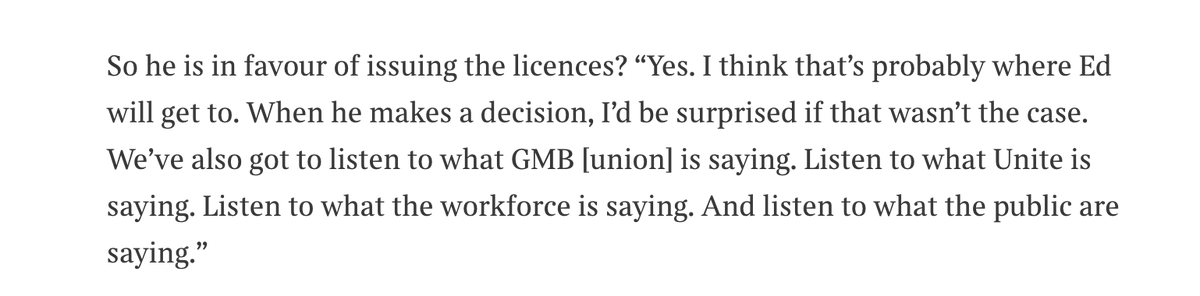
- Britain is 'cutting its nose off to spite its face' on North Sea oil and he'd be 'surprised' if Ed Miliband doesn't issue new drilling licenses
thetimes.com/uk/politics/art…
4
4
14
5,646
May 31
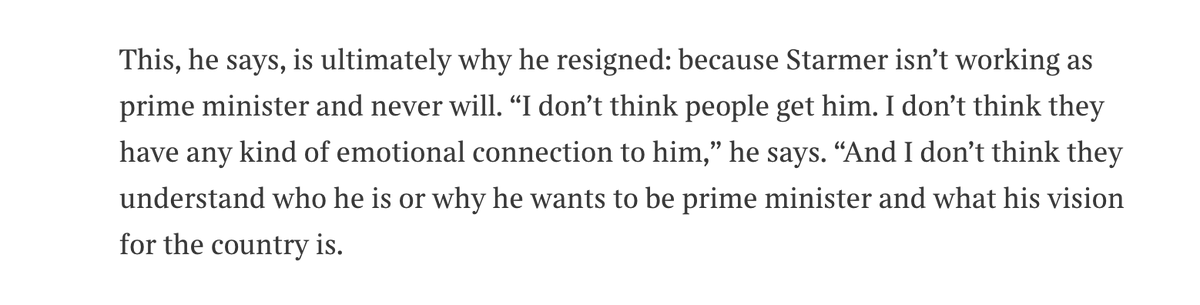
Voters, in his view, will simply never connect emotionally with Keir Starmer, which is why a leadership change is necessary
1
1
2,074
May 31
He was *very* positive about Andy Burnham, backing public control of utilities and the devolution agenda. He has "enormous respect" for him
1,662
Josh Glancy retweeted
May 30
Jeremy Hunt: ‘Politics makes you a lousy husband, father and friend’ thetimes.com/uk/politics/art…
24
7
42
11,630
Josh Glancy retweeted

May 30
EXC: Tony Blair privately advised Keir Starmer to fight on as prime minister in the weeks before publicly accusing him of having “no coherent plan” to run the country
The prime minister sought Blair’s counsel in a private call after Labour's local election losses earlier this month
Blair, who was not previously thought to be in close contact with Starmer, told him that he should seek to remain in No 10 for the foreseeable future
While Blair conveyed serious concerns about the direction of the current government, he advised that those seeking to replace him, chiefly Streeting and Andy Burnham, were yet to outline how they would lead differently
15
69
436
112,615
May 26
Welcome Ben!
May 26

Some news… I’m very exited to say I have been appointed the new political editor at The Sunday Times!
It will be a wrench leaving the Telegraph. I’ve been here 14 years (a third of my life!) and owe a lot to the editors who have supported me during that time.
I’ve admired The Sunday Times’s dogged, agenda-setting journalism all my career. Their political coverage has a reputation for being fair, incisive and revelatory - values more important now than ever in these uncertain times in Westminster.
I’ll be starting in September. Who knows where politics will be by then? Can’t wait to get stuck in.
4
1,191
Josh Glancy retweeted
May 24
- Bond markets? Keep fiscal rules
- Tax? Stick to red lines
- EU? No rejoin
- Trans debate? EHRC guidance
- Migration? Mostly back Mahmood
Burnham's Ming vase strategy in Makerfield has left him looking ... a lot like Keir Starmer
My @thetimes column
thetimes.com/uk/politics/art…
1
3
8
1,656
Josh Glancy retweeted

Like Keir Starmer, Andy Burnham is ducking the hardest questions thetimes.com/uk/politics/art…
2
2
8
3,829
Josh Glancy retweeted
May 23
Like Keir Starmer, Andy Burnham is ducking the hardest questions thetimes.com/uk/politics/art…
6
11
22
2,137
May 24
Interesting from @ayeshahazarika on why Labour are still nowhere closer to having a woman as leader
thetimes.com/uk/politics/art…
922