
I work on software stuff. Prev. somewhat of a researcher in cognitive science, reasoning, logic and creativity. Aspiring Mathematician/Computer Scientist
Joined October 2013
- Tweets 7,214
- Following 1,634
- Followers 163
- Likes 8,536
807 Photos and videos



Jorge Romero retweeted

Jun 6
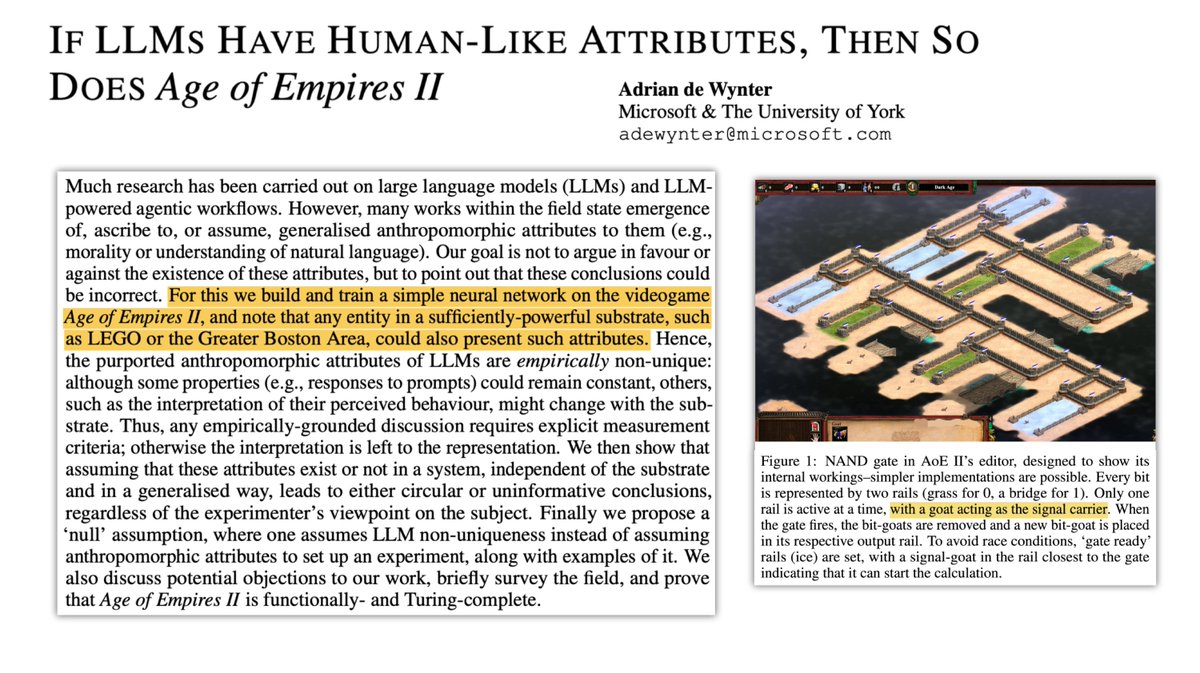
This is an insane paper and I love it
arxiv.org/abs/2605.31514
157
1,304
11,212
620,703
Jorge Romero retweeted

May 19
"Is that code AI generated? If it’s AI generated I don’t want it"
83
709
8,172
551,157
Jorge Romero retweeted

May 14
/grill-me is my most popular skill ever.
I get 5-10 messages a day about how it’s changed people’s workflows for the better
But… I’ve stopped using it for code. Here’s the improved version:
94
178
3,156
276,580
Jorge Romero retweeted

someone wrote a 680 page interactive book on cs algorithms
99
1,653
16,127
965,481
Jorge Romero retweeted

15
3,480
18,008
456,075
Jorge Romero retweeted

Apr 7
There's a physicist at Stanford named Safi Bahcall who modeled this exact principle and the math is wild.
He calls it "phase transitions in human networks." When you're stationary, your probability of a lucky event is limited to your existing surface area: the people you already know, the places you already go, the ideas you've already been exposed to. Your opportunity window is fixed.
When you move, your collision rate with new nodes in a network increases nonlinearly. Double your movement (new conversations, new cities, new projects) and your probability of a serendipitous encounter doesn't double. It roughly quadruples. Because each new node connects you to their entire network, not just to them.
Richard Wiseman ran a 10-year study at the University of Hertfordshire tracking self-described "lucky" and "unlucky" people. The single biggest differentiator wasn't IQ, education, or family money. Lucky people scored significantly higher on one trait: openness to experience. They talked to strangers more, varied their routines more, and said yes to invitations at nearly twice the rate.
The "unlucky" group followed the same routes, ate at the same restaurants, and talked to the same 5 people. Their networks were closed loops. No new inputs, no new collisions.
Luck isn't random. Luck is surface area. And surface area is a function of movement.
The lobster emoji is doing more work than most people realize. Lobsters grow by shedding their shell when it gets too tight. The growth requires a period of total vulnerability. No protection, no armor, soft body exposed to the ocean.
That's the cost of movement nobody posts about. You have to be uncomfortable first. The new shell only hardens after you've already moved.

505
13,921
67,178
4,560,753

Jorge Romero retweeted

The next time some manager or lead programmer tells you that you should be able to do X in 10 minutes with AI, agree only if there's money on the table, literally. Have them do whatever they just asked you to do, and if they can't finish in 10 minutes, you win.
8
8
129
11,562
Jorge Romero retweeted

Mar 8
When your boss says "we'll get it done somehow" and you realize you're the somehow
335
25,289
233,847
7,633,476
Jorge Romero retweeted

Mar 8
For any given desired computational outcome, there is some sequence of bits which encodes that. These bits of signal (of the desired outcome) can be intermixed with bits of noise.
The reason why these LLM-generated codebases by default have so many obviously useless lines of code is that, for any given generative step, the LLM’s job is to package up the few signal bits (from the prompt) into a plausible presentation of other bits, which may or may not be noise.
If they are extra signal (because they can be statistically inferred from the other signal bits), then that’s a win, but there’s a much higher probability that they’re actually just noise. This is why every AI generated tweet, article, or indeed code snippet contains drastically more fluff (noise) than what a focused person with reasonably good instincts for compression would produce.
So, in order to actually accomplish anything (without extreme vetting, compression, and modification of generated code), the “programmer” (prompter) needs to continuously generate more code to obtain the next signal bit they wanted, at the expense of many, many more bits of noise.
The result is often ~100x if not ~1000x more code than was needed, which is impossible to hand-edit, comprehensively understand, or compress. Layers upon layers of statically average nonsense, wrapping the few bits of utility you actually wanted.
Mar 8

i read this and was like huh thats a lot of code but surely hes built some huge super complex app
it’s a blog
he’s built a blog
300,000 lines of code for a blog
the blog posts are all ai slop
there’s like 10 lines of code per line of blog
24
32
514
40,877
Jorge Romero retweeted

Mar 8
Not knowing how to code giving you an advantage is absolute nonsense.
The more you understand, the better your prompts, the better the feedback you give, the better product you ship.
What will change is that the intricacies of syntax, compilers, module systems, the finer details of type systems, won’t matter as much to everyone.
But you should absolutely understand how the pieces fit together. From syscall to pixels. Learn how data flows, because you’ll be able to secure your systems. Learn about performance, because you’ll be able to push your agent further. Learn about APIs, because they determine how to integrate systems. Learn about how systems fail, because you’ll be able to make reliable programs.
349
607
6,393
468,521
Jorge Romero retweeted

Mar 8
Cada vez agradezco más estos artículos escritos desde el sentido común y el conocimiento del sector.
"La incómoda verdad sobre el vibe coding"
¿Estamos construyendo software o castillos de arena digitales?
Desde su aparición cada vez se habla más del vibe coding. Esa práctica de "programar por sensaciones", describiendo lo que quieres en lenguaje natural y dejando que la IA haga la magia. Y, para qué engañarnos, funciona. He visto (y creado) prototipos en un fin de semana que antes llevaban meses.
Pero hay una realidad incómoda que el hype no te cuenta: el vibe coding no escala.
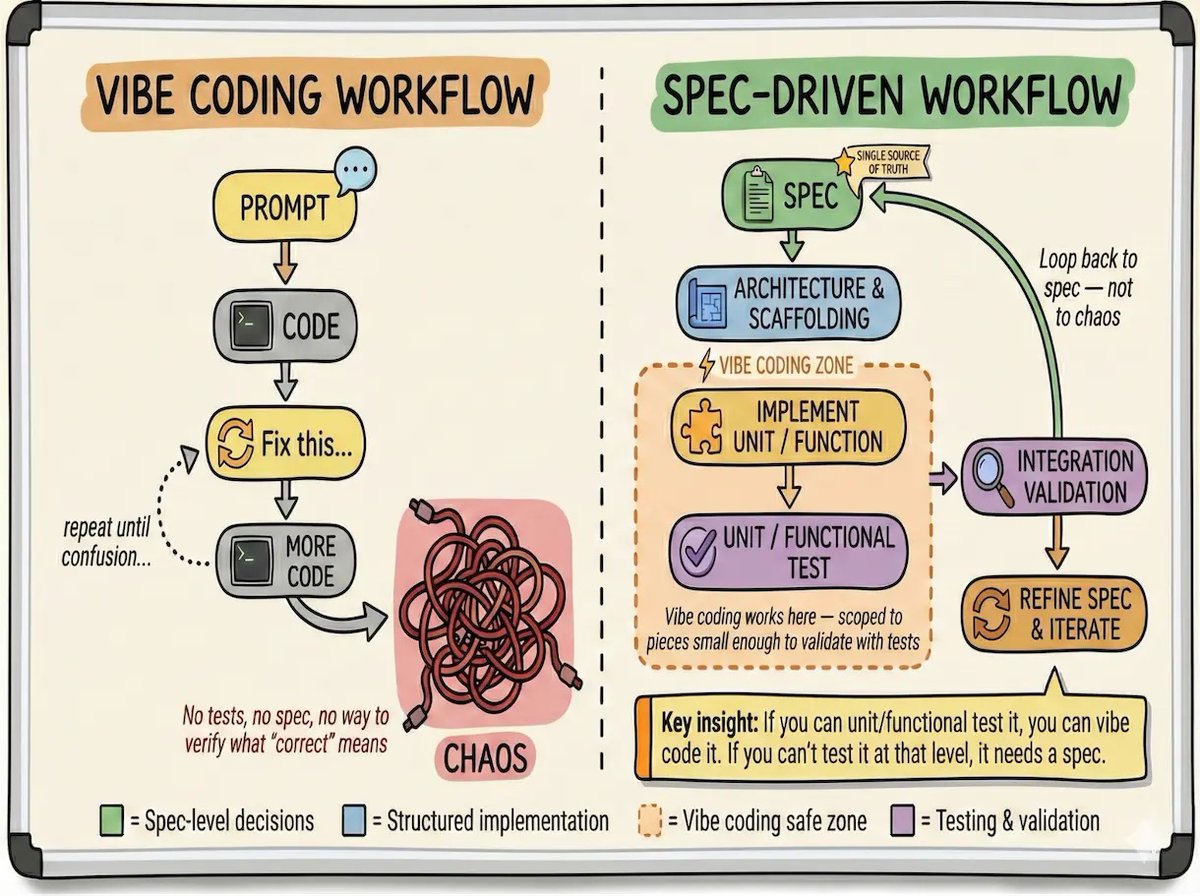
Hay un patrón que se repite: a los tres meses, el proyecto choca contra un muro. Cambias un botón y se rompe el login. Le pides a la IA que lo arregle y rompe tres cosas más.
¿Por qué pasa esto?
Porque construir sin especificaciones hace que la intención se pierda. El código generado se convierte en la única fuente de verdad, y la IA (con su ventana de contexto limitada) deja de entender el "porqué" de las decisiones.
La solución no es dejar de usar IA, es usarla con criterio:
1️⃣ Spec-Driven Development: Deja de tratar tus prompts como notas de usar y tirar. Tus especificaciones deben ser la fuente de verdad al que el código tiene que obedecer. Si algo falla, no parches el código: refina la spec y regenera.
2️⃣ La técnica sigue importando: La IA baja la barrera de entrada, pero no elimina la necesidad de saber arquitectura, dependencias y buenas prácticas. Una especificación escrita por alguien que no entiende esto lo que hace es escribir una carta a los Reyes Magos.
3️⃣ Vibe para explorar, Spec para construir: El vibe coding mola para prototipar rápido o para tareas minúsculas a nivel de unidad. Pero para sistemas que deben mantenerse y durar, necesitas guardarraíles.
La magia no está en las "vibraciones", está en saber exactamente qué quieres y expresarlo con tanta claridad que ni una IA pueda malinterpretarlo. Fin 😁
31
147
944
44,201
Jorge Romero retweeted

Mar 8
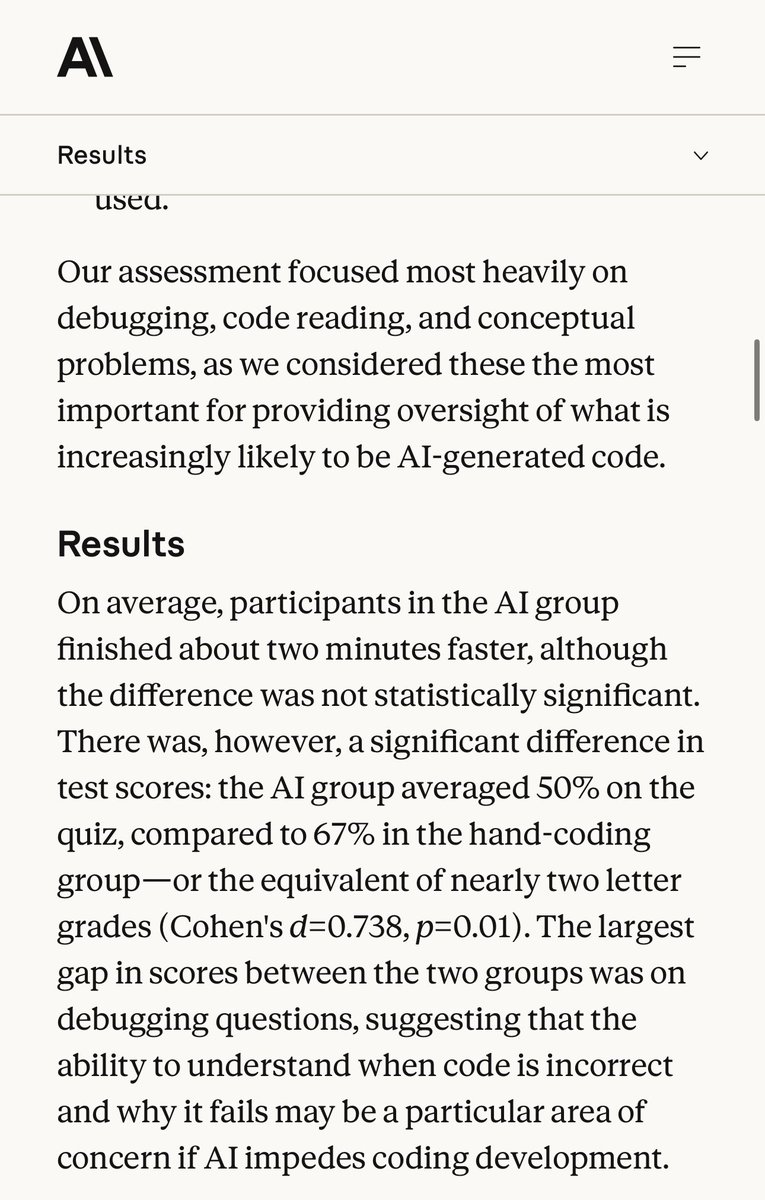
Anthropic themselves found that vibecoding hinders SWEs ability to read, write, debug, and understand code.
not only that, but AI generated code doesn’t result in a statistically significant increase in speed
don’t let your managers scare you into increased productivity. show them this paper straight from Anthropic.
215
605
6,485
2,480,002
Jorge Romero retweeted

Feb 11
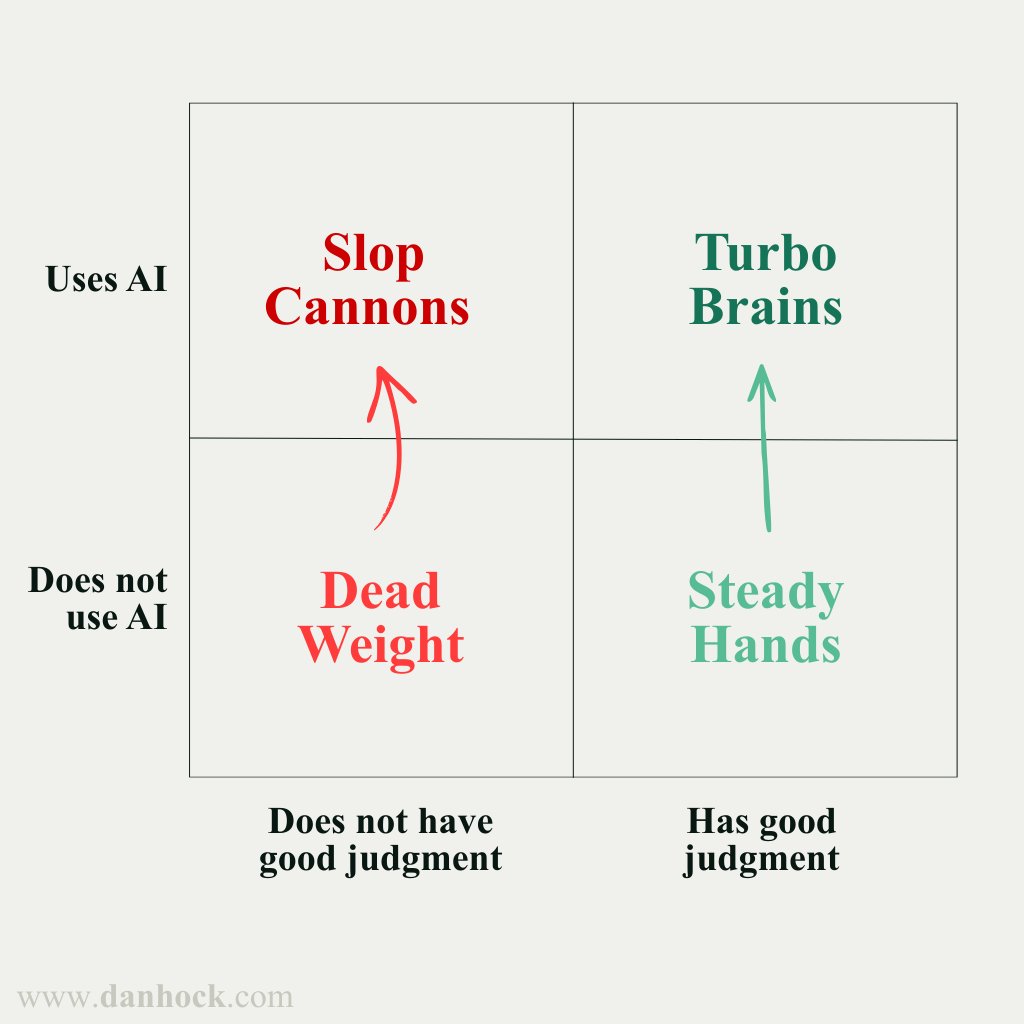
Four types of people at every company now
yes, people get 10x better when the go from bottom right to top right
but also, people get 10x worse when they go from bottom left to top left
156
437
4,473
669,015

when you think of feature A your job is to recognize that it's actually a special case of feature X and if you implement feature X it unlocks feature A B C
people are struggling with this lately because they can't think bigger than what their agent can do
65
57
1,122
44,191
Jorge Romero retweeted
Mar 3
the ugly truth is that LLMs are clearly plateauing in how "intelligent" they seem.
they are NOT to the point where they can fully take over coding. anyone who thinks so is either:
>not running a product at scale (it's great for MVPs)
>has a vested interest in ppl believing AGI is 6 months out
>has no idea how to code
yes, there were huge leaps in model capabilities before. but you can count them on one hand. the large companies are quite literally out of data to train these models on, so they're trying different things like synthetic data, better post-training RL loops, task-based fine-tuning.
these are all guesses though. and we haven't been seeing much progress since the last big wave imo (grok 4, gemini 2.5 pro, o3)
almost all proven AI researchers have agreed (and in some cases predicted) this drop off in model quality based on these scaling laws.
in fact, they don't just think that the intelligence returns of scaling will fall off, they think true intelligence is not possible at all with the current LLM based approach.
my point is that if you're a cs major, or a teenager that likes to code, or even in your early career you shouldn't consider leaving the field because of AI.
right now, this moment in time, this might be the BEST that AI coding tools get. and they are nowhere near replacing competent SWEs.
most of what you hear on twitter and in the news are largely propaganda-based glazing of AI because a massive portion of the US economy (all the large tech companies) are basing their future outlook on AI.
a ton of people are going to believe this bs and quit learning to code, change jobs, etc. but here's the most realistic timeline of how this is going to play out:
>publicly traded companies will layoff a ton of employees and say it's because of AI so stonk go up. my company did this a couple years ago. block did it last week. more will do the same.
>cs major will become less competitive because junior hiring has gone down. less people will go into cs.
>only the most dedicated and genuinely interested will remain in cs majors.
>tons of large companies and small companies and individuals will build a metric fuckload or features using cursor, lovable, etc
>these features will look like a mosaic of the most architectural patterns you could ever imagine. how do i know? because i read every single line of code my AI comes up with. probably 70% of it is completely retarded, but if i were to test it, it would "work".
>the SECOND any of these vibe coded shills get any sort of traction, their systems will literally melt because LLMs are garbage at real system architecture. why? because any company at real scale isn't letting dario and sama train on their source code. that would be retarded.
>now we have a ton of people with products that are making money but need someone to come in and fix their shit. good thing we still have those people who got a cs degree because they actually enjoy this task.
AI isn't going to make more software jobs. it's going to make a LOT more shitty software. an unfathomable amount of badly written applications that will need to be rewritten from the ground up.
126
68
1,117
153,408

Jorge Romero retweeted

Mar 4
I have been thinking about this a lot.
I think for a great many of engineers, the ones who did it because they loved it only to discover that money was in fact at the end of the rainbow found both the journey and the destination satisfying. In fact, I think I can argue with authority that the destination was only satisfying as the journey was difficult. The hard-fought evenings spent toiling away on an idea and codebase that slowly gives way to your vision was an incredible experience.
The group of people that fell into this category of hard-fought journey and destination we will call them tinkerers. One thing tinkerers have always hated is the already known problems. The journey is clear as day. The obstacles minor inconveniences. Its purely a matter of typing the solution into the terminal. This is also why I think so many of this group goes out and does open source, or starts companies. Work largely falls into this category with few exceptions.
From this reason is why I largely find UI work soul sucking. I know the solution, its a matter of just looking up the details and putting it into my editor. yawn. CSS, flex box this, grid that, put the tailwind classes in the bag.
To me, the LLM software world is with little to no journey and discovery. Its more of simply taking my high level idea and just formulating it into testable, atomic chunks that can be verified. I have traded my favorite part, discovery and raw creation, with itemized list of TODOs and patience and "No Mistakes."
To this, every morning from 6 to 9 I simply just hand code every thin. even UI things. It is because I want journey and discovery and raw creation. Maybe one day comes and its just so futile that I stop this. But for now, I still see such great value in this. I see such better thought through products. Because slowing down and truly thinking through everything. The architecture, the design, everything is an expression of discovery and creation. And I love it.
I am sure there will come a day, maybe even in the next 6 months where I change my mind. For now, I pursue the love of the game intentionally.
I do also believe that there exists people who get the same joy I got from building with tears and sweat by prompting LLMs. I am positive of it. I just don't understand how. But people love UI work. I also don't understand that.
Mar 4

Programming was deeply satisfying work to me. Work for hours/days before getting the payoff of the code working well on your machine. I’m feeling so much friction now to open the editor and do this kind of task by hand, but also increasingly depressed with the nature of work in an AI assisted dev workflow. Back and forth prompting seems to eat at my soul. Need to find a balance that brings back some of the toil.
182
196
2,830
311,638

Feb 17
This 200%

early in my career when i was learning a new tech or language i would tinker and google whenever i hit a roadblock
eventually i realized books had all the information i needed pre-googled for me
i think this is happening again with LLMs - sometimes i waste so much time letting the LLM keep taking swings instead of reading something
hope the industry doesn't abandon producing good reading material
7
Jorge Romero retweeted

Feb 17
A Programmer's Loss of Identity:
🔗ratfactor.com/tech-nope2
“I don't belong anymore. The group I identified with valued learning. For the first time in my life, I'm suddenly wary of meeting other 'computer programmers'. There's a decent chance we won’t have much in common.”
27
97
946
52,100