Joined February 2022
- Tweets 2,715
- Following 152
- Followers 1,487
- Likes 17,477
377 Photos and videos



Pinned Tweet

5 Dec 2023
My speech at Iurie Roșca's Chișinău Forum 2023.
True power resides in principium. But "power is made perfect in weakness” (2 Corinthians 12:9).
Text here:
arcaluinoe.info/en/blog/2023…
odysee.com/@chisinauforum:5/…
2
1
46
21,240
Justino Carneiro retweeted

Jun 13
The only thing that’s not a psyop is noetic prayer
5
7
71
2,520

Justino Carneiro retweeted

Great day to not be Roman Catholic
May 6

Western society is based on the unchanging values of Christian tradition which the Church is supposed to uphold and defend. Foremost among these values is righteousness which as Scripture shows consists of truth, order and justice: God, Whom the Bible beautifully describes as the Sun of Righteousness (KJV Mal. 4:2; Ps. 84: 11) is the highest truth; the natural order which God established when He made heaven and earth by His breath or spirit (Ps. 33:6) and which can be seen in the orderly manner heavenly bodies are positioned in the sky, in the rhythmic rising and setting of the sun, in the division of time into days and nights, in the change of the seasons, in the biological cycle of birth, growth and death, etc., is a revelation of divine truth and the right order of things upon which God's creation is built (Gen. 1:14; Rom. 1:19-20; Wis. 11:20; St Aug., p. 432); and justice is the adherence to the divine law whereby truth and order are upheld in human society (Ezek. 45:9). The Christian concept of Righteousness (Greek dikaiosyne from dikaios, "upright", "righteous", "virtuous", "keeping the commands of God") goes back to the Gospels and, beyond them, to Ancient Greece, the cradle of European civilization.
The very first commandment taught by Christ is to love God (Mark 12:28-30). But to love God, our Heavenly Father, in the Biblical sense means to dutifully act according to His Law. Thus, obedience to the Law of God and upholding righteousness, that is, truth, order and justice is the highest duty of all Christians and, above all, of the Christian Church. The ideal Christian society is defined by righteousness, peace and joy (Rom. 14:7). Only by the steadfast adherence to righteousness, to the right vision, right belief and right action, can man (both individually and collectively) attain real and lasting peace and joy (cf. Politeia 473e). Adherence to righteousness, therefore, is not so much a choice as it is a duty which man owes to God, to his fellow men and to himself. It is a duty that obliges us to oppose everything that violates righteousness, for example, anti-national and anti-Christian policies such as mass immigration, multiculturalism and Islamization — policies which go against established truth, order and justice. The second commandment taught by Christ, namely, to love one's neighbour (Mark 12:31), cannot be used — as relativist and obscurantist Church leaders have attempted to do — to override the first. It cannot be used to promote mass immigration: firstly, because "neighbour" in Christ's sermons refers, for the most part, to members of the same community, not to strangers or immigrants from other parts of the world; secondly, because if we truly love our neighbours, we cannot put the interests of strangers above those of our neighbours, nor the interests of other communities or nations above those of our own; thirdly, because mass immigration results in injustice to the host population; and fourthly, because mass immigration serves the agenda of vested interests and, therefore, promotes evil. Moreover, the Pharisees who style themselves apostles of "Christian love" are at a loss when asked to explain why they hate their indigenous European neighbours so much that they want to see them replaced with non-Europeans.
Love and compassion which result in injustice are instruments of evil. It would be grotesque to imagine, even for a moment, that God could have intended the faithful to work evil. It would be a gross injustice for a ruler, whose duty it is to protect his subjects, to give the country away to strangers and evict his subjects from the land as it would be for a father to give his house away to strangers and leave his own children homeless (1 Tim. 5 :8). Nor is there any evidence that Christ ever prescribed such a course of action for his followers. On the contrary, Christ himself did not tolerate injustice or evil: he chased money-changers from the temple, drove out demons and called on his disciples to slay his enemies (John 2:13-16; Mark 1:29-39; Luke 19: 27). God, who is the embodiment of righteousness (1 Cor. 1: 30), cannot be indifferent to injustice. And nor can those who believe in Him. As observed by the Church Fathers, injustice lays upon Christians the duty to fight in the cause of justice (St Aug., p. 862). As Christ sacrificed himself on the cross for the sake of mankind, Christians must sacrifice themselves on the battlefield for the sake of God and their brethren (John 3: 16). Martyrdom in the cause of Right is central to Christian tradition and the path to eternal life (John 12:25).
Miscegenation, particularly when leading to corruption of the true faith (which is what it tends to do in today's confused multicultural society), is equally frowned upon in the Bible and those who actively oppose it are commended (Nu. 25: 6-8). Far from being a Christian belief, the notion that mass immigration, miscegenation and the fusion of the races are part of some "divine plan" emanates from anti-Christian quarters. For example, an article in the Masonic magazine New Age states: "God's plan is dedicated to the unification of all races, religions and creeds. This plan, dedicated to the new order of things, is to make all things new — a new nation, a new race, a new civilization and a new religion." Such statements are understandable: Freemasonry is an anti-Christian movement which the Church itself has always strongly condemned. Moreover, they are contradicted by the Bible which states that nations were made by God and that on Judgement Day they will be gathered before Christ who will divide them into righteous and unrighteousones and sit in judgement over them (Acts 17:26; Matt. 25:31). Thus, there can be no divine plan to fuse all nations into one.
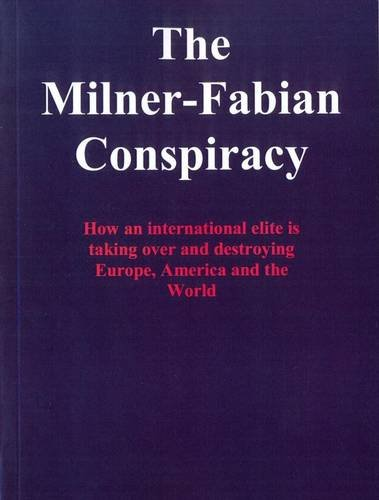
Ioan Ratiu, The Milner-Fabian Conspiracy, pp. 362-364
3
14
407
Justino Carneiro retweeted

"The naive in the "multipolar camp" continue to argue that BRICS represents an alternative to the American-centric globalist project. The global hyper-class, the oligarchs who control supranational private entities have no state, territorial or cultural loyalty. Being stateless by their very nature and operating within the system based on nomadic capital, they are as alien to the national interests of the US as to those of any other country.
When it comes to finding international protectors to save them from the domination of the Eurocrats, our cardboard “sovereignists” flock to the three [Trump, Putin, Xi] in the hope that they will end up being promoted to power or rewarded for their obedience by the White House, the Kremlin or the Chinese Communist Party..." iurierosca.substack.com/p/th…

1
6
13
1,104
Justino Carneiro retweeted

Jun 7
Prophetic!
All Romanides haters …. Read:
Jun 6

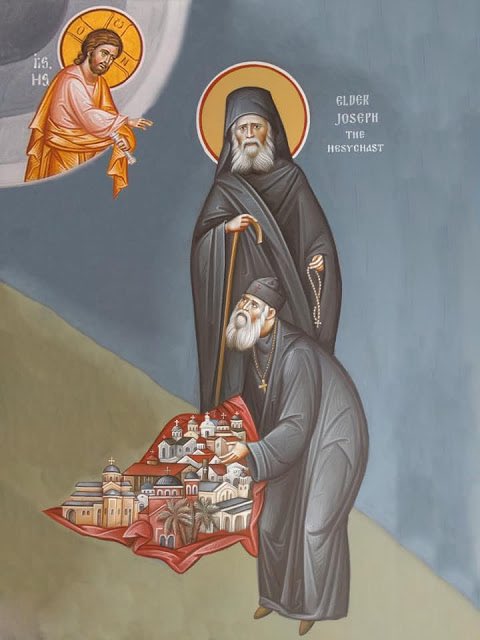
“Elder Joseph the Hesychast is perhaps the best ascetic in noetic prayer. The monks in obedience to him are excellent, and if there is to be a monastery in America, one of them could lay the foundations.
A good and strict monastic life is the only thing that can show the way for us to escape from this wretched state of Orthodoxy in America. If the monastery is started by monks from the Holy Mountain, we shall have the typikon of the Holy Mountain with vigils etc. and they will be a strong missionary centre, which will invade the centre of Satan’s kingdom and cleanse the atmosphere of demons with Orthodox incense and vigilance.
You know that the ascetics left for the desert, not because they were seeking a quiet life, but because the desert was regarded as the pre-eminent kingdom of Satan. For this reason, Christ went first into the desert and conquered the devil in his most powerful fortress. Thus, here too, where for so many years Satan has ruled unhindered, he ought to be confronted.”
Father John Romanides
4
19
253
13,062
Justino Carneiro retweeted

Father Savvas Agioritis on the "peripatetic confusion" of the wandering and exiled nous in this life.
"When a person functions properly—meaning they are spiritually healed—then the noetic energy (that is, the activity of the nous) exists within the heart and there it prays unceasingly. Then the human being functions correctly.
However, when a person is unhealed and ruled by passions, this noetic energy, instead of in some way revolving within the heart, unfolds and becomes attached to the brain, to the rational faculty. In this rational faculty, in the brain, all meanings and thoughts come from the environment through the senses. All the senses and nerves—the optic nerve and so on—lead to the brain.
The noetic energy should be in the heart. When it becomes fixed in the brain, then the concepts of the brain descend into the heart and, one might say, a short circuit occurs. The person becomes confused and makes gods out of created things in his environment, receiving the influence of his brain and the mental images that exist in it from the senses. He makes idols. This is how idolatry happens.
When a person is healed, the noetic energy gathers in the heart and is directed toward God, Who has no relation to the environment. As we said, there is absolutely no similarity.
This is the therapy that the Church offers: that a person may break this short circuit, this confusion between reason and heart, and allow reason and the brain to deal with the environment through the senses, while the heart works for God."
Hieromonk Savvas Agioritis (Homily, Nov 9, 2014), A "Short Circuit" Leads to Idolatry
1
6
28
622
Justino Carneiro retweeted
Jun 3
Saint Paisios the Athonite and the Clairvoyant Eldress Eulambia Romanides
Fr. John Romanides was born to pious parents from Cappadocia in Asia Minor, who during the population exchange of 1922 went to Piraeus, where he was born on 2 March 1927. When he was 72 days old, on 15 May 1927, he emigrated with his parents to America, where they settled in Manhattan. There his father Savvas worked as a tailor and his mother Eulambia was a housewife who helped her husband. Fr. John also had a sister named Parthenia, and in the house they spoke Turkish instead of Greek, since in Cappadocia the Greeks spoke Turkish.
Eulambia however was also an ascetic living in the midst of the city, for she brought with her the Cappadocian piety she learned in her homeland. This ascetic mentality was also taught to her son, who would later recall her saying to him as a child: "My child, one does not become a saint by force. It is something you must want!" When he explained these words of his mother, he wrote: "Of course someone cannot become a saint by force, but each of us must choose the path of ascetic therapy."
Especially noteworthy was her constant prayers while she did anything. She was a woman of noetic prayer, with the name of Jesus always on her lips. And often with these prayers she would do prostrations...many prostrations. When John was a boy he would notice his mother doing numerous prostrations, and being the jokester that he was, he said to her one day: "Mom, why are you doing one prostration after another?" And she responded to him: "Joke on, little John, joke on! Know that you will become a priest." This showed that she possessed a prophetic and clairvoyant gift, despite being a married mother in the largest city of America.
Years later, being a widow, Eulambia entered the Monastery of Saint John the Theologian in Souroti, outside of Thessaloniki. This monastery at the time was under the guidance of Saint Paisios the Athonite, who she had as a spiritual father even though he was not a cleric. Metropolitan Neophytos of Morphou recently visited the monastery and inquired about Eulambia, where he was told the following:
A year ago I visited this monastery, and the current abbess of the monastery, Philothea, told me: "This grandmother (Eulambia) did not know Greek very well, but she was the first at Services, the first in obedience, and she had a great clairvoyant gift. For example, Elder Paisios would sometimes do his prayer rule from bed. Grandmother Eulambia from Souroti in Thessaloniki would see him with the eyes of her heart - not with her physical eyes - what he was doing in his cell. When they would meet later on, she would tell him: 'On such and such day you were sick, Elder, and you didn't do all of your prostrations, nor did you do all of your prayer rope.' He replied: "You saw me when I was on the Holy Mountain?' She answered: 'Yes, I have a television that showed me.' Saint Paisios then said in amazement: 'Would you look at that, this grandmother who came from Turkey and America also has a colored spiritual television and follows what I do on the Holy Mountain!' All the nuns were astonished by the gifts of grandmother Eulambia."
1
8
50
2,229
Jun 3
Protestant ecclesiology is an outgrowth of papal ecclesiology.
First, medieval theologians distinguished three concepts that, in their view, had been conflated in the term "Body of Christ": the natural human body of Jesus Christ, the Eucharistic mystery, and the Church.
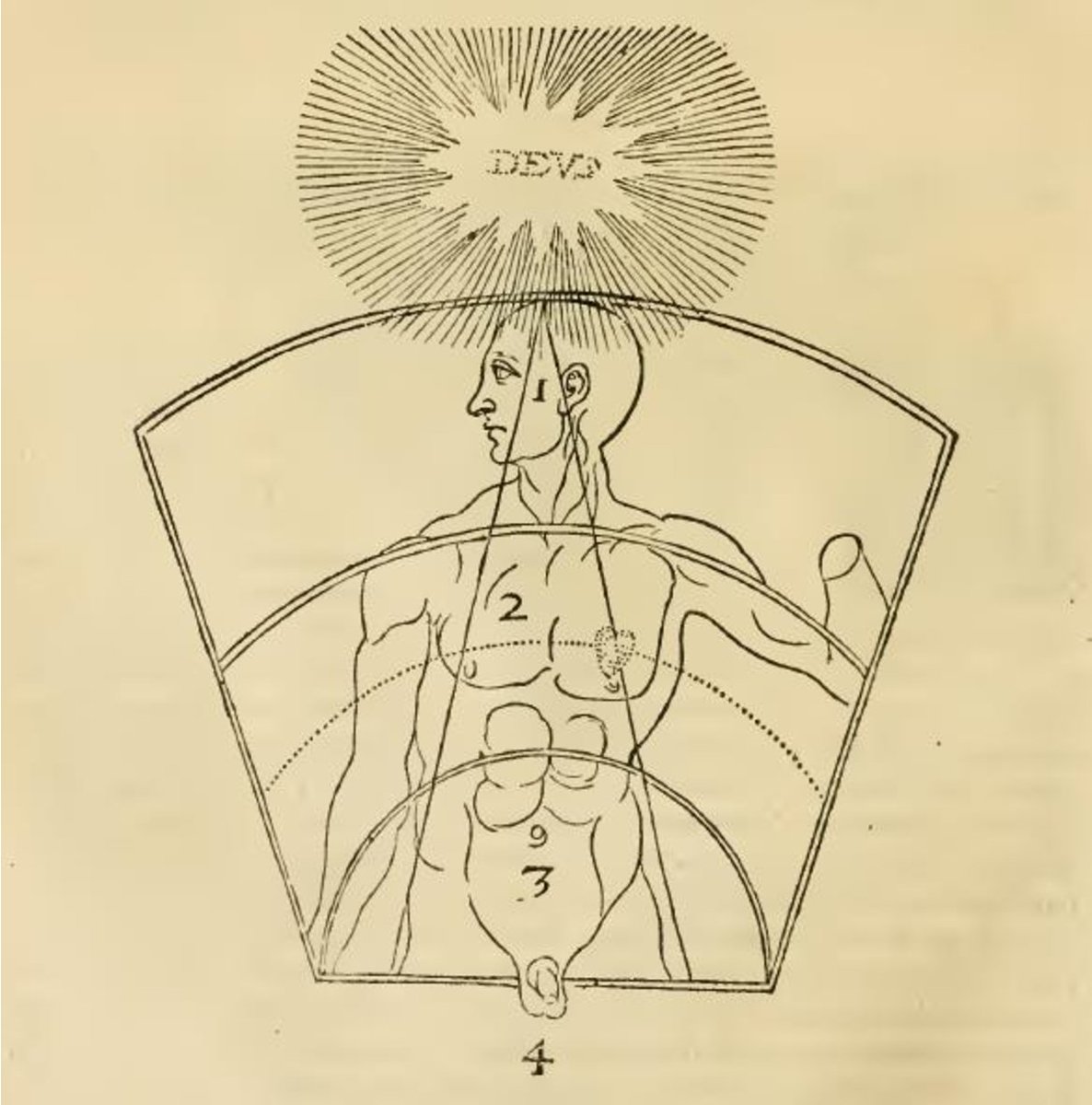
The application of the concept of "body" to the Church was developed in accordance with the concept of "corporation" inherited from Roman law and distinguished from the body of Christ in the sense of the Eucharistic mystery. The Church as corpus would, in effect, become a juridical corporation. As explained by Ernst Kantorowicz, medieval theologians and jurists, in order to justify the continuity of the organic unity of an institution through time, distinguished three temporal modalities: aeternitas, aevum and tempus. Within the scope of aevum, the ecclesial corporation acquires the dimension of perpetuity common to angels and celestial intelligences, being neither eternal like God nor strictly temporal like individual men (cf. Vatican I: "the perpetuity of the primacy of blessed Peter in the Roman pontiffs"). It is in this sense of aevum that the epithet mysticum henceforth came to be applied to the Church. The Church as a legal corporation is what is denoted by the syntagma corpus mysticum. As Henri de Lubac demonstrated, the adjective mysticum, originally belonging to the sacramental sphere in the West, was gradually transferred to the legal sphere of the institution.
As a unitary juridical entity distinct from its constituent members, the Church as a corporation acquires the legal status of a persona ficta. Yet, insofar as the papal conception of the Church is monarchical, the persona ficta of the Church cannot but be the Pope himself. The Pope is, in this sense, the head of the ecclesial juridical corporation, endowed with a legal personality independent of its members. This legal personification of the Church implies a surreptitious separation and subsequent hypostatization of its dual divine-human reality, whose new relation of representation recalls the Nestorian notion of the "prosopic union" of the human and the divine in Christ.
Papal ecclesiology further articulated this legal and corporate notion through the dual conception of the Church as Ecclesia militans – the visible Church – and Ecclesia triumphans – the invisible Church. Submission and obedience to the Pope, as the foundation of membership in the visible corporate Church, became the necessary condition for access to the triumphant Church, the invisible and heavenly counterpart of the visible Church on earth.
Eucharistic communion ceases to be the operative means by which the faithful are incorporated into the Body of Christ. The body of Christ present in the Eucharistic mystery ceases to be the sacramental foundation of the Church and is relegated to a secondary role, becoming merely a sign of belonging to the corporate Church, whose foundation is obedience to the Pope.
Reformers such as Luther and Calvin would adopt this notion, though now to designate the Church as a mystical body (spirituale et arcanum Christi corpus) – spiritual and invisible –, as opposed to the Church as a political and visible body (corpus politicum dumtaxat).
This idea of the mystical and invisible Church would also be appropriated by the esoteric movements of the seventeenth century, such as Rosicrucianism, and later by Freemasonry.
The separation of the Church from the eucharistic body of Christ opened the door to the conception of an esoteric and mystical ecclesia distinct from the Body of Christ as such. Contrasted with the representation of the Catholic Church as a merely political and external institution, this notion would come to assume the contours of an ecclesia not confined to Christianity itself, but transcending it, with Christianity conceived as an exoteric religion.
In the context of the Protestant movements, the emphasis on understanding the Church as the invisible Church – the true corpus mysticum of Christ, distinct from and opposed to the corrupt papal institution – resulted in the impossibility of drawing institutional boundaries between Church and State, since the Church, as corpus mysticum interpreted in this new sense, possessed no visible earthly form. Thus, all political and institutional aspects of the Protestant denominations were necessarily left in the hands of the princes who protected the various congregations and, ultimately, in the hands of the state.
4
7
36
3,357
Jun 3
Orthodox Christian spouses should have the same spiritual father.
They are simultaneously husband and wife, and spiritual brother and sister – accountable to their common spiritual father.
3
9
378
Jun 3
Wears mask. Opinion discarded.
Jun 3

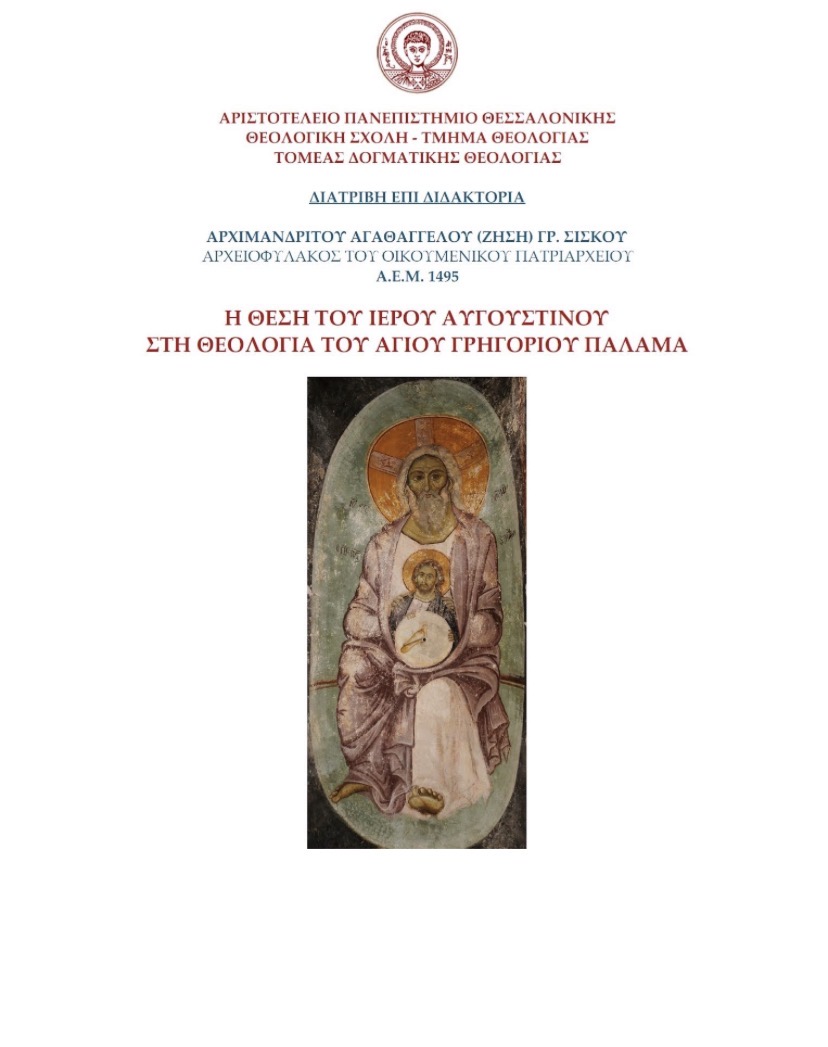
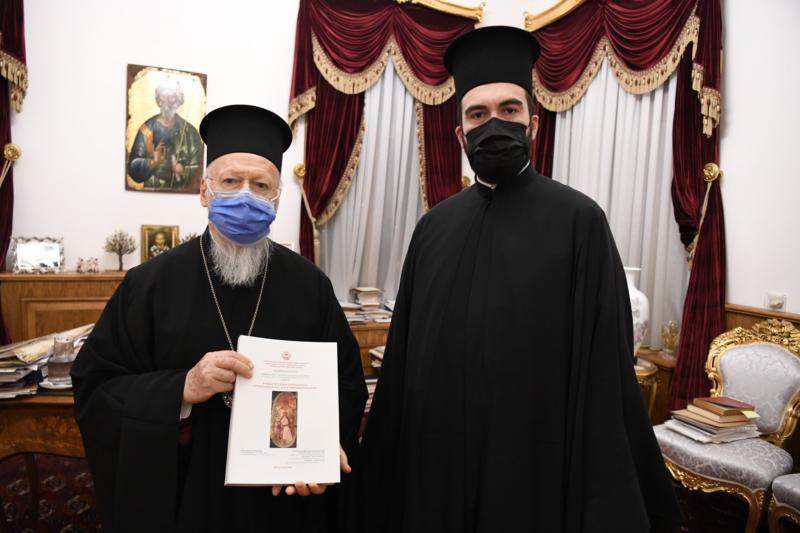
I want to read Archminadrite Agathangelos’ “The position of Saint Augustine in the theology of Saint Gregory Palamas” which explores this relationship further.
2
1
12
487
Justino Carneiro retweeted

Jun 2
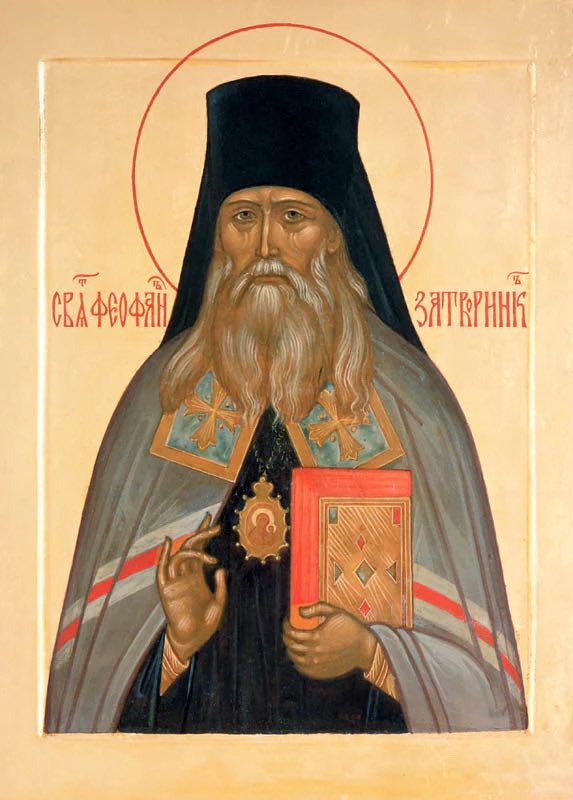
“Sincere faith is a renunciation of your mind. You must bare your mind and present it to faith as a clean slate, so that faith might inscribe itself on the mind as it is, without any admixture of alien phrases and statutes. When one’s former beliefs remain in the mind, then a mixture occurs after the tenets of the Faith are written there. The consciousness will be confused between the mind’s sophism and the operation of faith.”
- Saint Theophan the Recluse, Thoughts for Each Day of the Year
1
19
122
1,762
Justino Carneiro retweeted
We must always be apodictic in our Faith and walk with Christ!
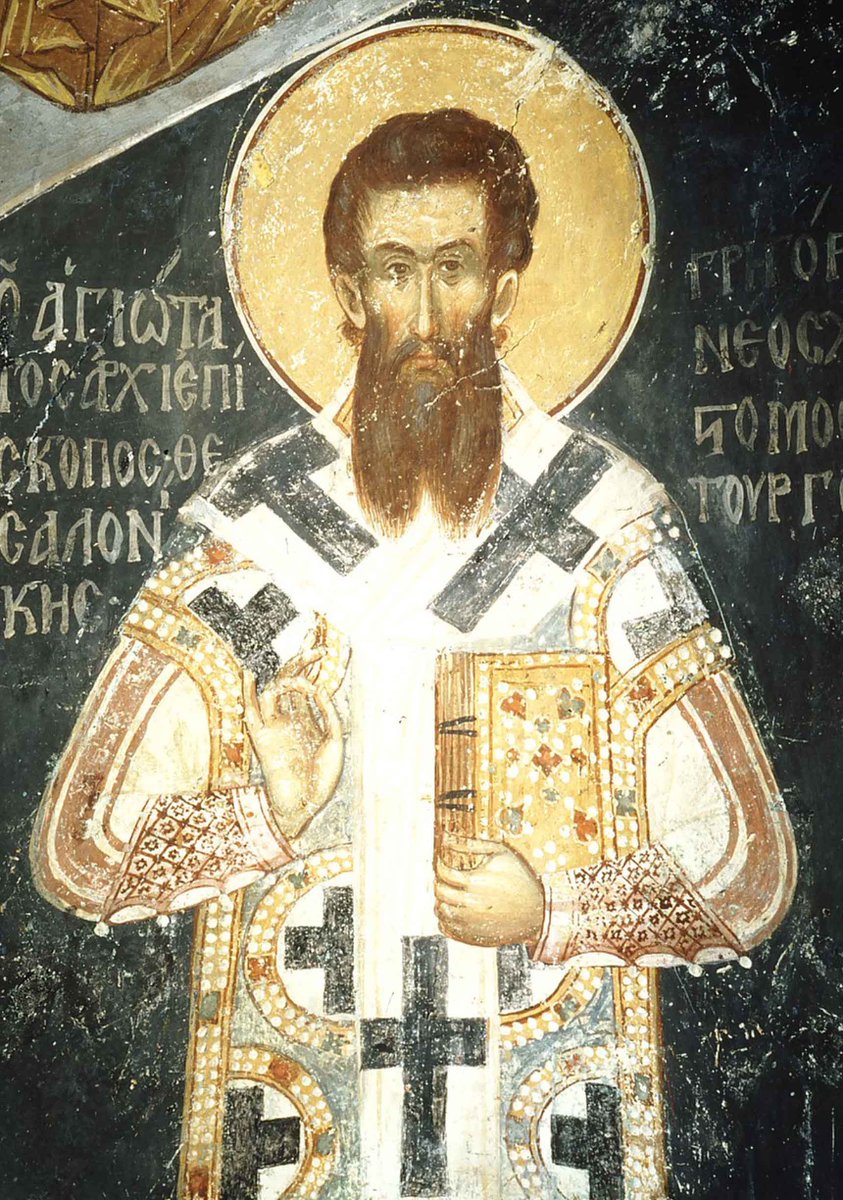
"You may know that in the dispute between Barlaam and St Gregory, in which Barlaam proposed the dialectical method as a means of finding the truth, St Gregory Palamas invoked apodictic reasoning, demonstrability, as the highest criterion of truth. He says, as is well known, that disjunctive syllogisms sometimes make something non-existent exist, and sometimes the opposite, whereas the apodictic method is always unerring. However, St Gregory Palamas himself says that our Holy Fathers recommend that we use reason, but in what way? Divinely. In other words, the most important thing is spiritual experience, which sheds light upon reasoning. If we do not have illumination, and if we do not have dispassion and grace in our soul, our reasoning may lead us into delusions.
Reasoning, as a function of the whole human being, is not necessary only for monks, but it is absolutely essential. You will actually notice in the writings of the holy Fathers that they contain powerful reasoning. The greatness of the holy Fathers lies not only in their spiritual experience and in their love, their virtues and their illumination, but also in their power of reasoning. Look at Athanasius in his anti-heretical arguments. We have syllogisms in the theology of St Gregory the Theologian against Eunomius, Palamas has syllogisms, and Maximus has lots of them."
— Fr. John Romanides
"Bring forth therefore fruits meet for repentance"
— St. Matt. 3:8
2
4
21
2,072
Justino Carneiro retweeted

Jun 1
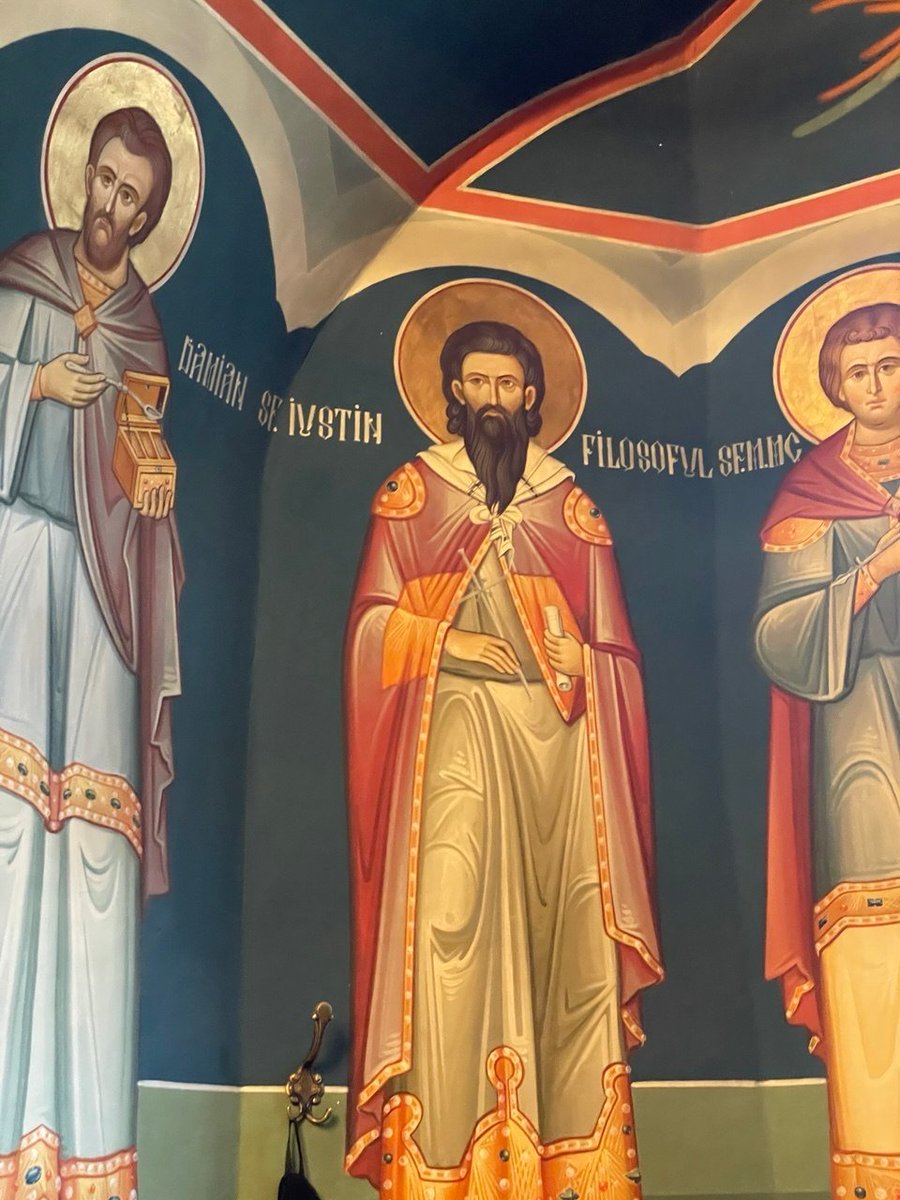
“By God's providence, Justin encountered an honorable elder who shook his faith in the philosophy of Plato and persuaded him that men cannot know the truth about God unless God reveals it…”
The Prologue of Ohrid for June 1st
St. Justin the Martyr and Philosopher
1
23
150
2,674
Justino Carneiro retweeted
Jun 1
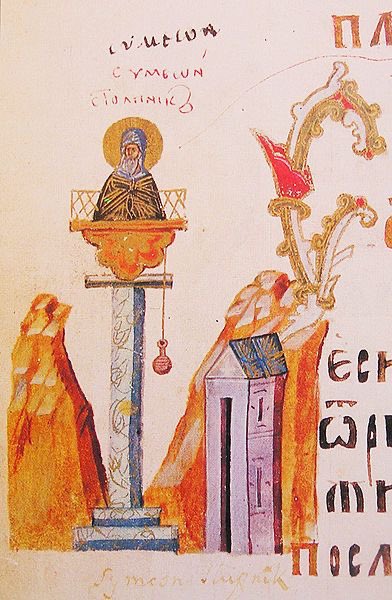
“The West thinks that the highest part of our being is our reason. Now, I know that there has been a reaction to this, particularly in the Pentecostal movement. There's been a reaction to this, but why?
Because it's so strong. It's not just in scholasticism, it's in all the various Protestant denominations as well. This heavy emphasis on reason.
But that is not the highest part of man. The spiritual aspect of man is the highest part of man. But what has happened is we have confused the spiritual power of man with the reasoning power of man, and we think it's one and the same.
We don't even know that we have a nous. We don't even know that the eye of the soul is not reason, and that the eye of the soul is the spiritual power that perceives the presence of God, and that this power is of the heart, because God is experienced in the heart, and the light of God is experienced in the heart. This is a power of the heart.
It's not a power of the head. Plato and company, they didn't know. That's why you have faith versus reason in the Western tradition.
Faith versus reason doesn't exist in the Orthodox tradition. So we've lost something in the West that needs to be recovered, and it's the role of the Orthodox Church, the Orthodox tradition, providentially, to bring this back so that we can be healed. We're talking about healing.”
- Dr. Christopher Veniamin
1
17
60
1,195
Justino Carneiro retweeted

May 29
The idea that this guy is being treated as an authority on Christianity is just absurd. He is re-framing what it means to be Christian for his own ends, and it should be obvious.
This guy worked directly with the CIA and an Iran-Contra criminal to privatize the most Orwellian Bush-era surveillance proposal, creating Palantir in the process, wants to tear down representative government and replace it with a private company run by a CEO/dictator, promotes borgifying humanity and frames it as necessary, and funds and helped create numerous companies that help commit genocide and blow children to smithereens. He embodies the opposite of what are ostensibly Christian values. Let him redefine what it means to be "Christian" at your own risk.
Also, no one would even consider calling this guy "Christian," let alone an authority on it, a few decades ago. But now the PayPal mafia bros largely control the digital realms that now dominate public discourse and have successful bought up a legion of podcasters/influencers, so they can make a large segment of the public believe whatever they want I guess.
In today's world, Emperor Palpatine could also probably successfully frame himself as a well-meaning authority on who and who isn't a baddie.
May 29

Peter Thiel says these are the signs to look out for regarding the Antichrist:
“The Antichrist copies Christ.”
“Pretends to be greater than Christ.”
“Hyper-Christian. Ultra-Christian.”
“And then, ultimately, deeply anti-Christian.”
606
3,651
12,411
371,114
Justino Carneiro retweeted
May 30
Homily 6, On Genesis by Elder Athanasios Mitilinaios
"'The sons of God saw the daughters of men...' All the emphasis now falls on 'saw,' because the object of special observation becomes the women.
However, before we proceed, we must clarify: the 'daughters of men' are the descendants of Cain. We had noted this. The Hebrew text has the expression: 'the angels of God saw the daughters of men...' On this point, from very ancient times — not recently, but from the first centuries of Christianity and even earlier, in the Old Testament itself, but especially around the time of Christ and after — in the interpretation of the Old Testament by both Jews and those Jews who perhaps deviated from the correct interpretation of Holy Scripture, it was known that 'the angels of God' are nothing other than the incorporeal angels who had relations with the daughters of men, and from this mixing we have the birth of giants.
Because the chiliasts (millenarians) and various heresies that have appeared on earth interpret this point in this way. And because they have the Old Testament translated from the Hebrew, this translation (an edition of the Bible Society that I have) says 'the angels of God.' A small edition I have is certainly according to the Septuagint but from another codex, another reading, has 'the angels of God.'
The Fathers confronted this very simply. It is not at all difficult. Listen: when it says 'sons of God,' even if we have codices that write 'angels of God,' it is impossible for us to consider them angels and understand the incorporeal angels, because immediately below, in verse 4, the Hebrew text also has 'the sons of God went in to the daughters of men.' So we have 'sons of God' in the Hebrew text as well, and it clearly refers to the generation of Seth.
Secondly, it would be monstrous and would imply a rape of women by spiritual powers against the will of the women, and monstrous people being born. And a third point: the Lord Himself said that in the Kingdom of God, the renewed people 'are as the angels, who neither marry nor are given in marriage.' Consequently, we see that it is not about angels but about human beings."
youtube.com/watch?v=PiFejgoC…
1
10
43
2,414
Justino Carneiro retweeted
Analyst @GnomeRad of @WorldWarNow_ talks geopolitics, religion, and globalism analyzing current conflicts in the Middle East and Ukraine through the lens of Orthodox Christian prophecy. Turkey appears to be next on the chopping block. Both Western powers and revisionist states like Russia and China are implementing similar technocratic controls. North America will morph into the Technate. Franz shares firsthand observations from his time in Russia and the Donbas, detailing the human cost of the war. ☢️🌍
3
15
24
12,780
Justino Carneiro retweeted
Have you even bothered to read the materials I sent you?
Fr. John is not subtly rejecting St. Leo's Tome. Where are you getting that? In fact, in his article on St. Cyril and Chalcedon, he explicitly says that Leo's Tome is "adequately Orthodox" and "definitely not Nestorian," while also insisting that it was accepted at Chalcedon only as a document against Eutyches and only in light of, and in subordination to, the letters and Twelve Chapters of St. Cyril. His critique is not a rejection of Leo's Tome itself, but a rejection of treating Leo's Tome as though it were an autonomous Latin standard detached from Cyril, Chalcedon, Constantinople II, and the wider Patristic framework.
The same point applies to "immanent universals." His rejecting a particular Latin or Augustinian metaphysical framework does not automatically amount to rejecting Orthodox Christology or falling into strict nominalism. In fact, the problem of universals isn't one completely "solved" in the Orthodox Church as the Fathers use this convention in different ways according to apologetic and theological needs, which is why Fr. John Romanides in the Christology article says,
"From the experience of theosis or the vision of God the prophets, apostles, and saints know that there is no similarity whatsoever between the uncreated and the created. This means that the created beings are not copies of uncreated archetypes and forms. Creation is unique as creation per se as the uncreated is unique per se. This means that if universals do exist they do not in any case belong to the uncreated dimension of existence.
From the viewpoint of the divine presence and energy in creation, this means that God does not relate Himself as one general or genetic pattern in which the specific members of a genus participate as parts related to a whole. The experience of theosis reveals that the totality of God is related to each individual as individual regardless of whether this individual is a part or a specific or an individual member of a genus or species or similar or identical in nature with others. It is not a part of the divine that is related to part of creation, nor all of God related to all of creation. But, each Person of the Holy Trinity coinhering in the other divine Persons is in totality related to each created individual being."
He says "if universals" exist, because he's aware of the fact that the Fathers had slightly differing views on this.
Prof. Johannes Zachhuber outlines this here for the early Church.
academia.edu/966292/Universa…
The Cappadocians utilized the distinction and relationship between universal/particular to help them articulate the distinction/relationship between ousia (the common and the universal) and hypostasis (the unique and the particular).
St. Augustine's Divine Conceptualism is much closer to a Platonic model than the Cappadocian or later Maximian approaches. No one here disputes that.
Sure, St. Maximos develops a more dynamic account in which universals and particulars are mutually implicated within the providential structure of creation and its return to God in Christ:
"Universals are contained by particulars through alteration whereas particulars mutate into universals when they are destroyed by dissolution. And the coming into being of the former is inaugurated by the destruction of the latter, while the destruction of the latter comes about through the generation of the former, for the combination of one universal with another, which brings more particulars into being, is a process of alteration that results in the destruction of the universal, whereas the reduction of particulars to universals, through the dissolution of their composition, is at once the cause of their destruction and the ongoing existence and creation of universals...this is the constitution of the sensible world."
- St. Maximos the Confessor, On Difficulties in the Church Fathers: The Ambigua, Vol I, pg. 275-277 (Ambiguum 10:83)
"God alone exercises providence over all beings, and not simply over some beings and not others, as certain secular philosophers have taught, but absolutely over all things, including universals and particulars, according to the single and unchanging purpose of His goodness.
… For the universals subsist in the particulars, and do not in any way possess their principle of being and existence by themselves, then it is quite clear that, if the particulars were to disappear, the corresponding universals would cease to exist."
- Ibid., pg. 313-315 (Ambiguum 10:101)
"For particulars are never predicated of universals, nor species of genera, nor what is contained of what contains, and this is why universals cannot be converted into particulars, nor genera into species, nor common qualities into the traits of an individual, nor – to put it concisely – what contains into what is contained."
- Ibid., pg. 385 (Ambiguum 17:4)
"But the Wisdom and Prudence of God the Father is the Lord Jesus Christ, who through the power of wisdom sustains the universals of beings, and through the prudence of understanding embraces the parts from which they are completed, since He is by nature the Creator and Provider of all things, and through Himself draws into one those that are separated, dissolved strife among being, and binding together all things in peaceful friendship and undivided concord, but in heaven and on earth, as the divine apostle says."
- St. Maximos the Confessor, On Difficulties in the Church Fathers: The Ambigua, Vol II, trans. Fr. Maximos Constas, Harvard University Press, pg. 117-119 (Ambiguum 41:11), here St. Maximos is quoting St. Dionysios the Areopagite’s On The Divine Names, from the chapter "Perfect and the One"
But the strict "denial of 'in re' universals" perspective isn't entirely unique to Fr. John. St. Photios the Great, in both Amphilochium 77 and 231, explicitly denies "in rem" universals and relegates their status entirely to "post rem" epistemic and denotative abstractions in the human mind, and that we cannot rightly attribute to them in themselves any causal power.
This paper demonstrates this clearly.
academia.edu/41804803/The_By…
Here's a key section in it that I will substantiate with Scholarios later on,
"It seems that Photius is not even interested in securing a causal role for in re universals. This point is made through a brief but strong remark: « For Socrates is a man or animal by himself » (l. 94, καὶ γὰρ ὁ μὲν Σωκράτης ἄνθρωπος ἢ ζῷον καθ’ αὑτό). This remark is made in contrast to the fact that « man or animal is corporeal not by itself nor from the beginning nor by nature, but as something declarative and indicative of a subject body that embraces its relation with it (ὁ δὲ ἄνθρωπος ἢ τὸ ζῷον σωματικὸν οὐ καθ’ αὑτὸ οὐδ’ ἄνωθεν οὐδὲ φύσει, ἀλλ’ ὡς ἐξαγγελτικὸν καὶ δηλωτικὸν ὑποκειμένου σώματος καὶ τὴν πρὸς αὐτὸ περιπτυσσόμενον σχέσιν) ». If this remark is taken seriously and literally, it indicates an opinionated view on universals, a clear-cut understanding of the universal as posterior to the individuals, and the negation of a traditional view on universals. It is not the universal man realized in Socrates which is responsible for the fact that Socrates is a man; but the fact that Socrates is a man is a primary ontological fact. Socrates is a man by himself; like Plato is a man by himself, like Aristotle is a man by himself. The universal man is just the concept obtained by abstraction from the consideration of these various men. It is a mental construction, posterior to the individuals, and not an entity which causes the being of the individuals.
The last statement goes one step further: genera and species are names (ὀνόματα). They are not real things – and absolutely not self-subsisting entities. It now seems clear that Photius could not be considered to be a realist, neither in the Platonic transcendent sense, nor in the immanent sense. He defends a position exactly like that of Aristotle’s in the De Anima: the universal animal is either nothing or posterior, « τὸ δὲ ζῷον τὸ καθόλου ἤτοι οὐθέν ἐστιν ἢ ὕστερον » (402b7).
A confirmation of this ontological conviction is found in Amph. 231 where Photius asks whether in the Incarnation Christ assumed a general human being or a particular human being (« Πότερον ὁ Χριστὸς τὸν καθόλου ἄνθρωπον ἀνελάβετο ἢ τὸν ἐπὶ μέρους; »). In this text, we find what is probably the clearest statement of Photius on the mode of being of universals:
'ἐπινοίᾳ μόνῃ καὶ φαντασίᾳ αὕτη γὰρ ἡ τοῦ καθόλου ὕπαρξις
in thought alone and in imagination, such is the existence of the universal' "
-- St. Photios, Amph. 231
On top of that read what he has to say in the beginning of Amphilochium 16:
"Moses called the earth 'invisible' because it had not yet enjoyed the possibility of appearing, as it was covered by the flood of waters. For there was the power and force of the deep, which on the one hand soaked the natural dryness of the earth, and on the other did not allow it to enjoy its own adornment, which consisted of kinds of plants and grasses, and the other beauty of flowers and fruits. Also, the earth was invisible because there was not yet the man created with the capacity to see it. "
Notice how St. Photios stresses that one of the reasons Moses called the Earth "ἀόρατος" or "unseeable" was because the Earth at that time had not a human being to behold it with his mind or senses. That's curious because he didn't need to mention that part explicitly if he were a strict Realist in a philosophical sense. Does that make St. Photios a nominalist, though? Is there a possible way to see things beyond this strict duality without being arbitrary?
At the beginning of the Triads, in his response to Barlaam, St. Gregory Palamas describes the Logoi of beings as ἀνειδέοι, ἀσχημάτιστοι, θεῖα θελήματα: formless divine intentions, not specific determinate forms grasped by the discursive intellect in a Platonic manner nor gleaned by the senses peripatetically in an Aristotelean one as God is beyond matter and form. So, would St. Gregory's refusal to treat the logoi as either Platonic universals or Aristotelian immanent forms make him a nominalist? Or does it show, instead, that he refuses to reduce the divine will to a created dialectic?
St. Gennadios Scholarios here, in defining conceptual distinction, states unambiguously that universals reside solely in the mind of man. He also says that the individual particularized realities signified are not therefore ONLY in the mind, but rather that the mind abstracts realities as universals and then reciprocally predicates their concrete individualities as particulars and vice versa.
"The so-called conceptual distinction exists only in those things that are said to belong to thought and are secondary intentional concepts. It is thus called because it arises from the mind’s resourcefulness and resides solely within the mind. For the human intellect, endowed by God with great abundance, abstracts certain simple and universal notions from particular and composite realities, thereby advancing toward knowledge. Conversely, it also imposes distinctions upon these notions by subdivision, working back into particulars; these are called secondary intentions and concepts of thought. They belong to discourse, not primarily to the thing itself, and it is around these that logical methodology revolves.
For instance, genus as such is a universal and a concept, and so is species. However, these do not exist in the thing itself as such. They both come into being and exist through an abstraction from realities, and they exist and are apprehended only in the mind. Yet sometimes they are also observed in reality, for which reason they are abstracted, so that the intellect may, through them, acquire precise knowledge of realities—not as universals, but rather as more essential parts of those realities that possess a structure opposite to the one previously mentioned.
Thus, species contains, while genus is contained by species. In such cases, the acts of containing and being contained are attributed not to the secondary intentions, but to the realities themselves, from which they were abstracted by the power of the intellect, examined as universals, and then reapplied to the realities.
Hence, we call man an animal essentially, but we do not also call animal genus essentially. For if we did so, we would then reason that man is a genus, which is altogether false. Instead, animal exists in reality according to its proper being, that is, as a living and sentient essence. Yet it is called a genus conceptually in its relation to the things subsumed under it, which partake in this essence essentially.
From such intellectual abundance, the mind sometimes forms propositions, treating the same thing in two ways. For instance, it apprehends that Peter is Peter, or that man is man, and it predicates the definition of the defined, separating them, and again reciprocally predicates, as things that are equivalent and convertible. In this way, it employs two notions for one and the same thing, even though there is a greater distinction here than in predicating something of itself. For here, one is a name, while the other is a phrase; one is singular, while the other is composite of multiple elements. Yet even so, the defined and its definition are nonetheless one and the same thing, which is why they are interchangeable.
In those intentions derived from abstraction by the power of the intellect, which are also called beings of reason and secondary intentions, the conceptual distinction exists. For after intentions corresponding to primary concepts, which exist outside the mind as things in themselves, are conceived and thereby come to exist in the mind, both their distinction and their union occur within the mind—such as when it is said that Peter is Peter. For in reality, Peter does not become subject to or predicated of himself, nor is he divided, but it is the intellect that performs these operations, both dividing him into definitions and then uniting them again in the proposition. Such division or conjunction places nothing within Peter himself."
-- St. Gennadios Scholarios, ON THE DISTINCTION BETWEEN THE DIVINE ESSENCE AND ITS ENERGIES. Section 2.
According to Scholarios and Photios, to say that universals "inhere" in particulars and that particulars are made for the universals is to say that God made this world intelligible and compatible with the human psyche, but does this statement automatically make them and Fr. John Romanides nominalists ?
The problem with nominalism in the West is that it solely relies on the individual man's active intellect to give order and structure to the external world, so if you deny "immanent" or "in rem" universals, you must also necessarily deny the stability of the world, making it a realm of random flux, but the Byzantine (and Saintly mind) does not need to choose between autonomous universals and nominalist flux, because it grounds the intelligibility of creation in God's providential and dynamically determined will.
1
7
22
1,354