
keepsimple.io - the project that brings you cutting-edge science! Join our Telegram community: t.me/keepsimple
Joined September 2009
- Tweets 109
- Following 9
- Followers 357
- Likes 43
18 Photos and videos









Pinned Tweet

Apr 9
keepsimple.io is a free, open-source educational project with zero commercial interest.
Here's what's inside:
#Mind
• UX Core: the world's largest library of cognitive biases and nudging strategies, used in product management and HR.
• Articles on cognition, decision-making, and human behavior.
• Bob: an AI trained on UX Core, specializing in cognitive biases and nudging strategies.
#Career
• Company Management: a modular framework for remote-first software companies, built by opening an entire company's internal structure to the public.
• Mozaic: coming soon...
#Body
• Longevity Protocol: an affordable alternative to Bryan Johnson's Blueprint. Same science, real life, ~$3K/year.
• Tom: an AI that translates longevity research into practical daily protocols. Send a food photo, ask about sleep, supplements, and workout.
⭐️ Keepsimple community.
Community for everyone who wants to think clearly and operate intentionally | mind, career, and body
Join Keepsimple Community → t.me/keepsimple
1
2
358
Jun 12
[1/7] Harvard once planted undercover researchers inside one of the world's largest mobile phone factories. What they discovered there should make every manager who likes to "keep an eye on things" pause for a moment. ↓
1
6
Jun 12
[6/7] Once the workers had privacy, they started testing their tricks properly, and when an idea proved itself, they brought it to supervisors on their own.
Bernstein called it pride in ownership. The curtain produced more honesty than the open floor.
1
7
Jun 12
[7/7] He named this the transparency paradox: the more visible you make people's work, the more theater you get instead of truth.
So whenever you feel the urge to install monitoring software or demand cameras-on meetings, remember that a piece of fabric once beat an entire surveillance system.
10
Jun 4
Do you think @karpathy, the guy who coined vibe coding in the first place, uses the Claude app for his magic?) Spoiler: no.
What the Claude app gives you is, at most, around half of what the model can actually do. The reason is that a company building one product for millions of users aims for the average of what's possible, enough to fit most people and earn a fair return on the investment. Reasonable for them, and it leaves plenty on the table for you.
Which means there's more value out there for the taking, simply by stepping off what the market hands you by default and building something a bit more your own.
We put out a new piece on keepsimple.io that maps that whole climb, all the way to the point where you're basically running a small company of agents on your own.
#vibecodeing
keepsimple.io/articles/vibec…
53
May 26
Mid-career people are sitting on rare leverage right now
Stanford's Digital Economy Lab paper tracked early-career workers since ChatGPT launched. Workers aged 22-25 in the most AI-exposed jobs saw a 13% relative drop in employment vs. peers in less-exposed roles.
The jobs disappearing fastest are the ones where juniors used to learn the ropes by doing the boring stuff, and AI now does the boring stuff.
So what happens to mid-career people in 5-7 years?
If companies stop hiring juniors at the same rate, the pipeline of people ready to step into senior roles dries up.
IBM noticed and is tripling entry-level hires in 2026, not generosity, math. Slashing juniors saves money now and creates an expensive talent shortage later.
Ofc most companies don't do that. Which means anyone currently in the 3-8 year experience range is in a structurally rare position!
That window won't stay open forever, but right now it's the most leverage you'll have in your career to negotiate scope, comp, and the kind of work you actually want.
4
129
May 25
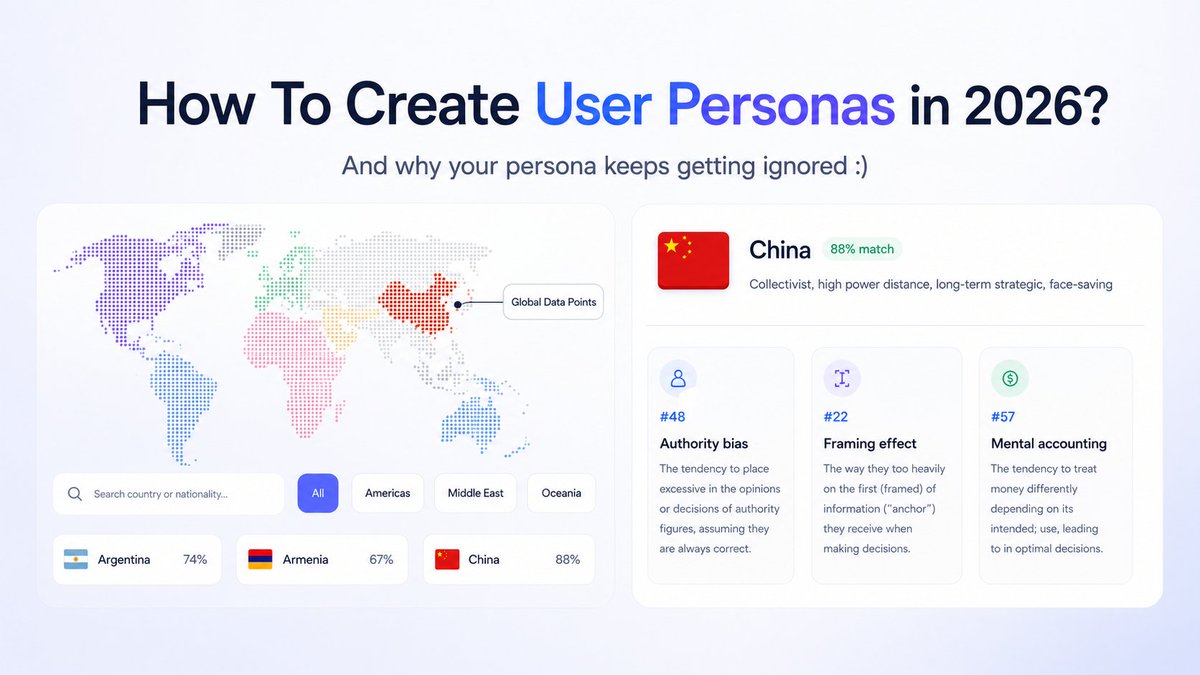
[1/8] Most user personas you've seen are useless and everyone in the room knows it.
They get printed, stuck on a wall, and ignored.
So here is how you create a Persona that makes sense.
2
5
898
May 25
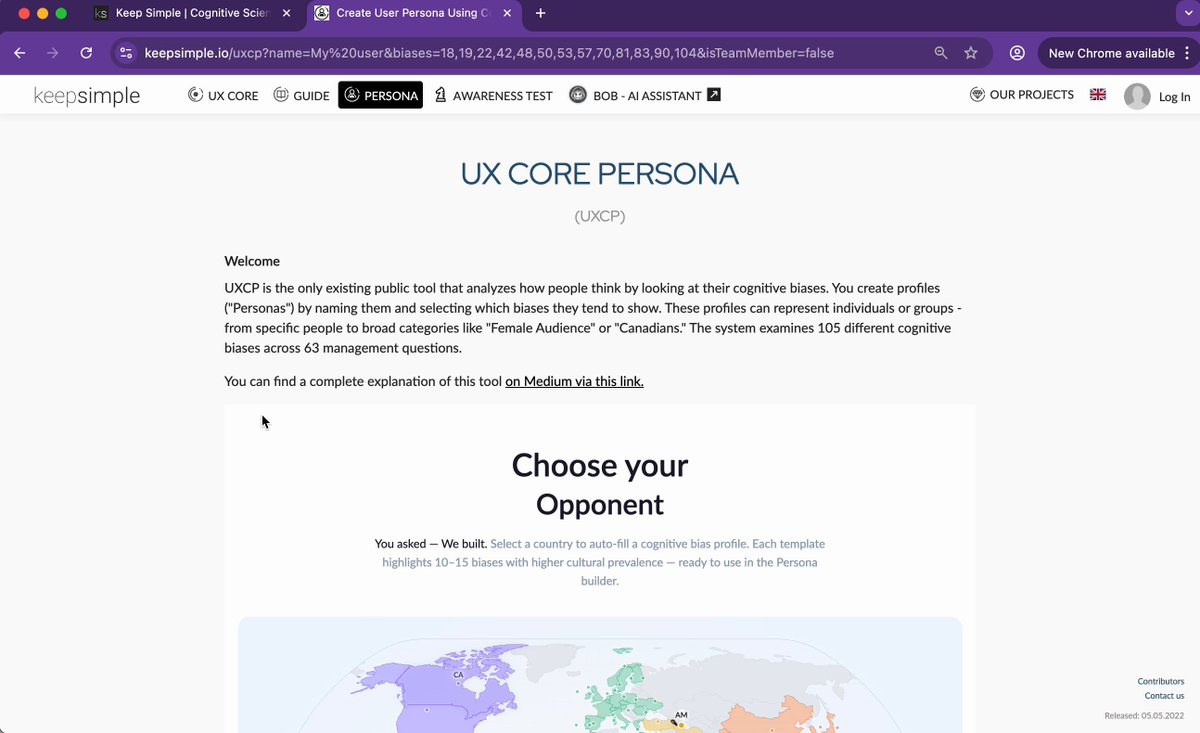
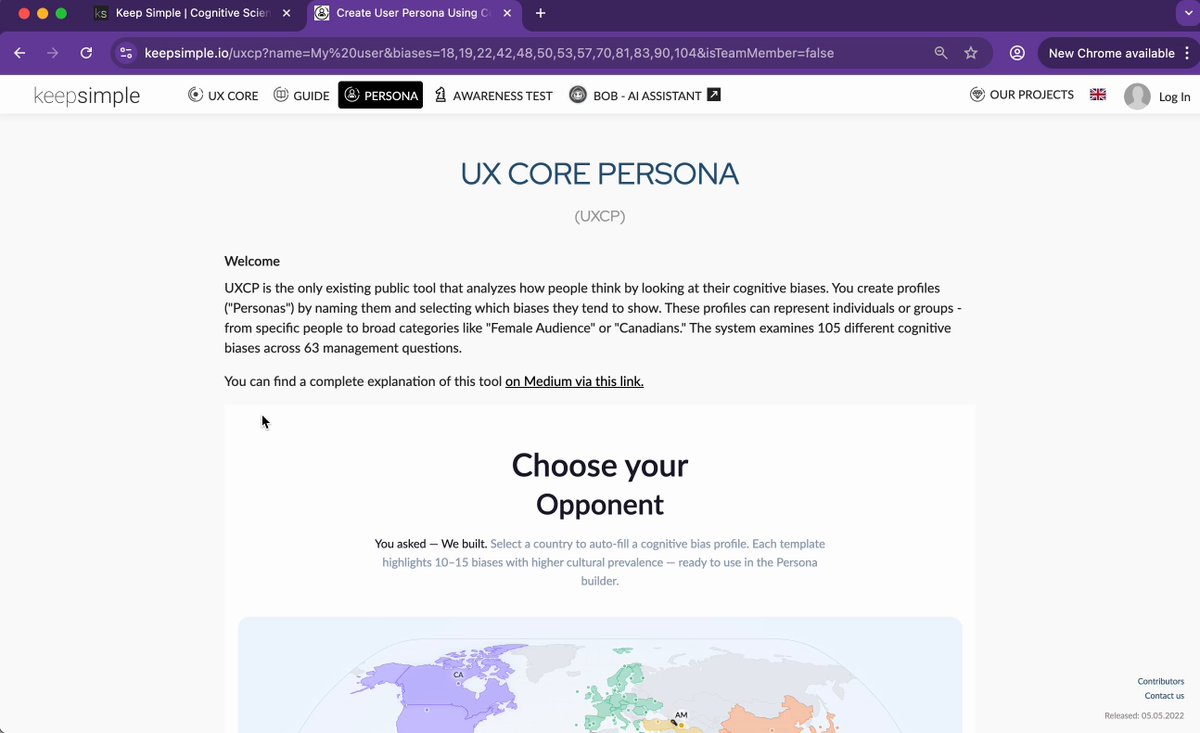
[6/8] And we built a free tool that builds a research-backed persona based on the cognitive biases of your target country.
Pick a country, fill in a few user details, get the biases that shape how that audience thinks - mapped to concrete design decisions.
Its free & open source - as always
🔗 keepsimple.io/uxcp
1
1
52
May 25
[8/8] Give it a spin. And if you have questions or just want to hang out, our Telegram community is open.
Friendly crowd, no spam.
🔗 t.me/keepsimple
1
61
May 19
[1/6] We just released a free tool that builds your product's user persona based on the cognitive biases most common in your target country.
It replaces the $5K–15K of research work that usually goes into building a research-backed persona for a new market.
Here's why this matters and how it works ↓
1
1
4
193
May 19
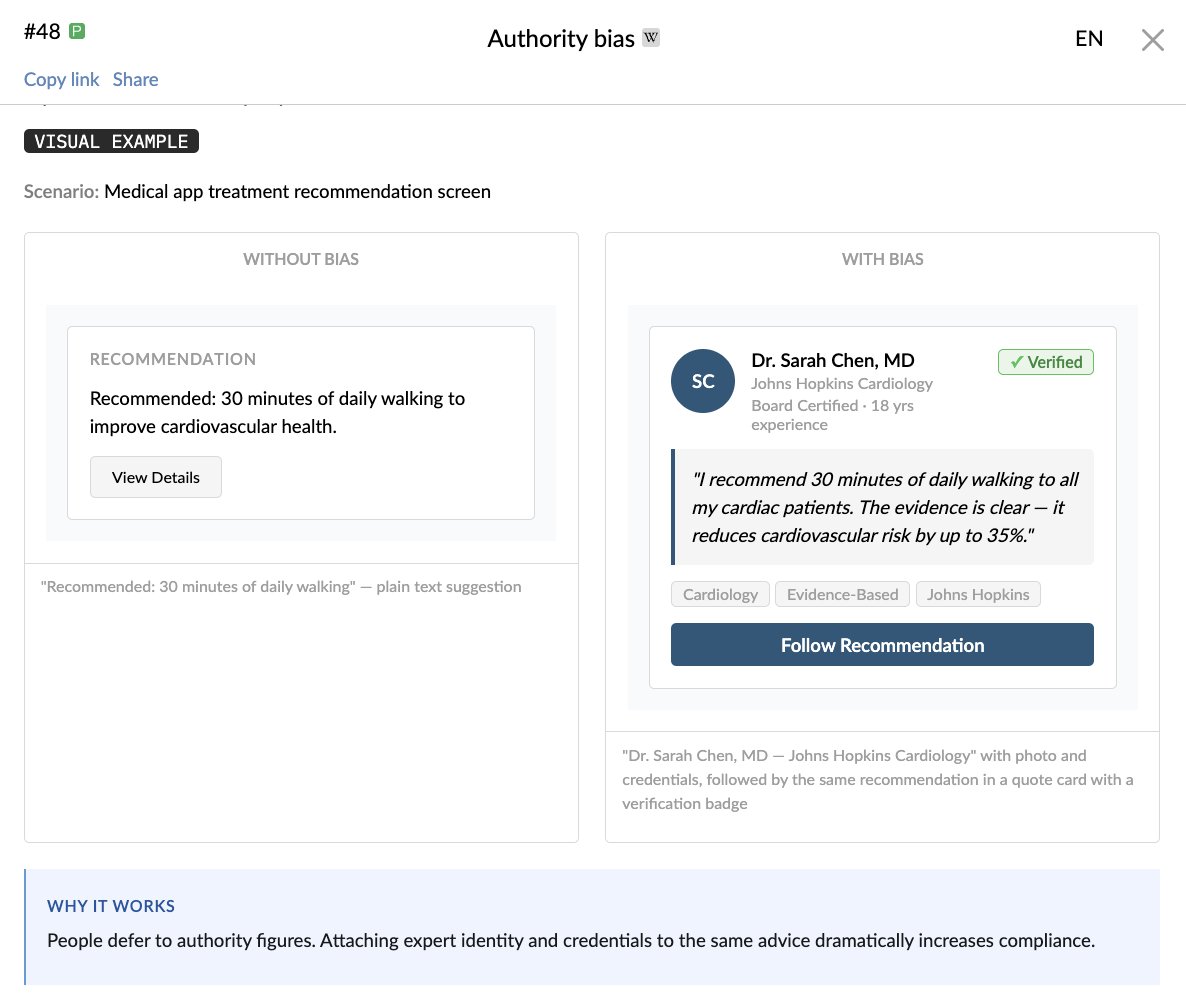
[5/6] And the magic - Once you know which biases are at play, you know exactly what to do in the product.
If authority bias is strong in your market, you lead with credentials and trust signals.
If loss aversion is strong, you reframe your pricing around what users lose by waiting.
If social proof dominates, testimonials go above the fold.
You stop guessing what to design and start designing for how the user actually thinks.
1
1
21