
Infra | Politics | Science | Tech | History | 🕉️ | 🛕
Joined July 2024
- Tweets 2,769
- Following 479
- Followers 80
- Likes 4,500
815 Photos and videos




Entropy (PFBR)⚡️🛰️🧬 retweeted

May 10
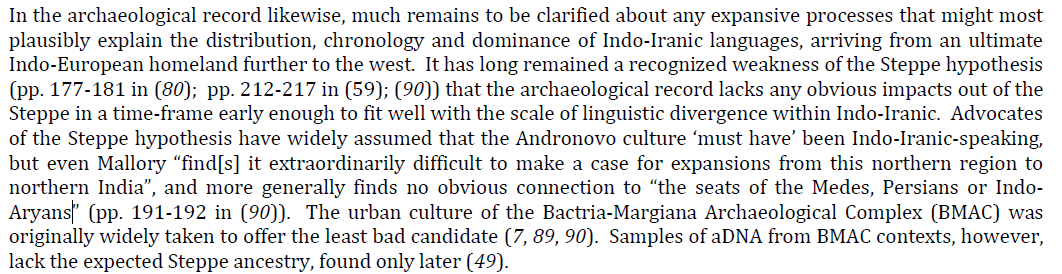
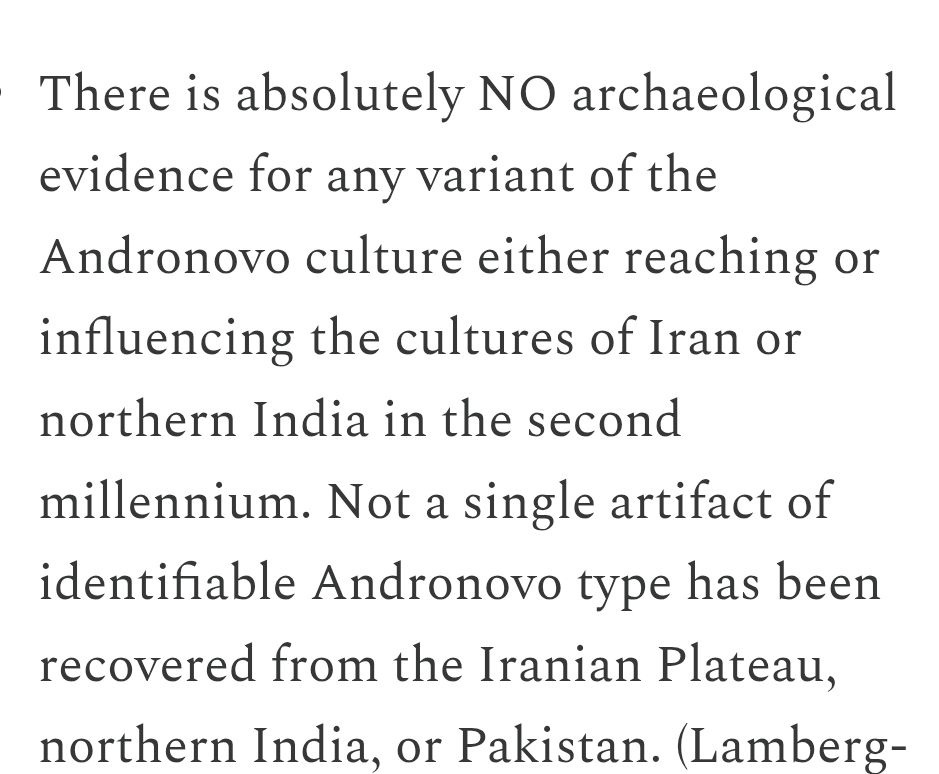
Reason is that the steppe "invasion" didn't happen. We find no evidence of it Archeologically.. more over IVC had far better weapons and metallurgy than steppe nomads
Some quotes from scholars below 2012-2025
1
4
156


Here's the corrected headline.
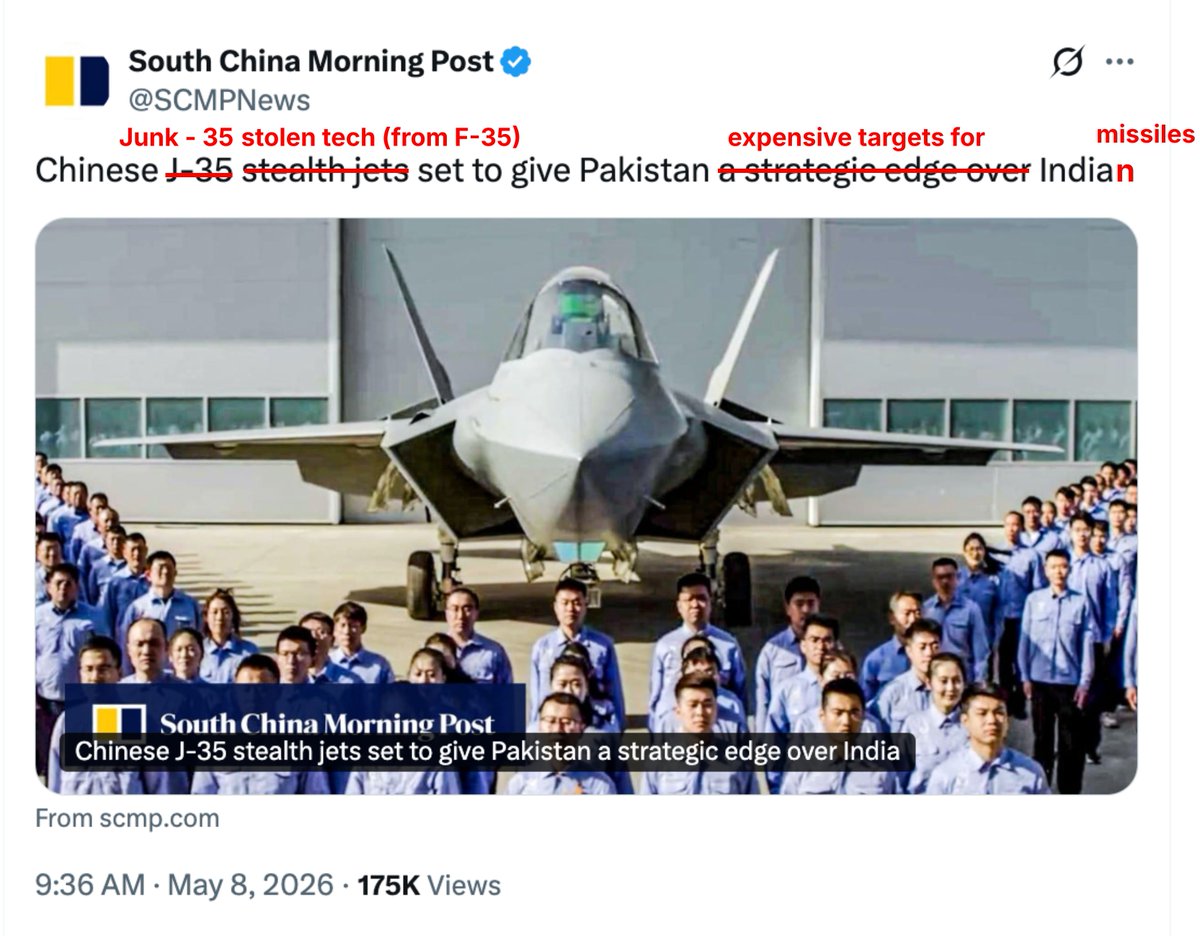

Chinese J-35 stealth jets set to give Pakistan a strategic edge over India scmp.com/week-asia/politics/…
1
246
U think that a soap dispenser used in c17 would be same as used in everyday life?
c17's soap dispenser isn't just a plastic box, it’s a tough piece of flight hardvare. It has to be designed to handle the heavy shaking of a giant cargo plane, survive freezing or boiling see more..
Apr 16

This is the same case.. defence complex have tendencies to overcharge on a lot of level..
2
184
temperatures, and be legally "certified" by engineers to prove it won't break or cause a fire mid-flight. Because they only make a few hundred of these instead of millions, the extra cost of testing, paperwork, and specialized materials gets added to every single unit.
78
Cost doesn’t matter, survival is the key. The longer you survive, the more chances that your engineers will find a low cost solution.
That shahed if not destroyed would take down a billion dollar infrastructure.
Apr 15

This one is not against Rafale. Replace it with any fighter jet.
The Shahed always win. The fuel in those 3 drop tanks alone is roughly the same cost as that drone!
287
Entropy (PFBR)⚡️🛰️🧬 retweeted
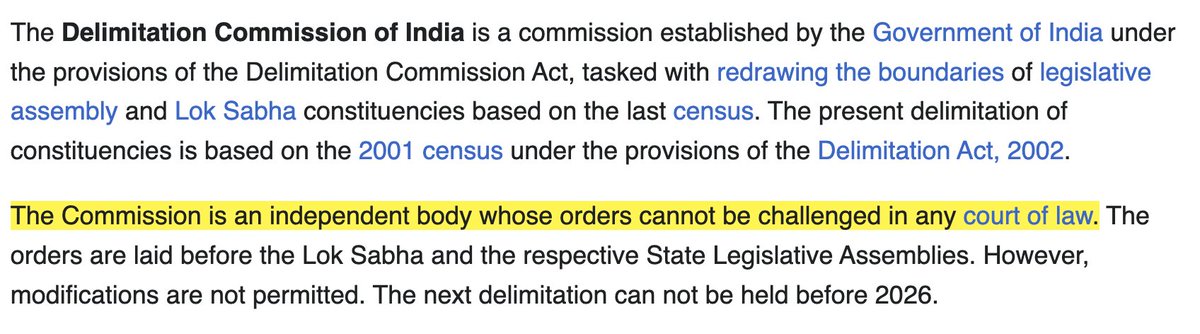
Under Article 329(a) of the Constitution, the validity of laws relating to the delimitation of constituencies cannot be called into question in any court.
1
208
Now this is what you call a headline. Every nationalistic media house need to do a 101 course on how to write headline and shame the other side.

39
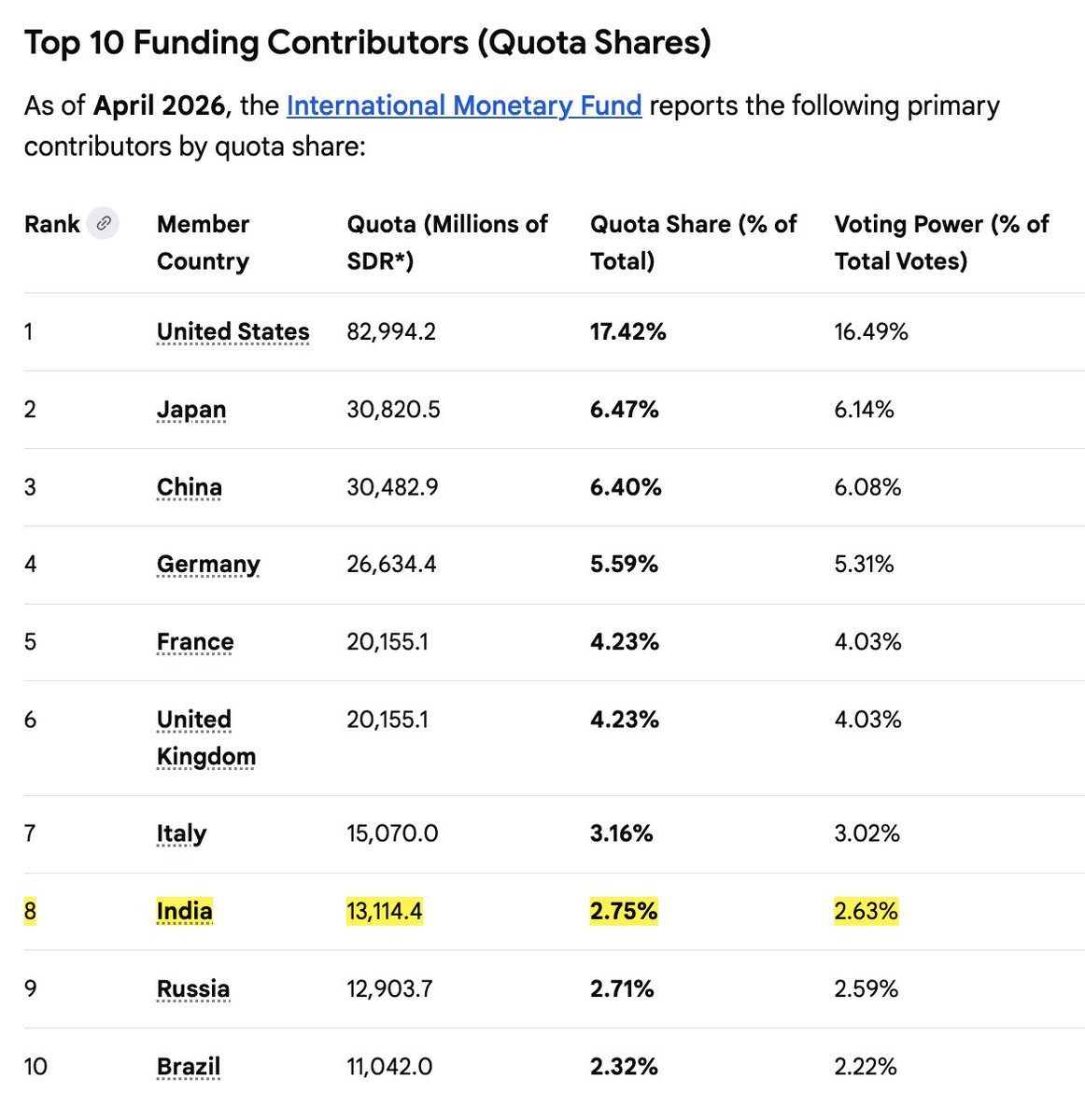
2.75% of the hotel bill amount is paid by India.
Apr 12

Who’s going to pay the bills of Serena Hotel, Islamabad? United States or Saudi Arabia?
108
Entropy (PFBR)⚡️🛰️🧬 retweeted
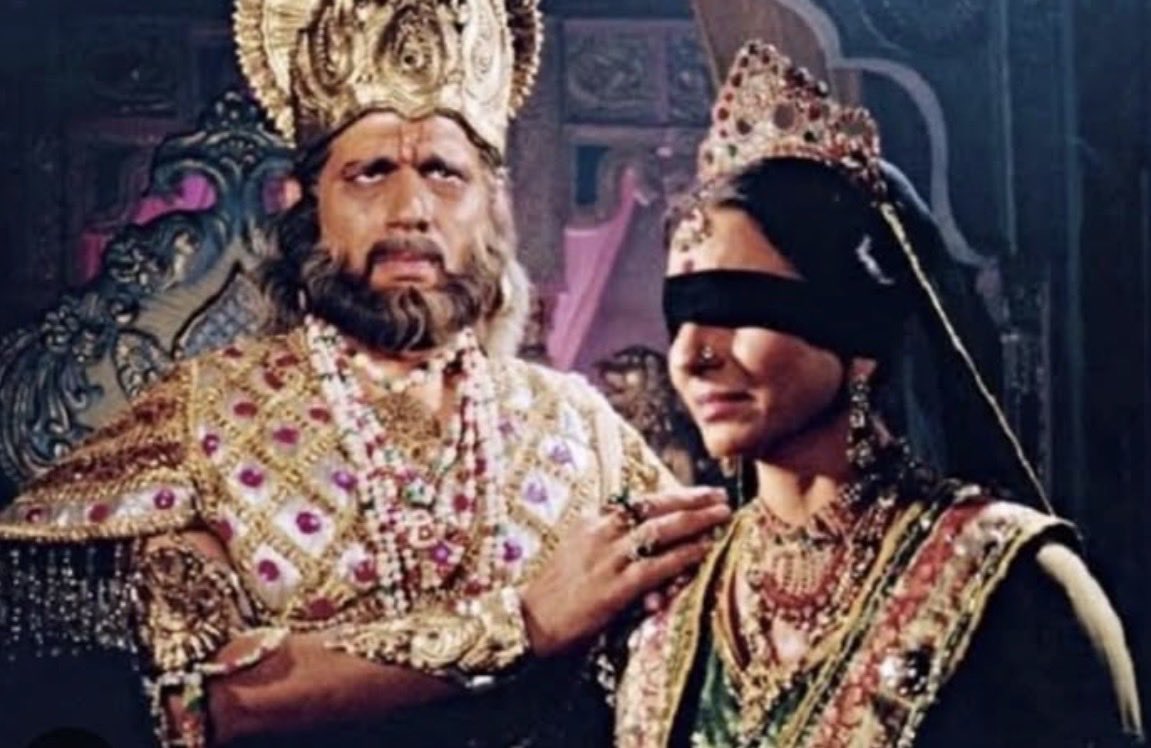
Misidentification of Dhṛtarāṣṭra of the Vedic Period
Many scholars mistakenly identify references to Dhṛtarāṣṭra in Vedic texts—such as the Kāṭhaka Saṁhitā, Pañcaviṁśa Brāhmaṇa, and Baudhāyana Gṛhya Sūtra—with Dhṛtarāṣṭra of the Mahābhārata era. However, a closer examination of these texts clearly shows that such identifications are erroneous and arise solely from the similarity of names rather than historical continuity.
The Kāṭhaka Saṁhitā (10.6) refers to Dhṛtarāṣṭra, son of Vichitravīrya, but the context reveals that he was a king of Kāśī, not a Kuru monarch.
[नैमिष्या वै सत्रमासत त उत्थाय सप्तविंशतिं कुरुपञ्चालेषुवत्सतरानवन्वत तान्वको दाल्भिरब्रवीद्यूयमेवैतान् विभजध्वमिममहंधृतराष्ट्रं वैचित्रवीर्यं गमिष्यामि स मह्यं गृहान् करिष्यतीतितमागच्छत् तन्नासूर्क्षत् तं प्राकालयतैता गा ब्रह्मबन्ध इत्यब्रवीत्पशुपतिर्गा हन्ति ताः परः पचमानश्चरेति तासां देवसूर्मे राजान्नंप्रासुपोदिति सक्थान्युत्कर्तमपचत तस्मिन् पचमाने व्युदस्यत्सोऽग्नये रुद्रवतेऽष्टाकपालं निरवपत् कृष्णानां व्रीहीणां तस्य यत्किंच धृतराष्ट्रस्यासीत् …]
The narrative describes interactions involving sages and ritual contexts, with no connection to the events or genealogies of the Mahābhārata. Jaiminiya Ashvamedha indicates that Dhṛtarāṣṭra’s son Durbuddhi was a contemporary of Indra’s son Arjuna.
The Pañcaviṁśa Brāhmaṇa (25.15.3) mentions Dhṛtarāṣṭra Āirāvata, explicitly identifying him as a nāga (serpent king), son of Irāvatī.
[अतिरात्रावभितोऽग्निष्टोमा मध्ये सर्वो दशदशी संवत्सरो द्वादशोविषुवान् सर्पसामानि विषुवति क्रियन्ते एतेन वै सर्पा एषु लोकेषुप्रत्यतिष्ठन्नेषु लोकेषु प्रतितिष्ठन्ति य एतदुपयन्ति जर्वरो गृहपतिःधृतराष्ट्र ऐरावतो ब्रह्मा पृथुश्रवा….]
The Baudhāyana Gṛhya Sūtra (3.10.6) also mentions Dhṛtarāṣṭra alongside figures such as Takṣaka, Tārkṣya, and Ahir, within the context of the Sarpa-bali ritual.
[जीर्वरो ग्रहपतिरध्वर्युर्धृताराष्ट्र ह्ह्रावतो ब्रह्मदत्तस्तापसो होता पृथुश्रवा दूरेश्रवा उद्गाता ग्लावश्चाजगश्च प्रस्तोता प्रतिहर्ता शितिपृष्ठो मैत्रावरुणः तक्षको वैशालकिर्ब्राह्मणाच्छंस्युपनीतिस्तार्क्ष्यस्सदस्यश्शिखातिशिखौ नेष्टापोतारौ वारुणो होता ऽच्छावाकश्चक्रः पिशङ्ग आग्नीध्रश्चाहिरो महेयस्सुब्रह्मण्यो ऽर्बुदो ग्रावस्तुत्साण्ड उन्नेता पशगो ध्रुवगोपः कौस्तुको धुरिमेजयश्च जनमेजयश्चे त्येतैरेव नामधेयैः समीची नामासि प्राची दिकिति षड्भिः पर्या यैः हेतयो नाम स्थ तेषां वः पुरो गृहाः इति षड्भिः इदं सर्पेभ्यो हविरस्तु जुष्टमिति चोपस्थानम्।६।]
Thus, the Vedic corpus clearly refers to two distinct figures named Dhṛtarāṣṭra: Dhṛtarāṣṭra, King of Kāśī, Son of Vichitravīrya and the father of Durbuddhi. Another Dhṛtarāṣṭra Āirāvata was a nāga king, son of Irāvatī.
Neither of these figures bears any historical or genealogical connection to Dhṛtarāṣṭra of the Mahābhārata, beyond the coincidence of name. The recurrence of identical names across different periods and contexts is a well-known feature of Vedic and later Sanskrit literature. Therefore, textual interpretation must rely on context, lineage, and internal evidence, rather than superficial name-based identification. Failure to do so leads to chronological distortions and conflation of entirely distinct traditions—as seen in the mistaken identification of these Vedic Dhṛtarāṣṭras with the Mahābhārata king.
3
13
41
3,614
Entropy (PFBR)⚡️🛰️🧬 retweeted
But PFBR can produce both types and aren't mutually exclusive
> The core primarily "burns" plutonium to generate power, resulting in reactor-grade plutonium
> The Blankets surrounding the core breed high-purity weapons-grade plutonium
> So he's right in his assessment
2
1
8
349
If we stop industrial and sewage waste from entering the river. The Ganga river will look like this, clean and GREEN for the whole journey.

This innocent soul got trapped in the Ganga as the water level suddenly rose, leaving him helpless and struggling to survive. In that terrifying moment, when hope seemed to fade, a kind-hearted raft operator stepped in and rescued him safely.
Moments like these remind us that humanity still exists in its purest form. Amid so much indifference, one act of courage and compassion can save a life and restore faith in the goodness of people.
Let’s be that reason for someone’s survival.
#dogs
#AnimalWelfare
132
The problem is we don’t think as Indians. We just copy the western designs.
Our houses and flat should be designed in such a way that clothes drying is one of the features.
Current flat design don’t take that into consideration even though everyone needs it.

Indians are so keen to behave like white westerners that they resort to this crap in a country with the best dryer of all - sunshine. And still we pretend that we don't notice the "Imagine the smell" comments. Education and exposure to the west makes us coolies forever.
1
1
1
198
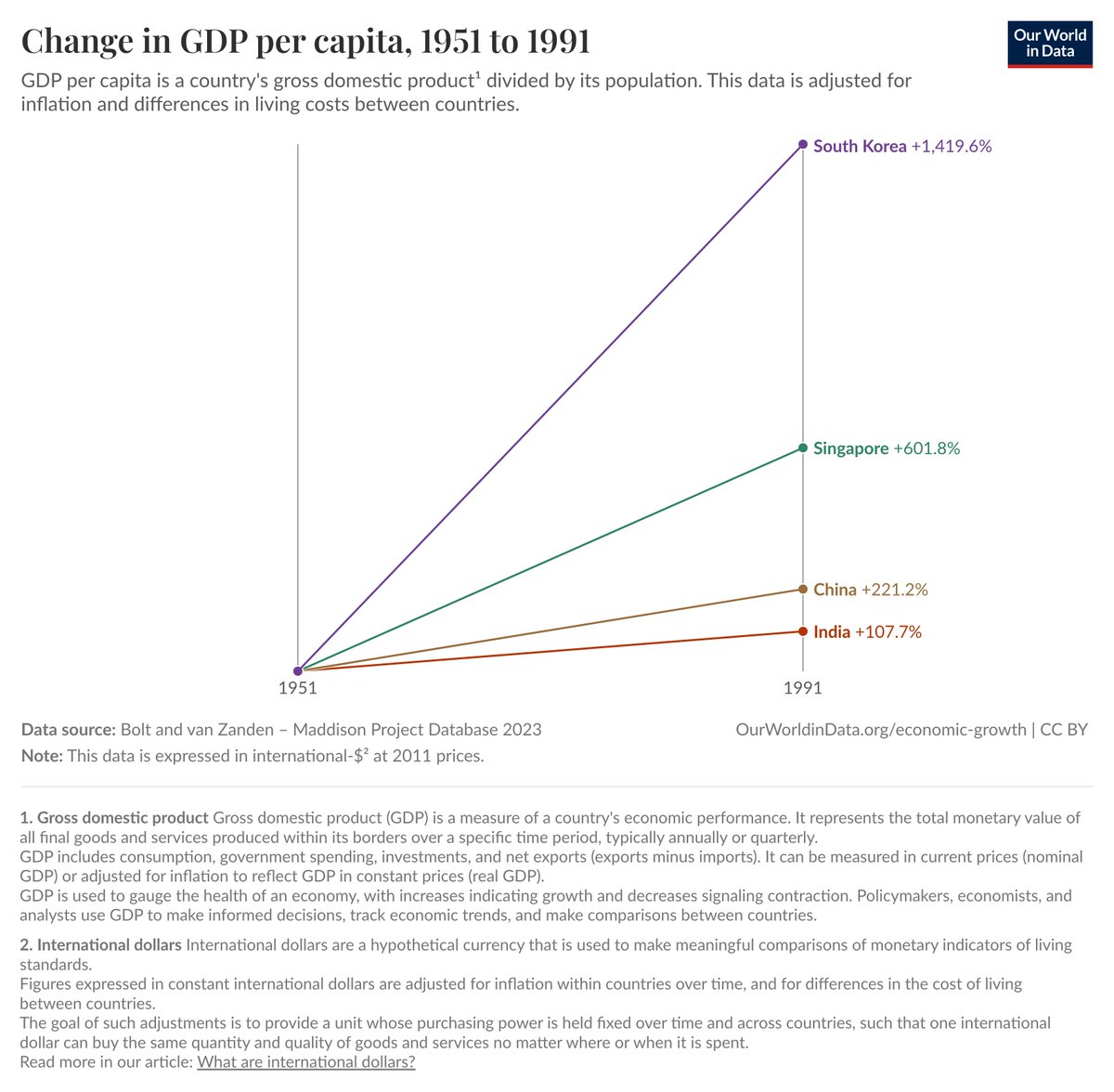
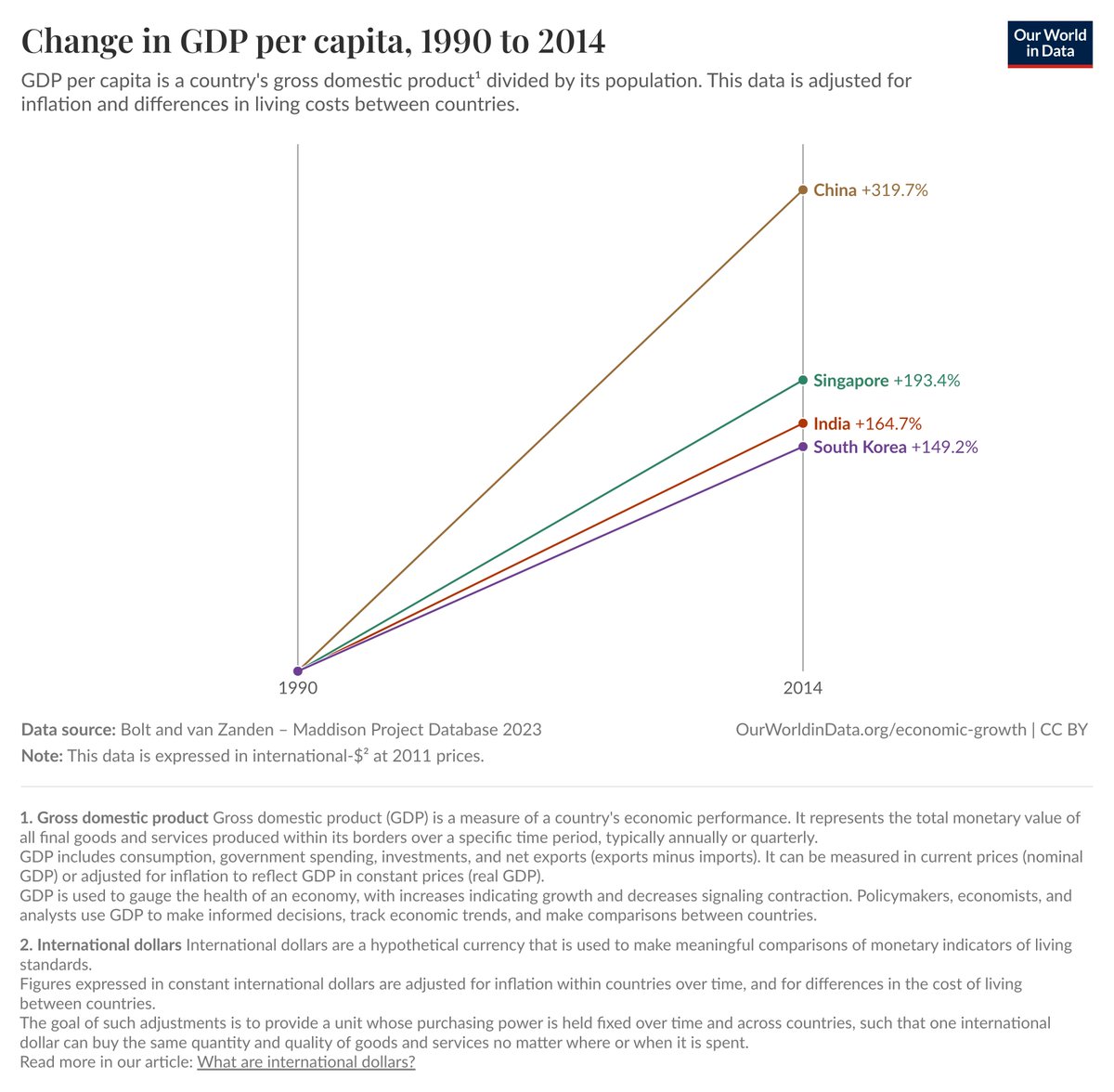
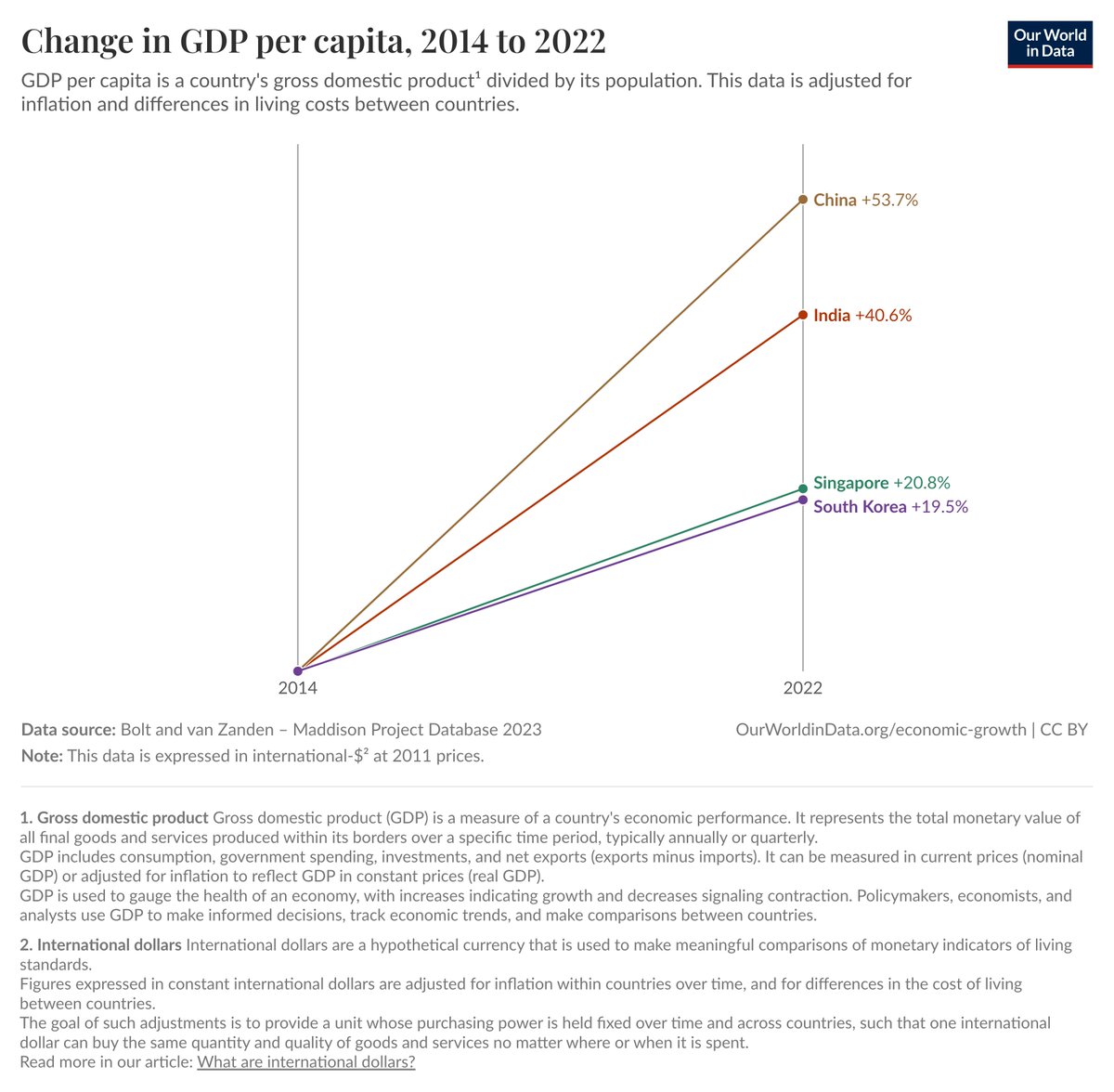
These graphs show %age change in GDP per capita.
We already lost the race by 1991.
Post liberalisation too we didn't do good as others still were faster.
Post 2014 we did better but still couldn't outpace chyna. This decade will be a game changer as we r going to be the fastest.
Apr 3

Today Korea is 13 times richer than us in per capita terms, China is 5 times richer, Singapore is 38 times richer.
Don't you know why???
Because for the past 11 years you raised an Army of Andh bhakts!!
221
Entropy (PFBR)⚡️🛰️🧬 retweeted

Apr 2
We just completed a successful flight for our tech demonstrator, Lat One v0.2.
Lat Aerospace is building ultra-short takeoff and landing aircraft using blown wing technology. Think fixed-wing performance with near-helicopter access.
A couple of months ago, v0.1 achieved uSTOL but crashed shortly after. That was expected. v0.2 was about completing the full mission, and it did. The blown wing concept worked in reality. Closed-loop control got validated. We'd predicted a cruise speed of 30-32 m/s and cruised comfortably at 33. No thermal issues despite a burning afternoon. The quick-detach wings held through aggressive turns. Was in the air for over 6 minutes. Smooth touchdown, and ready to fly again.
But the thing that makes me the happiest isn't any of that. It's that our CFD studies, aerodynamic models, SIL simulations, and flight logs all match, almost perfectly. That's what real engineering looks like. I am so proud of our team.
A long way to go, and we are getting there.
@lataerospace @surobhidas
375
1,355
10,224
578,285
Entropy (PFBR)⚡️🛰️🧬 retweeted
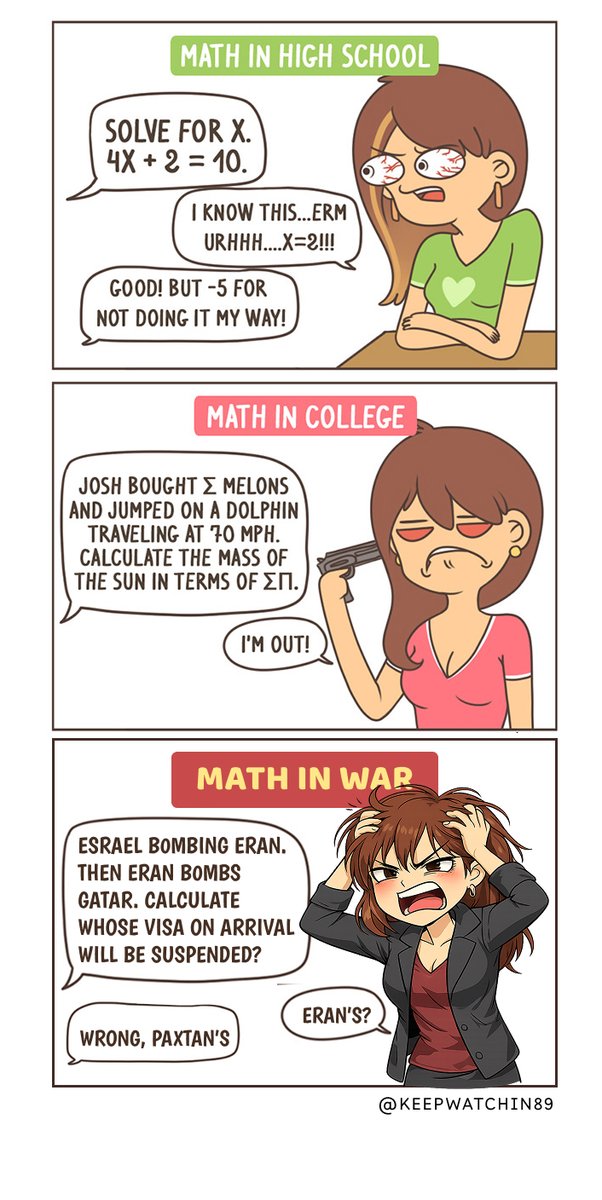
It's a Math Problem.
4
27
4,169
Entropy (PFBR)⚡️🛰️🧬 retweeted
Apr 1
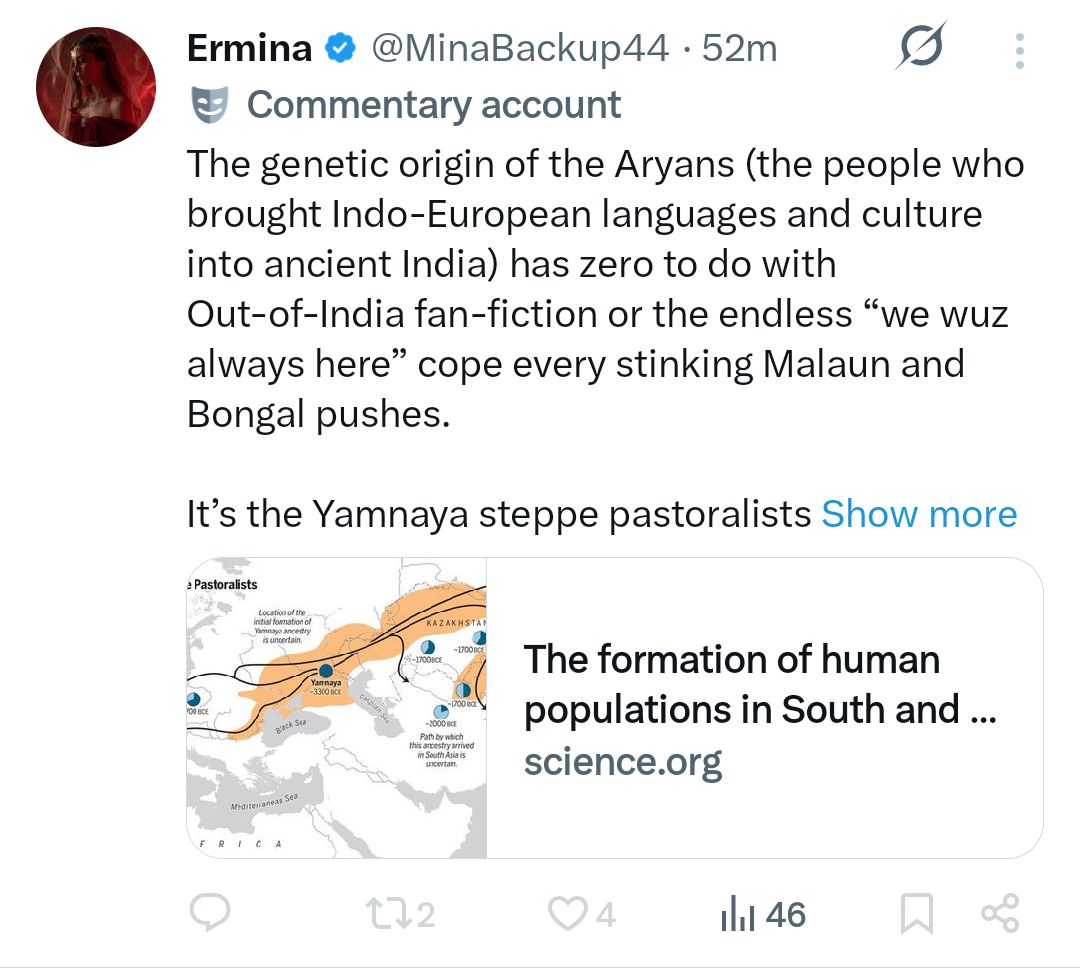
Again..This illiterate has made a post on Aryan migration.
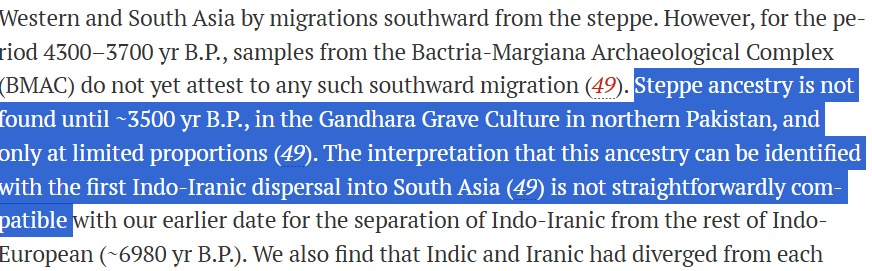
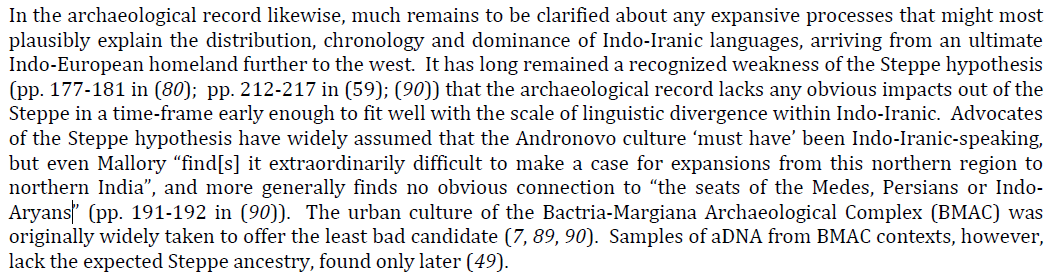
All the sources mentioned are old outdated 2019 reports. There are many reports which came after 2021.
She hasn't read these 2019 ones properly
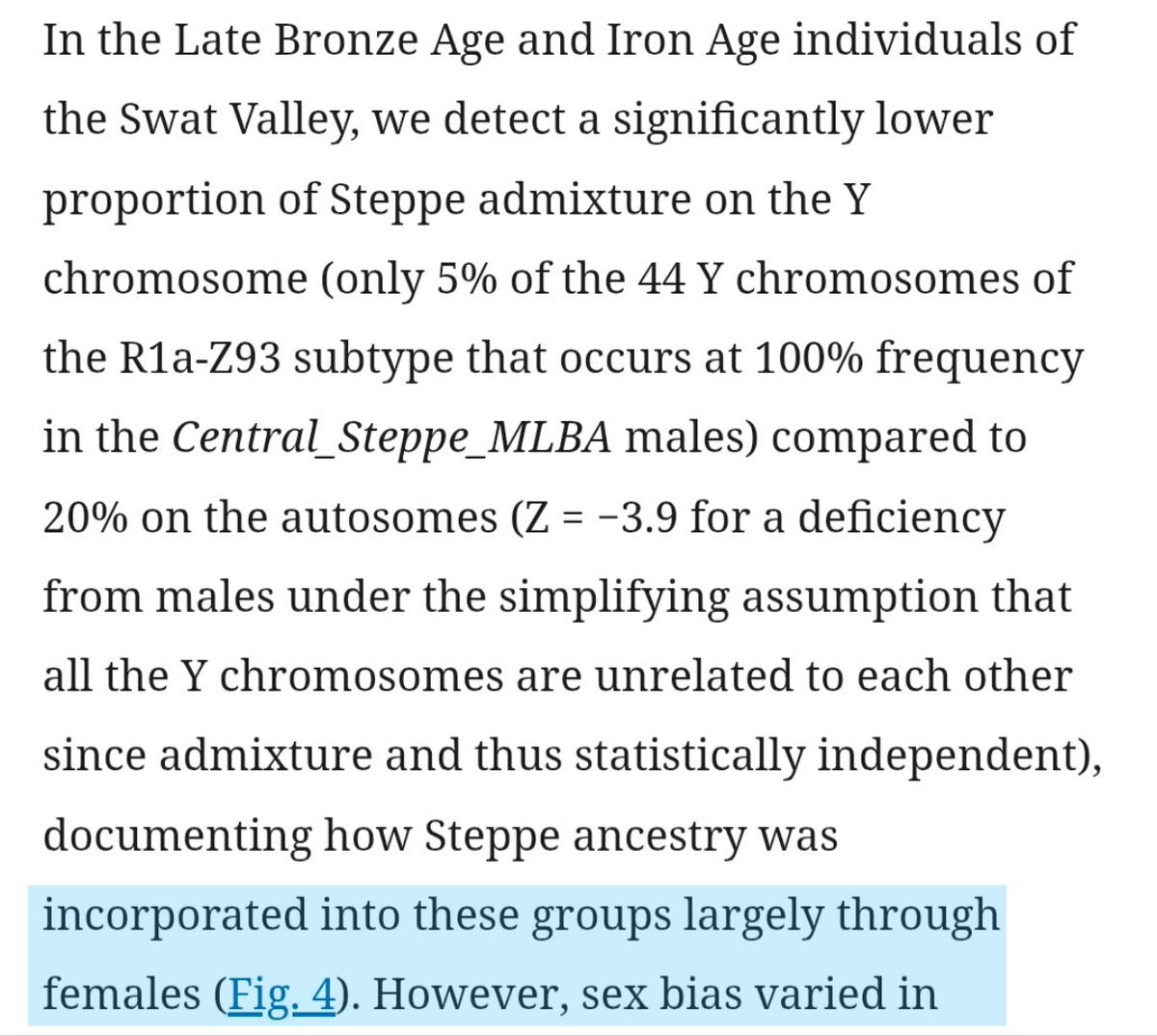
Narashiman 2019 literally says that steppe Ancestry in 1300-200 BC was female Mediated and less than 5% steppe Y-DNA.
Morden population has male Mediated has via later sources and has nothing to Vedic period as Steppe Y-DNA is low till 200 BC despite 100 samples
I am linking some updated reports (2023-2025) in this thread.
7
15
63
3,004
Well, instead of providing a proof to back up his claim, he ran away like a coward and blocked me. Haha

Proof-Trust me bro. Tribals are simple people. Brits settled in hills around them and used missionaries to convert many of them and dilute their identities. Now this son of a thief comes up with his b.s. Tribals worship Shiv gans, spirits who protect them. May Huli enlighten him
1
35
Entropy (PFBR)⚡️🛰️🧬 retweeted

Mar 30
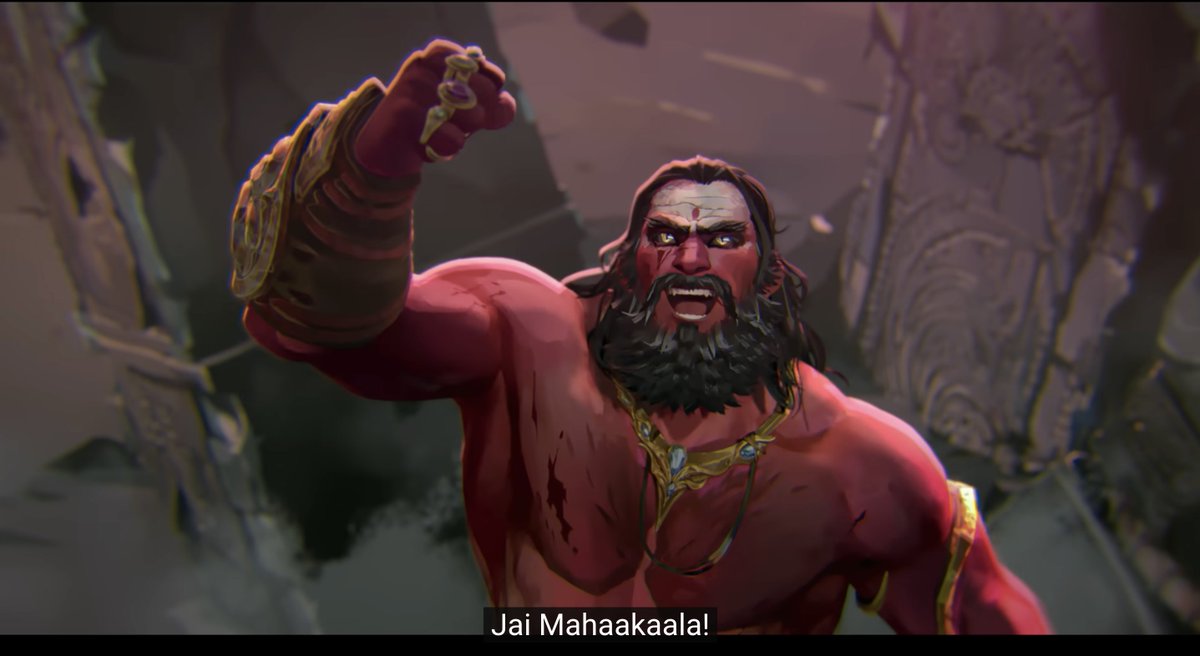
You’ve seen Ramayan in anime style… now help bring Mahabharat to life — Made in India.
Contribute today! prachyam.org/mahabharat
#MahabharatAnime #MahabharatPrachyam #PrachyamOriginalSeries
2
67
199
2,150