Joined October 2019
- Tweets 3,969
- Following 217
- Followers 12,495
- Likes 4,800
359 Photos and videos



Pinned Tweet

May 9
I’ll be posting All updates here from now on:
spacetech-gulf.com/2026/04/g…
4
19
16,930
44m
RT @kelevitch: The Gulf created the first generation in human history that went from subsistence to superabundance in a single lifetime, an…
4
1h
The Gulf created the first generation in human history that went from subsistence to superabundance in a single lifetime, and then handed that superabundance to their children as a birthright.
What you get is a ruling generation that remembers scarcity and therefore understands the value of what was built. And a young generation that has never felt want, never built anything, and is now being asked to lead a post-oil diversification project requiring exactly the hunger and discipline our upbringing systematically removed.
Vision 2030 is a desperate attempt to artificially reinsert adversity into a population that was insulated from it for forty years.
The problem is you cannot manufacture the psychology of necessity. You can build a giga-project. You can mandate Saudization, can close the expat loopholes.
But you cannot make a man who has never needed to fight feel the urgency of a man who has. And every serious Gulf technocrat knows it, and won’t say it out loud.
4
27
505
12h
RT @kelevitch: The problem with most people is they fail to differentiate between the state/government and the people. Governments can norm…
7
13h
The problem with most people is they fail to differentiate between the state/government and the people. Governments can normalise/have ties with other governments without the people supporting it which is the case in mistakes of these Arab monarchies
Yet people willingly ignore it to run a certain agenda, happens with gulf states too
21h

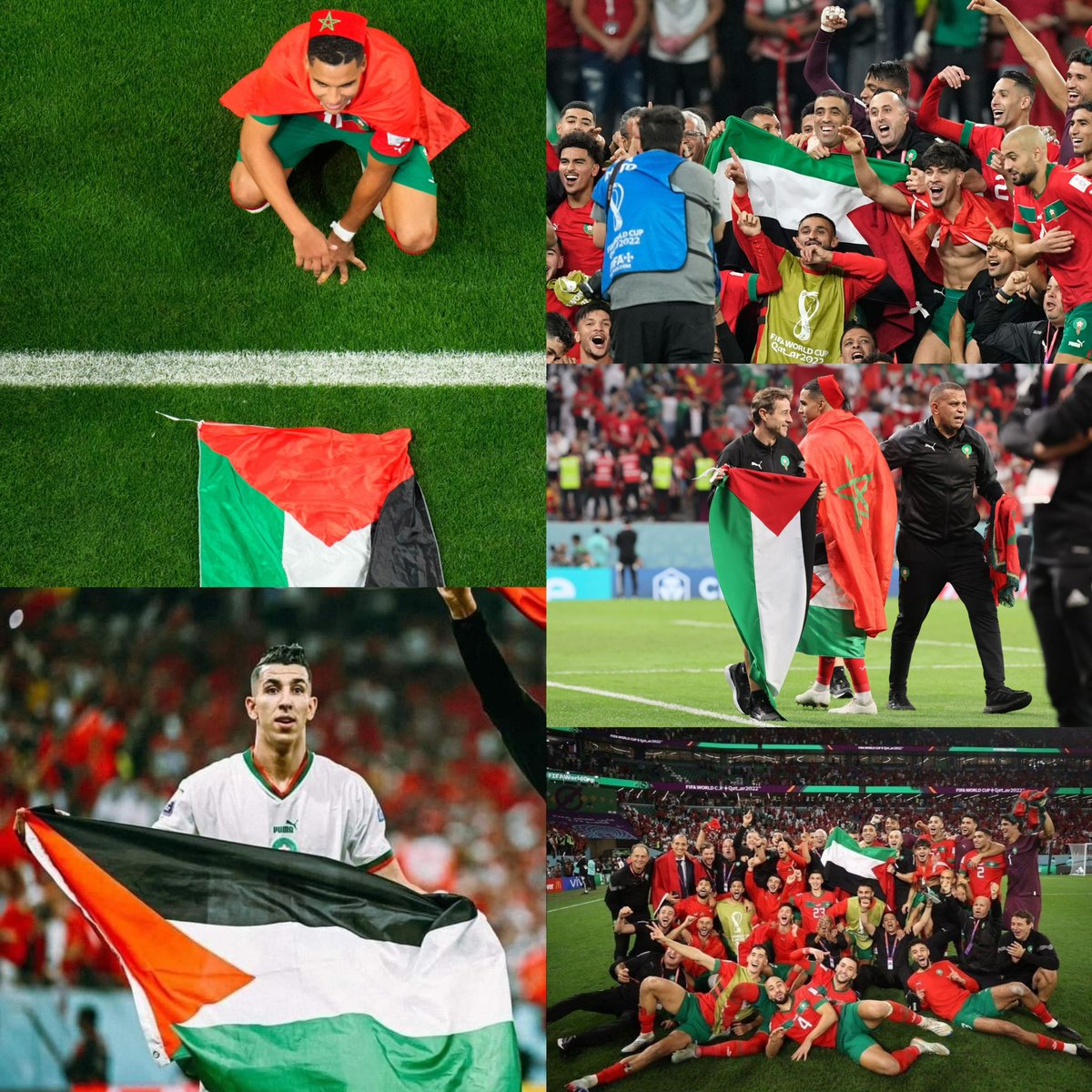
The ‘Israel of Africa’
a country that while achieving the greatest accomplishment in African history was placing the Palestinian flag over its own flag.
1
7
32
2,093
21h
RT @kelevitch: Elon Musk became the world’s first trillionaire.
And he did it while running a government department, holding billions in fe…
17
23h
Elon Musk became the world’s first trillionaire.
And he did it while running a government department, holding billions in federal contracts, and having direct access to the head of state.
It’s the system working exactly as designed.
The old model: fund candidates, own policy, stay behind the curtain. Rockefeller, Koch, Soros, capital operating through the democratic interface.
The new model: become the interface. Skip the middleman entirely. Why buy access to power when you can become structurally indispensable to it?
Musk doesn’t need to bribe anyone. SpaceX has a near-monopoly on US government launch capacity. DOGE gave him a map of the federal bureaucracy. X gives him the information environment. xAI is training on all of it.
The genius of democracy was always that it made power look like consent. The new genius is making plutocracy look like disruption.
He’s not corrupting the system. He’s the system’s next iteration.. what happens when capital stops needing the packaging altogether.
The cage got an upgrade. Same function. Better aesthetics.
May 27

Democracy only spread because it was the best system for producing compliant trading partners.
A democracy has elections. Elections require parties. Parties require financing. Financing requires capital. Capital has interests. So by design, every democracy in the world has a built-in mechanism that ensures the people with money have disproportionate access to the people with power.
You don’t need to bribe a dictator and hope he stays in power. In a democracy, you just fund both candidates and own the outcome regardless.
This is why US spent the Cold War toppling democracies that elected the wrong people Mossadegh in Iran, Allende in Chile, Lumumba in Congo and replacing them with dictators who were more “stable.” Stable meaning: predictable to capital.
The genius of it is the aesthetics. Democracy looks like self-determination. It has flags and anthems and moving inauguration speeches. People will die for it. But the operating system underneath is remarkably friendly to concentrated wealth arguably more so than overt authoritarianism, which at least makes the power visible.
The most honest political scientists will tell you: what actually spread after 1989 was markets. Democracy was the packaging.
And the packaging worked so well that the people inside it genuinely believe they’re free which is the final, most elegant feature of the system.
A cage you can’t see is the strongest cage ever built.
17
72
3,003
Jun 13
RT @kelevitch: Recent archaeology discoveries in Saudi Arabia further prove the historical reliability of the science of hadith
Below are…
22
Jun 13
Recent archaeology discoveries in Saudi Arabia further prove the historical reliability of the science of hadith
Below are some examples
A strong example is Al-Juhfah. In Sahih al-Bukhari, Ibn ‘Abbas reports that the Prophet ﷺ made Al-Juhfah the miqat for the people of al-Sham. 2 A supporting report in Sunan al-Nasa’i adds that it was for al-Sham and Egypt. 2 This is important because recent archaeology at Miqat Al-Juhfah uncovered more than 1,700 artifacts, including pottery, glass, stone fragments, shells, beads, metal objects, six pottery kilns, a water channel, and thirteen tombstones from the Umayyad and Abbasid periods. The finds also included material linked to the Levant, Egypt, and Ethiopia, confirming that Al-Juhfah really functioned as a major international pilgrimage station. 2
A second example is Al-Rawha. In Sahih al-Bukhari, a report from Ibn ‘Umar refers to “the mosque situated at the place called Sharaf Ar-Rawha.” 1 This matters because the Saudi-UK Exeter project now describes Al-Rawha as a large settlement on the Hejaz Hajj Route with a cemetery and a mosque. 1 Again, the hadith preserved not just a vague memory, but a named stop with a religious feature that archaeology is now investigating.
A third example comes from the Iraqi pilgrimage route. In Sahih al-Bukhari, Ibn ‘Umar reports that after Basra and Kufa were opened, people told ‘Umar that Qarn was off their route, so Dhat ‘Irqwas fixed for them instead. 1 This matches the broader reality of an Iraqi Hajj corridor. In 2026, Saudi authorities documented a first-century Hijri Islamic inscription on the Darb Zubaydaroute in Hail, on a road used by pilgrims traveling from Kufa to Makkah. 1
These examples do show something important: the hadith tradition preserved accurate early Islamic geography; named stations, pilgrimage routes, and places of prayer that archaeology is increasingly confirming. This strengthens the case that hadith transmission was not random legend, but often preserved real historical memory with surprising precision.
May 24
Part 2 : proving the reliability of the science of Hadith using NASA data
In 632 CE, the Prophet Muhammad ﷺ lost his infant son Ibrahim.
Multiple companions independently recorded what happened that day:
“The sun eclipsed on the day Ibrahim died.”
This is in Sahih al-Bukhari. The most authenticated hadith collection in existence. Narrated by at least four companions independently with separate chains.
"The sun eclipsed in the lifetime of Allah's Messenger (ﷺ) on the day when (his son) Ibrahim died. So the people said that the sun had eclipsed because of the death of Ibrahim. Allah's Messenger (ﷺ) said, "The sun and the moon do not eclipse because of the death or life (i.e. birth) of someone. When you see the eclipse pray and invoke Allah."
For 1,400 years this was simply a detail in a book.
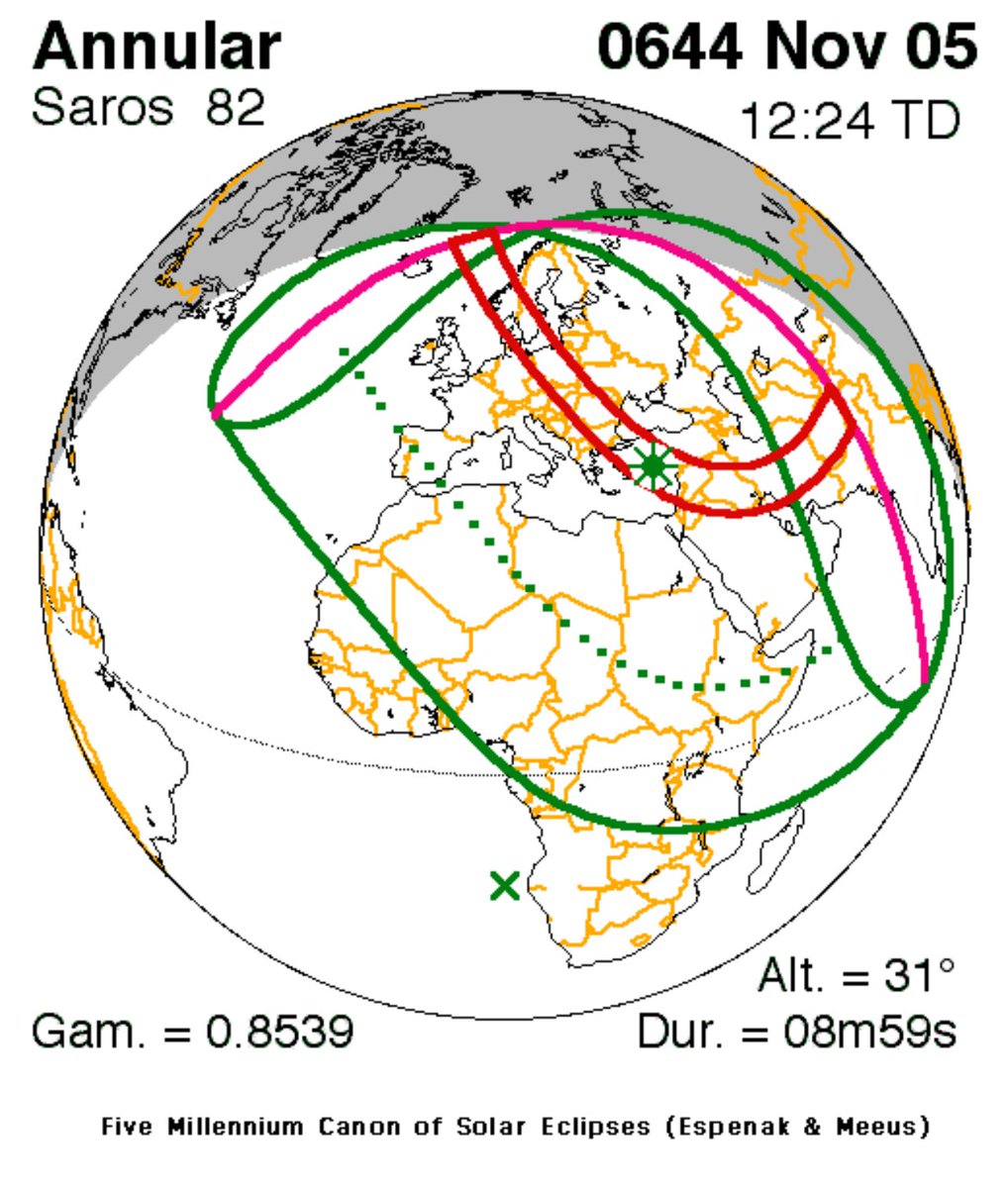
Then NASA built the Five Millennium Catalog of Solar Eclipses.
On January 27, 632 CE NASA confirms an annular solar eclipse occurred. Visible from Medina. Exactly matching the date of Ibrahim’s death.
Four independent witnesses. Four separate chains of transmission. All preserved faithfully for 14 centuries. All confirmed by modern astronomy.
Ibn kathir say he died in Rabi al-Awwal 10 AH converts to approximately late January 632 CE. (There is different of opinions regarding the exact dates but they all lead to 632CE)
NASA confirms: Solar eclipse on January 27, 632 CE visible from Medina.
But there’s detail that destroys every “fabrication” theory:
When people said “the sun eclipsed because of Ibrahim’s death” the Prophet ﷺ stood up and corrected them.
“The sun and the moon do not eclipse because of the death of anyone.”
A fabricator would have kept the miracle.
A fabricator would have said YES Allah sent this sign for my son.
Instead the Prophet ﷺ removed the supernatural interpretation entirely. On the spot. In public.
And his companions faithfully recorded that correction even though it made the story less miraculous.
That’s not what liars do.
That’s what honest witnesses do.
Preserved by honest narrators.
Across 14 centuries.
Confirmed by NASA in the 21st century.
The isnad system works.
The science of hadith works.
The only escape route for a skeptic is to claim the date conversion is wrong. But the date conversion doesn’t come from Muslims trying to prove the miracle rather it comes from independent Islamic historical scholarship that predates NASA by centuries. Ibn Kathir recorded the date. Astronomers confirmed the eclipse. Nobody coordinated that across 1,400 years.
22
129
6,013

انا كل يوم بيزيد حبي وتقديري للسنغال👏👏
مدرب السنغال بابي ثياو تريند دلوقتي في امر ىكا بسبب تصريحاته في المؤتمر الصحفي
الصحفي : كانت هناك رياح شديده في ولايه نيوجيرسي اليوم والامن طلب من اعضاء البعثه عدم الخروج حفاظا علي سلامتكم لماذا خرجتم للصلاه؟
بابي ثياو : وهل يوجد شيئ اهم من الصلاه؟؟ اعتقد ان هذا سؤال ليس من شأنك انت خائف من رياح ونحن نخاف من الله الذي صنع الرياح نحن هنا من اجل لعبه ترفيهيه ونسينا اننا مخلوقين من اجل عباده الله
لو كان نهائي كاس العالم اليوم ونحن طرف في النهائي لخرجنا لأداء صلاه الجمعه حتي لو كلفنا خساره البطوله لاتتحدث معنا عن شعائر تخص ديننا.
افسم بالله الواحد فخور بالسنغال وخير ممثل للقاره الافريقيه تصريحات بابي ثياو عملت جدل كبير النهارده انا مشوفتش قوه وايمان كده في حياتي الصحفي حرفيا سكت ومعرفش يتكلم بعد الكلمتين دول....انا من النهارده سنغالي👏👏👏♥️♥️♥️

733
9,717
52,772
2,134,292
ًً retweeted

Jun 12
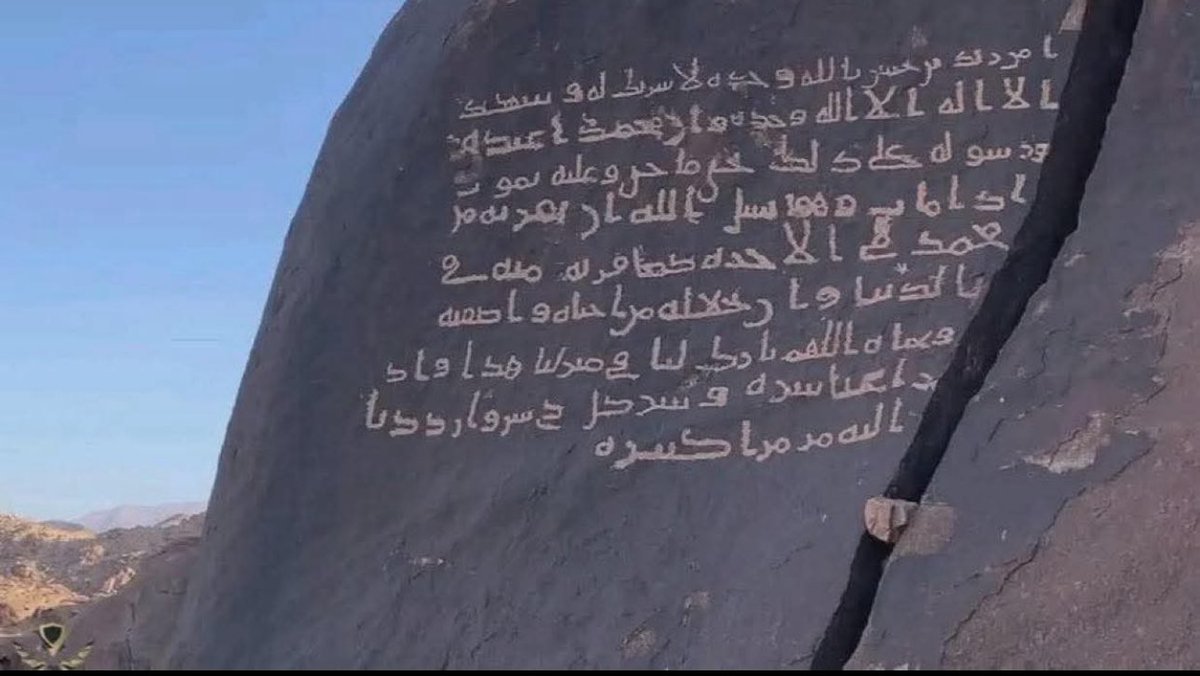
🚨A Modern Epigraphic Discovery unveils an Inscription where Zayd Bin Hassan (The Grandson of the Prophet) Writes the following:
"I, Zaid bin Al-Hasan, believe in God alone with no partner, and I bear witness that there is no god but God alone, and that Muhammad is His servant and Messenger. Upon this I live as long as I live, and upon it I die when I die. And I ask God to bring me close to Muhammad in the Hereafter as He brought me close to him in this world, and to make me one of his beloved ones, his chosen ones, and his elite. O God, bless us in this abode of ours and ward off from us its evil and the evil of every evildoer."
51
1,026
6,952
1,184,412
Jun 12
German idealism wasn’t really about the mind at all. It was the first serious philosophical response to the collapse of a unified cosmic order what Weber would later call Entzauberung (disenchantment). When Newtonian mechanics stripped nature of purpose and meaning, you had a universe that was mechanically coherent but existentially uninhabitable. The idealists were trying to relocate meaning inside a world that had just had it surgically removed.
Kant’s transcendental structures, Hegel’s dialectic, Schelling’s Naturphilosophie, all of these are essentially attempts to smuggle teleology back into a disenchanted universe through the back door of consciousness. The subject becomes the new locus of purposiveness because nature no longer provides it.
Why this matters now: We’re in an analogous moment. AI, neuroscience, and evolutionary psychology are doing to mind what Newton did to nature i.e mechanizing it, stripping it of genuine intentionality. The idealist project failed because Hegel’s Geist was too obviously a philosophical sleight of hand. But the underlying problem how to inhabit a world where meaning isn’t built into the structure of things never went away.
The real heir to German idealism isn’t analytic philosophy of mind. It’s Islamic civilizational thought, phenomenology, and certain strands of contemporary ontology that take seriously the idea that the order of knowing and the order of being aren’t cleanly separable.
6
43
945
Jun 12
RT @kelevitch: Saudi and Qatar paid off Syria’s World Bank debt. Saudi pledged $6.4 billion for Syrian development sectors. Qatar is develo…
30
Jun 12
That’s his response to Trump announcing an imminent Iran deal btw and the context is telling. He is trying to frame the potential agreement as an Israeli achievement, or at least limit the political damage of a deal that reportedly doesn’t address most Israeli concerns.
The subtext is pure damage control. Trump announced a deal Netanyahu reportedly wasn’t given advance notice of, and now he is scrambling to claim credit for a diplomatic outcome he didn’t negotiate and can’t veto. “Complete agreement between Trump and me” is exactly what someone says when there is no complete agreement between Trump and them.
Jun 12

JUST IN: 🇮🇱🇮🇷 Israeli Prime Minister Netanyahu says Iran will not possess a nuclear weapon as long as he remains in office.
3
15
1,447
Jun 12
Saudi and Qatar paid off Syria’s World Bank debt. Saudi pledged $6.4 billion for Syrian development sectors. Qatar is developing Damascus Airport and power generation. Gulf states lobbied Washington to lift Caesar Act sanctions. They’re setting the terms of who gets reconstruction capital and who doesn’t. This is a form of political power that bypasses every multilateral institution UN, Arab League, EU without ever declaring itself.
30
248
18,420
Jun 12
RT @kelevitch: Syria is one of the Iran war’s biggest winner
The Strait of Hormuz closure that came from the Iran-US-Israel conflict accid…
11
Jun 12
Syria is one of the Iran war’s biggest winner
The Strait of Hormuz closure that came from the Iran-US-Israel conflict accidentally made Syria’s geographic pitch land corridor from Gulf to Mediterranean viable overnight. Syria is now proposing to serve as a direct land-based alternative for energy flows and commercial trade linking Asia to Europe. The most consequential geopolitical repositioning in the Levant in decades happened as a side effect of a conflict Syria wasn’t even party to.
11
46
3,302
Jun 10
The terror!st states of US and lran re-started their illegal war against lran tonight at the eve of the world cup threatening the whole security of the middle east yet again
1
1
28
1,145
Jun 10
This guy must be living in a fantasy

Trump has just announced on Fox News the death sentence of the Saudi, Qatari, Bahraini, UAE, and Kuwaiti regimes as well as the global economy.
3
34
4,298
Jun 9
There’s something worth salvaging here but the argument collapses at the foundation.
The ibaha maxim is real and underutilized which i agree with . The cultural pathology of halal-paranoia producing grey, disengaged Muslim communities is also real.
But “seek the moral judgement of your heart” deployed against structured legal reasoning isn’t liberation, it’s a very old mistake. That hadith has a specific epistemic context. Generalizing it as a license to bypass madhab calculus is what every antinomian current in Islamic history did and classical scholars identified exactly this move as the point where maqasid reasoning becomes rationalization.
Maqasid al-shariah was never designed to dissolve the zahir of fiqh rather to illuminate why the zahir exists. The scholars who built that framework were more rigorous about usul than anyone citing them casually in this register tends to be.
The “mufti who has lost touch with reality” line is the tell which is clearly not an argument, just a feeling dressed as discernment. The question of which scholarly voices are credible is itself a methodological question that requires… exactly the kind of structured engagement with tradition being dismissed here.
The diagnosis is partially correct but as you can guess the prescription is liberal Muslim reformism with better.. vocabulary.
Jun 9

A central reason Muslims have never yet flourished on a large scale in the West is our almost wholly negative attitude towards shari'a or sacred law. Negative shari'a should pivot on clear red lines, not a paranoia about whether or not everyday life is "halal."
The real purpose of sacred law is in any case positive; it provides principles for maximized human flourishing in accordance with the lofty vision of human nature that has been revealed to us, not a raft of complexes and prohibitions.
The true Muslim's natural assumption when encountering a new situation is not only that it is "halal", but that its halal status need not even be investigated. God created all that is in the earth for you; everything on this earth was created for our benefit, in order to help us in actualising the holistic flourishing demanded by our nature; it was not created so that we could be suspicious, uneasy, and paranoid about every unfamiliar thing that we encounter.
Instead, in everything you do be faithful and loyal to the haqa'iq and the sha'a'ir, the spiritual realities and the outward symbols of the din. It is that deep spiritual orientation and the pursuit of the corresponding truth, beauty, and goodness in all things which will keep you on the Straight Path, the path of closeness to Allah, not an unhealthy and morally lazy dependence on a "mufti" who has lost all touch with reality.
He created all that is in the earth for you is indeed one of the proof texts for the fiqh maxim "the default assumption is permissibility." We should combine it with the hadith, "Seek the moral judgement of your heart," and recognise that a pedantic and partisan fiqh madhhab calculus is rarely the right way to achieve the maqasid of the din in this time.
From the
ضروريات
to the
تحسينيات
the purposes of sacred law are configured to facilitate the cultivation of truth, beauty, and goodness in the life of each individual believer. Social and cultural non-participation, the self-incarceration of authentically Islamic creative energies, and our defaulting to "halal" medicine and engineering, and thus becoming grey, lifeless non-presences in Western societies that we should be transforming with light, is the price our communities pay for our lazy (and unislamic) legalism.
4
48
3,273