
Conversation analyst at the University of York. I post about CA methods, turn-taking, multimodality, the recruitment of assistance, and other topics—e/acc
Joined March 2008
- Tweets 1,275
- Following 327
- Followers 1,202
- Likes 10,242
166 Photos and videos
Pinned Tweet

May 8
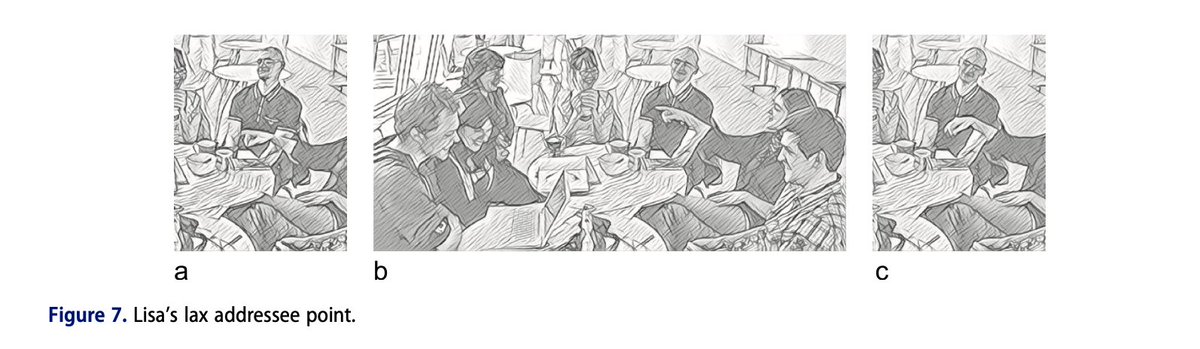
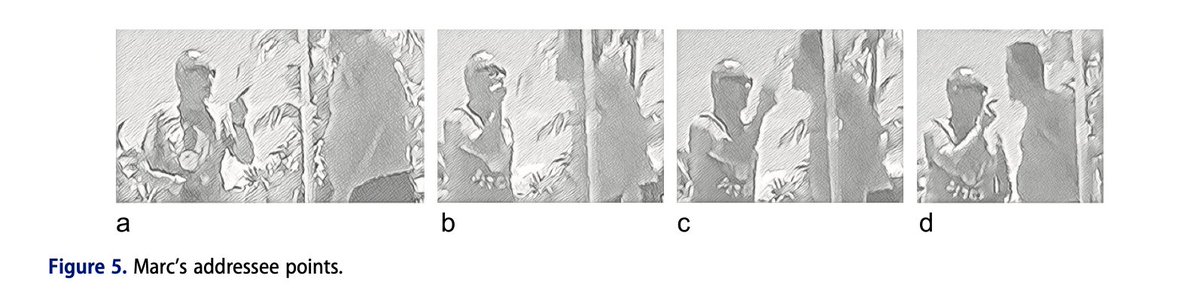
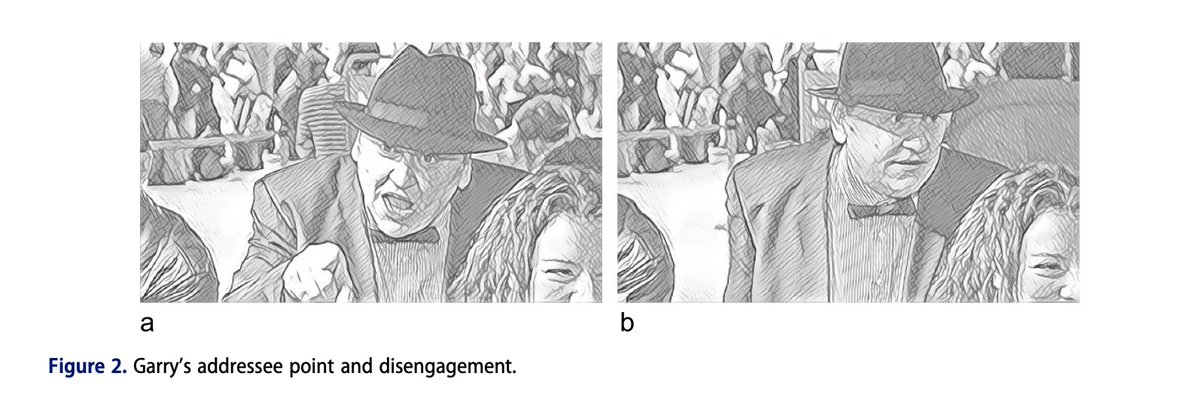
A new article I co-authored with Paul Drew has just been published: "Addressee points in conflictual interactions: A reductionist analysis of action".
Free-access link:
tandfonline.com/eprint/IXCAG…
More below.
1
2
62
May 8
A new article I co-authored with Paul Drew has just been published: "Addressee points in conflictual interactions: A reductionist analysis of action".
Free-access link:
tandfonline.com/eprint/IXCAG…
More below.
1
2
62
May 8
We also found that the tenseness of articulation varies meaningfully. Addressee points produced with rapid, sudden movements occur in extreme conflicts whereas those with lax, fluid movements appear in ironic or mock conflict in which speakers employ practices of deescalation.
1
32
May 8
In the article, we question the use of stipulated action categories (accusation, threat) and argue for a different analytic route: to observe and describe the precise configurations of social conduct, their uses and effects that constitute the basis for action ascription.
1
32
Kobin Kendrick retweeted

Sci-Hub is an evil website that pirated 85M research papers and made them freely available
And now they've added AI to their database to make Sci-Bot.
It answers your questions using latest, full-text articles.
But DO NOT use it. We should all try to make billion-dollar academic publishers richer.
I'm putting the link below so you know how to avoid it.
836
8,903
46,841
4,947,006
Kobin Kendrick retweeted

Mar 10
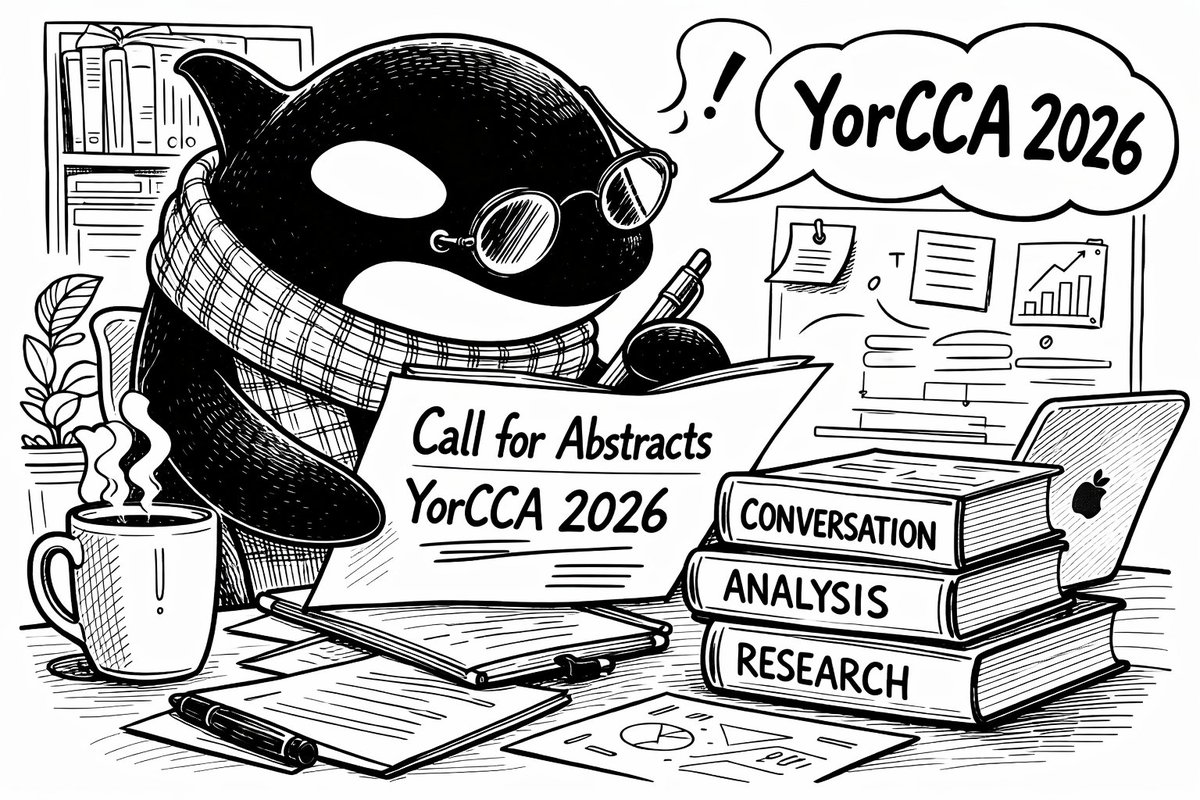
📢 YorCCA 2026 — Weekly Reminder
Abstract submission is still open for YorCCA 2026!
🎓 Open to current MA/PhD researchers and recent PhD graduates (2023 )
🗓 Deadline: Friday 10 April 2026
🔗 Full details & submission: sites.google.com/york.ac.uk/…
Please share and submit soon!
1
3
89
Feb 21
I've developed a simple app to help with transcription: Ript. It solves three problems: finding symbols, numbering lines, and styling multimodal transcripts.
App: ript-editor.vercel.app/
Guide: docs.google.com/document/d/1…
2
2
5
246
Feb 21
I developed it with Claude and didn't write a single line of code. I just described the features the app should have and Claude worked his magic. This is just one example of how AI can support CA research. #AIforCA
1
1
96
Feb 21
I'll add more features over time, like better line type classification, customizable styles, and a downloadable version that runs locally.
What features would you most like to see?
73
Jan 30
Spread the word! The next York Conference on Conversation Analysis will be held 17-18 July. Encourage your MA/PhD students to submit an abstract. Deadline: 10 April.
Jan 21

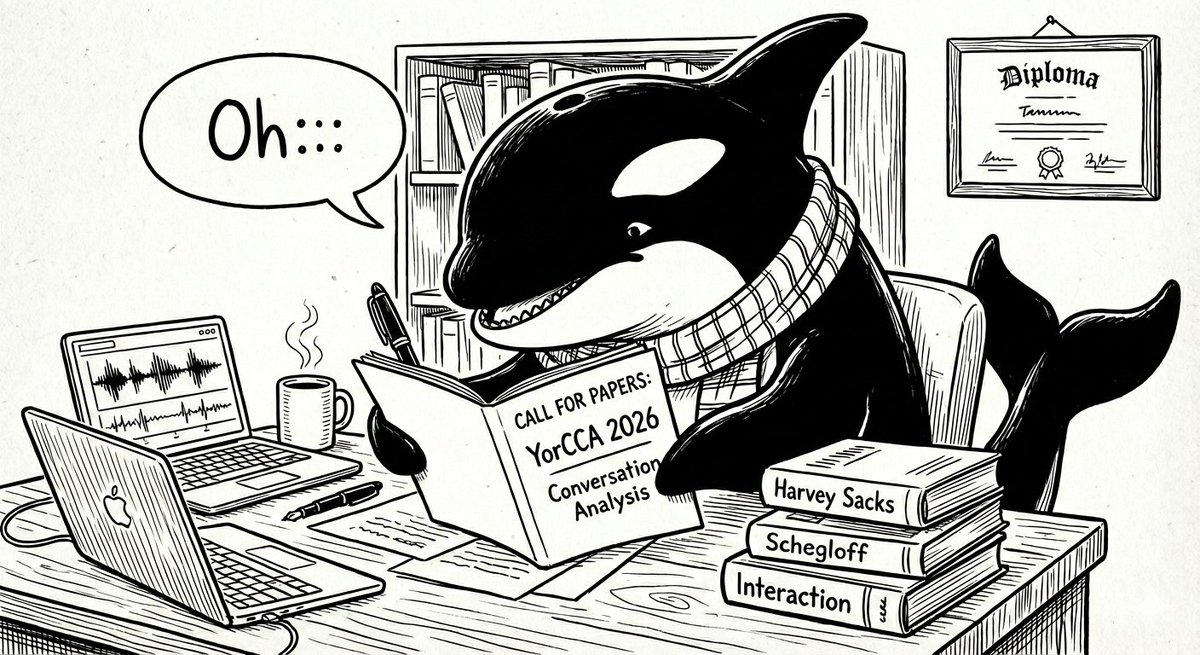
📢 YorCCA 2026 — Call for Abstracts
YorCCA 2026 is now accepting abstract submissions.
🗓 Submission deadline: Friday 10 April 2026
🎓 Eligible: current MA/PhD researchers & recent PhD graduates (2023 )
🔗 Full details & submission:
sites.google.com/york.ac.uk/…
1
118
16 Dec 2025
We’re lucky to have Richard at YorCCA 2026! In addition to his talk, he’ll also offer a post-conference workshop. Stay tuned for details!
Find out more about YorCCA:
sites.google.com/york.ac.uk/…
16 Dec 2025
We are excited to have Professor Richard Ogden as an invited speaker at #YorCCA2026! His research brings together phonetics and CA to explore how phonetic detail shapes social action. His work deepens understanding of turn-taking, stance, and non-lexical vocalisations in talk.
2
174
11 Dec 2025
I’m very excited for the next YorCCA! Spread the word to your MA and PhD students.
11 Dec 2025
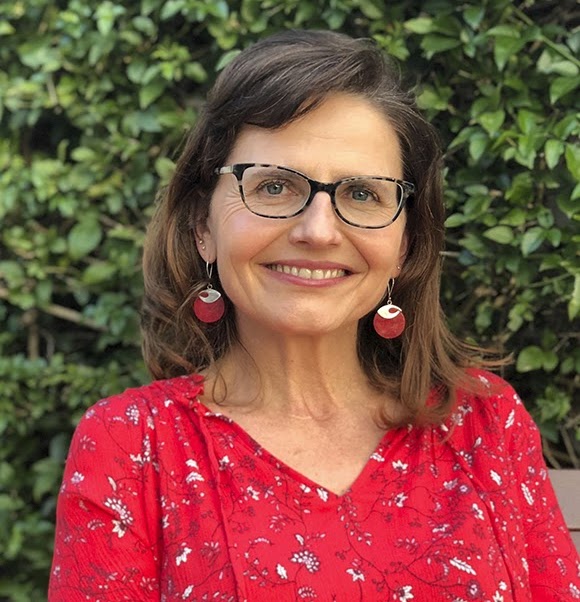
We are excited to have Professor Ana Cristina Ostermann (@ana_ostermann ) as an invited speaker at #YorCCA2026! Her research explores social interaction in institutional contexts, with particular attention to gender, health communication, and embodiment.
1
2
198
Kobin Kendrick retweeted
11 Dec 2025
We are excited to have Professor Ana Cristina Ostermann (@ana_ostermann ) as an invited speaker at #YorCCA2026! Her research explores social interaction in institutional contexts, with particular attention to gender, health communication, and embodiment.
2
4
405
10 Dec 2025
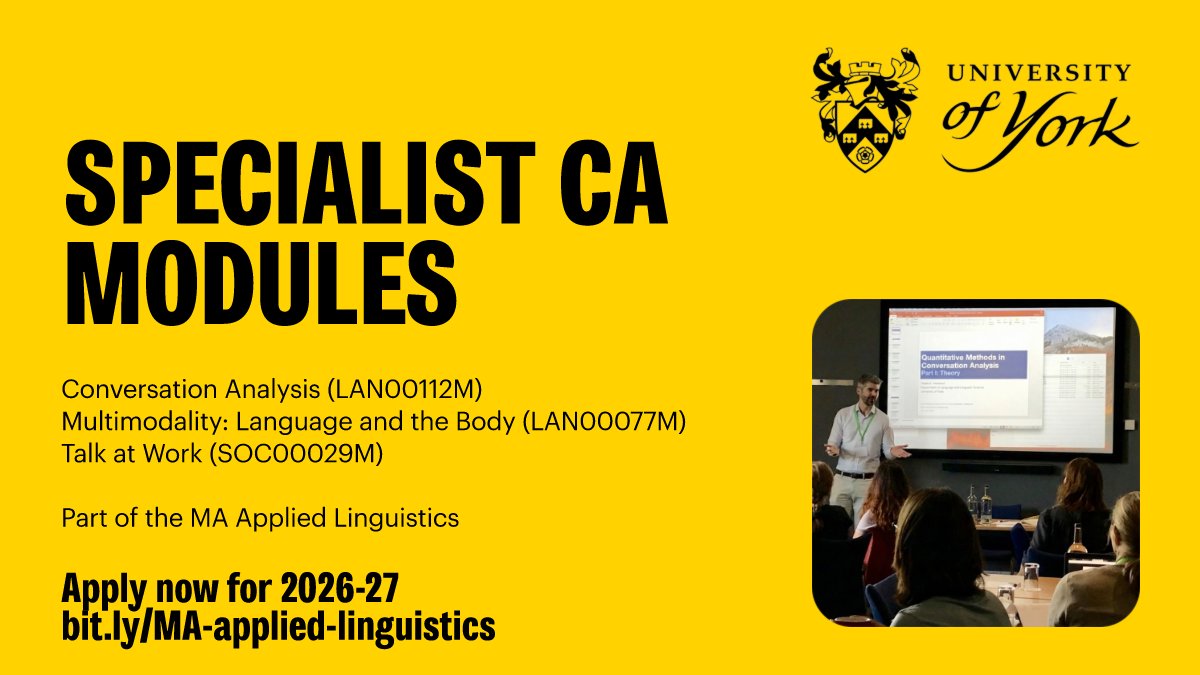
We have a CA pathway in our MA Applied Linguistics at York. Includes dedicated modules on CA, multimodality, and institutional interaction (taught by Merran Toerien). Applications open for 26-27.
Find out more
york.ac.uk/study/postgraduat…
203
Kobin Kendrick retweeted
14 Nov 2025
🎉 Great news! YorCCA 2026 will take place on 17–18 July 2026 at the University of York.
📅Key Dates
• Main Conference: 17 July 2026
• Workshops: 18 July 2026
🌐Further details will be available on our official channels shortly. Mark your calendars!
sites.google.com/york.ac.uk/…
1
3
110
9 Dec 2025
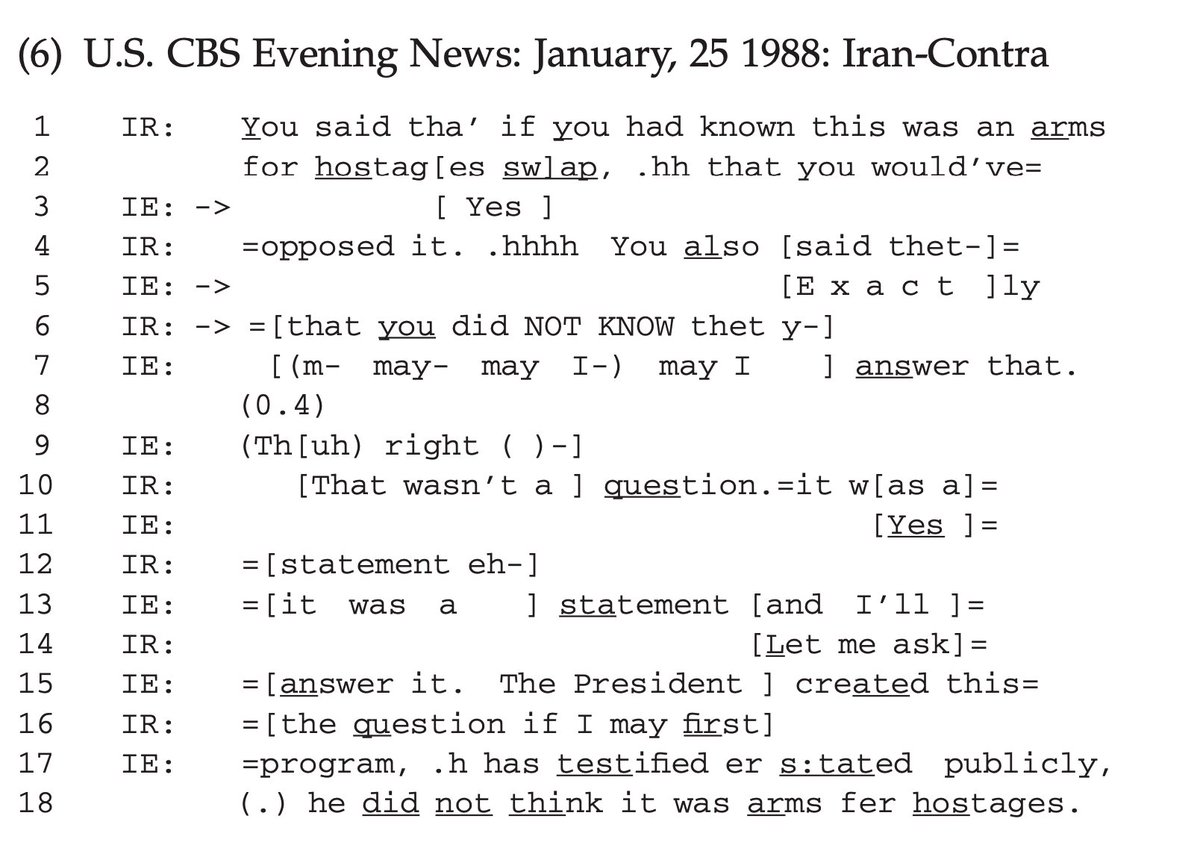
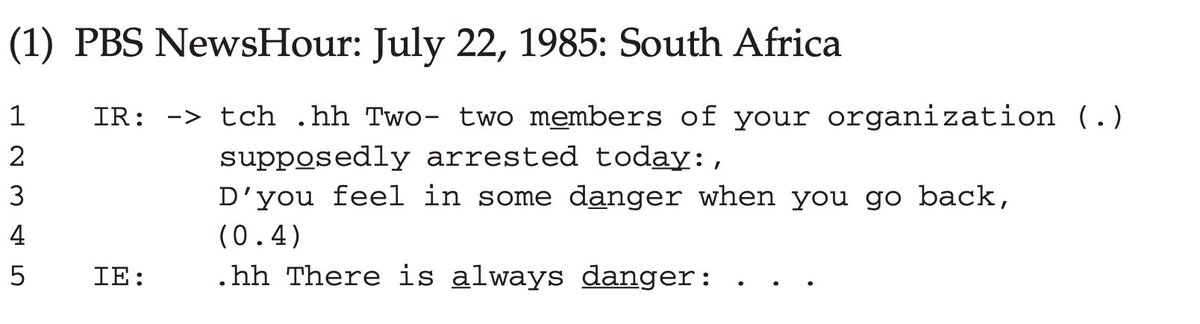
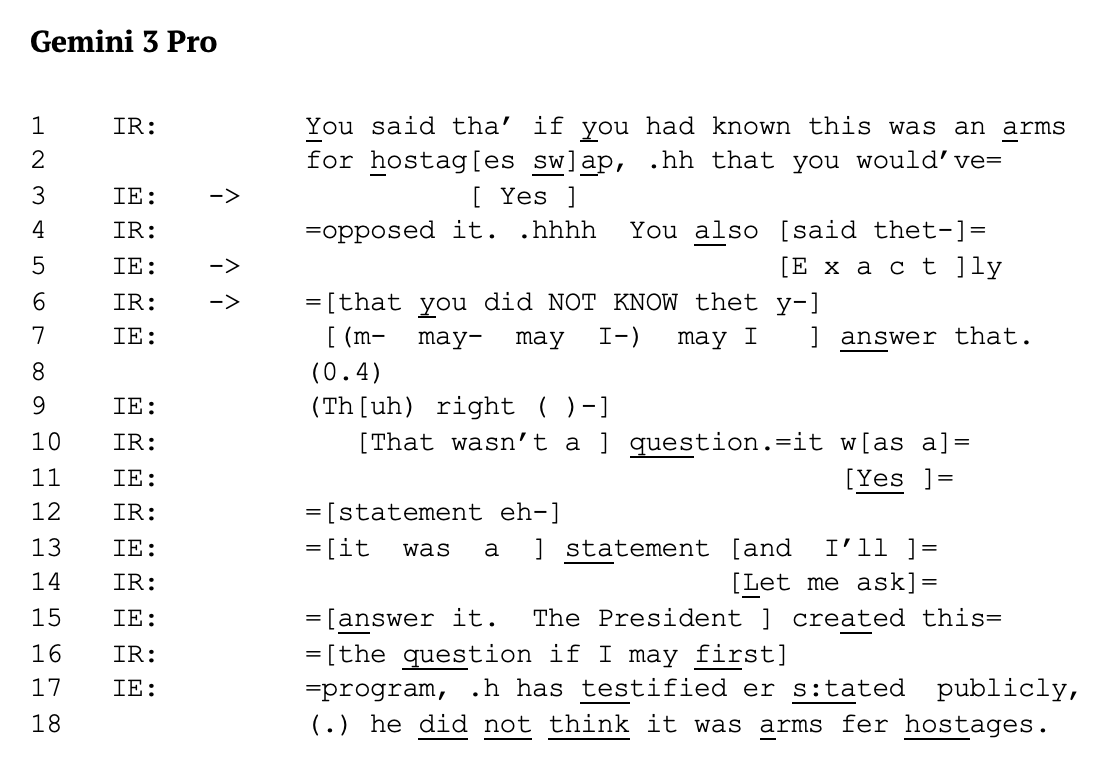
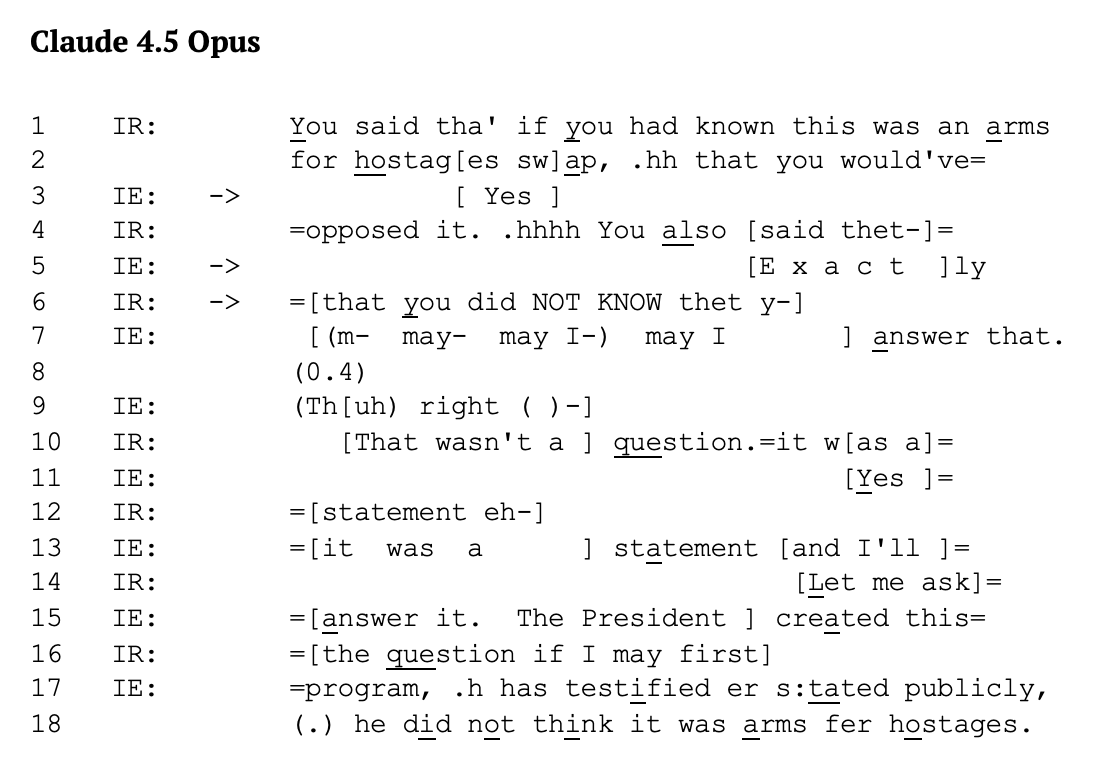
Well that didn't take long. Gemini 3 Pro and Claude 4.5 Opus can both recognize underlined text and re-transcribe CA transcripts from screenshots. Gemini is more accurate but still makes some mistakes. I gave them a transcript from Clayman (2013) with lots of complex overlap.
14 Nov 2025

TIL: AI models can't see underlined text. ChatGPT 5.1 Thinking, Claude Sonnet 4.5 and Gemini 2.5 Pro all struggle to recognize which letters are underlined. This is my new test for AGI.
4
272
20 Nov 2025
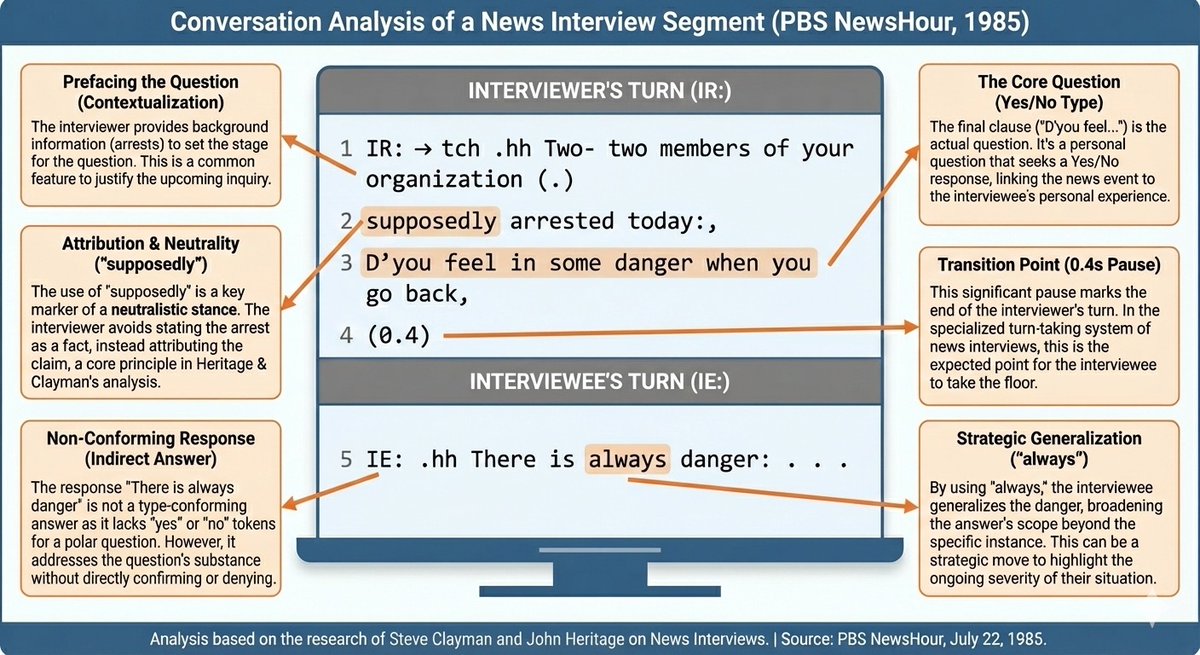
We've now entered the era of AI-generated infographics. I asked Gemini to analyse a screenshot of a data extract from Clayman (2013) and to create an infographic. This is what it came up with.
1
1
9
997