
Coffee sipper @GoogleAI | Opinions r my own 🥸
Joined November 2019
- Tweets 183
- Following 158
- Followers 100
- Likes 436
10 Photos and videos

5 Dec 2025
Working at the Singapore office is very appealing! Really miss all the food there 😂

Happy to share that the @GoogleDeepMind Gemini team is starting a new research team in Singapore!
This new team will be focused on advanced reasoning, LLM/RL and improving bleeding edge SOTA models such as Gemini, Gemini Deep Think and beyond. 🔥
This team will be led by yours truly and reports up to Quoc Le (@quocleix)'s broader team in Mountain View which was recently in the center of both IMO gold medal and ICPC gold medal breakthroughs with Gemini Deep Think, amongst many other significant Gemini advancements. 🚀
We’re starting out with a very small but intensely capable force because talent density is key over anything else in the LLM era. Over the past few months, we have gone around and gathered the best of the best talent (in the region and beyond) and I’m confident we’ll have a super cracked team very soon.
If you are interested in joining and have made truly exceptional contributions in any domain or area, (engineering and/or research etc) please contact me.
This is quite an exciting time, with the Gemini / GenAI team at Google Deepmind leading the charge at the frontier. This is also the best opportunity to be on the critical path to AGI from the sunny island of Singapore. 🏝️
Many thanks to leadership support from @quocleix @JeffDean @benoitschilling, @EugenieRives and @demishassabis for the support of this team.
Wonderful and fun image generated by Nano Banana 👇

52
Kornraphop K. retweeted

29 Aug 2024
When I was a PhD student, my advisor taught me what good management of technical talent looks like.
We used to meet on a weekly basis, and towards the end of that week-long period of banging my head against the wall on an ambiguous problem, my enthusiasm and drive to dig deeper would have dampened quite significantly.
Some weeks I had promising results to show, some weeks I just had results.
Some weeks, I brought in issues and insights and asked for direction. Some weeks, when my experiments failed to validate a hypothesis or were inconclusive, I went in with nothing but a brainstorming topic.
But every time — every single time — I would go to meet with my advisor, by the end of that one-hour chat in a small office where the only tools we used to communicate were a pen and paper and a whiteboard, I would feel a rush of excitement, immediately get back to my desk, and get started on a brand new set of hypotheses.
Every single time, I had spent a sleepless night trying to prepare for the meeting, and I would go back to the drawing board as soon as the meeting was over. That’s how stimulating the discussions were, and how large the scope of possibilities for where we could go next in terms of narrowing down a problem worth solving, and a solution worth building.
My advisor had figured out what motivates me — novel tasks, uncharted territory, and using obscure math to reframe an applied problem statement into something I could produce practical results on. When I’d get concerned about progress, he would refocus the conversation back to the technical problem, and he knew it worked to reinvigorate inspiration every single time. All throughout the years.
32
231
3,006
355,373
31 Jul 2024
29 Jul 2024

Great to see Gemini 1.5 Pro top the new @scale_ai leaderboard for adversarial robustness! Congrats to the entire Gemini team, and special thanks to @ancadianadragan & the AI safety team for leading the charge on building in robustness to our models as a core capability.
1
119
Kornraphop K. retweeted

15 Jul 2023
Google's BARD's image understanding is amazing!🤯 Vision-language models leverage understanding from both vision and language modalities. #AI #LLM
Here's a video of me prompting BARD with only a product image and it describes the product's key features in detail.
#GenerativeAI
5
6
17
11,726
13 May 2023
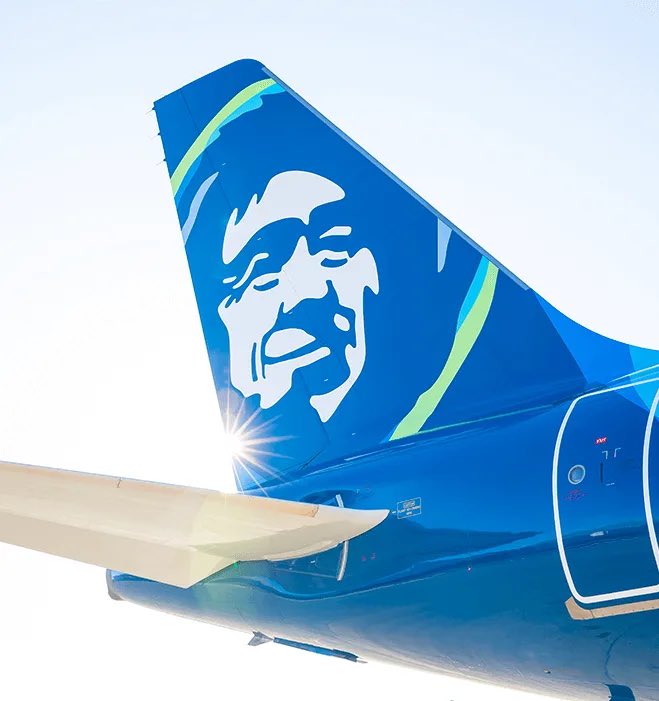
น้องสาวถามว่า สายการบินนี้เค้าเชียร์ลุงหรอ คือพอคิดปุ้ปแม่งมองเป็นอย่างอื่นไม่ได้ละ 5555555555555 #เลือกตั้ง2566 #ลุงตู่
2
2
147
11 May 2023
Glad to be a part of #PaLM2 🌴 and #GoogleBard 🤖 announced at #GoogleIO
I am very lucky to be working on something huge and directly related to my phd research, both LM and RL 🚀
Stay tuned, more are coming!
blog-google.cdn.ampproject.o…
2
120
15 Mar 2023
Glad to be a part of this huge effort!! 🤩
14 Mar 2023

Excited about PaLM API: an easy and safe way for developers to build on top of our language models, and MakerSuite, a tool to jumpstart prototyping - both in private preview today. @googlecloud customers can also access these models more via Vertex AI.
blog.google/technology/ai/ai…
98

28 Dec 2022
Never expect to reach 500 citations before. I know it's not a big deal for senior researchers but it means a lot to me as a moderate PhD student. I still remember the moment I got my first citation.
Extremely grateful to those who support me so far @Georgetown & @MassiveData_GU
2
11
893
18 Dec 2022
One of the future work presented in my PhD defense is to watch the World Cup Final. I am proceeding 😎⚽️🔥
#WorldCup #ArgentinaVsFrance
104
13 Dec 2022
Pass PhD thesis defense: ✅
Submit the dissertation: ✅
Start working full time: ☑️
3
8 Dec 2022
Pass PhD thesis defense: ✅
Submit the final draft: ☑️
Start working full time: ☑️
7
Kornraphop K. retweeted

23 Nov 2022
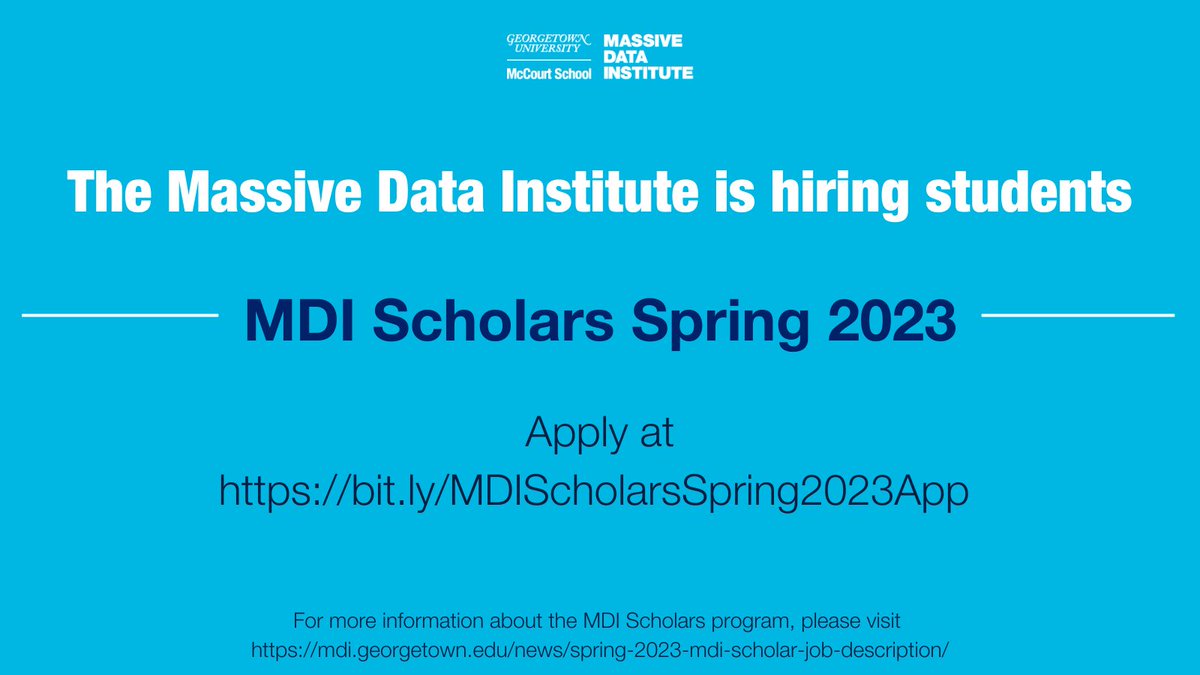
📣 Calling all @georgetown students!
@MassiveData_GU is pleased to announce a call for applications for MDI Scholars Spring 2023 cohort! More info application can be found here ➡️ mdi.georgetown.edu/news/spri…
Applications due by Friday, December 9th at 11:59pm Eastern.
4
3
10 Nov 2022
Just submitted my PhD dissertation draft. Hope everything goes as planned 🤞
#phdlife
1
1
Kornraphop K. retweeted

8 Nov 2022
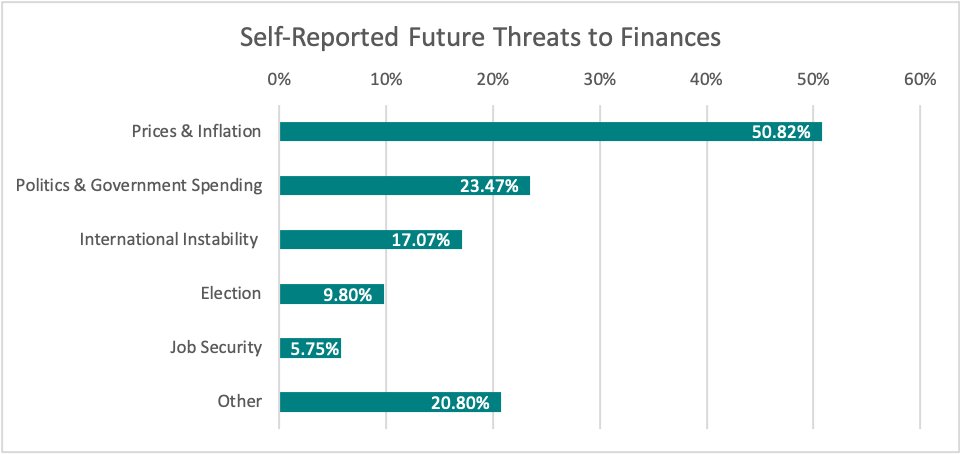
MOSAIC PROJECT: Covid-19 decreasing as a major financial threat. No surprise - inflation is largest future concern.
mosaic.mdi.georgetown.edu/re…
2
1
11 Oct 2022
Finally, I'm at the point that I read a related work section and noticed that it says the author names of some papers incorrectly... 🧐
1
3
3 Oct 2022
Work on #Politics and #NLP? 🧐 Esp, Twitter data? We release language models pre-trained on >80 million US politics-related tweets. #LREC2022
Paper: aclanthology.org/2022.lrec-1…
Repo: github.com/GU-DataLab/PoliBE…
1
6
Kornraphop K. retweeted

30 Sep 2022
Some ML research areas are extremely crowded. Working there is a race. But it's not about "how to benefit science" but "who gets the credit." This is the furthest from being a scientist I can imagine. How did we get here?
89
119
1,163
23 Sep 2022
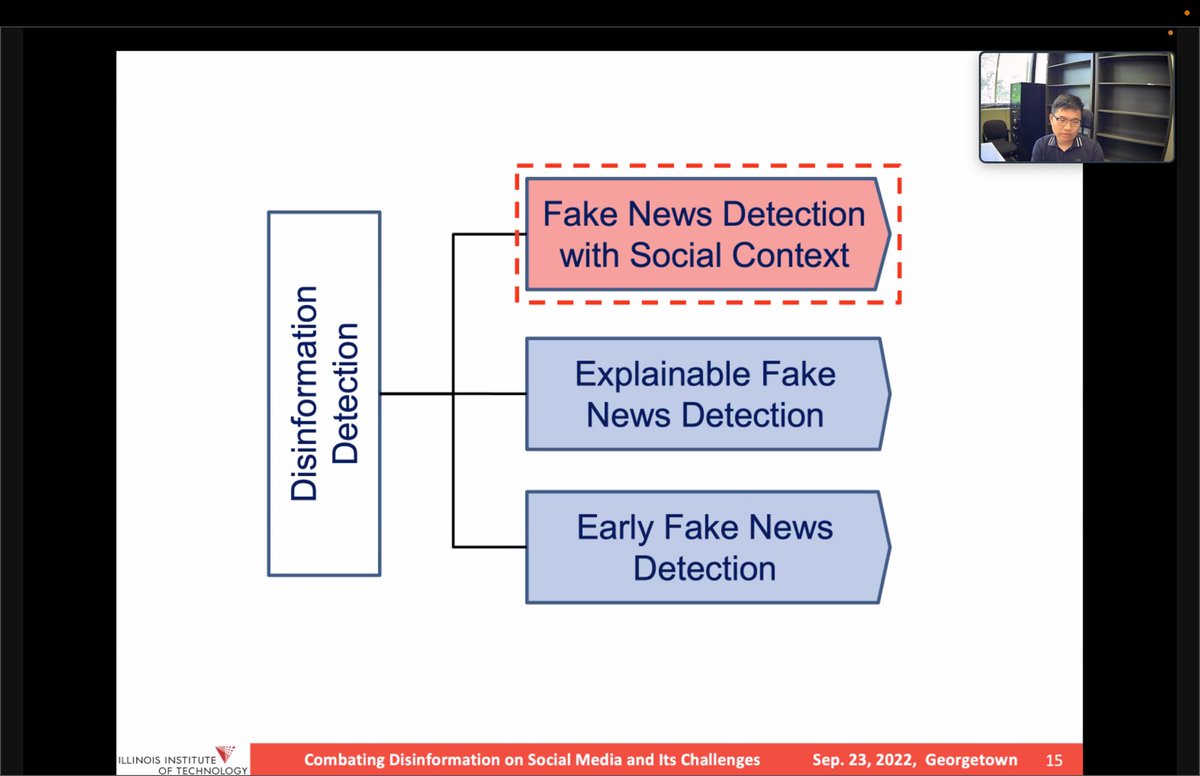
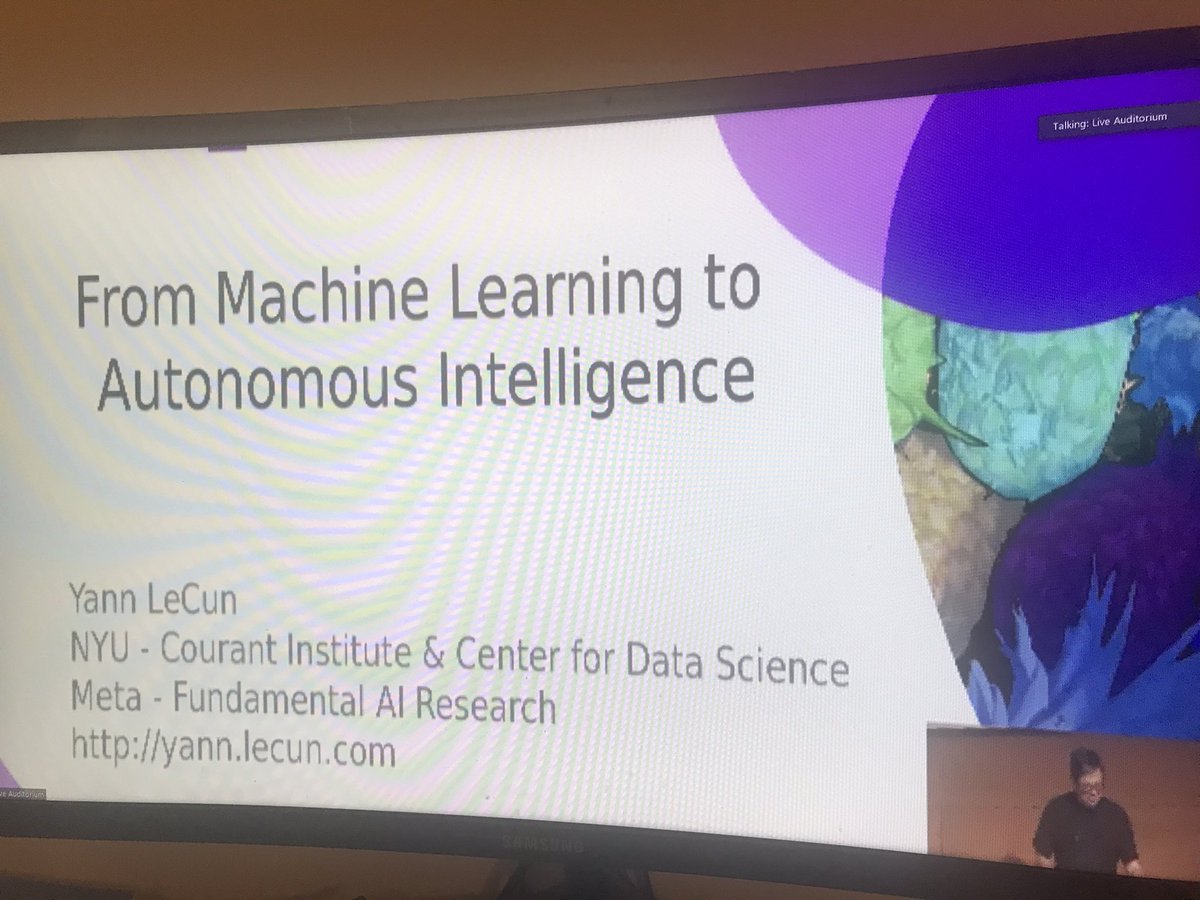
Attened 2 live talks from 2 of my (academic) idols on the same day. One from Prof @ylecun at @ECMLPKDD and the other one from Prof @KaiShu0327 at @Georgetown. What a day! 🤩
#ecmlpkdd2022 #AcademicTwitter
1
1
3