
Software Engineer | Rust | Dart
Joined May 2011
- Tweets 3,044
- Following 411
- Followers 519
- Likes 996
312 Photos and videos





Frank Moreno 💙🦀 retweeted

24 Jul 2024
📢 ¡No te pierdas nuestro próximo Meetup de @flutter_ec! 🌍
📅 Jueves 25 de julio de 2024
🕖 19:00 GMT-5
🎤 @kranfix nos hablará sobre "WeakReference o, como Itachi diría, a tu referencia le falta odio".
¡Te esperamos! meetup.com/flutter-meetup-ec… 🚀
@FlutterDev @nlycskn @anelvro

1
5
11
1,307
Frank Moreno 💙🦀 retweeted

26 Jun 2024
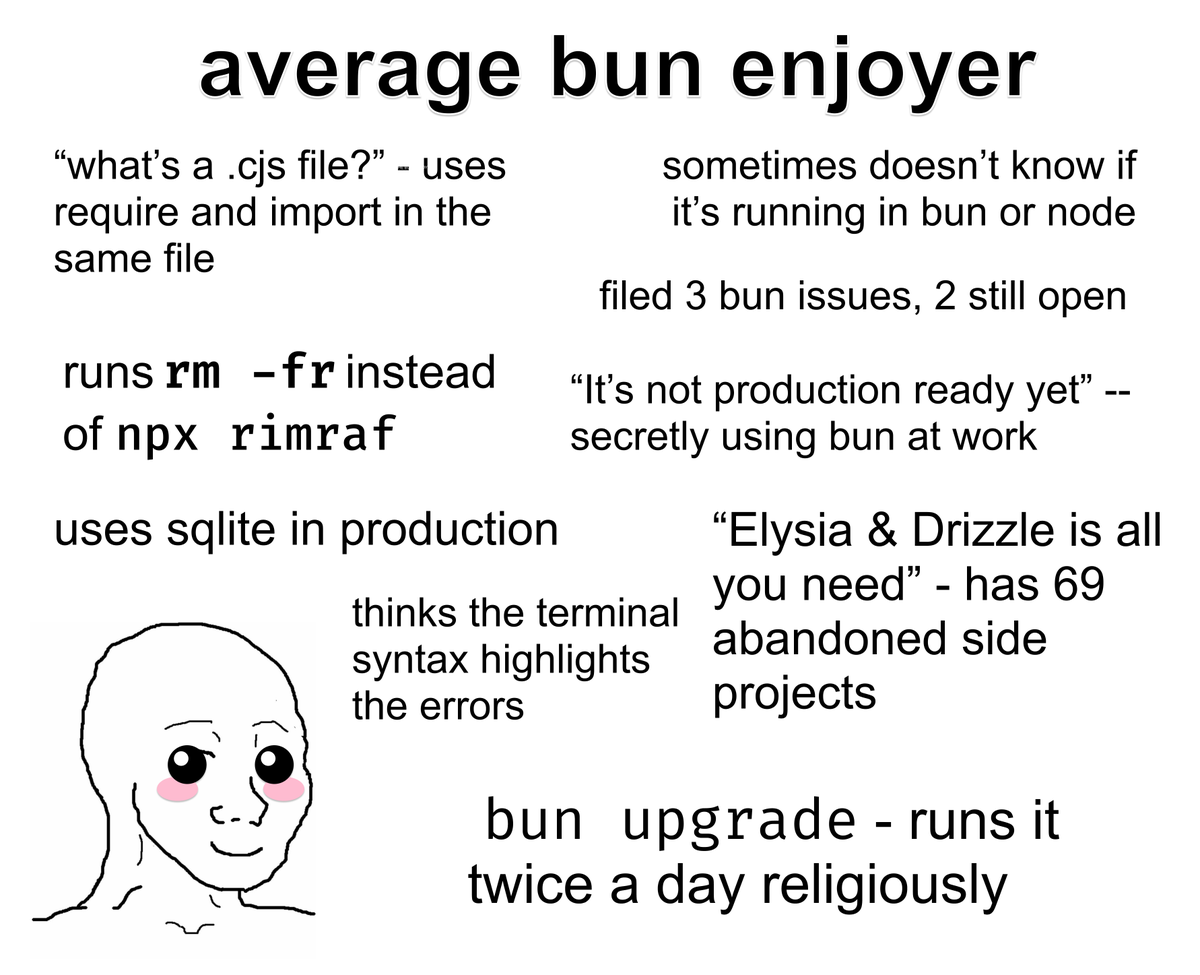
ALT average bun enjoyer "what's a cjs file?" - uses require and import in the same file sometimes doesn't know if it's running in bun or node same file filed 3 bun issues, 2 still open runs rm -fr instead of npx rimraf "It's not production ready yet" --secretly using bun at work uses sqlite in production thinks the terminal syntax highlights the errors bun upgrade - runs it twice a day "Elysia & Drizzle is all you need" - has 69 abandoned side projects
33
30
913
43,302
Frank Moreno 💙🦀 retweeted

"Mi sistema es intuitivo, el usuario sabra como utilizarlo"
El usuario:
181
2,820
27,861
2,647,574
Frank Moreno 💙🦀 retweeted

14 May 2024
First year university, I had an OOP professor.
He talked a lot about what's OOP and how it's different from procedural.
At the time I was learning C by studying the half-life SDK. So I shows him this code and asked him about it
github.com/ValveSoftware/hal…
He said it's not OOP. It's just procedural code that uses classes for high level code organization, nothing more.
He made claims about this kind of code being near impossible to maintain.
He also said it's outragous that a single class has nearly 5000 lines.
88
129
2,175
842,279
Frank Moreno 💙🦀 retweeted

28 Apr 2024
The Simpsons in the 1950s
677
6,713
39,614
4,402,928

Frank Moreno 💙🦀 retweeted

8 Mar 2024
Just updated my TSConfig cheat sheet for TS 5.4!
No more module "ESNext".
module: "preserve" is my new best friend.
totaltypescript.com/tsconfig…
17
102
827
63,435
Frank Moreno 💙🦀 retweeted

5 Feb 2024
Apple truly outdid themselves with the Vision Pro!
140
744
7,188
1,157,554

16 Dec 2023
@interbank debería hacer mejor sus partnerships.
¿Cómo es posible que el pago de la tarjeta oh genere un recargo de 5 soles y que ni siquiera te lo agregue al pago total para matar la deuda de una sola vez?
1
1
1
313
16 Dec 2023
O, al menos, ustedes deben comunicar que la operación generará recargo a pagar luego para que uno esté informado y pueda decidir no pagarlo.
1
1
135
16 Dec 2023
No sé por qué esperan a que haya un reclamo con @IndecopiOficial para hacer bien las cosas.
1
108
Frank Moreno 💙🦀 retweeted

13 Dec 2023
📷11vo SPEAKER CONFIRMADO 📷
📷 INSCRIBETE:
mdevconf.tech/
📷 Desde Lima, Perú nos visitará Frank Moreno.Desarrollador Flutter y Rust con casi 11 años de experiencia desarrollando software.Contribuye con varios paquetes open-source tanto en JS, Dart y Rust.

2
5
405
Frank Moreno 💙🦀 retweeted

28 Oct 2023
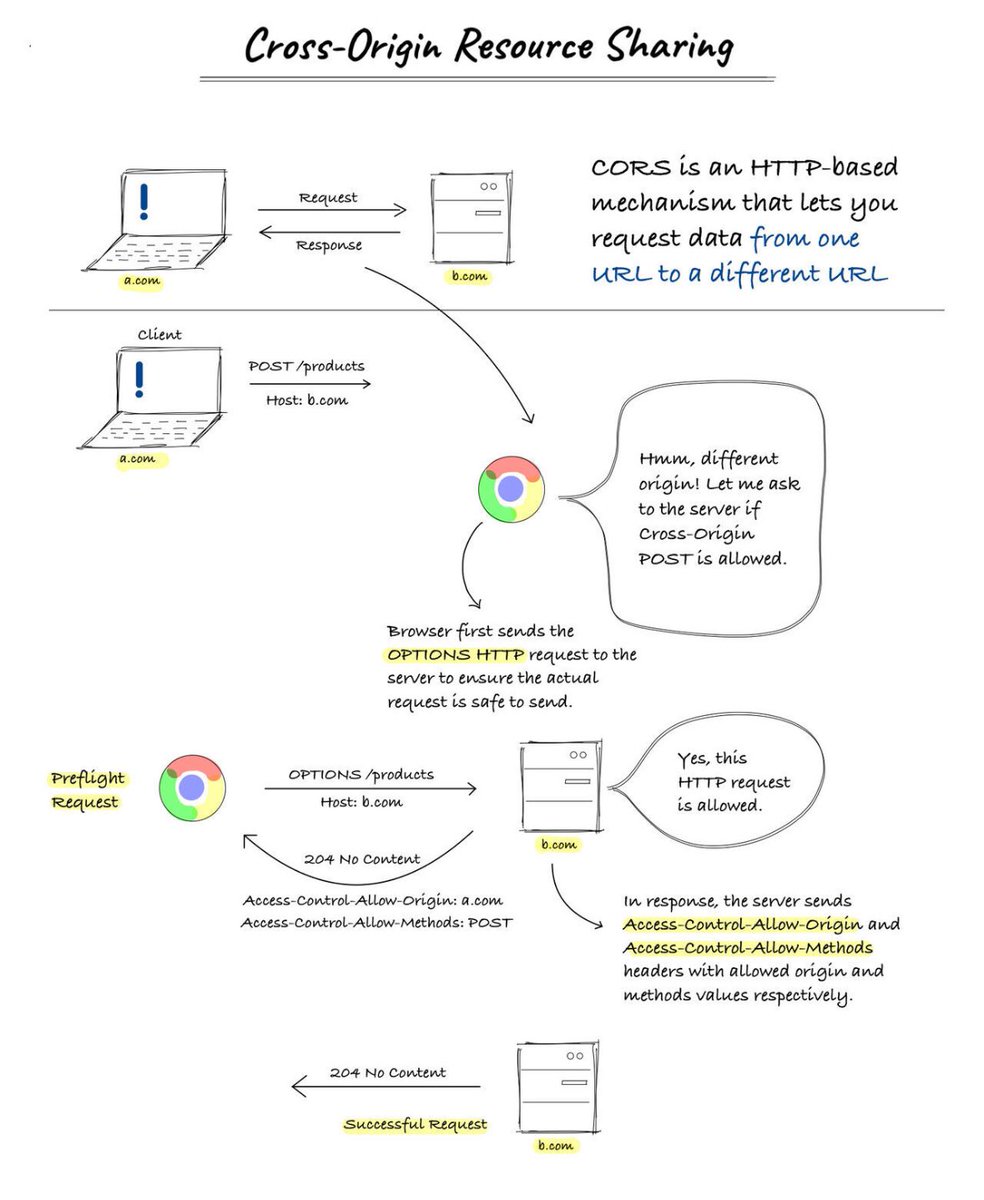
𝗪𝗵𝗮𝘁 𝗶𝘀 𝗖𝗿𝗼𝘀𝘀-𝗢𝗿𝗶𝗴𝗶𝗻 𝗥𝗲𝘀𝗼𝘂𝗿𝗰𝗲 𝗦𝗵𝗮𝗿𝗶𝗻𝗴 (𝗖𝗢𝗥𝗦)?
Browsers use CORS, a method, to prevent websites from requesting data from different URLs. A request from a browser includes an origin header in the request message. The browser allows it if it gets to the server of the exact origin; if not, the browser blocks it.
We can deal with CORS issues on the backend. Cross-origin requests require that the values for origin and 𝗔𝗰𝗰𝗲𝘀𝘀-𝗖𝗼𝗻𝘁𝗿𝗼𝗹-𝗔𝗹𝗹𝗼𝘄-𝗢𝗿𝗶𝗴𝗶𝗻 in the response headers match and it is set by the server. When you add an origin to the backend code, the CORS middleware only permits this URL to communicate with other origins and utilize it for cross-origin resource requests.
There are two ways to fix CORS issues:
𝟭. 𝗖𝗼𝗻𝗳𝗶𝗴𝘂𝗿𝗲 𝘁𝗵𝗲 𝗕𝗮𝗰𝗸𝗲𝗻𝗱 𝘁𝗼 𝗔𝗹𝗹𝗼𝘄 𝗖𝗢𝗥𝗦
Server can let all domains with 𝗔𝗰𝗰𝗲𝘀𝘀-𝗖𝗼𝗻𝘁𝗿𝗼𝗹-𝗔𝗹𝗹𝗼𝘄-𝗢𝗿𝗶𝗴𝗶𝗻: *. This actually turns off same-origin policy, which is not recommended. Another optin would be only to allow particular domain, which is better option, e.g., 𝗔𝗰𝗰𝗲𝘀𝘀-𝗖𝗼𝗻𝘁𝗿𝗼𝗹-𝗔𝗹𝗹𝗼𝘄-𝗢𝗿𝗶𝗴𝗶𝗻: 𝗵𝘁𝘁𝗽𝘀://𝘀𝗼𝗺𝗲𝗱𝗼𝗺𝗮𝗶𝗻.𝗰𝗼𝗺.
𝟮. 𝗨𝘀𝗲 𝗮 𝗣𝗿𝗼𝘅𝘆 𝗦𝗲𝗿𝘃𝗲𝗿
We can use a proxy server to call external API. It acts as a middleware between client and the server. If the server doesn't return proper headers defined by CORS, we can add them in the proxy.
Image credits: RapidAPI
#softwareengineering #programming #api #apidesign #techworldwithmilan
8
257
1,188
136,652

🎉 We are thrilled to announce Docker's acquisition of @mutagen_io, the groundbreaking open-source software that maximizes file synchronization and networking technologies. Get ready for a new era of development possibilities on Docker Desktop! #remotedev
bit.ly/3r0eqq5
2
63
205
52,491
Frank Moreno 💙🦀 retweeted

11 Jun 2023
UI Testing an Airbnb App.
UI in Flutter → github.com/Roaa94/flutter_ai…
UI Tested in Maestro → maestro.mobile.dev/
5
64
418
40,992
Frank Moreno 💙🦀 retweeted

17 May 2023
Continuamos trabajando unidos como comunidad para traerles este gran evento!!!
Cuales speakers les gustaría que tuviéramos?
We keep working together as community bringing you all this big event!!!
Who would you like us to have as speaker?
Art by @drcoderz
18
20
80
11,849
12 May 2023
That awkward moment when you spent a minute asking why the analyzer says that log::info!("some log") is an error when I released that I was in a TypeScript file instead of a Rust one.
187
Frank Moreno 💙🦀 retweeted

7 Apr 2023
From today through April 16, we invite you to review the current draft of the updated Rust Trademark Policy and share any feedback you might have using this form.
Your responses will help us ensure the Rust Trademark Policy is useful for all! 🦀
docs.google.com/forms/d/e/1F…
489
65
219
1,254,665