
340 Photos and videos




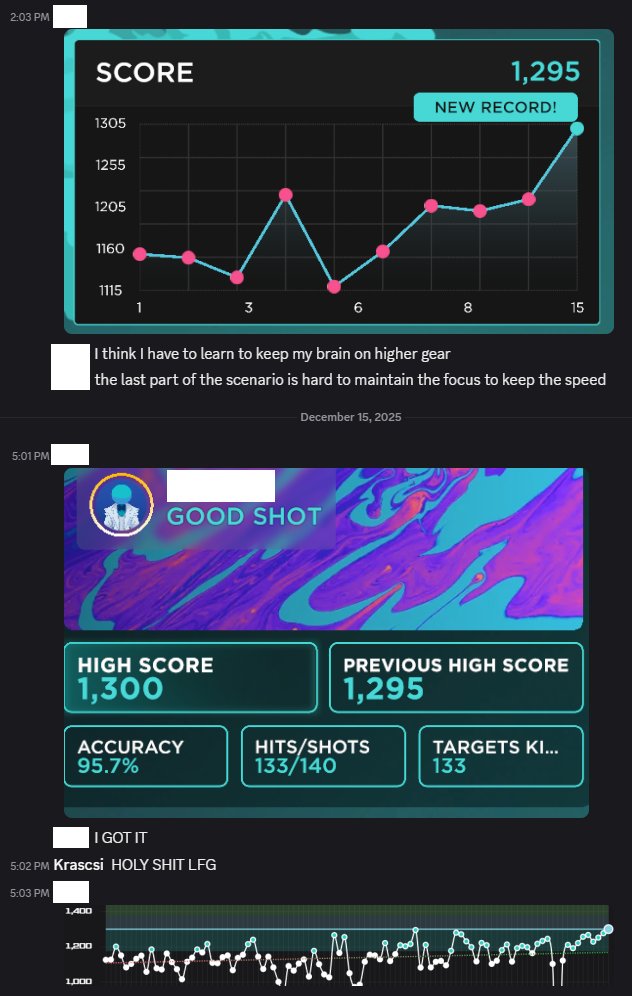

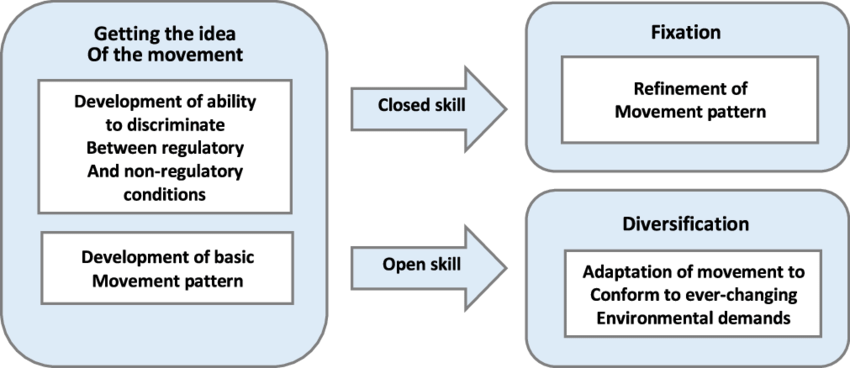
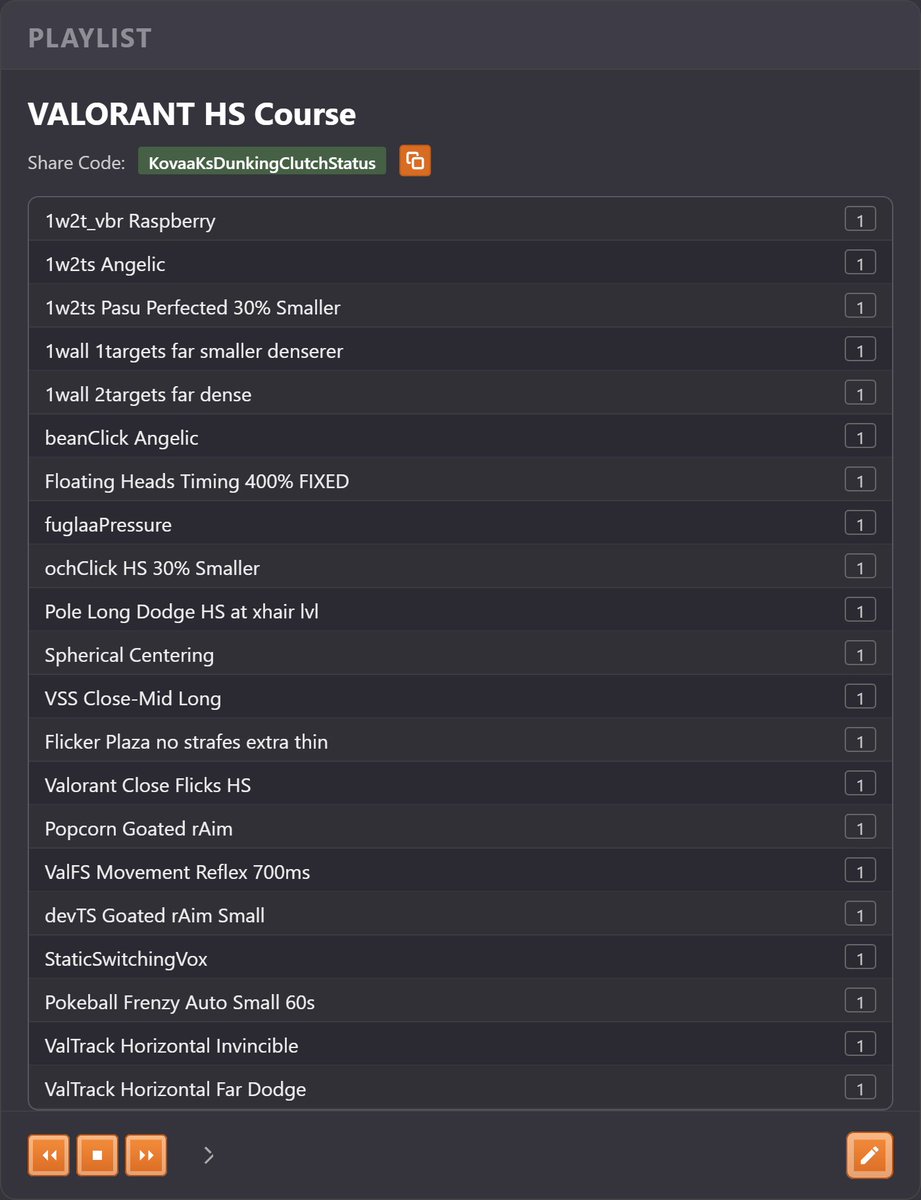


AI allows for much crazier bursts of high performance and that really fits how I work.
Only issue is that I've gotten fast enough in comprehension and moving parts in my head that it can't always be fast enough for me if I want to use a really intelligent model. I need to use pen and paper to note parts down so I don't let the whole thing escape my working memory. Kinda breaks the flow state which I feel like slows me down. Proper orchestration adds overhead that I'd love removed somehow but I don't trust AI's judgement at all to do that.
Coolest thing is I'm very sure it's increased my capacity to ingest, manipulate and even memorize information, uni exams never felt this easy and this is the least I've ever studied in my life. I've become an even faster and better reader reading a ton of code and docs and such. My reading comprehension at higher speeds got much much better. I understand different levels of abstraction much easier and their relationships.
However sometimes you gotta slow down and go the exact opposite way, reading very technical and challenging books with problems, handwriting stuff, experimenting with toy projects. This is something I want to do more of this summer now that uni semester has ended. Software Foundations I really want to do as much of as possible.
The 2 ways of operating complement each other a lot. AI is a great amplifier but you still need to know what exactly to build and I also think you should own and know your systems inside and out as much as possible. If you can't reason about them you can't debug them and fix them easily. Good judgement is more important than ever. Also good books compound like crazy now, tech talks, conferences, hackathons(?) stuff like this. Obviously these are things most should've been doing even before I guess but now that it's easier to produce things I'd assume much less people will go and push themselves but the ones who will will lap everyone else in a few years (or already do).
You should be able to do breadth and depth and with AI you can do both and more of those so you can get much more skilled in the same timeframe.
Gotta be like water my friend.
1
1
364
I'm an avid Codex user and I can't work on 2 important things at the same time with it
If I do I can't keep it all in my head, I autopilot and let it rip and it ends up with shit solutions that I have to revert and remake properly
Method is 1 hard problem with pen and paper and docs and 1 slave job that's really hard to fuck up and is just a pain to type out, something that feels like a waste of time and resources I could be putting to harder problems that are much more design-oriented
This way I don't make huge mistakes because I'm always tapped in and I can see if something is not going in the right direction, so even if it feels slower it feels much better because I'm still thinking about contracts, abstractions, invariants but I'm pretty sure it's much faster overall because I don't have to restart ever (and cleaning up slop is ROUGH so I'd rather not do it either)
I very much so dislike the slot machine argument that people are throwing around because yes obviously you can use it like that but you can use it in smarter ways so it can do work for you that's a pain to do manually and is not that critical. It's pretty good at designing experiments with the right directions so you can test a lot of things in a short amount of time.
With the right supervision you can even let it do critical work but it really just works as an abstraction over typing but it can give you directions you didn't think about if you ask it.
Software design, logic (Software Foundations) are more important than ever if you're using these tools. Quality of thinking, precise specs and constraints, clear control and data flow design so you can eliminate potential errors even while designing not just when you're actually getting code out.
So if you give it all the control don't be surprised if it converges to average even with all the post training RL
Don't outsource all your thinking, keep it to yourself and use it like the tool it is
Mar 17

LLMs have made code cheap.
So now people are spinning up 10 agents working on 10 features in parallel. Sounds productive.
But the tradeoff is obvious: the code quality is often spaghetti over-engineered.
LLMs behave like over-eager interns. They will do more than asked, add abstractions you didn’t need, and optimize for "completeness" over simplicity.
Which means you end up babysitting anyway.
For anything non-trivial, I have found you still need to spend 1–3 hours upfront:
• defining scope
• writing clear specs
• thinking through system boundaries
• setting constraints
Otherwise, the system drifts.
And even after that, you have to review the code.
They still hallucinate patterns, introduce unnecessary layers, or miss edge cases, even with detailed instructions.
A lot of people advocate "just let agents cook."
In practice, you're often getting 60-70% unnecessary code that increases:
• cognitive load
• onboarding time
• surface area for bugs
• long-term maintenance cost
For side projects, this is fine.
But for real systems with shared codebases, multiple engineers, and production traffic, this compounds fast.
We are already seeing:
• unstable tools
• memory leaks
• constant crashes
• frequent rewrites
This isn't just "early days", it’s a direct result of speed > discipline.
Spinning up 10 agents feels like productivity.
But you are often just pulling forward the cost into refactoring hell.
I would rather:
build slower → keep systems simple → refactor less frequently
Good engineering is still about what you choose not to build.
2
1,094
RLMs for the win bros
Have this feeling that "neurosymbolic AI" is gonna be the way
Feb 17

Underrated dev upgrade from today's launch:
Claude's web search and fetch tools now write and execute code to filter results before they reach the context window.
When enabled, Sonnet 4.6 saw 13% higher accuracy on BrowseComp while using 32% fewer input tokens.
3
905
He's the best to ever do it man, watching him own people brings a tear to my eye
Absolute fucking legend

I absolutely love this because you clearly haven't watched this video, a video I know very well because I even TALKED TO FUCKING FRANCOIS MORIER ABOUT THIS VIDEO ITSELF YOU FUCKING IDIOT
it LITERALLY explains that HIGHER dpi increase jitter, OBVIOUSLY, have you even watched it? man I thought my rage against grifter tweakers was over but clearly it isn't, you are singlehandedly making me want to expose all you ignorant fucks once again
1
18
1,384
Couldn't use rewasd when I had a huge cut on my finger for BF6, thank God Steam allowed for something similar which I didn't know about so I had stick movement by mapping it to wasd and mouse aim lol
Feb 2

some clips in here are hilarious. How can you post this and try to sell it as legit.
its just sad atp...
P.S.
this is def not REWASD
2
1
13
4,064
smooth is slow, slow is fast is retarded in flicking
completely different skill to go from A to B with constant speed vs high acceleration then stopping
if you train it like that you won't be able to flick better, actually, you will teach yourself a bad way of flicking which your brain will default to in game and you'll be slower than your grandpa (why it won't work for tacfps or anything low ttk)
think of it more like a jab
that teaches you how important relaxing your muscles is to explode, what kind of velocity curve you should have; you tense a bit at the very end to make it snap and you're ready for the next one
5
62
6,052

Pretty sure after you can get to top 5% of aim for most people learning movement and positioning (2 whole other skills than aim) becomes 1000x more valuable
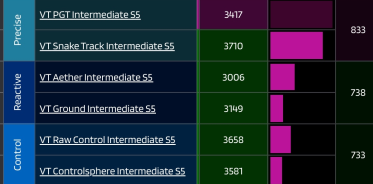
So if you started training for your game and that's still what you want to do, to be the best at and you got to VT Master (pretty sure that's where the threshold is with S5) and your other parts are not top 5% improving them is going to be much higher ROI
You can still improve your aim and it will allow you to hit shots more frequently than what others can't even dream of but going from top 5% to top 1% in aim won't help you as much as going from top 50% to 20% in movement and positioning
And ofc there's the problem of training wrong in the trainer, because if you specialize in tasks to hit top 5% once that's completely different to someone being able to just hop on hitting top 5% scores without heavy specialisations in those scenarios.
But that's a topic for another day as for why transfer between aim trainers and games is not working for s TON of people.
9
1
88
6,027