
Striving to be curious ,caring and have courage.All views tweets and opinions are my own.
Joined October 2014
- Tweets 3,640
- Following 845
- Followers 347
- Likes 3,766
228 Photos and videos














Lesley Ann Henderson retweeted

May 29
Having an active “champion” is an important part of delivering a change or improvement initiative. Or is it? Do local change champions create a vulnerability when it comes to sustaining the project longer term?
Newly published research by Hannah Stark & Jane Page defines champions as people in a change situation who “actively promote, protect & troubleshoot [the change] through their influence, advocacy, & practical problem-solving." The researchers found the factors that make champions effective at initial implementation stage may also create systemic vulnerabilities that threaten sustainability of the change.
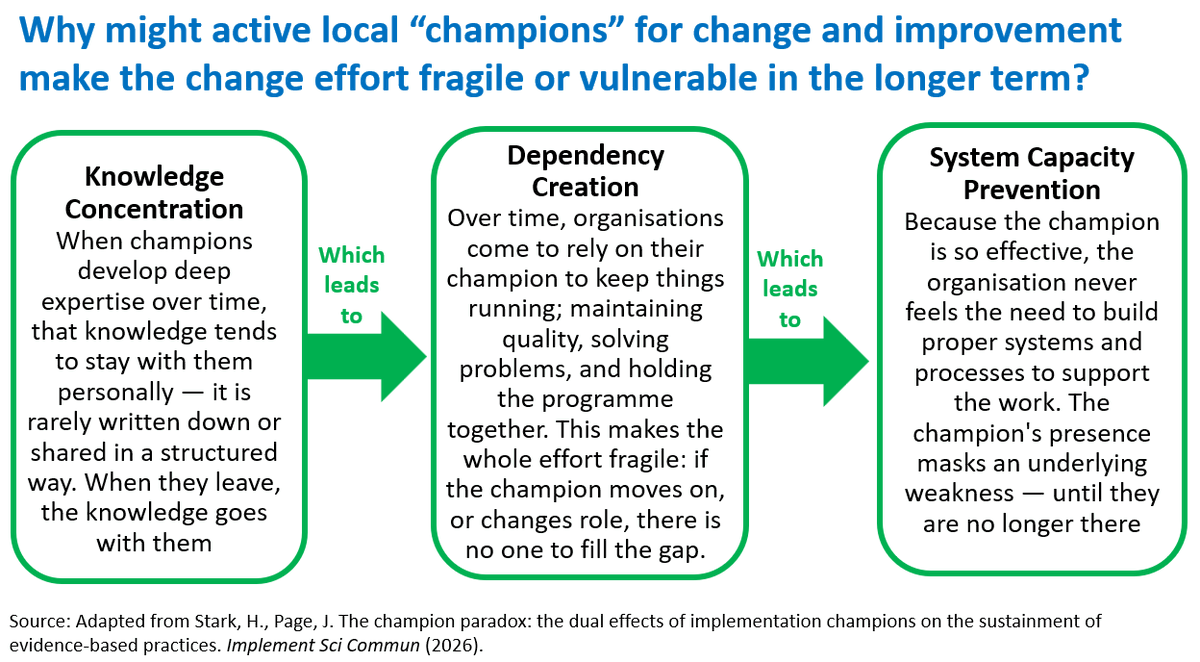
Champions build momentum through their specialised knowledge, personal commitment & ability to translate evidence into practice. But the research found three mechanisms through which these same strengths generate fragility:
- Knowledge concentration: Expertise accumulates in individuals rather than being embedded in organisational systems.
- Dependency creation: Organisations become reliant on champions for quality assurance, problem-solving & continuity. These dependencies only surface when champions leave; at which point, multiple capability gaps emerge at once.2
- System capacity prevention: When champions hold things together through personal effort, organisations don't feel urgency to build systematic infrastructure. Their effectiveness conceals structural gaps underneath.
These form a self-reinforcing cycle. The more effective the champion, the less pressure to develop collective capacity that would survive their departure (see the graphic).
What does this mean for us as leaders of change?
1) What are we actually building? When we appoint a champion, we need to ask whether we’re strengthening organisational capacity or creating a workaround for absence of capability. The two may look identical in the short term.
2) Role design matters. The researchers propose reframing champions; not as permanent drivers of improvement, but as transitional resources whose purpose is to build collective capability & become unnecessary. Selection criteria should extend beyond individual competence to include capacity for knowledge transfer & succession planning.
3) We must get smarter about how we measure sustainability. Just because a programme is still running doesn't mean it's on solid ground. An organisation can look perfectly healthy while everything depends on one or two key people. The real test is whether the programme would hold up if those people left tomorrow; whether knowledge is spread across the team, whether documented processes exist so a new person could pick things up & whether standards can be maintained through people changes.
Our instinct to find brilliant champions for change & improvement isn’t wrong. But it’s incomplete. This research shows that building the system around the work - not just the person in the work - is what makes change last.
Link to the article (open access): link.springer.com/article/10….
7
23
56
3,103
Lesley Ann Henderson retweeted

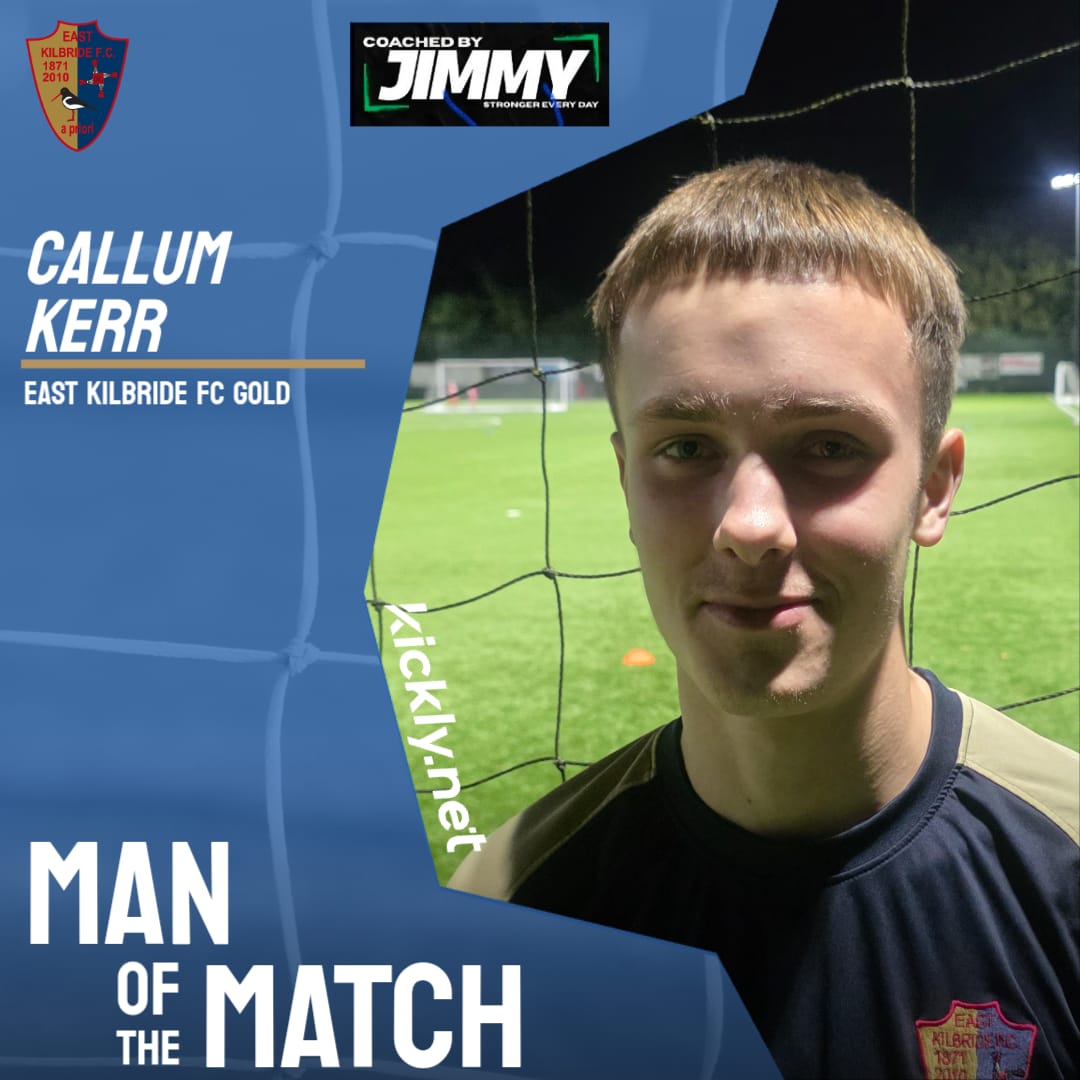
MOTM was Callum. On at the start of the second half he made an immediate impression with his direct running causing the opposition no end of trouble! He capped a great second half performance by getting himself on the scoresheet too.. Well Done Callum 🏆🍾⚽️🥳
2
1
7
148
Lesley Ann Henderson retweeted
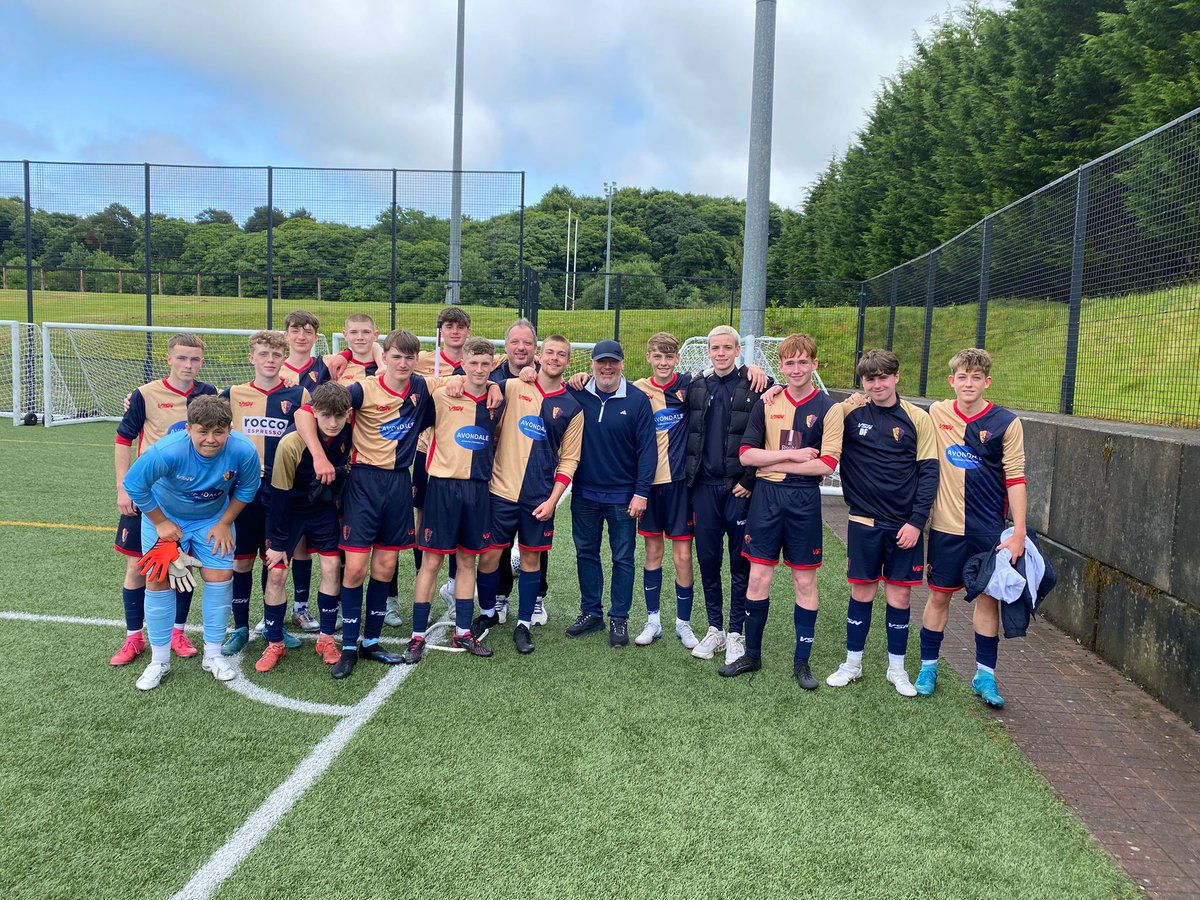
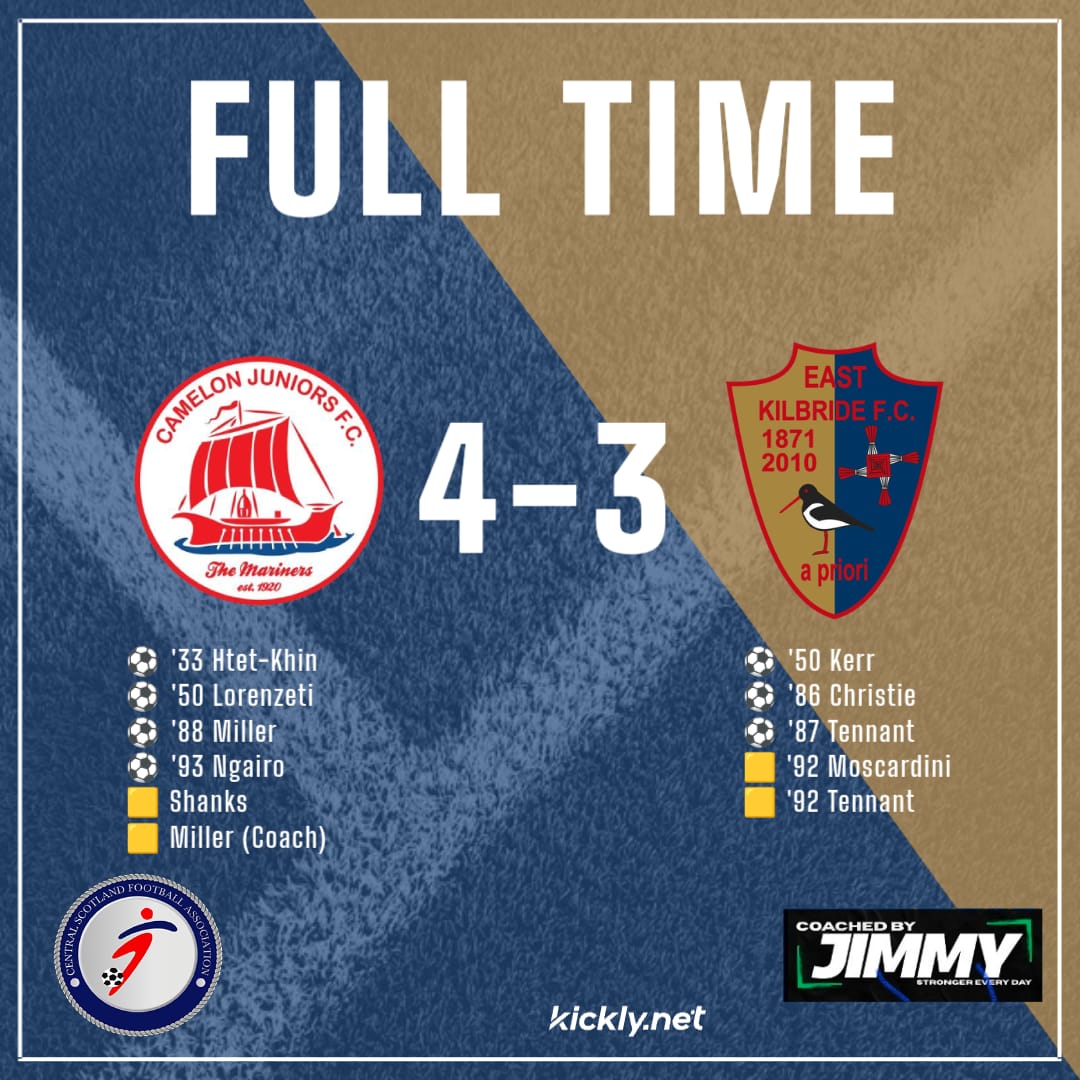
A second league defeat of the season for the boys at the hands of Camelon this morning. A spirited comeback from 2-0 down saw us lead 2-3 with minutes to go. Rather than see the game out we lost concentration and Camelon won the the game with a late pen. Lessons to be learned! ⚽️
1
3
128
Lesley Ann Henderson retweeted
Our squad to face Camelon Juniors today....

1
4
110
Lesley Ann Henderson retweeted
May 7
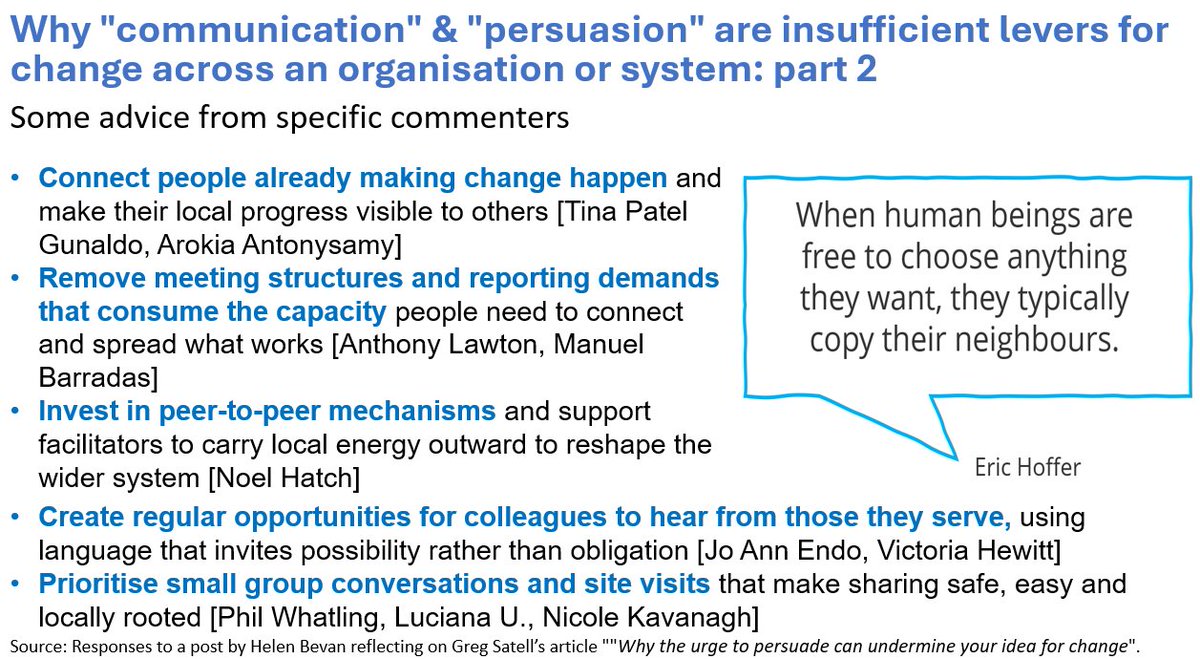
Why "communication" & "persuasion" are insufficient levers for change across an organisation or system: part 2.
A summary of comments in response to my last post, across multiple social channels. I pulled out six themes:
1) Why persuasion fails: Greg Satell, author of the original article, clarifies that persuasion methods DO work — Robert Cialdini's research shows that. The problem is that once people return to their social networks, they may get convinced right back. He points to Brown & Reingen's 1987 paper on social ties & word-of-mouth referral as foundational evidence.
2) Visibility & peer influence: Arokia Antonysamy notes that if people in informal networks don't trust change, it won't scale regardless of formal mandate. Nicole Kavanagh adds that visibility strengthens informal networks & gives people courage to act differently. Phil Whatling observes that healthcare teams regularly copy what's working next door — local conditions matter more than large programmes. He suggests that identifying & managing local conditions for safe information flow could be one of the lowest-cost, highest-impact levers for change we have.
3) Conditions for change: Anthony Lawton points out that leaders can only maximise the benefits of social architecture (the relational networks that carry change) when the structural environment supports it. People are asked to adopt new behaviours while the systems around them actively punish exactly that: meeting structures that consume capacity, decision processes that fragment ownership, reporting demands that pull people away from the relationships where change actually travels. Noel Hatch confirms that peer-to-peer spread works when rooted locally — trust builds through shared experience, not messaging — but raises the key question of how to stop that energy staying localised & start reshaping the wider system.
4) Momentum & organisational risks: John-Paul Crofton-Biwer notes NHS change efforts often focus on those who won't change, using authority to cajole. Building momentum behind those already succeeding flips the model — but organisational antibodies can slow or reverse progress when early successes are neglected. Victoria Hewitt adds that replacing "should" with "could" produces open, often joyful responses rather than closed resistance.
5) Show impact from connection: Maike Kueper notes peer influence stays underrated partly because it resists easy measurement. Jo Ann Endo shares a powerful example: a researcher whose palliative care findings spread through networks & had extended patients' lives had no idea how much her work was valued by practitioners.
6) Build the architecture proactively: Melissa Panagides-Busch argues social architecture must be built before crisis hits, not during it. The organisations that navigate hard moments well are usually the ones that invested in those invisible threads long before they needed them.
To conclude, a quote from Reza Hosseini Ghomi that sums up the spirit of many of the comments: “social architecture may be the real operating system of transformation”.
2
19
50
4,230
Lesley Ann Henderson retweeted
Next up we are on our travels as we take on @MilngavieReal09. A win for Kilsyth over Falkirk this evening gives us the opportunity to clinch the league title on Saturday if we can come home with the three points. #letsdothis #nokilbynoparty 🏆⚽️🙏🔶️🔷️

1
7
135
Lesley Ann Henderson retweeted
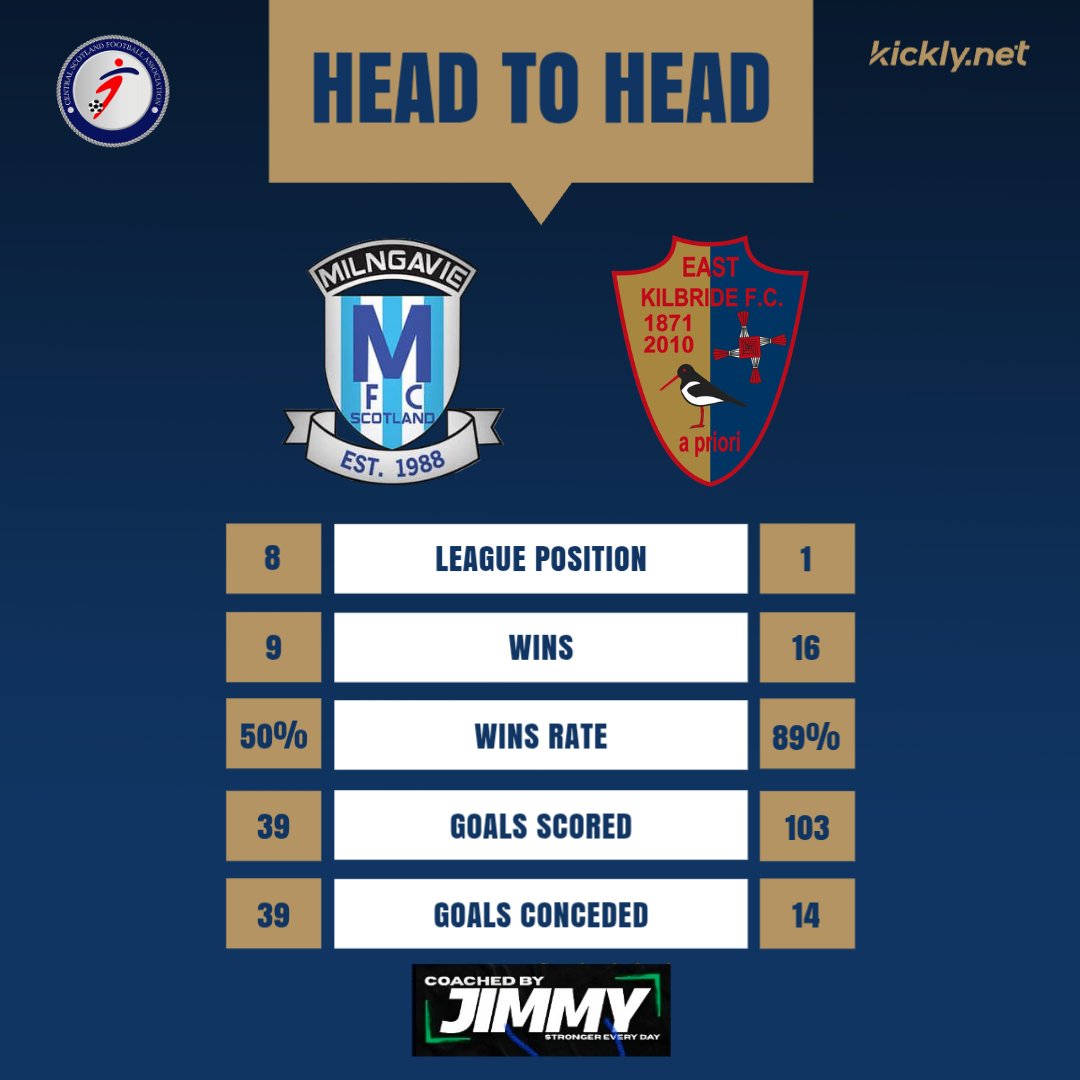
Here is how both teams match up before the game st the weekend.. A 5-2 victory over Falkirk last week saw us smash the 100 goal barrier in the league. A great achievement! Hopefully there is more to come as we look to secure the title with 3 points on Saturday! 🔶️🔷️⚽️
1
9
183

Apr 27
A determined and committed player . A well deserved MOTM .

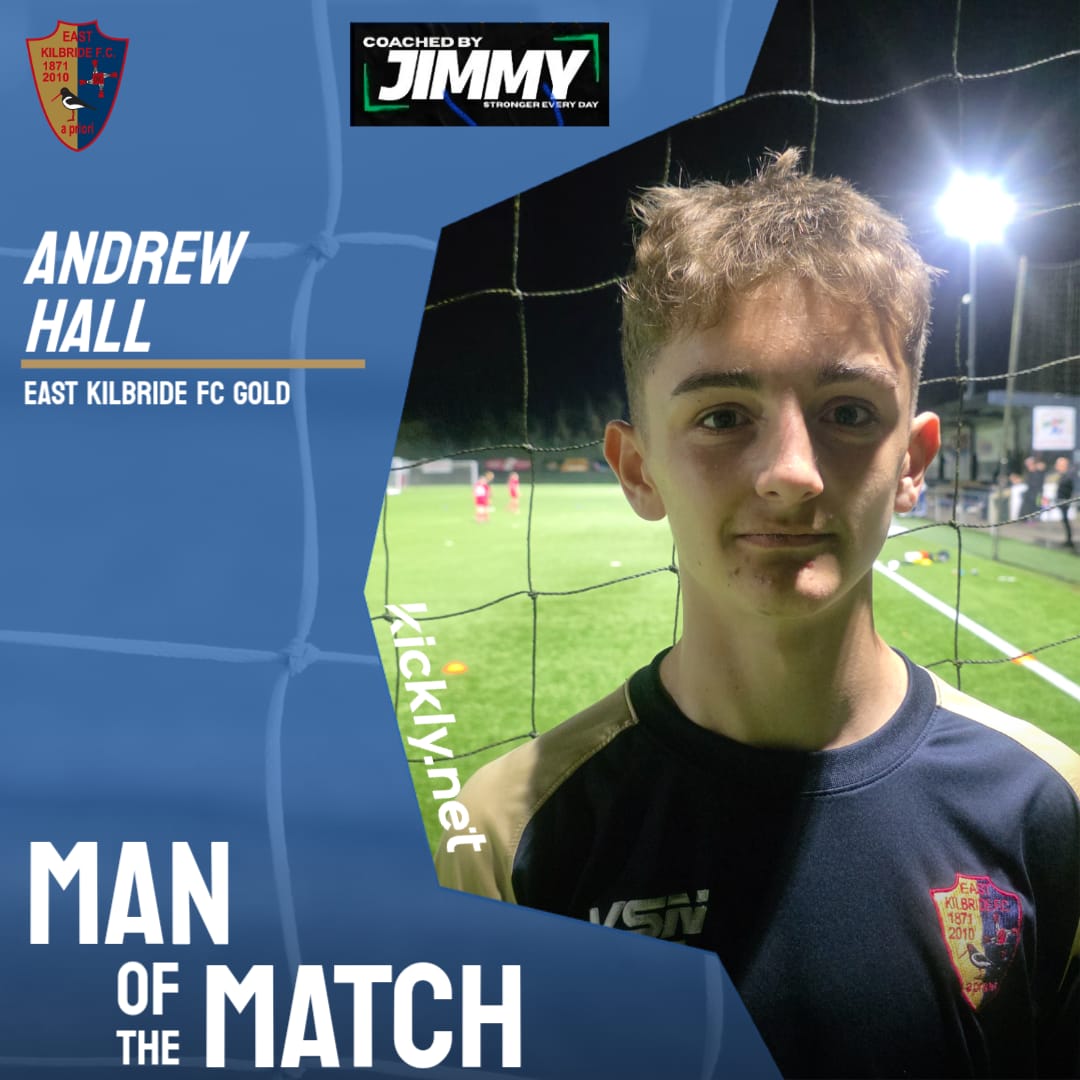
Referee's MOTM was Mr Dependable, Andy Hall. Andy has had a number of big performances this year & yesterday was no different. Constantly demanding the ball and looking to drive the team forward, covering every blade of astro in the process. A real team player. Well done Andy! 🏆
1
32
Lesley Ann Henderson retweeted
Ref's MOTM award goes to Max. Played a big part of a solid defensive unit (for the best part of 85 minutes 😂) His ability to break up play and start attacks by driving the team forward massively contributes to the teams success.. Well done Bert! 🤔 🏆🥳⚽️🔷️🔶️

1
2
14
239
Lesley Ann Henderson retweeted
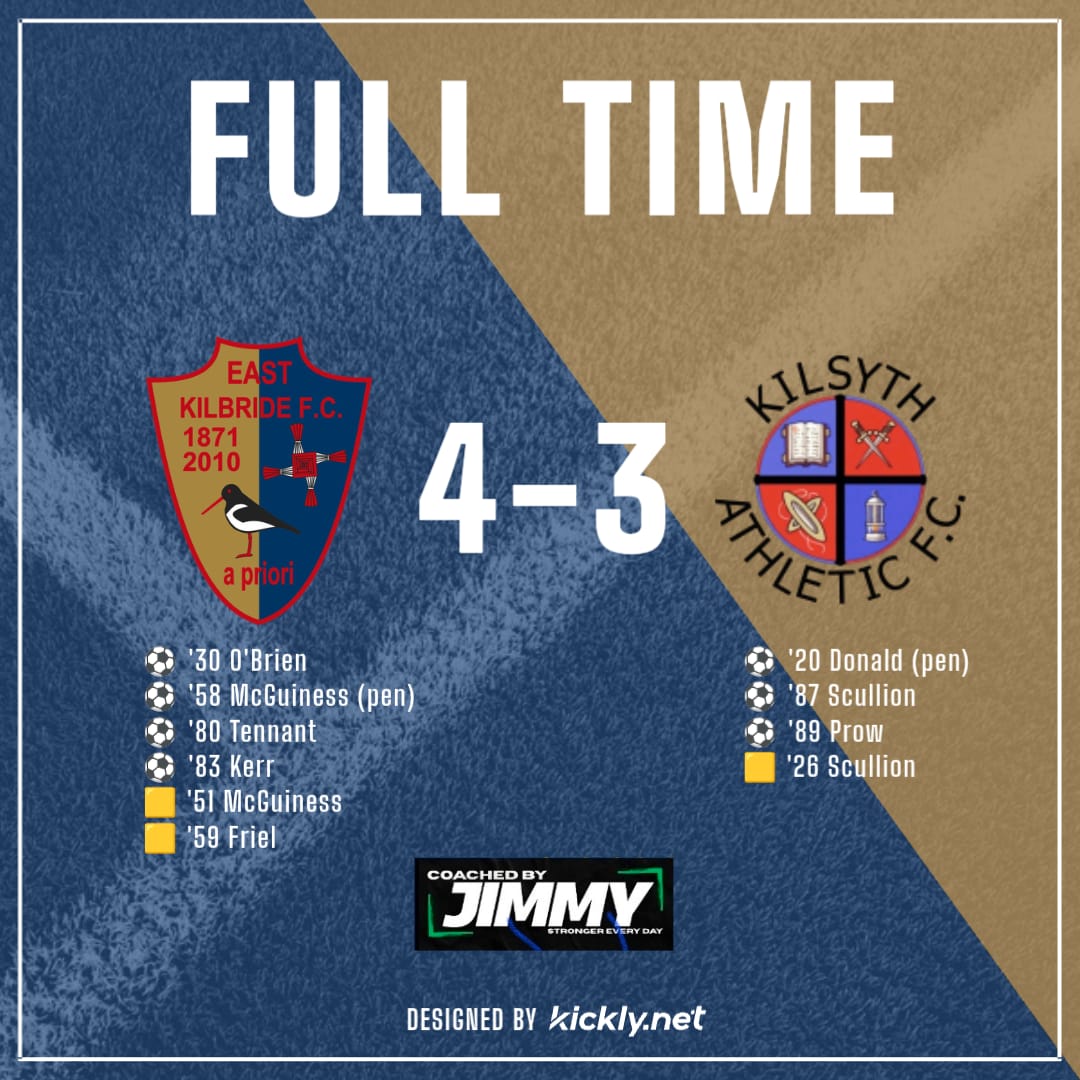
Wow... Although not at our best and sharing 4 goals in the last 10mins we managed to get the win over the line and take a vital 3 points against our nearest rivals! The boys have found a rich vein of form at the right time of the season... All the best to Kilsyth 🤝 #believe 🏆⚽️
3
11
181
Lesley Ann Henderson retweeted
Today's line up for the top of the table clash against Kilsyth Athletic... #stayfocused 🔶️🔷️⚽️

2
6
167
Lesley Ann Henderson retweeted
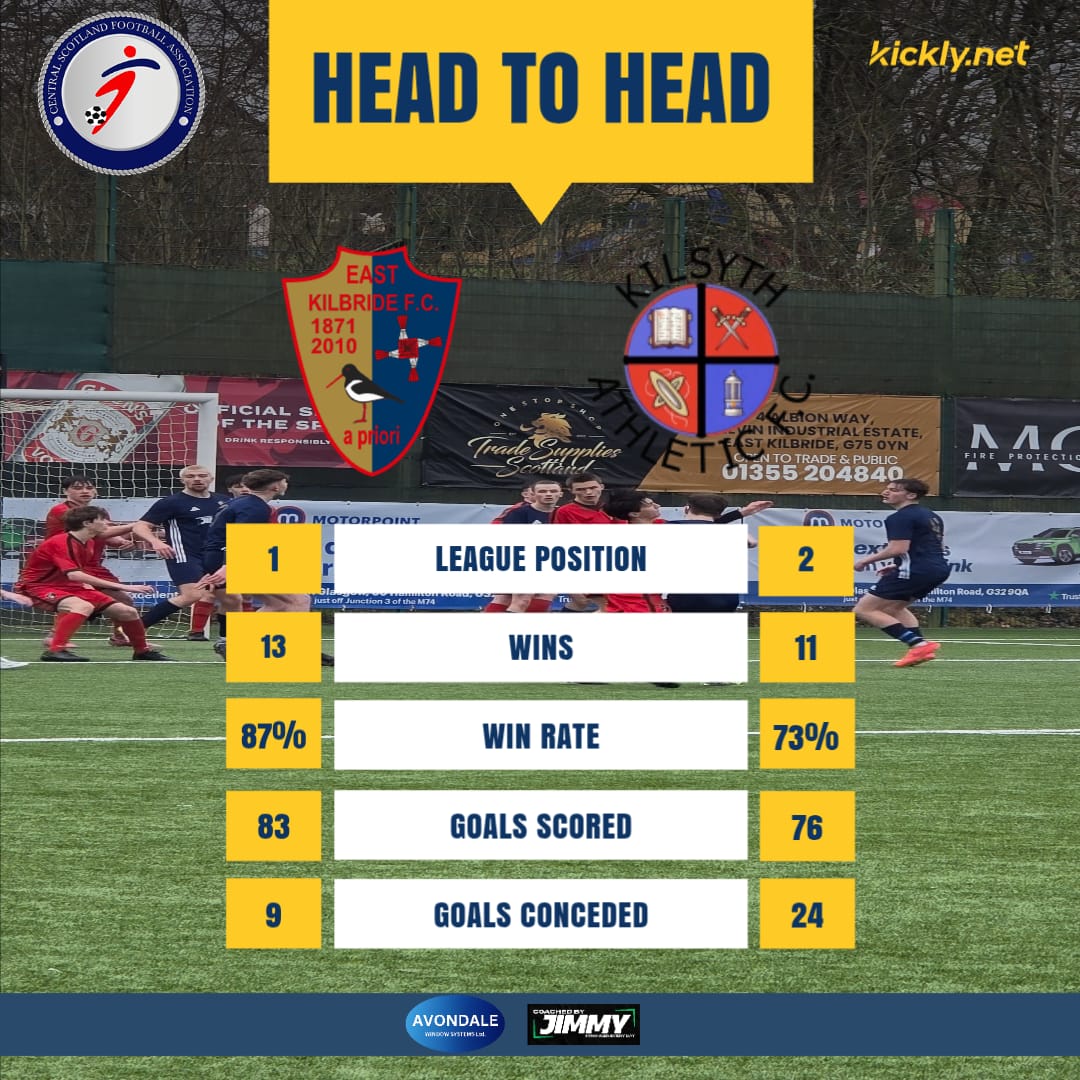
Four points separate the teams in the top of the table clash at K-Park this coming Saturday. Here are some of the other stats this season. Strangely enough for two of the leagues top scoring teams, the first encounter finished in a 1-1 draw!
1
8
233
Lesley Ann Henderson retweeted
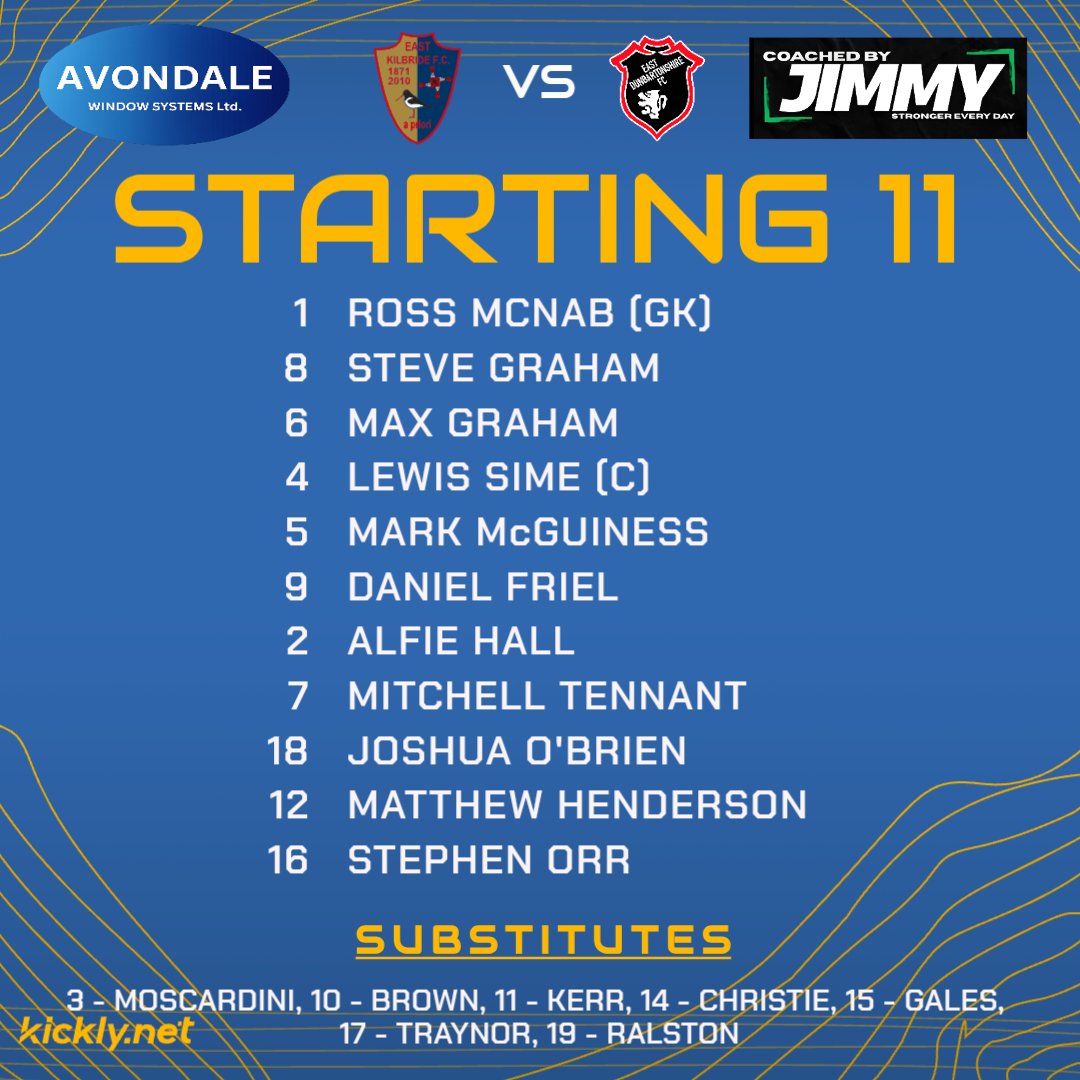
Today's squad to face EDFC at home. The first of three big matches at home for the boys this month! 🔶️🔷️⚽️💪
1
4
140
Lesley Ann Henderson retweeted
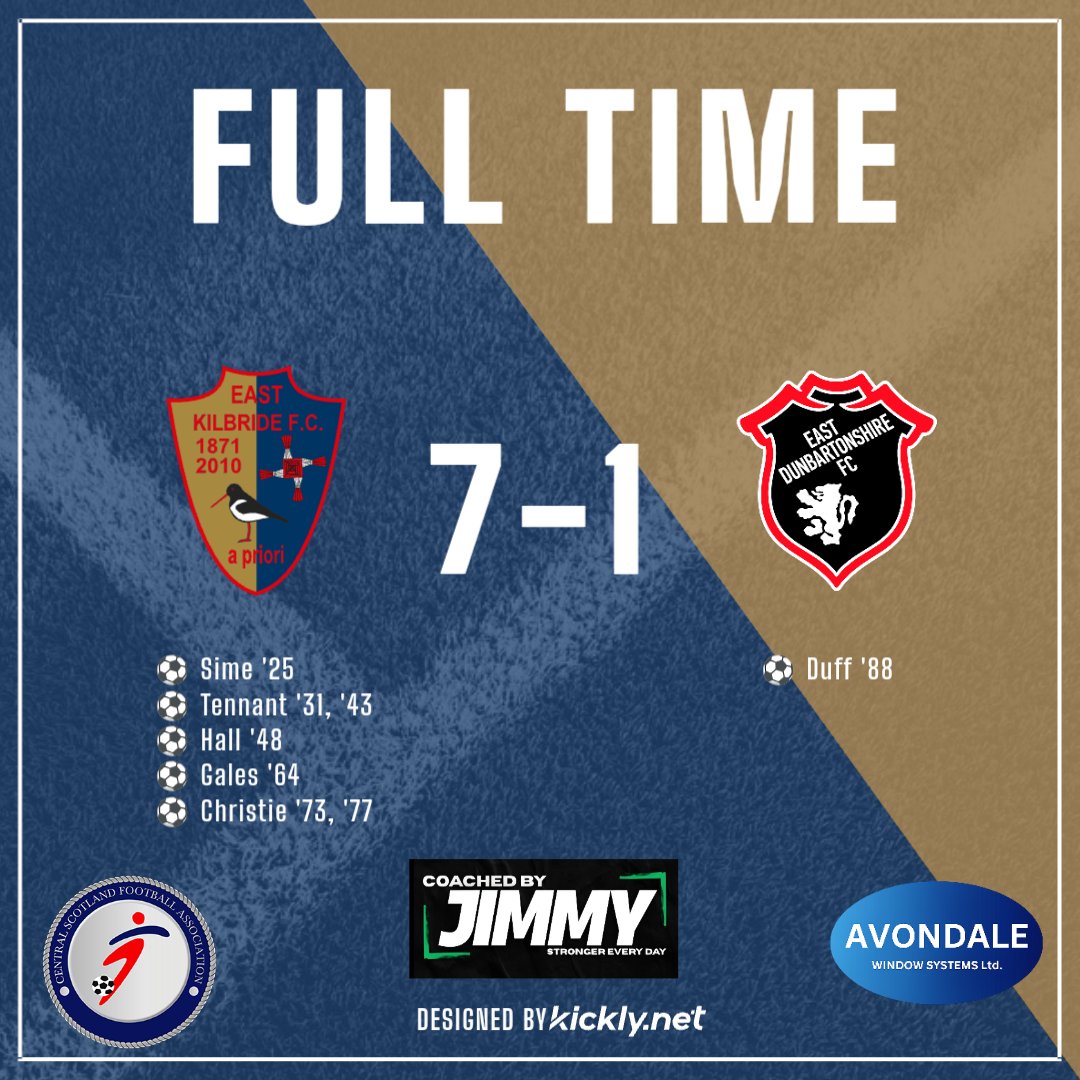
A tremendous performance & result this morning in the sunshine at K-Park. Took a while for us to get into our stride but once we did we were clinical. A win in the first game of the split puts a marker down. We can't let the standards drop! #wEKeepgoing 🔶️🔷️⚽️
2
2
11
221
Lesley Ann Henderson retweeted
Today's MOTM - voted by the ref was Matthew Henderson who led the front line by example. A great battle with the opposing centre half today which was physical, but fair, with Matthew regularly coming out on top. The only thing missing was a goal! Well done Matthew! 👏🏆⚽️🔶️

2
6
192
Lesley Ann Henderson retweeted
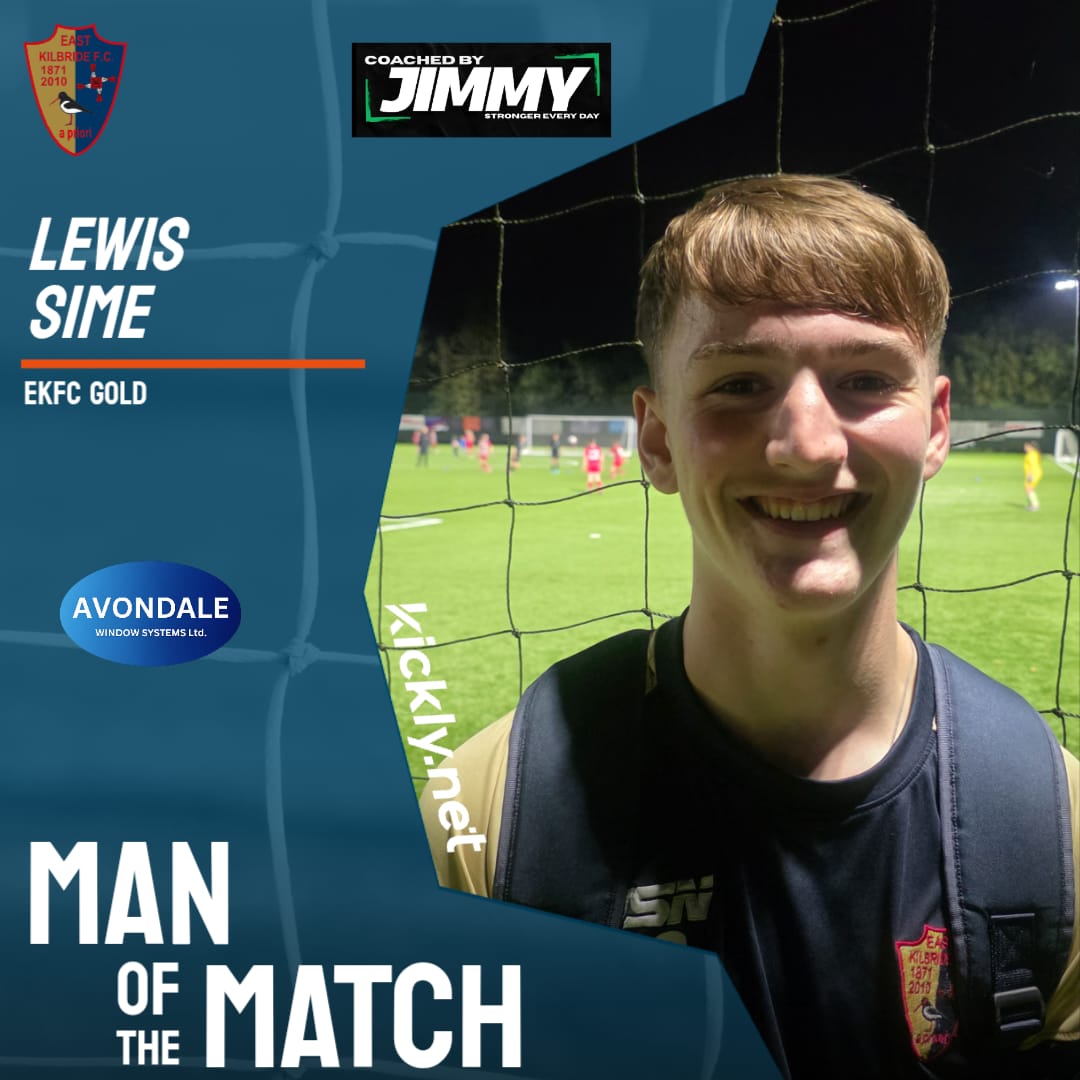
MOTM today was our CB and Captain, Lewis. Mr Reliable as always! He never put a foot wrong and came up with a couple of last ditch tackles at important moments in the game which, if not timed perfectly, could have resulted in a penalty and a possible red card. Well done! 🏆🎉 ⚽️
1
1
9
188
Lesley Ann Henderson retweeted
Feb 15
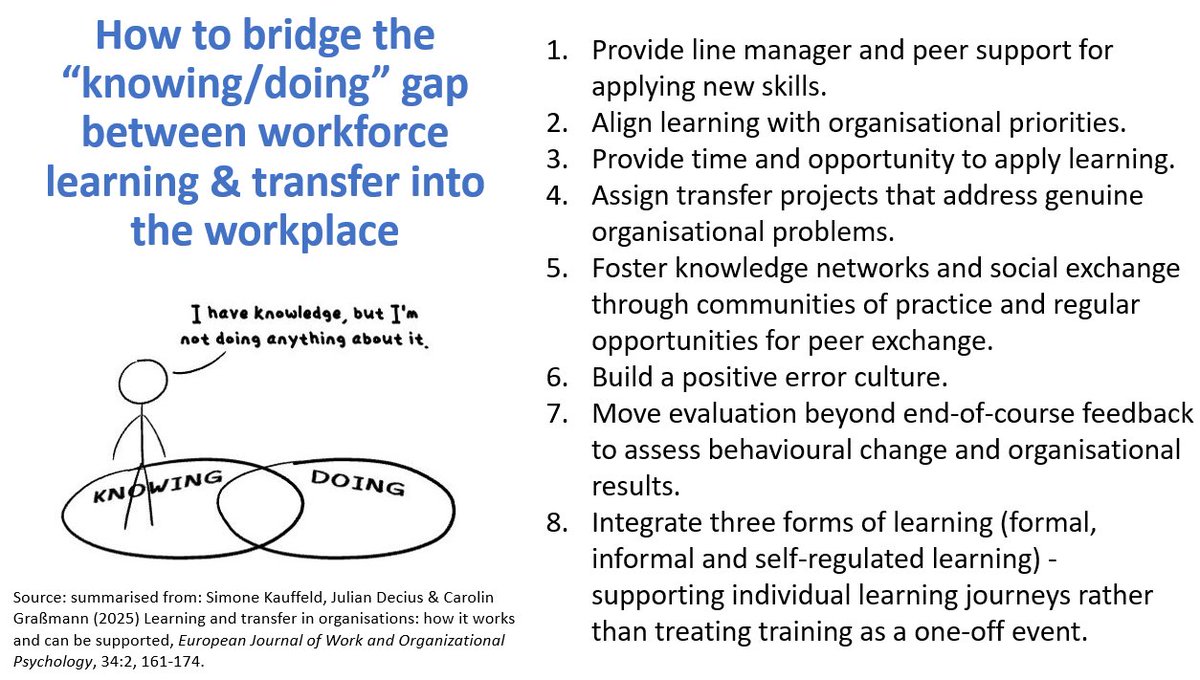
Only 10-15% of workforce training transfers to workplace practice: what we can do about it.
Recent research asserts that only 10-15% of what people learn in formal training actually transfers to workplace practice. Those of us building skills for improvement and change in health and care can relate to this. Health and care organisations invest massively in improvement training, yet it frequently fails to translate into practical improvements in care delivery.
The transfer problem is not primarily about the training itself or participant capability. The work environment is the primary determinant of whether learning transfers successfully. We, as leaders, hold the key to unlocking the 85-90% of learning that currently fails to translate into improved care.
Actions we can take to enable learning transfer from improvement training based on research findings:
1) Create explicit support structures. Improvement training participants need identified peer supporters and line managers who understand their role in enabling application of new skills. This support directly affects transfer through impact on motivation and determination to overcome obstacles.
2) Align learning with organisational priorities. When we connect improvement training and individual learning goals explicitly to strategic goals and health and care outcomes, we get more learning transfer.
3) Provide time and opportunity to apply learning. The research identifies availability of time, resources and opportunities to apply new knowledge as critical environmental factors. Improvement work needs protected space, not an expectation it will happen alongside unchanged operational demands.
4) Bridge the "knowing/doing" gap through transfer projects that address genuine organisational problems. These projects should be strategically aligned, adequately resourced and accompanied by clear agreements about outcomes between leaders and participants.
5) Foster knowledge networks and social exchange. Over half of participants change their knowledge networks after training, actively seeking expertise from experienced colleagues. We should recognise and enable these networks, creating conditions for knowledge sharing through communities of practice and regular opportunities for peer exchange.
6) Build a positive error culture. A culture that allows experimentation without fear of blame is both a predictor of informal learning and a facilitator of transfer. Improvement requires testing changes and testing requires psychological safety to learn from what does not work as well as what does.
7) Move evaluation beyond end-of-course feedback to assess behavioural change and organisational results. We should track whether participants are applying improvement methods, whether teams are adopting new approaches and whether changes are producing better care outcomes.
8) Integrate three forms of learning. Combine formal improvement training with informal learning through experimentation and reflection, and self-regulated learning where people set their own goals and monitor their progress. We should support individual learning journeys rather than treating training as a one-off event.
The evidence is clear: successful learning transfer is a system property, not an individual responsibility. When we create the environmental conditions that enable transfer, improvement training can fulfil its potential to transform care for the people and communities we serve.
tandfonline.com/doi/full/10.… By Simone Kauffeld and colleagues. Sourced via John Whitfield.
1
27
76
5,890
Lesley Ann Henderson retweeted
Feb 8
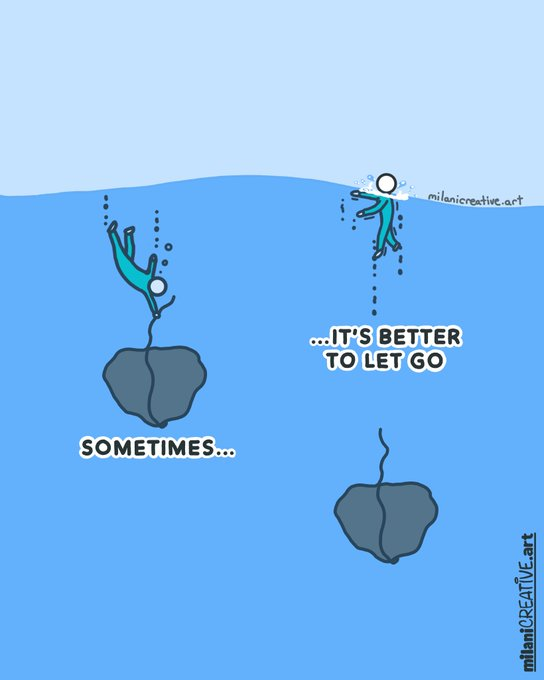
Being able to walk away from a change initiative (often something we have invested huge personal effort in and feel passionate about) is a defining capability for leaders of change.
In change work, we celebrate the leaders who “push through resistance” and “never give up”. We talk less about the leaders who know when to stop – or walk away – from a change initiative altogether.
Sometimes that decision is about the work itself:
- The initiative is no longer aligned with organisational priorities.
- The context has shifted so much that the original case no longer holds.
- The effort required now far outweighs any likely benefit.
But sometimes, the decision is about the toll on the person leading the change:
- Sponsors are absent, inconsistent or obstructive, leaving us carrying the risk but not the authority.
- We’re repeatedly asked to “spin” the story or sidestep hard truths in ways that clash with our values.
- The behaviours rewarded around the initiative (blame-shifting, pressurising, tolerating poor behaviours) are the opposite of the culture we’re trying to build.
Walking away will rarely be applauded. It may look to some people like a lack of resilience or loyalty. Yet it can be an act of deep responsibility: to our own wellbeing, to our credibility, to the people we lead & to the people we are seeking to create better outcomes for.
Actions to reduce the risk of having to stop or walk away:
1) Name the conditions we need (sponsorship, resourcing, psychological safety) and pay attention when those conditions are chronically missing.
2) Build regular check‑ins with sponsors to test commitment, reset expectations and surface misalignments early, rather than absorbing them alone.
3) Set the change process up from the start as a series of “experiments” with clear hypotheses and time‑boxes, so we can make decisions about what to do next based on real data, not assumptions.
4) Hold structured learning huddles as a change team, focusing on “What are we learning? What needs to change in our approach? What should we stop?”.
5) Invite voices from outside the core project team (frontline staff, service users, partner organisations) into periodic reflection sessions to test whether the change still makes sense in their reality.
6) Create reflective space with others (coaching, mentoring, peer support) to notice when the work is eroding your own energy, integrity or wellbeing. The first rule of being an effective change agent is that “you can’t be an effective change agent on your own”.
As leaders of change, our legacy isn’t just the initiatives we drive to completion. It’s also the ones we have the courage and strategic insight to stop. Sometimes the best move is not to push through, but to step away.
See, for instance, @AdmiredLeaders on reactive quitting versus strategic quitting: admiredleadership.com/field-….
The graphic is by the brilliant @milanicreative.
6
34
121
7,961
Lesley Ann Henderson retweeted
Jan 24
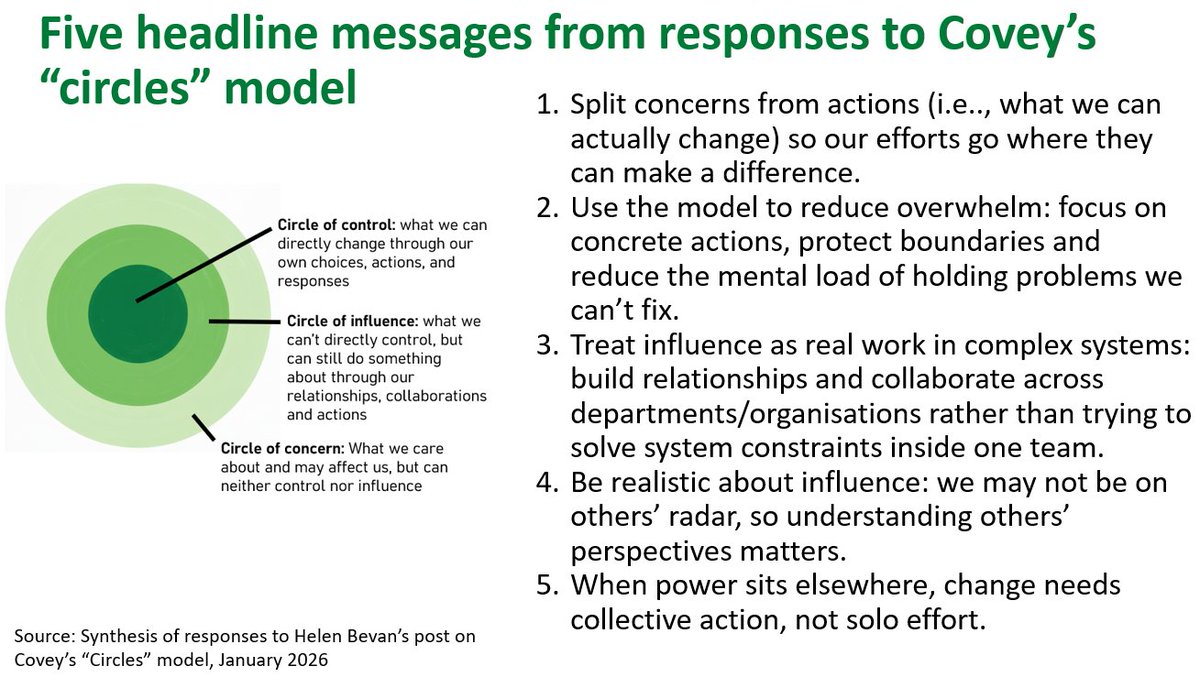
Reflecting on Stephen Covey’s “circle” model: part two.
In this post, I am summarising the comments that others made on my last post about Covey’s “circles” model in leading change. The comments come from across multiple social platforms. Thanks to everyone who commented.
The comments added useful reality checks.
First, the "circles" model can calm the noise. John-Paul Crofton-Biwer said focusing on what we can’t control leaves us governed by fear, while focusing on what we can do builds confidence & that fear or confidence can ripple out & affect others. Cathryn Sloan described how sustained change can create helplessness & loss of agency: the model helps people see where they do have agency, where they need strategies to influence & where they can let go of mental load. Julie Neethling added a mindfulness angle: don’t let “limited thinking” take over; come back to being present; put your own actions & behaviours first - alongside boundaries, checking in on your team, & listening. Conclusion: reduce the drain from “trying harder” at problems that need a different route, while staying grounded enough to take the next practical step.
Second, influence isn’t a "soft" option. Claire Doody noted that in matrix organisations, we are often responsible for things we can’t control & sorting helps with the tension between accountability & control. Tina Patel Gunaldo said it’s often within a leader’s control to reach beyond their own department to co-create collaboration. Stephen Sherry added that teams can burn energy compensating for constraints outside their control & misread the lack of movement as a delivery failure. Conclusion: influence is built through relationships & small consistent actions, & it needs time & attention.
Third, the model has limits if it becomes too individual. Matt Walsh challenged what happens when we don’t trust the people who have control or influence over the things causing concern, & argued the model can deny collective action. Owen Jarvis warned about over-claiming system change by one organisation & suggested “collective impact,” where roles add up. Sarah Miller argued long-term change comes from redesigning the conditions people operate inside, not only managing attention within them. Conclusion: “focus on what you control” is not a substitute for organising, aligning, & escalating together when the issue sits at system level.
Fourth, it’s easy to overestimate our influence. Victoria Hewitt noted we can think we’re in the circle of influence when we “aren’t even on someone else’s diagram at all,” linking this to Covey's Habit 5: “Seek First to Understand then to be Understood.” Conclusion: to influence, understand other people’s pressures, priorities, & trade-offs before pushing your solution.
Overall conclusions: Do what we can do in our circle of control; invest in relationships that broaden our circle of influence; name what's bigger in our circle of concern so it can be escalated through other routes. The circles can’t remove constraints, but can help reduce unproductive mental load & direct effort where it can generate impact.
7
22
87
5,697
Lesley Ann Henderson retweeted

20 Dec 2025
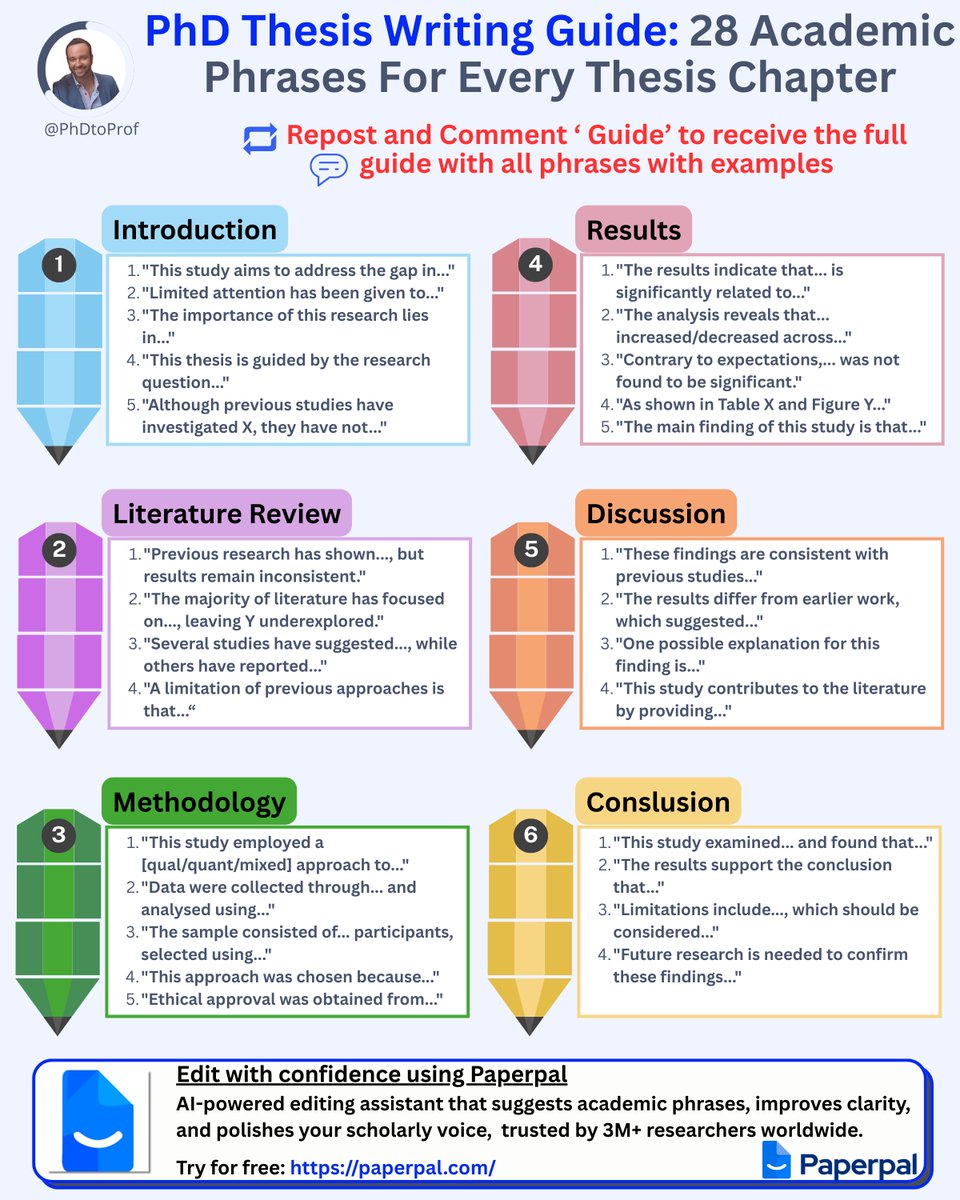
Words that fail PhD theses:
"This study shows...",
"It is important to note...",
"As mentioned above..."
After reviewing 25 successful theses, I mapped exact phrases for each chapter:
Repost & Comment 'guide' for full phrase guide 👇
175
575
1,928
114,676