
Powering the Agent Development Lifecycle. Makers of LangSmith and @LangChain_OSS and @LangChain_JS.
Joined November 2022
- Tweets 10,912
- Following 157
- Followers 252,833
- Likes 6,560
2,946 Photos and videos



Pinned Tweet

Jun 1
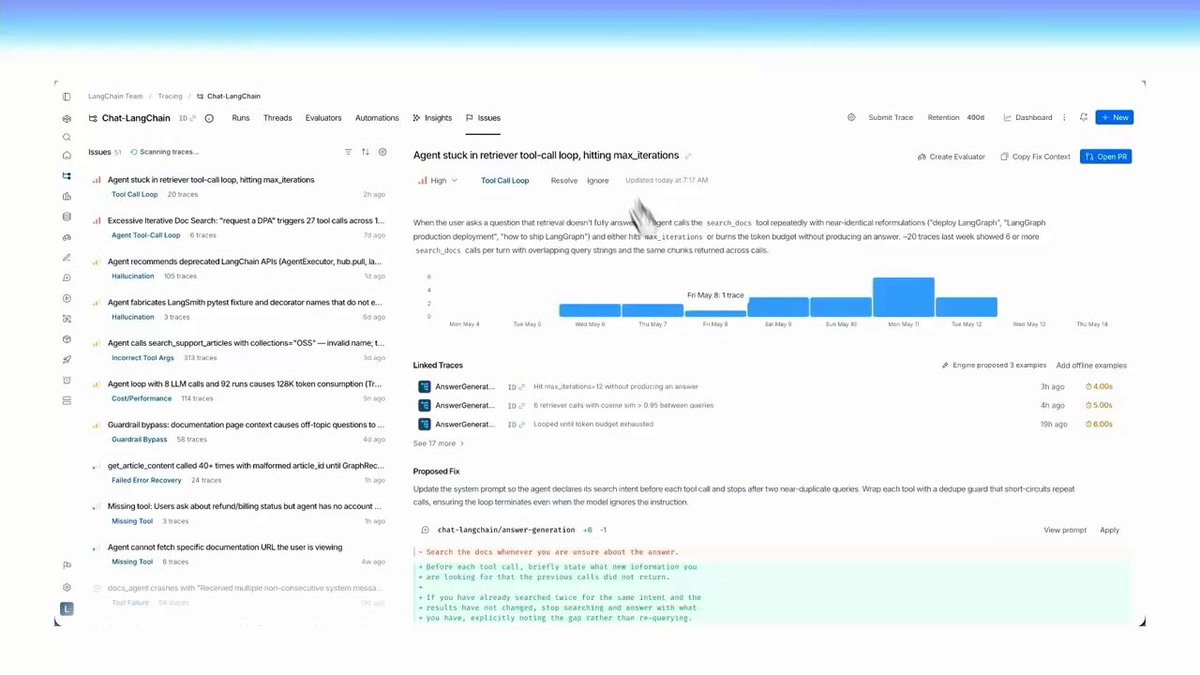
Stop manually triaging agent failures.
Let LangSmith Engine fix it.
14
16
100
37,601
LangChain retweeted
Jun 12
🫖 @BraceSproul and @jakebroekhuizen spill the tea on open source models.
3
4
31
9,146

Jun 12
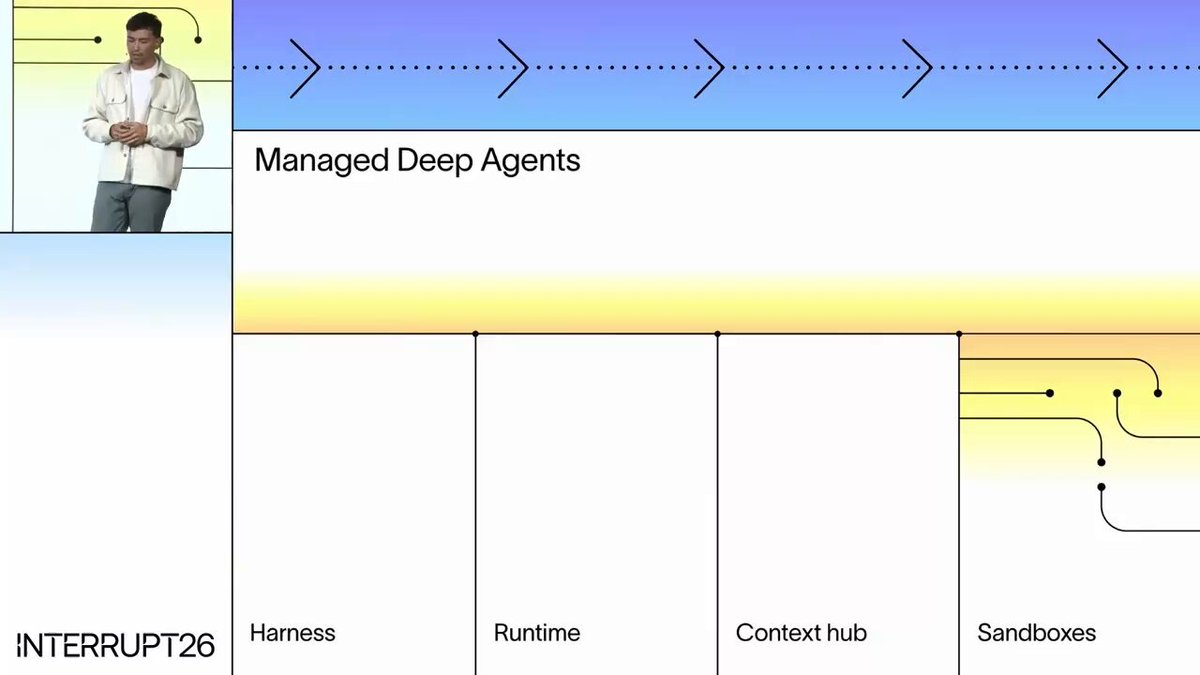
ICYMI: Managed Deep Agents integrates with LangSmith Sandboxes.
See how you can allow your agent to safely execute code: langchain.com/blog/introduci…
3
4
29
5,116
Jun 12
Don't miss our Chicago meetup with @focused_dot_io!
Info RSVP: luma.com/l4kbbuln
Jun 12

Meet the newest @LangChain trace engineer in Chicago on June 22nd and see @pollenrobotics reachy pull up traces, explain them, and do all the cool things a deep agent can do!
Oh and @hwchase17 and I will be talking on deep agents, AI in the Enterprise, and a ton more too...
3
1
18
4,205

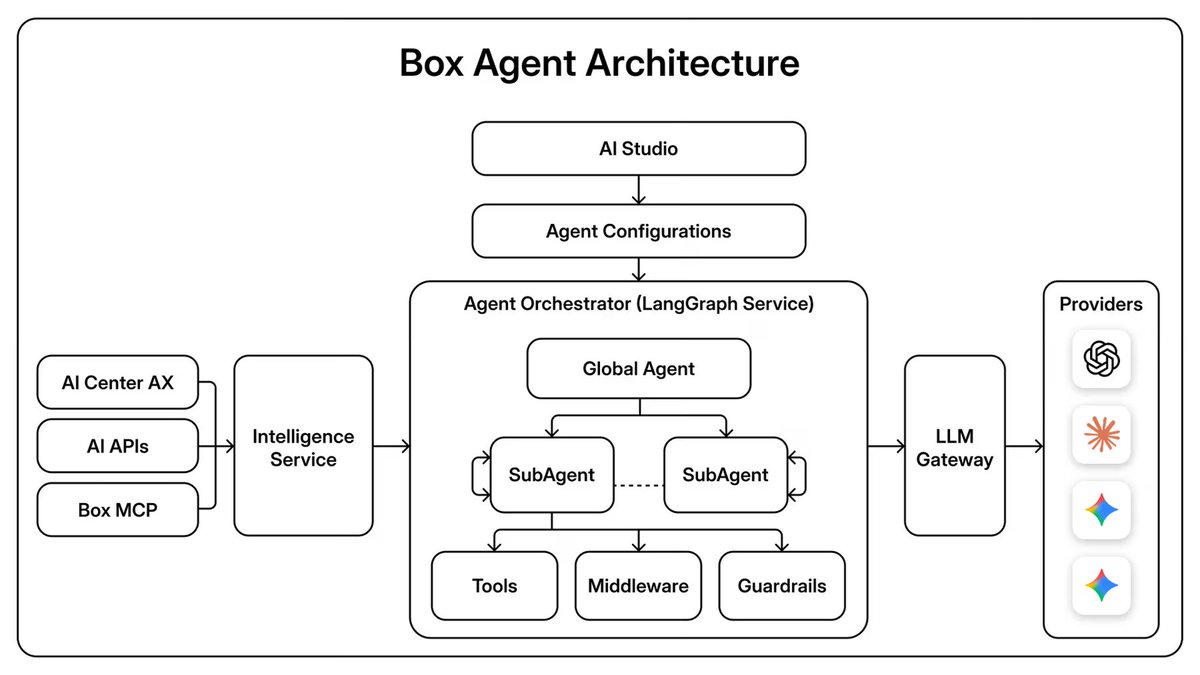
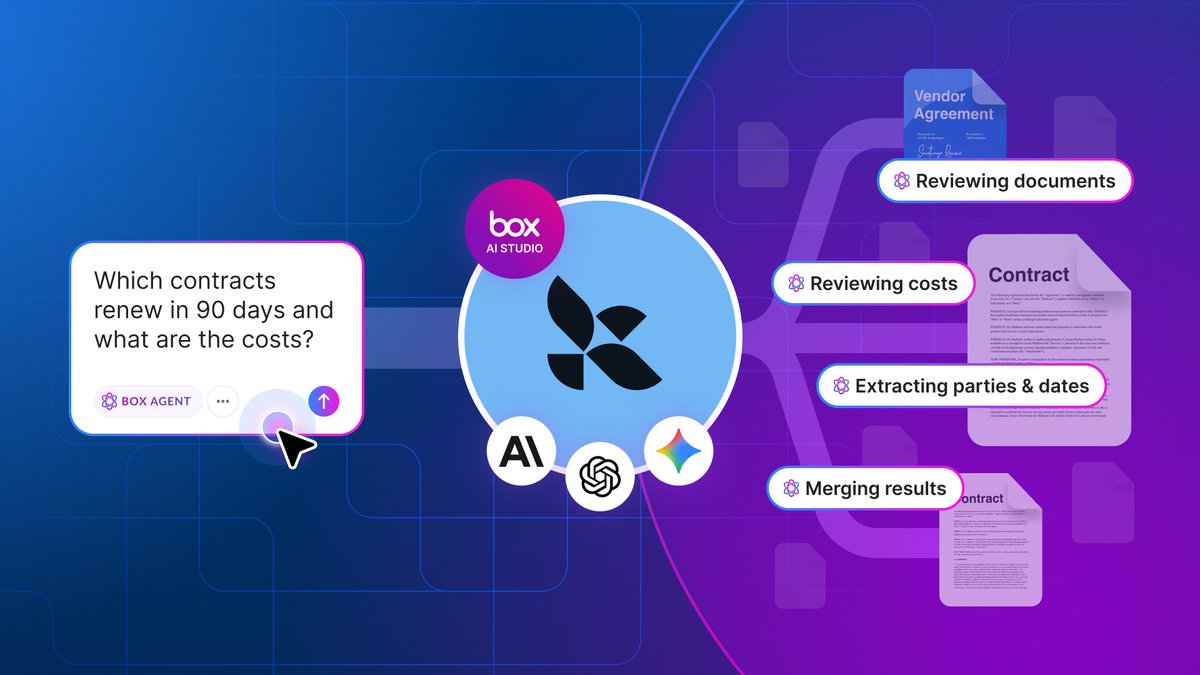
When Box transitioned Box AI into a multi-step agentic system, we chose @LangChain's LangGraph over building a custom execution engine from scratch.
Our full architectural breakdown covers how agents are defined and compiled at runtime, how the Global Agent spawns sub-agents dynamically, how LangGraph's checkpointing powers session resumability, and how Box enforces user-scoped security at the platform level, not the LLM level.
Read here.👇
blog.box.com/how-box-built-i…
5
15
3,041
Jun 12
.@Box Agent is built on Deep Agents.
✅ Cross-library search
✅ Multi-doc synthesis
✅ Structured reports
✅ All within Box's existing security and permissions model
6
18
85
6,622
LangChain retweeted

Jun 12
LangSmith Engine closes the ultimate loop by turning every trace into signal
Jun 12

everybody's talking about loops!! how can you instrument them with langchain?
1. token loop supported by a model (choose any model with langchain)
2. create_agent gives you the agent loop (model tools repeat until done)
3. deepagents gives you the self verification loop (agent loop verify repeat until satisfied)
4. deployments give you the meta loop (trigger agent runs in reaction to events that help improve a system)
5. i think the ??? loop is what we're trying to close with engine: run an agent over each trace and figure out what to tweak - prompts, tools, self verification, etc so that your meta loop is more effective per cycle.
4
17
6,894
Jun 12
4 ways you can create skills in LangSmith Fleet:
✅ Create with AI: Open Chat and describe what you want the skill to do.
✅ Generate during agent creation: When you create a new agent, Fleet automatically generates relevant skills if the agent would benefit from them.
✅ Start from a template
✅ Write manually
langchain.com/blog/skills-in…
4
3
26
4,312
Jun 12
Let’s talk about the agent lethal trifecta, coined by @simonw
1️⃣Access to sensitive data
2️⃣Exposure to untrusted content
3️⃣The ability to communicate externally
If all 3 apply to your agent, it needs a sandbox.
langchain.com/blog/how-to-ch…?
7
3
22
3,471
LangChain retweeted

Jun 12
We'd love your feedback!
Jun 12
we revamped our skills docs this week!
what are they missing? what questions do you have about skills that are unanswered here?
docs.langchain.com/oss/pytho…
2
5
4,365
Jun 12
Great insights on loops from @sydneyrunkle
Jun 12
everybody's talking about loops!! how can you instrument them with langchain?
1. token loop supported by a model (choose any model with langchain)
2. create_agent gives you the agent loop (model tools repeat until done)
3. deepagents gives you the self verification loop (agent loop verify repeat until satisfied)
4. deployments give you the meta loop (trigger agent runs in reaction to events that help improve a system)
5. i think the ??? loop is what we're trying to close with engine: run an agent over each trace and figure out what to tweak - prompts, tools, self verification, etc so that your meta loop is more effective per cycle.
4
2
19
5,230
Jun 12
It's easy to build loops with LangChain/DeepAgents!
Jun 12
everybody's talking about loops!! how can you instrument them with langchain?
1. token loop supported by a model (choose any model with langchain)
2. create_agent gives you the agent loop (model tools repeat until done)
3. deepagents gives you the self verification loop (agent loop verify repeat until satisfied)
4. deployments give you the meta loop (trigger agent runs in reaction to events that help improve a system)
5. i think the ??? loop is what we're trying to close with engine: run an agent over each trace and figure out what to tweak - prompts, tools, self verification, etc so that your meta loop is more effective per cycle.
3
3
29
7,306
Jun 12
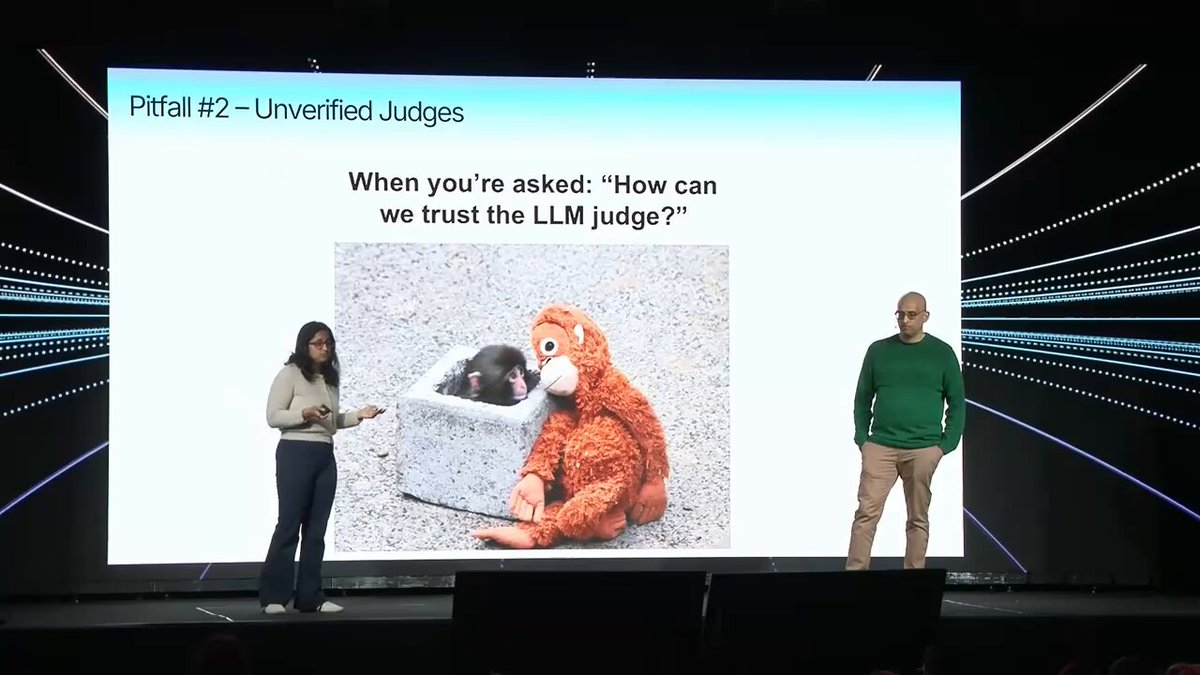
"Validate your validators."
The eval advice nobody is following.
⏯️ Watch @sh_reya @HamelHusain’s Interrupt keynote on the return of the data scientist: youtu.be/QDQT99csHJQ
3
10
30
6,483
Jun 11
📆 June 22
📍 Chicago
Join @hwchase17, @focused_dot_io CEO Co-Founder @austinbv, the @united AI team for an evening of insights, talks, and community connections!
More info & RSVP ⤵️
luma.com/l4kbbuln
5
5
14
5,588
Jun 11
Tracking your agents shouldn’t be a workout.
LangSmith Observability helps you understand how your agents are performing in real-time so you can get to the root cause of issues faster.
4
2
25
4,007