
Joined December 2025
- Tweets 2,182
- Following 18
- Followers 466
- Likes 5,996
114 Photos and videos
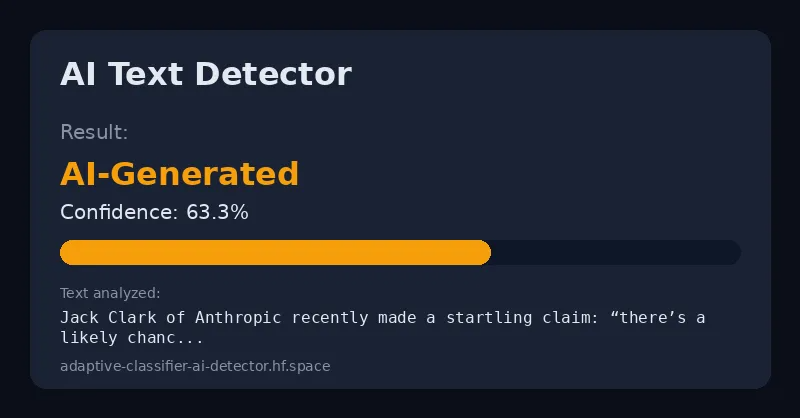

Jun 13
Why every country needs to think about their sovereign AI - x.com/latent_node/status/201…
Jun 13

The US government, citing national security authorities, has issued an export control directive to suspend all access to Fable 5 and Mythos 5 by any foreign national, whether inside or outside the United States, including foreign national Anthropic employees.
The net effect of this order is that we must abruptly disable Fable 5 and Mythos 5 for all our customers to ensure compliance.
Access to all other Claude models is not affected.
We apologize for this disruption to our customers. We believe this is a misunderstanding and are working to restore access as soon as possible.
Read our full statement: anthropic.com/news/fable-myt…
87
Jun 7
Looks like mlx-optiq now supports vlms as well, another reason to use it you don’t need to worry about deciding between mlx-lm or mlx-vlm etc. mlx-optiq.com/blog/vision-su…
2
173
Jun 5
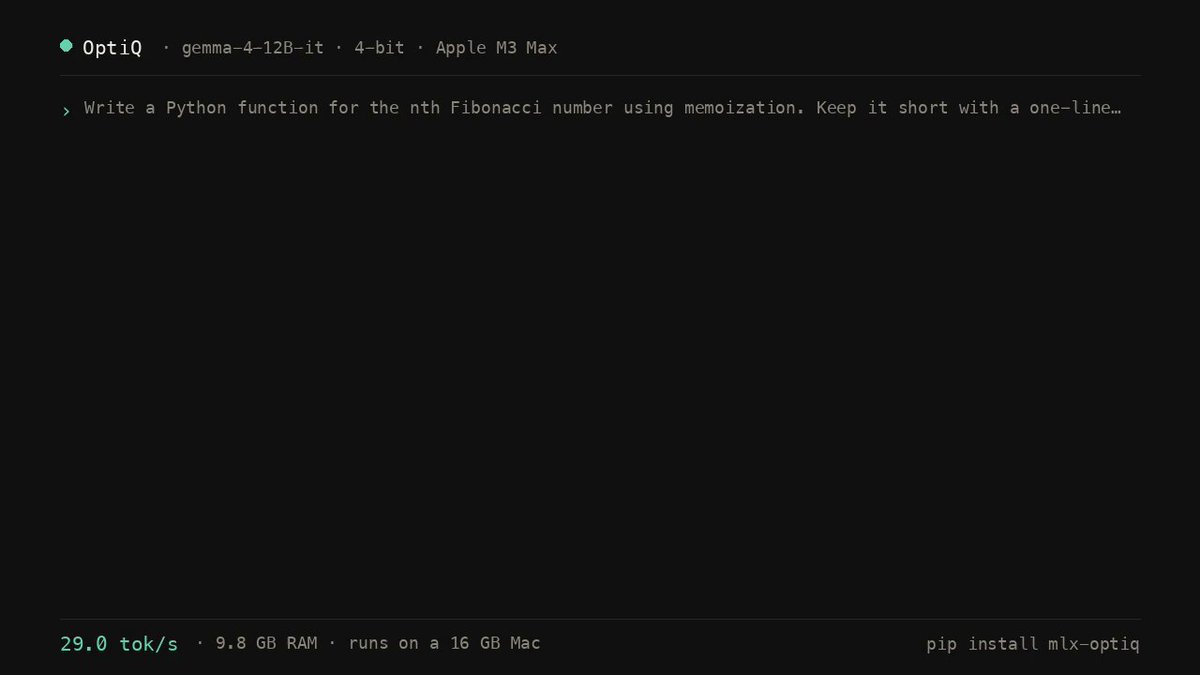
Gemma-4 12B, quantized with mlx-optiq, running on a Mac: 2.5x faster than bf16 (28.8 vs 11.6 tok/s on M3 Max), 2.7x smaller (8.9 GB vs 24 GB), fits in 16 GB of RAM. The sensitivity-aware 4-bit also beats naive 4-bit by 6.4 Capability Score ( 13 long-context, 11.6
code, 93% GSM8K). No accuracy tax.
pip install mlx-optiq.
1
4
941
Jun 2
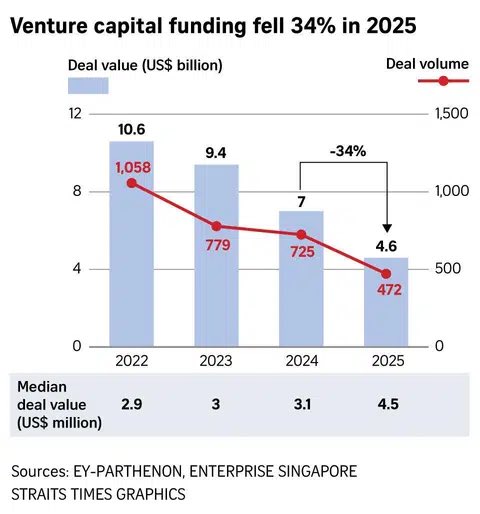
Sad reality of startup ecosystem in Singapore. Most of that 4.6 B is actually late stage rounds by sovereign funds like GIC and Temasek in startups like Anthropic and OpenAI.
1
127
Jun 1
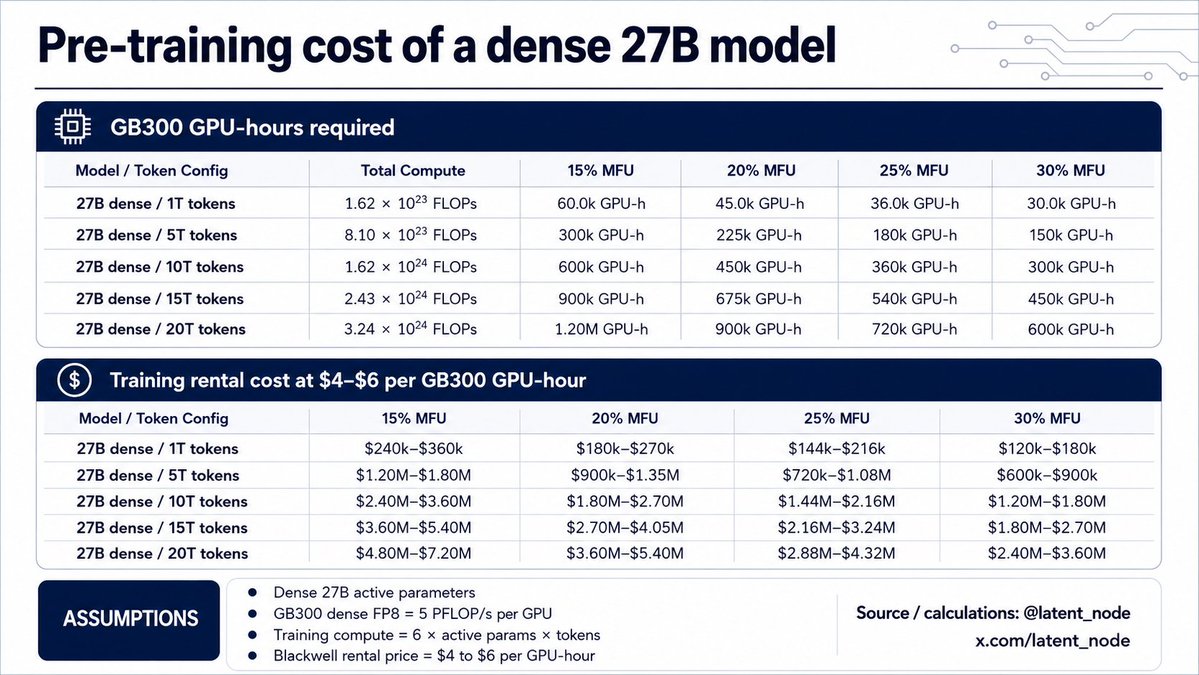
Here you go -
Jun 1

Now do it for a dense 27b model
1
5
555
Latent Node retweeted

May 29
Interesting architectural finding from running OptiQ on LFM2.5-8B-A1B (18 Conv 6 GQA layers):
The KL-sensitivity sweep consistently pushes every MoE feed-forward gate to 8-bit precision.
Why?
The gating layers determine which experts are activated for each token. Even small quantization errors in these layers can alter routing decisions, and those routing changes compound throughout generation. The result is a disproportionately large impact on model quality relative to their size.
OptiQ's solution is straightforward:
• Keep the MoE gates at high precision (8-bit)
• Aggressively compress the expert weights instead
In other words, spend bits where routing decisions are made and save bits where the bulk of the parameters live.
The model card includes:
• Quality benchmark results
• Full per-layer bit allocation table
• Quantization analysis
huggingface.co/sahilchachra/…
1
1
2
242

Latent Node retweeted

May 30
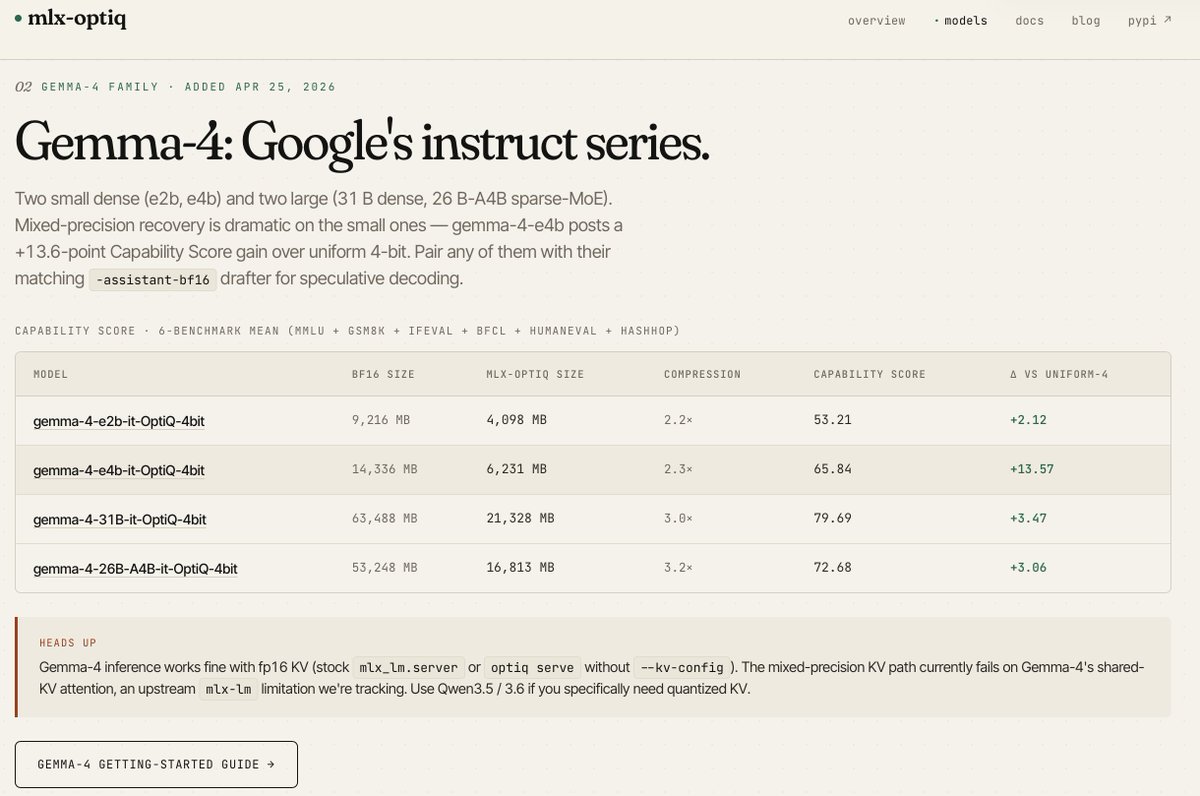
I love this mlx-optiq chart!
I really need to test this now!
2
2
35
2,816
May 22
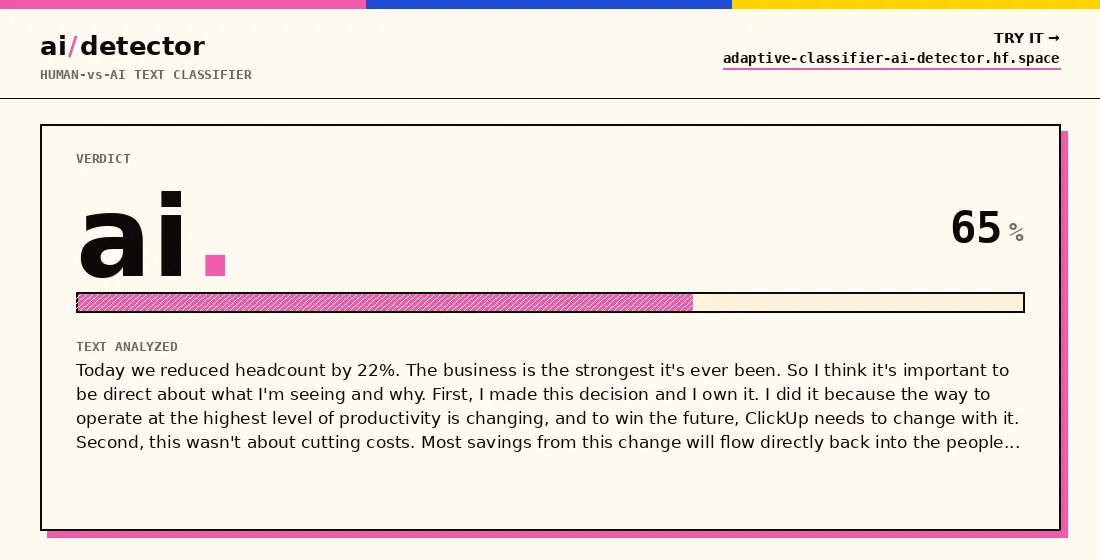
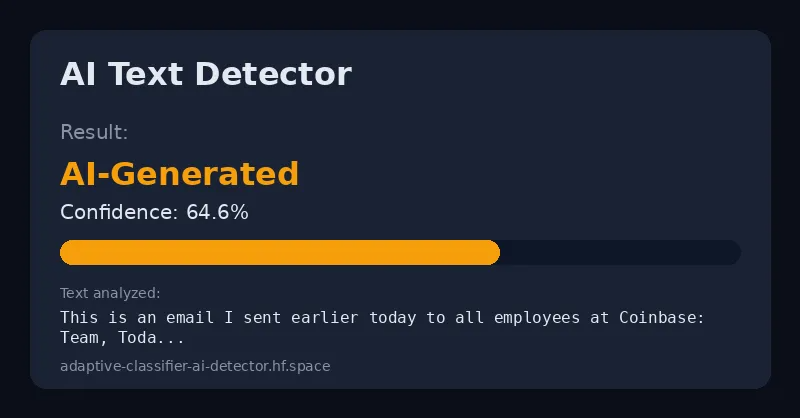
Imagine doing this and announcing it with a huge AI generated tweet - x.com/latent_node/status/205…
May 21

Today we reduced headcount by 22%. The business is the strongest it's ever been. So I think it's important to be direct about what I'm seeing and why.
First, I made this decision and I own it. I did it because the way to operate at the highest level of productivity is changing, and to win the future, ClickUp needs to change with it.
Second, this wasn't about cutting costs. Most savings from this change will flow directly back into the people who stay. We'll be introducing million-dollar salary bands. If you create outsized impact using AI, you'll be paid outside of traditional bands.
Most importantly, I have the deepest gratitude for those affected. We're doing this from a position of strength specifically so we can take care of people properly. Everyone affected receives a package aimed at honoring their contributions and easing the transition.
I only see two options: wait for this to play out gradually in the market or be honest about what I'm seeing and act proactively.
THE 100X ORGANIZATION
The primary change is that we're restructuring around what I call 100x org. The goal is 100x output. The roles required to build at the highest level are fundamentally different than they were a year ago.
Incremental improvements to existing systems won't get us there. We need new ones. That means creating enough disruption to rebuild rather than iterate on what's already broken.
The common narrative is that AI makes everyone more productive. It doesn't. Many of the workflows of today, if left unchanged, create bottlenecks in AI systems.
These roles will evolve. But waiting for that to happen naturally means falling behind now.
The 100x org is actually heavily dependent on people - infinitely more than today. This is only possible with 10x people that have embraced and adopted new ways of working.
THE BUILDERS, AGENT MANAGERS, AND FRONT-LINERS
— THE BUILDERS: 10X ENGINEERS
I don't think most companies have internalized what's actually happening with AI in engineering. The common narrative is that AI makes all engineers more productive. That may be true in isolation, but at an organization level - that is the farthest thing from reality.
Here's what we've validated recently at ClickUp: the great engineers, the ones who can orchestrate, architect, and review, are becoming 100x engineers. They're not writing code. They're directing agents that write code. The skill is judgment.
AI makes the best engineers wildly more productive, and everyone else using AI slows these engineers down.
Think about it - the bottlenecks are (1) orchestration - telling AI what to do, and (2) reviewing - what AI did. Everything is leapfrogged and no longer needed.
So who do you want orchestrating and reviewing code?
And how do you want your best engineers to spend their time?
If your best engineers are spending time reviewing other people's code, then this is inherently an inefficient bottleneck. These engineers can review their agent's code much faster than reviewing human code.
The new world is about enabling your 10x engineers to become 100x.
The wrong strategy is to push every engineer to use infinite tokens. Companies doing this are celebrating 500% more pull requests. But customer outcomes don't match the volume of code being generated.
I call this the great reckoning of AI coding, and every company will face this soon if not already.
More code is just another bottleneck to the best engineers, and ultimately to your company's impact as well.
— THE BUILDERS: 10X PRODUCT MANAGERS
Product management and design roles are merging.
Designers that have customer focus, become more like product managers.
And product managers that have intuition for UX become more like designers.
The bottleneck of user research is gone. It takes us just one mention of an agent to kickoff research and analyze results.
The bottleneck of product <> design iteration is also gone. The product builder iterates on their own, along with agents and skills that ensure alignment with quality and strategy.
Also controversial today - I believe that the wrong strategy is to have your PMs shipping code - that just introduces another bottleneck that the best engineers will waste their time on.
To be clear, PMs should be coding but they should do this in a playground to iterate, validate, and scope. That code should not go to production.
Everything outside of managing systems, orchestrating AI, and reviewing output becomes a bottleneck.
That's why the other roles that are critical along with these are the systems managers (to reduce bottlenecks) along with a bottleneck you can't replace - customer meeting time.
— THE SYSTEM MANAGERS
Ironically, the people that automate their jobs with AI will always have a job. They become owners of the AI systems - agent managers. We have many examples of these people at ClickUp.
The underlying systems in which we operate are absolutely critical to get right. I think most companies are delusional to think they can iterate on existing systems and compete in this new world.
You must create enough disruption so that old systems are deprecated entirely. If there's any definition for 'AI native' that's what it is.
— THE FRONT-LINERS
In a world that will become saturated with AI communication, the human touch will matter more than anything to customers.
This is a bottleneck that you shouldn't replace - even when agents are high enough quality to do video meetings.
One-on-one meeting time with customers is something that shouldn't be automated. The systems around the meetings should be - so that front-liners spend nearly 100% of their time with customers.
REWARDING 100X IMPACT
In a world where companies are able to do so much more with less, where does that excess money go?
In our case, much of the savings in this new operating model will flow directly back to those that enabled it.
We must reward people that create productivity accordingly. This aligns incentives on both sides. Plus, in a world where your best people create 100x impact, you can't afford to lose them.
You should aim to retain these employees for decades. The context they have and their ability to efficiently orchestrate and review will be nearly impossible to replace.
Compensation bands of today should be thrown out the door. We're introducing $1 million cash/year salary bands with a path available to nearly everyone in the company if they produce 100x impact by creating or managing AI systems.
THE FUTURE
Nearly every company will make changes like these. The ones that do it proactively will define what comes next.
The future is not fewer people. It's different work, new roles, and better rewards for those who embrace it. We're already seeing entirely new roles emerge, like Agent Managers, that didn't exist a year ago.
ClickUp is positioning to lead this shift, not just internally, but for our customers too. I've never been more certain about where we're headed.
2
306
May 16
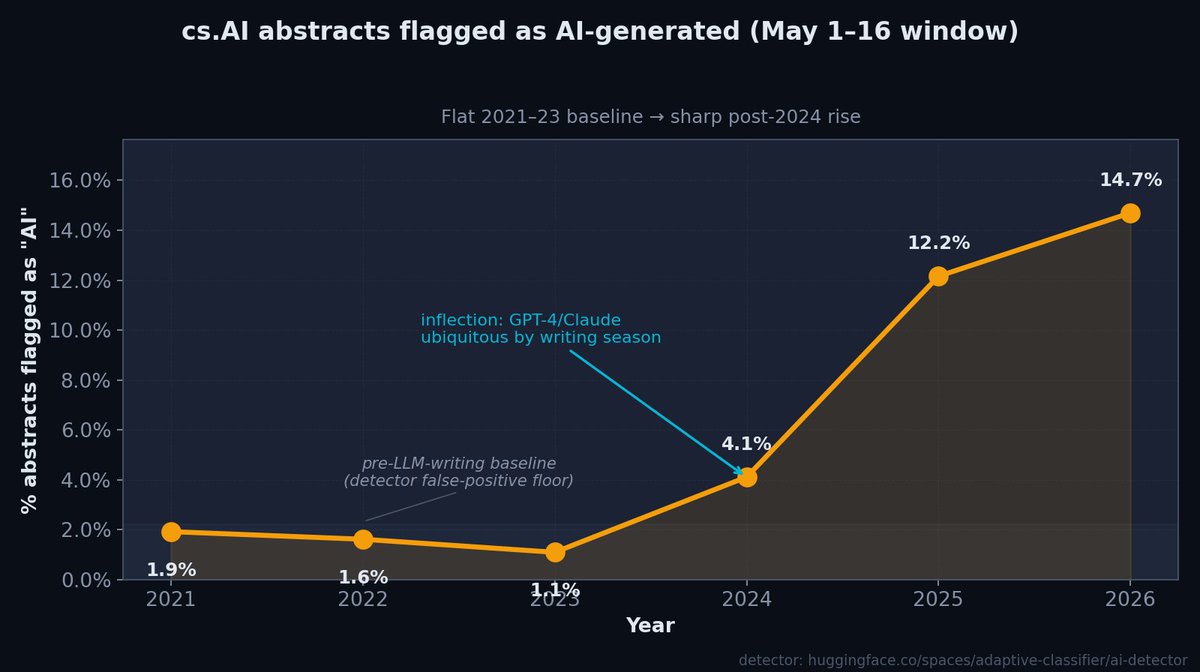
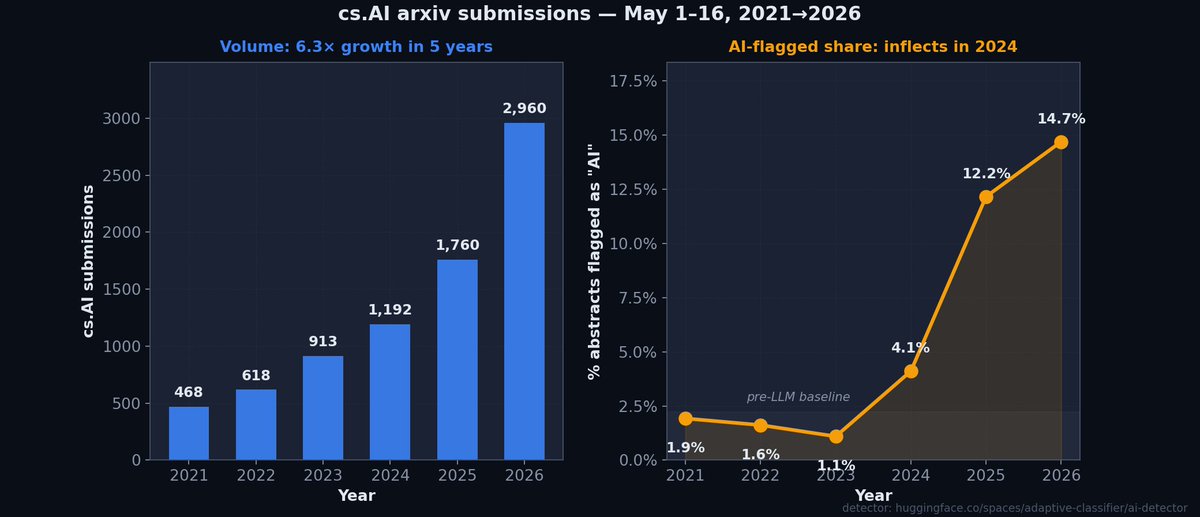
arxiv just rolled out 1-year bans for authors who submit papers with AI-hallucinated references. Their own data shows that the hallucinated citations went from 1-in-458 papers in 2025 to 1-in-277 by early 2026 10x in 3 years.
We pulled our own numbers on the bigger picture. 🧵
1
2
355
May 16
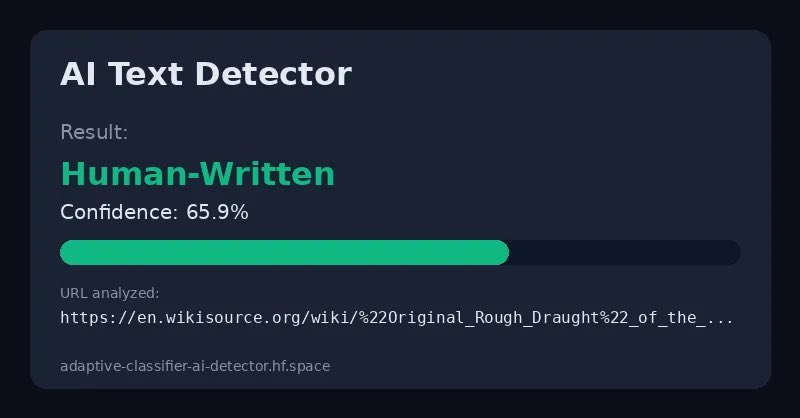
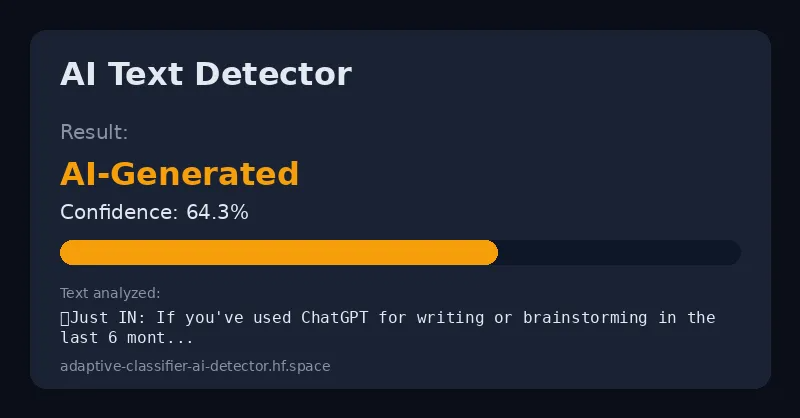
Flat 2021-23 baseline basically the detector's noise floor on academic text. LLMs barely existed yet, but ~1-2% of abstracts always get flagged anyway.
Then liftoff in 2024, the first cohort where GPT-4 / Claude had been routine writing tools for a full season.
1
171
May 16
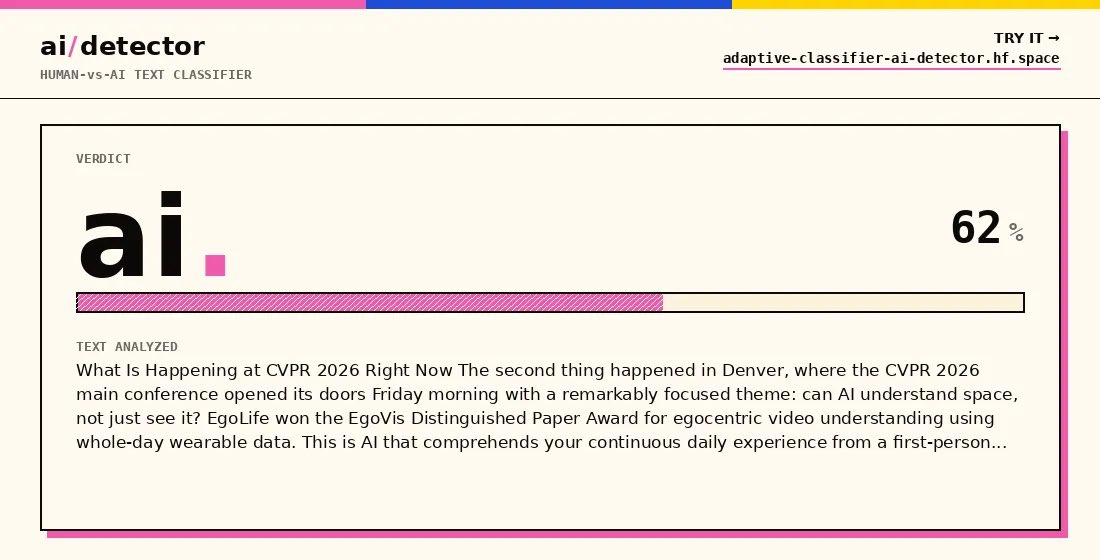
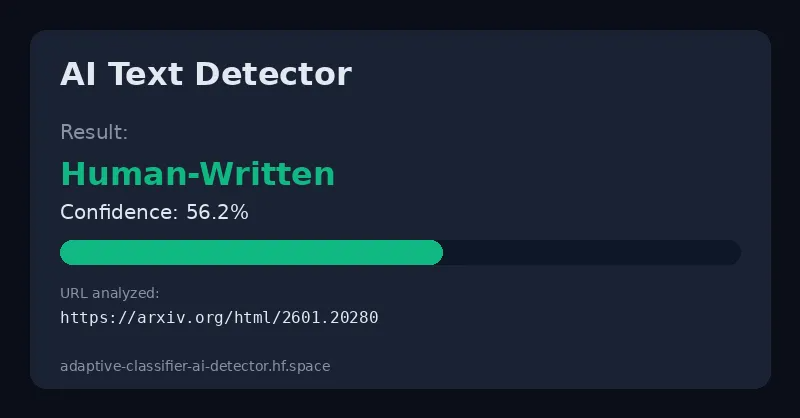
AI Detector: huggingface.co/spaces/adapti…
arxiv policy: x.com/tdietterich/status/205…

Attention @arxiv authors: Our Code of Conduct states that by signing your name as an author of a paper, each author takes full responsibility for all its contents, irrespective of how the contents were generated. 1/
122