
Messaging & Positioning Strategist | I dig up bad marketing, analyze how it died, and help growing businesses bring their brands back to life.
Joined August 2024
- Tweets 382
- Following 49
- Followers 52
- Likes 177
113 Photos and videos













May 26
N27, the first one avant-grotesk font family by atipo®. Download Regular & Italic weights for free!! atipofoundry.com/fonts/n27 via @atipostudio
24
18 Dec 2025
I asked my client how much it costs him to land a new customer. He didn't know. So I made him do the math.
Payroll for his sales team. Software. Time. All of it.
He landed on $2,577 per.
Then his ops person jumped in: "It's actually way more than that. If we're being honest, we're probably losing money."
And if you're like most founders I talk to, you've got no idea if you're making money or hemorrhaging it. But messaging can fix this.
When I dug into their messaging, they were saying the same bullshit as everyone else. It's not that no one cares, it doesn't show value. The messaging did nothing.
We fixed it.
Stopped talking about the experience. Started talking about what customers actually wanted: qualified leads, ROI, and proof that the service they were providing was worth their time.
That one shift? Cut their CAC by 90% (down to $187 to be exact). Same product. Same service. Different story.
16
17 Dec 2025
Got called out last week for using the word "messaging."
"That's jargon," she said. "What's the actual outcome?"
Fair. I was being vague on purpose.
Here's the unfiltered version: I help companies stop lying, mostly to themselves, sometimes accidentally to their buyers.
Your founder thinks you're a platform. Your sales team thinks you're a tool. Your customers think you're a workflow fix. Nobody wins.
You all just sound confused.
I make you pick one story. Stick with it. Sound like one company instead of a committee.
Does it feel weird at first? Yeah. Because you're admitting months of incoherence.
Does it work? Your pipeline stops rotting. Your team stops looking stupid in front of prospects. Your close rate climbs.
So yeah. Not "messaging strategy." Just: clarity and cash.
14
16 Dec 2025
When a prospect asks "What exactly do you do?" and your founder, your sales guy, and your customer success person give three different answers, that's not a vocabulary problem.
That's a messaging problem.
And yeah, "messaging" is jargon. So is "product-market fit." So is "go-to-market."
It's jargon because it means something specific. It's the gap between what you think you do and what your market actually hears.
Close that gap, and deals stop stalling.
Prospects stop ghosting. Your team stops contradicting each other in front of buyers. That's why I use the word.
What word would you use?
7
10 Dec 2025
There's a conversation about your product happening right now...and it's probably not great.
Your customer is explaining it to their network. What works. What sucks. What they wished was different.
That conversation is more honest than any reference call. Your customer optimizes feedback. They don't want to hurt your feelings.
But when they're explaining you to their people? They're dropping truth bombs:
- The weird technical workarounds.
- The underselling of your value.
- The conversations about whether to renew.
That unfiltered reality reshapes everything. The sad part is most founders never collect it.
DM me if you want to know what your customers really say.
11
9 Dec 2025
Every founder talks about consistent messaging.
Yeah, well...consistency is easy when you've got nothing to say.
Real consistency comes from paying attention to what's actually happening. Like:
Your customers are struggling with problems your sales team didn't mention.
They're hitting edge cases that make them doubt the choice.
Your messaging keeps saying "We're innovative" while they're just trying to make it work.
Your customers will tell you what's true.
You listen. You update. Your team says the same things because those things are actually true now.
That's consistency that converts.
DM me if your messaging feels disconnected and inconsistent.
7
8 Dec 2025
Here's what kills companies: messaging built on assumption...
You think you know why customers bought. You think you know what keeps them. You're probably wrong.
And you don't find out until revenue flatlines.
It's not a crash. It's a bleed. Attrition. Churn creeping up. Nobody knows why because nobody's asking anymore.
The conversation between you and your customers is your only early warning system.
Skip it long enough, you'll be six months behind reality.
DM me if you can't remember the last customer conversation you had that mattered.
4
6 Dec 2025
I'm going to tell you something that might cost me a sale. You probably don't need me.
If your messaging problem is "our homepage could be punchier" or "we need better email templates," hire a copywriter. They're cheaper and they'll make you feel better about yourself.
I'm for a different problem.
I'm for when your VP of Sales and your Head of Product give completely different pitches for the same product and nobody's technically wrong but the company's still screwed.
I'm for when you've tried three messaging approaches in six months and all of them sound fine in Slack but die the second they touch a real prospect.
I'm for when you can't figure out why your competitor with the objectively shittier product keeps beating you and the only honest answer is "they can explain what they do and we can't."
That's a different kind of broken. And it requires a different kind of fix.
If your problem is this: you built something valuable and nobody can figure out what the hell it is or why they should care, and it's costing you deals and sanity and the respect of your board...
𝐓𝐡𝐞𝐧 𝐲𝐞𝐚𝐡. 𝐂𝐚𝐥𝐥 𝐦𝐞.
Because I've spent 15 years watching smart people talk past each other about products that should sell themselves. And I've gotten pretty darn good at finding the one true thing buried under all that noise.
Not the thing that sounds good in a conference room. The thing that makes a prospect stop scrolling and think "oh wow, that's exactly my problem."
That's what I do. I excavate until I find that thing. Then I build everything from there.
It's not magic. It's just work most people don't have the patience for.
So before you DM me, ask yourself: is this a cosmetic problem or a structural one? Because I only fix structural.
If your messaging problem is structural and you're ready to do the boring work to fix it, DM me.
32
6 Dec 2025
You want to know why your competitor with the worse product is beating you?
They can explain what changes when someone buys. You can only explain what you do.
That's it. That's the whole game.
You have better features. Better engineering. Better everything except the one thing that matters: a clear answer to "why should I care?"
So you lose. Not because your product is worse. Because your explanation is worse.
Here's what I mean:
You say: "We're a procurement platform that automates vendor management."
They say: "We turn procurement from a compliance bottleneck into a competitive advantage."
Both are true. But only one describes transformation.
You're telling people what you built. They're telling people what changes. Guess who wins?
Most founders skip this step. They assume if they build something useful, people will figure out why it's useful. Then they're shocked when prospects nod through demos and ghost them.
The prospects aren't confused about your features. They're confused about what changes if they buy. And confusion doesn't convert.
Your competitor figured this out. That's why they're growing and you're explaining.
If you know your product is better but your competitor's message is winning, DM me.
9
5 Dec 2025
Most messaging consultants ask "what does your product do?" Then they make your answer prettier and call it strategy.
I ask "what changes when someone buys this?"
Almost nobody can answer it.
"We save time."
Everyone saves time. What do they DO with that time?
𝐒𝐢𝐥𝐞𝐧𝐜𝐞.
That silence is where your actual messaging lives. Between "we save time" and "you stop being a cost center and become a strategic function leadership values."
Most consultants fill that gap with features. I excavate until we find what transforms.
If your messaging sounds like everyone else's, DM me.
13
3 Dec 2025
Here's the question I ask that most messaging consultants skip:
"𝐒𝐡𝐨𝐰 𝐦𝐞 𝐚 𝐜𝐮𝐬𝐭𝐨𝐦𝐞𝐫 𝐰𝐡𝐨 𝐬𝐚𝐢𝐝 𝐧𝐨. 𝐈 𝐰𝐚𝐧𝐭 𝐭𝐨 𝐭𝐚𝐥𝐤 𝐭𝐨 𝐭𝐡𝐞𝐦."
They look at me like I just asked to set money on fire.
"Why would we do that? They didn't buy. We should talk to the customers who love us."
Yeah, that's exactly why your messaging sounds like everyone else's.
Your happy customers will tell you you're great. They'll confirm everything you already believe about your product. They'll give you testimonials about how innovative and flexible and transformative you are.
Fantastic. Now you sound like 30,000 other companies.
The people who said no? They'll tell you the truth.
They'll tell you the exact moment in your pitch where they checked out. The feature you kept explaining that they didn't give a shit about. The competitor's message that landed when yours didn't.
They'll tell you what belief needed to shift for them to buy and what failed to shift it.
That's not feel-good feedback. That's excavation. That's finding the gap between what you think you're saying and what people actually hear.
Most consultants run a workshop with your team. Fill out a positioning canvas. Ask what makes you different. Congratulations, you just asked the people who are least objective about your product to evaluate your product.
I talk to the people who walked away. Because they're the only ones who'll tell me what's actually broken.
Your customers who said yes will help you write better testimonials. Your customers who said no will help you write better messaging.
One makes you feel good. One makes you money.
If you're tired of messaging built on what your team wants to hear instead of what prospects actually need to believe, reach out to me.
6
2 Dec 2025
You don't need to obsess about your customer.
But you need to check in...
Here's what to listen for:
One mentions something weird? Outlier.
Three mention it? Signal.
You catch problems before they become churn.
You notice what works that you didn't predict.
You spot where messaging is disconnected.
Your competitor probably isn't doing this.
So you do. You check in. You listen. You adjust.
Over time, that rhythm becomes part of your DNA.
When something changes, you feel it early.
Find whatever cadence works:
Quarterly calls
Monthly check-ins
A standing office hours
Just make it a ritual, not a project.
DM me if that rhythm died and you're wondering why things feel off.
1
2 Dec 2025
I start every engagement the same way: I talk to your customers.
Most founders go silent or say this...
"I... hadn't thought of that."
Me: "Seriously!?"
You built something great. People pay for it. And you've never asked the end user what they 𝘢𝘤𝘵𝘶𝘢𝘭𝘭𝘺 think?
Your customer sees your product through their lens, their budget, their constraints, their agenda. They just want shit that works.
That gap is where your real messaging lives.
DM me if you're not talking to the people using what you built.
4
2 Dec 2025
𝐌𝐨𝐬𝐭 𝐦𝐞𝐬𝐬𝐚𝐠𝐢𝐧𝐠 𝐜𝐨𝐧𝐬𝐮𝐥𝐭𝐚𝐧𝐭𝐬 𝐚𝐬𝐤: "𝐖𝐡𝐚𝐭 𝐝𝐨𝐞𝐬 𝐲𝐨𝐮𝐫 𝐩𝐫𝐨𝐝𝐮𝐜𝐭 𝐝𝐨?"
𝐈 𝐚𝐬𝐤: "𝐖𝐡𝐚𝐭 𝐜𝐡𝐚𝐧𝐠𝐞𝐬 𝐰𝐡𝐞𝐧 𝐬𝐨𝐦𝐞𝐨𝐧𝐞 𝐛𝐮𝐲𝐬 𝐢𝐭?"
These sound similar. They're not.
"What does your product do" gets you features. Sometimes benefits if you're lucky. "We help procurement teams manage vendors more efficiently."
Cool. What does "more efficiently" actually mean? What's different about their day? Their quarter? Their career?
That's what I'm digging for. The actual transformation.
Not "we save you time." Everyone saves time. What do they DO with that time that changes their business?
Not "we reduce risk." Everyone reduces risk. What risk specifically? And what do they do instead of managing that risk?
Not "we increase visibility." What do they SEE that they couldn't see before? And what decisions does that visibility unlock?
𝐇𝐞𝐫𝐞'𝐬 𝐰𝐡𝐲 𝐭𝐡𝐢𝐬 𝐦𝐚𝐭𝐭𝐞𝐫𝐬:
Features are what you built. Benefits are what those features enable. Transformation is what actually changes in someone's world when they use those benefits.
Most companies stop at benefits. "Save time, reduce costs, increase efficiency."
That's not messaging. That's generic bullshit every competitor can claim.
Transformation is specific. It's falsifiable. It's the thing your customers would lose if you disappeared tomorrow.
𝐄𝐱𝐚𝐦𝐩𝐥𝐞:
Bad messaging: "We're a procurement platform that helps you manage vendors more efficiently."
Better messaging: "We're a procurement platform that saves you 10 hours a week on vendor management."
Actual transformation: "We turn procurement from a compliance bottleneck that slows deals down into a strategic function that closes them faster."
See the difference?
The first one could be anyone. The second one is measurable but still generic. The third one describes what actually changes. The role shifts. The perception shifts. The business outcome shifts.
𝐓𝐡𝐢𝐬 𝐢𝐬 𝐰𝐡𝐚𝐭 𝐈 𝐝𝐨.
I ask about transformation until we find something true. Something specific enough that your competitors can't claim it. Something valuable enough that customers will pay for it.
Then we build your messaging from there.
Not from features. Not from benefits. From what actually changes.
Most messaging consultants run a workshop and fill out a template. I interview your customers who said no and figure out what belief needed to shift to make them say yes.
That's the work. It's not glamorous. It's research and excavation and asking "why" until everyone's annoyed with me.
But it's how you find messaging that actually differentiates instead of just describing.
If your messaging sounds like everyone else's because it's built on features and benefits instead of transformation, DM me.
1
2 Dec 2025
Your competitors aren't geniuses. They're just people who refuse to check their work. The edge in your business isn't a secret algorithm. It’s a fucking notebook and the willingness to look at what you wrote.
6
1 Dec 2025
You know what's cheaper than hiring me?
Nothing.
Doing nothing costs zero dollars upfront. You can keep running your company exactly as you are. Sales and product contradicting each other. Prospects nodding through demos and then ghosting.
Feels free, right?
𝐇𝐞𝐫𝐞'𝐬 𝐰𝐡𝐚𝐭 𝐟𝐫𝐞𝐞 𝐚𝐜𝐭𝐮𝐚𝐥𝐥𝐲 𝐜𝐨𝐬𝐭𝐬:
That enterprise deal you lost last quarter: the one where you couldn't articulate why you're different from the cheaper option. That was $180K you'll never see again.
The three good sales reps who quit because they got tired of explaining a product even they didn't understand. Replacing them costs $90K in recruiting and onboarding. Plus six months of watching new reps fumble the same conversations the old ones fumbled.
The competitor who raised the same round as you. Their product's worse but their messaging is better. They just got acquired for 8x revenue. You're still here trying to explain what you do.
𝐓𝐡𝐚𝐭'𝐬 𝐰𝐡𝐚𝐭 𝐟𝐫𝐞𝐞 𝐜𝐨𝐬𝐭𝐬.
And it compounds. Bad messaging doesn't stay bad, it metastasizes. Into every hire who asks "so what do we actually sell?" Into every campaign that says nothing. Into every investor update where you're explaining why growth is slower than you promised.
The longer you wait, the more expensive the fix becomes. Not because my prices go up. Because your company accumulates more 𝐦𝐞𝐬𝐬𝐚𝐠𝐢𝐧𝐠 𝐝𝐞𝐛𝐭.
You can pay to fix it now. Or pay way more to live with it forever.
𝐇𝐞𝐫𝐞'𝐬 𝐰𝐡𝐚𝐭 𝐲𝐨𝐮'𝐫𝐞 𝐧𝐨𝐭 𝐚𝐝𝐦𝐢𝐭𝐭𝐢𝐧𝐠 𝐭𝐨 𝐲𝐨𝐮𝐫𝐬𝐞𝐥𝐟:
You're not avoiding this because of the money. You're avoiding it because fixing it means admitting it's broken. And admitting it's broken means admitting you've been wasting money for months on a problem you could've fixed.
That's the real cost of free. Not the money you'll lose. The time you already lost that you can't get back.
If you're done pretending this will fix itself, DM me.
14
30 Nov 2025
What's actually stopping you from fixing your messaging?
Not money. You just dropped $15K on a trade show booth that generated 100s of tire-kickers and a guy selling SEO services.
Not time. You spent four hours last week arguing with your co-founder about whether to call it a "platform" or a "solution."
𝐈𝐭'𝐬 𝐟𝐞𝐚𝐫.
You're terrified someone will realize you don't actually know how to talk about your own product. That if you get specific about what you do, people will figure out you're a fraud. That if you stop trying to appeal to everyone, you'll end up with no one.
So you stay vague. "We're an innovative solution for forward-thinking enterprises."
Congratulations. You sound exactly like everyone else. Which means you sound like no one.
𝐇𝐞𝐫𝐞'𝐬 𝐰𝐡𝐚𝐭 𝐟𝐞𝐚𝐫 𝐜𝐨𝐬𝐭𝐬 𝐲𝐨𝐮:
Money on ads that say nothing. Sales calls that die in the first five minutes. A website your mom loves and your buyers ignore. Prospects who nod politely and then ghost you because they have no fucking idea what you actually do.
Meanwhile your competitor—the one with the worse product and better messaging—is closing deals you should've won.
Not because they're smarter. Because they're not afraid to say what they do.
They picked a lane. They said no to bad-fit customers. They stopped trying to sound impressive and started trying to be understood.
And now they're growing while you're wordsmithing your homepage for the umpteenth time.
𝐓𝐡𝐞 𝐜𝐨𝐦𝐩𝐚𝐧𝐢𝐞𝐬 𝐭𝐡𝐚𝐭 𝐰𝐢𝐧 𝐚𝐫𝐞𝐧'𝐭 𝐬𝐦𝐚𝐫𝐭𝐞𝐫 𝐭𝐡𝐚𝐧 𝐲𝐨𝐮. 𝐓𝐡𝐞𝐲'𝐫𝐞 𝐣𝐮𝐬𝐭 𝐛𝐫𝐚𝐯𝐞𝐫 𝐚𝐛𝐨𝐮𝐭 𝐜𝐥𝐚𝐫𝐢𝐭𝐲.
They'd rather be clearly wrong than vaguely right. Because you can test "clearly wrong" and fix it. You can't test "nobody knows what the hell you do."
You know what's worse than admitting you're afraid? Staying afraid for another year while lesser competitors eat your market.
If you're done hiding behind vague messaging and ready to get specific, DM me.
ALT Outreach hand helping a fallen woman.
4
30 Nov 2025
You hired a general marketing person to fix your messaging problem.
Three weeks in, they're redesigning your website footer and asking whether the LinkedIn banner should be blue or teal.
You're paying them to make decisions you don't want to make. Complete abdication! You're not alone.
Here's what you're thinking: "If I hire someone smart enough, they'll figure out what we should be saying to the market."
They won't. Because you haven't told them what your product/service actually does, who it's for, or why anyone should care.
I've seen this so many times:
Your VP of Sales says one thing.
Your Head of Product says another.
You say a third thing depending on who's in the room.
And your poor marketer defaults to safe: blog posts nobody reads, graphics nobody asked for, and a content calendar that makes you look busy while your pipeline stays empty.
Marketing people can't invent your strategy alone. They can't pull your core message out of thin air while your leadership team is still fighting about whether you're a "platform" or a "solution."
Here's what I see works most effectively:
Spend two hours writing down what your product does and who it's for. Not positioning. Not vision. Just the truth in plain language.
Test it on three customers. YES...actually talk to your customers. Ask them to repeat it back. Fix what confuses them.
Now you, your team, and your marketer know what they're saying. Now they can do their job.
Your marketer stops guessing. Your content actually connects to revenue. And you stop wondering why you're paying someone to make Instagram carousels when you need pipeline.
If your marketing hire is stuck because your messaging is broken, DM me.
ALT Eric Moore headshot. Handsome devil.
22
28 Nov 2025
AI is a tool. My 3H framework is a system.
Tools are great. But tools without systems create chaos.
You can use ChatGPT to:
• Draft your homepage
• Write your pitch deck
• Generate social posts
• Polish your emails
Do it. Seriously. Use AI. It's fast and it's good.
𝐁𝐮𝐭 𝐡𝐞𝐫𝐞'𝐬 𝐰𝐡𝐚𝐭 𝐢𝐭 𝐜𝐚𝐧'𝐭 𝐝𝐨:
It can't tell you if the homepage message matches the pitch deck story. It can't surface the disagreement between Marketing and Sales. It can't verify your claims are actually true.
It generates content. It doesn't create coherence.
That's where 3H comes in.
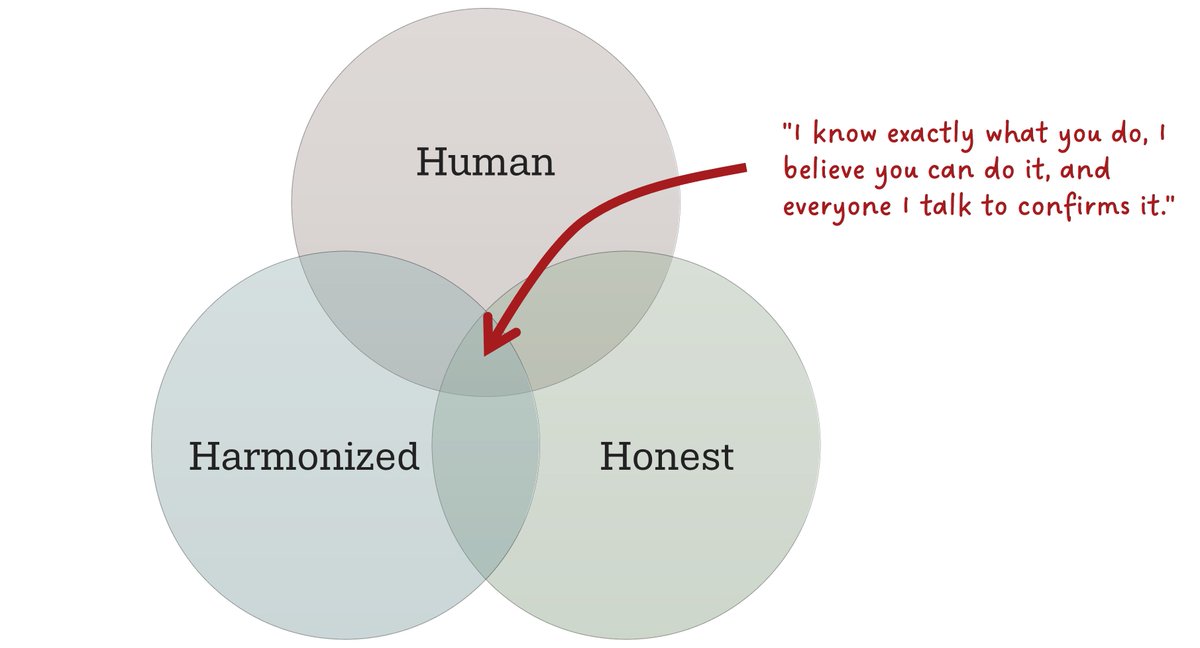
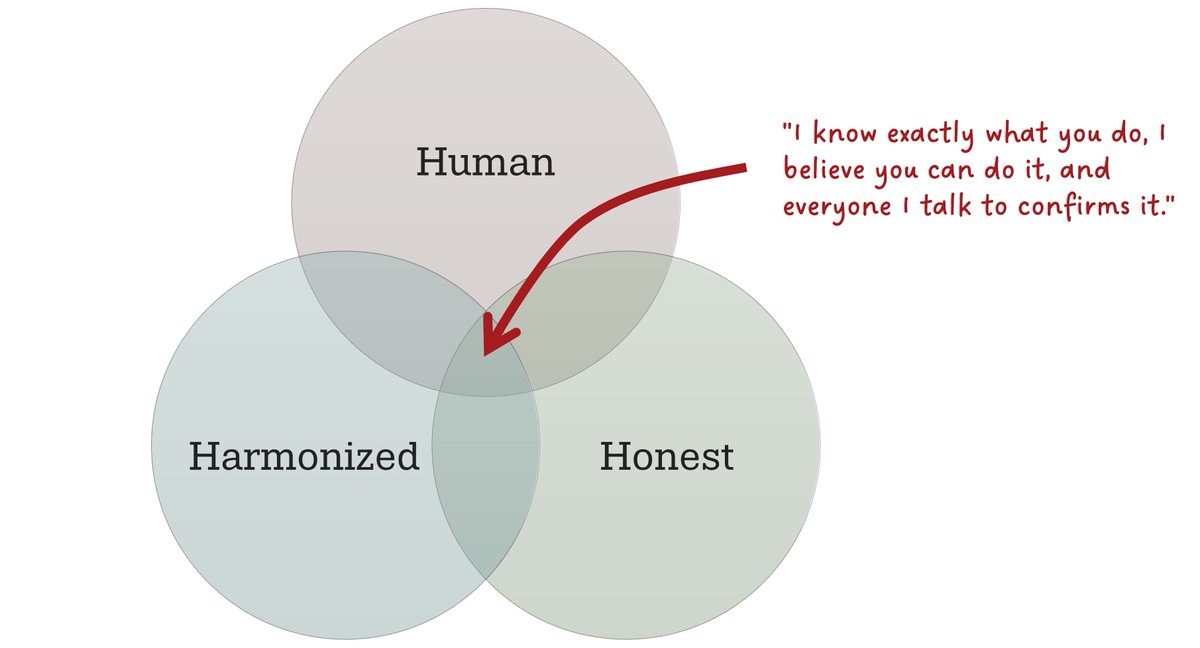
𝐇𝐮𝐦𝐚𝐧: Find the real language, not the AI language.
𝐇𝐨𝐧𝐞𝐬𝐭: Verify claims before they become content.
𝐇𝐚𝐫𝐦𝐨𝐧𝐢𝐳𝐞𝐝: Align the team before you publish anything.
Then use AI to scale what you've aligned on.
Think of it this way:
• AI is the printer
• 3H is the blueprint
You need both. But if you print without a blueprint, you just waste paper faster.
Use AI for speed. Use 3H for direction.
Because the future isn't "AI or human." It's "AI with human judgment."
That's the play.
11
27 Nov 2025
Your prospect just read three AI-generated comparison pages.
Yours. Your competitor's. Your other competitor's.
𝐘𝐀𝐘! 𝐓𝐡𝐞𝐲 𝐚𝐥𝐥 𝐬𝐚𝐲 𝐭𝐡𝐞 𝐬𝐚𝐦𝐞 𝐭𝐡𝐢𝐧𝐠: "Unlike other solutions, we actually deliver results."
Guess what? Nobody believes any of you.
Because AI optimized for persuasion, not truth.
It doesn't know the difference between "We're 10x faster" and "We're 10x faster for datasets under 50GB when using our premium tier."
It just writes what converts.
Your Sales team knows this. They're stuck defending claims AI made up. Prospects ask questions the website can't answer. Trust evaporates.
3H fixes what AI breaks.
Human: Use language customers actually use, not marketing language that sounds good. Honest: Make claims specific enough to be fact-checked. Harmonized: Make sure Sales can defend what Marketing writes.
AI chases clicks. 3H builds trust.
And in B2B? Trust closes deals. Not clever copy.
10