
an opinionated community of intense, smart and ambitious founders all around the world who don’t fit the usual startup molds but wanna change the world
Joined March 2022
- Tweets 460
- Following 10
- Followers 691
- Likes 426
90 Photos and videos
Pinned Tweet

31 Jan 2024
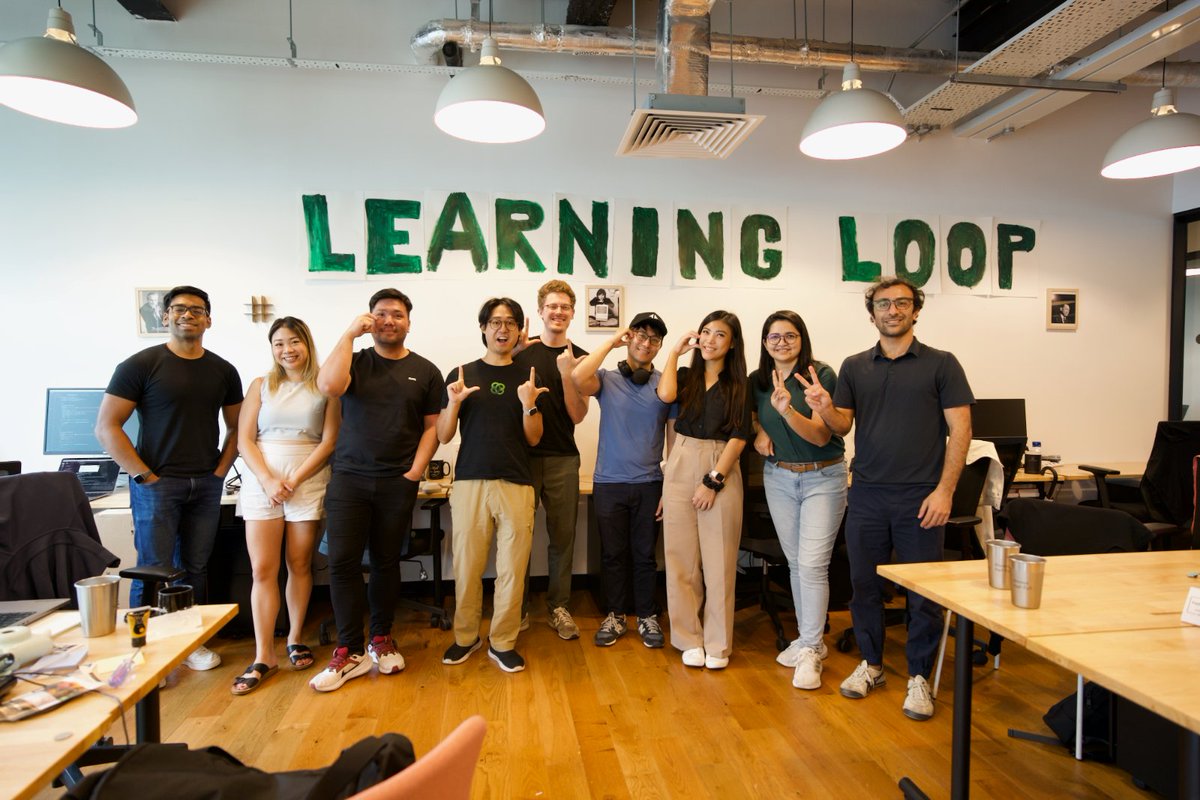
We're building Asia's best founder residency in Singapore
2
4
22
3,839
22 Feb 2025
most VCs and founders in palo alto / sf are nice people but have never left their city. most problems you care to solve isn’t a problem at all to them because they don’t have it. it’s on you to show them. have backbone, build, write,
1
247
22 Feb 2025
the startup world is way too biased and privileged yet still meritocratic, which makes is net great for any kid anywhere in the world with a dream
1
2
233
22 Feb 2025
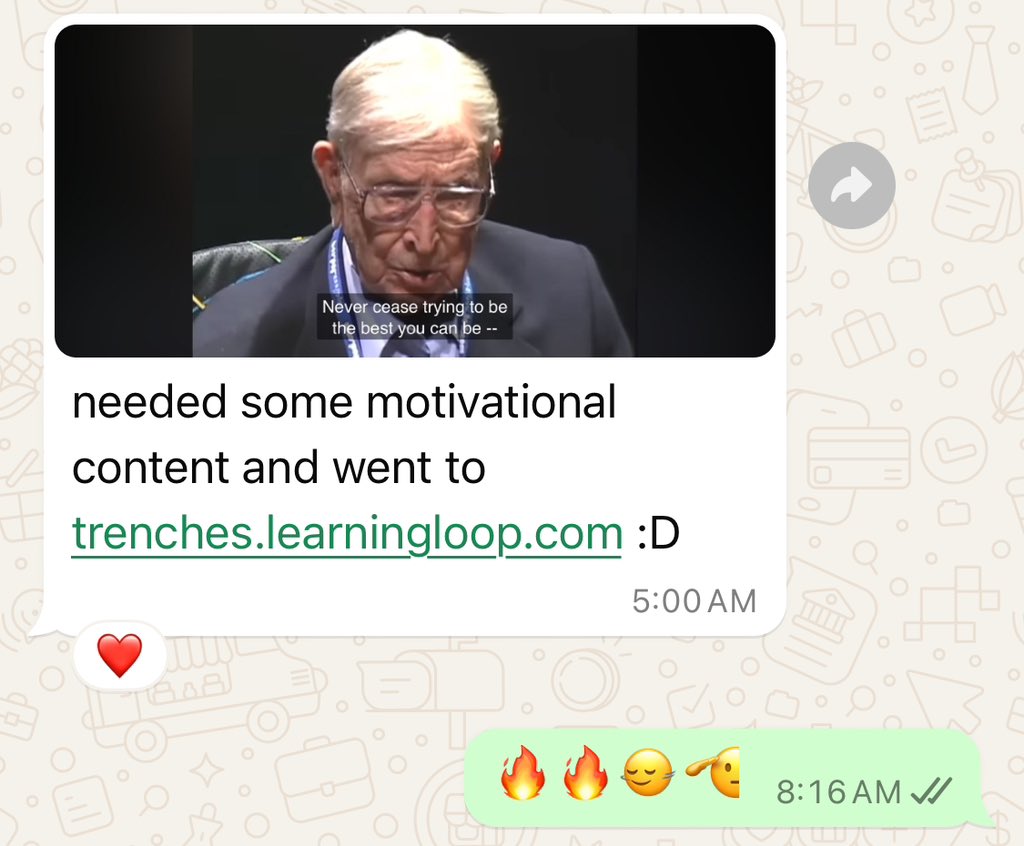
we curated our favorite videos and songs for the trenches (both for good and bad days). you can add your fav too! trenches.learningloop.com
1
118
Learning Loop retweeted

23 Nov 2024
We won Product of the Day on Product Hunt! 🎉
A huge thank you to everyone who supported us - you made this possible❤️
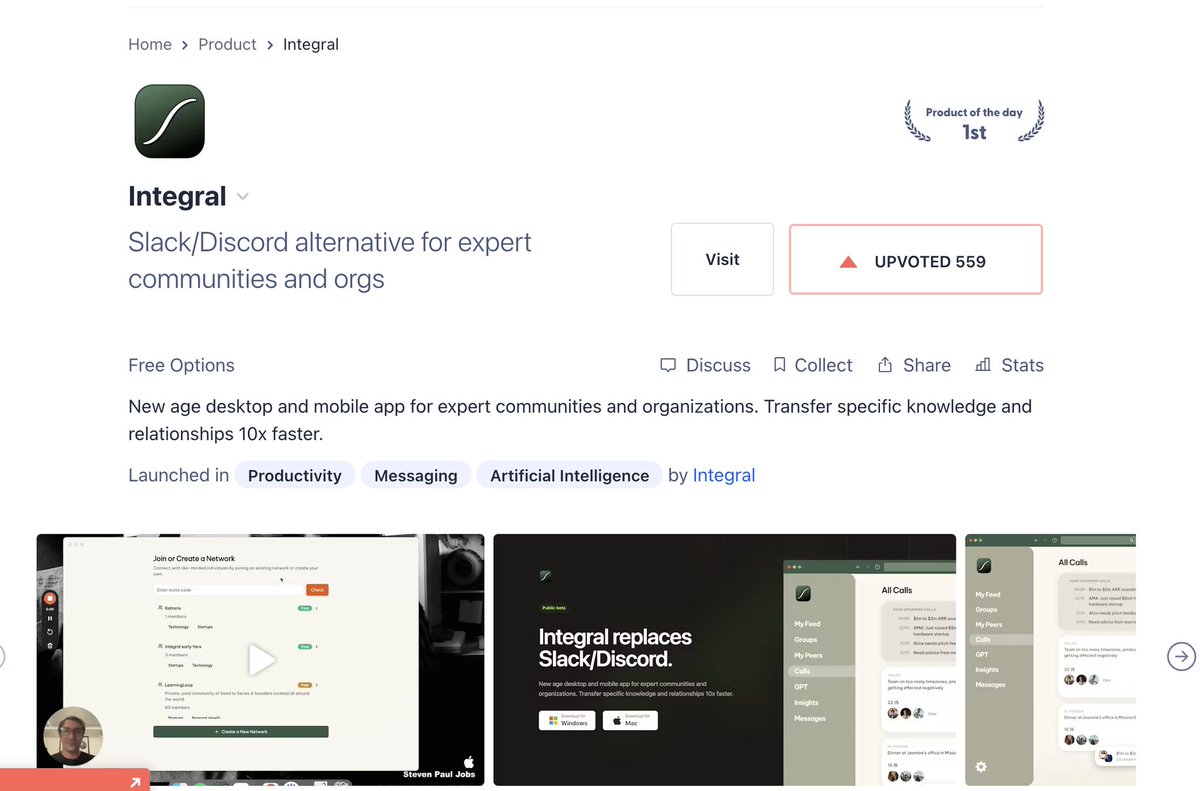
22
3
116
4,670
Learning Loop retweeted
23 Nov 2024
Integral is currently #2 on product hunt. Please support us. we badly wanna win this
producthunt.com/posts/integr…

1
3
32
2,824
Learning Loop retweeted
22 Nov 2024
We made it to the #1 spot on Product Hunt y'all!
Still, the day is long and you can support us if you haven't yet so we maintain the #1 place
Link is in the first comment!
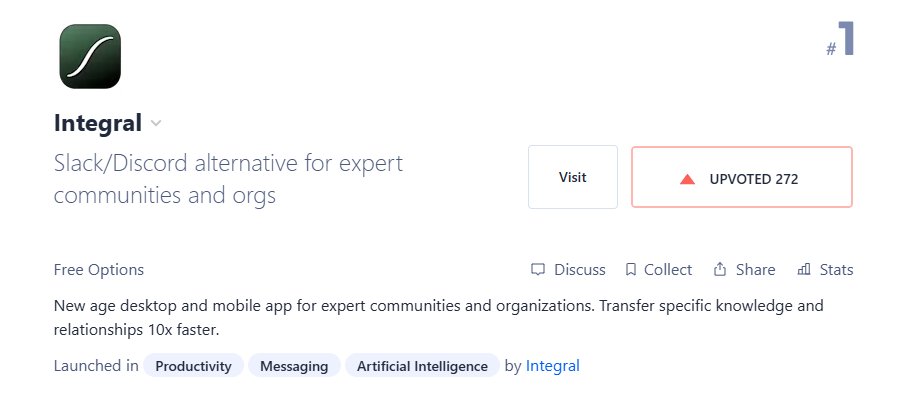

1
2
26
1,039
Learning Loop retweeted
5 Sep 2024
New Launch ✨
We built a website where we share stories of how startups got their first users through unscalable tactics
You can check it out here: dothingsthatdontscale.xyz/
Feedback is appreciated!
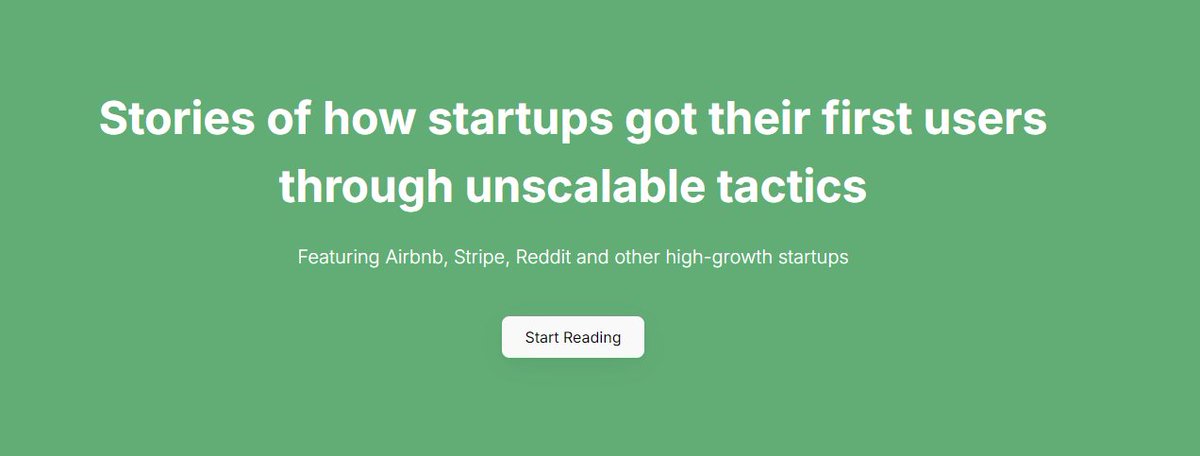
7
12
76
6,112
Learning Loop retweeted

31 Aug 2024
LL Mafia
missing so many of our members. one day we’ll have an event and bring all LL members and friends to the same city 🫡
P.S: back to singapore after 2 months in san francisco.
sign up for LL to amp up your startup journey and feel at home, wherever in the world you live.
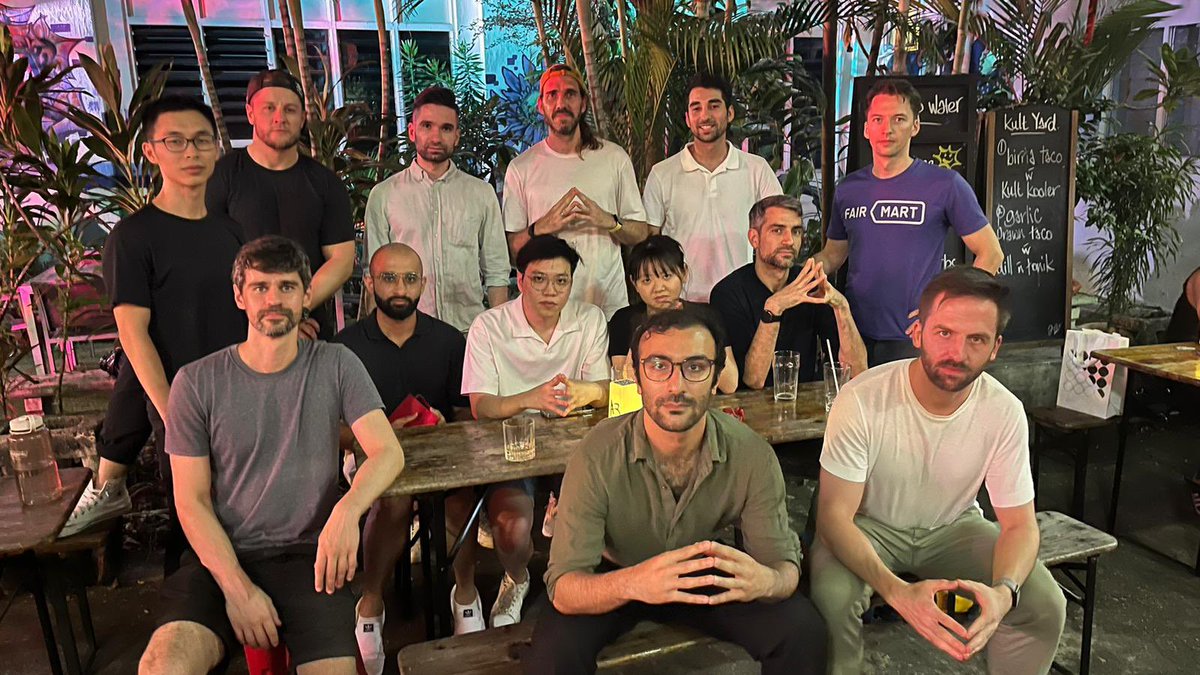
1
2
16
939
Learning Loop retweeted
27 Aug 2024
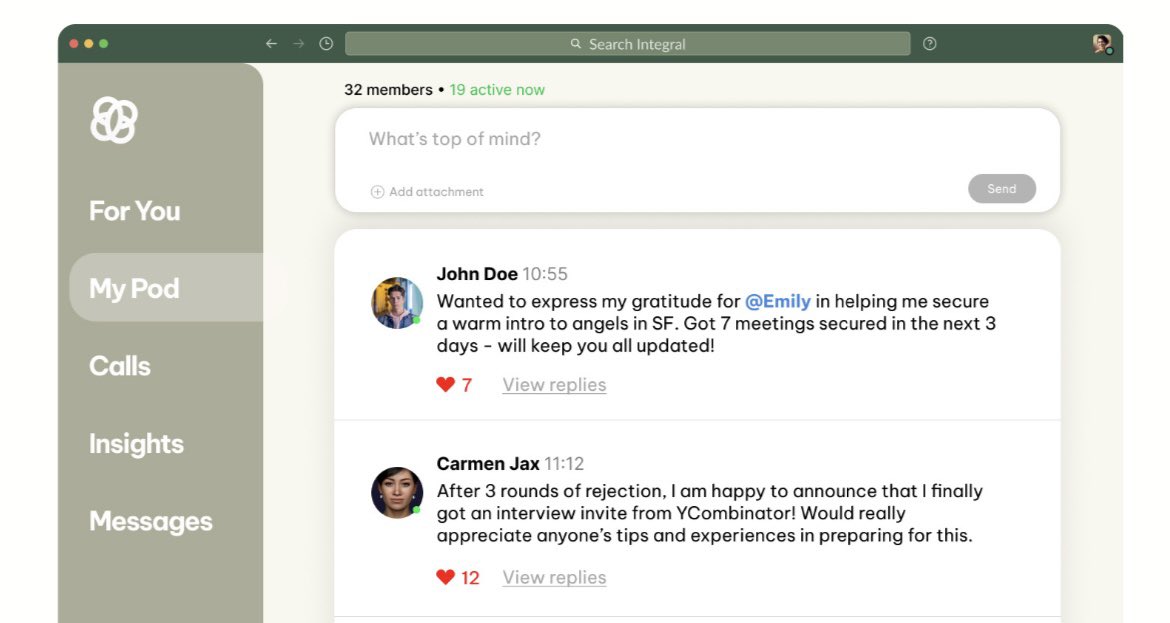
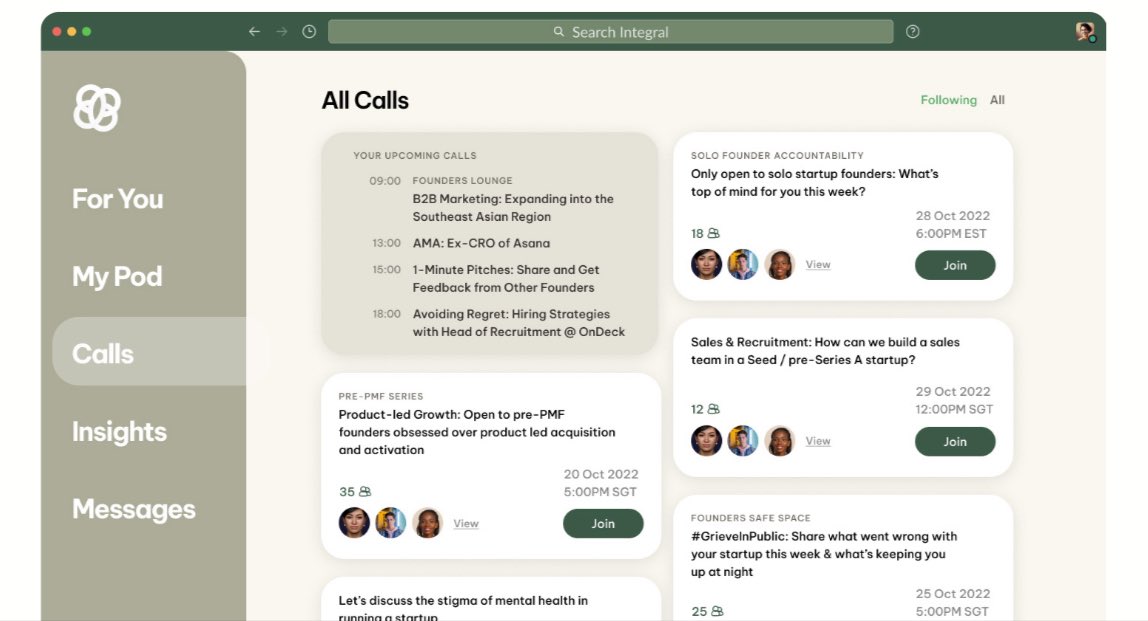
we’re migrating away from slack to integral (the app we've been working on)
this app will make slack (and discord and circle and team) look like a joke
you might think I'm crazy but you'll love it when you get access. we’re testing with founders first.
here’s a sneak peek:
1
4
29
1,669
Learning Loop retweeted
21 Aug 2024
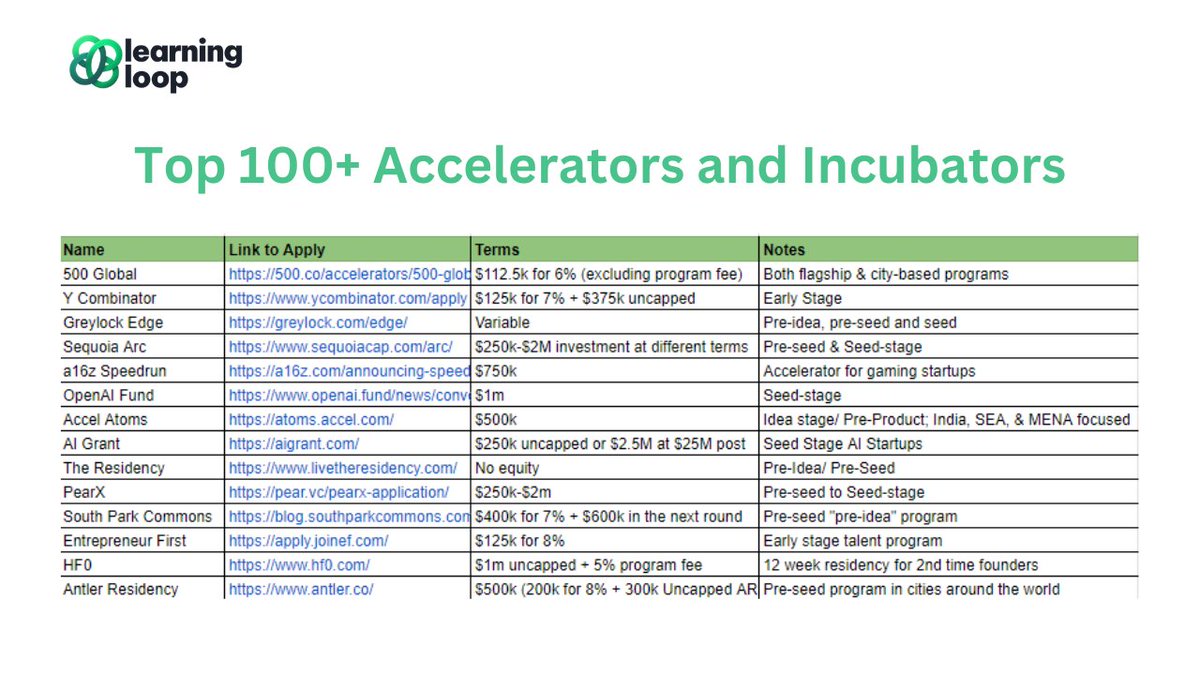
We have compiled a list of the top accelerators and incubators to apply to.
This list includes links to learn more about each accelerator, details on their terms, info about the stage of companies they typically accept
Link to access below👇
5
5
28
2,181
Learning Loop retweeted
13 Aug 2024
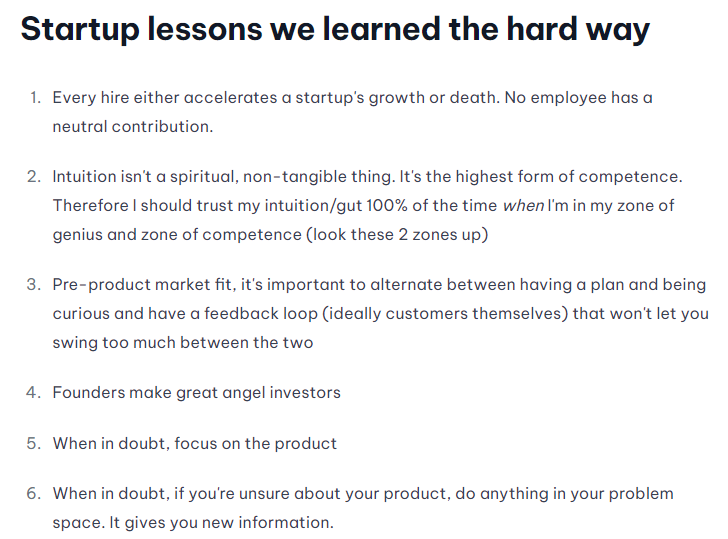
Startup lessons we learned the hard way
Link to the full post below ⬇️
2
2
17
1,291
Learning Loop retweeted
8 Aug 2024
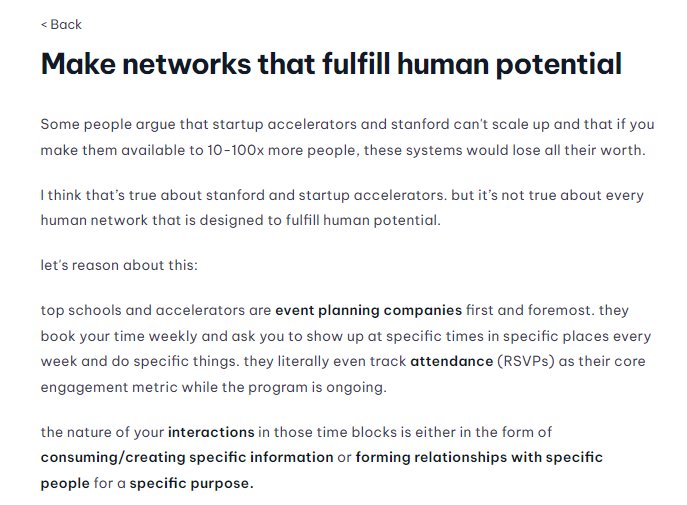
we wrote a post about why we’re building @learninglooporg
please read and let me know what you think.
link in the next tweet ⬇️
1
3
13
1,101
Learning Loop retweeted
6 Aug 2024
It’s been a long time in the making (and we still have a lot of work ahead), but I’m excited to share something we've been working on: Say hello to our new blog: learningloop.com/blog
We'd love for you to take a look and share your thoughts
We'll be posting more soon!
1
5
17
952
Learning Loop retweeted
24 Jul 2024
the number of homepage sign ups on our website has grown 13% weekly consistently for the past 11 weeks.
team is working hard and smart and i’m in sf preparing for something big. the work of our lives in the making.
3
1
12
2,133
17 Jul 2024
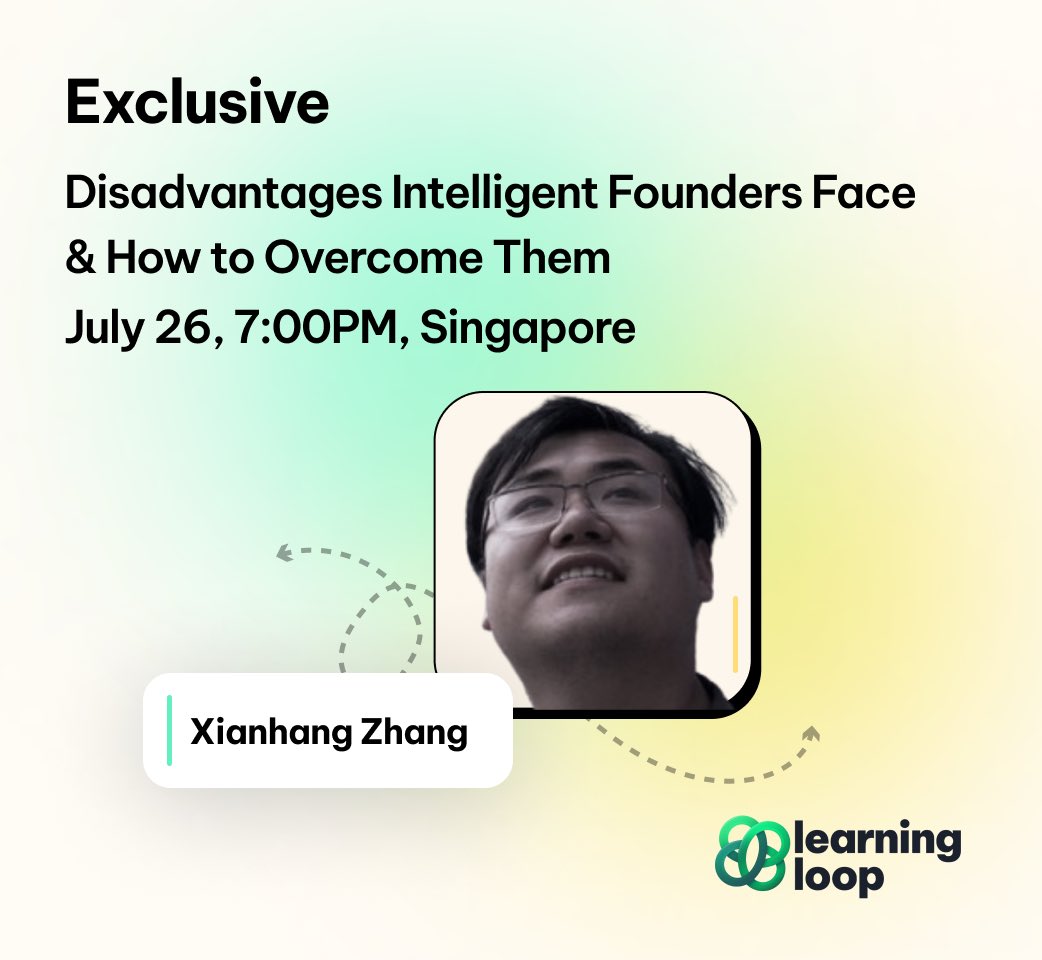
We’re hosting a founders-only coaching session with Xianhang Zhang on July 26 from 7:00 to 9:00 PM in Singapore.
He's a 4x founder, former head of growth at South China Morning Post and current PhD candidate.
Seats are limited, RSVP asap (link in the reply)
1
2
6
623
Learning Loop retweeted
17 Jul 2024
- Junto club
- The Inklings
- MIT TMRC
- Vienna Circle
- Homebrew Club
- Olympia Academy
- Cambridge Apostles
- Mastermind Alliance
- Bloomsbury Group
- Lunar Society of Birmingham
Building the next one @learninglooporg
2
4
15
880
10 Jul 2024
you must read this
10 Jul 2024

Some people argue that startup accelerators and stanford can't scale up and that if you make them available to 10-100x more people, these systems would lose all their worth.
I think that’s true about stanford and startup accelerators. but it’s not true about every human network that is designed to fulfill human potential.
let's reason about this:
top schools and accelerators are event planning companies first and foremost. they book your time weekly and ask you to show up at specific times in specific places every week and do specific things. they literally even track attendance (RSVPs) as their core engagement metric while the program is ongoing.
the nature of your interactions in those time blocks is either in the form of consuming/creating specific information or forming relationships with specific people for a specific purpose.
they also use money and status and scarcity (deadlines, low acceptance rate) to attract smart people and make sure they complete the whole program.
they then bring economic opportunity providers to you at the end of the program to ensure you increase your access to capital thru them (e.g. employers in a hiring fair, or investors in a demo day).
they then take credit (economically and/or reputation-ally) when their grads succeed and that’s how they manage to maintain a good top of funnel for their next cohorts. they are consumers of talent and do what it takes to make sure a critical mass of the talent they enroll can succeed visibly, otherwise less and less people will sign up for the next cohorts.
both schools and accelerators are net positive products in the world, but their business models are designed to keep opportunities scarce, in an increasingly abundant world.
in other words, they can take in less than 1% of all the high potential people.
it’s always raised a question in my mind: how do you enable 100% of high potential, hardworking people?
other than telling them to move to the US? (that's okay but the rest of the world will eventually burn in hell if all the ambitious people did move to 1 place and their home countries got worse and worse, which they do btw)
what is the true blocker and can it be automated?
to reason about this, we need to first unbundle these 2 systems intelligently.
the biggest attraction of accelerators is the money. while many people appreciate the mentorship/luck etc., the sign ups would be drastically lower if there was no funding, since most people tell themselves they already have enough mentorship/luck (limiting belief but the market does what it does. trying to running an accelerator that doesn't invest/host demo day and look at the sign up rates).
the biggest attraction of schools is the status (which gives individuals a huge leverage in career, dating life and circle of friends. the 3 important things that matter in a human’s life.)
if stanford removed its curriculums, classes, lectures and degrees but was somehow able to still deliver on career, dating life and circle of friends, it’d have the same number of applications.
to build new systems that enable 100% of high potential hard working people, all it takes is to build high status human networks formed around fulfilling human potential in specific domains. and continuously build a better access to economic opportunities.
I mentioned US. US itself is such a network and it is made by humans.
Will the US get worse if there were 1 billion Americans? No, it’d get better. that human-made culture and constitution would compound economic opportunities.
one could argue accelerators and schools are designed to have a hierarchy, a set of gatekeepers and mentors and their internal systems of defining who is good vs bad vs best, to judge and rate their networks, whereas US as a network is designed to turn every individual into the judge, the creator of their own ratings, and to break the damn gates that block each individual's path to self actualization.
now, if accelerators and universities are the product of a time of scarcity,
who are the people building human networks that fulfill human potential at scale?
Who are the people funding them?
And most importantly, what’s stopping you from doubling down in this problem space?
P.S: many people familiar with this space may say "but companies like OnDeck tried this and they had to scale down".
I respect OnDeck and I've looked into them and concluded their scaling down had nothing to do with the problem/solution space itself, but rather with the founding team's expectations from the journey.
In fact, I believe if they still care to pursue their founding mission with the same intensity as day 1 (which I hope they do), they absolutely can achieve it.
I'm a technical founder operating in this space and obsessing over it for the past 10 years and while I see 9999 ways a company in this space can fail, I do not see 1 reason achieving this is impossible. which is why I'm building in this space.
If you resonate with these you should DM me and say hi. I'm all in and I enjoy jamming with others who are obsessed with this space. plus i'll be in SF soon (assuming you're more likely to be in SF than elsewhere, for the reasons i shared in this post lol)
1
123
Learning Loop retweeted
4 Jul 2024
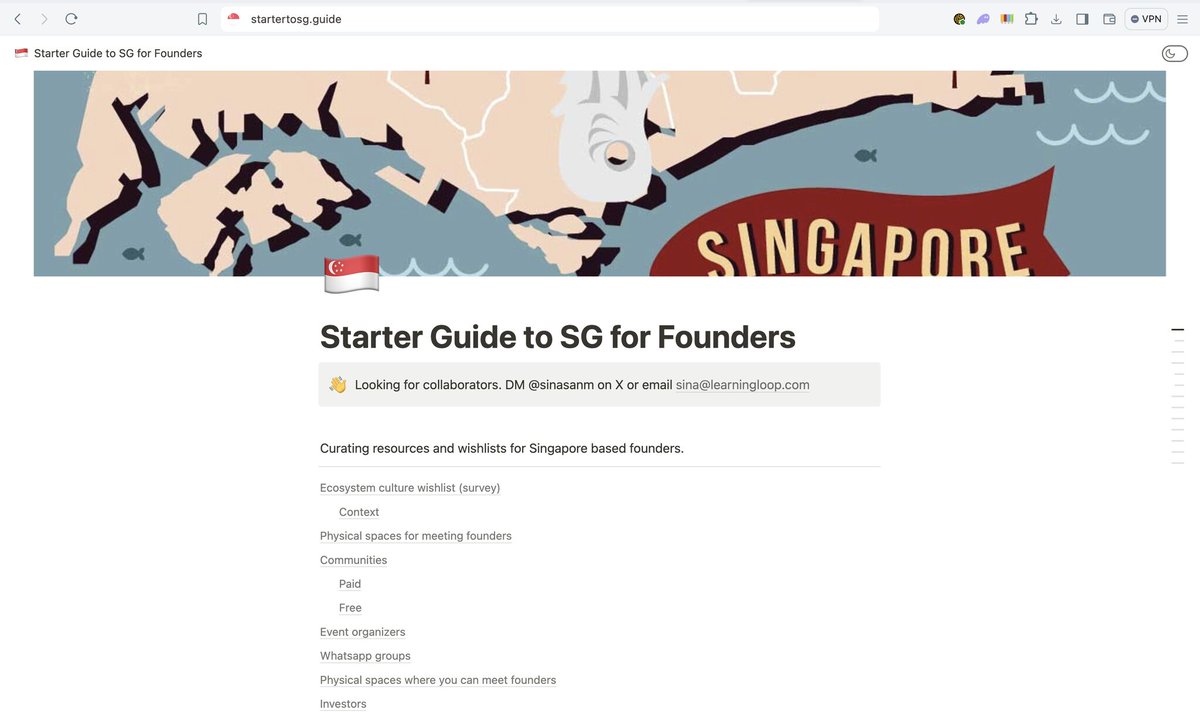
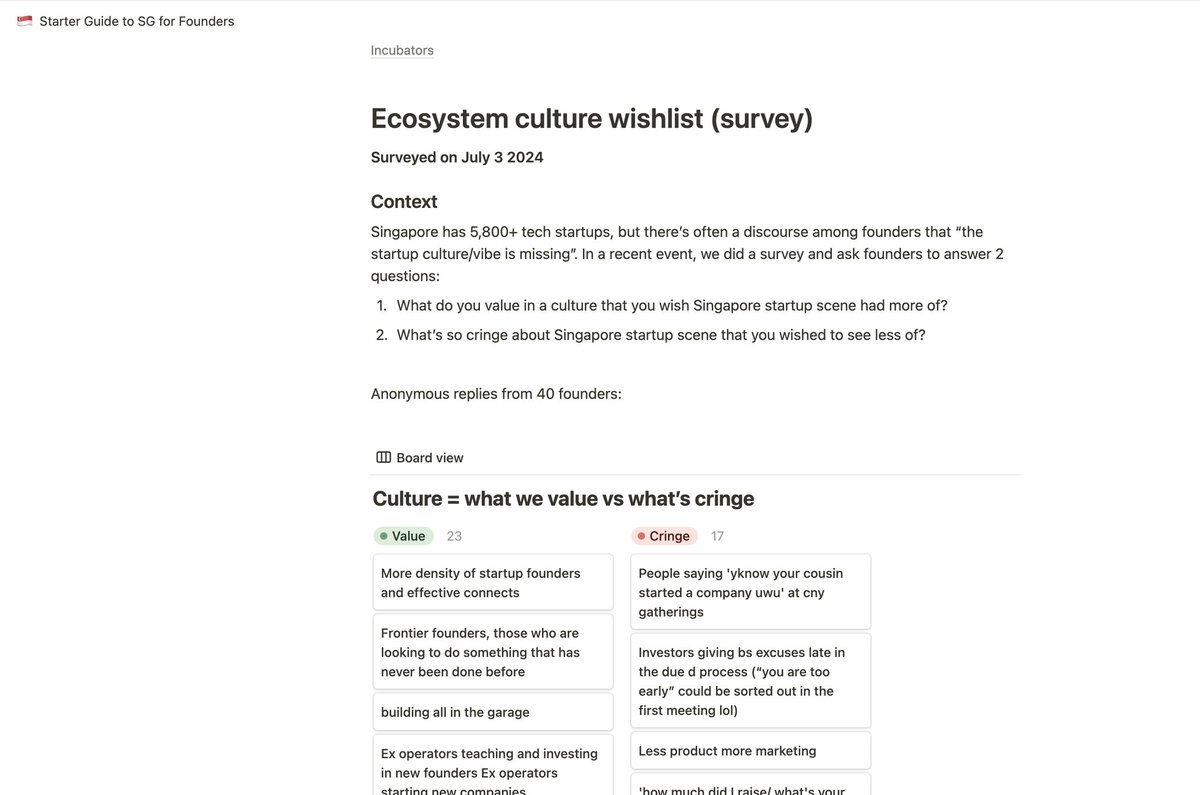
We surveyed 40 founders on Singapore startup ecosystem at @learninglooporg event yesterday.
We asked two questions:
1. What do you value and want more of?
2. What's cringe that you want less of?
We published the anonymous results online. Link in reply!
Pls retweet for karma
2
6
22
1,437